Chrome and Wood Ideas to Bring Warmth and Shine to Every Room

Walk into any well-designed home today, and you’ll likely spot it: a gleaming metal edge sitting right next to a warm wooden surface. This pairing isn’t an accident. Chrome and wood ideas have become one of the most reliable ways to balance a room, because the two materials do opposite jobs so well. Chrome reflects light and adds a crisp, modern edge, while wood brings texture, history, and a sense of calm. Together, they stop a space from feeling either too cold or too rustic.
This guide walks through 15 practical chrome and wood ideas you can use in almost any room, plus the design logic behind why they work, the mistakes to avoid, and how to choose wood tones that won’t clash with your metal finishes. Whether you’re renovating a kitchen or simply swapping out a side table, these ideas are grounded in real design principles rather than passing trends.
Why Chrome and Wood Ideas Work So Well Together
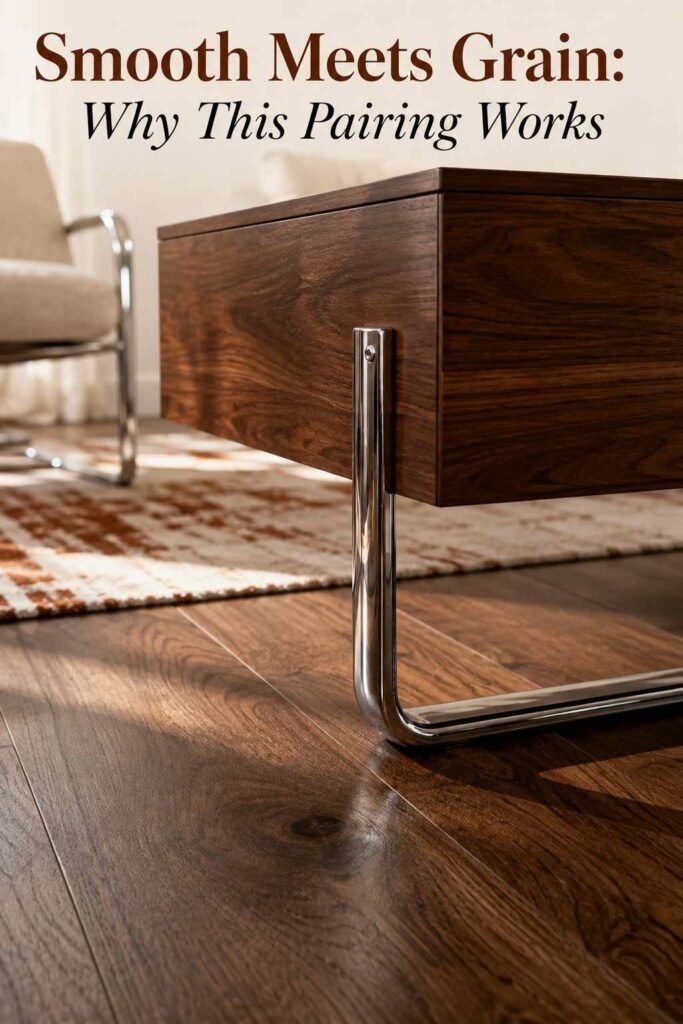
Good design usually comes down to contrast, and few pairings contrast as cleanly as polished metal and natural timber. Chrome is smooth, cool to the touch, and highly reflective. Wood is warm, textured, and full of natural variation. When placed side by side, each material makes the other more noticeable. The wood softens the industrial edge of chrome, and the chrome keeps the wood from feeling too heavy or dated.
This combination also has real design history behind it. Furniture from the Bauhaus movement in the 1920s and later the Mid-Century Modern era of the 1950s and 1960s frequently paired chrome-plated steel frames with wood or wood-veneer surfaces. Designers such as Marcel Breuer and Eileen Gray helped popularize tubular chrome furniture, often finished with wood seating or tabletops to keep the pieces from feeling sterile. That same balance is why the look still feels current in modern homes almost a century later.
There’s also a practical reason designers keep returning to this pairing: it’s forgiving. Because chrome is a neutral, cool-toned finish, it doesn’t compete with a specific wood species or wall color the way a warmer metal like brass sometimes can. That flexibility means a chrome accent can be introduced into a room that already has established wood tones, without forcing a full redesign around it. This is part of why the look shows up in so many different settings, from compact city apartments to larger, more traditional homes.
15 Chrome and Wood Ideas for Every Room in Your Home
Below are fifteen room-by-room ideas for combining these two materials, so you can find inspiration for the specific space you’re working on.
Living Room Ideas
1. A chrome-framed coffee table with a solid wood top.
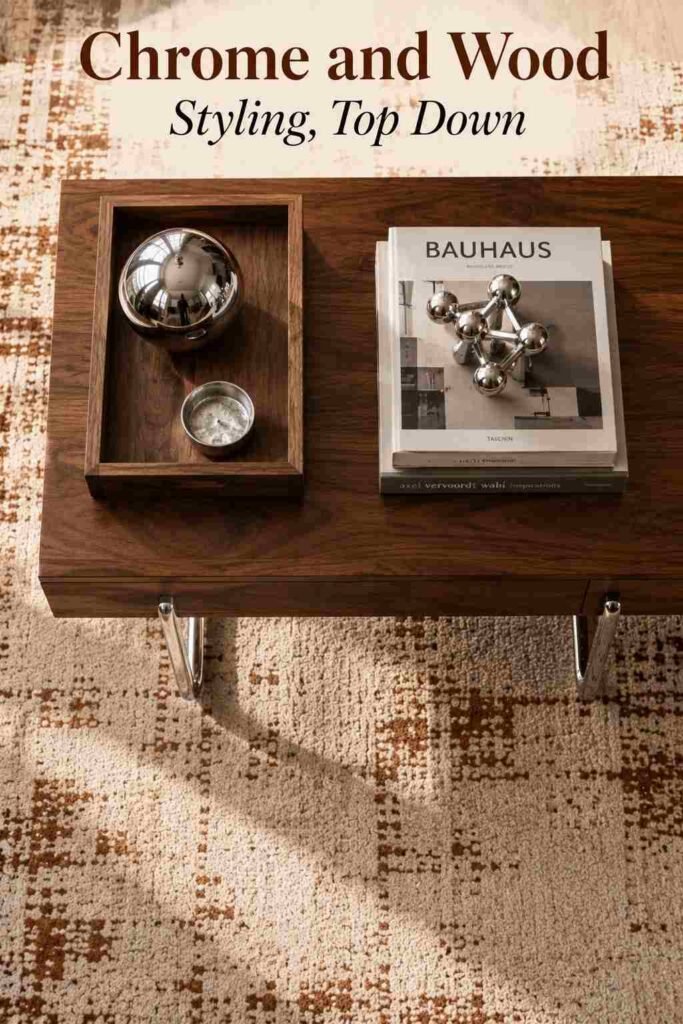
This is one of the most popular ways to combine the two materials because it anchors a living room without overwhelming it. A thick wood slab paired with slim chrome legs keeps the piece visually light while still feeling substantial.
2. A chrome side table beside a wood-toned sofa.
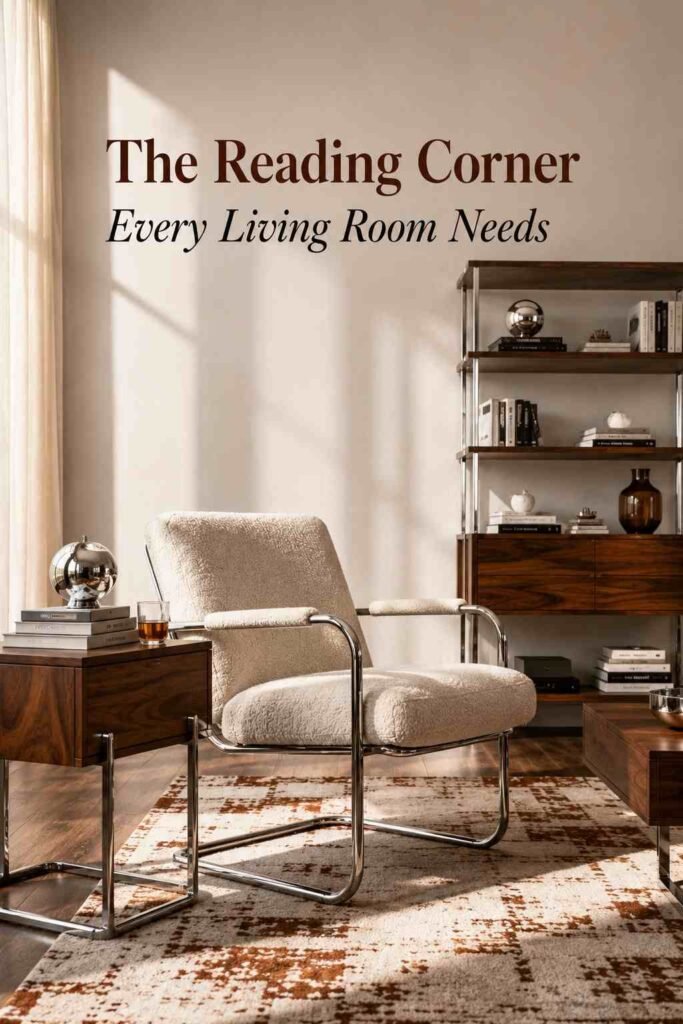
A polished chrome side table placed next to a linen or leather sofa in warm brown tones creates an easy focal point, catching light from a nearby window or lamp without competing with the room’s softer textures.
3. Wood shelving mounted on chrome brackets.
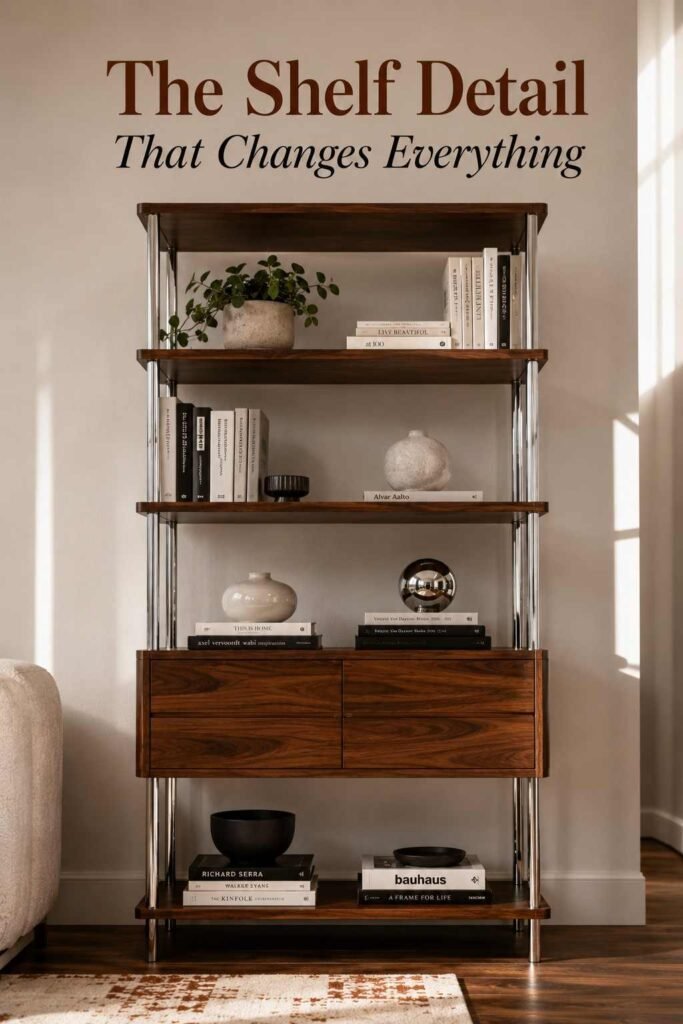
Floating wood shelves supported by visible chrome hardware give a room an open, airy feel while still displaying books, plants, or decor with a bit of structure underneath.
Kitchen Ideas
4. A chrome faucet paired with wood cabinetry. Warm oak or walnut cabinets next to a polished chrome tap is one of the simplest upgrades to make, since it only requires swapping hardware rather than remodeling the whole kitchen.
5. Chrome bar stools at a wood kitchen island. Metal-framed stools with cushioned seats pull up nicely against a butcher-block or wood-topped island, creating a clean line that still feels inviting for casual meals.
6. Open wood shelving with a chrome support rail. Instead of closed cabinets, a run of wood shelves held by a slim chrome rail keeps everyday dishes accessible while adding a bit of shine to an otherwise matte kitchen.
Bathroom Ideas
7. Chrome fixtures with a wood vanity. Natural wood vanities have remained a steady favorite in bathroom remodels over the past few years, and pairing them with chrome faucets, mirrors, and towel bars keeps the look from feeling too spa-like or too industrial.
8. Wood-look tile with chrome towel bars and hooks. For bathrooms where real wood isn’t practical because of moisture, wood-look porcelain tile paired with chrome hardware gets a similar effect without the upkeep concerns.
Bedroom Ideas
9. A chrome bed frame with wood nightstands. A slim chrome frame keeps a bedroom feeling modern, while a pair of wood nightstands on either side grounds the room and adds storage.
10. A wood headboard with chrome reading lamps. Wall-mounted or clip-on chrome lamps beside a wide wood headboard give a bedroom a boutique-hotel feel without requiring a full renovation.
Dining Room Ideas
11. Chrome dining chairs around a wood table. This is one of the more classic combinations, often seen in Mid-Century Modern dining room ideas, where cantilevered chrome chair frames surround a long wood table.
12. A wood buffet or sideboard with chrome hardware. Swapping plain knobs for chrome pulls on a wood buffet is a low-cost way to modernize a dining room without buying new furniture.
Home Office Ideas
13. A desk with chrome legs and a wood desktop. A wood desktop resting on a chrome frame keeps a home office looking professional and uncluttered, especially in smaller rooms where a bulky wood desk might feel heavy.
Outdoor and Patio Ideas
14. A chrome and wood outdoor lounge set. Weather-resistant chrome-finished frames combined with teak or eucalyptus wood slats hold up well outdoors while keeping the same balanced look found indoors.
15. A wood pergola with chrome accent lighting. Wrapping a wood pergola with slim chrome or brushed-nickel light fixtures adds a modern touch to an otherwise natural, rustic structure, and it’s a detail few outdoor spaces use well.
Chrome and Wood Ideas by Design Style
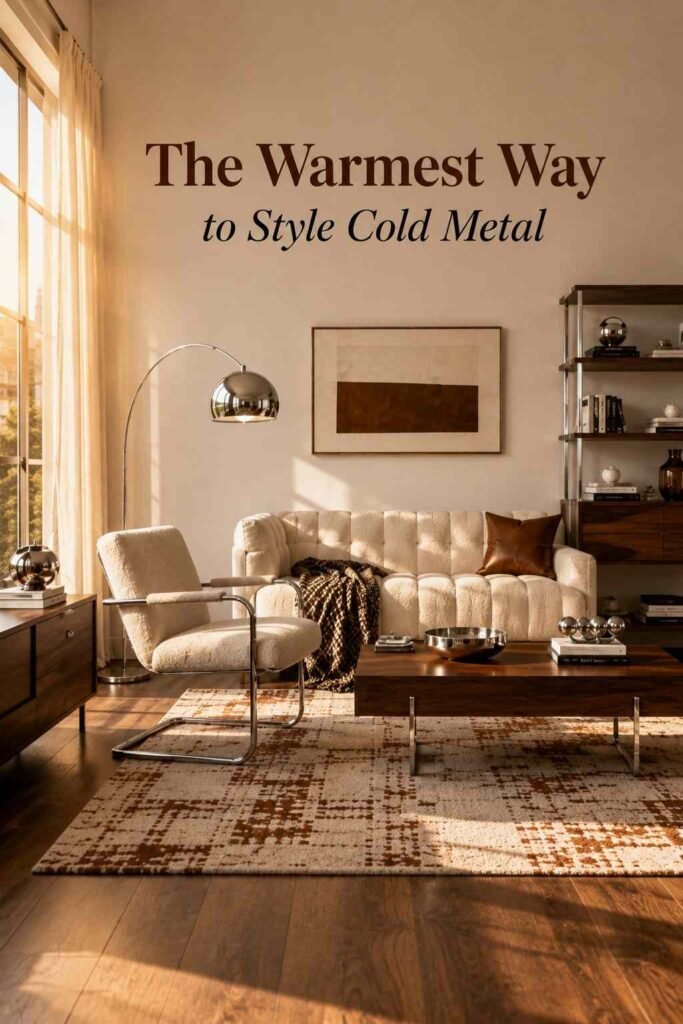
Not every home follows the same aesthetic, and this pairing can be adapted to fit several distinct styles rather than just one look.
Mid-Century Modern leans on tapered wood legs, walnut tones, and slim chrome frames, echoing furniture from the 1950s and 1960s. Art Deco interiors favor high-shine chrome details against dark, richly grained wood like ebony or mahogany. Industrial spaces pair reclaimed or distressed wood with chrome piping and exposed hardware for a rawer look. Scandinavian interiors keep things lighter, using pale ash or birch wood with minimal chrome accents so the metal reads as a quiet detail rather than a statement. Modern Farmhouse style, meanwhile, uses chrome sparingly, often limited to a single faucet or light fixture against reclaimed barn wood.
Common Mistakes to Avoid When Mixing Chrome and Wood
Even a strong material pairing can go wrong if it’s overused or applied without a plan. A few missteps show up often enough to be worth flagging before you start shopping.
The most frequent mistake is using too much chrome in one room, which can make a space feel cold or feel more like a showroom than a home. A good rule is to let chrome act as an accent, not the dominant material, appearing on legs, hardware, or lighting rather than covering large surfaces. Another common issue is mismatched wood tones within the same room, such as a cool gray-toned wood floor paired with warm orange-toned wood furniture, which creates visual tension instead of harmony. Finally, skipping softer materials altogether, like textiles, rugs, or plants, can leave a room like this feeling flat, since both materials are naturally hard and reflective.
How to Choose the Right Wood Tone for Your Chrome Accents
Chrome pairs well with almost any wood tone, but getting the undertones right makes a noticeable difference in how balanced a room feels. Cooler chrome finishes tend to sit nicely against warm woods like oak, walnut, or teak, since the contrast between warm and cool feels intentional rather than accidental. If your existing floors or cabinetry lean toward gray or cool-toned wood, consider pairing them with brushed chrome rather than high-polish chrome, since brushed finishes read slightly warmer and less stark.
It also helps to think about the room as a whole rather than a single piece of furniture. If you’re also updating cabinetry or wall colors at the same time, a broader look at kitchen color ideas can help you settle on a palette that complements both the wood grain and the chrome finish before you commit to a final scheme. Matching undertones across flooring, furniture, and fixtures is usually more important than matching exact wood species.
Maintenance Tips for Chrome and Wood Furniture
Chrome and wood pieces are fairly low-maintenance, but each material has its own care routine. Chrome should be wiped with a soft, dry cloth to prevent water spots, and a small amount of vinegar or glass cleaner handles fingerprints without damaging the finish. Avoid abrasive sponges, which can dull the shine over time. Wood surfaces benefit from a light dusting and an occasional application of furniture oil or wax, especially for pieces near a kitchen sink or bathroom vanity where moisture exposure is higher. Keeping both materials away from direct, prolonged sunlight also helps prevent chrome discoloration and wood fading. For more room-specific styling and upkeep guidance, resources like outinteriors offer additional inspiration for maintaining a balanced, lived-in look.
Conclusion
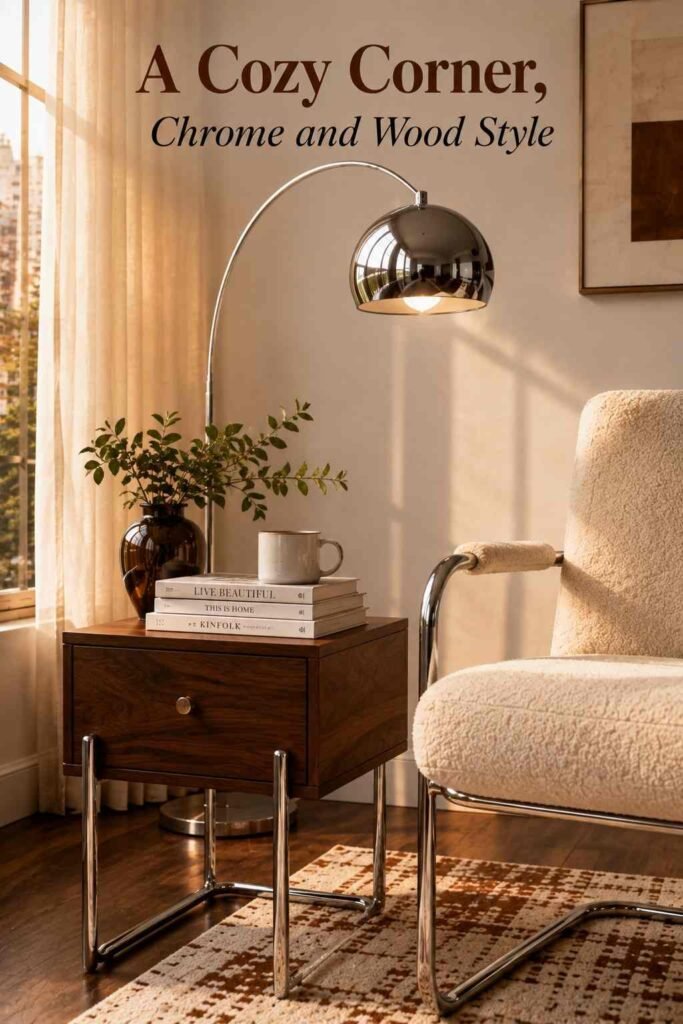
Chrome and wood ideas work because they solve two design problems at once: they add shine and structure while keeping a room from feeling cold or overly staged. From a simple side table to a full kitchen renovation, the combination scales up or down depending on your budget and the size of the project. Start small if you’re unsure; a single chrome fixture or accent table is often enough to test the look, then build from there once you see how it fits your space. With the right wood tone, a bit of restraint on the chrome, and a few soft textiles to balance things out, this pairing can suit almost any home, regardless of its existing style.
Frequently Asked Questions
Does chrome go well with dark wood?
Yes. Dark wood tones like walnut, mahogany, or ebony create strong contrast against polished chrome, which is part of why the combination was popular in Art Deco interiors. The dark wood grounds the room while the chrome adds brightness and reflection.
Is chrome and wood a modern or a dated style?
It depends on how it’s used. Because the pairing dates back to the Bauhaus and Mid-Century Modern eras, it can look dated if the furniture styling is too literal. Used with current shapes and finishes, though, chrome and wood ideas read as thoroughly modern rather than retro.
Can I mix chrome with other metals in the same room?
It’s possible, but it takes care. Mixing chrome with brushed nickel is usually safe since both are cool-toned, but combining chrome with warm metals like brass or gold in the same sightline can look unplanned unless it’s done deliberately.
What wood works best with chrome in a kitchen?
Warm-toned woods such as oak, walnut, and maple tend to pair best with chrome kitchen fixtures, since the warmth balances chrome’s cool, reflective surface. Butcher-block countertops are a particularly popular choice for this reason.
How do I keep a chrome and wood room from feeling cold?
Add soft materials like rugs, cushions, or curtains, and limit chrome to accents rather than large surfaces. Warm lighting also helps offset the coolness of a reflective chrome finish.
Is chrome furniture hard to maintain?
Not particularly. A soft cloth and occasional glass cleaner are usually enough to keep chrome free of fingerprints and water spots. Avoiding abrasive cleaning tools is the main thing to watch for.
Are chrome and wood ideas suitable for small rooms?
Yes, and they can actually help. Chrome’s reflective surface bounces light around a smaller room, making it feel more open, while wood keeps the space from feeling sterile or overly industrial.