Modern Catholic Home Decor Ideas to Transform Every Room in 2026

Walk into most furniture showrooms, and you’ll find plenty of neutral throw pillows but almost nothing that speaks to faith. That gap is exactly why so many Catholic families feel stuck between two extremes: decor that looks dated and overly ornate, or decor that says nothing about what they believe at all. The good news is that a third option has quietly taken over Pinterest boards and Instagram feeds over the past few years.
These 25 modern Catholic home decor ideas show you how to blend clean lines, soft neutrals, and natural materials with meaningful symbols of the faith. Whether you’re setting up your first apartment or refreshing a family home, each idea below is practical, budget-aware, and rooted in real liturgical tradition rather than trend-chasing. Beyond the ideas themselves, this guide also covers the budget traps and styling mistakes that most Catholic home decor articles leave out entirely, so you can plan a room correctly the first time.
What Makes Catholic Home Decor Feel Modern
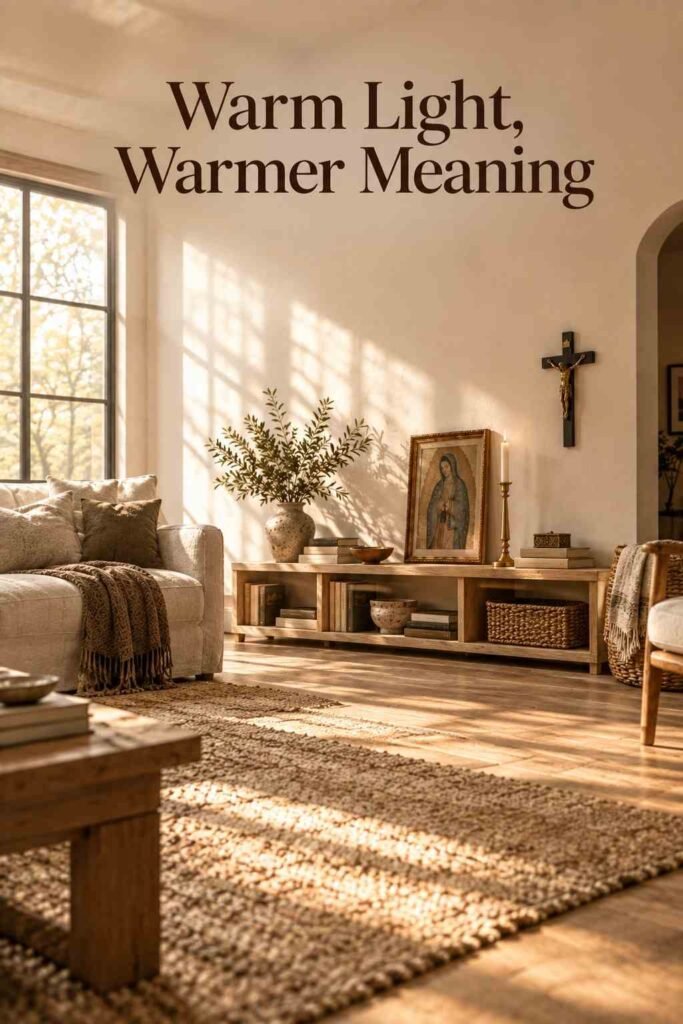
The shift toward modern Catholic home decor has a real name behind it: the Theology of Home movement, sparked by authors Carrie Gress and Noelle Mering, whose book series reframed the home as sacred space rather than just a place to store furniture. Their work encouraged a generation of Catholic homeowners to stop hiding their faith behind closet doors and start integrating it thoughtfully into everyday rooms.
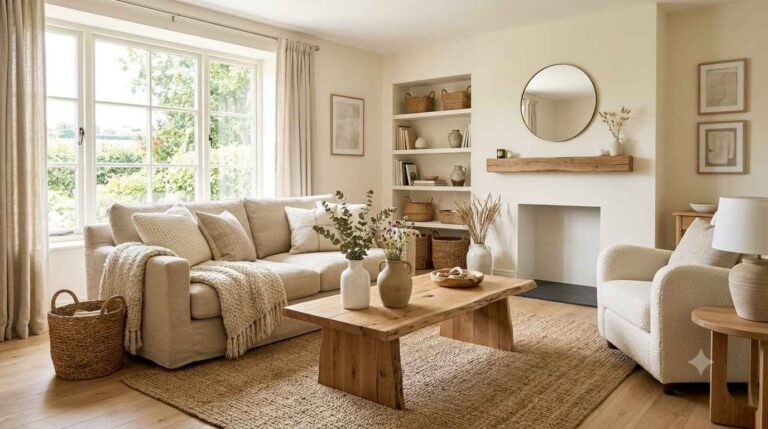
Modern Catholic decor typically favors matte black or wood-tone crucifixes over ornate gold, linen and canvas over heavy velvet, and one meaningful piece per wall instead of a cluttered gallery. It borrows the restraint of Scandinavian and Japandi interiors while keeping the substance of sacred art intact. The result feels calm, intentional, and lived-in rather than staged for a church gift shop catalog.
This isn’t about stripping faith down until it disappears. It’s about removing visual noise so the pieces that remain- a crucifix, an icon, a rosary- actually get noticed and used. That distinction is what separates thoughtful Catholic home decor from a room that simply has religious objects scattered around it.
Creating a Prayer Corner
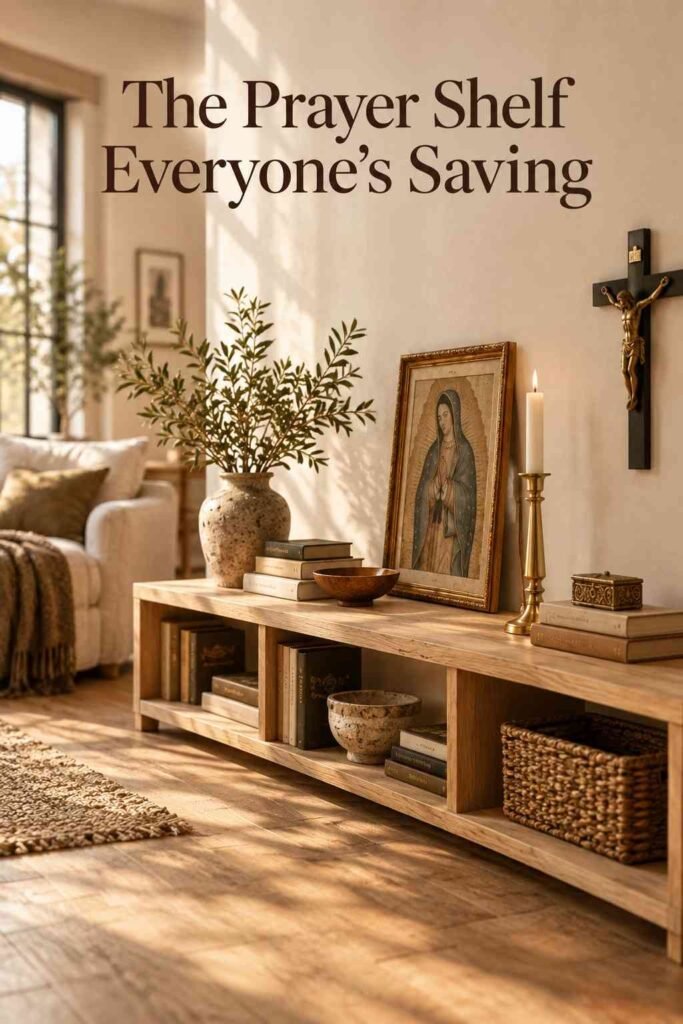
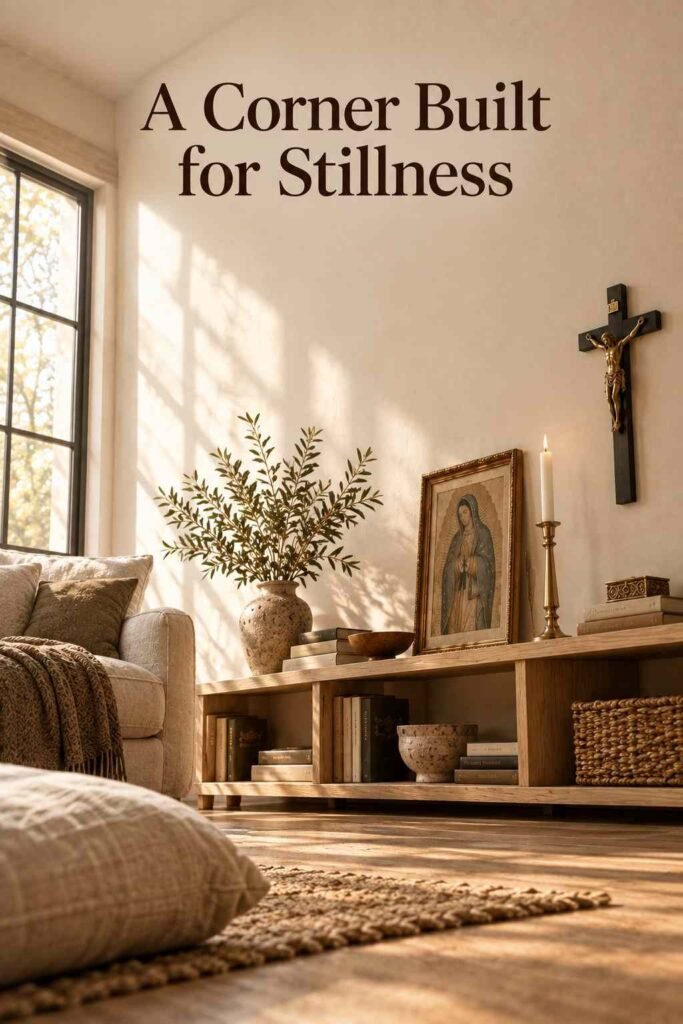
A dedicated prayer corner is the anchor of most Catholic home decor plans, and it doesn’t require a spare room. A single chair, a shelf, and natural light are enough to start.
- A minimalist wall crucifix in matte black metal or unfinished wood, hung at eye level rather than high on the wall, so it invites daily contact rather than distant reverence.
- An icon of Our Lady or the Sacred Heart printed on canvas rather than framed under glass, which softens the look and fits contemporary gallery walls.
- A low wooden shelf holding a Bible, a rosary, and a single unscented pillar candle, kept intentionally sparse.
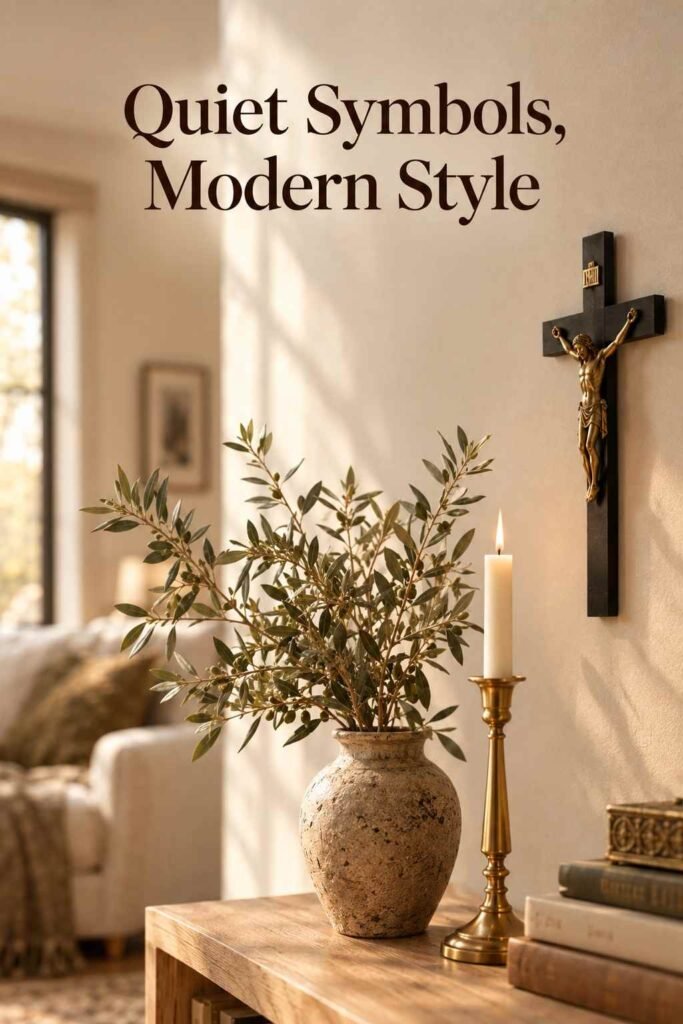
- A woven prayer kneeler or floor cushion in a neutral linen fabric, tucked beside a window for natural morning light.
- A small dish for holy water near the doorway of the room, using a simple ceramic or stoneware bowl instead of an ornate font.
Living Room and Entryway Accents
The living room and entryway set the tone for the entire home, and this is where subtlety matters most.
- A carved wooden cross as the single statement piece above a console table, rather than one of several competing focal points.
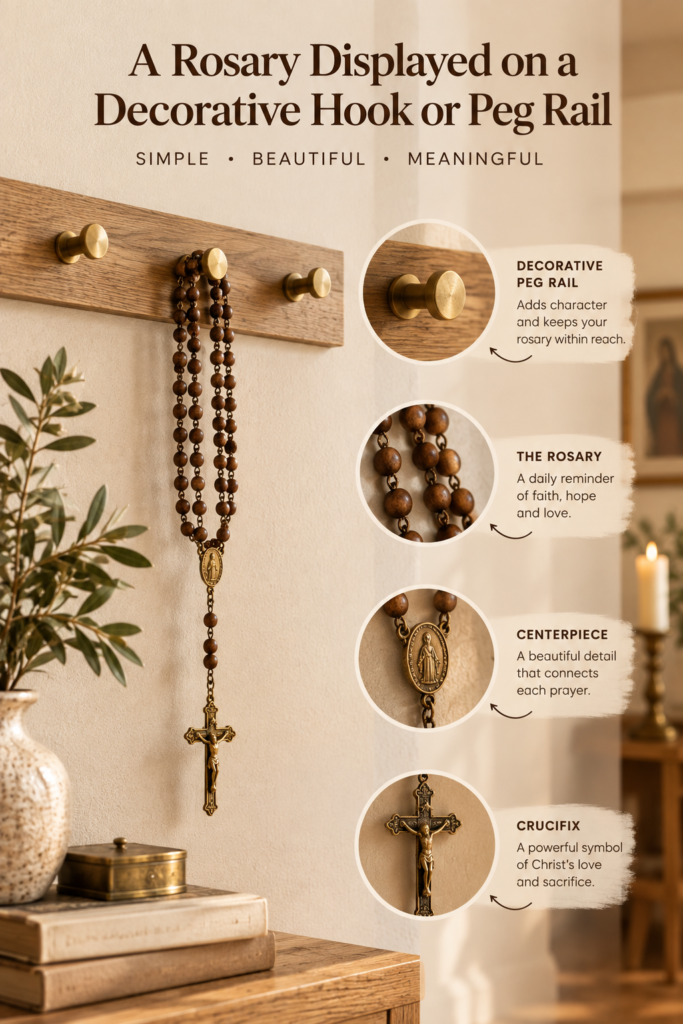
- A rosary displayed on a decorative hook or peg rail, treating it as functional art instead of hiding it in a drawer.
- A gallery wall mixing saints with family photos, so faith reads as part of your story rather than a separate theme.
- A textured throw or pillow featuring a subtle cross motif, woven rather than printed, for a tactile, understated touch.
- A small St. Joseph or Holy Family statue in warm terracotta or stone finish, placed on a bookshelf among other objects rather than isolated on its own pedestal.
Kitchen and Dining Room Touches
Faith-centered decor in shared spaces like the kitchen tends to work best when it’s quiet and functional.
- A grace-before-meals print framed simply in black or oak, hung near the dining table instead of over the stove.
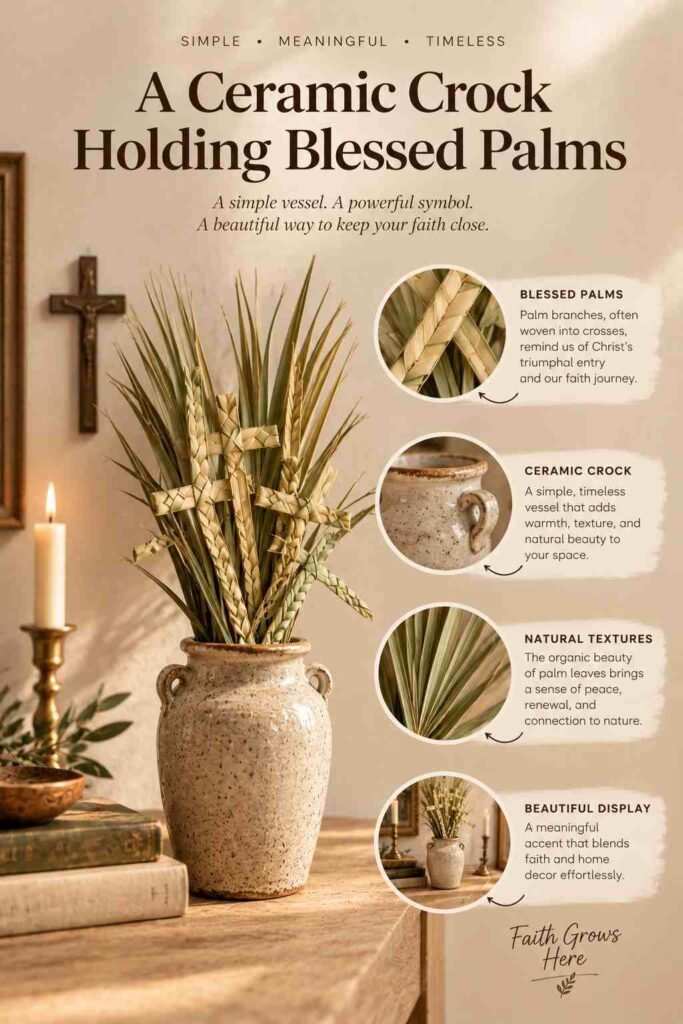
- A ceramic crock holding blessed palms from Palm Sunday, refreshed each spring and stored respectfully rather than discarded.
- Everyday dishware in neutral tones with a small embossed cross or dove, so the symbolism feels built-in rather than added on.
- A rosary bowl on the kitchen counter decor idea, positioned near where the family already gathers, making prayer part of the daily rhythm rather than an afterthought.
Bedroom and Nursery Blessings
Bedrooms call for the softest version of Catholic home decor, since these are spaces meant for rest and quiet reflection.
- A guardian angel print in muted watercolor tones above a child’s bed, chosen for its softness rather than dramatic imagery.
- A nightstand crucifix in a size small enough to feel personal, often the last thing seen before sleep.
- Baptismal keepsakes displayed in a shadow box, turning a candle and gown into a framed memory rather than a box in storage.
- A woven wall hanging with a scripture verse, using macramé or fiber art techniques that already suit a modern nursery palette.
If you spend hours praying or working at a desk in the same room, browsing Moody Home Office Ideas can help you pair dark, contemplative tones with a small icon or crucifix for a space that feels both productive and reflective.
Home Office and Study Ideas
More Catholics are working from home, and a study or office deserves the same intentionality as the rest of the house.
- A framed prayer for work or study, positioned within eyeglass reach of the desk rather than across the room.
- A bookshelf styled with spiritual reading alongside reference books, mixing Theology of Home titles with everyday work materials.
- A small St. Thomas Aquinas or St. Jerome print, patrons associated with study and scholarship, above the desk as quiet encouragement during long work sessions.
Seasonal and Liturgical Calendar Decor
One area most Catholic home decor guides skip entirely is how decor should shift with the liturgical calendar rather than staying static all year.
- A modern Advent wreath using a wood or concrete base with three purple candles and one rose candle, swapped in each of the four weeks before Christmas.
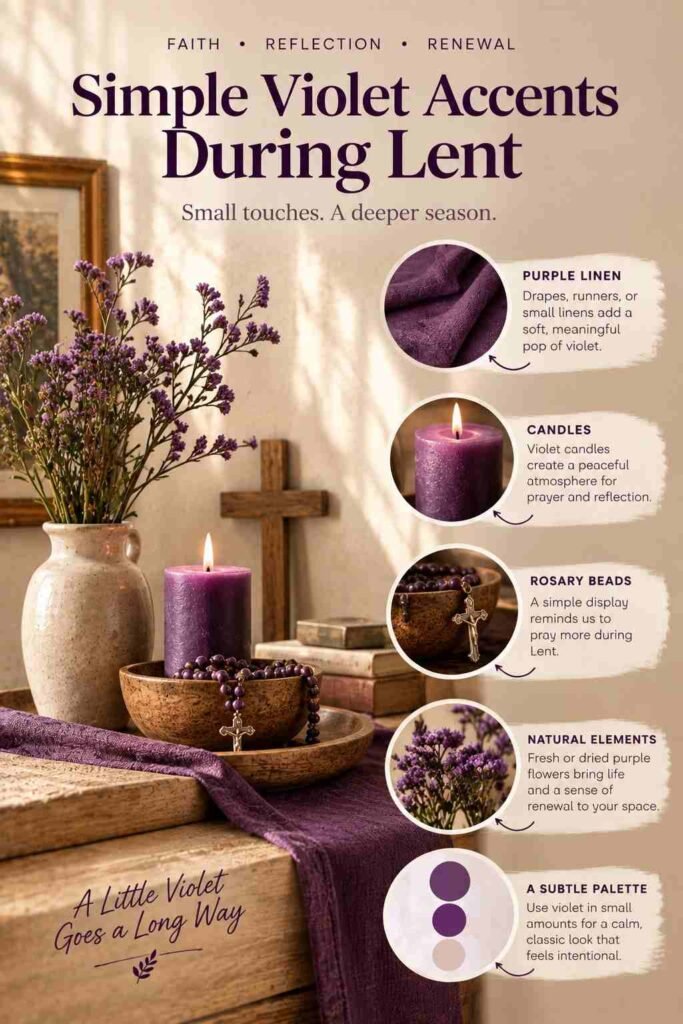
- Simple violet accents during Lent, such as a table runner or single candle, removed on Easter Sunday to mark the change in season visually.
- A minimalist nativity set in stone, clay, or wood tones for Christmas, chosen to blend with year-round decor rather than looking out of place once January arrives.
- A Divine Mercy or Easter-themed print, rotated into the main gallery wall the Sunday after Easter and left up through the Easter season.
Families with young children often lean into a whimsical home approach during these seasons, mixing playful seasonal prints with gentle religious imagery so the transitions feel like part of the year’s natural rhythm rather than a chore.
Choosing Colors, Materials, and a Budget That Works
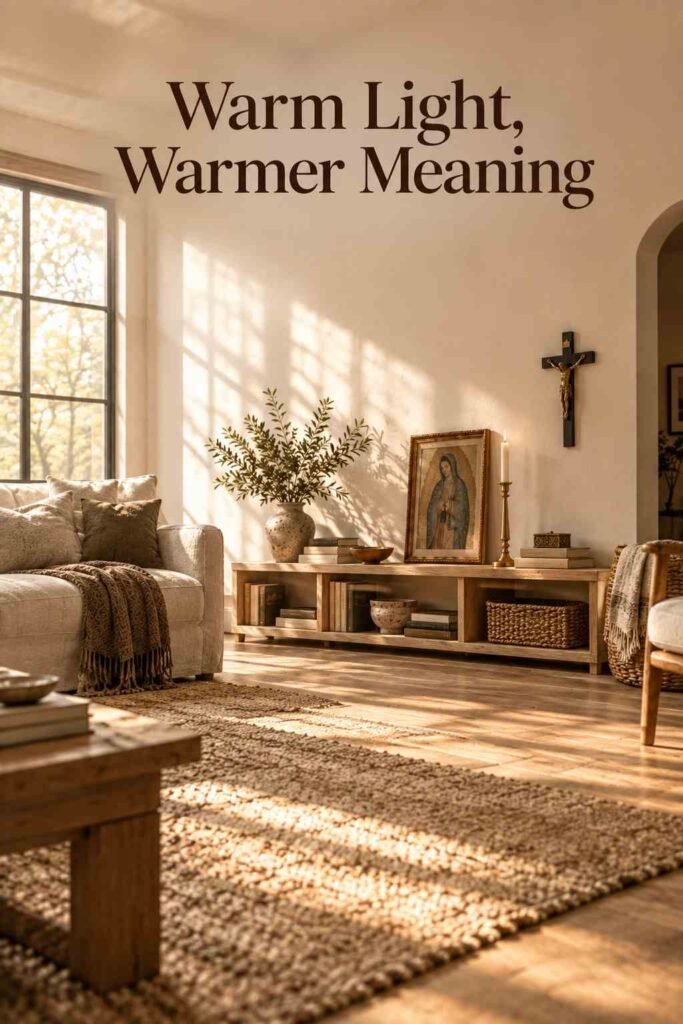
Most modern Catholic home decor leans on a narrow, calming palette: warm white, oatmeal, charcoal, and deep green or burgundy as occasional accents tied to the liturgical calendar. Natural materials like oak, linen, terracotta, and unglazed ceramic read as intentional rather than trendy, and they age well instead of looking dated in five years.
Budget is one of the biggest gaps left unaddressed by most guides on this topic. You don’t need to buy everything new. Thrifted frames can hold printed icons, a family crucifix can be refinished rather than replaced, and a single well-made piece, such as a solid wood cross, will outlast several cheaper decorations combined. Start with the prayer corner, since it has the most spiritual impact for the least financial investment, then expand room by room as budget allows.
For more room-by-room inspiration beyond faith-based styling, Outinteriors offers a wider library of design guides worth bookmarking as you plan the rest of your home.
Common Mistakes to Avoid in Catholic Home Decor
Most guides list ideas but skip the mistakes that undermine them. A few show up again and again.
- Buying everything at once. A room filled overnight with statues, prints, and candles tends to feel cluttered rather than sacred. Spread purchases out and let each piece earn its place.
- Mismatched finishes. Combining a bright gold statue with matte black frames and raw wood shelving reads as accidental rather than curated. Pick one or two finishes, such as black and natural wood, and stay consistent across a room.
- Skipping the seasonal reset. Leaving Christmas or Lenten pieces up year-round is one of the most common gaps in otherwise well-planned Catholic home decor. A five-minute swap each liturgical season keeps a space feeling current and intentional.
- Treating decor as separate from daily life. A rosary locked in a drawer or a Bible displayed but never opened defeats the purpose. The best pieces are the ones your family actually touches.
Bringing It All Together
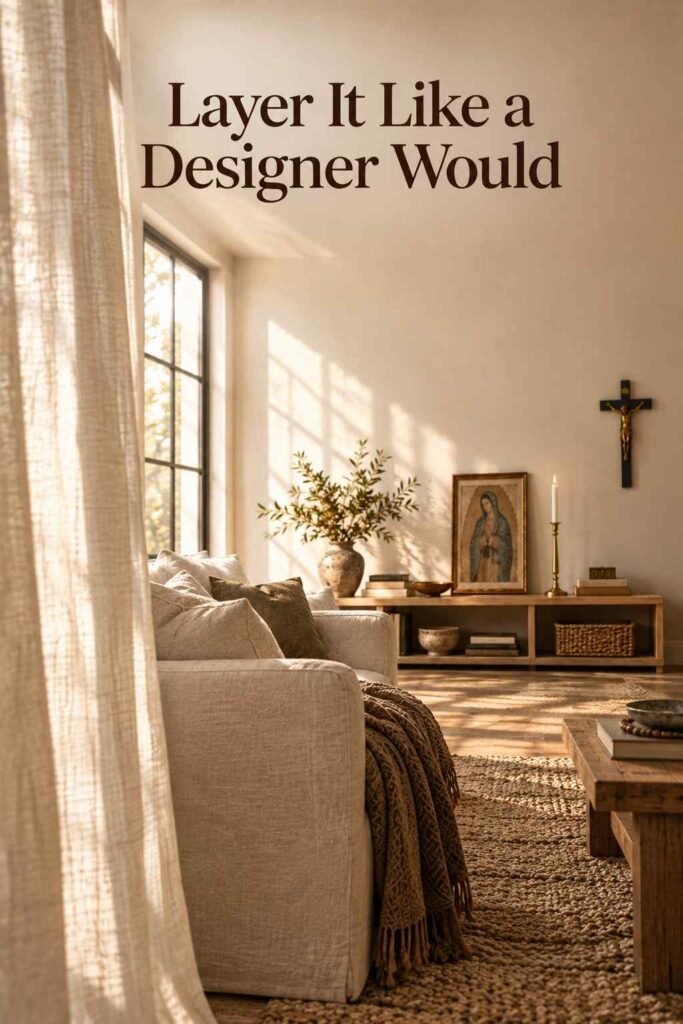
A home doesn’t need every idea on this list to feel intentional. Most families find that starting with three or four pieces- a crucifix, a prayer corner, and one seasonal touch- makes the biggest difference before anything else is added. Modern Catholic home decor works best when it grows slowly alongside your family’s actual habits of prayer, rather than being installed all at once for appearance’s sake.
The goal isn’t a showroom. It’s a home that quietly points back to what matters, room by room, season by season, for years to come. Done well, Catholic home decor becomes something your family barely notices day to day, right up until the moment it’s exactly what someone needed to see.
Frequently Asked Questions
What is modern Catholic home decor?
It’s an approach to styling a home that combines traditional Catholic symbols, such as crucifixes, icons, and rosaries, with contemporary design principles like clean lines, neutral colors, and natural materials, rather than the heavier, ornate styles common in older religious decor.
Where should I start if I’m new to Catholic home decor?
Begin with a single prayer corner using a crucifix, a candle, and one meaningful print. It costs little, takes an afternoon to set up, and gives you a clear focal point before you decorate the rest of the home.
How do I decorate for Catholic feast days without it looking cluttered?
Rotate one or two seasonal pieces, such as a violet runner for Lent or a rose candle during Advent, in and out of a fixed display area instead of adding new items on top of what’s already there.
Is it appropriate to mix Catholic decor with secular home styles like farmhouse or minimalist?
Yes. Wood-tone crucifixes, linen textiles, and stone statues naturally complement farmhouse, Japandi, and minimalist interiors, which is part of why the modern Catholic aesthetic has grown so popular.
What materials work best for a lasting, modern look?
Oak, walnut, terracotta, unglazed ceramic, and linen tend to age gracefully and avoid the dated look that laminated or heavily gilded pieces can develop over time.
Can Catholic home decor work in a small apartment?
Absolutely. A single shelf, a wall hook for a rosary, and one framed print are enough to create a meaningful prayer space even in a studio apartment with limited wall room.
How often should seasonal Catholic decor change?
Most families adjust decor around four to six times a year, aligning with Advent, Christmas, Lent, Easter, and one or two major feast days such as Our Lady of Guadalupe or St. Joseph’s Day.
Does modern Catholic home decor have to be expensive?
No. A prayer corner with a thrifted frame, a printed icon, and a single candle can cost less than a night out, and a well-made wood crucifix will outlast several cheaper pieces bought over time.