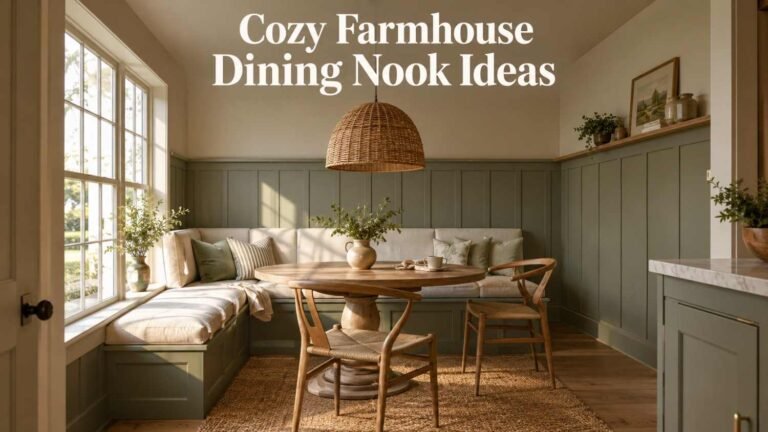
Cozy Sage Green Dining Room Ideas for a Warm, Inviting Space
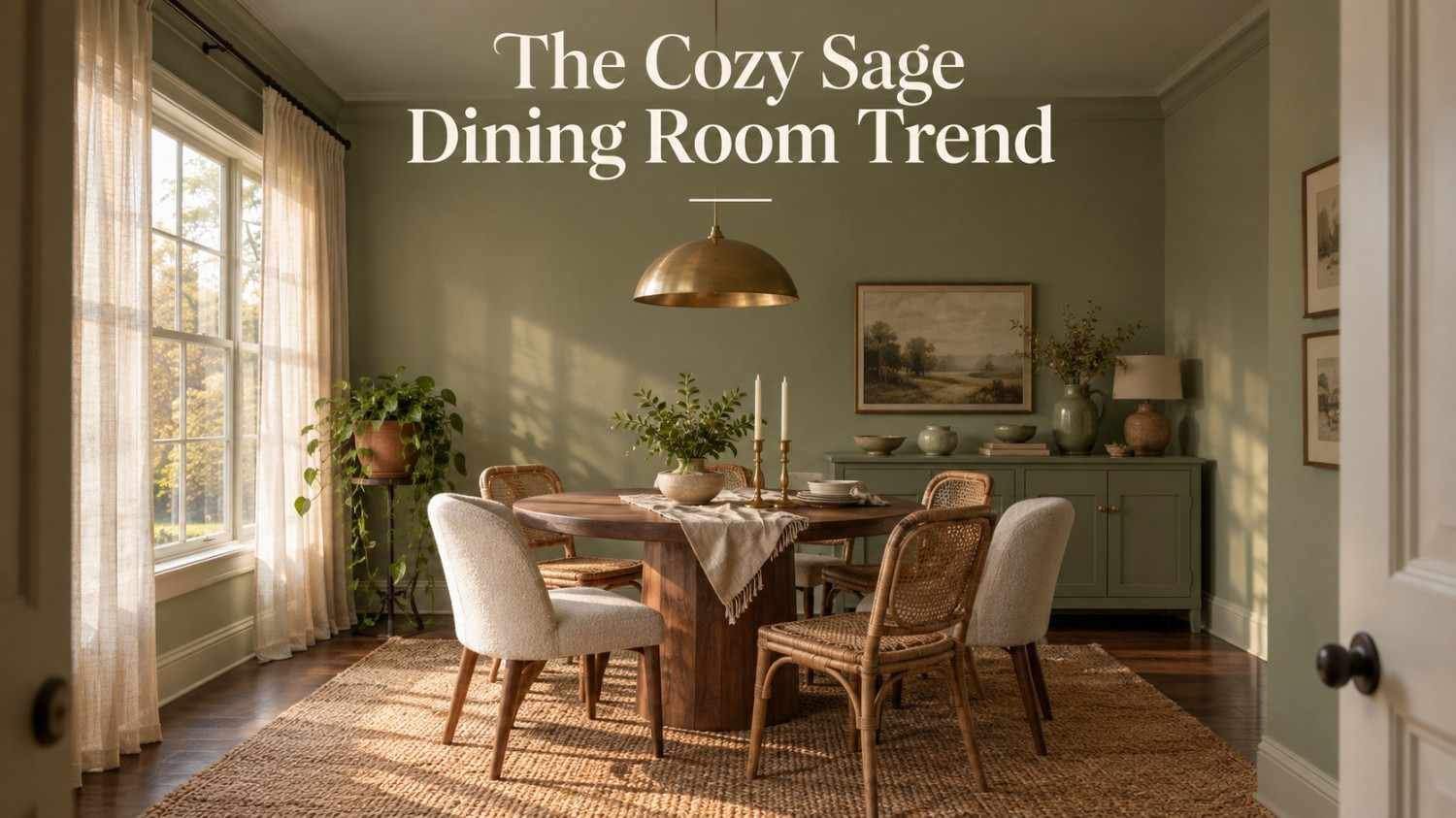
Sage green has quietly become the color homeowners reach for when a dining room needs to feel calmer without feeling cold. Unlike stark white or heavy gray, it carries just enough warmth to soften a room while still looking intentional and considered. A sage green dining room works in a tiny apartment nook and a full formal dining hall alike, because the color shifts gently with changing light instead of demanding attention. This guide brings together 25 sage green dining room ideas, built around real paint data, tested furniture pairings, and layout choices that hold up long after the trend photos fade. Whether you’re painting one accent wall or planning a full room refresh, there’s an idea here for your space and your budget.
Picking the Right Sage Green Paint for Your Dining Room
Choosing paint for a sage green dining room starts with understanding undertone and light reflectance value (LRV), the measure of how much light a color bounces back. A higher LRV reads lighter and airier; a lower LRV feels moodier and more intimate. Sage greens generally sit between 25 and 65 LRV, so picking the right one depends on your room’s natural light and the mood you want at the table.
1. Start With a True Sage, Not a Mint or Olive
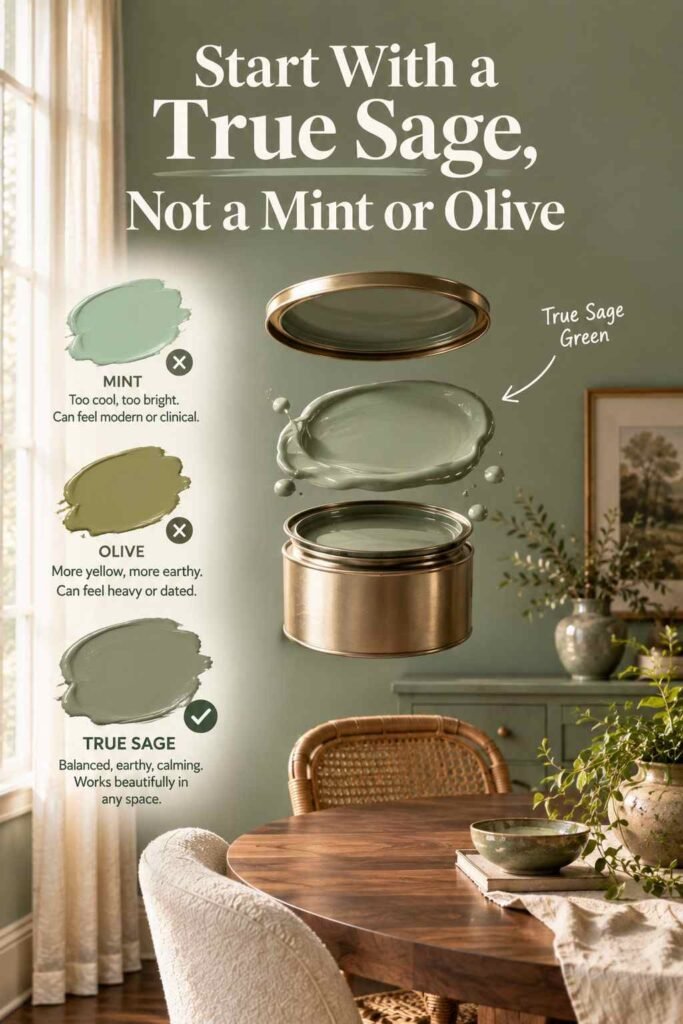
A true sage has muted saturation and a warm-to-neutral undertone, which keeps it from reading as minty or overly yellow-olive. Before committing, test swatches in both morning and evening light, since sage shifts more than most neutrals depending on the hour.
2. Try Sherwin-Williams Clary Sage for a Classic Mid-Tone
Clary Sage (SW 6178) is one of the most balanced mid-tone sage options, with soft gray-green undertones that work in both traditional and modern dining rooms. It pairs especially well with oak flooring and linen textiles.
3. Go Deeper With Evergreen Fog for a Moody Dining Room
Sherwin-Williams Evergreen Fog (SW 9130), with an LRV around 30, leans cooler and grayer than most sage tones. It suits dining rooms used mainly in the evening, where a deeper wall color feels intimate under candlelight or a dimmed chandelier.
4. Choose Benjamin Moore October Mist for a Neutral Sage
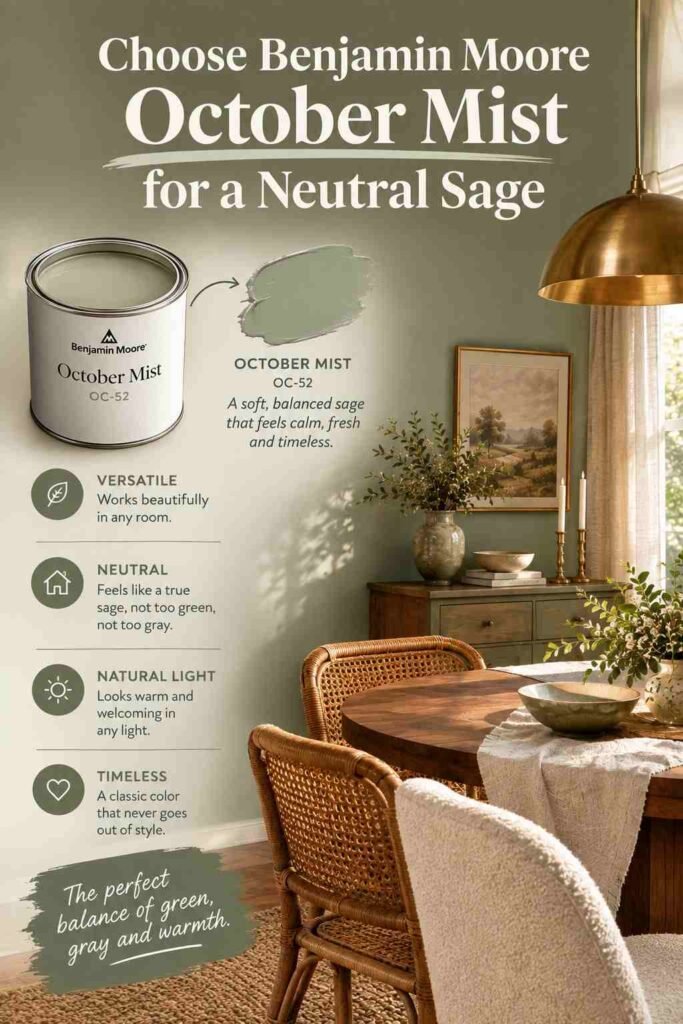
October Mist, Benjamin Moore’s 2022 Color of the Year, has an LRV near 40 and warm gray undertones that make it function almost like a neutral. It’s a forgiving choice if you’re nervous about committing to a full green room.
5. Layer Monochrome Sage Tones Instead of One Flat Color
Using two or three sage shades — a lighter tone above a chair rail and a deeper one below — adds depth to a sage green dining room without introducing a second color family. This works especially well in smaller rooms, where contrast can otherwise feel busy.
Warm Wood, Metals, and Contrast Pairings
Sage green leans cool on its own, so what you pair it with does most of the work in setting the room’s temperature. These five ideas balance sage with materials that add warmth, texture, or contrast.
6. Pair Sage Walls With Warm Wood Furniture
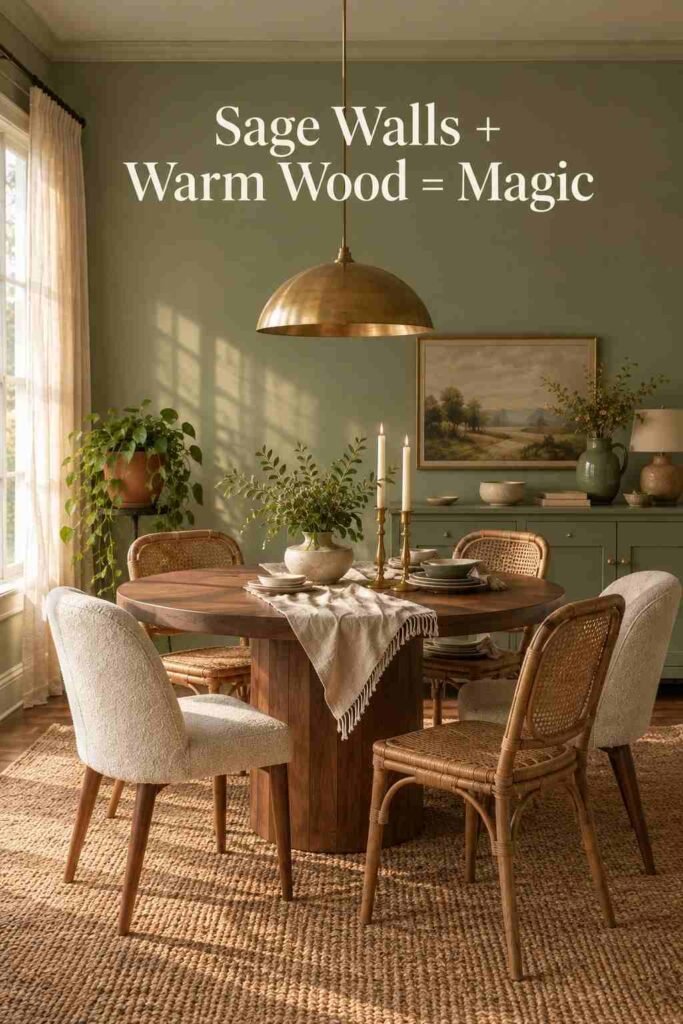
Oak, walnut, and reclaimed pine all warm up sage’s cooler undertones. A sage green dining room with a mid-tone wood table and matching chairs reads timeless rather than trendy, and it suits both contemporary and farmhouse-style homes.
7. Paint the Ceiling Instead of the Walls
Painting sage on the ceiling while keeping walls a soft neutral is a quieter way to bring in color. It draws the eye upward, makes standard 8-foot ceilings feel more architectural, and creates a cozy, enclosed feeling at the table.
8. Mix in Brass or Gold Fixtures
Because sage tends toward cool, warm metals like brass or gold in pendant lights, candlesticks, or chair frames introduce necessary balance. A few gold accents keep a sage room from feeling flat or institutional.
9. Add Matte Black for Bold Contrast
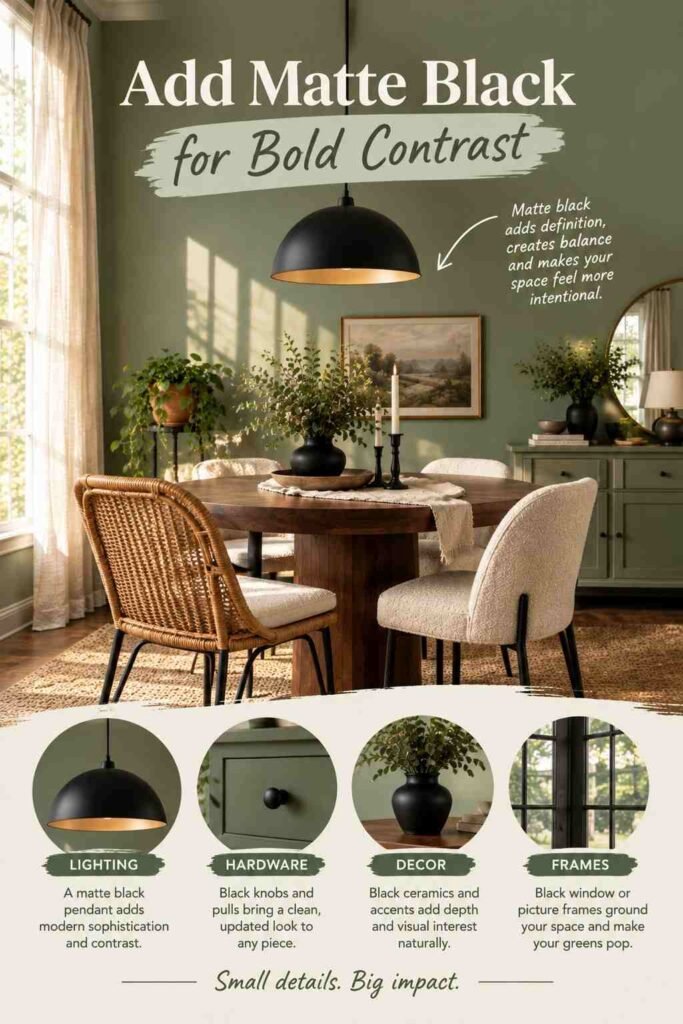
Matte black window frames, chair legs, or a black pendant fixture ground a sage green dining room and highlight architectural details. Darker finishes do show dust more readily, so this pairing works best with a regular cleaning routine.
10. Add a Botanical or Geometric Wallpaper Accent Wall
A single sage accent wall in botanical or geometric wallpaper gives a curated, designer look without overwhelming the room. Keep tableware and lighting simple on the same wall so the pattern stays the visual focal point.
Furniture and Layout Ideas for a Cozy Sage Dining Room
Once the walls are settled, furniture shape and color scheme decide how the room actually functions day to day.
11. Anchor the Room With a Round Dining Table
In a compact sage green dining room, a round dining table removes sharp corners, makes conversation easier because everyone faces the center, and fits more comfortably into square or narrow floor plans than a rectangular table of the same seating capacity.
12. Layer in Navy and Gold Decor for Richness
Sage doesn’t need to stand alone. Introducing navy and gold decor — think a navy runner, gold-rimmed dinnerware, or a navy-upholstered bench — adds depth and a slightly more formal feel without competing with the green walls.
13. Bring in Rattan and Woven Textures
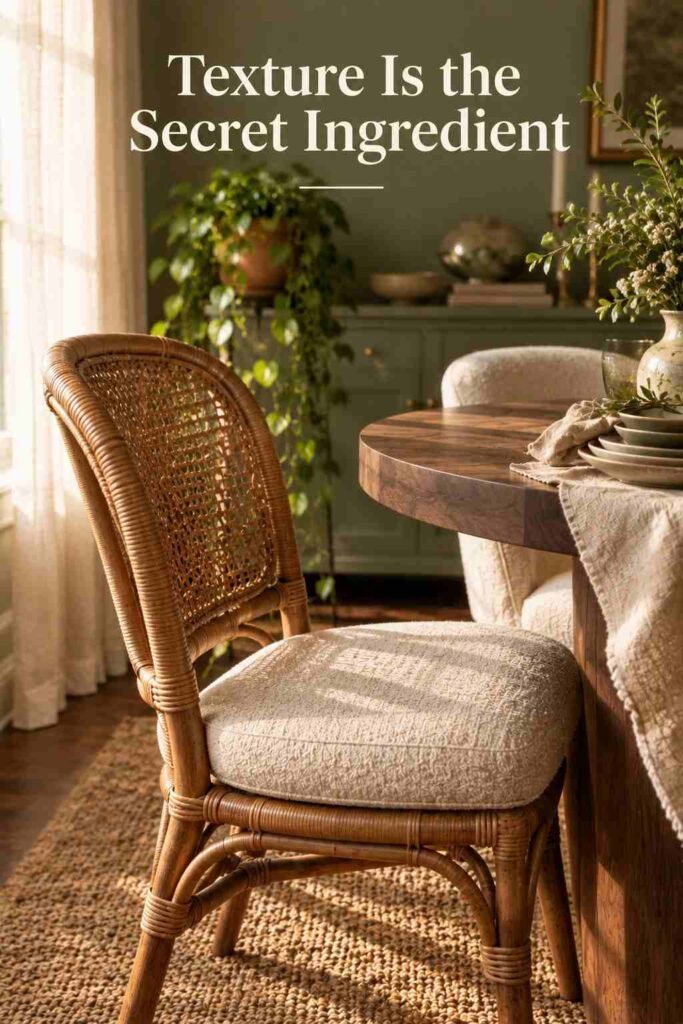
Rattan chairs, a woven pendant shade, or a seagrass runner soften sage’s cooler tones and add the kind of texture that photographs well but also just feels good in daily use. This pairing is especially popular in coastal and Scandinavian-influenced dining rooms.
14. Mix Dining Chair Styles Intentionally
Sage green is forgiving enough to make mismatched chairs look deliberate rather than accidental. Try pairing two upholstered head chairs with four simple wood side chairs for a collected, lived-in look. For furniture sourced specifically to complement muted green walls, outinteriors offers curated wood and rattan pieces that pair naturally with this palette; browsing outinteriors is a fast way to shortlist options before you shop in person.
15. Build a Banquette or Window Seat Nook
A built-in banquette upholstered in a durable fabric, tucked against a sage wall, makes a small dining room area feel like a dedicated room even in an open-concept layout. It also adds hidden storage underneath for linens or extra chairs.
Textiles, Lighting, and Rugs
The right soft furnishings keep a sage green dining room from feeling flat or one-note.
16. Dress Windows in Linen or Sheer Curtains
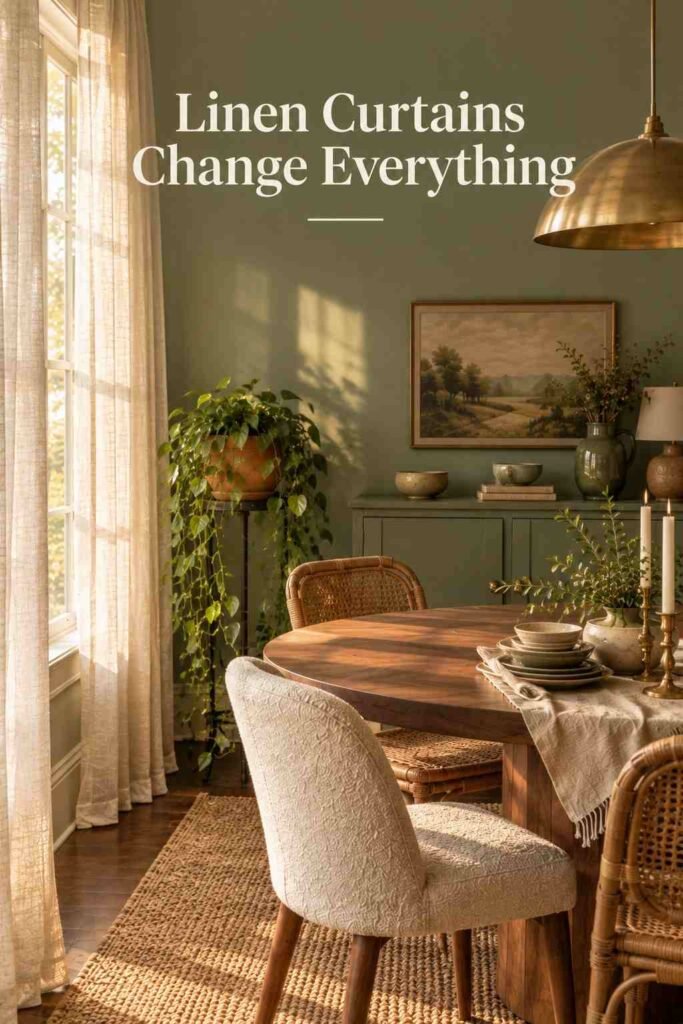
Natural linen curtains in white, oatmeal, or a soft sage tone let light filter through without fighting the wall color. Avoid heavy, dark drapery unless the room is large enough to absorb the visual weight.
17. Ground the Room With a Jute or Wool Rug
A jute or wool rug in a neutral tone adds warmth underfoot and defines the dining zone in open-plan homes. Stick to natural fibers and simple weaves so the rug supports the sage walls rather than competing with them.
18. Hang a Statement Pendant or Chandelier
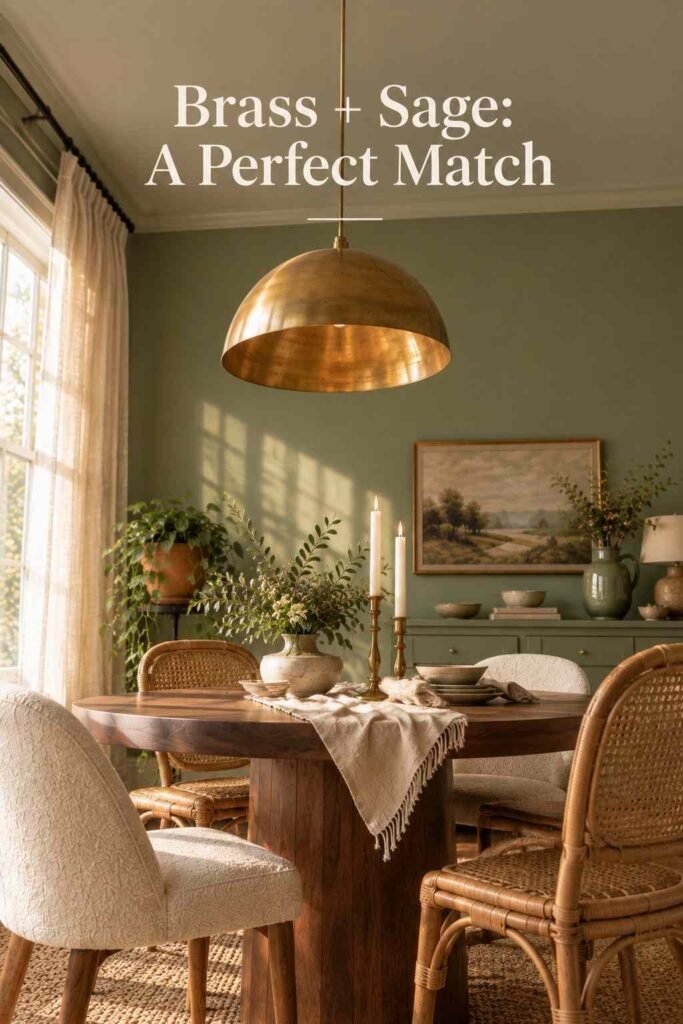
A sculptural pendant in rattan, linen, or aged brass becomes the room’s focal point and adds scale that a small dining table alone can’t provide. Size it to roughly two-thirds the width of the table below it.
19. Style Open Shelving With Sage-Toned Ceramics
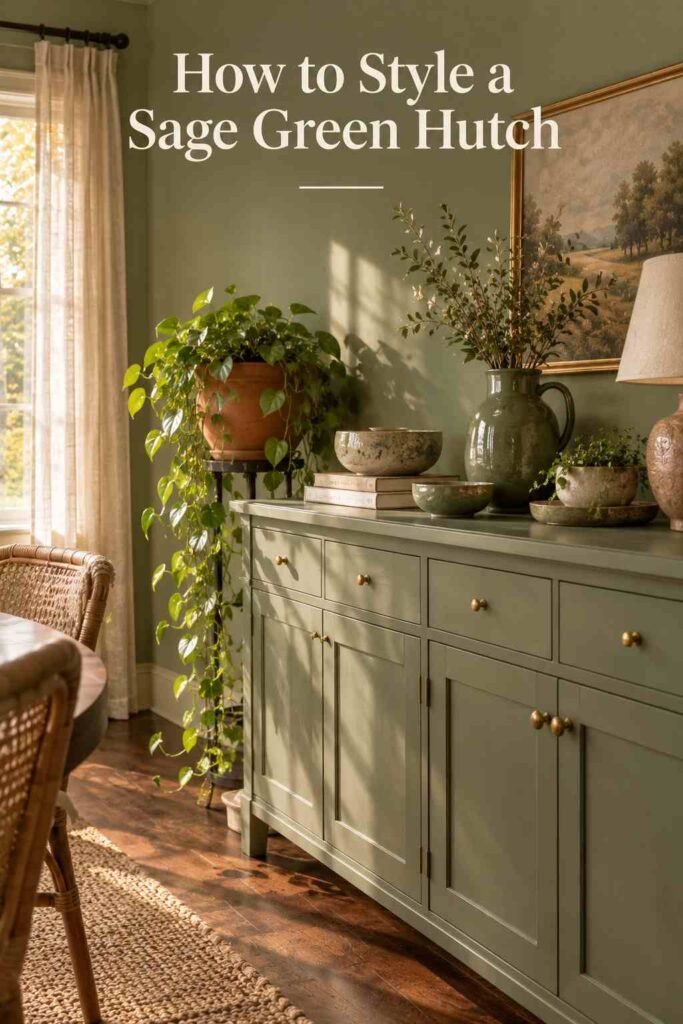
If your dining room includes a hutch or open shelving, layering in stoneware, sage-glazed ceramics, and a few plain white pieces keeps the display cohesive without matching everything exactly.
20. Paint a Cabinet or Hutch in a Deeper Sage
When full walls feel like too much commitment, painting just a sideboard, hutch, or built-in cabinet in a deeper sage shade — like Benjamin Moore Cypress Green, with an LRV around 34 — delivers the same mood in a smaller dose.
Finishing Touches for a Personal, Cozy Feel
The last five ideas are about the details that make a sage green dining room feel finished rather than staged.
21. Bring in Real Greenery
Trailing pothos, a fiddle-leaf fig, or a simple herb centerpiece reinforces the natural theme sage green already suggests. Live plants also soften hard edges around a wood table or built-in shelving.
22. Pair Sage With Terracotta for Earthy Warmth
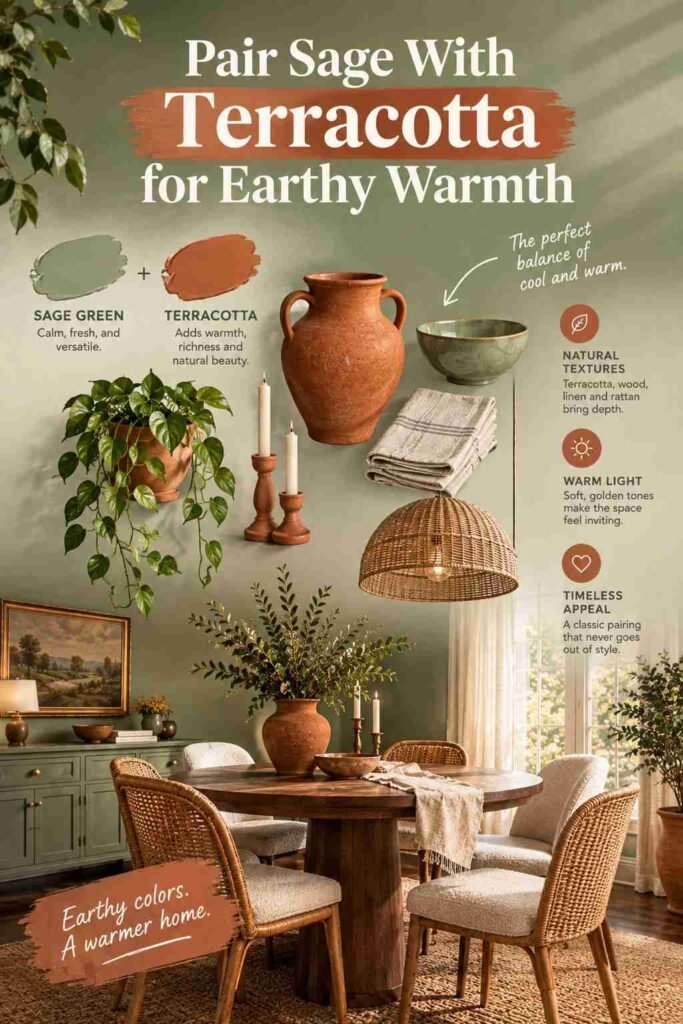
Terracotta pots, dinnerware, or a woven terracotta-toned runner add an earthy warmth that plays well against sage’s cooler base, especially in rooms with south-facing windows and strong natural light.
23. Add One or Two Vintage Pieces
A single antique mirror, an inherited sideboard, or a flea-market chandelier keeps a sage dining room from feeling overly styled. One imperfect, older piece usually does more for warmth than several new ones.
24. Scale Sage Green to Fit a Small or Apartment Dining Nook
In compact spaces, keep the palette limited to two or three materials and let the sage wall color do most of the visual work. A small round table, simple pendant, and a single wood tone keep a tiny sage green dining room from feeling cluttered.
25. Style the Table Seasonally
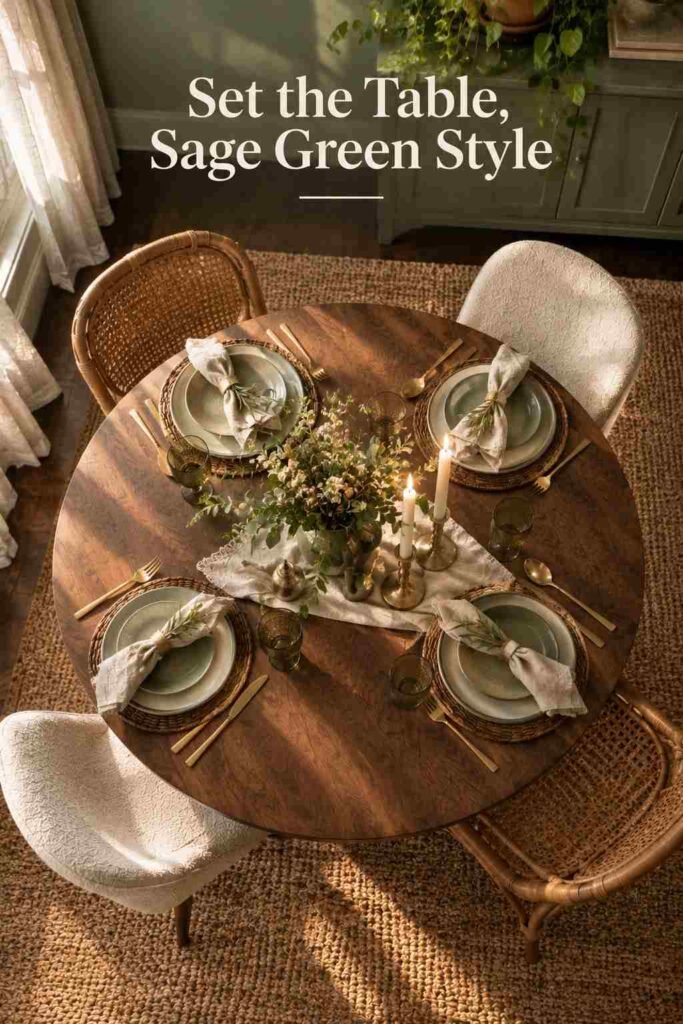
Swap table linens and centerpieces with the seasons — deeper florals and candles in fall and winter, lighter linen and greenery in spring and summer — so the same sage green dining room feels fresh throughout the year without repainting anything.
Bringing It All Together
A sage green dining room rewards patience more than any single bold move. The paint color sets the tone, but it’s the wood furniture, metal accents, textiles, and small personal touches that turn a painted room into a space people actually want to linger in. Start with one or two ideas from this list — a paint sample and a round dining table, for instance — rather than trying to apply all 25 at once. Sage green has stayed popular for several years now precisely because it adapts as your furniture, lighting, and taste change, which makes it a low-risk, high-reward choice for a dining room refresh.
Frequently Asked Questions
Does sage green make a dining room look smaller?
No. Because sage has a moderate LRV and muted saturation, it tends to make small dining rooms feel calmer and more cohesive rather than boxed in, especially when paired with a lighter ceiling and natural light.
What colors go best with a sage green dining room?
Warm wood tones, brass or gold metals, cream and linen textiles, and navy accents all pair well. Terracotta and rust tones work nicely too, especially in rooms with strong natural light.
Is sage green paint going out of style?
Sage green has held steady as a top interior color choice for several years, unlike shorter-lived trend colors. Because it functions closer to a neutral than a bold statement color, it’s less likely to feel dated quickly.
Should I paint the whole dining room sage green, or just an accent wall?
Both work. A full room creates an enveloping, cozy effect, while a single accent wall or painted ceiling offers the same mood with less commitment — a good option for renters or anyone hesitant about a full repaint.
What paint finish works best for a sage green dining room?
Eggshell or satin finishes are generally the best balance for dining rooms, offering enough durability for wipe-downs near the table without the glare of semi-gloss on a larger wall surface.
Does sage green work with a round dining table?
Yes. A round table often suits sage green dining rooms particularly well in smaller or square-shaped spaces, since the soft, curved shape echoes the calm, organic feel of the color itself.
Can I use sage green in a dining room with little natural light?
Yes, but choose a warmer-undertone sage with a slightly higher LRV, and rely on brass fixtures and layered lighting to keep the room from feeling dim or heavy.