Outdoor Kitchen Stone Design Ideas for a Backyard Built to Last
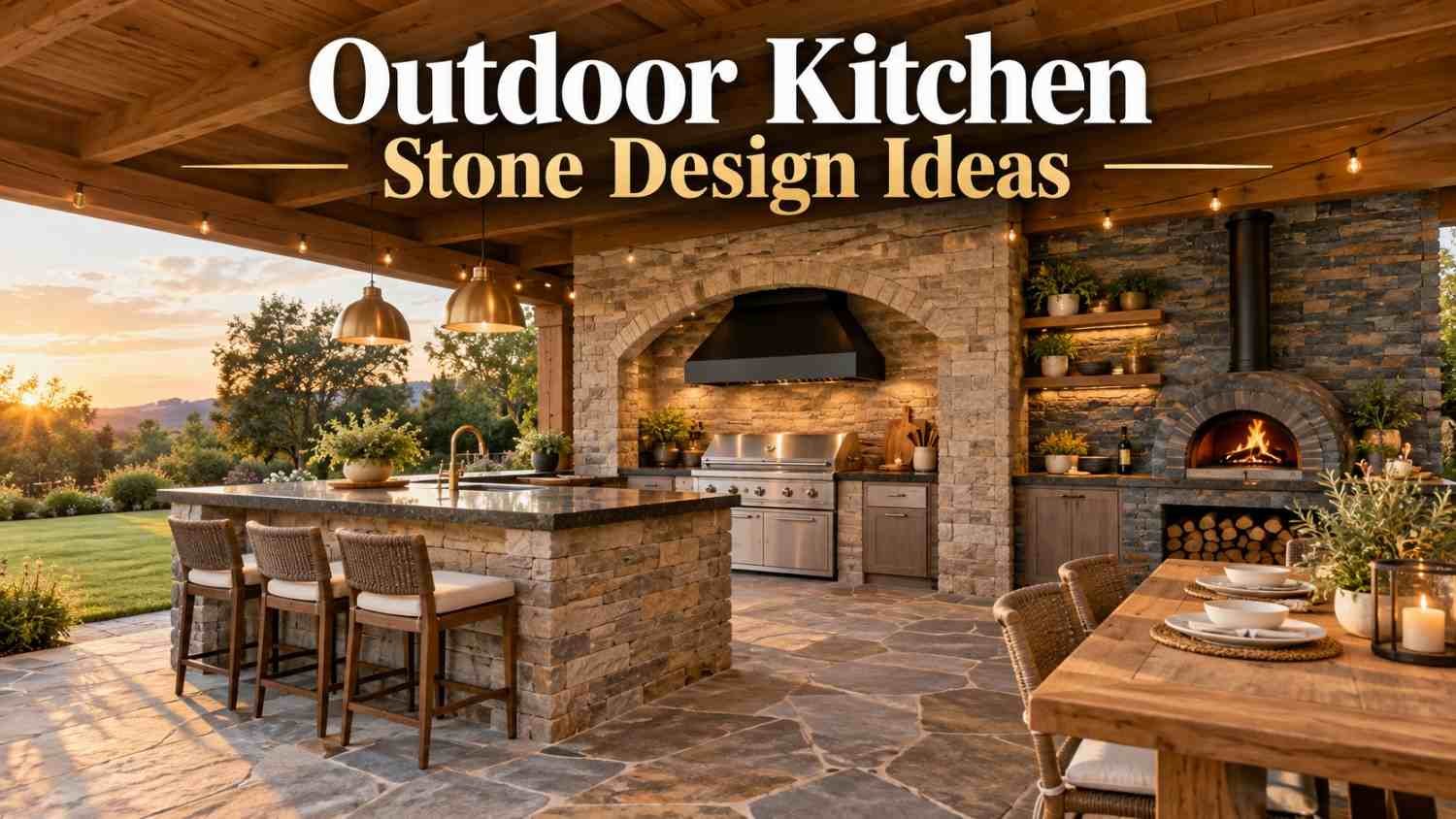
Picture a warm summer evening. The grill is glowing, the patio stones hold the day’s heat, and a bowl of cold peaches sits on a granite counter. That scene is easier to build than most people think. Stone shrugs off heat, rain, and years of family dinners. Below, you’ll find 25 outdoor kitchen stone design ideas, grouped by cladding, countertop, feature, and layout. Each one comes with practical notes on materials, upkeep, and the kind of space it suits. Whether you cook on a compact patio or a full backyard island, you’ll finish with a clear plan and fewer surprises.
Pick the Right Stone Before You Pick a Style
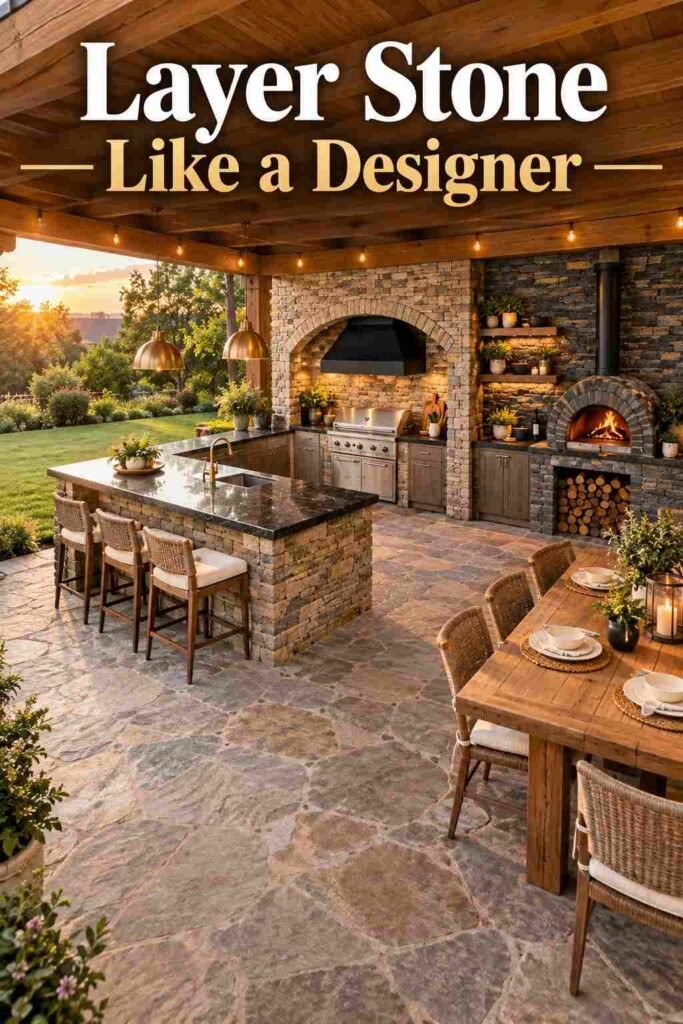
Before you browse outdoor kitchen stone design ideas, decide what your site can support. Natural stone such as granite, limestone, and slate offers real depth and variation. Stone veneer, either thin natural or manufactured, gives a similar look at lower weight and cost. Porcelain slabs copy stone closely and resist stains and UV fading. Climate matters too. In freeze-thaw regions, choose dense, low-absorption stone and seal it. In hot, sunny regions, lighter shades stay more comfortable to the touch. Finally, match stone to task: counters need heat and stain resistance, walls need texture, and floors need grip when wet. Once your stone is set, layer in warmth with trending and cute kitchen decor that works from the patio to the pantry.
Outdoor Kitchen Stone Design Ideas for Islands and Walls
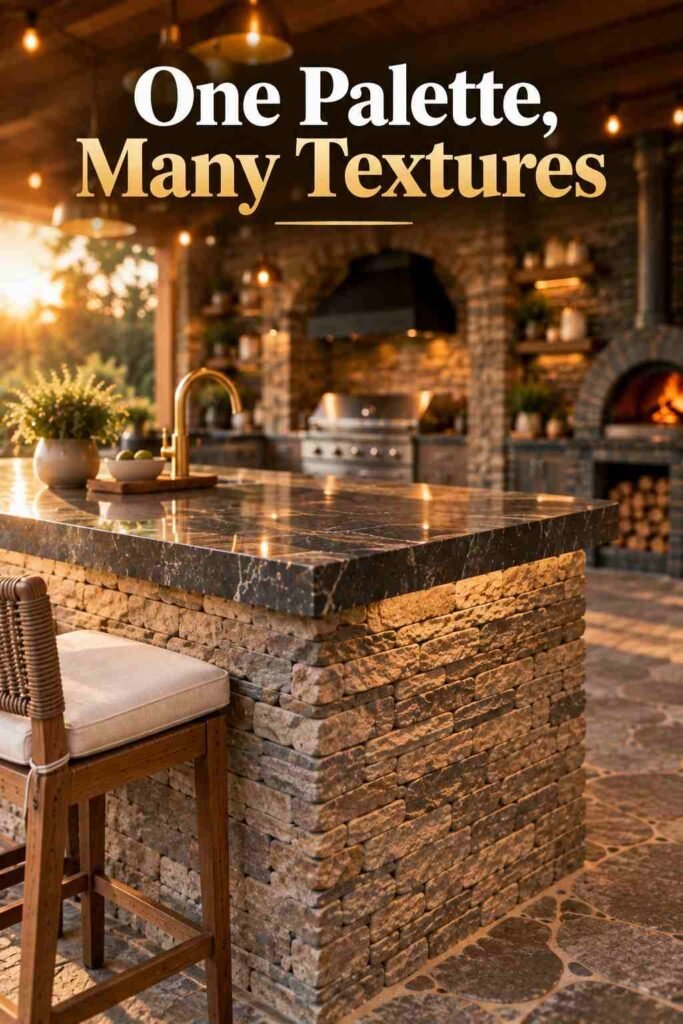
1. Stacked Ledgestone Island
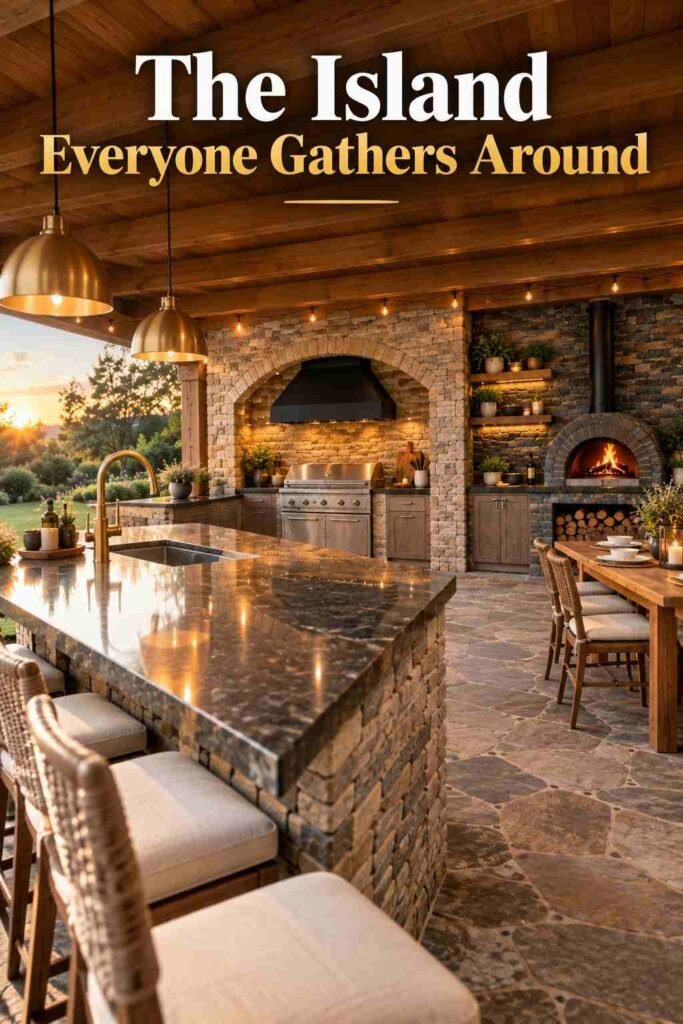
Ledgestone panels are narrow, layered strips that create strong horizontal lines. They suit modern and rustic homes alike. Clad a masonry island in ledgestone, then top it with a smooth honed counter for contrast. Choose a neutral gray or sand tone to hide dust and splashes.
2. Rustic Fieldstone Base
Fieldstone keeps its rounded, weathered edges, so no two walls look alike. It suits cottage, farmhouse, and lakeside settings. Because pieces vary in size, ask your mason to lay out the pattern on the ground first. That keeps heavy stones from landing in the wrong spot.
3. Dry-Stack Backdrop Behind the Grill
A dry-stack style wall uses tight joints and little visible mortar, giving a clean, modern edge. Build it behind the grill as a backdrop and shelf. Stone also shields nearby walls from grease. Follow your grill maker’s clearance guidance and keep combustible materials away from the cooking zone.
4. Limestone Veneer Island
Limestone offers soft, creamy tones that glow at dusk. It pairs well with Mediterranean and traditional homes. Thin veneer weighs less and usually costs less than full-thickness blocks. Limestone is porous, so seal it and re-check the seal every year or two.
5. Slate Panel Fronts
Slate brings charcoal, rust, and green tones with a naturally split surface. It absorbs very little water, which helps in cold climates. Use large panels for a sleek look. Add warm wood shelving and black hardware for an earthy, modern feel.
6. River Rock Accent Panel
Smooth river rock set in mortar reads casual and coastal. Use it as an accent panel beneath a bar overhang rather than across the whole island. A small, well-placed section adds texture without feeling busy, and the rounded stones soften a hard-edged design.
7. Formal Ashlar Stonework
Ashlar stone is cut into neat rectangles and laid in a regular pattern. It gives a formal, estate-style look. Choose it when the kitchen sits against a stone house wall, so materials match. Expect higher labor costs, since precise coursing takes skill.
8. Two-Tone Stone and Stucco Island
Pair a stone base with a smooth stucco upper section. Stucco lowers the budget and lets the stone shine where it is most visible. Pull the stucco color from your trim. The stone below also protects the lower portion from splashes and lawn equipment.
Stone Outdoor Kitchen Countertop Ideas That Handle Heat
9. Honed Granite Work Zone
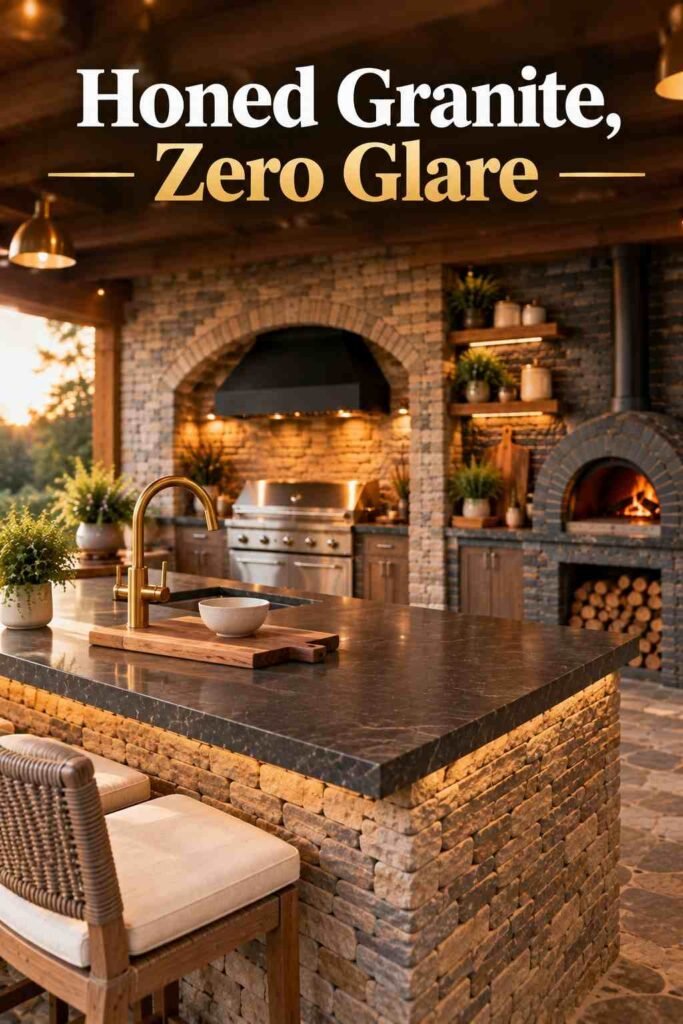
Granite is a proven outdoor surface that resists heat and scratches. A honed or leathered finish hides fingerprints and glare better than a polished one. Seal it as the manufacturer advises. In full sun, choose lighter colors, since dark surfaces can get hot.
10. Soapstone With a Living Patina
Soapstone is dense, nonporous, and heat tolerant. It starts gray and slowly darkens, especially if you rub it with mineral oil. Some cooks love the changing look, while others prefer a fixed color. Decide first. Light scratches can be sanded out.
11. Quartzite for a Marble Look
Quartzite is a hard natural stone with soft, marble-like veining. Do not confuse it with engineered quartz. Some stones sold as quartzite behave more like marble, so ask for a sample and test it with a drop of lemon juice before buying.
12. Porcelain Slab That Looks Like Stone
Porcelain slabs mimic marble, limestone, or slate, yet resist stains, UV, and freeze-thaw damage. They suit owners who want stone style without regular sealing. Large sheets mean fewer seams. Let an experienced fabricator cut them, because thin edges can chip.
13. Bluestone Bar Top
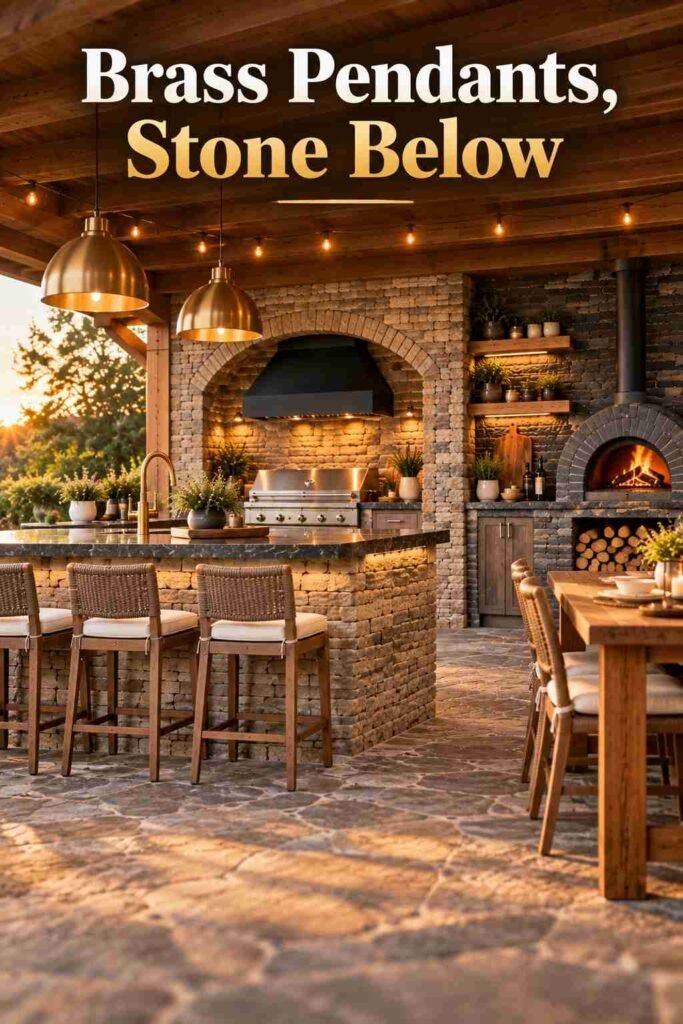
Bluestone, a dense sandstone quarried in the northeastern United States, has a blue-gray tone and a natural cleft surface. It feels textured and timeless. Use it for a bar top or serving ledge where people lean, set drinks, and linger. For furniture, lighting, and finishing touches that match your new patio, explore outinteriors.
14. Mixed-Stone Zones
Assign each task its own surface. Use granite beside the grill, where heat and grease are constant. Use limestone or slate on the dining ledge, where the demands are lighter. The contrast defines zones naturally and helps the kitchen feel designed rather than assembled.
15. Waterfall Edge on a Modern Island
A slab that wraps down the island’s end shows off the stone’s veining from the side. It works well with porcelain and granite. Slabs are heavy, so hire a pro to set them on a firm, level base with proper support.
Feature-Focused Outdoor Kitchen Stone Design Ideas
16. Stone-Clad Pizza Oven
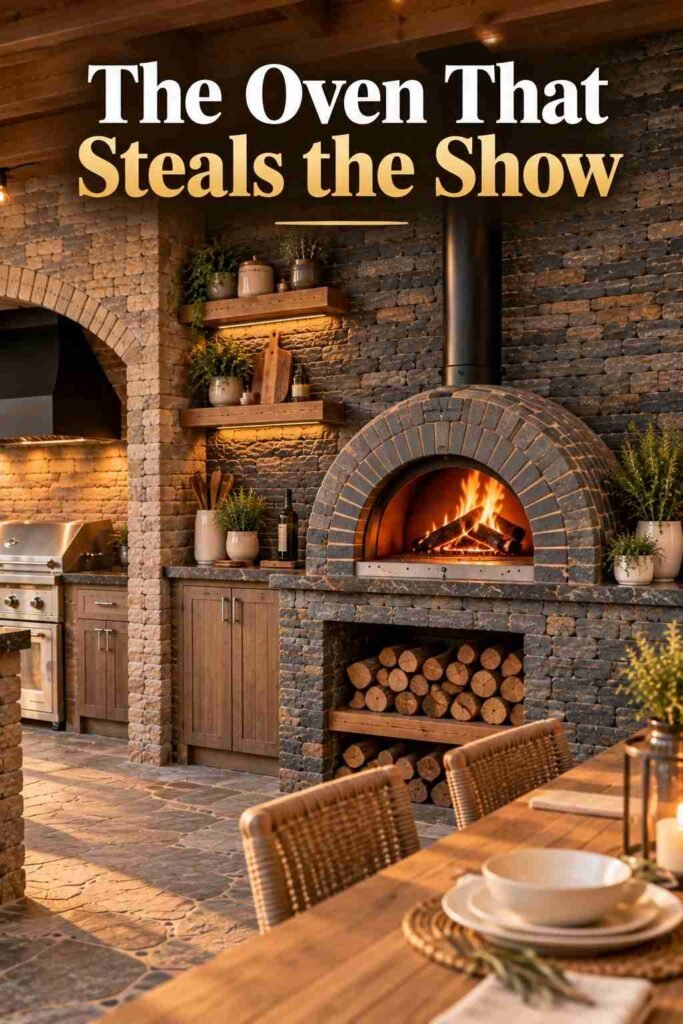
A wood-fired pizza oven with a stone or brick dome becomes an instant focal point. Place it at the island’s end so guests can gather without crowding the cook. Add a stone niche below for firewood. Check local rules on wood-burning appliances first.
17. Stone Fireplace Wall
A fireplace at one end of the kitchen extends outdoor cooking into cool evenings. Use non-combustible stone around the opening and a properly built chimney. Local codes vary, so involve a licensed mason from the start and confirm permit requirements.
18. Arched Stone Alcove for the Grill
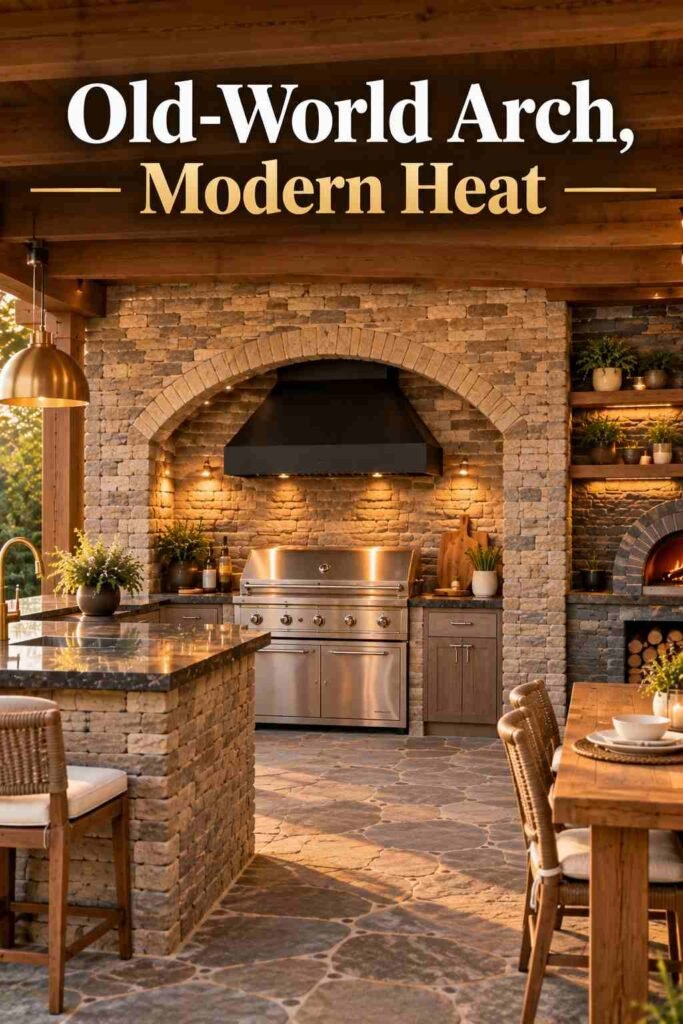
A recessed alcove framed by a stone arch adds Old World drama and tucks the grill out of view when not in use. Line the back wall with heat-tolerant stone. Make sure the design allows for ventilation and appliance clearances.
19. Stone Bar With Seating
Extend the counter about 12 inches past the base so seated guests have knee room at bar height. Stone overhangs need solid support, so ask your fabricator about brackets. A bar keeps company close while the cook works.
20. Wall Fountain in Stone Veneer
A small wall fountain adds the sound of moving water, which softens street noise. Set it into a stone veneer panel at the kitchen’s edge, away from grill splatter. Choose a recirculating pump and a stone that tolerates constant moisture.
21. Stone Niches and Cubbies
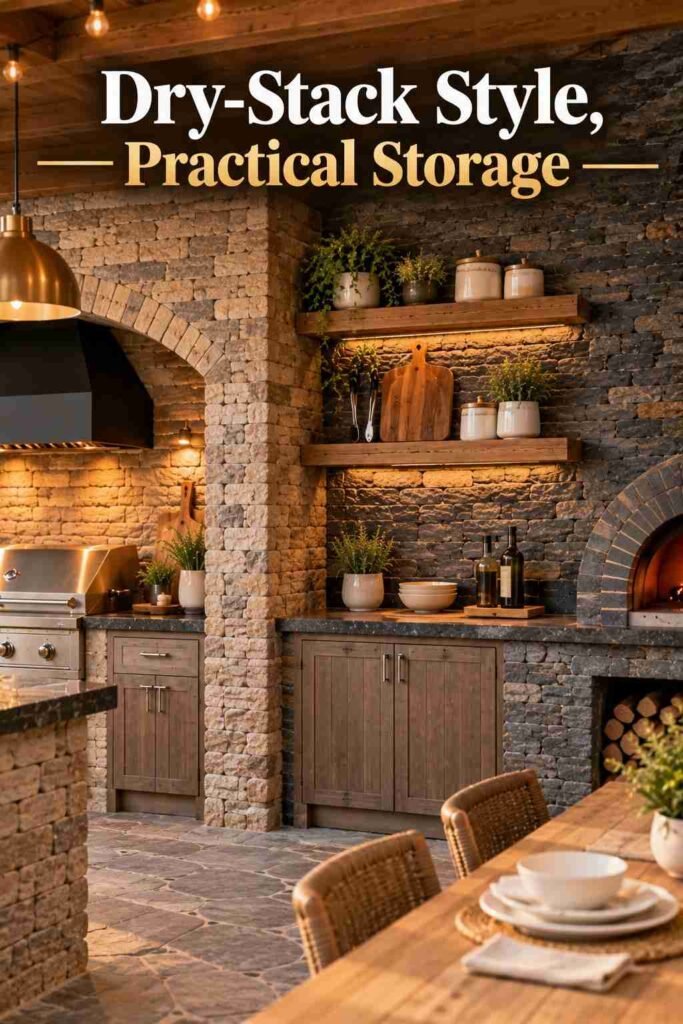
Recessed niches keep tools, spices, and platters within reach. Build them into the stone wall behind the counter and leave them open to air. Face them with slate or dense granite, which handle occasional splashes better than soft, porous stone.
Layout, Flooring, and Small-Space Outdoor Kitchen Stone Design Ideas
22. Flagstone Patio Floor
Irregular flagstone slabs give the floor a natural, rambling feel. Fill joints with gravel or polymeric sand. Choose a thermal or textured finish for wet-weather grip. The irregular shapes also blend easily with lawns and planting beds.
23. Travertine Pavers for a Poolside Kitchen
Travertine pavers stay comfortable underfoot in strong sun, which makes them a favorite around pools. Pick a textured finish for traction. Seal the stone, since it is porous, and keep grill grease off the surface with a mat.
24. Compact Corner Kitchen
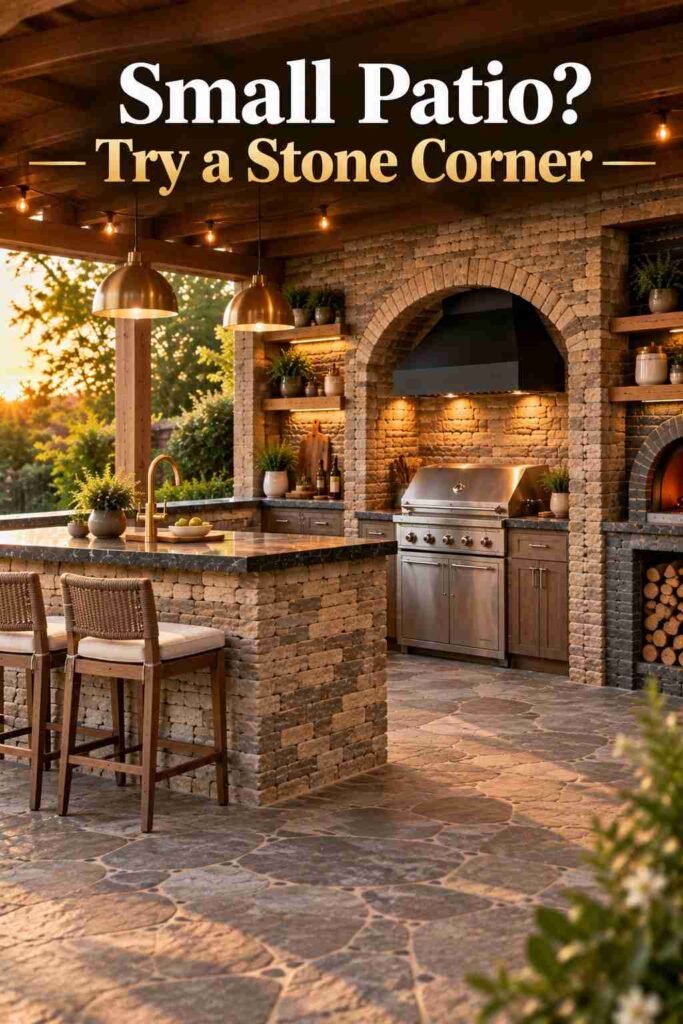
Tuck an L-shaped stone unit into the corner where two walls meet. You clad fewer surfaces, gain wind protection, and keep the footprint small. Lighter stone, such as pale limestone, helps a tight patio feel more open.
25. Stepping-Stone Path to an Herb Bed
Lay stepping stones from the kitchen to a raised herb bed built from matching stone. The cook can snip basil mid-recipe without breaking stride. It ties the cooking area to the garden and repeats one material for a cohesive look.
Sealing, Climate, and Safety Tips Before You Build
Even great outdoor kitchen stone design ideas need a sound plan. Apply a penetrating sealer to porous stones such as limestone, travertine, and granite, and reapply as the manufacturer directs. In cold regions, choose low-absorption stone and ask installers about drainage and expansion joints, since freeze-thaw cycles can crack poorly set pieces. Avoid engineered quartz outdoors, because direct sun can discolor it. If your island encloses a gas grill, provide ventilation and follow the appliance’s clearance rules. Hire licensed professionals for gas and electrical work. Finally, view samples outdoors, in daylight, and when wet. Planning a larger build? Browse barndominium ideas to see how stone accents pair with metal siding and open floor plans.
Conclusion
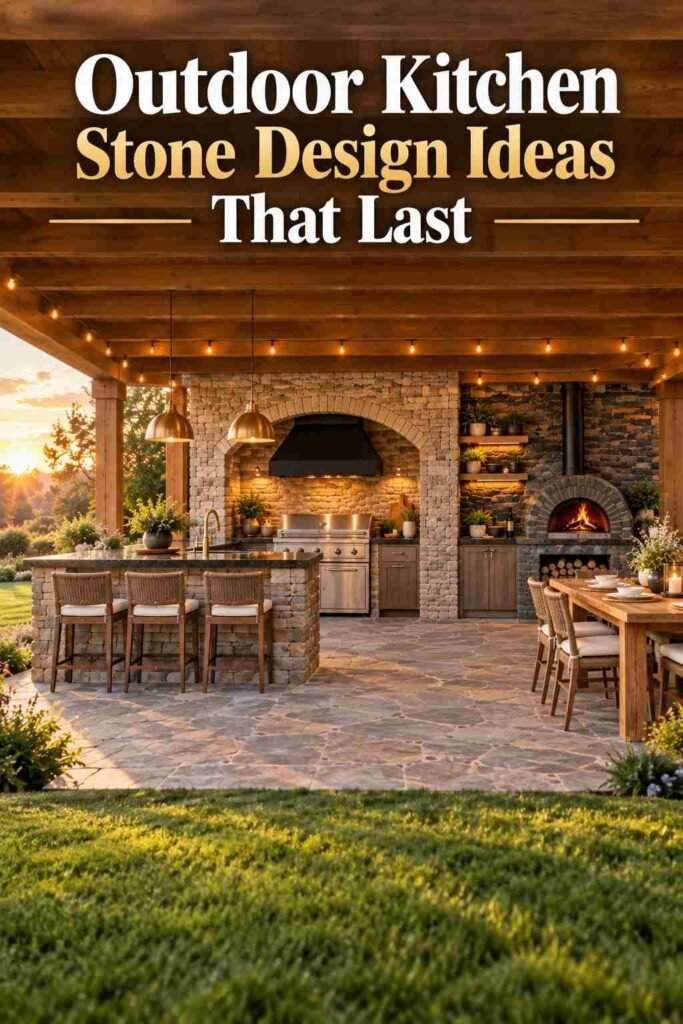
Stone gives an outdoor kitchen weight, warmth, and a sense of place. You don’t need all 25 ideas. Start with one surface that fits your climate, such as slate in cold regions or travertine in sunny ones. Then add a single feature that suits how you cook, whether that is a pizza oven, a bar, or an herb path. Treat these outdoor kitchen stone design ideas as a menu, not a checklist. Request samples, test them outside, and talk with a licensed contractor about structure, gas, and drainage. Do that, and your kitchen will look better with every season.
Frequently Asked Questions About Outdoor Kitchen Stone Design Ideas
What are the best outdoor kitchen stone design ideas for a small patio?
Try a compact corner layout, a dry-stack backdrop, or a slim stone-faced grill station. Light limestone veneer makes tight spaces feel larger. Keep the palette to one or two stones so the area stays calm and uncluttered.
What is the most durable stone for an outdoor kitchen countertop?
Granite, true quartzite, soapstone, and porcelain all handle heat and weather well. Granite has the longest track record outdoors. Choose based on your climate, your tolerance for patina, and how much sealing you want to do.
Is stone veneer as good as full-thickness natural stone?
For cladding, yes, when installed with the right water barrier, lath, and flashing. Veneer is lighter and usually cheaper. Counters and bar tops are different, and they need real slabs or porcelain for strength and heat resistance.
Do I need to seal outdoor kitchen stone?
Porous stones such as limestone, travertine, and many granites benefit from a penetrating sealer. Porcelain does not need sealing. Soapstone is nonporous, though some owners oil it for an even, darker look.
Can stone crack in cold weather?
It can if water enters the stone or the base and then freezes. Choose low-absorption stone, make sure water drains away, and use expansion joints where your installer recommends them. Proper setting matters as much as the stone itself.
How much does a stone outdoor kitchen cost?
Cost varies widely with size, stone type, appliances, gas and electrical work, and local labor rates. Veneer generally costs less than full-thickness stone. Ask for itemized quotes from at least two licensed contractors before you commit.