Photos in Living Room Ideas That Turn Blank Walls Into Memory Walls
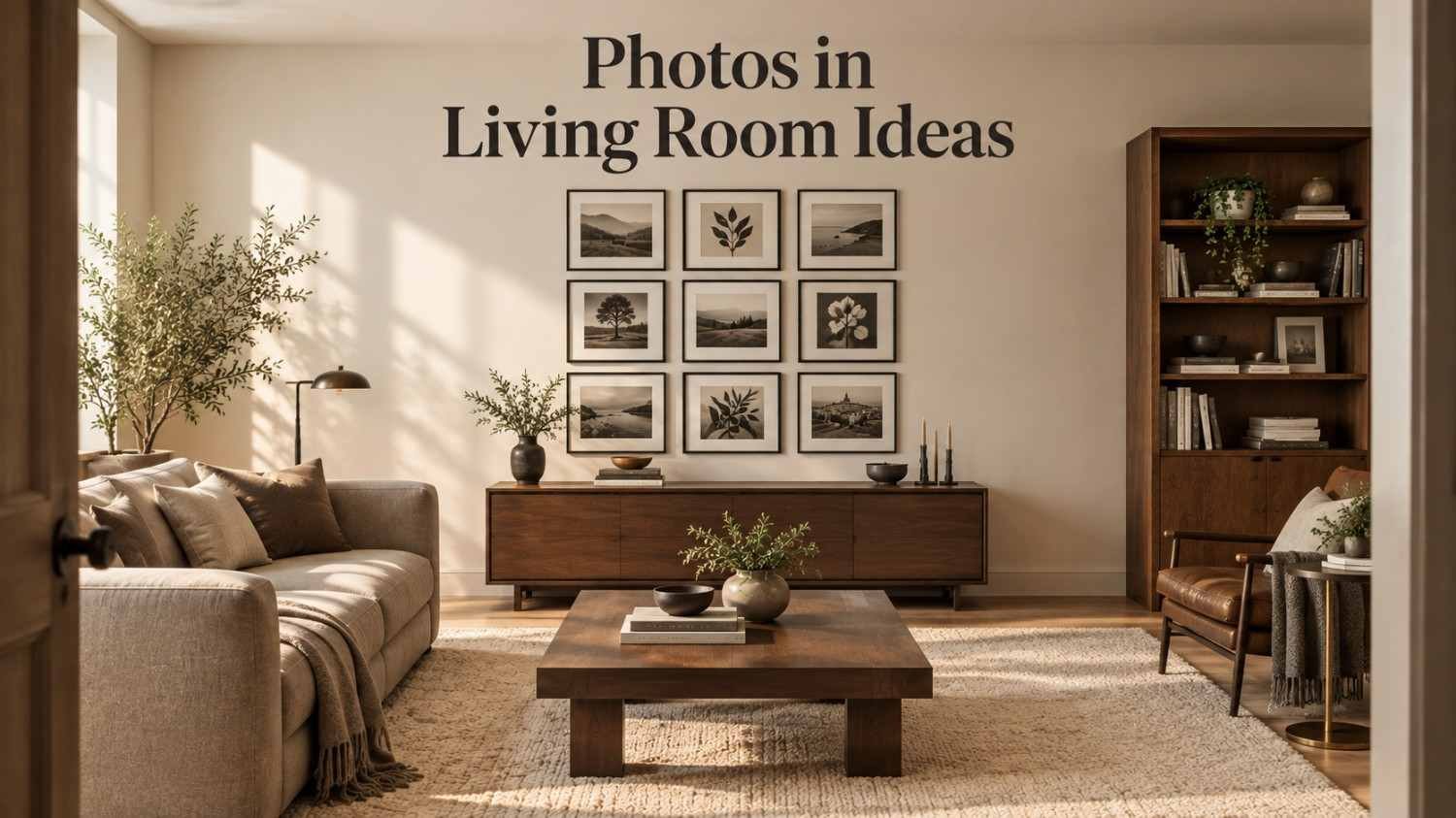
A living room says a lot about the people who spend their evenings in it. The sofa, the rug, and the lighting all matter, but nothing makes a space feel lived-in quite like a wall of photos. Whether it is a single oversized print above the console table or a sprawling grid that climbs toward the ceiling, the right display turns a plain room into a personal one. Below are 25 photos in living room ideas that cover every layout, frame style, and budget, along with the small details that separate a cluttered wall from a curated one.
Why Photos in Living Room Spaces Matter More Than People Think
Photos in living room settings do more than fill empty drywall. They anchor a seating area, guide the eye toward a focal point, and give guests something to talk about that isn’t the weather. A 2023 National Association of Home Builders survey found that personalized decor consistently ranks among the top features buyers and renters say makes a house feel like a home. A photo wall is one of the cheapest ways to deliver that feeling, often costing less than a single piece of commercial art.
Beyond aesthetics, photo displays help a room tell a story over time. A single frame above the fireplace can grow into a full gallery as new milestones happen. Because the display evolves, it never feels finished or dated the way a matched furniture set can. That flexibility is part of why photos in living room decor schemes remain popular across every design era, from farmhouse to mid-century modern.
Planning Your Layout Before You Pick Up a Hammer
Measure the Wall and the Furniture Below It
Before choosing frames, measure the wall space and the furniture sitting against it. A common rule places the center of a photo arrangement roughly 57 inches from the floor, which is standard eye-level height in most homes. If the display sits above a sofa or console, leave about 6 to 12 inches of breathing room between the top of the furniture and the bottom of the frames so the grouping feels connected rather than floating.
Choose a Layout Style First, Frames Second
Most successful photos in living room walls start with a paper template. Cut kraft paper to match each frame size, tape the shapes to the wall, and step back before drilling a single hole. This trial run prevents mismatched spacing and saves the wall from unnecessary nail holes. Once the layout feels balanced, then it’s time to shop for frames, mats, and finishes.
25 Photos in Living Room Ideas to Try This Year
1. The Salon-Style Wall of Mixed Frames
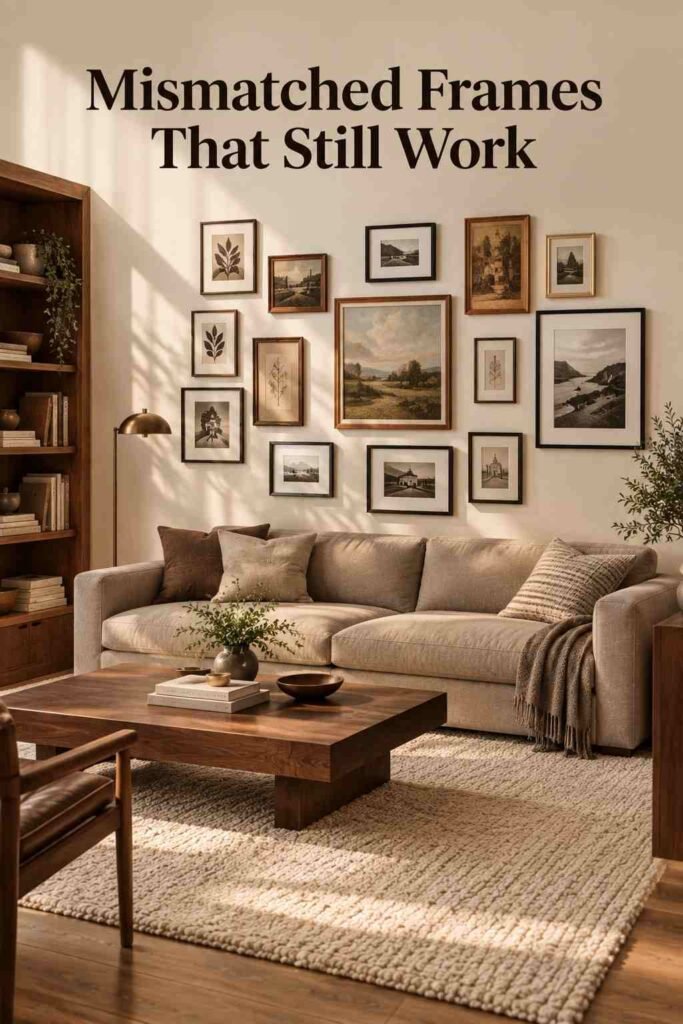
Cover one wall edge to edge with frames of different sizes, finishes, and eras. This layout works best in living rooms with high ceilings and benefits from a shared color story, such as all black-and-white prints or matching wood tones, to keep the eclectic mix from feeling chaotic.
2. A Grid Gallery Above the Sofa
Nine or twelve identical frames arranged in perfect rows create a clean, symmetrical statement. This is one of the most requested photo arrangements in living room configurations because it suits nearly every style, from transitional to contemporary, and reads as intentional even with minimal styling.
3. The Floating Shelf Ledge Display
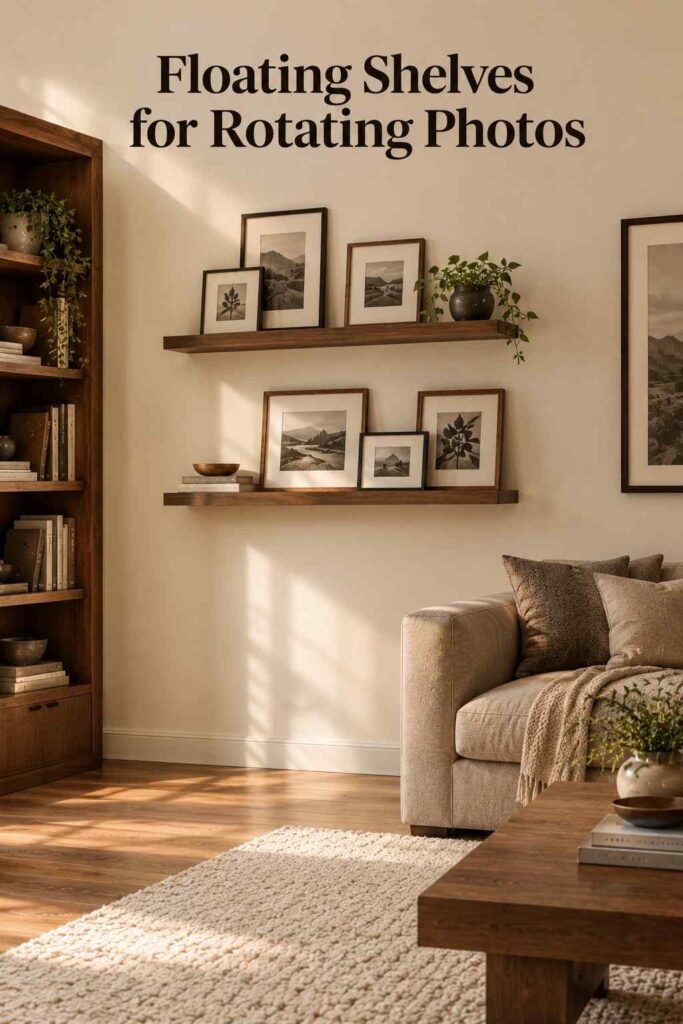
Mount two or three narrow shelves and lean framed photos against the wall instead of hanging them. This no-drill method makes it easy to swap images seasonally and pairs nicely with small potted plants or a scented candle tucked between frames.
4. Oversized Single Statement Print
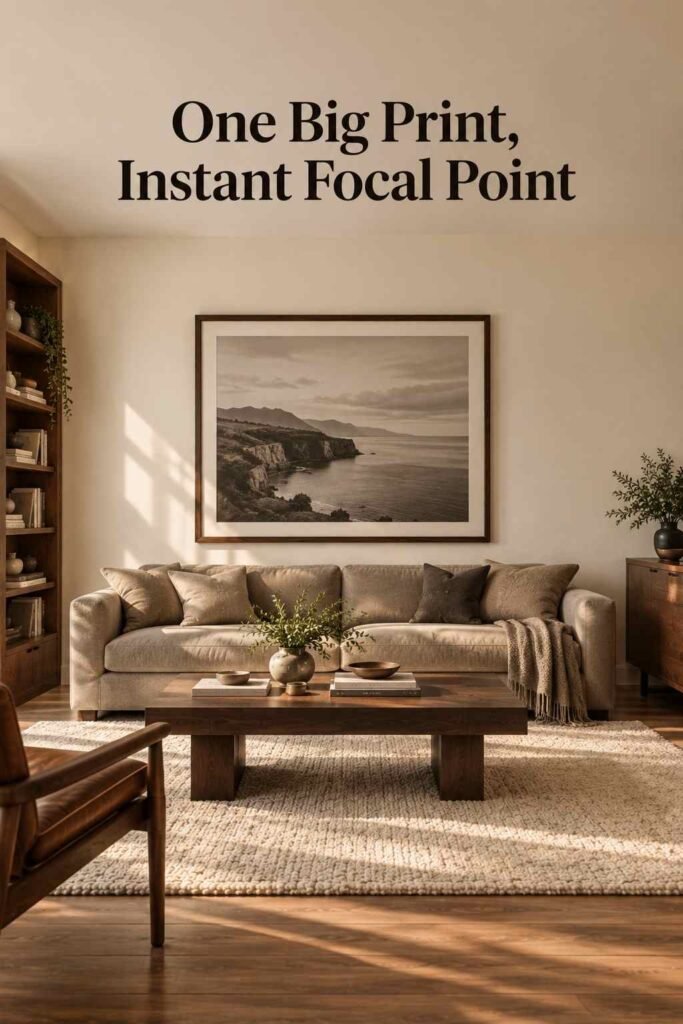
Sometimes one large canvas does more work than a dozen small frames. A single 36-by-48-inch family portrait or landscape print above the sofa creates an instant focal point without demanding constant rearranging.
5. The Staircase-to-Living-Room Continuation
If a staircase opens into the living area, let the photo arrangement flow from the steps into the main room. This continuous line draws the eye through the whole floor plan and makes an open layout feel more cohesive.
6. Black and White Family Portraits
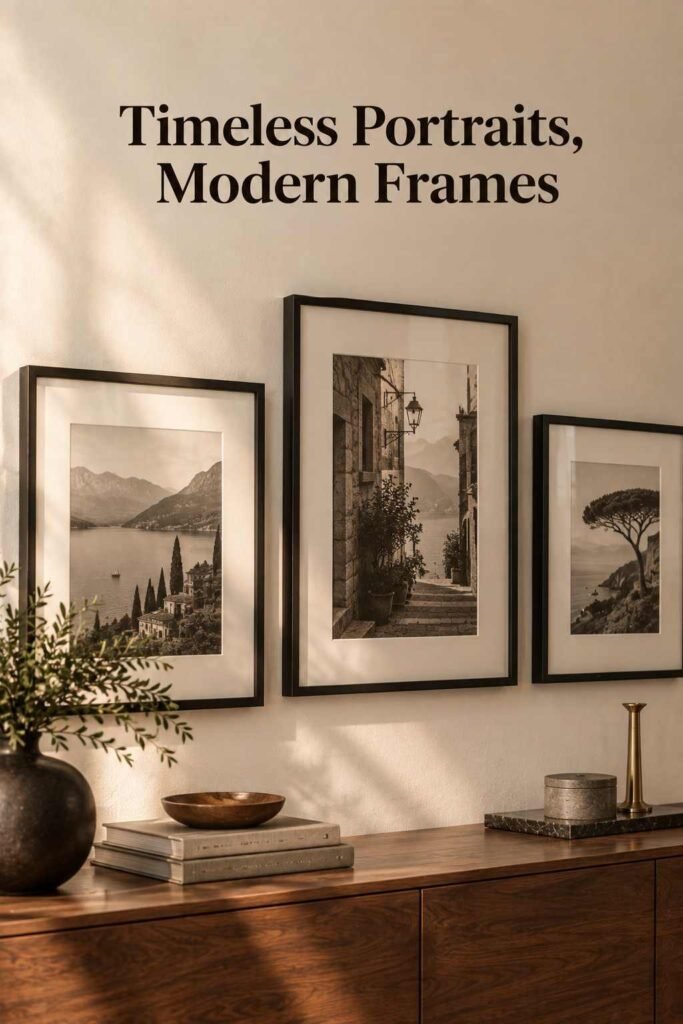
Removing color from a set of family photos gives the display a timeless, gallery-like quality. Black-and-white printing also makes it easier to mix photos taken years apart without the different color casts clashing.
7. Mixed Media: Photos Plus Art Prints
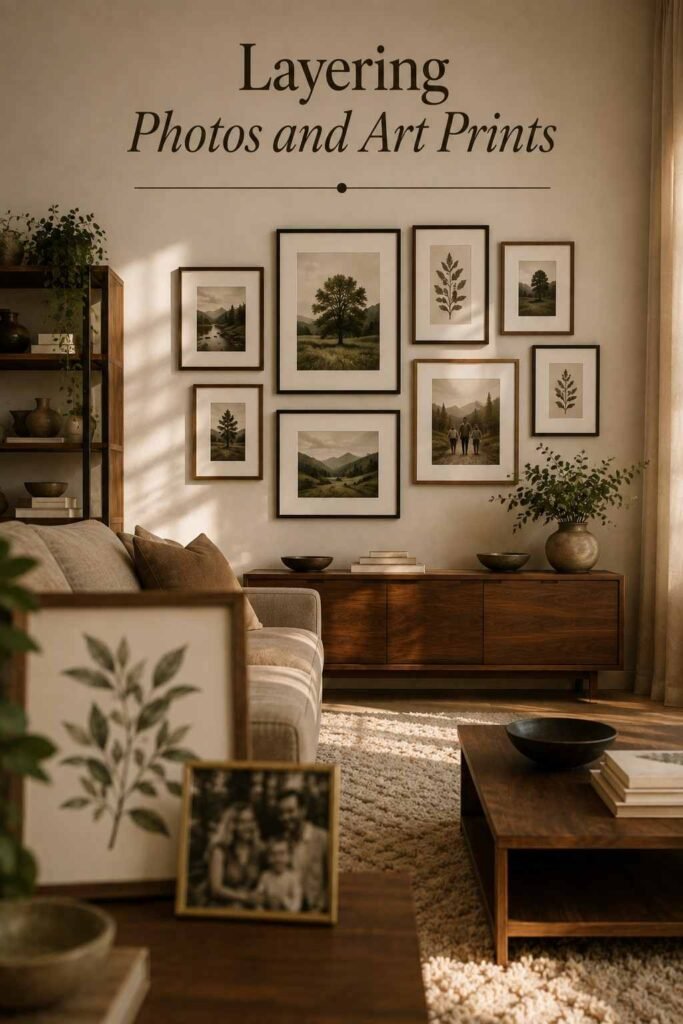
Combine personal photographs with botanical prints, abstract art, or line drawings for a layered look. A well-placed Botanical Wall Art piece next to a family photo softens the display and keeps it from reading as a straight timeline of snapshots.
8. The Circular Frame Cluster
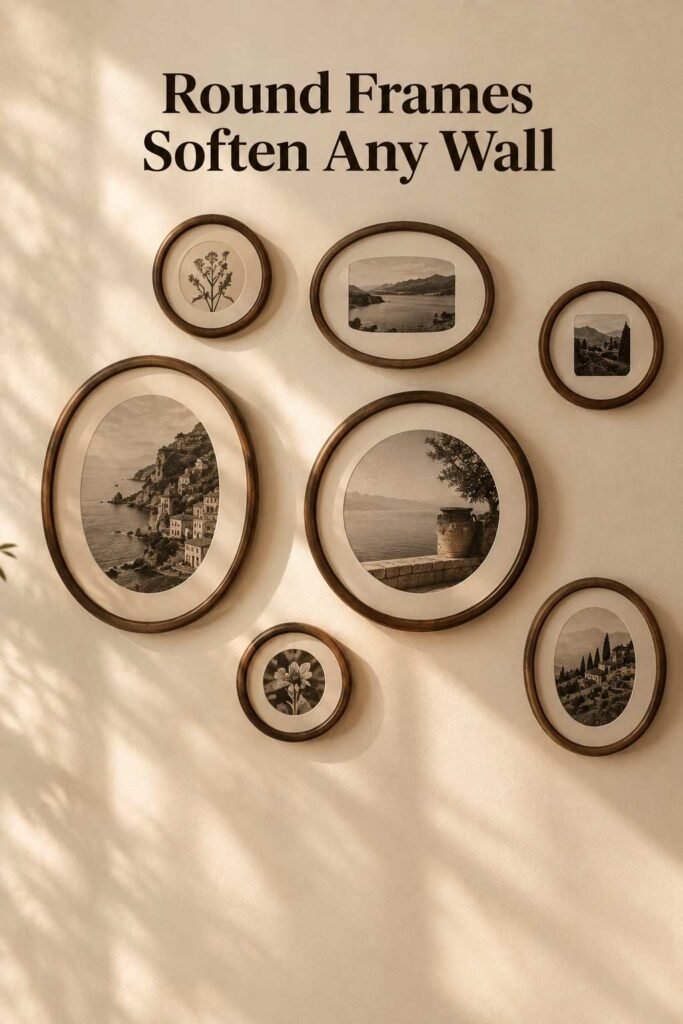
Round and oval frames break up the boxiness of a typical wall grid. Grouping three to five circular frames at staggered heights adds a softer, more organic silhouette that suits boho and coastal living rooms.
9. A Themed Travel Wall
Dedicate the arrangement entirely to trips: postcards, ticket stubs, and photographs from each destination. This version of photos in living room decor doubles as a conversation piece and a personal travel log guests genuinely enjoy browsing.
10. The Symmetrical Pair Above Console Tables
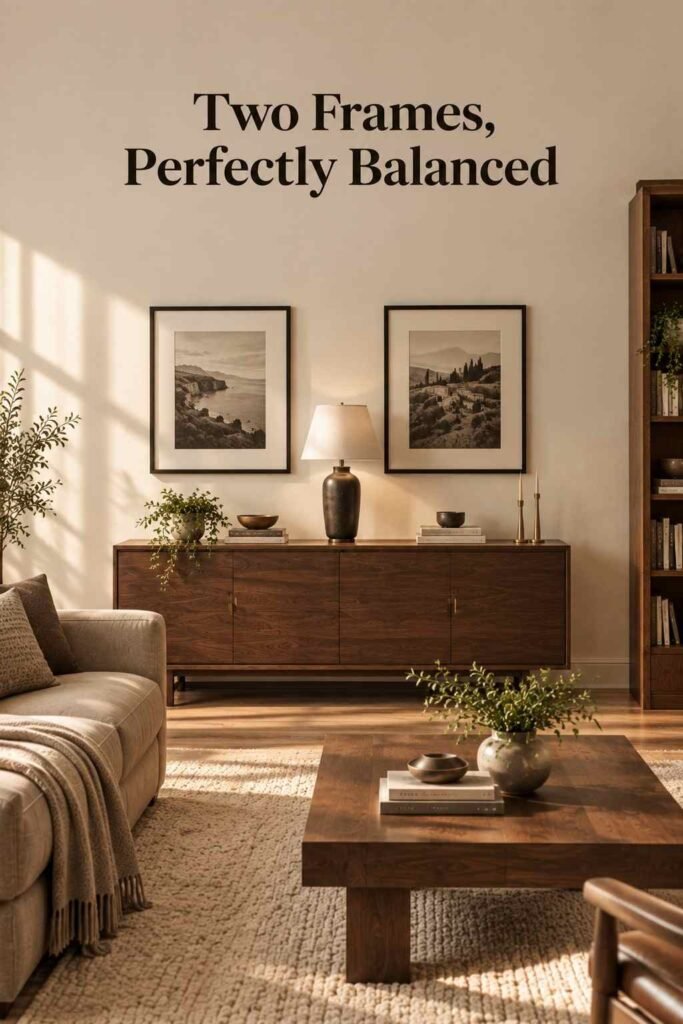
Flanking a media console with two matching framed photos creates instant balance. This works especially well in narrower living rooms where a full gallery wall would overwhelm the space.
11. Vintage Frames With Modern Photos
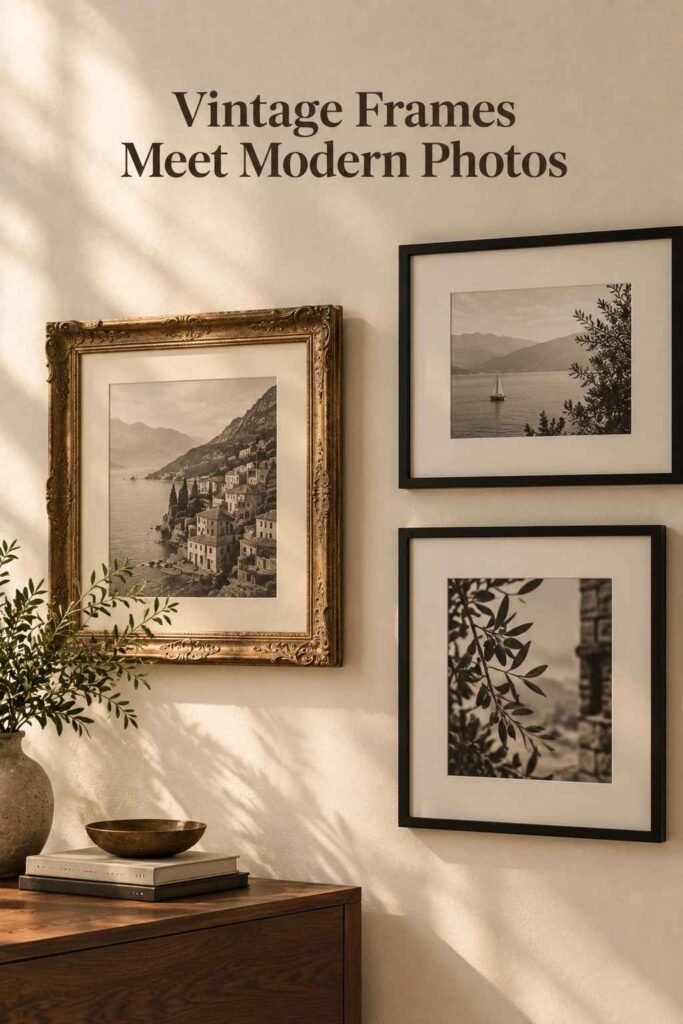
Pairing ornate, secondhand frames with contemporary photography creates contrast that feels curated rather than mismatched. Thrifted frames also keep the project budget-friendly.
12. The Polaroid String Display
String twine across a blank wall and clip Polaroid-style prints with small pegs. It is inexpensive, endlessly changeable, and popular with renters who cannot drill into walls.
13. Photo Wall With Built-In Lighting
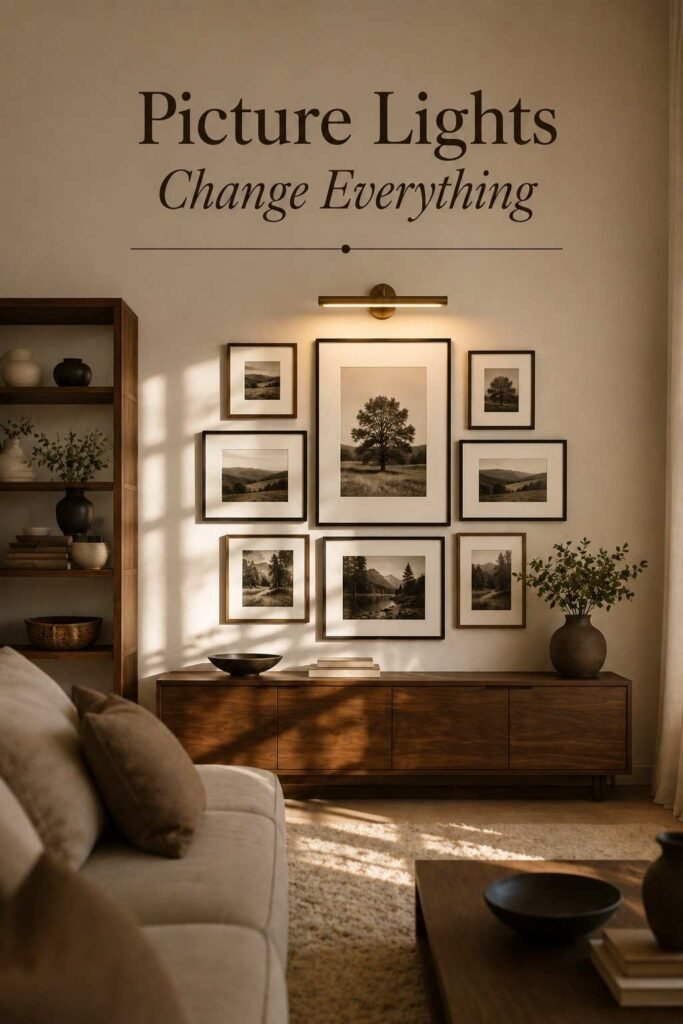
Adding small picture lights or a plug-in sconce above the display extends its impact into the evening. This is particularly effective in living rooms used often for entertaining after dark.
14. The Corner-to-Corner Diagonal Arrangement
Instead of a strict grid, stagger frames diagonally from one corner of the wall to the other. This asymmetrical approach adds movement and works well on accent walls, including a black accent wall idea treatment where the dark backdrop makes light-colored mats pop.
15. Minimalist Single-Row Line
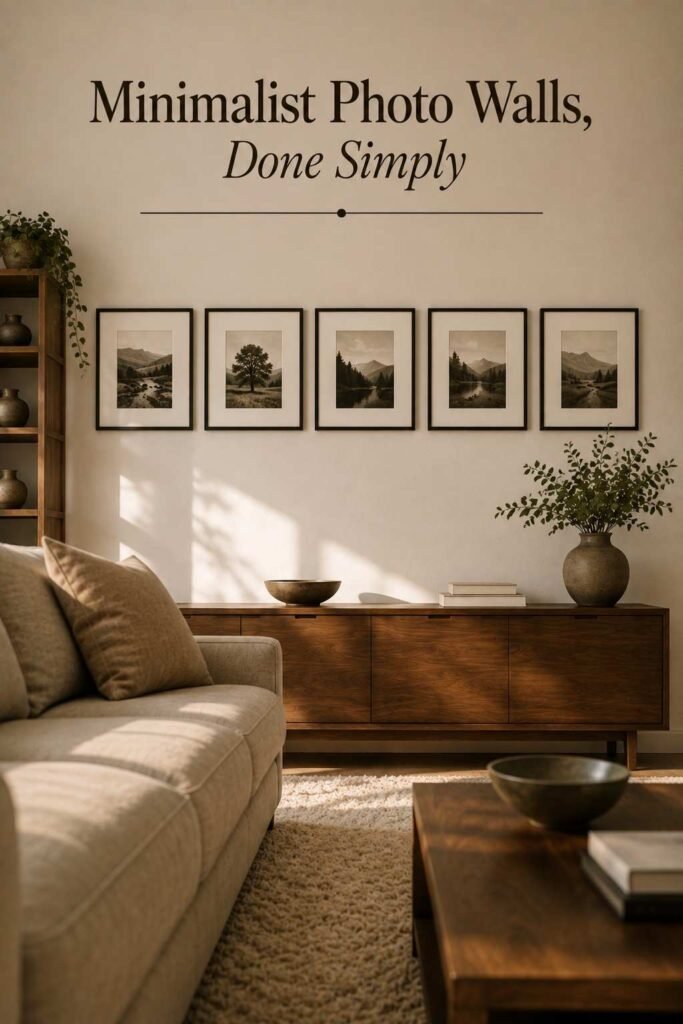
Hang five to seven same-size frames in a straight horizontal line at eye level. This restrained approach suits Scandinavian and minimalist living rooms that favor negative space over dense clusters.
16. The Bookshelf Photo Integration
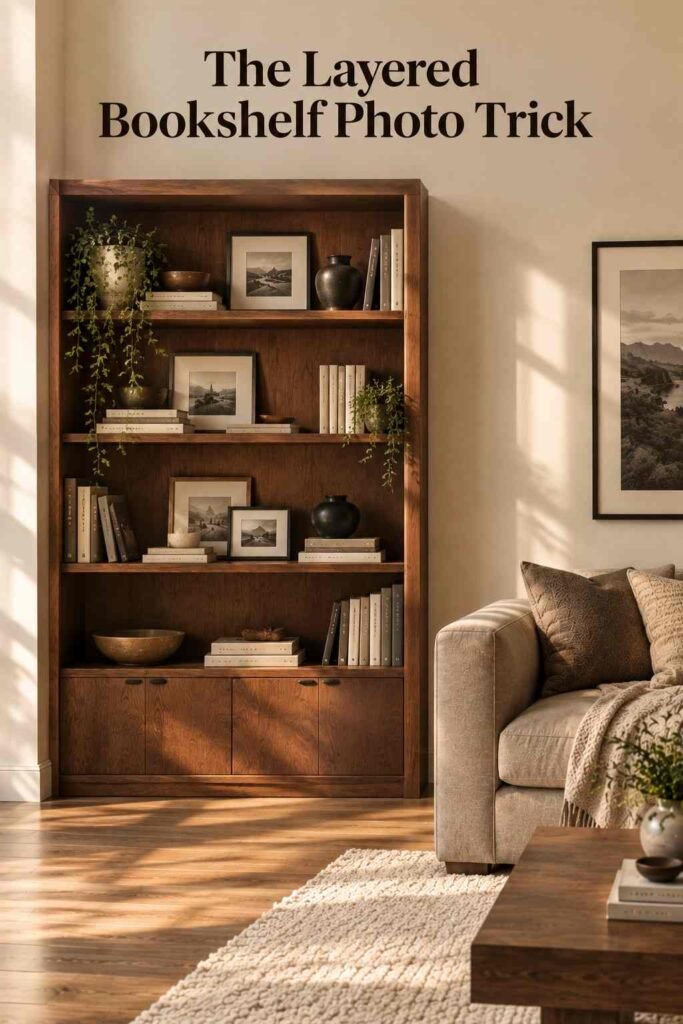
Rather than hanging every photo, lean smaller framed prints against books on open shelving. This layered look mixes texture and keeps the display feeling casual and lived-in.
17. Family Tree Photo Layout
Arrange photos in a branching pattern that visually represents generations, from grandparents down to the newest additions. It is a meaningful centerpiece for larger, multigenerational households.
18. The Floating Frame With No Visible Hardware
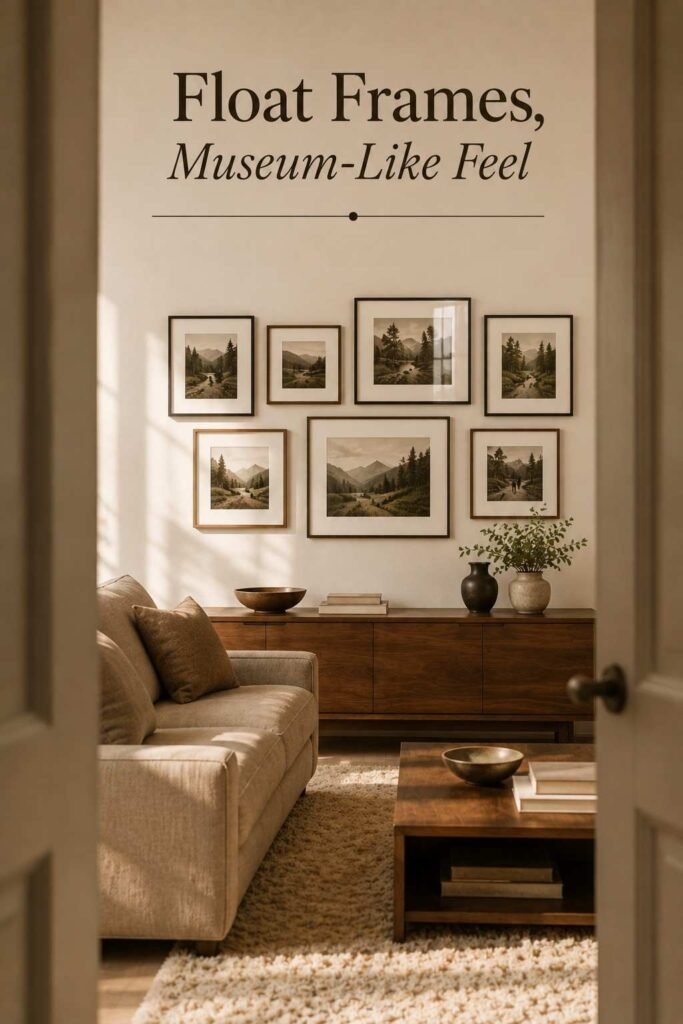
Acrylic float frames make a photo appear suspended between two panes of glass. The effect feels modern and museum-like, particularly for black-and-white or high-contrast images.
19. Seasonal Rotating Display
Use a modular frame system so a portion of the wall can be swapped for holiday photos, new milestones, or seasonal artwork without redoing the entire layout.
20. The Oversized Collage Canvas
Print a single collage of dozens of small images onto one large canvas. This gives the visual density of a gallery wall without the commitment of multiple nail holes.
21. Photos Framed With Matching Mats and No Matching Frames
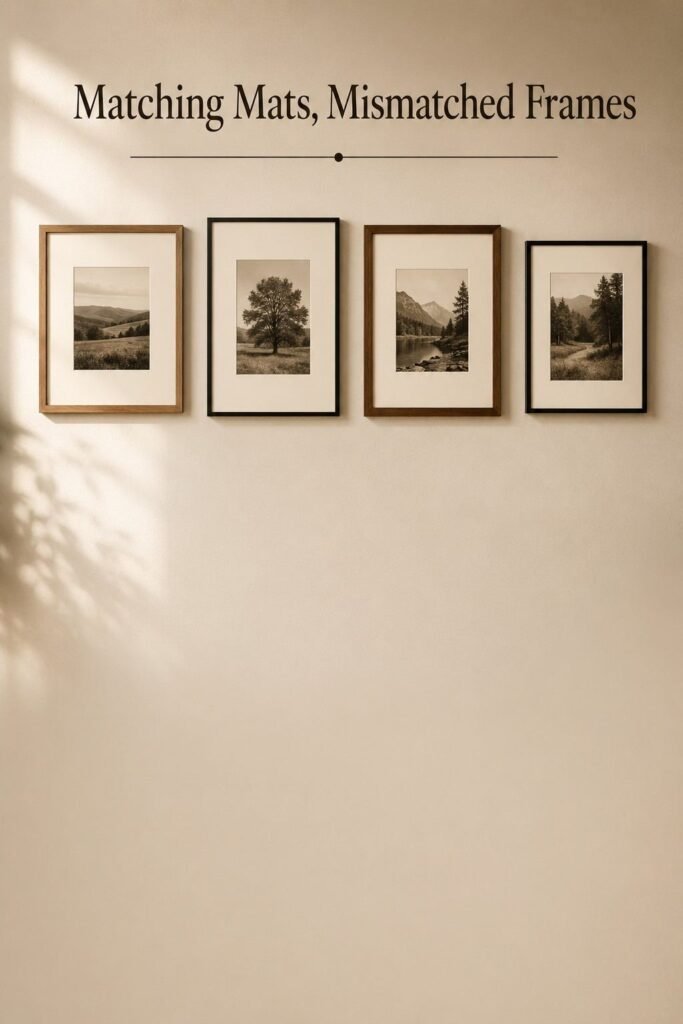
Uniform white mats create visual consistency even when the frames themselves vary in wood tone or metal finish, a middle ground between a full salon wall and a strict grid.
22. The Windowsill and Ledge Combination
For living rooms with deep windowsills, lean small framed photos there instead of, or in addition to, wall-mounted pieces. It softens the window without blocking natural light.
23. Gallery Wall Around a TV
Rather than treating the television as an eyesore to hide, build the photo arrangement around it so the screen becomes one more “frame” in the composition.
24. The Color-Coordinated Wall
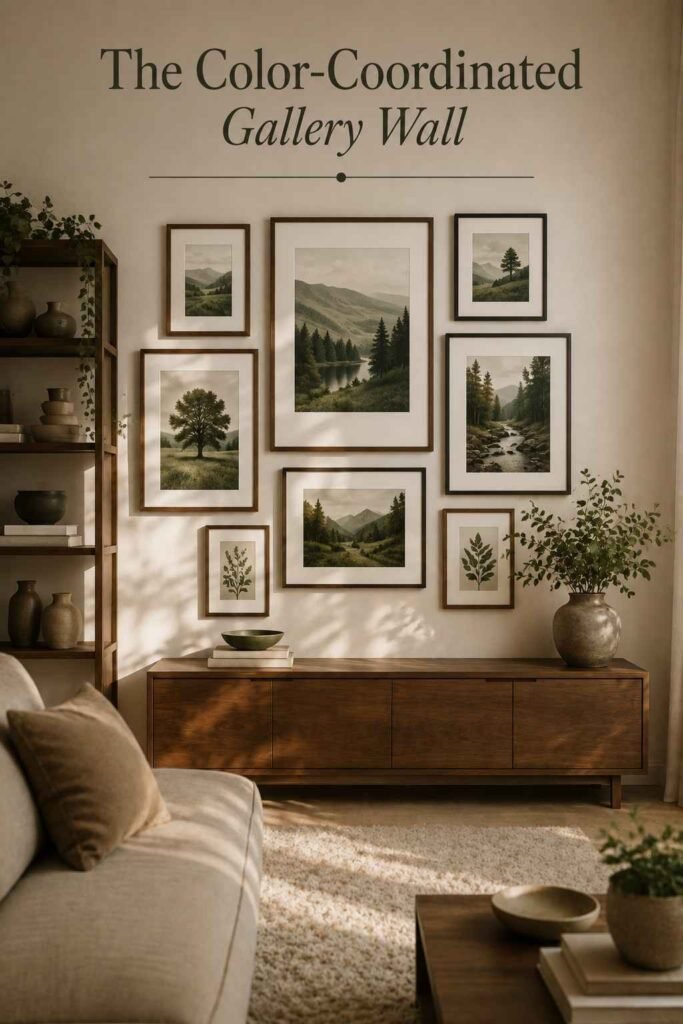
Choose photos where a dominant color, such as sage green and terracotta decor, repeats across each image. This creates a cohesive palette that ties the display to the room’s existing decor.
25. Photos in Living Room Nooks and Alcoves
Small architectural nooks are often overlooked, but a tightly clustered set of three to five photos can turn an awkward gap into one of the room’s most charming details.
Common Mistakes to Avoid When Hanging Photos on Living Room Walls
Hanging frames too high is the most frequent misstep, since it pulls the eye upward and away from the seating area. Spacing frames too far apart is another common issue; 2 to 3 inches between frames typically reads as connected without feeling crowded. Skipping the paper-template step also leads to unnecessary wall damage. Finally, mixing too many frame finishes without a unifying element, whether that’s color, subject matter, or matting, can make a wall feel disorganized rather than curated.
Budget-Friendly Ways to Display Photos in Living Room Areas
Not every project requires custom framing. Thrifted frames, printable templates, and DIY matting can cut costs significantly while still achieving a polished look. Renters can rely on removable adhesive hooks or leaning ledge displays instead of drilling. For those who want professional guidance on sourcing frames, layout planning, or full-room styling, Outinteriors offers curated design resources worth exploring before starting a wall project.
Conclusion
A wall of photos does more for a living room than almost any other single decorating decision. It personalizes a shared space, gives it warmth, and evolves naturally as life continues to happen. From a single oversized print to a sprawling salon-style arrangement, these 25 photos in living room ideas offer a starting point for nearly any home, budget, and design style. The best layout is rarely the most expensive one; it’s the one that reflects the people who actually live there.
Frequently Asked Questions
1. How high should photos in living room displays be hung?
Center the arrangement around 57 inches from the floor, adjusting slightly lower if it hangs above a sofa or console table.
2. What is the ideal spacing between frames in a gallery wall?
Most designers recommend 2 to 3 inches between frames for a cohesive but not cramped look.
3. Should all frames match in a photo wall?
No. A shared element, such as color palette, matting, or frame finish, is usually enough to unify mismatched frames without forcing an identical set.
4. How many photos are needed for a full gallery wall?
There is no fixed number; some walls work with five frames, while larger walls can hold 15 or more. Layout balance matters more than quantity.
5. What’s a good no-drill option for renters?
Leaning photos on floating shelves, using adhesive hooks, or stringing them on twine with small clips are all damage-free options.
6. Should photo walls include non-photo elements like art prints?
Yes. Mixing in art prints, botanical pieces, or textured objects often makes a display feel more layered and less like a straight photo timeline.
7. How often should a photo wall be updated?
There’s no strict timeline, but many households refresh a few frames each year to reflect new milestones or seasons.