Botanical Wall Art Ideas to Bring Nature Into Every Room
A bare wall can make a room feel unfinished. You may have good furniture, a soft rug, and warm lighting, yet something is still missing. Very often, that missing piece is a touch of nature. Leaves, petals, ferns, and branches bring color, softness, and movement to a space without demanding attention.
That is why botanical wall art has stayed popular for centuries. It suits a quiet, cozy reading corner as well as a busy family kitchen. It works in a modern apartment and in a traditional cottage. In this guide, you will find 23 botanical wall art ideas, grouped by style and space. You will also find practical advice on framing, spacing, and care, so your choices look polished and last for years.
A Short Look at Why Botanical Art Endures
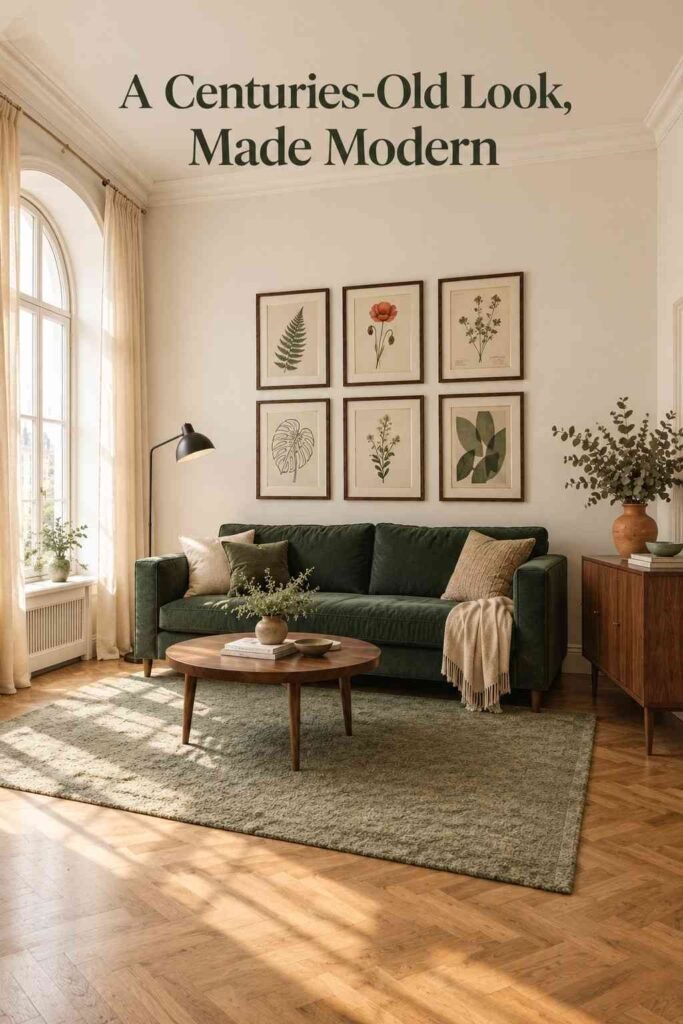
Botanical illustration began as a scientific tool. Before cameras, artists recorded plants in careful detail so doctors, scholars, and gardeners could identify them. During the 18th and 19th centuries, printed plates of flowers and leaves filled the books of naturalists, and many were hand-colored. Today, those same plates inspire much of the decor we hang at home.
There is a simple reason this art keeps its appeal. Plants are familiar, calming, and never really go out of style. A fern print feels as fresh today as it would have a century ago. When you choose botanical wall art, you are borrowing from a long tradition of looking closely at the natural world.
Classic and Vintage Botanical Wall Art Ideas
Classic pieces suit people who love detail, history, and a timeless look. These ideas work especially well in living rooms, studies, and dining spaces.
1. Vintage Botanical Illustrations in Matching Frames
Choose three or four plates from the same period and hang them in identical frames. The matching frames create order, while the different plants add variety. Cream mats and thin black or oak frames give a museum-like finish.
2. Herbarium-Style Specimen Prints
Herbarium sheets show a whole plant, roots included, with a small label beneath. These prints look scholarly and calm. They pair well with wood furniture, leather chairs, and shelves of books.
3. Watercolor Wildflower Prints
Soft washes of poppy, cornflower, and daisy add a gentle, hand-painted feel. Because the colors are light, they suit bedrooms and sunrooms. Choose prints on textured paper for added depth.
4. Fern and Moss Studies on Aged Paper
Ferns have graceful, repeating shapes that look striking in a set. Prints with a warm, aged-paper background add coziness to a hallway or a den without feeling heavy.
5. A Framed Botanical Gallery Grid
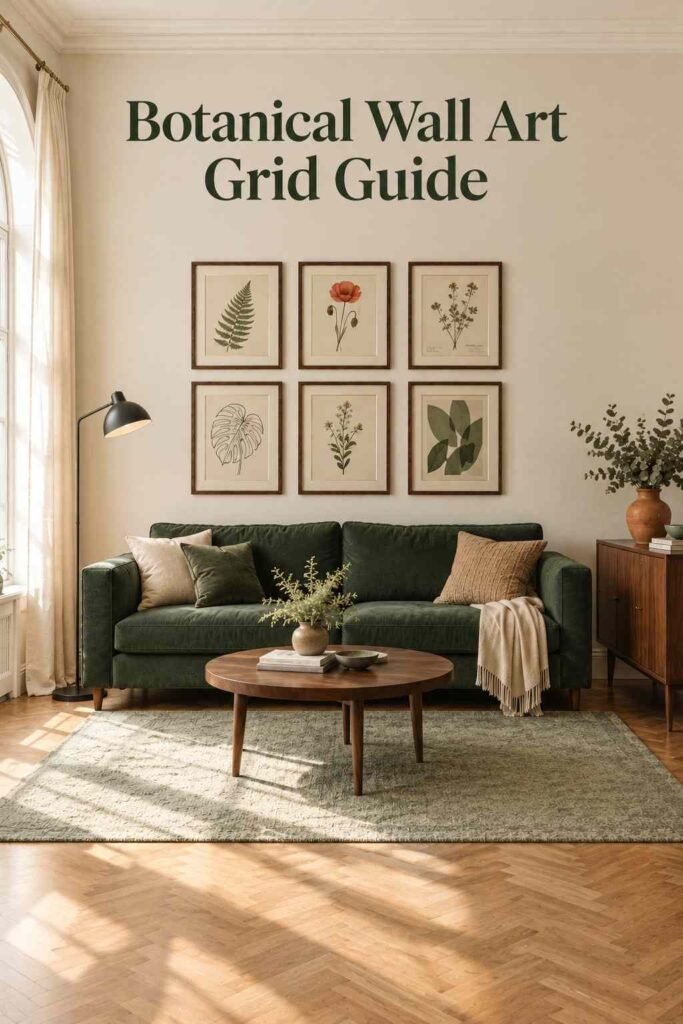
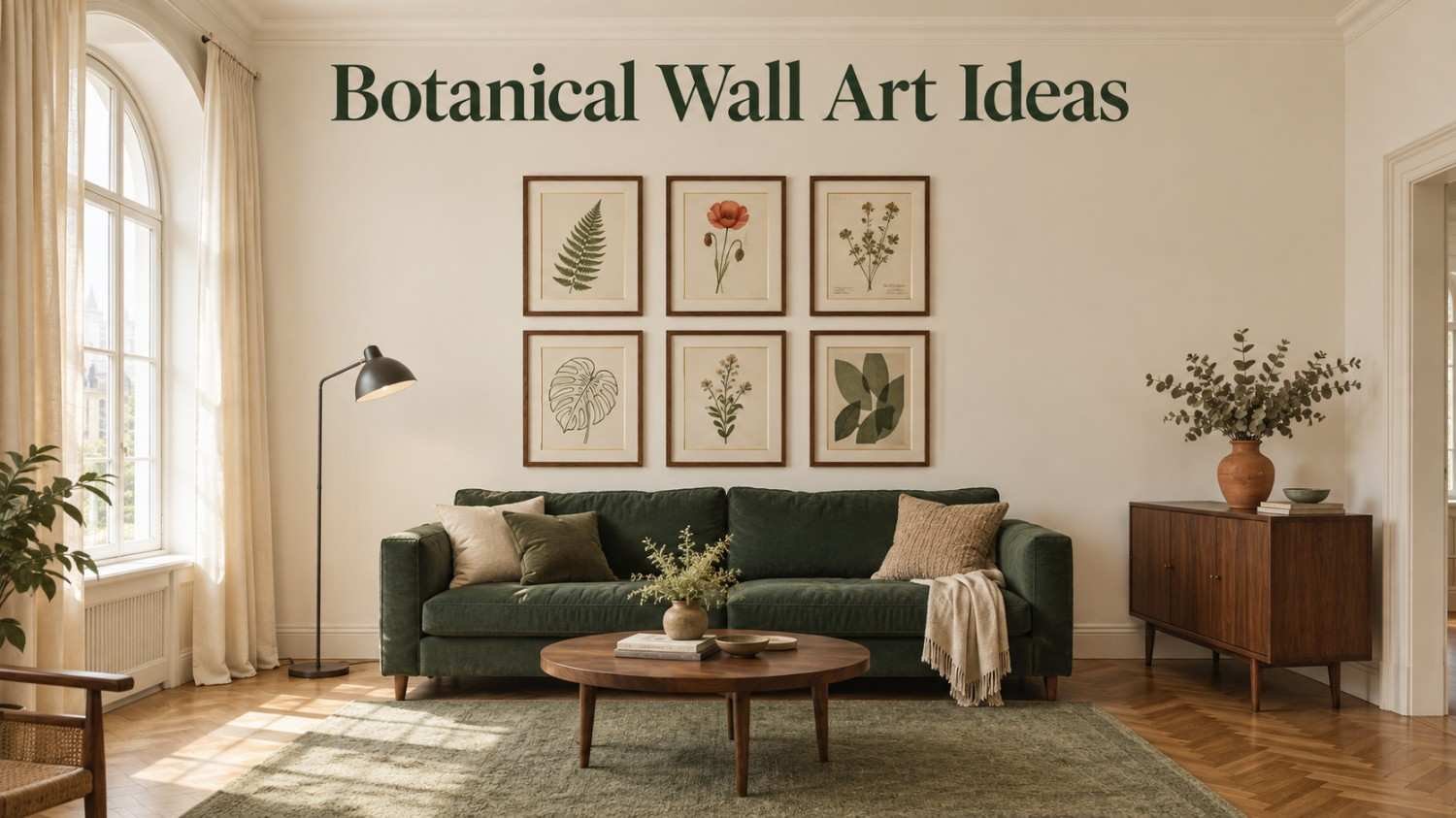
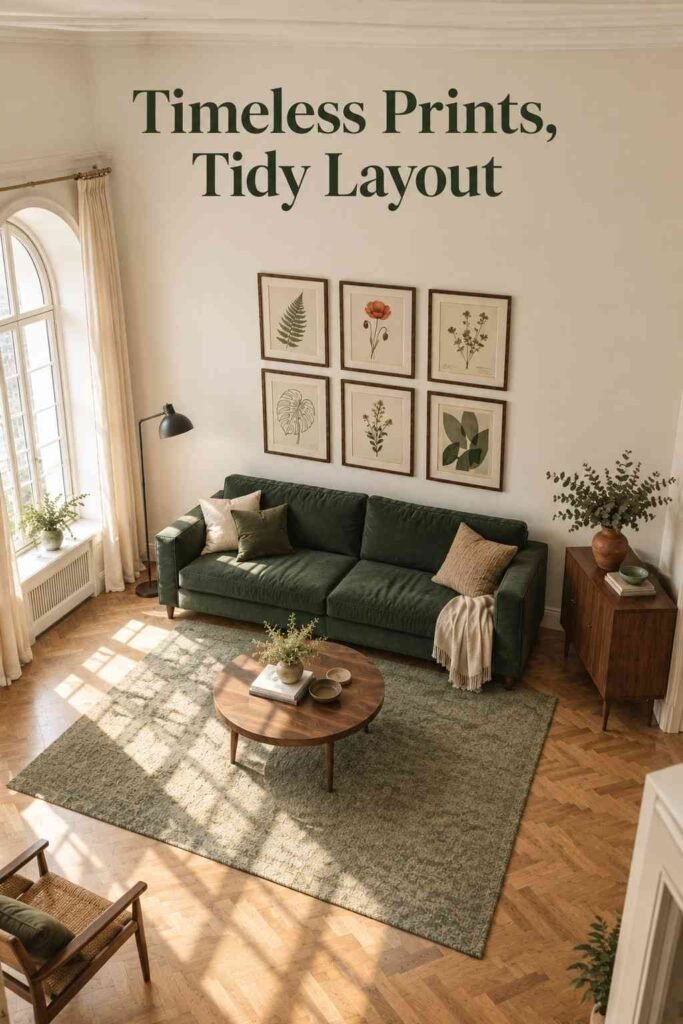
For a tidy look, arrange six or nine prints in a grid with equal gaps of about two inches. Keep the frame color consistent. A grid feels intentional, and it fills a large wall without visual clutter.
Modern and Graphic Botanical Wall Art Ideas
If your home leans contemporary, these ideas keep the natural theme while simplifying the lines and colors.
6. Monstera and Palm Line Art
Line drawings reduce a leaf to its outline. Thin black lines on a white background look clean and current. A single large monstera print can anchor a sofa wall on its own.
7. Minimalist Single-Stem Prints
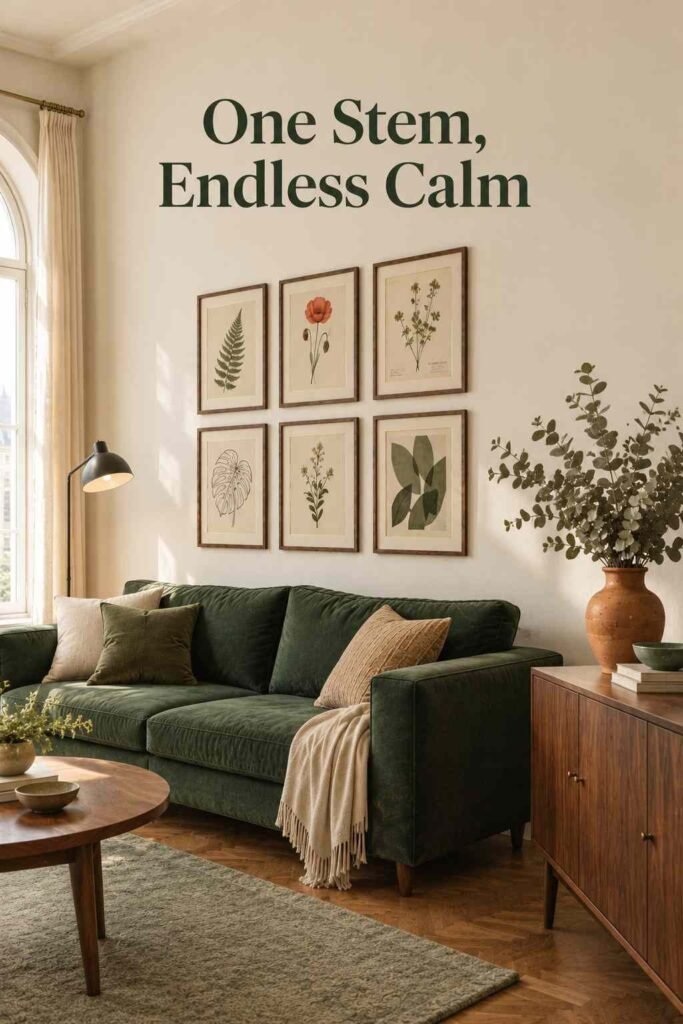
One stem, one flower, plenty of space. This approach suits small rooms and entryways. The generous white margin lets the print breathe and keeps the wall from feeling crowded.
8. Abstract Botanical Shapes in Earth Tones
Overlapping leaf forms in rust, sage, sand, and clay create movement without strict realism. These pieces are ideal for people who want nature-inspired color but not a literal plant portrait.
9. Black-and-White Botanical Photography
Monochrome photos of leaves, seed heads, or shadows on a garden wall highlight texture and light. They look sophisticated in offices and modern living rooms, and they match nearly any color scheme.
10. Cut-Paper Style Leaf Compositions
Bold, flat shapes with crisp edges recall mid-century cut-paper art. Choose a limited palette of two or three colors. The result feels playful yet refined, especially above a console or dining bench.
Handmade and Textured Botanical Wall Art Ideas
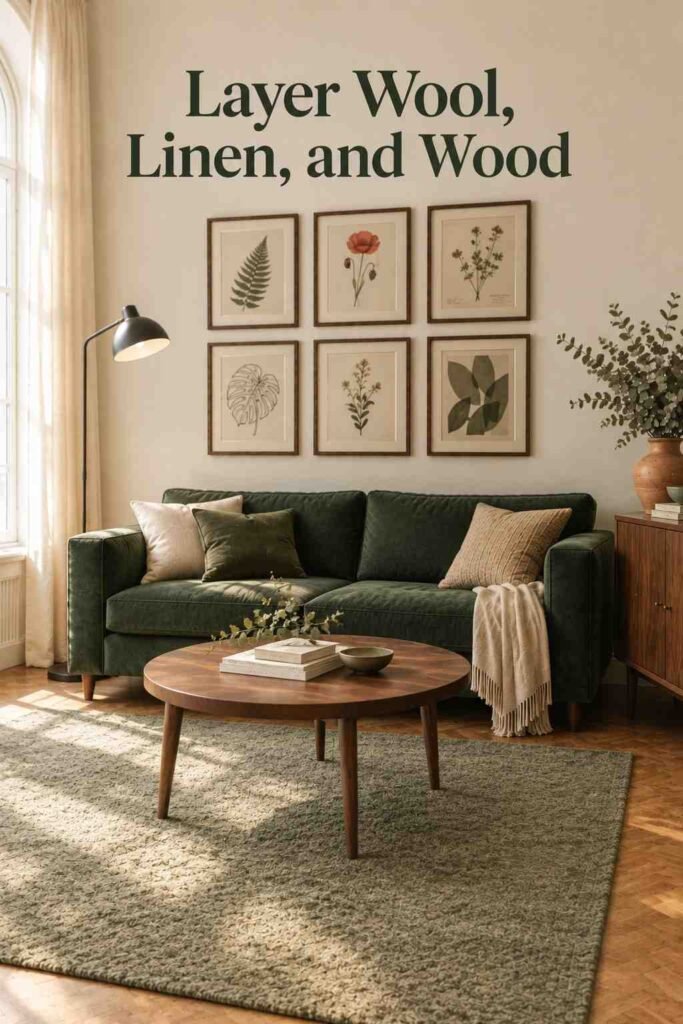
Texture gives a wall warmth. These ideas add a personal, crafted quality that printed paper alone cannot offer.
11. Pressed Flowers in Floating Frames
Pressed blooms placed between two panes of glass seem to hover on the wall. You can use flowers from your own garden, which makes the piece meaningful. Press them flat for two to three weeks before framing.
12. Pressed Ferns and Leaves Under Glass
Leaves keep their shape well when pressed. Arrange them in a simple row or a single large spray. Green tones fade over time, so keep the frame out of direct sun.
13. Embroidered Botanical Hoops
Small embroidery hoops stitched with leaves and blossoms bring a soft, folk-art charm. Hang a cluster of three to five in different sizes for a relaxed, cottage-style corner.
14. Woven or Fiber Wall Hangings with Leaf Motifs
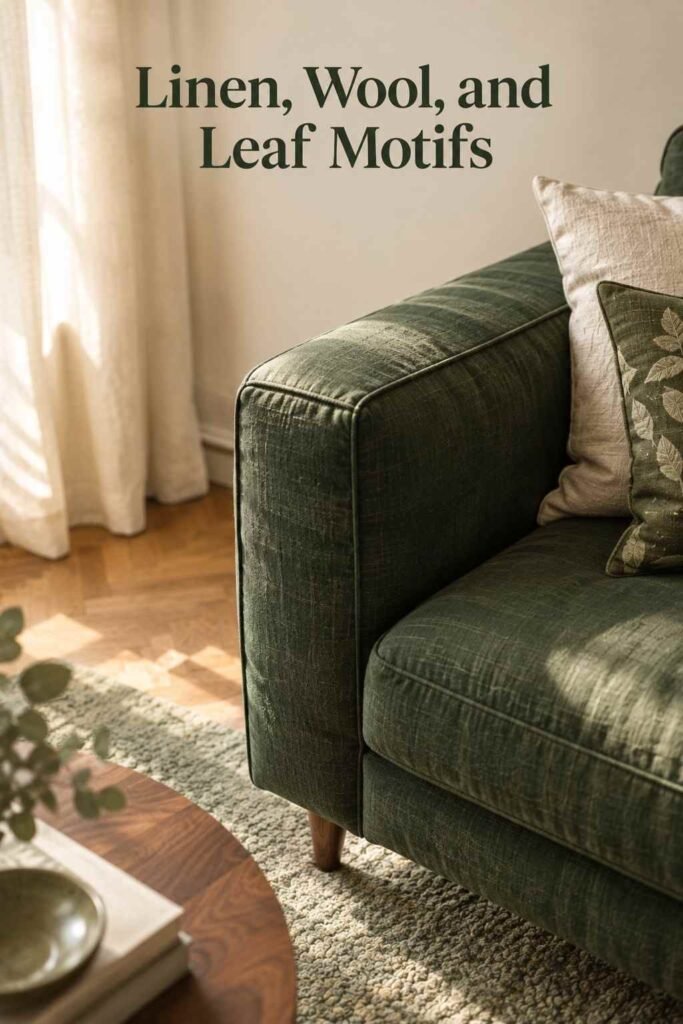
Natural fibers such as cotton, jute, and wool add depth and absorb sound. A leaf-patterned hanging works well in a bedroom or nursery, where a gentler atmosphere is welcome.
15. Hand-Painted Leaf Murals
A painted branch climbing across a wall turns the wall itself into art. Start with a simple pattern and use painter’s tape as a guide. A single accent wall is often enough to change the mood of a room.
Statement and Large-Scale Botanical Wall Art Ideas
Sometimes a room needs one confident piece. Larger works create a focal point and set the tone for everything around them.
16. Oversized Tropical Leaf Canvas
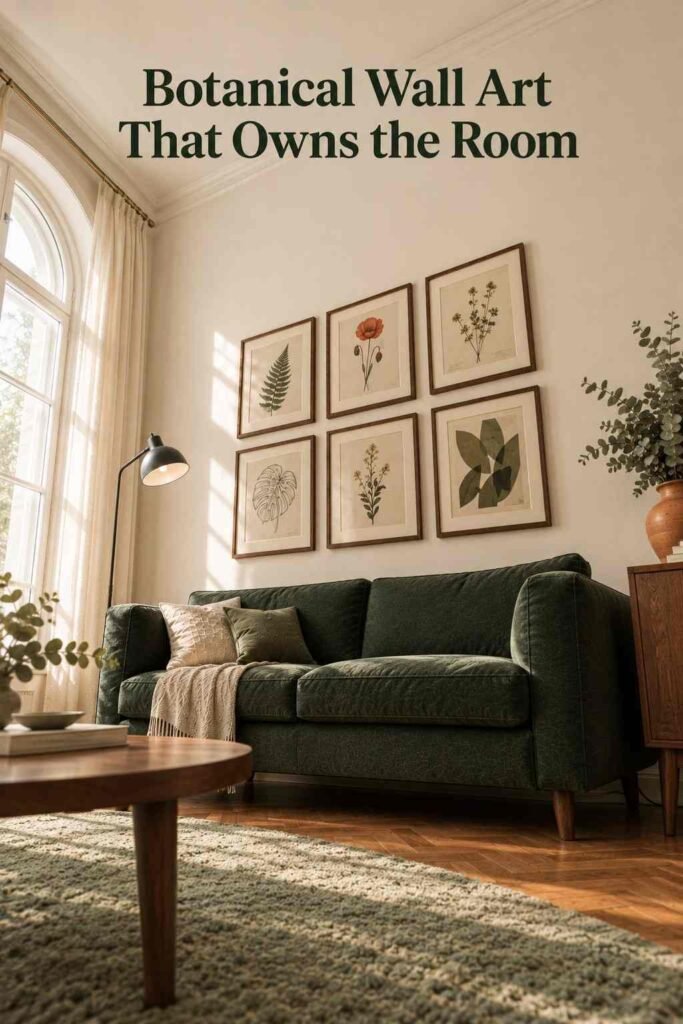
A big banana leaf or palm canvas brings drama and energy. Hang it above a sofa or a bed. Pick a piece at least two-thirds the width of the furniture beneath it, so the proportions feel balanced.
17. Blossom Branch Triptych
A branch of blossoms split across three panels leads the eye along the wall. Spring-inspired pieces like this suit bright rooms and add a sense of renewal. Leave two to three inches between panels so the image reads as one scene.
18. Framed Botanical Wallpaper Panels
Instead of papering a full wall, frame a panel of botanical wallpaper. You get the pattern and richness of wallpaper without the commitment. This is a smart choice for renters.
19. Sculptural Metal or Wood Leaf Art
Cut-metal or carved wooden leaves cast soft shadows and change through the day as light moves. They add dimension to plain walls, especially in entryways and stairwells.
Botanical Wall Art Ideas for Specific Rooms
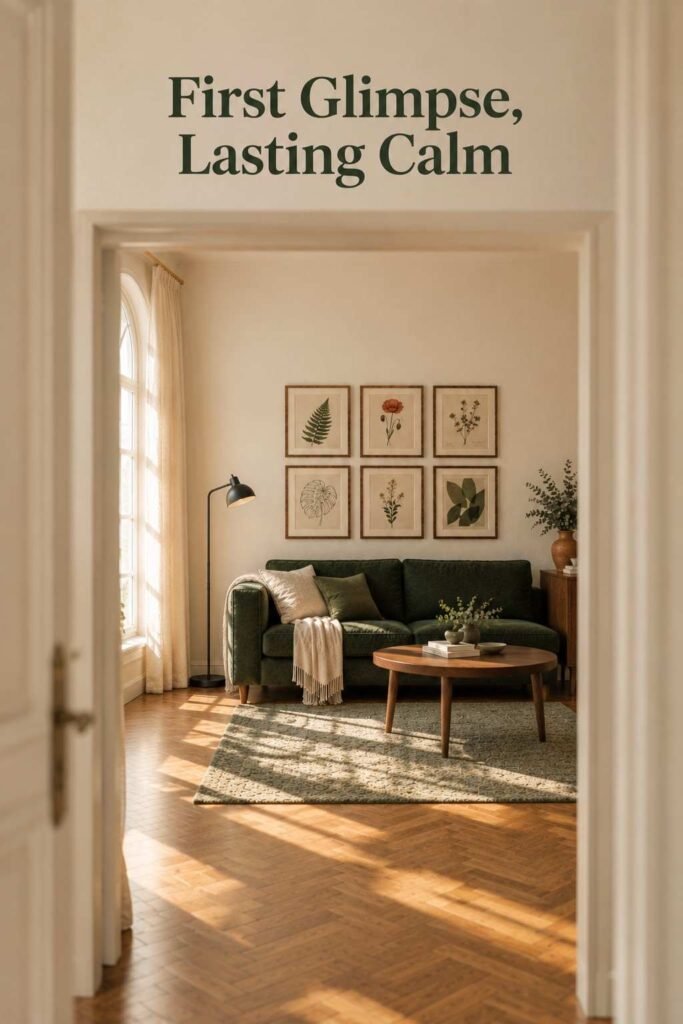
Different rooms have different needs, from humidity to mood to light. These ideas match the art to the space.
20. Bathroom Fern Prints Behind Protective Glass
Bathrooms see steam and splashes, so use sealed frames with glass. Ferns, eucalyptus, and seagrass prints suit the spa-like feel. Avoid unsealed paper or canvas near showers.
21. Kitchen Herb and Vegetable Botanicals
Basil, rosemary, thyme, and artichokes make cheerful kitchen art. A row of small herb prints above a counter feels practical and friendly. Choose easy-to-wipe frames with glass fronts.
22. Soft Lavender and Peony Prints for Bedrooms
Muted purples, blush pinks, and pale greens encourage a restful mood. Hang a pair above a headboard or a single large print on the wall opposite the bed, where you will see it first thing each morning.
23. Tall Vertical Prints for Hallways and Entryways
Narrow spaces call for narrow art. Tall, slim frames with a single stem or branch draw the eye upward and make ceilings feel higher. Repeat two or three along a hallway for rhythm.
How to Choose the Right Botanical Wall Art
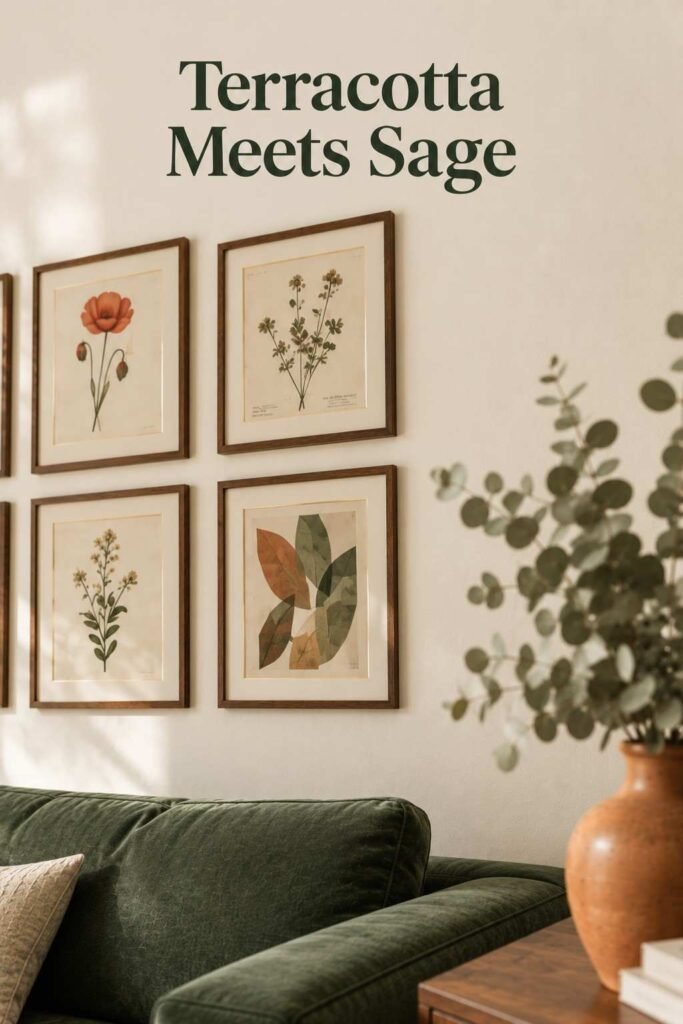
With so many options, a few simple rules keep your decisions clear. Begin with color. Look at the tones already in your room, such as the sofa, curtains, or rug, and pick art that echoes at least one of them. Green looks natural almost everywhere, but a print with a touch of warm terracotta or soft blue can tie a whole room together. If you want a more dramatic focal point, explore our collection of Luxury wall art living room pieces that turn a plain wall into a statement.
Next, think about scale. A tiny print on a large wall looks lost. As a general rule, art above furniture should span about two-thirds to three-quarters of the furniture’s width. Also consider style consistency. You can mix vintage and modern pieces, but a shared color, frame finish, or mat keeps the group looking planned rather than random.
Hanging and Spacing Tips That Make a Difference
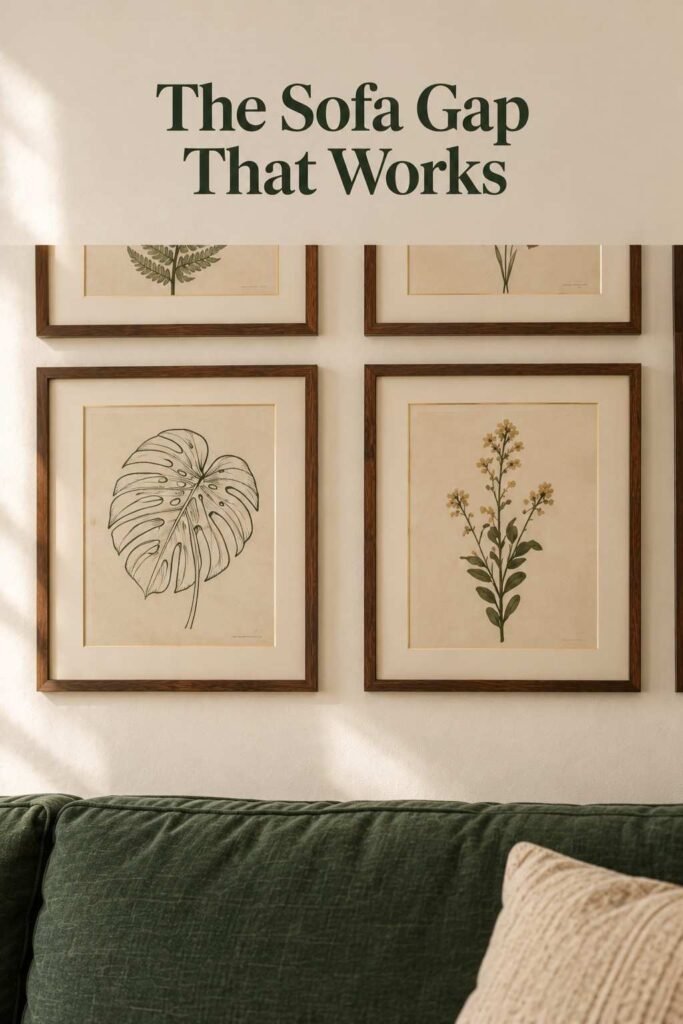
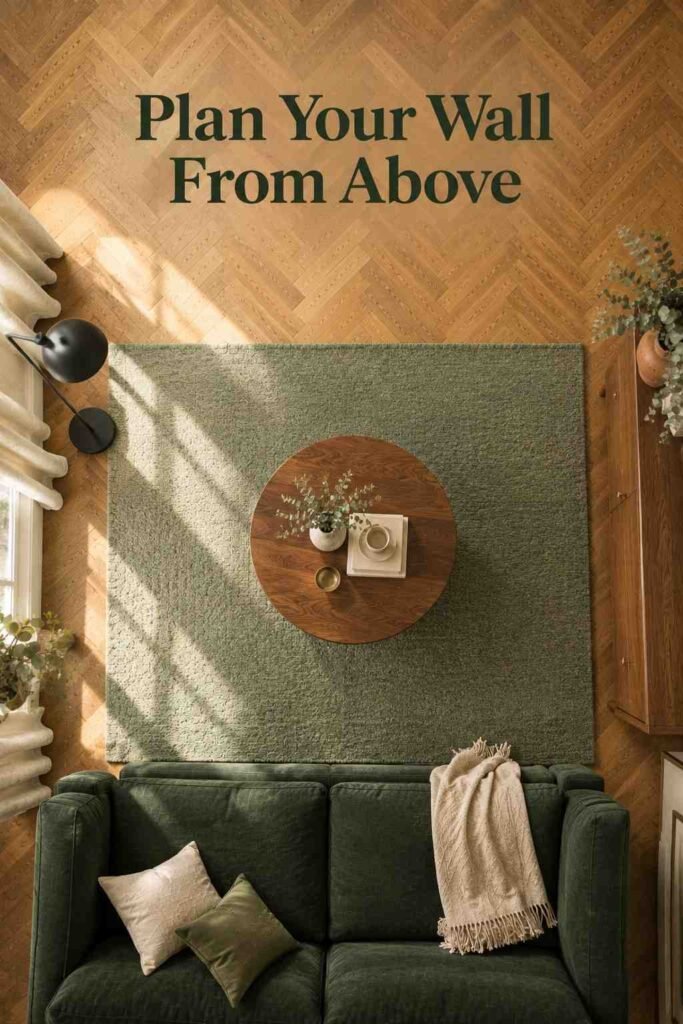
Placement affects how finished your art looks. Museums commonly hang art with its center at about 57 inches from the floor, which is close to average eye level. Use this as your starting point for a single piece. When hanging above a sofa or console, leave roughly 6 to 10 inches between the furniture and the bottom of the frame. For a soft, seasonal touch, a Cherry Blossom wall decor piece brings delicate branches and gentle color to any space.
For gallery walls, lay everything on the floor first and rearrange until it feels right. Trace each frame on paper, tape the paper templates to the wall, and adjust before making any holes. This one step saves many patched nail marks. Keep gaps between frames consistent, usually 2 to 3 inches, so the group reads as one arrangement.
Framing and Material Choices
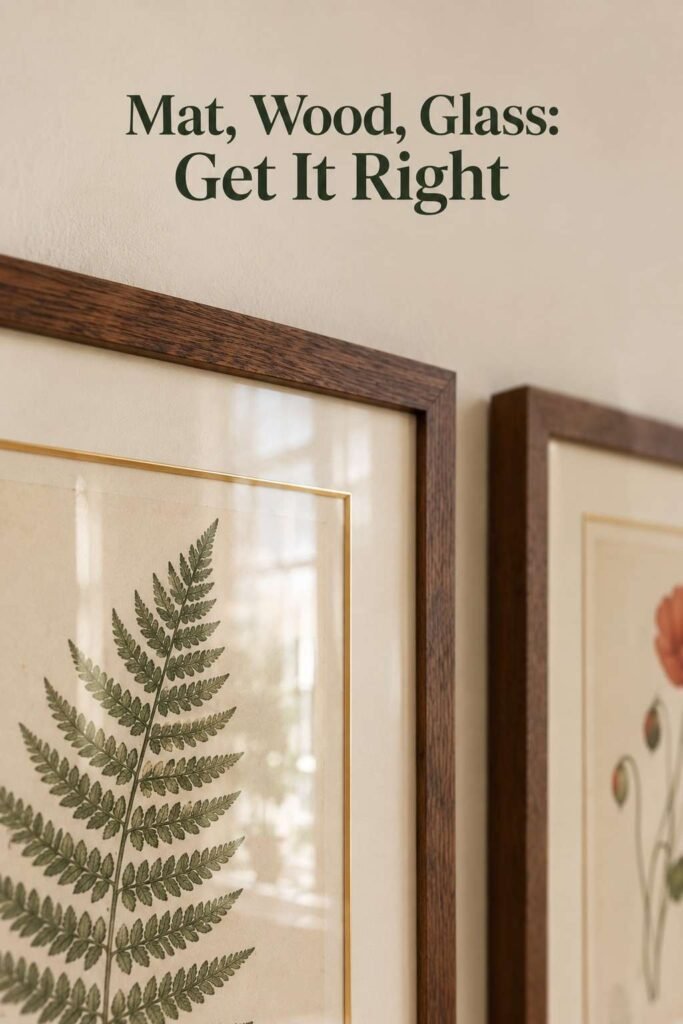
Frames shape the mood of botanical art. Natural oak or walnut suits vintage prints and gives warmth. Thin black metal feels modern and crisp. White frames keep the focus on the plant itself and work well in Scandinavian and coastal rooms. A wide white mat makes even a small print look considered.
For paper prints, choose acid-free mats and, where possible, UV-filtering glass. These protect delicate colors from fading and yellowing. Canvas needs no glass, but it should stay away from steam and grease. Pressed plants must always sit behind glass, since exposure to air and moisture will break them down quickly.
Caring for Your Botanical Artwork
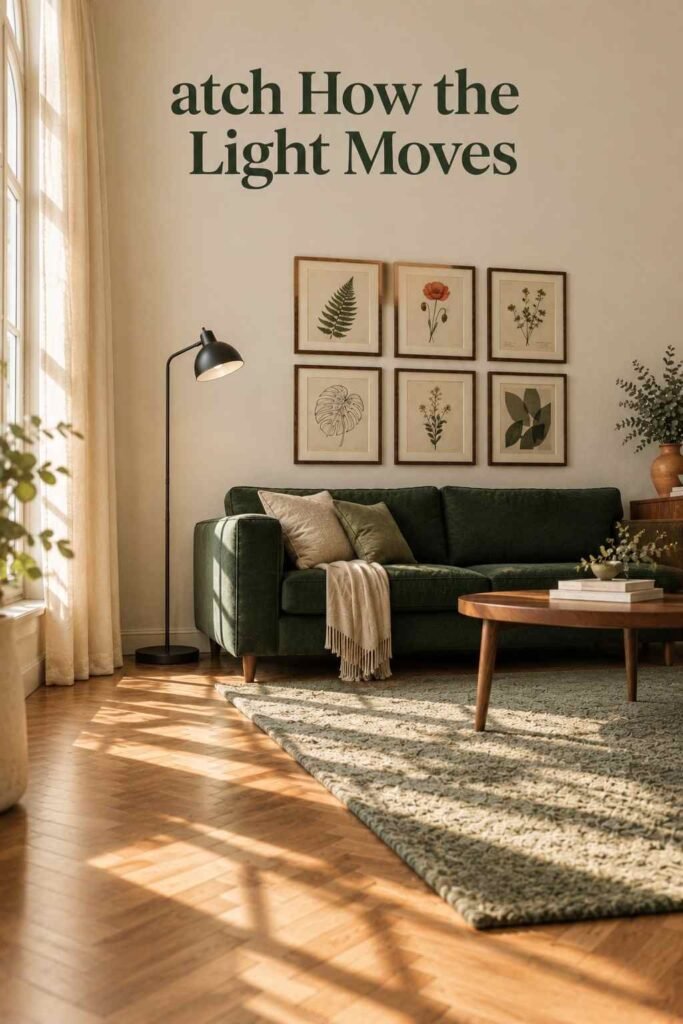
Good care keeps art looking fresh. Avoid hanging prints in direct sunlight, which is the most common cause of fading. Dust glass gently with a soft, dry cloth, and spray cleaner onto the cloth rather than the frame so liquid does not seep inside. Check frames once or twice a year to make sure the backing is secure.
If a room is humid, keep an eye out for spots or ripples on paper. Moisture trapped behind glass is a warning sign. In that case, remove the print, let it dry in a shaded, airy place, and reframe it with fresh backing. A little attention now can protect a favorite piece for decades. To see more design inspiration and finished room ideas, visit Outinteriors and browse the latest collections.
Conclusion
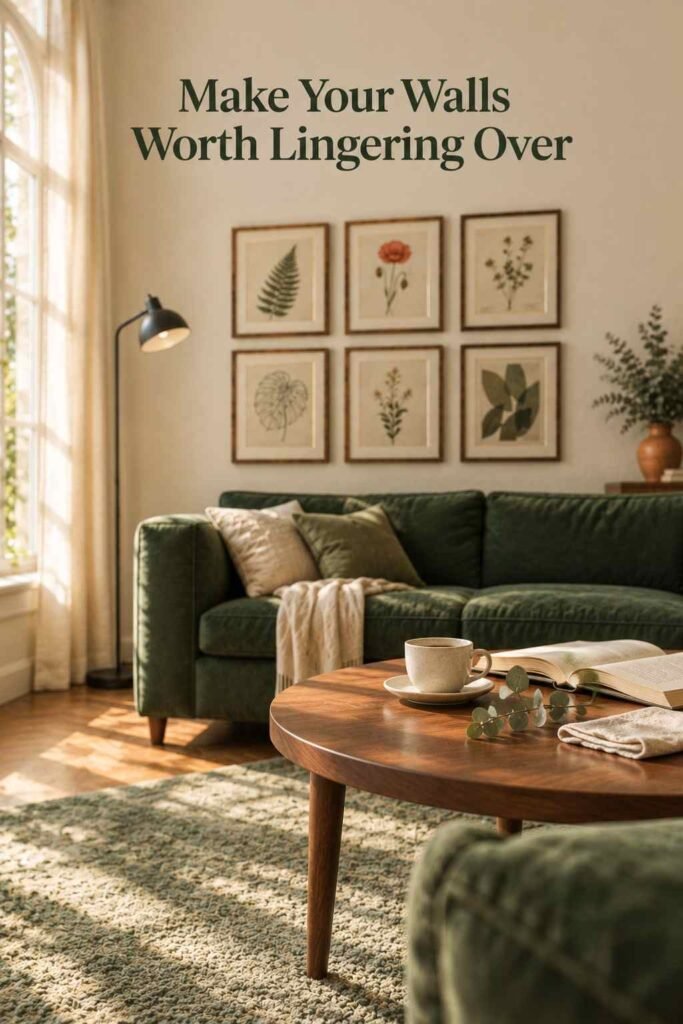
Choosing 23 botanical wall art ideas is really about choosing how you want your home to feel. A framed vintage plate can make a study feel thoughtful. A large leaf canvas can bring energy to a living room. A few pressed flowers can turn a quiet corner into something personal. Start with one wall, one style, and one piece that makes you smile. Then let the collection grow slowly. With careful placement, protective framing, and a little patience, your walls will hold the calm and beauty of the garden all year round.
Frequently Asked Questions
1. What is botanical wall art?
It is artwork that features plants, flowers, leaves, or branches. It includes scientific-style illustrations, watercolors, photography, pressed specimens, and abstract designs inspired by nature.
2. Which rooms suit botanical wall art best?
Almost any room works. Living rooms and bedrooms suit larger or softer pieces. Kitchens welcome herb prints. Bathrooms do well with ferns, as long as the frames are sealed and protected from moisture.
3. How many pieces should I hang together?
Odd numbers such as three or five often feel balanced. That said, a well-spaced pair or a single large print can be just as effective. Let the wall size guide you.
4. Can I mix different botanical styles on one wall?
Yes. Keep one element consistent, such as frame color, mat width, or a shared color palette. This ties different styles together and avoids a cluttered look.
5. How do I stop botanical prints from fading?
Keep them out of direct sunlight and use UV-filtering glass when possible. Acid-free mats and quality paper also help preserve color over time.
6. What size botanical print should go above a sofa?
Aim for artwork that is about two-thirds to three-quarters of the sofa’s width. If you use several pieces, measure the whole group as one unit.
7. Are botanical prints a good choice for renters?
Very much so. Prints, framed panels, and lightweight hangings are easy to swap. Adhesive hanging strips can also protect walls when nails are not allowed.