Backyard Jacuzzi Setup Ideas for a Private Spa Retreat
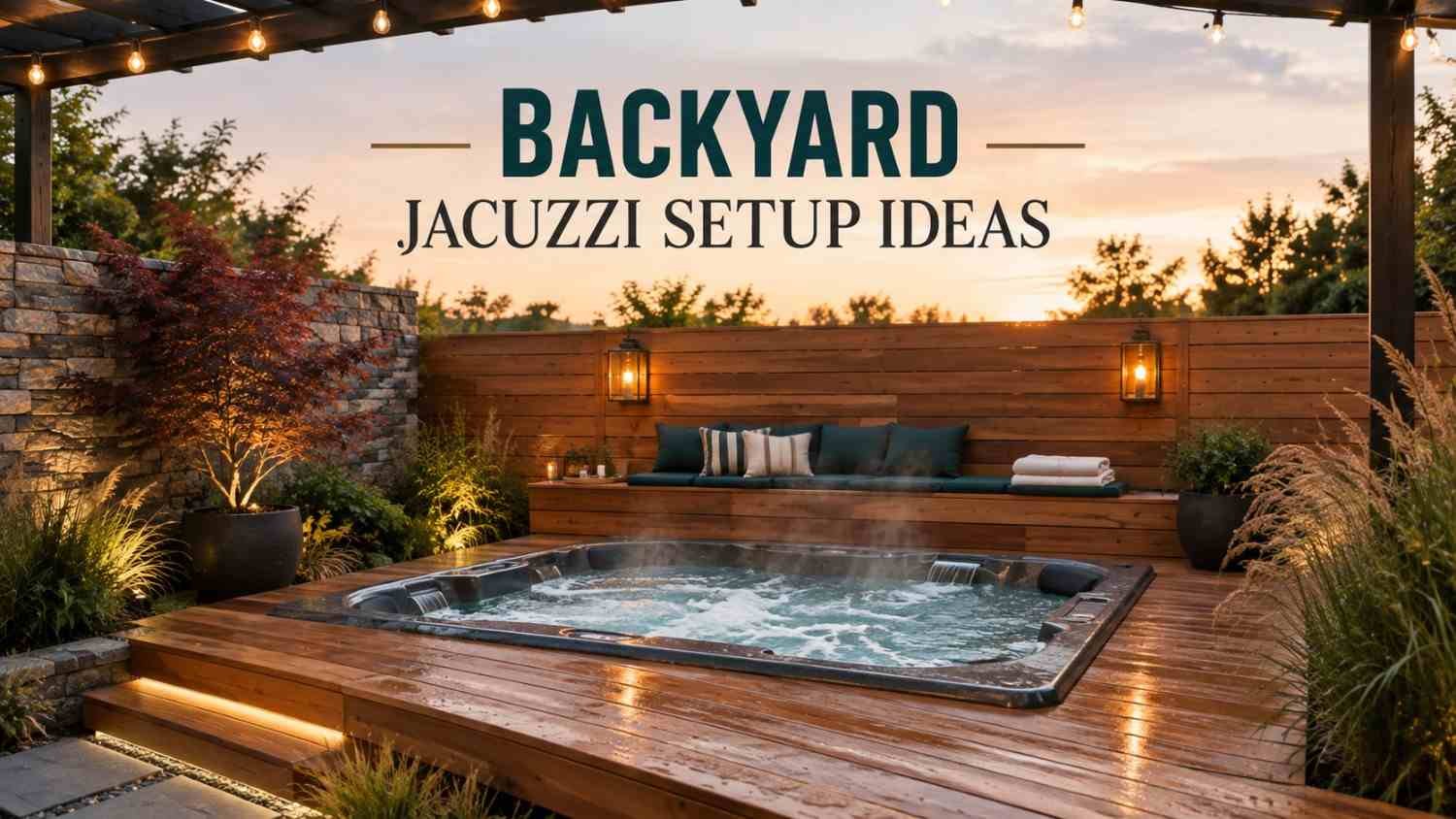
Picture a cool evening, steam rising from warm water, and the noise of the day fading into the trees. That is the promise of a well-planned backyard jacuzzi setup. But great spa corners rarely happen by accident. They come from smart choices about the base, the power supply, privacy, and the space around the tub. This guide shares 23 ideas that work in real yards, from tiny patios to wide lawns. Each idea includes a practical tip, so your spa looks good and works well for years.
Plan Your Backyard Jacuzzi Setup Before You Buy
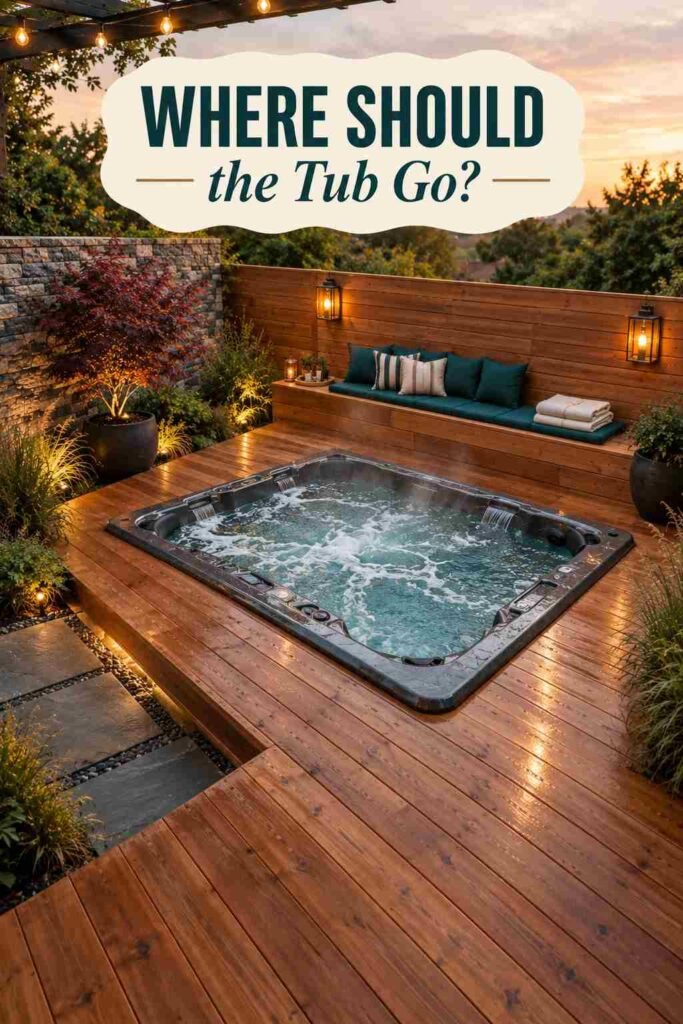
Start with the ground. A full tub can weigh 3,000 to 5,000 pounds or more once it holds water and bathers. Most manufacturers recommend a level, reinforced concrete pad about 4 inches thick, or a deck engineered for that load. Next, think about power. Many full-size tubs need a dedicated 240-volt, GFCI-protected circuit, often rated at 50 amps. Smaller plug-and-play models run on 120 volts. Hire a licensed electrician, because code usually requires a shutoff switch in sight of the tub and about 5 feet away.
Then check permits, HOA rules, and barrier or cover requirements before you spend a dollar. Leave clear access to the service panel, and plan drainage so runoff does not pool near your foundation. Budget honestly, too. Prices vary widely by brand, size, and region. Portable acrylic tubs often run from about $4,000 to $15,000, while custom built-in spas cost more once digging and finishing are added. Also, “Jacuzzi” is a brand name. Most people use it to mean any hot tub, and every idea below fits any brand.
Deck and Patio Backyard Jacuzzi Setup Ideas
1. Sink the Tub Into a Deck
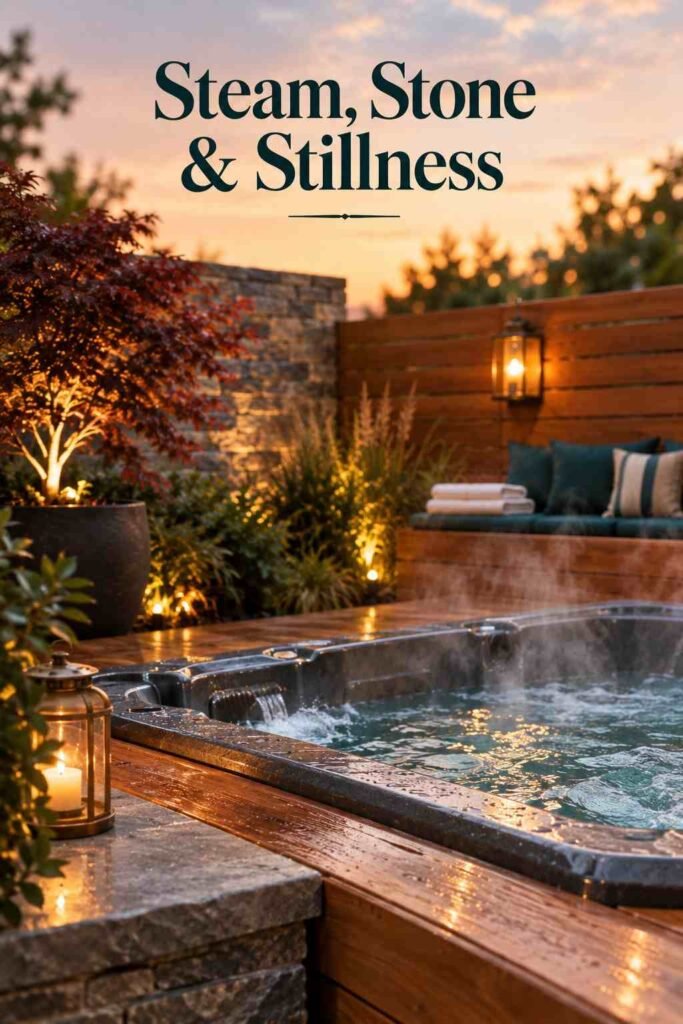
A deck-integrated tub looks built-in without deep digging. Frame the deck around the shell so the rim sits close to floor level. Use slip-resistant composite or sealed hardwood boards, and keep one section removable for repairs. Water is heavy, so have a structural professional check the joists first. This layout suits raised patios and gives guests of all ages easy, step-in access.
2. Build a Raised Platform With Steps
Sloped yards need a level stage. A raised platform solves the slope and turns the tub into a focal point. Add wide steps, sturdy handrails, and low step lights for safe evening entry. Wrap the base in cedar slats or stone veneer to hide the frame. Leave a hinged panel for the equipment bay. The extra height also lifts your view above nearby garden beds.
3. Lay a Paver Patio Around a Concrete Pad
Pour the reinforced slab first, then extend the patio around it with bluestone, porcelain pavers, or brick. Slope the surface slightly away from the tub and your house so water drains. Add a wide walkway from the back door, which makes cold-weather trips feel short. Loose pavers alone rarely give the firm, even base a tub needs, so treat them as a finish, not a foundation.
4. Cover the Tub With a Pergola
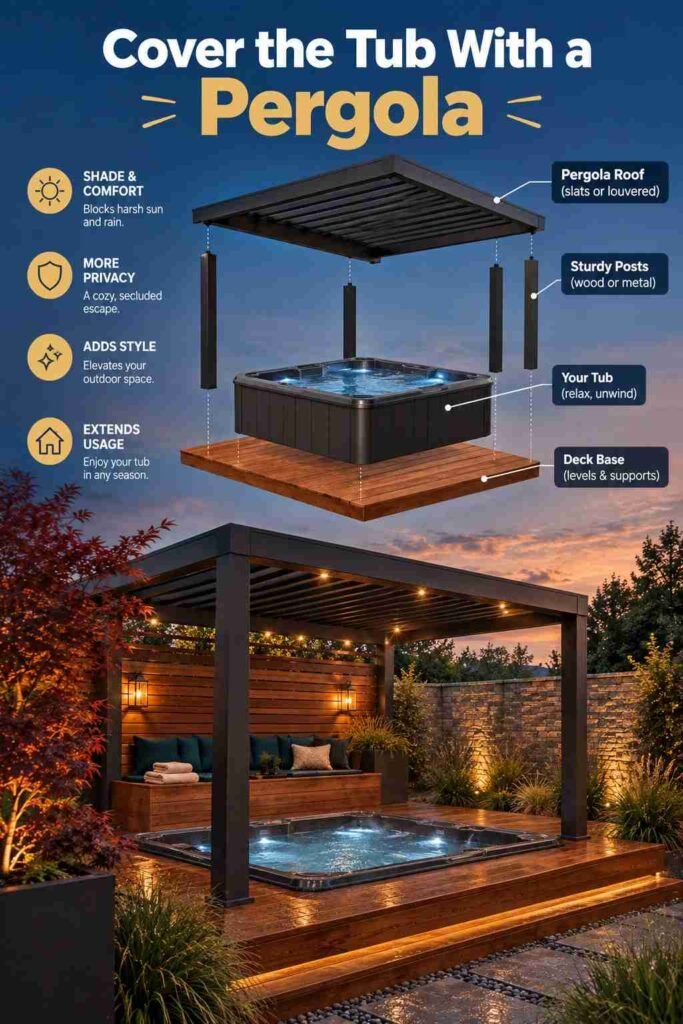
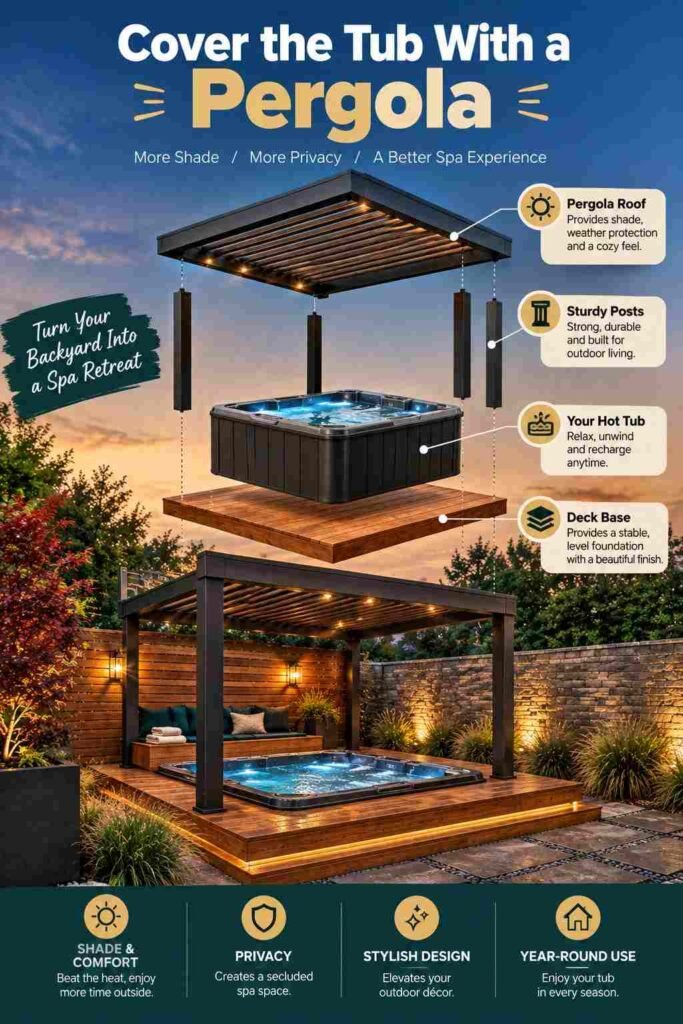
A pergola frames the tub and adds summer shade. Anchor the posts to the deck or slab, never to the tub itself. Choose a slatted or louvered roof so heat and steam can escape. Hang string lights from the beams and train climbing vines overhead for a soft ceiling. Keep the roof high enough that you can stand in the water without bumping anything.
5. Pair the Spa With a Pool
If you already have a pool, place the spa beside it. A built-in spa with a spillover edge sends warm water cascading into the pool, adding sound and movement. Even without a spillover, a shared stone wall creates one unified water zone. Keep both equipment areas accessible and follow local barrier rules. Lighting across both surfaces makes the yard glow at night.
Natural Garden Jacuzzi Setup Ideas
6. Wrap the Tub in Natural Stone
Stone makes a tub feel like part of the land. Use ledgerstone or fieldstone veneer around the cabinet, and add a wide rim for sitting. A few boulders can hold a small waterfall. Use a removable panel at the service side so repairs stay simple. Warm gray and sand tones pair well with wood. Choose a textured finish, because smooth stone gets slippery when wet.
7. Create a Tropical Grotto
Large-leaf plants, ferns, and palms create a lush, sheltered mood. Choose container plants that suit your climate and drop few leaves, since debris clogs filters. Set pots at different heights to layer the view, then aim a few soft uplights at the foliage. In cold regions, use hardy hostas and ornamental grasses, or move tender plants indoors for winter. A wooden screen behind the plants completes the hideaway.
8. Borrow From Japanese Soaking Gardens
Calm design works especially well around water. Use raked gravel, a few carefully placed rocks, a Japanese maple, and clumping bamboo in a planter. Keep the palette quiet: greens, grays, and natural wood. A low bench holds towels and tea, and a stone lantern adds glow without glare. Fewer objects, placed with care, do more than a crowded design.
9. Go Rustic With a Cedar Wrap
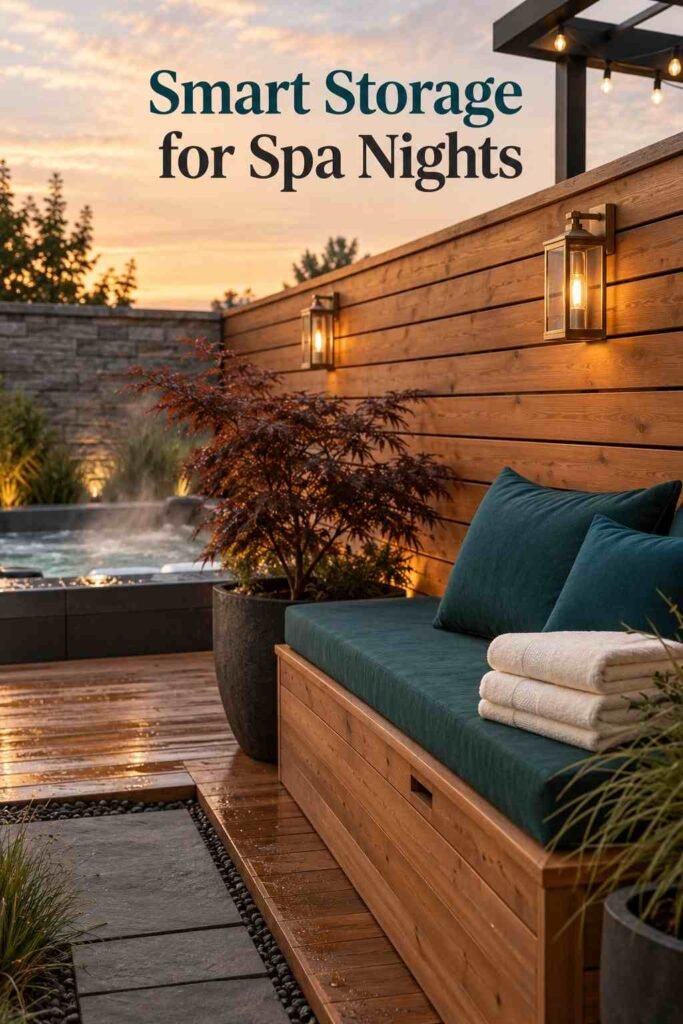
Cedar resists weather well and smells wonderful when warm. Wrap the tub in horizontal boards, then build a bench with lift-up storage for towels and supplies. Leave a hinged panel for equipment access. Seal the wood on a schedule to keep the color, or let it silver on purpose. This look suits farmhouses, cabins, and wooded lots, and it often costs less than full stone cladding.
10. Try a Desert-Style Xeriscape
Dry climates call for a dry-garden look. Use gravel, large boulders, agave, yucca, and grasses that need little water. Stucco or block walls give shade and a clean backdrop, and a shade sail overhead protects both the water and the bathers from strong sun. Keep the cover on between soaks, because dust and heat both hurt water quality. Low-water planting keeps upkeep light.
Small-Space and Budget Backyard Jacuzzi Setup Ideas
11. Tuck the Tub Into a Corner
Corners give privacy almost for free. Two fence lines already provide shelter, so you only need a small screen or planter to finish the enclosure. Leave a few feet of clearance on the service side. Many compact tubs measure roughly 5 to 6 feet across, which fits small yards without dominating them. Add a narrow shelf for drinks, and the corner looks intentional.
12. Use a Partially Recessed Tub
Setting the tub partly into the ground lowers the rim, which makes entry easier and the profile sleeker. It needs less digging than a fully in-ground spa. Plan drainage carefully, because water can collect around the cabinet and equipment. Check with the manufacturer that your model allows partial burial. Surround the rim with a low retaining wall and planting to complete the look. If you want more ideas for the space around your tub, browse these Cozy Outdoor Backyard Ideas for seating, lighting, and planting layouts.
13. Start With an Inflatable Plug-and-Play Tub
If you rent, or want to test the habit first, an inflatable tub is the gentlest entry into a backyard jacuzzi setup. Many models run on a standard household outlet and cost far less than rigid tubs. Set it on a flat, smooth patio or a heavy-duty ground mat, and use a GFCI-protected outlet. Inflatables hold heat less well, so add a good cover and a windbreak.
14. Use a Covered Patio Nook
A roofed patio beside the house shelters the tub from rain and snow. It also shortens the walk from the door. The trade-off is moisture. Plan for open sides or a ceiling fan so steam does not damage siding, ceilings, or windows. Use slip-resistant flooring, outdoor-rated lights, and keep the tub back from the wall for service. Check ceiling height and local rules first.
15. Set the Tub on a Gravel Pad
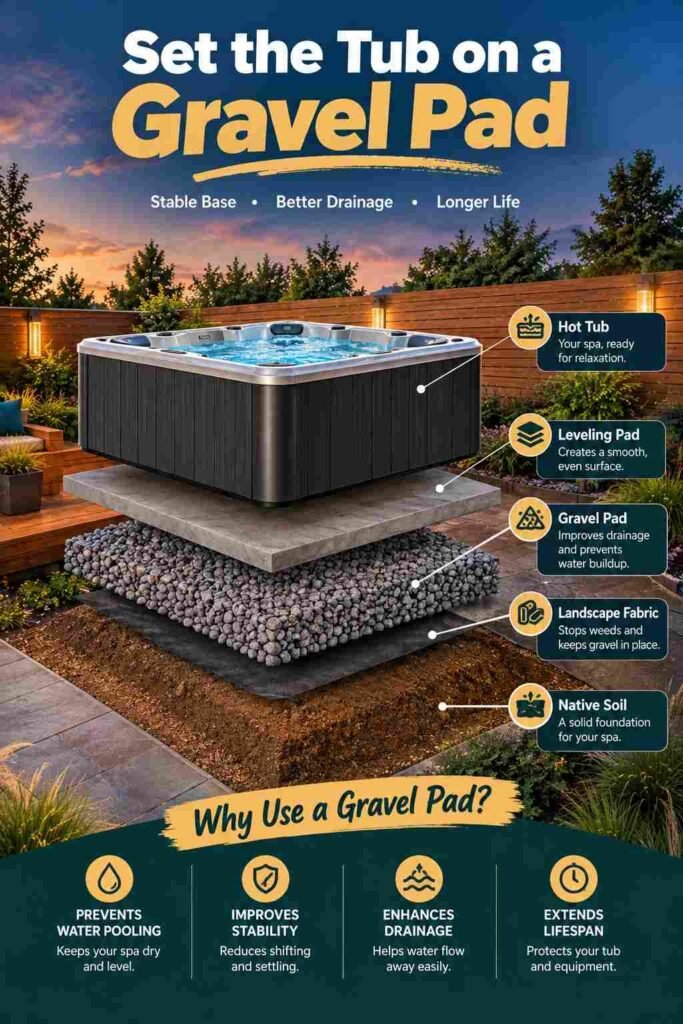
When a slab feels too costly, some makers accept a compacted gravel pad with a spa base grid. Lay landscape fabric, compact crushed stone in layers, and edge the pad with steel or stone. Confirm warranty terms first, because not every brand allows this. Add stepping pavers to keep feet clean. Drainage matters more here, so slope the pad slightly and keep it above surrounding soil.
Privacy and Comfort Upgrades for Any Backyard Jacuzzi Setup
16. Install Horizontal Slat Fencing
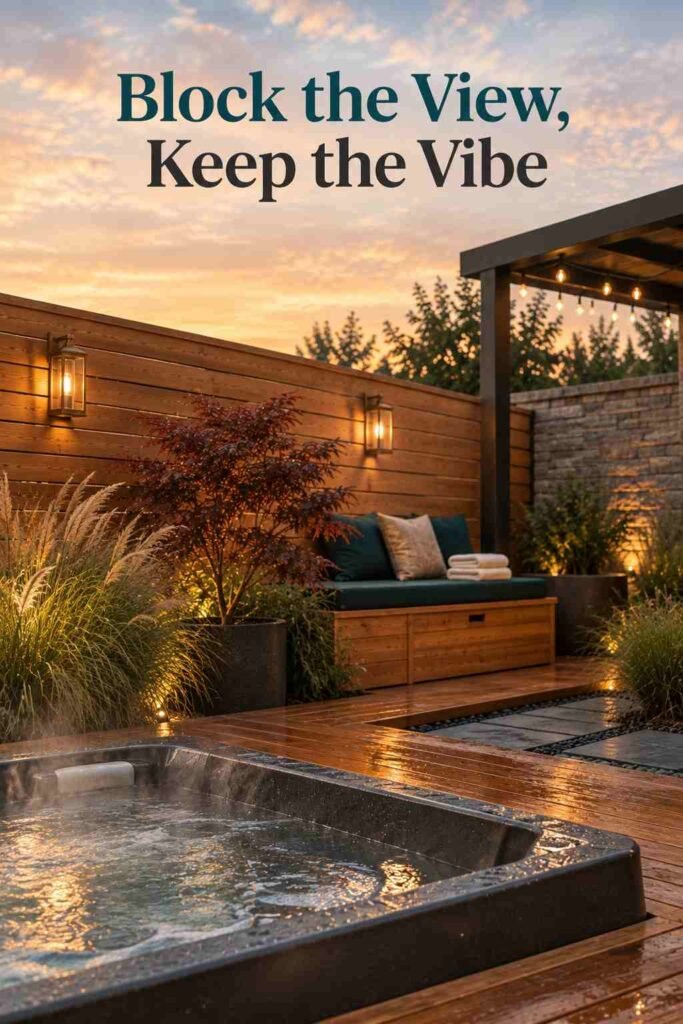
Horizontal slats look modern and block sightlines well. Use cedar, redwood, or composite boards, with tight spacing near the tub and wider gaps elsewhere for airflow. Six feet is a common height, but local fence rules vary, so check before building. A dark, matte stain helps the fence recede, so plants and lights stand out. Add a latching gate for a neat entry.
17. Grow a Living Privacy Screen
Plants soften a fence and help absorb sound. Clumping bamboo in planters, arborvitae, holly, or tall grasses can form a green wall. Pick species suited to your climate zone, and keep roots away from pipes and the pad. Plant at a distance that allows for mature width, so branches never hang over the water. Living screens take time to fill in, so pair them with a temporary panel.
18. Add Retractable or Removable Screens
Outdoor curtains, sliding panels, or freestanding louvered screens give privacy on demand. They suit renters, HOA communities, and yards where permanent walls are not allowed. Choose mildew-resistant fabric or aluminum frames, and secure them against wind. Close them for the evening soak and open them for daytime views. They also block breeze, which keeps the water warmer and reduces heating time.
19. Plan Layered, Low-Glare Lighting
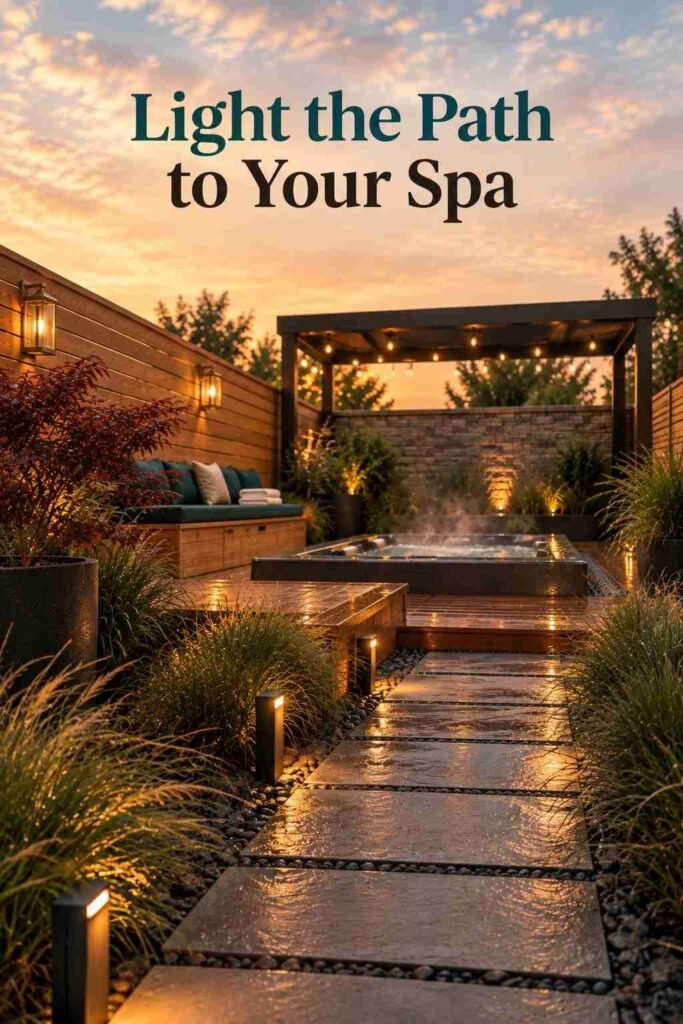
Good lighting makes the tub feel inviting and safe. Use three layers: path lights for steps, soft string lights overhead, and a few uplights on plants or walls. Warm white bulbs near 2700K feel calm. Avoid harsh floodlights aimed at the water, which cause glare and annoy neighbors. Put lights on a timer, and use outdoor-rated, low-voltage fixtures where possible.
Luxury and All-Season Backyard Jacuzzi Setup Ideas
20. Add a Fire Feature for Warm-Ups
A gas fire table or fire pit gives you a place to dry off and linger. Keep it a safe distance from the tub, the cover, and overhanging branches, and follow local rules. Face the seating toward the fire to create a natural gathering circle. Gas units make less smoke than wood, which matters near a spa. Keep throws and a small side table nearby.
21. Pair the Spa With a Cold Plunge or Outdoor Shower
Some people enjoy alternating hot and cool water. A small cold plunge tub or a simple outdoor shower makes that easy. Place the shower near the tub so rinsing off is quick, with a drain that leads away from the pad. If you plan hot-and-cold routines, talk with your doctor first, especially with heart or blood pressure concerns. Add a slatted mat for safe footing.
22. Build an Entertainer’s Surround
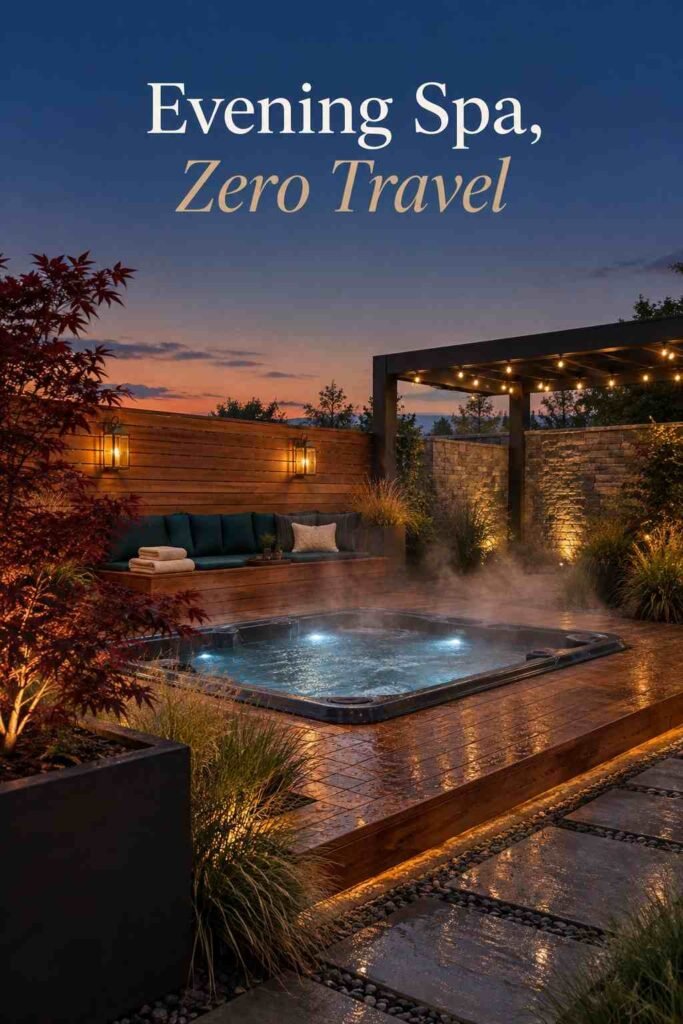
For social yards, build seating and a serving ledge into the surround. A bench along one side keeps guests close, and a narrow counter holds drinks away from the water. Add a weather-rated speaker at a modest volume for the neighbors’ sake. Keep glass out of the tub area and use shatterproof cups. Plan traffic flow so guests reach the tub without crossing your dining space.
23. Create a Four-Season Retreat
A backyard jacuzzi is most rewarding when the air is crisp. Block wind with glass panels or a solid screen, and lay non-slip mats along the path. Use an insulated, locking cover, and keep steps clear of snow and ice. Add hooks for robes and a covered bin for dry towels. Comfort in winter turns a weekend treat into a year-round habit. After a long soak, carry the same relaxed mood indoors with a dark cottagecore bathroom full of moody tones and vintage touches.
Keep Your Backyard Jacuzzi Setup Safe and Clean
Keep water at or below 104°F (40°C), the upper limit commonly recommended by U.S. safety authorities. Use a locking cover whenever the tub is idle. Test and balance the water regularly, clean or replace filters as the manufacturer advises, and drain and refill on a schedule. Many owners do this every three to four months with typical home use. Keep glass, electrical devices, and extension cords away from the water. Never soak alone if you are unwell or have been drinking alcohol. For more home and garden design guides, explore the latest posts from outinteriors.
Final Thoughts on Your Backyard Jacuzzi Setup
The best backyard jacuzzi setup fits your space, budget, and daily habits. Start with a solid base, safe power, and clear local approval. Then layer on privacy, lighting, and greenery. Whether you choose an inflatable tub on a patio or a stone-wrapped spa beside the pool, small details make the difference. Pick two or three ideas from this list, sketch them on paper, and build in stages. Soon that quiet evening soak will become part of your routine.
Frequently Asked Questions:
How much space do I need for a backyard jacuzzi setup?
Most two-to-three-person tubs measure about 5 to 6 feet across. Larger six-to-eight-seat models often reach 7 to 8 feet. Add several feet of clear space around the tub for service access, walking room, and furniture.
Do I need a permit to install a hot tub?
Often, yes. Rules for electrical work, fencing, barriers, and setbacks differ by city and county. Check with your local building office and HOA before you buy or dig.
What is the best base for a hot tub?
A reinforced concrete slab about 4 inches thick is the most common recommendation. Some makers also approve engineered decks or gravel pads with a base grid. Always follow your tub’s manual to protect the warranty.
How much does a backyard jacuzzi setup cost?
Costs vary widely. Inflatable tubs can cost a few hundred dollars. Portable acrylic tubs often run several thousand to about $15,000. Electrical work, the base, and the surround add to the total, and custom built-ins cost more.
Can I put a hot tub on my deck?
Only if a structural professional confirms the deck can carry the full weight of the filled tub. Many standard decks cannot, so reinforcement is often needed.
Can I use my hot tub in winter?
Yes. Use an insulated, locking cover, block the wind, and keep the path clear of ice. Cold air is part of the appeal, but never let the water freeze.