Black TV Wall Ideas to Transform Your Living Room Into a Design Statement

A television is usually the biggest object on a wall, yet most homes treat it like an afterthought — a flat screen bolted onto plain drywall with a tangle of cords underneath. A well-designed black TV wall flips that script. Instead of hiding the screen, it uses dark color and texture to make the television blend in when it’s off and pop when it’s on. Over the last few seasons, this look has moved from designer showrooms into everyday American living rooms, bedrooms, and even dorms. Below are 25 black TV wall ideas, backed by real paint names, materials, and costs, plus the mistakes most guides skip entirely.
Why a Black TV Wall Works So Well
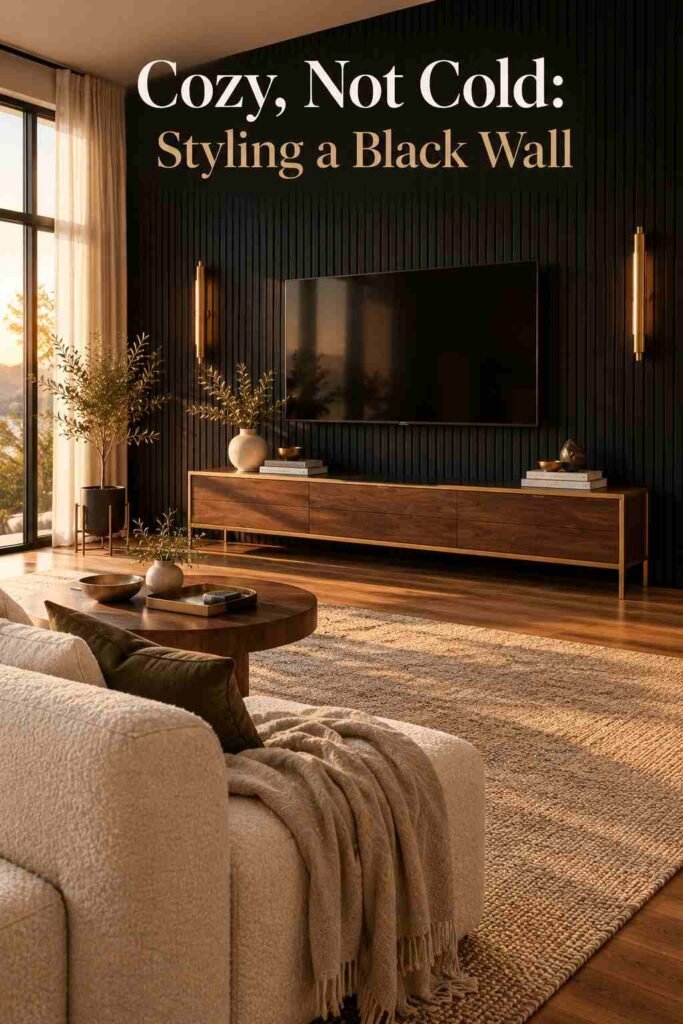
The trick behind a great black TV wall is light, not darkness. Most flat-screen bezels are already black, and paint colors with a low Light Reflectance Value (LRV) — usually under 10 — visually blend with the bezel, making the screen look like it’s floating rather than mounted on a box. This is why designers keep returning to black instead of gray or navy for entertainment walls. A dark backdrop also makes bright artwork, brass fixtures, and greenery stand out more sharply, and it hides fingerprints, scuffs, and dust far better than a white or pastel wall ever could.
Choosing the Right Black Paint for a TV Wall
Not every black is the same, and picking the wrong undertone is the most common reason a black accent wall looks muddy instead of moody.
True Black Shades
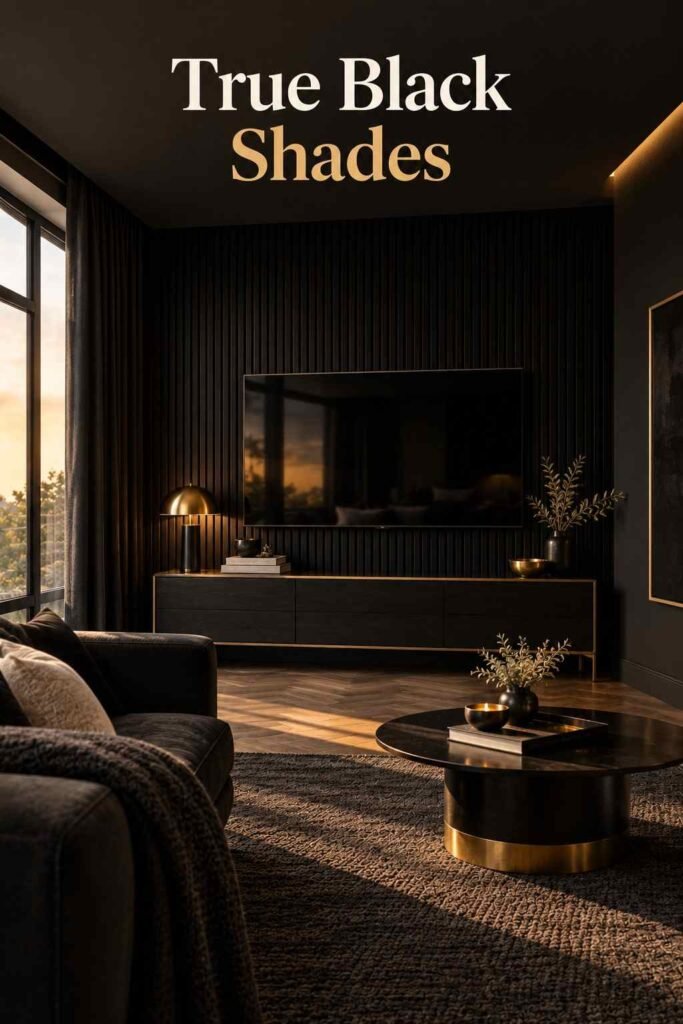
For maximum drama and contrast, go with a true black like Sherwin-Williams Tricorn Black (SW 6258) or Benjamin Moore Jet Black. These crisp, cool-toned blacks work best in rooms with strong natural light or bold white trim, since they read as sharp rather than flat.
Soft, “Almost Black” Shades
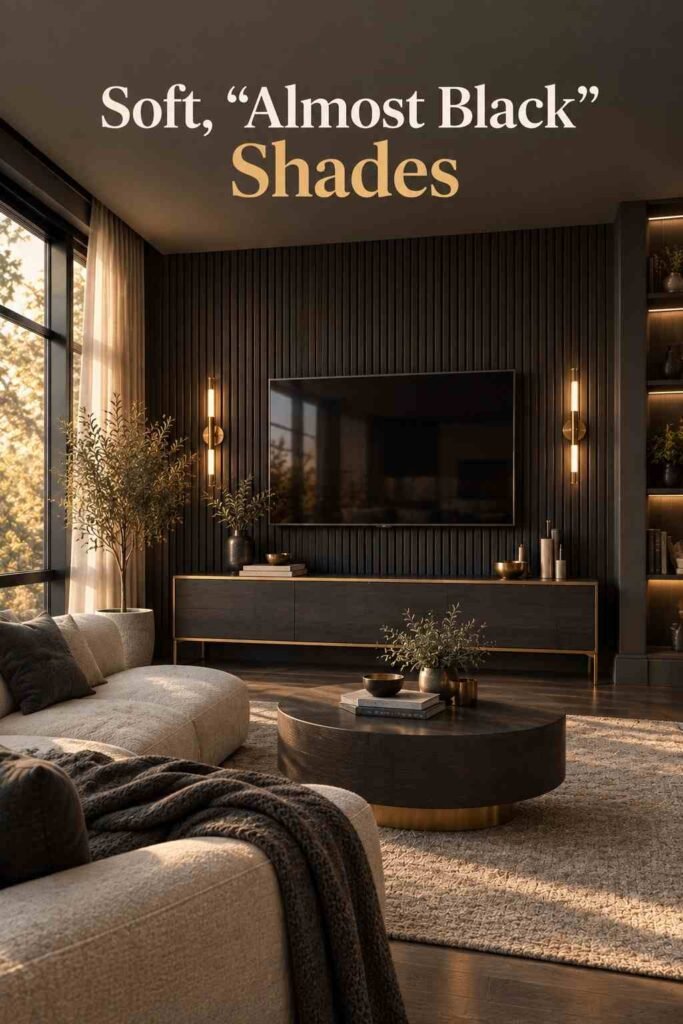
If a stark black feels too harsh, warmer near-blacks soften the effect while keeping the same disappearing-screen trick. Popular options include Sherwin-Williams Iron Ore, Peppercorn, Benjamin Moore Soot, and Farrow & Ball’s Off-Black, all of which carry subtle green, brown, or blue undertones depending on the light.
Best Sheen for a TV Wall
Skip high-gloss finishes directly behind the screen — glossy paint reflects ambient light and creates distracting hotspots during movie night. An eggshell or matte finish absorbs light evenly, keeps the wall looking uniform, and is easier to spot-clean than flat paint.
25 Black TV Wall Ideas for Every Style and Budget
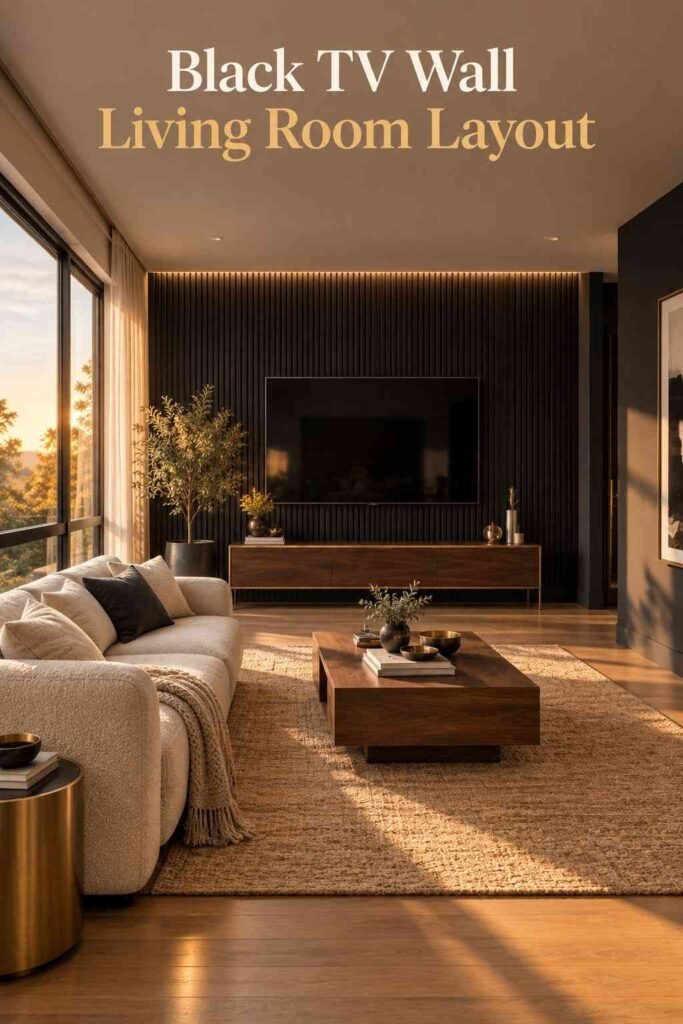

Fluted or slatted wood panels finished in black are one of the most requested looks in modern living rooms right now, adding rhythm without heaviness.

Custom black cabinetry below and beside the TV hides consoles, gaming systems, and cables while keeping the whole wall visually unified.

Pairing black paint or panels with warm wood shelving or a wood console keeps the space from feeling cold.
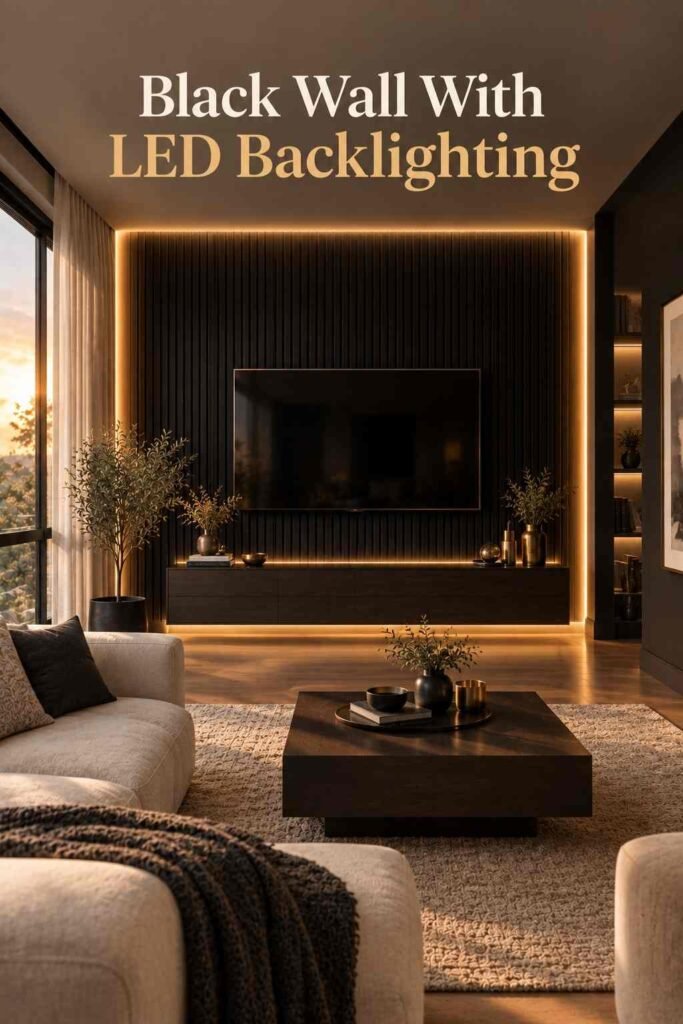
A thin LED strip installed behind or around the television adds a soft glow that reduces eye strain during evening viewing.
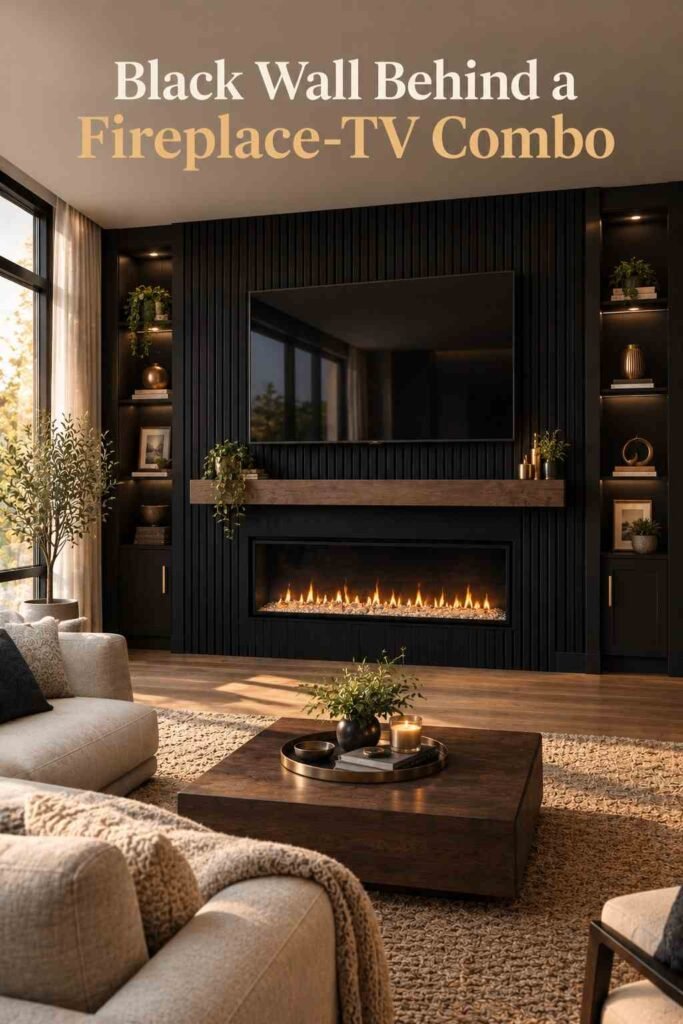
Mounting the screen above a black-clad fireplace surround makes both features read as one cohesive design element.
For more real-home examples that balance bold black walls with soft textiles and warm lighting, outinteriors is a useful place to browse before committing to a final design.
Black TV Wall Mistakes to Avoid
Most guides list ideas without mentioning what actually goes wrong during installation. A few recurring issues: painting only a narrow strip directly behind the TV, which can look like an afterthought rather than an intentional wall; choosing a warm black in a room with cool LED lighting, which can make the paint look purple or muddy; skipping a primer on a previously dark or glossy wall, leading to uneven coverage; and mounting the television too high, which breaks the visual balance a black wall is supposed to create. Testing a sample swatch under both daytime and evening lighting for at least 48 hours before painting the whole wall avoids most of these problems.
How Much Does a Black TV Wall Cost
Budgets vary widely depending on materials. A basic DIY paint job typically runs $50–$150 for paint, primer, and supplies on an average living room wall. Peel-and-stick panels or textured wallpaper generally cost $100–$400, depending on square footage. Wood slat or shiplap paneling, including materials, ranges from $300–$900 for a DIY install, or more if a contractor handles it. Custom built-in cabinetry is the most expensive option, often starting around $1,500 and climbing well beyond that for full-wall, floor-to-ceiling units. Paint remains the most budget-friendly way to get the full effect of a black TV wall in a single weekend.
Lighting and Styling Tips
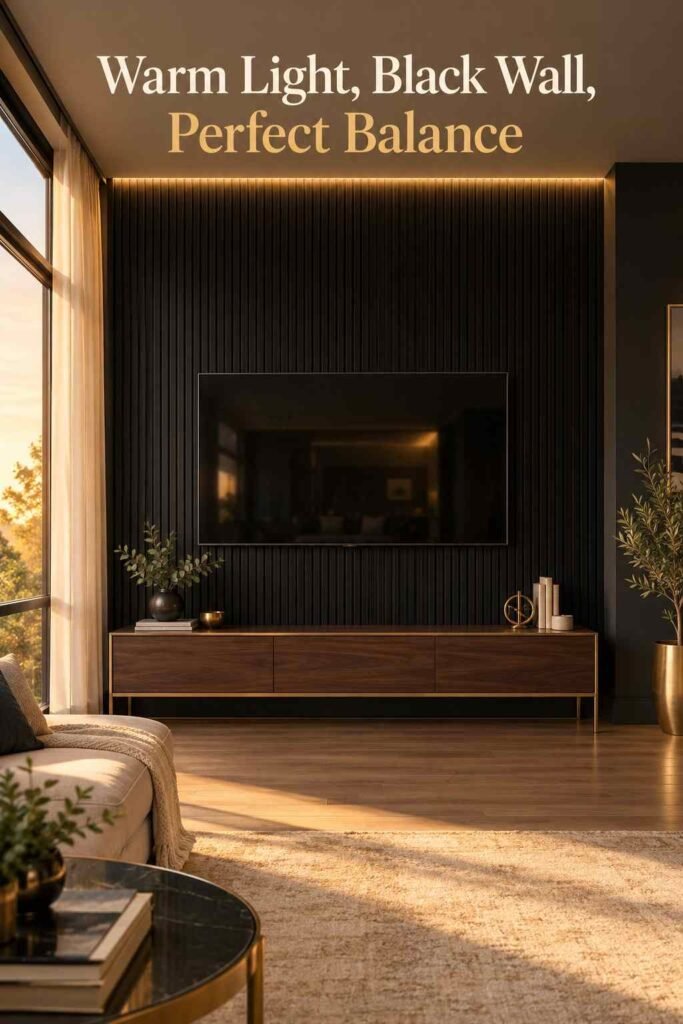
Because black absorbs light rather than bouncing it around a room, lighting placement matters more than usual. Layering a floor lamp, a pair of picture lights, or a backlit LED strip keeps the wall from reading as a flat void after dark. Warm white bulbs (around 2700K) generally complement black walls better than cool white, since they soften the contrast instead of making it feel clinical. Keeping surrounding furniture — sofas, rugs, and curtains — a shade or two lighter than the wall also prevents the whole room from feeling closed in.
Final Thoughts
A black TV wall isn’t just a paint trend; it’s a practical design fix for one of the most awkward features in modern living rooms. Whether it’s a simple coat of matte black, a slatted wood panel install, or a full built-in media wall, the goal is the same: let the television disappear when it’s off and let the room’s personality take over. Start with a sample swatch, test the lighting, and choose the version of this list that matches both your style and your budget — because the best black TV wall is the one you’ll still love in five years, not just five months.
Frequently Asked Questions
Does a black TV wall make a room look smaller?
Not necessarily. Black recedes visually when it’s contained to one wall and balanced with lighter furniture, rugs, and trim. Painting an entire small room black without contrast is what typically makes a space feel cramped.
What is the best black paint for a TV wall?
Sherwin-Williams Tricorn Black and Benjamin Moore Jet Black are popular true-black options, while Iron Ore, Peppercorn, and Farrow & Ball’s Off-Black offer softer, warmer alternatives with less stark contrast.
Should I paint the whole wall black or just the section behind the TV?
Painting the full wall from corner to corner (or floor to ceiling) generally looks more intentional than a narrow strip, which can appear unfinished or accidental.
Can renters achieve a black TV wall look?
Yes. Removable wallpaper, peel-and-stick wood panels, and command-strip-mounted shelving all replicate the look without violating a lease or requiring repainting at move-out.
What furniture pairs well with a black TV wall?
Light wood tones, cream or oatmeal upholstery, and warm metal accents like brass or matte gold keep a black wall from feeling too heavy or cold.
Does a black wall interfere with Wi-Fi or remote signals?
Standard interior latex or acrylic paint does not affect Wi-Fi, Bluetooth, or infrared remote signals. Only certain specialty metallic or radiation-shielding paints can interfere with wireless signals, and those are rarely used for residential accent walls.
Is a black accent wall a good idea for a rental or dorm room?
Yes, with removable materials. Peel-and-stick panels and adhesive wallpaper deliver the same visual effect as paint and can be removed cleanly when it’s time to move out.