Picture Frame Wall Ideas to Turn Blank Walls Into Personal Stories
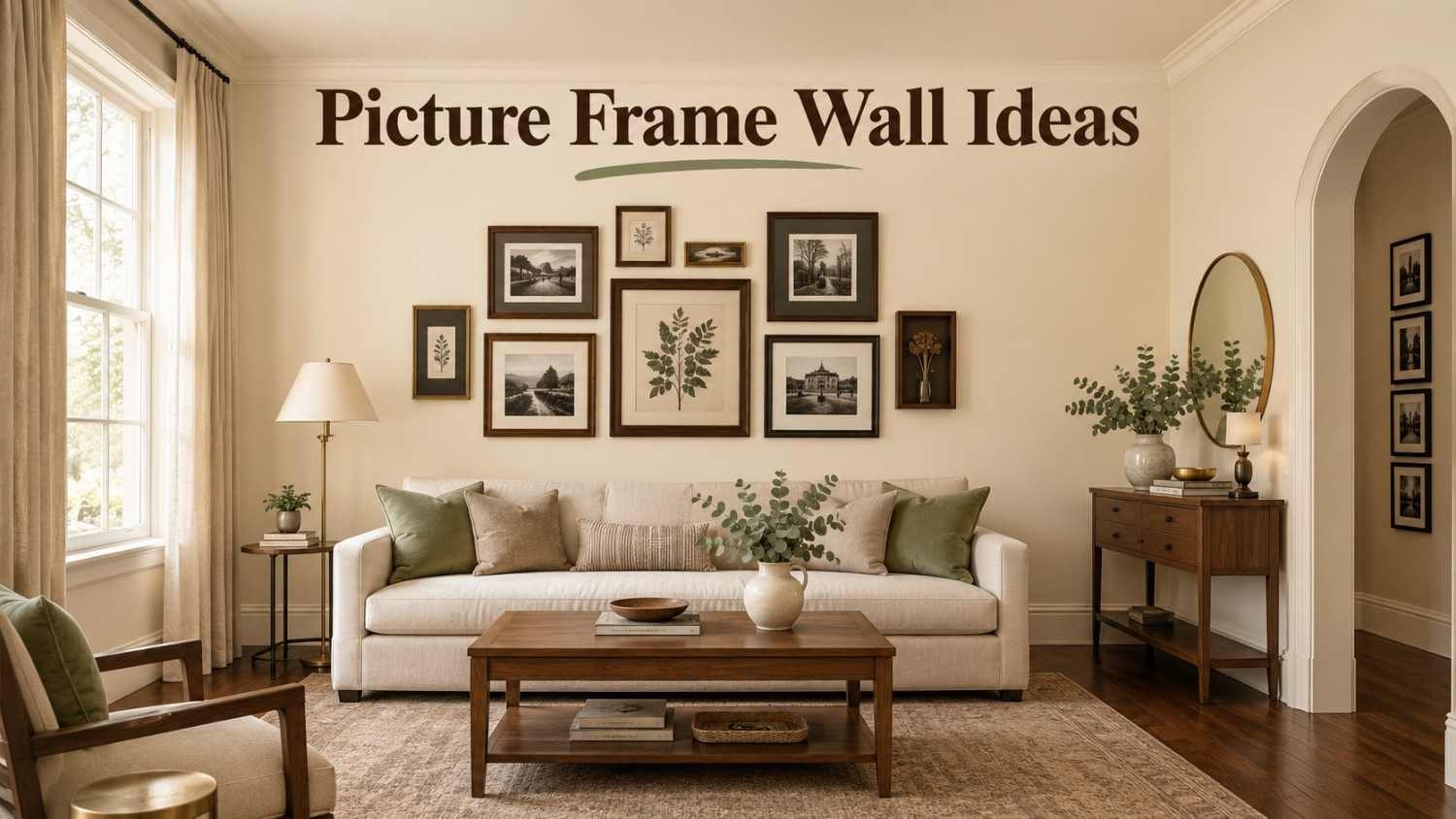
A blank wall feels unfinished. A well-planned frame wall feels like home. Your photos, prints, and small treasures do the talking, and the wall becomes a story guests can read at a glance. This guide shares 24 picture frame wall ideas for every room, budget, and style. You will find layouts for living rooms, stairways, bedrooms, and tight hallways, and each idea comes with a tip you can use today. Grab a pencil, some paper, and a tape measure. By the end, you will know how to plan and hang a display that looks intentional and lasts for years.
Plan First: The Rules Behind Every Great Frame Wall
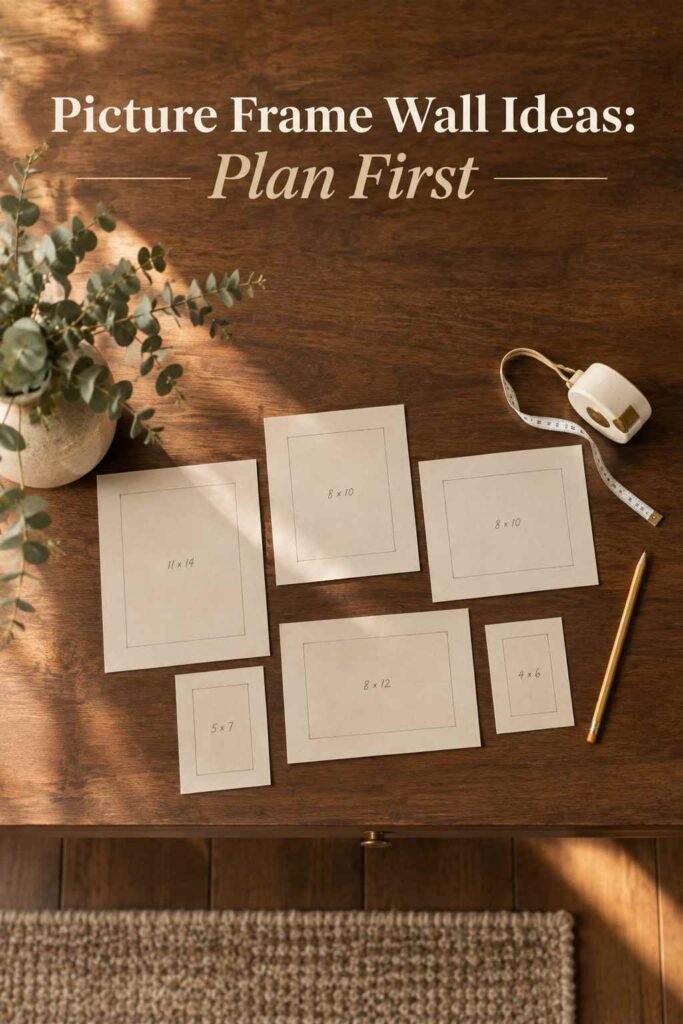
Good walls start with a plan, not a hammer. Measure the wall, then measure the furniture below it. Designers often suggest keeping the display about two-thirds to three-quarters the width of the sofa, console, or bed beneath it. Center the group near 57 inches from the floor, a common gallery height that suits most eye levels. Leave 2 to 3 inches between frames so the group reads as one piece. Cut paper templates for each frame, tape them to the wall, and rearrange until it feels right. Match hardware to frame weight, and use wall anchors for heavy pieces. Keep these basics in mind as you browse the 24 picture frame wall ideas below.
Classic Layouts: Picture Frame Wall Ideas
1. The Symmetrical Grid
Matching frames in even rows create a calm, orderly wall. Use one frame style and one mat size, and keep every gap equal. Six or nine frames suit a sofa or bed well. This layout is unforgiving, so measure twice and level each frame before you move on.
2. The Salon-Style Gallery
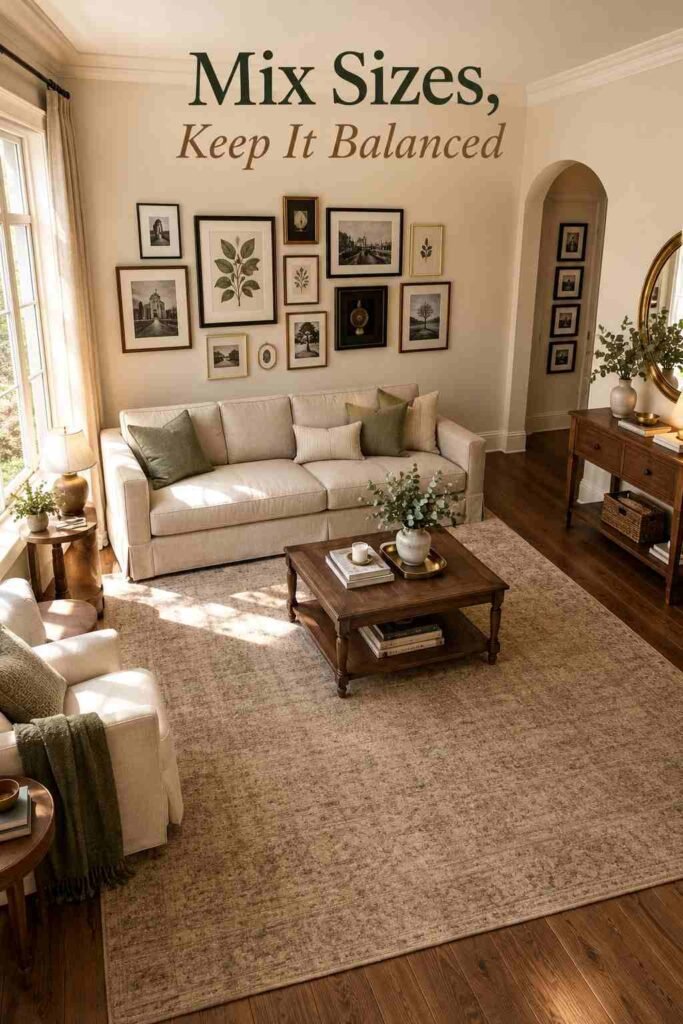
Named after the Paris Salon exhibitions, where art hung close together, this layout mixes sizes, shapes, and finishes. Start with the largest piece near the center and build outward. Keep the outer edge loosely rectangular so the cluster feels planned, not scattered.
3. The Picture Ledge Display
Shallow ledges let you lean frames instead of nailing each one. You can swap images in seconds and layer small frames in front of larger ones. This suits renters and anyone who changes their mind often. Add a small plant or candle for texture.
4. The Single Horizontal Line
A row of frames at one height reads as clean and modern. If sizes vary, align the centers rather than the tops. It works above a headboard, a console, or along a hallway. Space the frames evenly and let the wall color breathe around them.
5. The Vertical Column
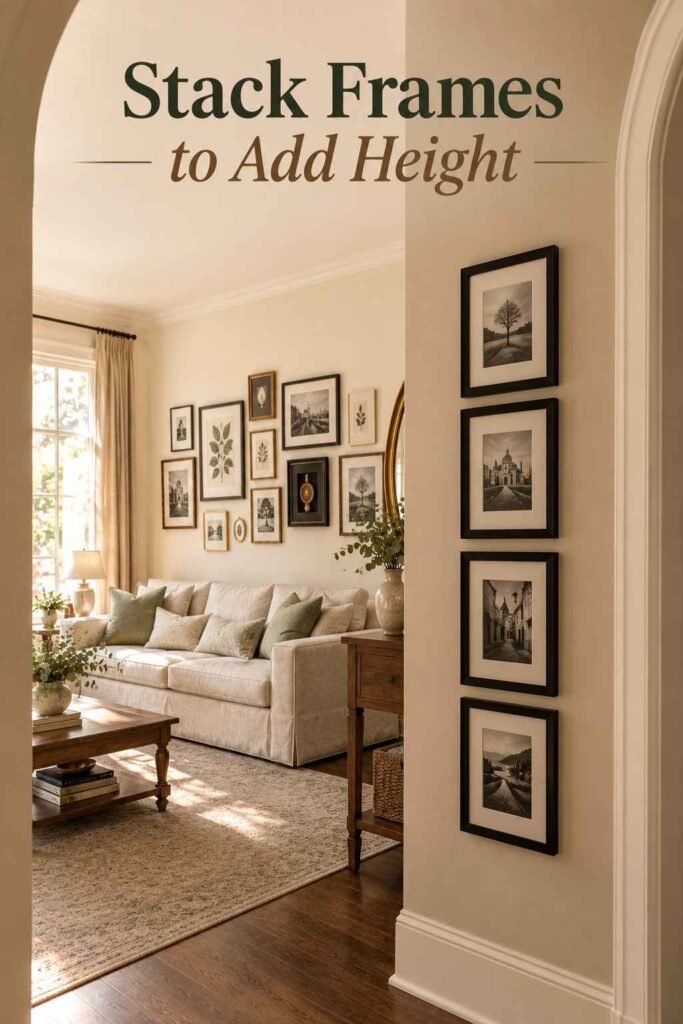
Narrow walls beside doors or windows are hard to fill. A stacked column of three to five frames solves that problem. Keep widths consistent and gaps tight to pull the eye upward. This trick also makes low ceilings feel taller.
6. One Large Frame With Satellites
Anchor the wall with one oversized print, then surround it with three or four small frames. The big piece sets the mood. The small ones add personal touches, like family photos. You get drama without the work of a full gallery.
Room-by-Room Picture Frame Wall Ideas
7. Above the Sofa
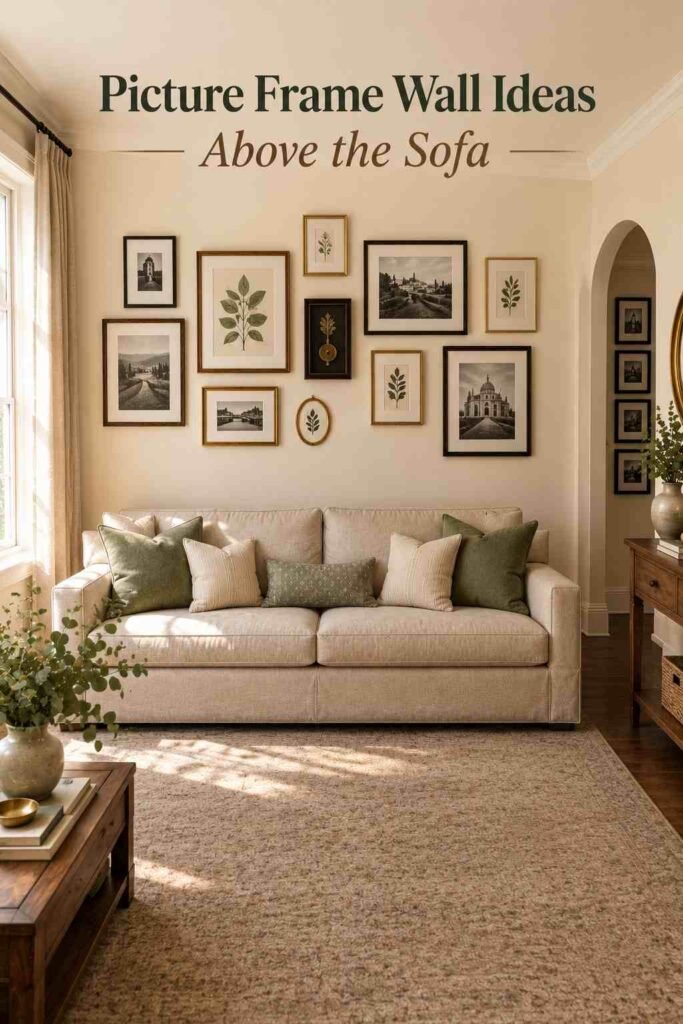
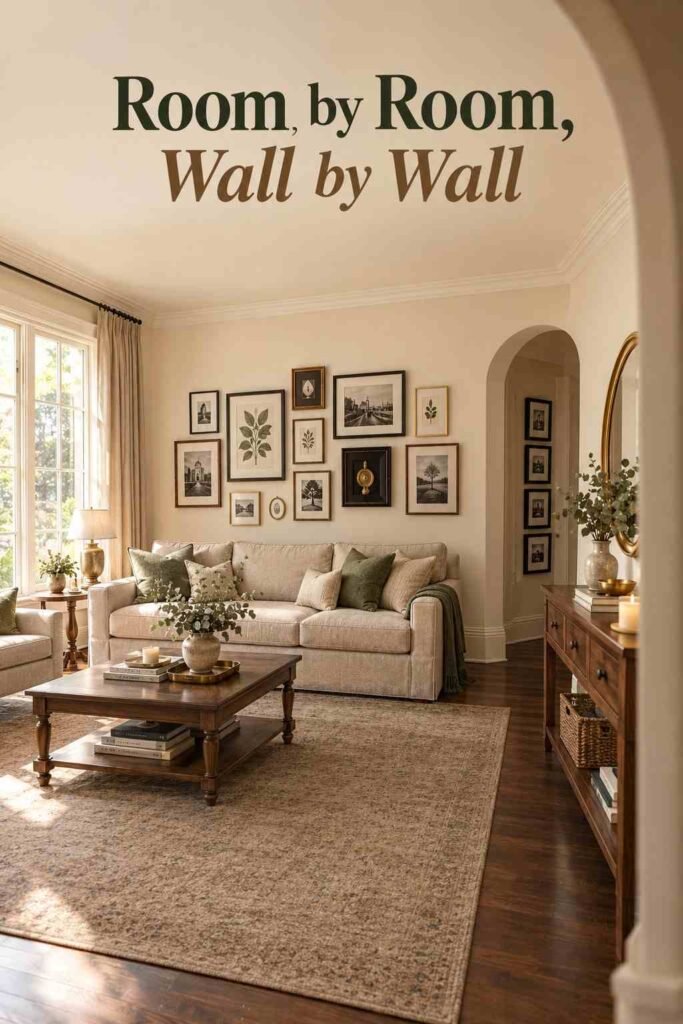
The sofa wall is often the living room’s focal point. Keep the group about two-thirds the width of the sofa. Hang the lowest frame roughly 6 to 10 inches above the back cushions. Mix photos with art prints so the display feels layered, not staged.
8. Along a Staircase
Follow the slope of the stairs. Line up the bottom edges of the frames with the stair angle, or use a stepped arrangement. Hang a family photo timeline in order of age, so climbing the stairs becomes a walk through your history. Use a stable ladder for hanging.
9. In the Entryway
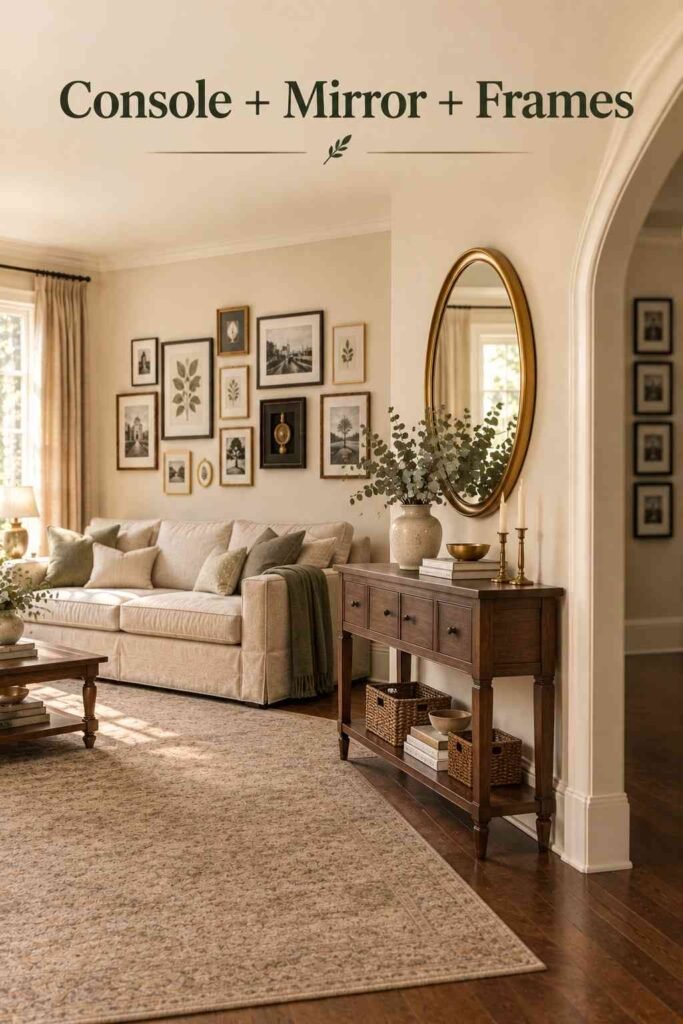
The entry sets the tone for the whole home. Pair a slim console with a cluster of frames above it, and add a mirror to bounce light around. Choose images that welcome guests, such as travel shots or local landmarks. Keep it uncluttered, because entries are often tight.
10. Above the Bed
Choose calm images here, like landscapes, soft abstracts, or wedding portraits. Hang the group a hand’s width or so above the headboard, and keep its width close to the bed’s. Secure heavy frames to studs or use proper anchors, since they sit above your head.
11. In the Dining Room
Dining rooms invite conversation, so pick pieces that spark it. Framed menus, botanical prints, and old family recipes all work well. Hang the group slightly lower than usual, because guests spend most of their time seated. Warm frame tones add coziness under evening light. If you want a display that also works for entertaining, pair your frames with a dining room bar so the wall and the drink station feel like one design.
12. In the Home Office
Mix motivating prints, certificates, and family photos. A tidy grid supports focus better than a busy cluster. Place frames within your natural line of sight from the desk. Check for glare from windows and lamps, since glass can reflect light straight into your screen.
13. In the Kitchen or Breakfast Nook
Small frames with food prints, vintage ads, or herb illustrations suit a nook. Keep them away from the stove and sink, where steam and grease damage paper. Acrylic glazing and sealed backs give extra protection in a busy kitchen.
Style-Led Twists: 6 Ideas From Our 24 Picture Frame Wall Ideas
14. Black-and-White Photography
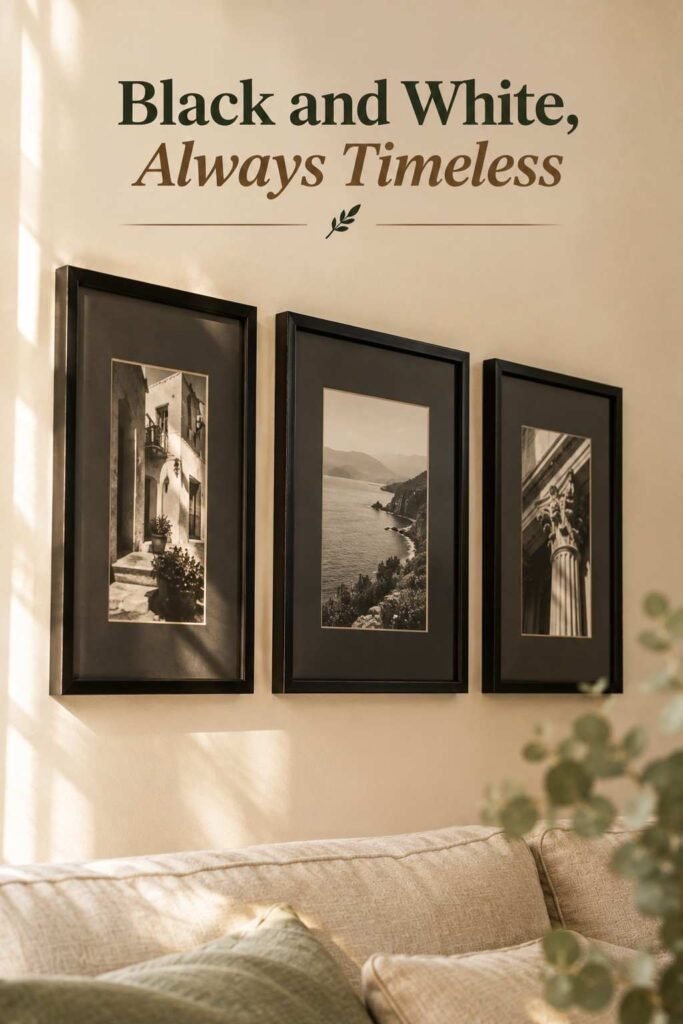
Monochrome images unify photos taken in different places and years. Use black or white frames with wide white mats for a gallery feel. Group by subject, with portraits together and landscapes together. The result looks timeless and pairs with almost any decor.
15. Mixed Metal Frames
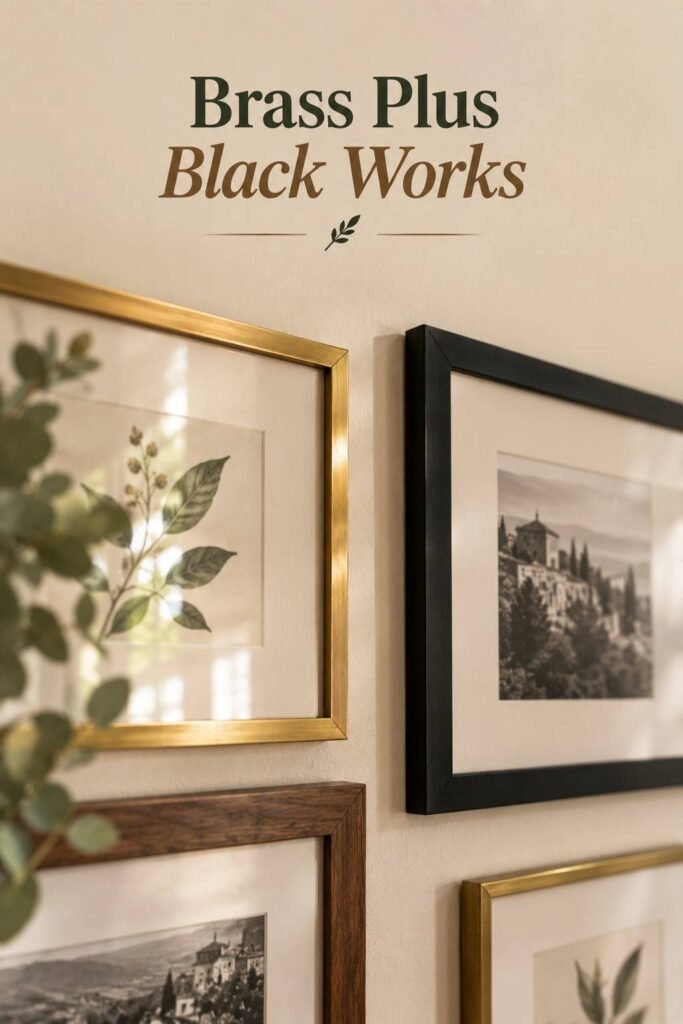
Combine brass, black, and silver frames for depth. Let one metal dominate and use the others as accents. Repeat each finish at least twice so the mix looks planned rather than random. This approach also helps a wall blend with existing light fixtures and hardware.
16. Thrifted and Vintage Finds
Flea markets and estate sales hold ornate frames at low prices. Unify mismatched styles with a coat of spray paint in one color, or keep the worn patina for a collected look. Add old maps or postcards for extra character.
17. Minimalist Wide-Mat Frames
Thin frames with generous mats let each image breathe. Stick to two frame colors and a tight palette. Leave more empty wall around the group than you think you need. Quiet layouts like this suit small rooms and modern homes.
18. Color-Coordinated Frames
Paint or buy frames in one color family, such as sage, navy, or terracotta. The shared color ties different images together. Bold frames on a neutral wall become the room’s accent, so you can skip a feature paint job.
19. Botanical and Nature Prints
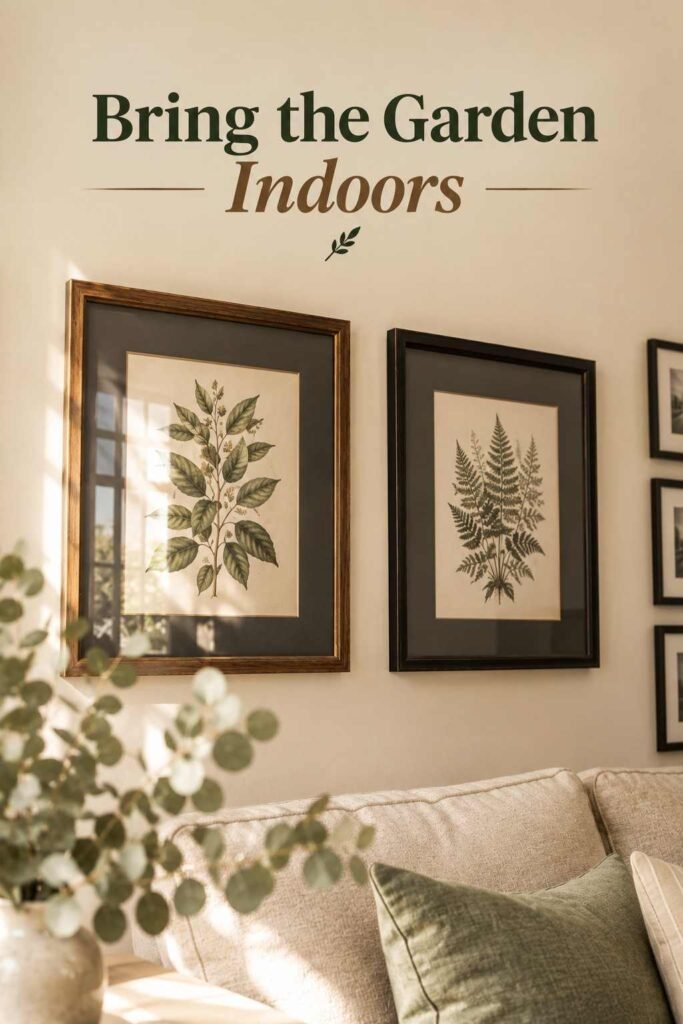
Pressed leaves, flower sketches, and bird illustrations bring the outdoors in. Hang them in matching frames in a two-by-three grid or a loose cluster. Pressed plants from your own garden add a personal touch. Choose UV-protective glass to slow fading.
Creative Finishers: Picture Frame Wall Ideas
20. Frames Around a Mirror
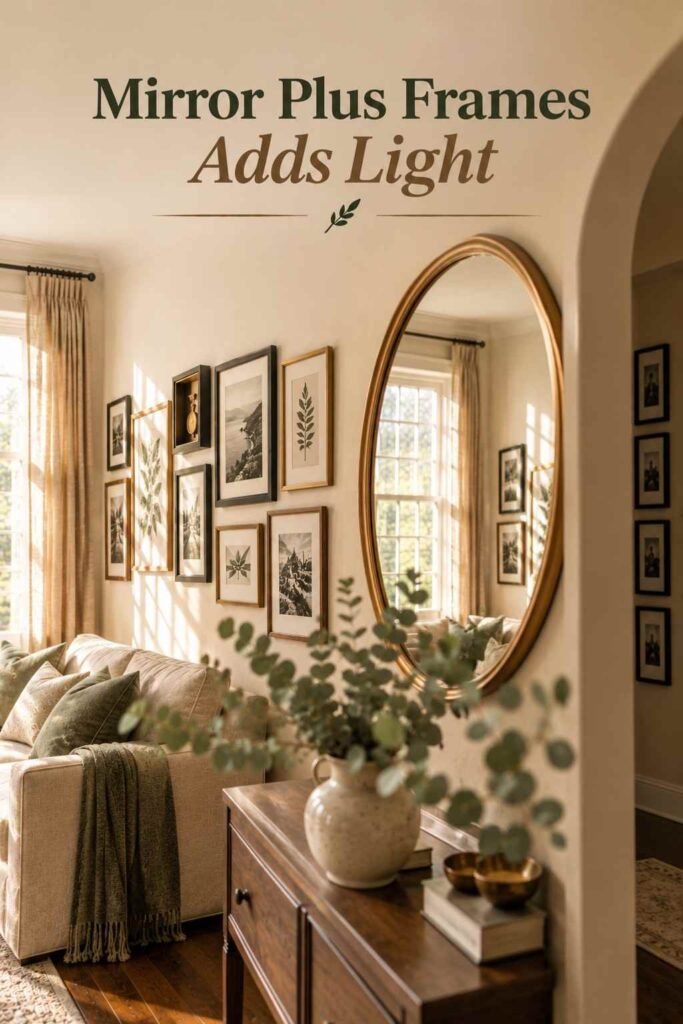
Set a round or arched mirror in the center and ring it with small frames. The mirror bounces light, and the frames add interest. This is a strong pick for entries and dim hallways, where extra brightness helps.
21. Framing a Doorway or Window
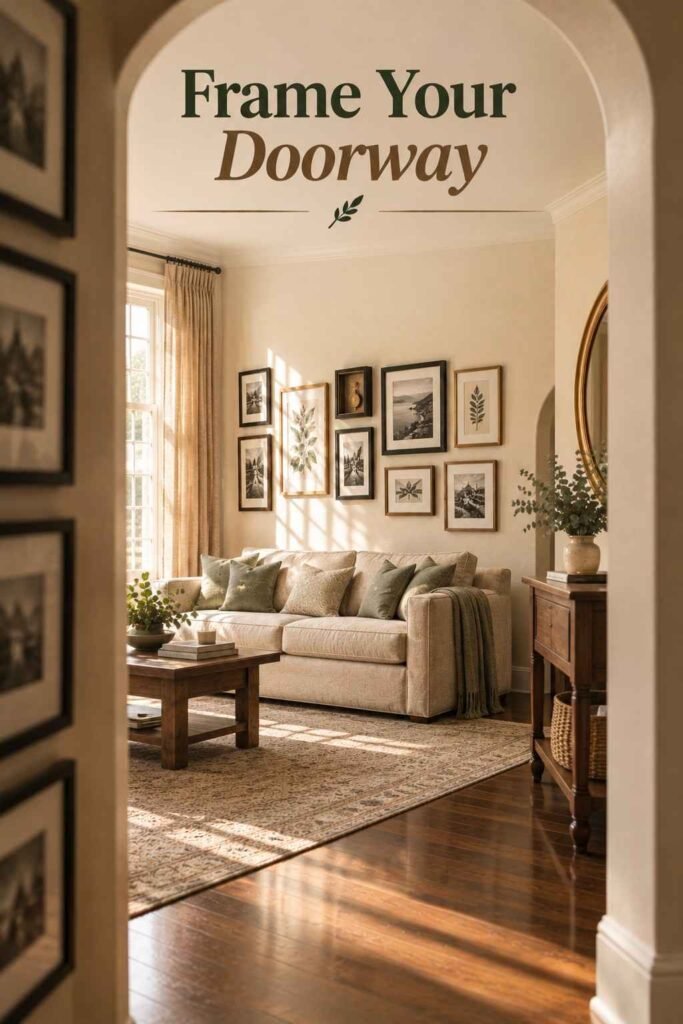
Arrange frames around an architectural feature so the opening becomes part of the display. Keep gaps consistent from the edge of the trim. This idea puts awkward wall space to work, space that would otherwise stay empty.
22. A Rotating Kids’ Art Wall
Front-opening frames let children swap in new drawings. Use one frame style for a tidy look while the art stays colorful. Write the date on the back of each piece, and you will build a keepsake archive over time.
23. Shadow Boxes for Keepsakes
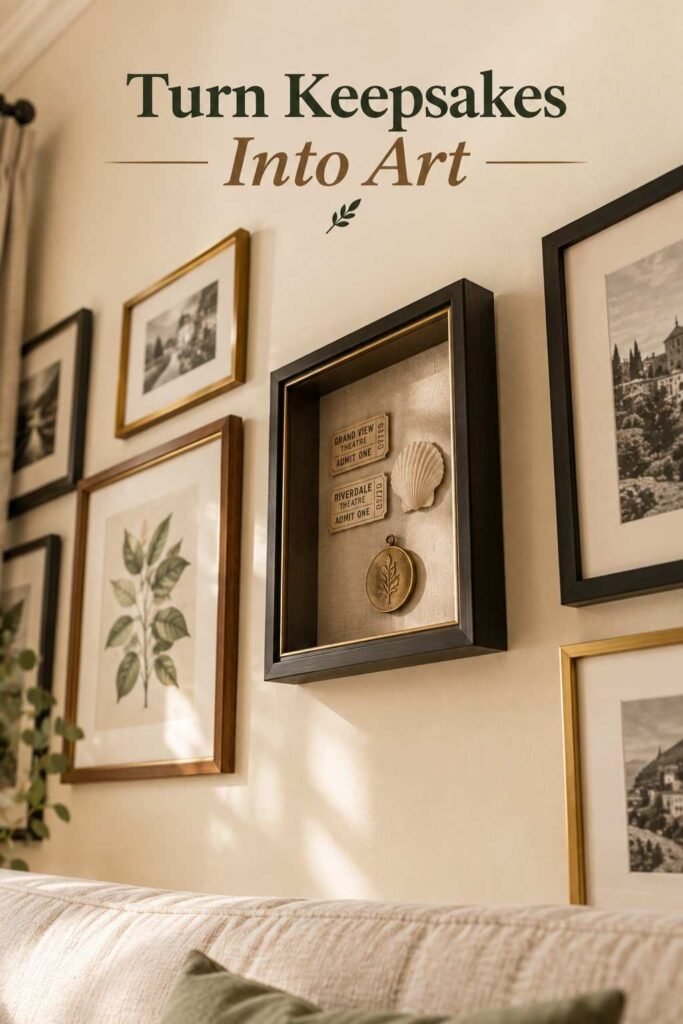
Deep frames hold ticket stubs, baby shoes, medals, or shells. Mix them with flat frames to add depth. Mount items with archival tape or pins so the objects stay safe and can be removed later without damage.
24. The Floor-to-Ceiling Display
On tall walls, extend the arrangement upward. Keep heavier pieces lower and lighter ones higher, and stagger sizes so the eye travels up the wall. In a two-story home, following the stairwell gives you a true gallery feel.
Common Mistakes When Hanging a Picture Frame Wall
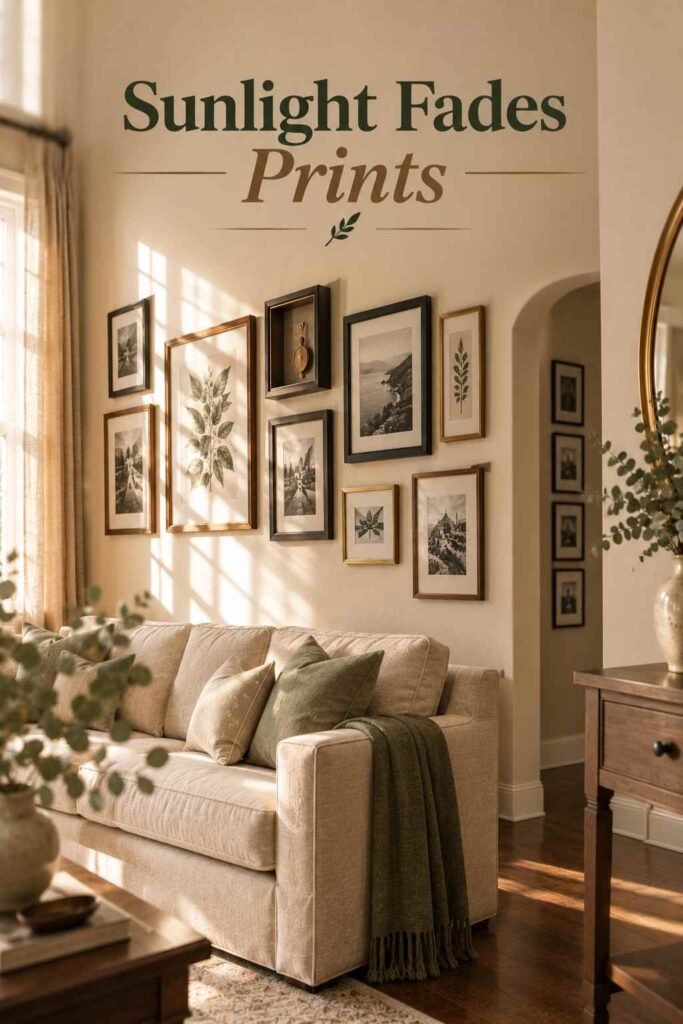
Even the best of the 24 picture frame wall ideas above can fall flat with poor execution. The most common error is hanging art too high, so it floats away from the furniture below. Uneven gaps come next, and they are easy to avoid with templates and a level. Direct sunlight fades prints over time, so keep favorite photos out of harsh light. Finally, do not skip the weight check. A frame that looks light can still pull a small nail out of drywall. For a bolder look above the sofa, browse Luxury wall art living room options and add one statement piece to your gallery.
Budget-Friendly Ways to Build a Frame Wall
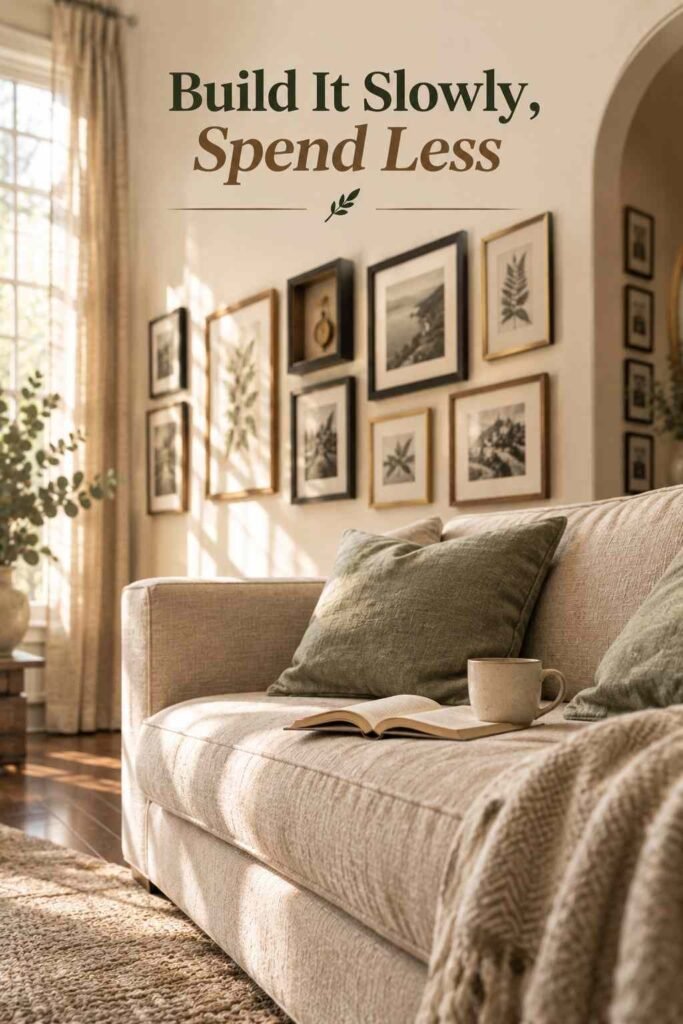
You do not need to buy everything at once. Start with three or four frames and add more over time. Thrift stores, garage sales, and clearance shelves often have solid frames for a few dollars. Print your own photos at a local shop or online. Several major museums also offer free public-domain images you can download and print at home. A wall built slowly often looks richer than one bought in a single afternoon. You can find more layout inspiration and finished room designs at outinteriors.
Conclusion
A great wall does not need expensive art. It needs a clear plan, steady spacing, and images that mean something to you. With 24 picture frame wall ideas to choose from, you can match the layout to your room, your style, and your budget. Start small, test the arrangement with paper templates, and hang with care. Then step back and enjoy it. Your walls will start telling your story the moment the last frame goes up.
Frequently Asked Questions
What height should I hang a picture frame wall?
Center the whole group around 57 inches from the floor. If the wall sits above furniture, place the lowest frame about 6 to 10 inches above it so the two read as one unit.
How many frames do I need for a gallery wall?
It depends on the wall. Five to nine frames suit most sofas and beds. Odd numbers often look more natural, but a tidy grid of six works too.
Can I hang frames without nails?
Yes. Picture ledges let you lean frames without any holes. Adhesive strips also work for light frames. Always check the weight limit on the package.
How far apart should frames be?
Leave 2 to 3 inches between frames. Tighter gaps feel modern and cohesive. Wider gaps can make a group look scattered.
Do all the frames have to match?
No. Matching frames give a formal look, but mixed frames add personality. Tie them together with a shared color, a repeated finish, or consistent mat colors.
Which of the 24 picture frame wall ideas suits small spaces?
The vertical column, the single horizontal line, and minimalist wide-mat frames all work well in tight rooms. They add interest without crowding the wall.