Wall-Going-Downstairs Ideas to Turn Your Staircase Into a Showpiece
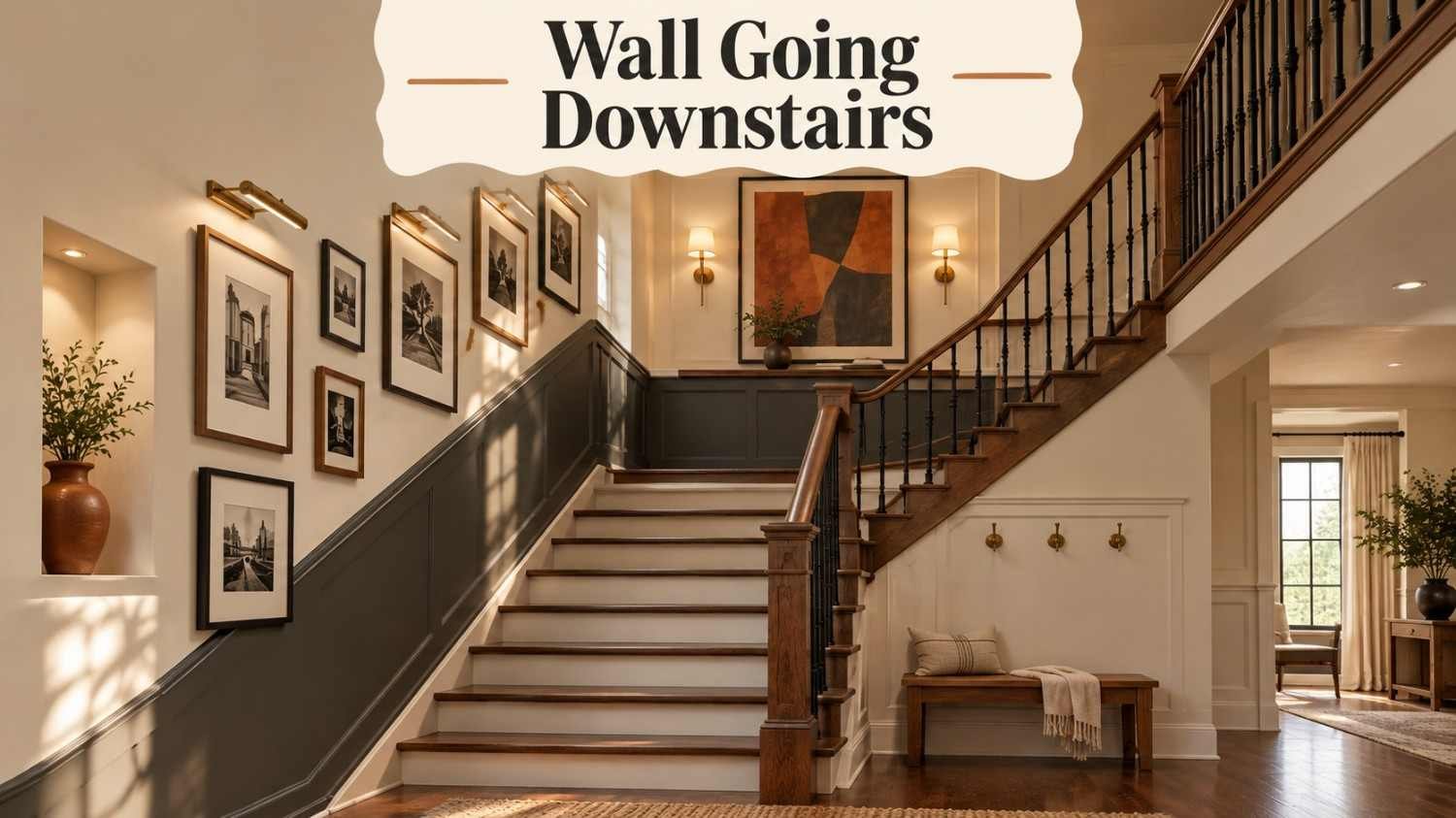
Picture your morning. You step out of the bedroom, grab the rail, and start down. What does your eye land on? In many homes, it is a long, blank stretch of paint. That is a missed chance. The wall going downstairs is the one surface you see every day, at a slow pace, from changing heights. These 25 ideas cover art, color, texture, lighting, and storage. You will also find the measurements and safety limits that keep the design practical. Pick one idea, or blend a few to suit your home.
Why the Wall Going Downstairs Deserves Extra Attention
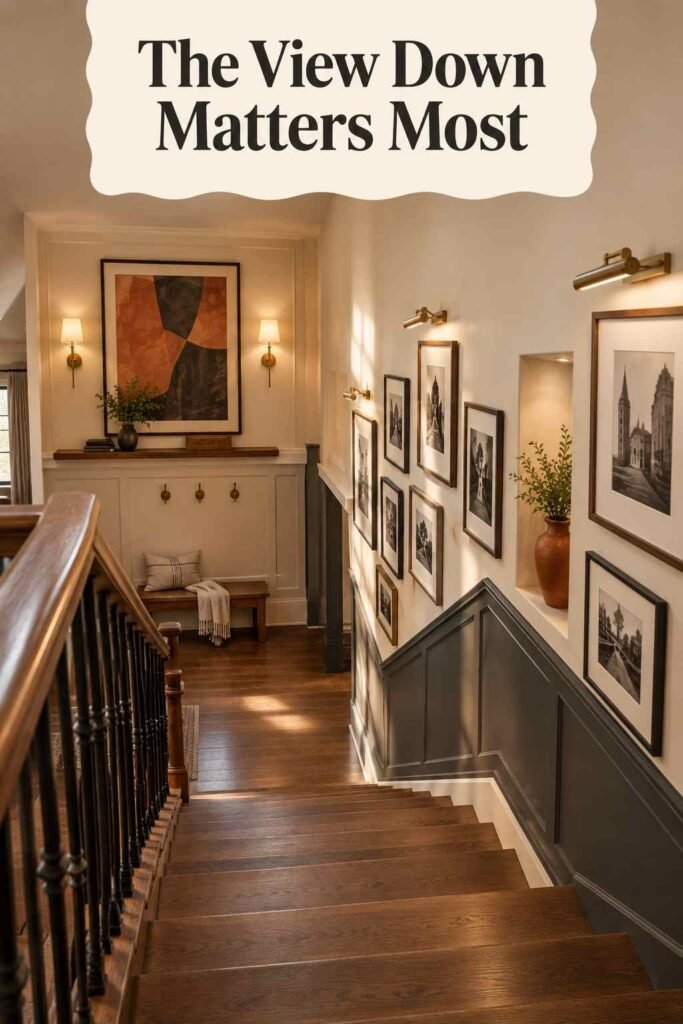
A stair wall behaves differently from a living room wall. You view it at an angle, in motion, and from several heights. Bold, simple designs read better than tiny, fussy ones. The wall also links two floors, so its style should feel at home both upstairs and down. Many stairwells lack windows, which makes lighting a key part of the plan. Finally, this is a high-traffic zone, so finishes must survive scuffs and swinging bags. Keep these four points in mind, and every choice below gets easier.
Plan Your Wall Going Downstairs Before You Buy Anything
Measure and Map the Space
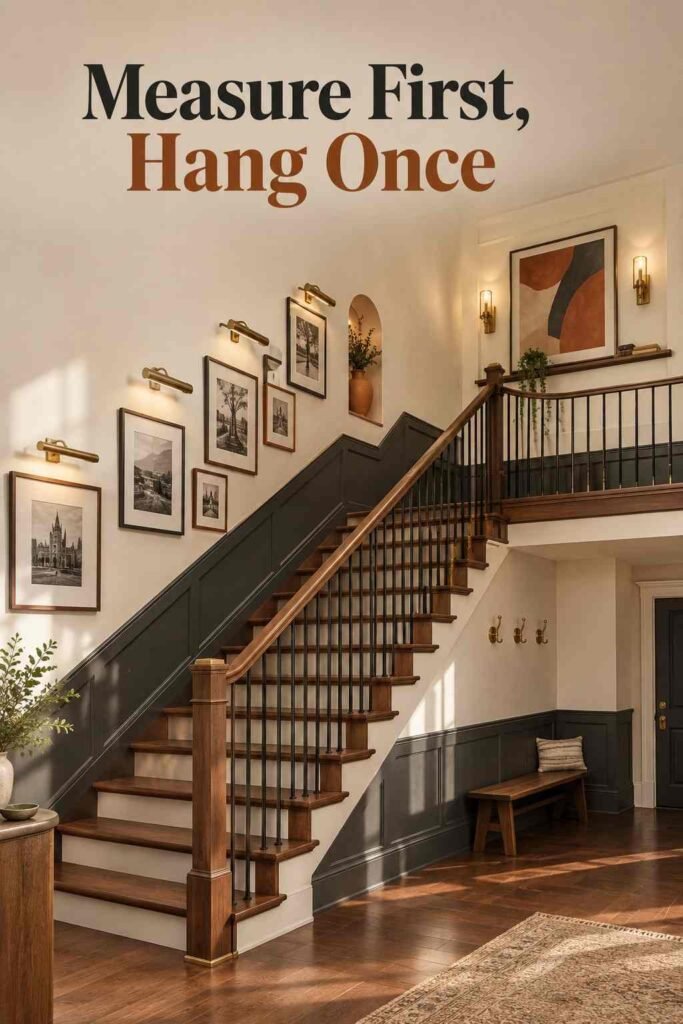
Start with painter’s tape and paper. Cut paper templates to the size of each frame, tape them up, and walk the stairs several times. Center your main piece about 57 inches from the floor on landings, a long-standing gallery guideline. On the sloped run, keep every frame at the same height above the stair nosing so the line looks even. Leave 2 to 3 inches between frames. Photograph the layout before you drill, so you can rebuild it if plans change.
Know the Safety Basics
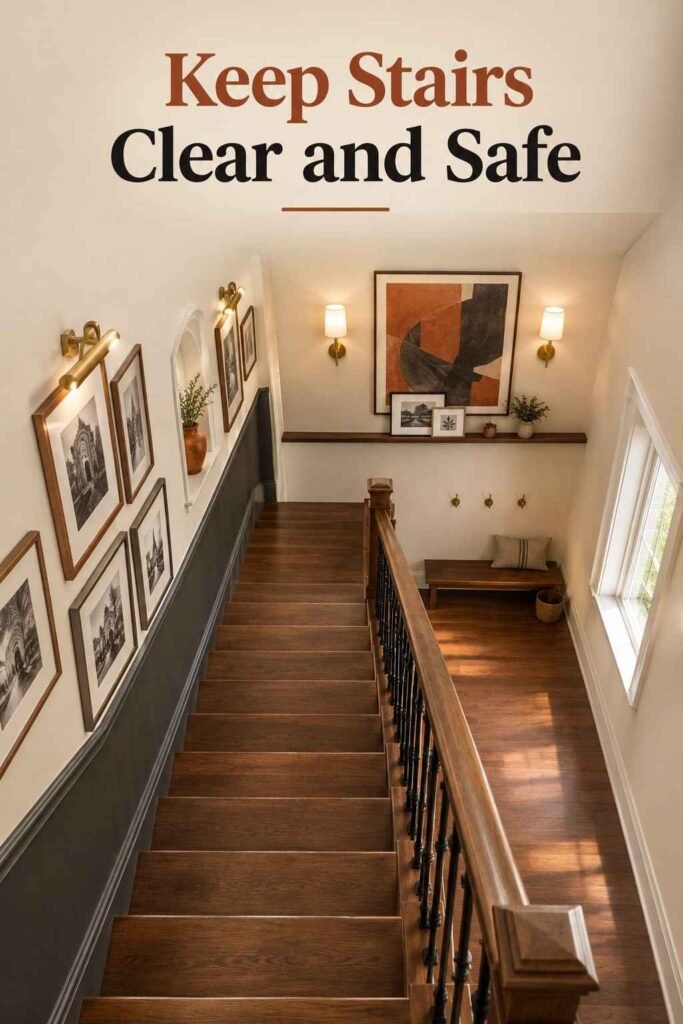
In the U.S., the International Residential Code, which many local codes follow, sets handrail height at 34 to 38 inches. It also limits handrails to a 4.5-inch projection into the required stair width, and it sets a minimum stair width of 36 inches. Local rules vary, so check with your building department before adding deep shelves or thick paneling. Keep every item secure and flush. People grab walls for balance, and a loose frame is a hazard.
Gallery and Art Ideas for a Wall Going Downstairs
1. A Stepped Gallery That Follows the Stairs
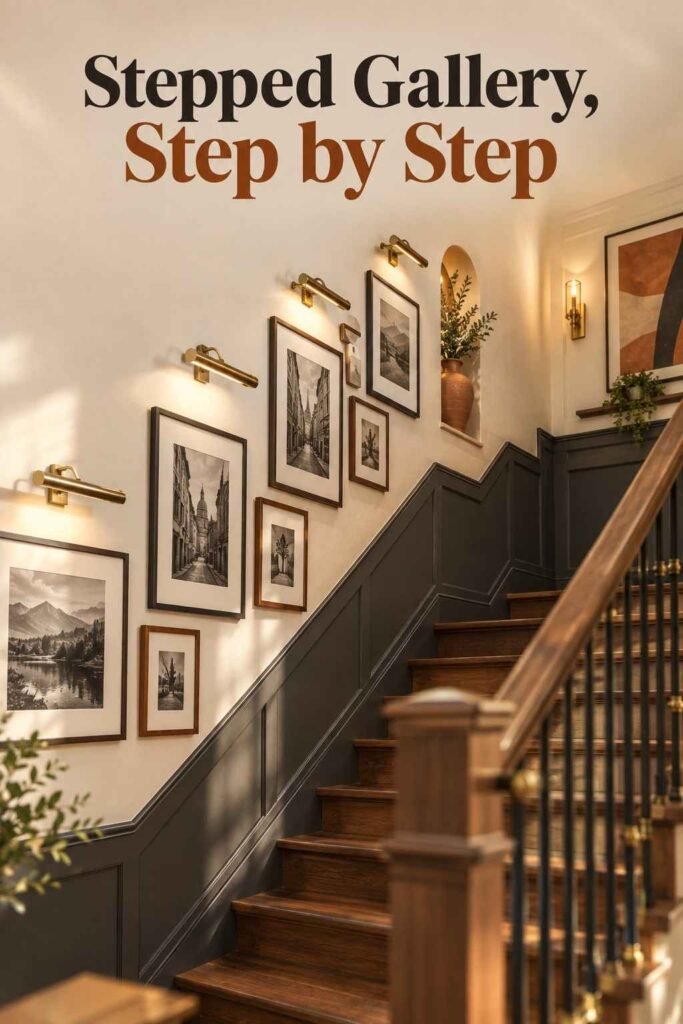
Let the stair angle set the pattern. Hang frames so their bottom edges run parallel to the slope, stepping down as you do. Use two or three frame sizes, one frame finish, and matching mats for calm. Lay everything on the floor first, then transfer the layout to the wall with tape templates. The result feels planned, not scattered.
2. One Oversized Statement Piece
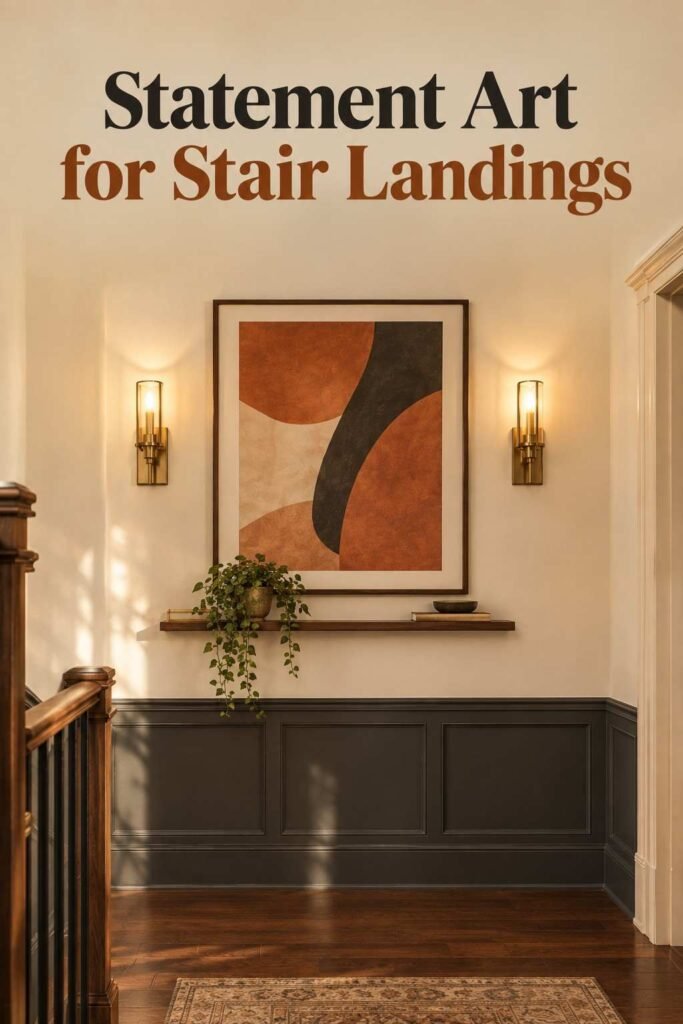
When the wall going downstairs is tall and plain, one large artwork can beat twenty small ones. Pick a piece roughly 40 inches wide or more and hang it on the landing, where you see it straight on. Abstract work, landscapes, and large botanical prints read well from a distance. One big piece also keeps the space tidy and easy to dust.
3. A Family Photo Timeline
Start with grandparents at the top and end with today’s newest arrival at the bottom, or reverse it. Black-and-white prints in matching frames make mixed photo quality look deliberate. Add small brass labels with names and years. Each trip down becomes a short walk through your family story, and guests tend to slow down and enjoy it.
4. A Black-and-White Photography Series
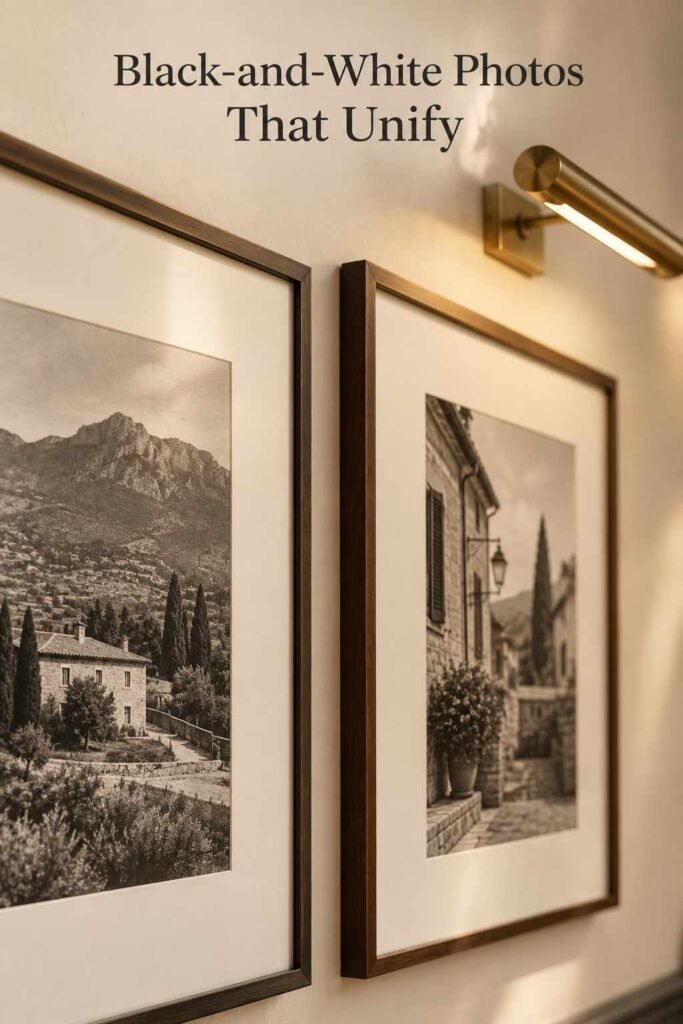
A set of six to nine prints from one place or one photographer gives a gallery feel without chaos. Use white mats inside thin black frames, on a white or pale wall. The strong contrast holds up in dim stairwells. A shared theme, such as coastlines or city streets, ties the whole display together.
5. Framed Textiles and Tapestries
Texture softens hard stairwell surfaces. A vintage kilim, a woven hanging, or a framed scarf adds warmth and helps dampen echo. Mount fabric on a wooden bar or inside a deep frame so it hangs flat. Choose colors that echo the floors above and below, which links both levels.
6. Slim Picture Ledges
Narrow ledges let you swap art without new holes. Choose ledges about 3 to 4 inches deep and place them on flat wall stretches, away from the handrail. Lean frames against the wall, and layer small pieces in front of large ones. Stagger two ledges to echo the stair angle.
Paint, Color and Texture for the Wall Going Downstairs
7. Two-Tone Paint With a Rising Line
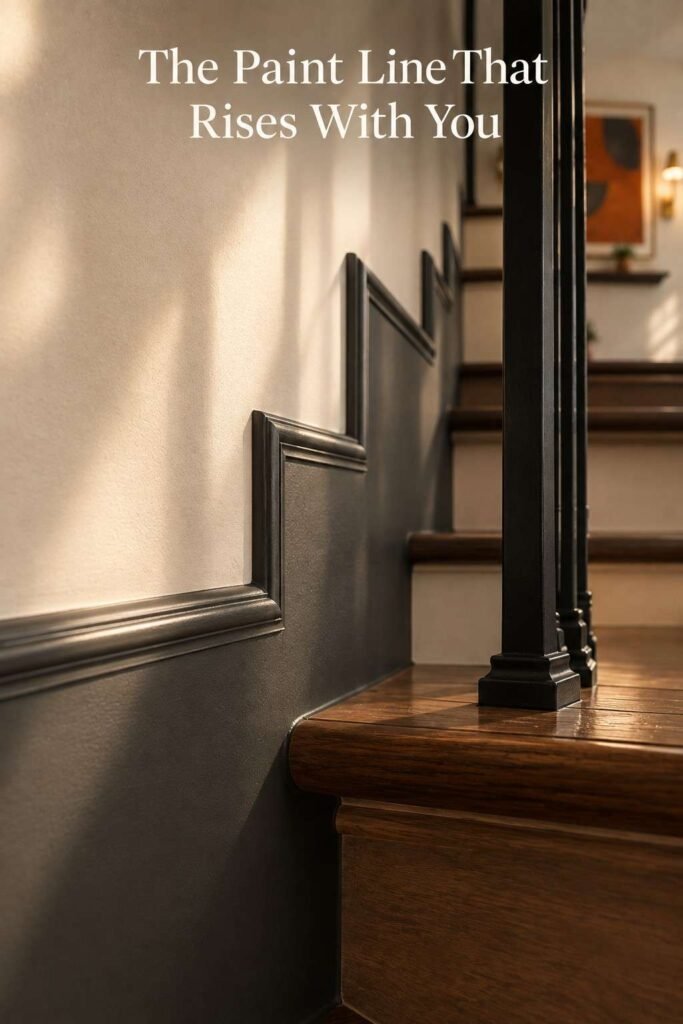
Paint the lower section darker and let the dividing line follow the stair slope. Deep green, navy, or clay below with soft white above grounds the space and hides scuffs at hand height. Use a washable satin or eggshell finish, and mark the line with tape and a level.
8. A Full Color Drench
Paint walls, trim, and even the ceiling in one hue. Wrapping the stairwell in a single warm shade feels cozy and hides uneven corners. Test large samples first, because stairwell light shifts the shade from top to bottom. Terracotta, olive, and deep blue are dependable choices.
9. Board and Batten Paneling
Vertical strips over painted boards add structure and shield the wall from bags and shoes. On a wall going downstairs, the top rail can step down with each tread, which adds rhythm. Space battens evenly and caulk the seams before painting. It is a friendly project for confident DIYers.
10. Bold Wallpaper
A pattern scaled for a narrow space can turn the stairwell into the highlight of the house. Botanicals, stripes, and small geometrics all work. Choose vinyl-coated or washable paper for scuff resistance. Ask the installer to plan seams so the pattern matches across the slope.
11. Limewash or Textured Plaster
Soft, cloudy finishes add depth without a single frame. Limewash shows brush movement and warm variations, especially under wall lights. It suits older homes and modern minimalist spaces alike. Because limewash can mark more easily than washable paint, use it above hand height or seal high-touch zones.
12. Painted Shapes and Arches
Large painted shapes act as art you never need to frame. A tall arch, a color block, or a diagonal band that echoes the stair line fits well. Mark shapes with tape, then paint in two tones. It costs little and is easy to repaint when your taste changes.
13. A Picture Rail With Rotating Art
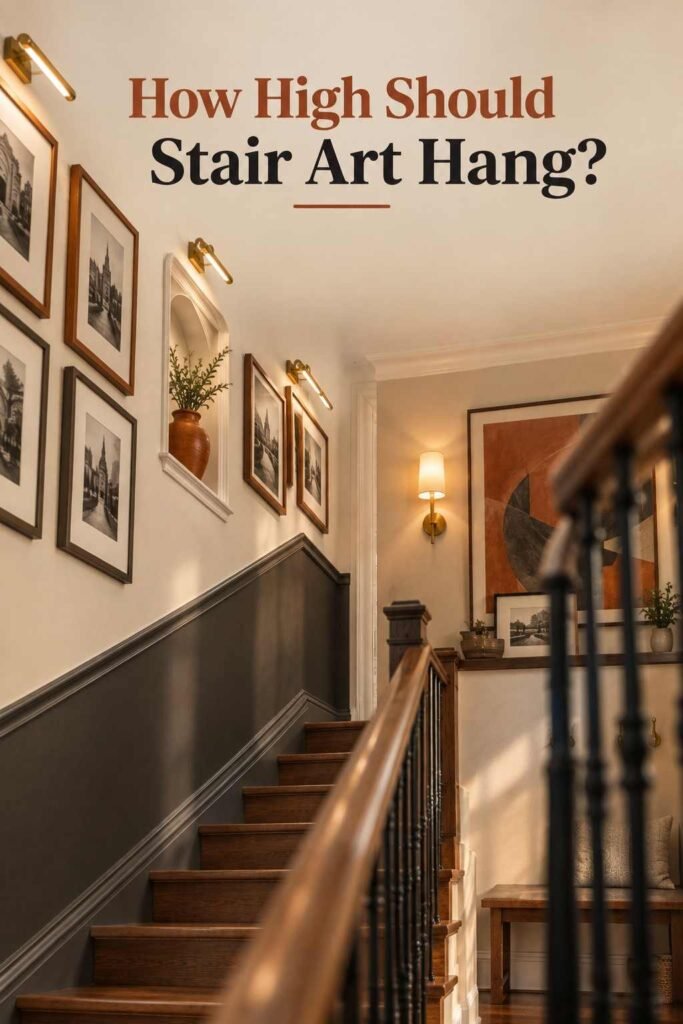
A slim rail near the ceiling lets you hang lightweight pieces on cords and switch them by season. Anchor the rail into studs so it holds securely. This approach saves patching, since you move art along the rail instead of making new holes.
Lighting and Storage Ideas for a Wall Going Downstairs
14. Wall Sconces
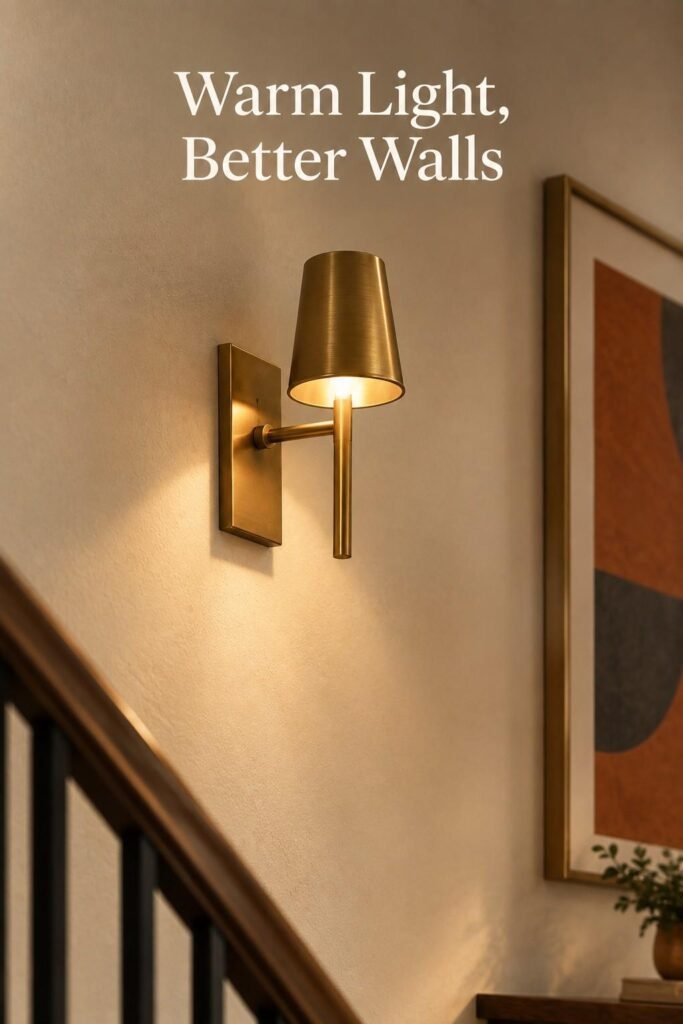
Good light makes each step safer and each wall more inviting. Place sconces about 60 to 66 inches above the floor, spaced evenly, with one at each landing. Choose warm bulbs around 2700K for a soft glow. Plug-in sconces with cord covers work well when rewiring is not an option. If your stair wall opens onto a bright, glassy space, borrow ideas from these Square sunroom ideas to keep colors and materials consistent.
15. Picture Lights
Slim, low-heat lights above artwork guide the eye and bring out color. Battery and plug-in versions avoid rewiring. Aim for an even wash instead of a hot spot, and make sure the fixture stays shallow, so it never intrudes on the walking path. For help arranging frames at landings, browse these Photos in living room ideas to see how balanced layouts look in real homes.
16. Low-Level Step Lights
Small LED lights near the base of a wall going downstairs mark each tread at night and reduce missteps. Motion-sensing units switch on as you approach and stay off otherwise. Some are battery-powered, while hardwired versions are best installed by a licensed electrician.
17. A Mirror on the Landing
A large mirror bounces light from windows or lamps and makes the stairwell feel wider. Hang it on the landing wall, not directly facing the top step, so the reflection does not confuse depth. A frame with a soft finish looks less harsh in a tight space.
18. Built-In Niches
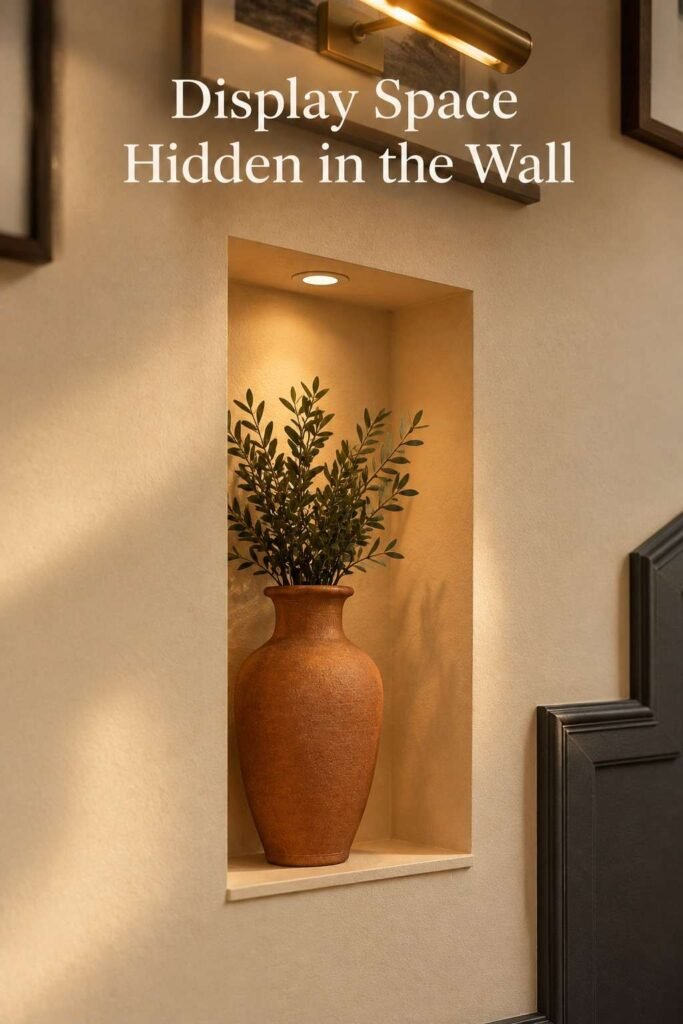
Recessed shelves set between studs add display space without sticking out. A standard 2×4 wall cavity is about 3.5 inches deep, which suits small vases and books. Have a contractor check for wiring, plumbing, and structural members before cutting. Light the niche from within for a jewel-box effect.
19. Floating Shelves on the Landing
Landings often have room for shelves that would obstruct the flight itself. A single shelf about 6 inches deep can hold a plant, a small lamp, or a stack of books. Keep items low-profile and unbreakable near walkways.
20. Hooks and a Drop Zone at the Bottom
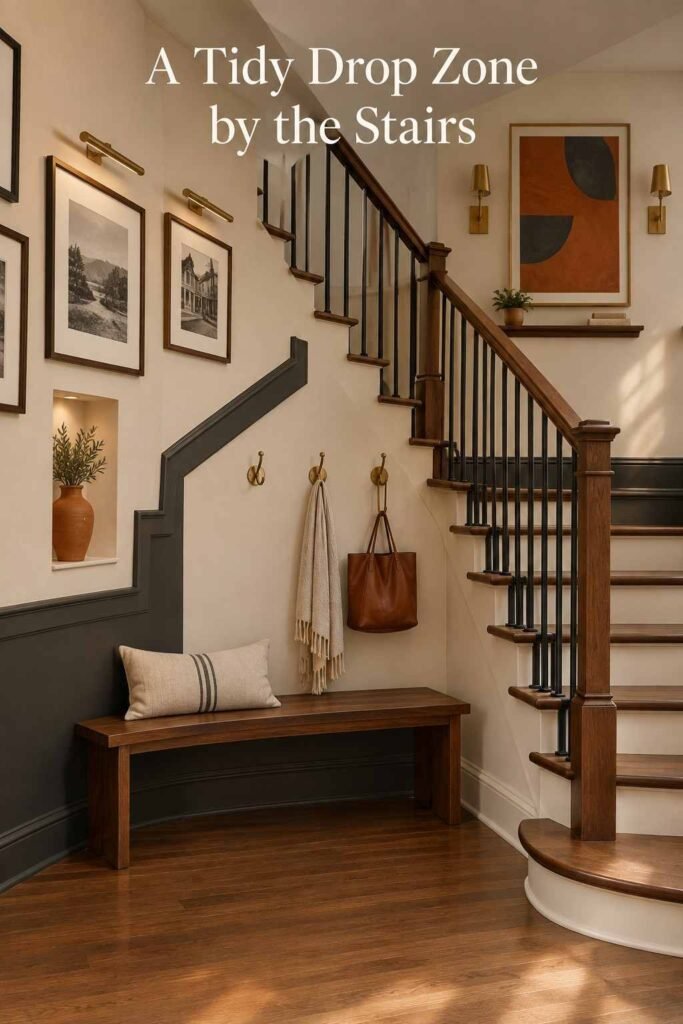
The wall at the foot of the stairs collects clutter. A row of sturdy hooks, a slim bench, and a tray keep bags and keys tidy. Choose hooks that sit close to the wall, and paint the backing board the same color so it blends in. Keep the walking path clear.
Creative and Renter-Friendly Ideas for Any Wall Going Downstairs
21. Damage-Free Frames and Strips
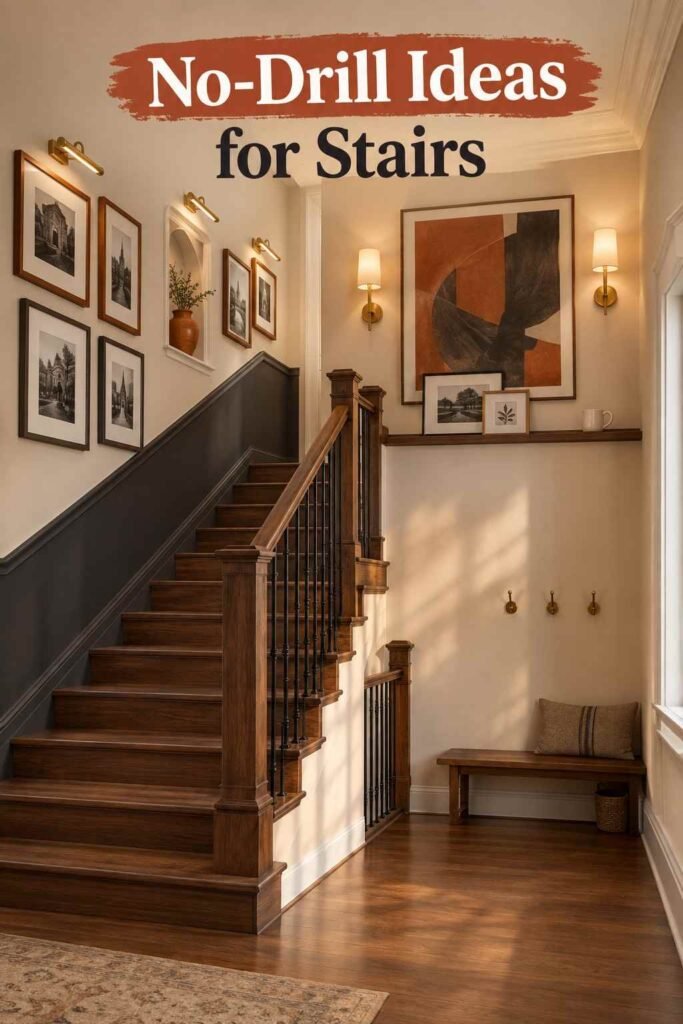
Adhesive strips and repositionable frames protect walls and deposits. Check the weight rating on the packaging, and clean the wall first. Stay with light frames and avoid spots where hands brush the wall. Renters can also use strips to test a layout before committing.
22. A Clip Line for Kids’ Art
A tensioned wire or slim rail with clips shows off children’s drawings, and swaps take seconds. Hang it where kids can reach, but away from the handrail path. Rotate the display monthly and store keepsakes in a folder so nothing is lost.
23. A Wood Slat Wall
Vertical wood slats add warmth and a modern, Scandinavian feel. Backing them with felt softens sound in echoey stairwells. Oak, walnut, and stained pine each give a different mood. Keep panel depth shallow, around three-quarters of an inch, to protect stair width.
24. Thin Brick or Stone Veneer
A thin veneer gives a rustic, textured surface that lasts. It suits industrial lofts and cottage homes. Choose a shallow product so stair width stays intact, seal it to limit dust, and add warm lights to bring out the texture.
25. Sculptural Wall Pieces
Woven baskets, ceramic plates, carved wooden masks and metal wall sculptures add depth without frames. Group them in odd numbers, keep spacing consistent, and pick pieces that sit flat against the wall. Travel finds add stories that guests love to ask about.
Mistakes to Avoid on a Wall Going Downstairs
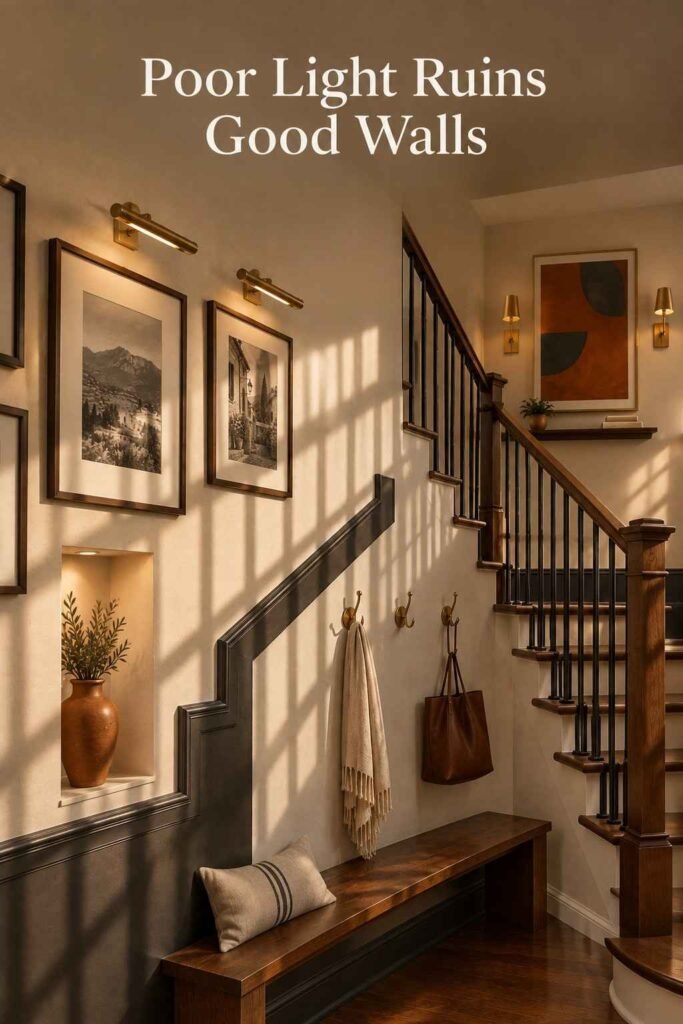
The most common error is scale. Tiny frames scattered on a tall wall look lost, so go bigger or group them tightly. The second is poor light, which turns rich color into mud. Third, people hang art too high, forgetting the viewer is descending. Fourth, deep shelves and thick paneling can eat into stair width and break local rules. Finally, avoid heavy items on weak anchors. Use studs or rated hardware, and test the hold before you trust it. Need help planning a full update from stairs to sofa? Explore what Outinteriors has to offer for cohesive interior inspiration.
Final Thoughts on Styling Your Wall Going Downstairs
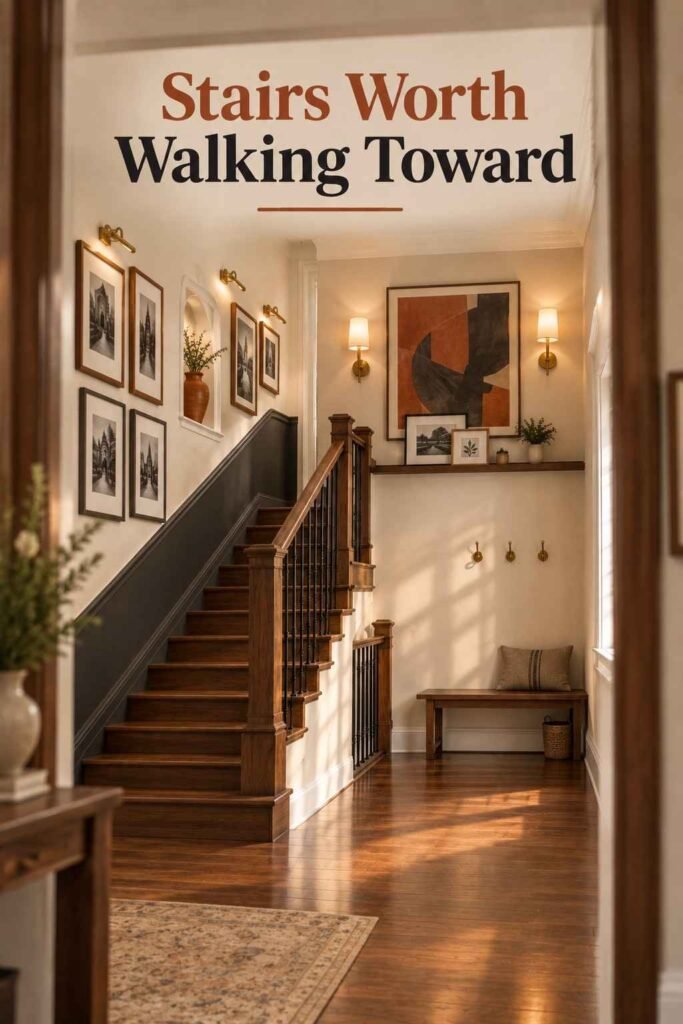
A stair wall does not need a big budget, only a clear plan. Measure first, respect safety limits, and choose one strong idea before adding extras. Paint and paneling set the mood, art adds personality, and lighting ties it together. Start small if you feel unsure. A single oversized print or a fresh coat of deep color can change how the whole house feels every time you head down for coffee.
Frequently asked questions
How high should art hang on a wall going downstairs?
On landings, center art around 57 inches from the floor. On the sloped run, keep each piece a consistent distance above the stair nosing so the line follows the incline.
What paint finish works best on stair walls?
Choose washable satin or eggshell. Both resist scuffs and wipe clean, which suits a high-traffic area.
Can I hang heavy frames or mirrors along the stairs?
Yes, but anchor them into studs or use hardware rated well above the item’s weight. Avoid placing heavy pieces where someone might grab them for balance.
How can renters decorate a stair wall?
Use adhesive strips, picture ledges, plug-in sconces, removable wallpaper and clip lines. Check weight ratings and test a small area first.
Do shelves and paneling on stair walls break building rules?
They can if they reduce the required stair width. In the U.S., minimum stair width is commonly 36 inches, but local codes differ, so confirm with your building department.
How many frames should a stair gallery have?
For a single flight, start with five to nine frames of two or three sizes. Lay them out on the floor and use paper templates before hanging.