Glamorous 25 Dining Room Ideas to Transform Your Space in 2026
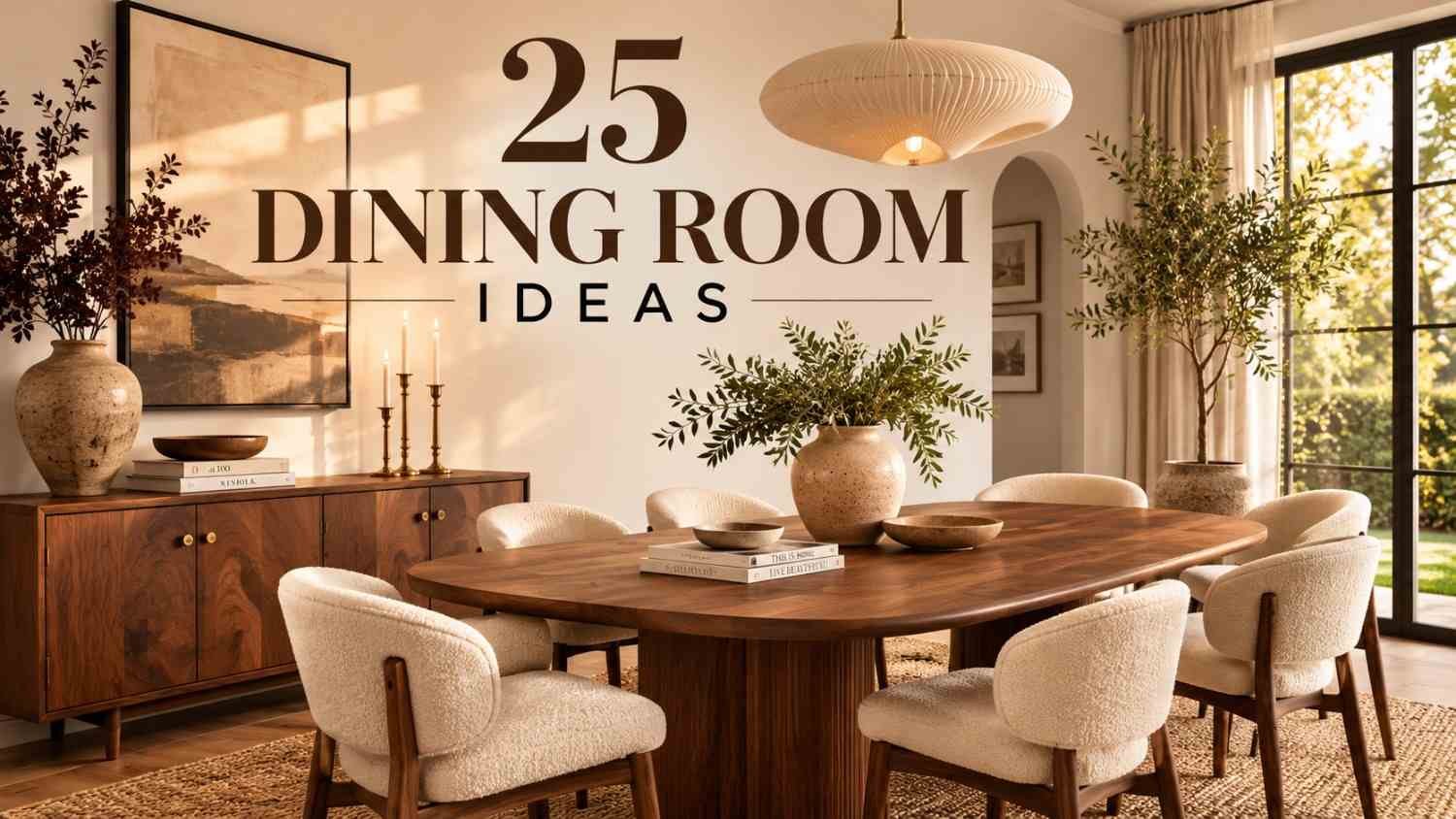
The dining room used to be the room nobody used until Thanksgiving. Not anymore. Across the country, homeowners are turning this once-forgotten space into the heart of everyday life — a spot for laptop lunches, craft projects, and Tuesday-night dinners lit by candlelight. Open floor plans and smaller square footage have also changed what this room needs to do; it now has to flex between hosting, working, and everyday family meals, sometimes all in the same afternoon. Whether you’re working with a grand formal room or a narrow nook squeezed between the kitchen and the stairs, the right dining room ideas can make the space feel intentional instead of accidental.
This guide gathers 25 dining room ideas that cover every budget, square footage, and design style, from color and lighting to layout and multi-purpose furniture. Each idea is grouped by the problem it solves, so you can skip straight to the section that matches your space instead of scrolling through a random photo feed. Read on to find the idea that finally makes your dining room work as hard as the rest of your home.
Why Dining Room Ideas Should Start with Function, Not Style
Before choosing paint chips or pendant lights, measure the room. Designers generally recommend leaving 42 to 48 inches between the table edge and the nearest wall or piece of furniture, so chairs can slide out and a guest can pass behind someone seated without squeezing past. This single measurement solves more layout problems than any mood board ever will. It also decides table shape: round and oval tables suit tight, squarish rooms because they have no corners to bump into, while a rectangular table fits a long, narrow space better.
Function also means being honest about how the dining space gets used on an average Tuesday, not just during holidays. A family that eats breakfast at the table every morning needs a wipeable finish and durable chair fabric more than it needs a fragile antique. A household that hosts twice a year can lean into a more delicate, formal look without much compromise. Keep this everyday-versus-occasional distinction in mind as you work through the dining room ideas below, since it will steer nearly every decision that follows, from fabric choice to how much storage the room needs.
Matching Ideas to Your Home’s Architecture
Not every style suits every house, and this is where many mood boards fall apart. A boxy 1990s builder-grade room with low ceilings tends to overwhelm easily, so it benefits from lighter palettes, a single statement piece, and furniture with visible legs that let light travel underneath. Older homes with crown molding, high ceilings, or original hardwood floors can carry richer color and heavier furniture without feeling cramped, since the architecture already provides visual weight. Open-concept new builds usually need the dining zone to be defined on its own, often through a rug, a pendant light, or a change in wall color, since there are no walls doing that job for you.
A quick way to test whether an idea fits is to look at the room’s existing trim, flooring, and natural light before adding anything new. A farmhouse table looks out of place under sleek recessed lighting, just as a glass-and-chrome set can feel cold in a room full of exposed wood beams. Matching the era and materials already present in the room, rather than fighting them, is usually the fastest way to a space that feels finished instead of assembled from a catalog.
Small-Space and Budget-Friendly Dining Room Ideas
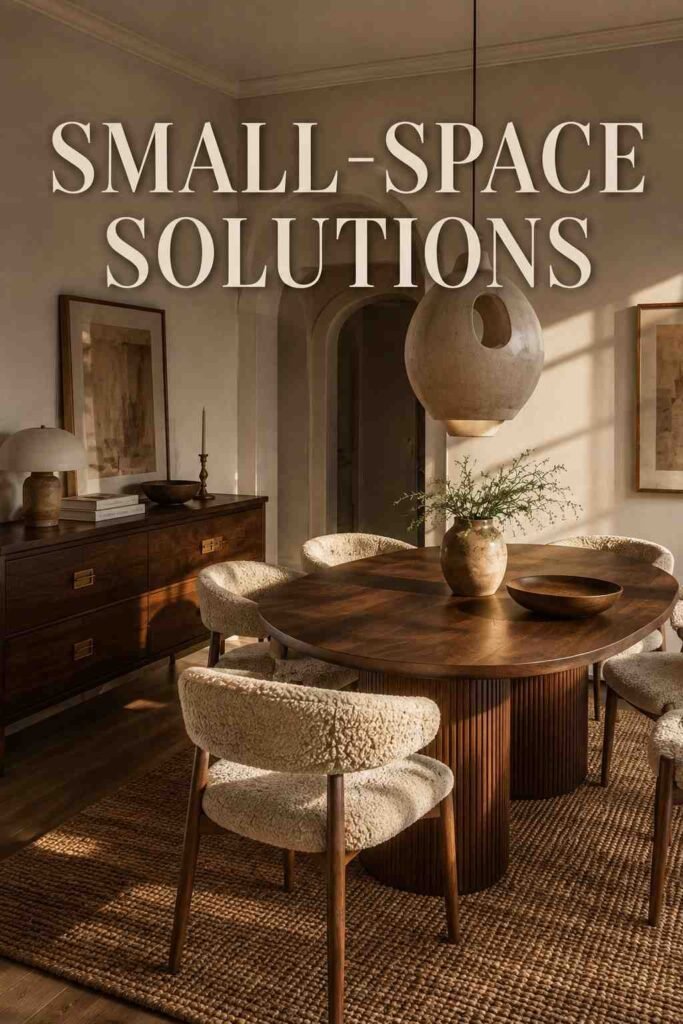
These small-space dining room ideas prove that square footage has little to do with style.
- Choose a round or drop-leaf table. In rooms under 100 square feet, a round table seats four without eating up corner space, and a drop-leaf or extendable style folds flat when guests leave.
- Add a corner banquette. A built-in or freestanding bench tucked into a corner turns even a tiny eating area into seating for six and can hide storage underneath.
- Hang a statement mirror. A large mirror placed opposite a window bounces natural light around the room and visually doubles the space — a trick borrowed from tiny city apartments.
- Paint the ceiling, not just the walls. A soft wash of color across the ceiling draws the eye upward, making a low-ceilinged dining room feel taller without much cost.
- Shop secondhand chairs. Mismatched vintage chairs, unified with one paint color or fabric, cost a fraction of a matching set and bring in character new furniture can’t fake.
Color, Wall, and Wallpaper Dining Room Ideas
- Try a moody, saturated wall color. Deep hues like ink blue, forest green, or terracotta make a dining room feel intimate once the lights dim, especially paired with brass or warm-toned fixtures.
- Wallpaper the ceiling. A patterned or textured paper overhead — sometimes called the “fifth wall” — adds drama without competing with artwork on the surrounding walls.
- Install wainscoting or panel molding. Classic paneled walls add architectural texture to a plain rectangular room and suit both traditional and modern dining rooms.
- Build a gallery wall of original art. Grouping several smaller pieces at eye level, roughly 57 inches from the floor to the center of the arrangement, gives the room a curated, personal feel.
- Use grasscloth or textured wallpaper. Natural-fiber wallpaper adds warmth and hides minor wall imperfections better than flat paint, a practical fix in older homes.
Lighting Dining Room Ideas
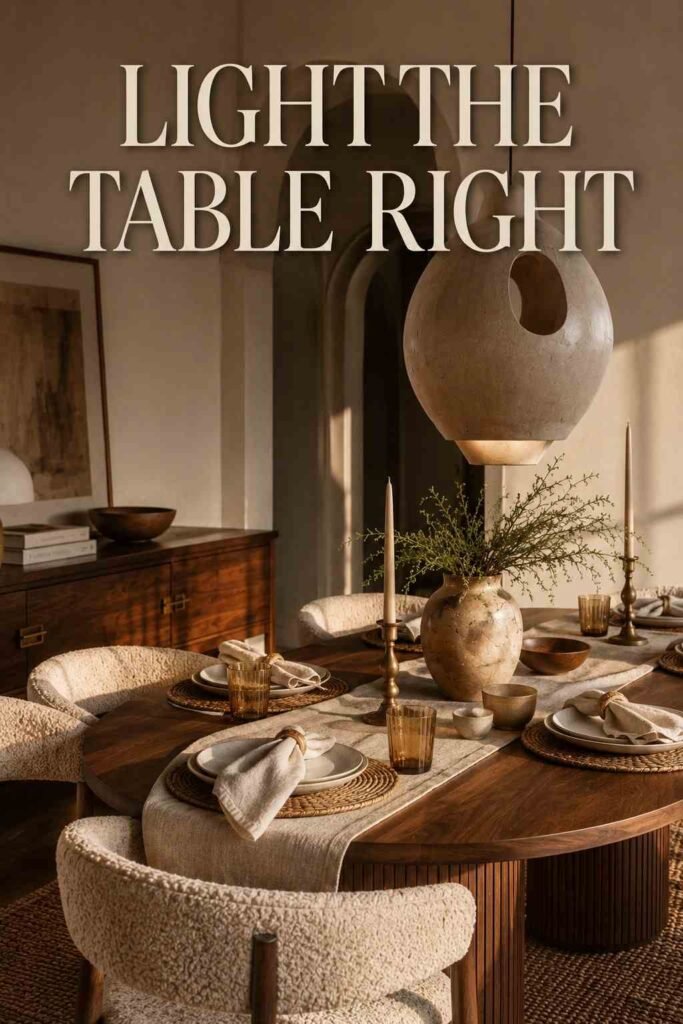
- Layer three types of light. Combine an overhead fixture, wall sconces, and a sideboard lamp so the room stays warm even with the main light switched off.
- Hang the pendant at the right height. Most designers hang a chandelier or pendant 30 to 34 inches above the tabletop — low enough to feel intimate, high enough that no one stares at a bulb.
- Install a dimmer switch. This is the cheapest upgrade on this list; a $15 dimmer turns a bright everyday table into candlelit dinner-party lighting in seconds.
- Try two smaller fixtures instead of one. Over a long or extendable table, twin pendants spread light more evenly than a single large fixture centered on a table that changes size.
Furniture and Layout Dining Room Ideas
- Mix chair styles around one table. Pairing wishbone chairs with a bench, or dining chairs with two armchairs at the ends, keeps a matched set from feeling stiff.
- Choose curved, sculptural furniture. Rounded table edges, sloped chair arms, and pedestal bases define 2026 dining rooms, softening spaces full of hard angles.
- Add a sideboard or bar cart for storage. Extra linens, serveware, and glassware need a home outside the kitchen, and a sideboard anchors an otherwise empty wall.
- Layer a rug under the table. A rug should extend at least 24 inches beyond the table edge on every side so chairs stay on the rug even when pulled out.
- Open the layout to the kitchen. Removing a wall or widening a doorway between kitchen and dining room keeps the cook part of the conversation during dinner parties.
Materials Worth the Investment
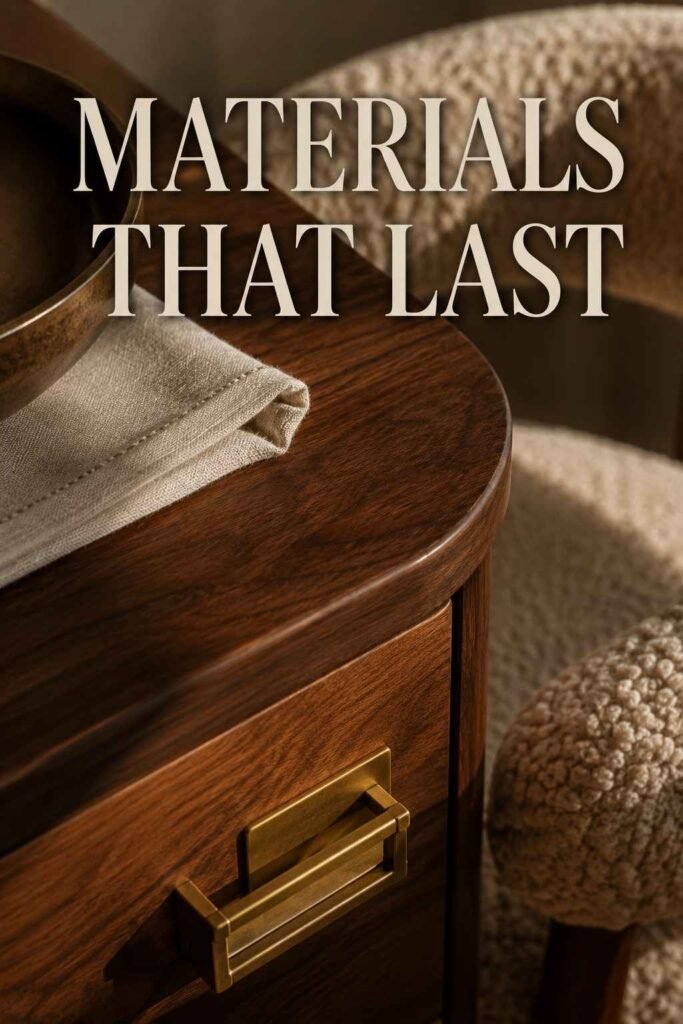
A dining table takes more daily wear than almost any other piece of furniture in the home, so material choice matters more here than in a formal living room. Solid wood, particularly white oak, walnut, and reclaimed pine, resists dents and can be refinished after years of use, which makes it a better long-term value than veneer even at a higher upfront cost. Performance fabrics — stain-resistant, tightly woven blends now common on dining chairs — hold up to red wine and kids far better than delicate linen, without sacrificing the look of natural fiber. For anyone prioritizing sustainability, look for FSC-certified wood, reclaimed or salvaged tabletops, and secondhand chairs refinished locally rather than shipped new; it is often the most budget-friendly route as well as the lowest-impact one.
Multi-Functional Dining Room Ideas
Dining rooms rarely have one job anymore, and these ideas plan for that everyday reality.
- Turn one end of the table into a workspace. For anyone splitting time between meals and remote work, a few home office desk setup ideas — a slim laptop stand, a charging station tucked in a drawer — keep the table dinner-ready by six o’clock.
- Borrow storage tricks from a craft room office. A window bench fitted with baskets and a fold-down surface can double as a craft room office by day and extra dining seating by night.
- Add a bar or coffee station. A narrow console with a tray, glasses, and a small fridge turns the dining room into a spot for morning coffee, not just dinner service.
For more curated, room-by-room styling advice like this, explore the full library of guides at outinteriors.
Trend-Forward and Luxury Dining Room Ideas
These trend-forward dining room ideas borrow from the season’s most-requested designer looks.
- Go for a single statement chandelier. Skip the matchy-matchy dining set and let one oversized fixture — woven rattan, sculptural glass, or vintage brass — anchor the room.
- Introduce wood drenching. Using the same wood tone on the table, floor, and trim creates a warm, monochromatic backdrop that photographs beautifully and rarely feels dated.
- Display an open shelf or plate rack. Stacking everyday and heirloom dishware on open shelving turns tableware into decor and frees up sideboard drawers for linens.
Bringing It All Together
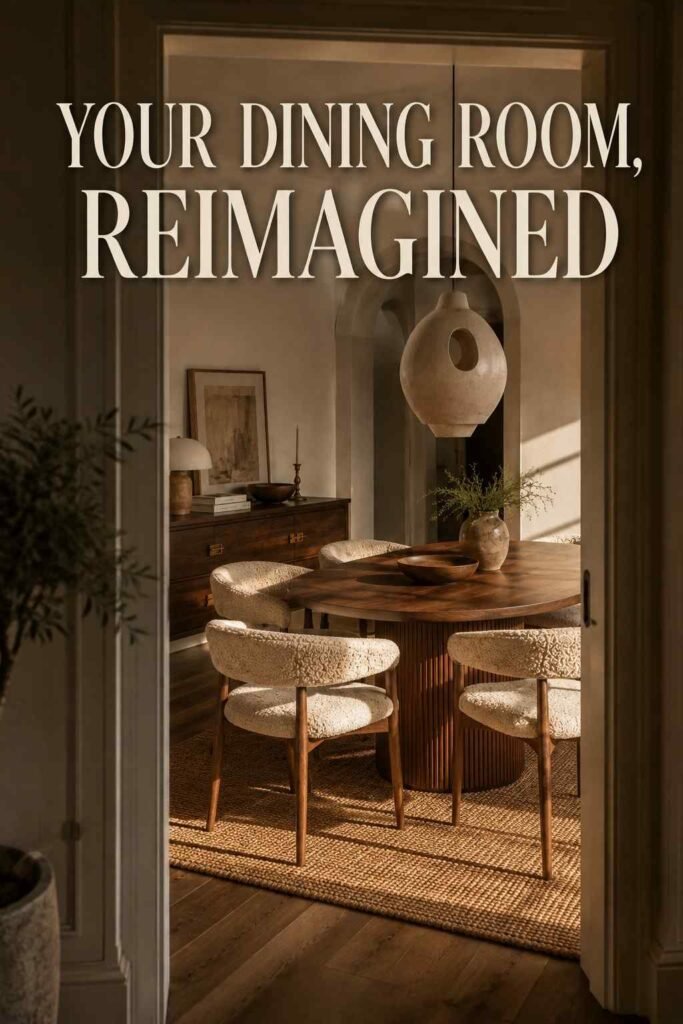
A dining room doesn’t need to be the most-used room in the house to be one of the best. Small updates — a dimmer switch, a well-placed mirror, a correctly sized rug — often make a bigger difference than a full renovation, and most of them can be finished in a single weekend. Bigger changes, like opening a wall to the kitchen or building in a banquette, take more planning and budget but pay off for years, both in daily comfort and in resale appeal.
Whichever of these 25 dining room ideas you start with, keep daily use in mind: a table that survives homework, hosting, and the occasional work call earns its place in the home far more than one chosen for looks alone. There is no need to tackle the whole room at once. Pick two or three ideas from this list, try them together, live with them for a few weeks, and let the rest of the room evolve gradually from there.
Frequently Asked Questions About Dining Room Ideas
How much does it cost to redecorate a dining room?
A refresh using paint, a rug, and new lighting typically costs $500 to $2,000, while replacing furniture with a custom table and chairs can reach $5,000 or more depending on materials. Shopping secondhand for the table base and reupholstering existing chairs can cut that budget significantly without changing the overall look.
What is the standard size of a dining room table?
Most dining tables stand 30 inches high. A 48-inch-long table seats four comfortably, while tables between 72 and 96 inches seat six to eight, and an extendable leaf lets one table cover both scenarios.
How do I make a small dining room look bigger?
Choose a round table, hang a mirror opposite the main window, and pick armless or open-back chairs that don’t visually block the floor. Sticking to two or three colors throughout the room, rather than introducing a new shade with every piece of furniture, also keeps a compact space from feeling busy.
What color makes a dining room feel inviting?
Warm, saturated tones like terracotta, deep green, or navy tend to feel cozier for evening meals than cool pastels, especially under warm-toned lighting. Testing a sample on the wall at both midday and after dark before committing is worth the extra week, since dining rooms are used most often once the sun has gone down.
How high should a chandelier hang above a dining table?
Most designers hang the bottom of the fixture 30 to 34 inches above the tabletop, adding a few inches for rooms with ceilings above nine feet.
Can a dining room double as a home office?
Yes. A table positioned near an outlet, paired with a slim desk organizer and a comfortable chair, can shift between meals and work without a full renovation. Storing cables, chargers, and paperwork in a drawer or basket that closes at the end of the workday keeps the room from feeling like an office once dinner starts.
Do I need a rug under my dining table?
It’s optional, but a properly sized rug — extending at least 24 inches past the table edge — adds warmth and helps define the space in an open floor plan. A flatweave or low-pile rug is easier to clean under a table than a plush one, which matters once crumbs and spills enter the picture.