
Entryway Bench Ideas to Make Every Homecoming Feel Welcome
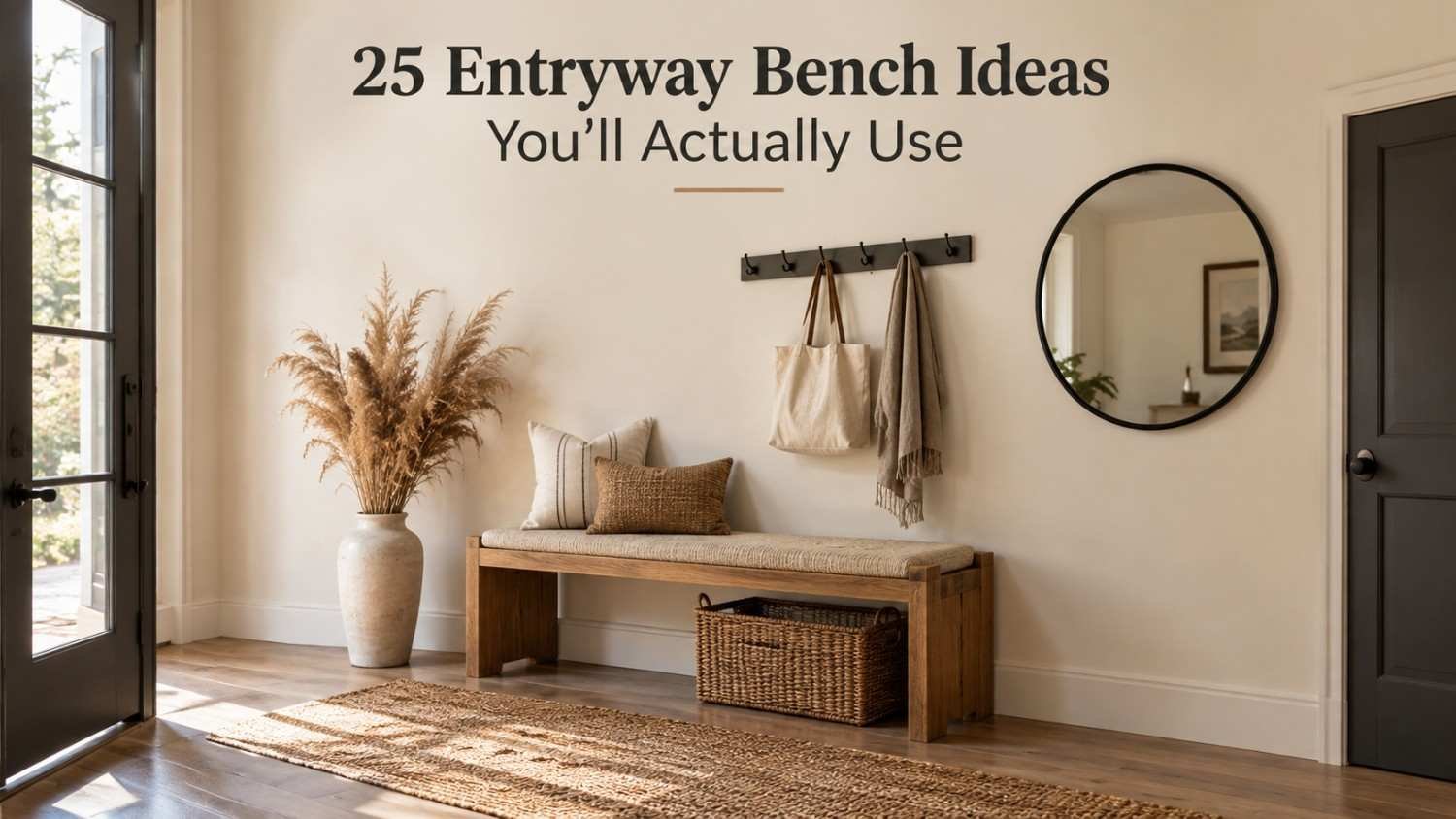
Walk through your front door, and the first thing your body wants to do is sit down, drop a bag, and kick off your shoes. That single moment is why entryway bench ideas matter more than most homeowners realize. A well-placed bench does double duty: it softens the transition from outside to inside, and it quietly organizes the chaos of shoes, keys, and coats that pile up by the door.
Most articles on this topic show pretty photos without explaining what actually makes a bench work in real life — the right height, the right depth, the right material for a mudroom versus a formal foyer. This guide fixes that gap. Below are 25 entryway bench ideas, organized by function and style, along with the practical details you need before you buy or build one, from apartment-sized corners to full mudroom walls.
Homeowners often buy a bench first and figure out storage second, then wonder why shoes still pile up on the floor. Working through these entryway bench ideas in order — starting with the sizing basics, then moving into layout and style — helps you avoid that trial-and-error cycle and land on something the whole household actually uses.
What to Look for Before You Buy or Build an Entryway Bench
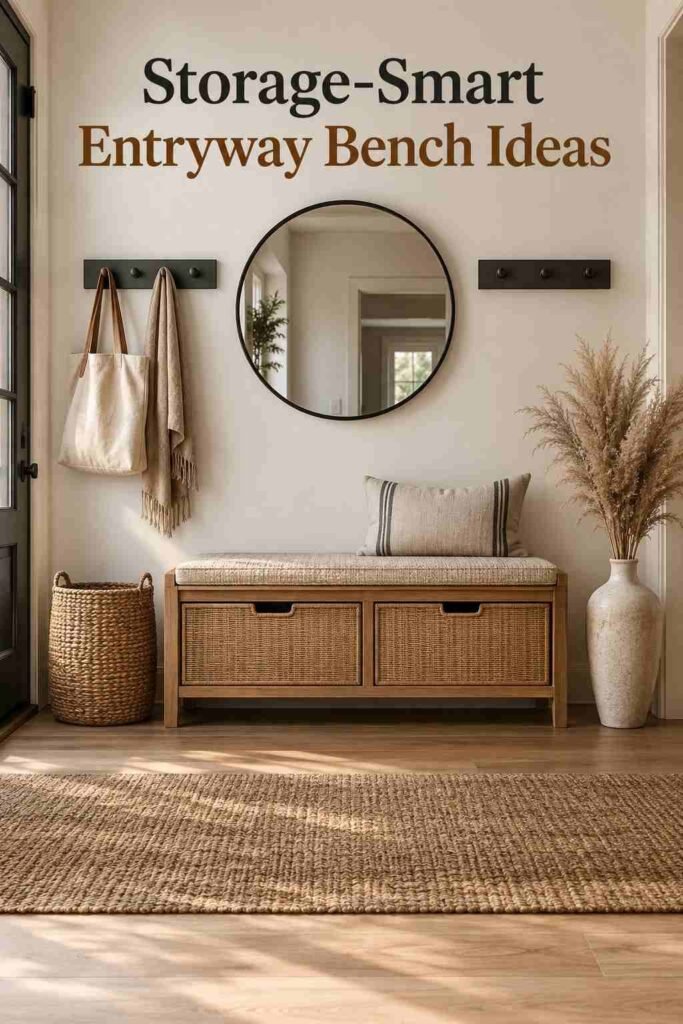
Before scrolling through inspiration photos, it helps to understand the basics that separate a bench that gets used daily from one that becomes a dusty landing pad for mail. A comfortable seat height typically falls between 17 and 19 inches, matching standard dining chair height so people of different ages can sit and stand comfortably. Depth matters too — anything under 14 inches feels flimsy, while 16 to 20 inches gives enough room to actually sit rather than perch.
Material choice depends on traffic and climate. Solid wood and metal frames handle wet boots and dropped umbrellas better than upholstered fabric, which is why many of the entryway bench ideas below pair a hard surface with removable cushions. If your household deals with snow, mud, or pets, prioritize washable covers and sealed wood finishes over delicate textiles.
Weight capacity is another detail rarely mentioned. A bench meant for sitting, not just display, should comfortably support at least 250 to 300 pounds without wobbling — check the frame joinery, not just the marketing photos, before committing.
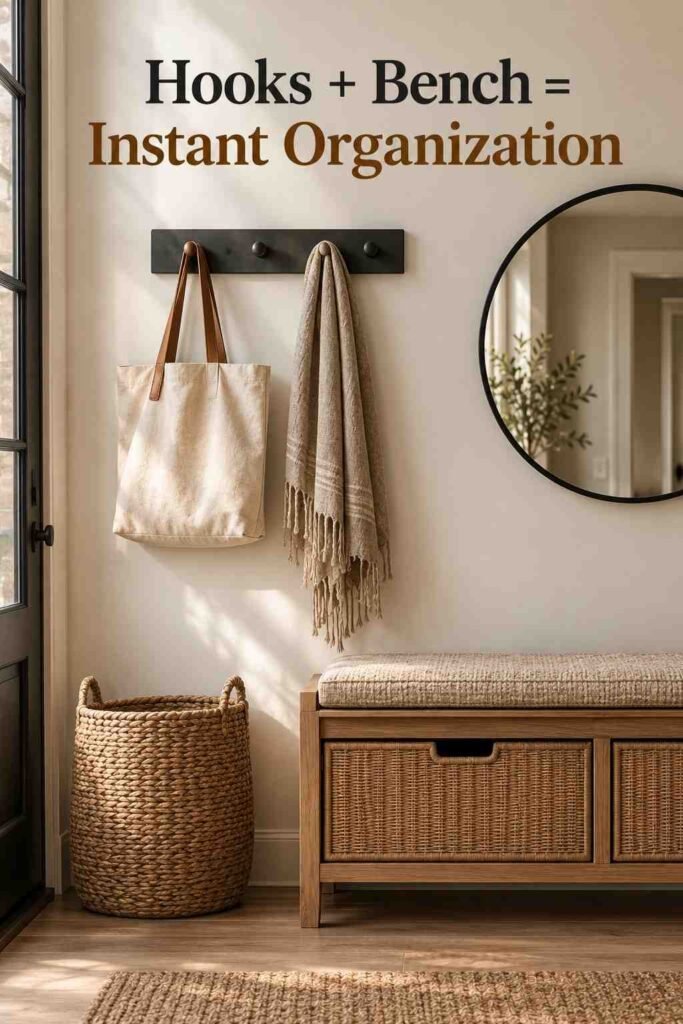
Lighting and wall storage change how a bench feels day to day. A row of hooks or a slim shelf mounted above the seat keeps coats and bags off the cushion, while a warm sconce or small pendant nearby makes the whole corner feel intentional rather than accidental. Many of the entryway bench ideas below work best when paired with at least one of these two additions, since a bench on its own rarely solves the full storage puzzle.
If your home lacks a dedicated foyer altogether, it’s worth browsing mudroom ideas first, since many small-space solutions overlap with entryway bench ideas but lean harder into boot storage and coat management.
25 Entryway Bench Ideas for Every Style and Space
Storage-Smart Bench Ideas
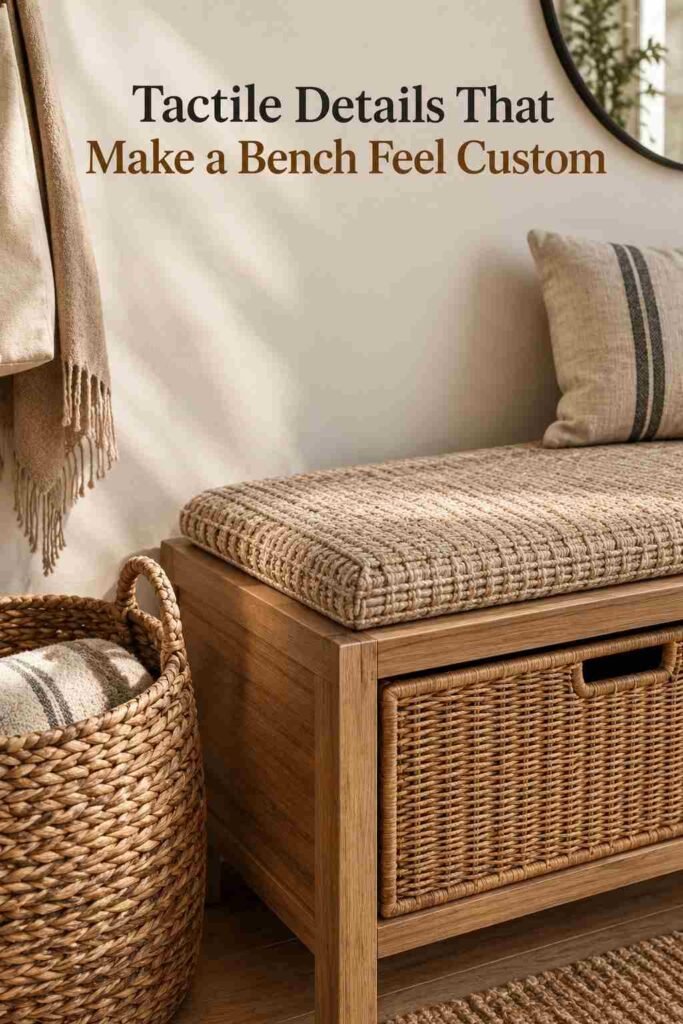
1. Cubby Bench with Fabric Bins: This classic layout pairs an open cubby base with woven or canvas bins, giving each family member their own labeled spot for shoes and gloves. It’s one of the most requested entryway bench ideas because it hides clutter instantly while still looking tidy from across the room.
2. Bench with Built-In Drawers: Drawers keep small items like sunglasses, pet leashes, and mail dust-free. Choose soft-close hardware so the drawers hold up to daily slamming from kids rushing out the door.
3. Lift-Top Storage Bench: The seat itself hinges open to reveal a deep interior cavity, ideal for seasonal items like winter boots or beach towels that don’t need daily access. Look for safety hinges that prevent the lid from slamming shut.
4. Ventilated Shoe-Cubby Bench
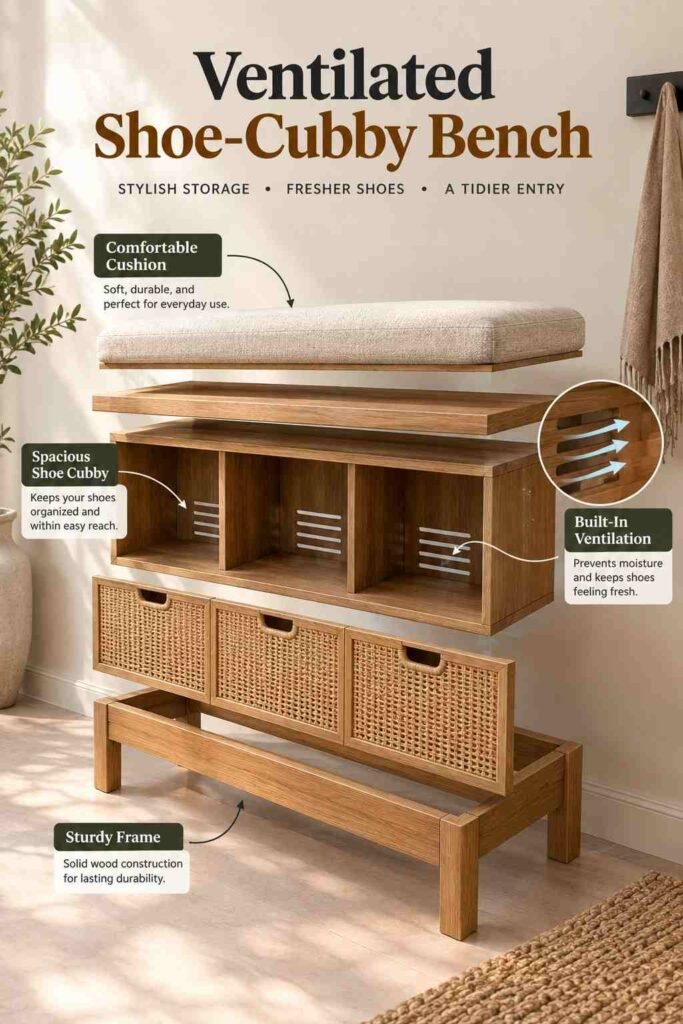
Slatted or louvered cubby fronts let air circulate around damp shoes, cutting down on odor. This detail is often missing from generic bench designs but makes a real difference in humid climates.
5. Locker-Style Bench with Hooks: Modeled after school lockers, this design combines a bench seat, individual cubbies, and wall hooks above each section. It’s a favorite among larger families who need assigned storage zones.
Small-Space Bench Ideas
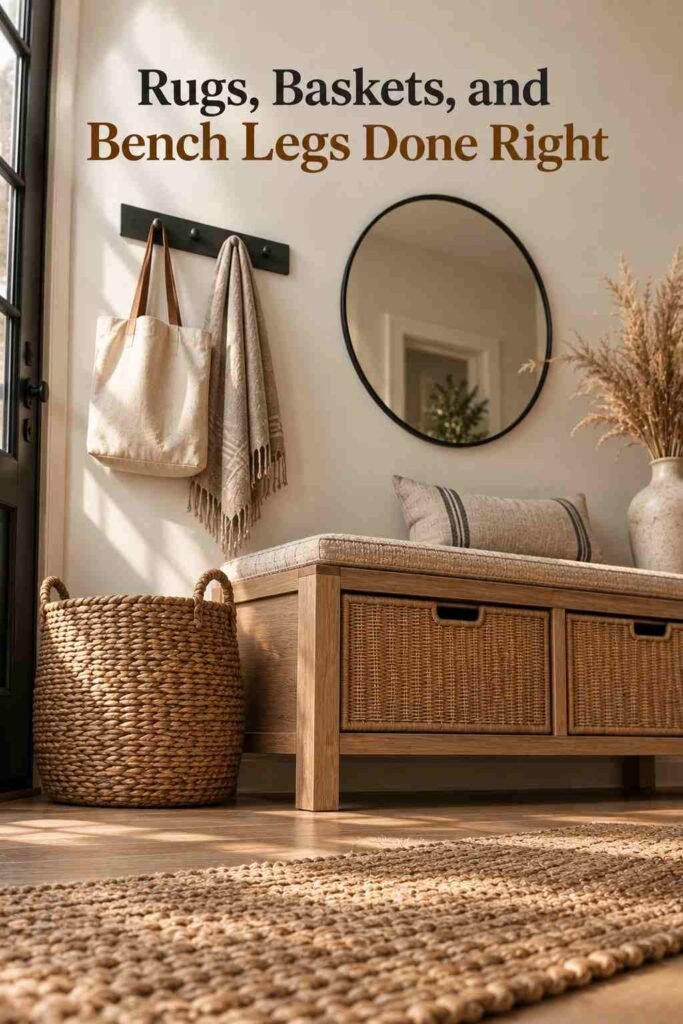
6. Floating Wall-Mounted Bench: Mounted directly to the wall studs, a floating bench frees up floor space for cleaning and makes narrow hallways feel less cramped. Confirm stud placement before installing, since these benches carry real weight.
7. Corner Entryway Bench: An L-shaped or angled bench tucks into an unused corner, turning dead space into seating without blocking foot traffic. This works especially well in apartments with awkward entry angles.
8. Narrow Bench with Vertical Shoe Rack: Pairing a slim bench with a tall, narrow shoe rack beside it maximizes storage in tight footprints under 30 inches wide, a common constraint in older homes and condos.
9. Fold-Down Wall Bench
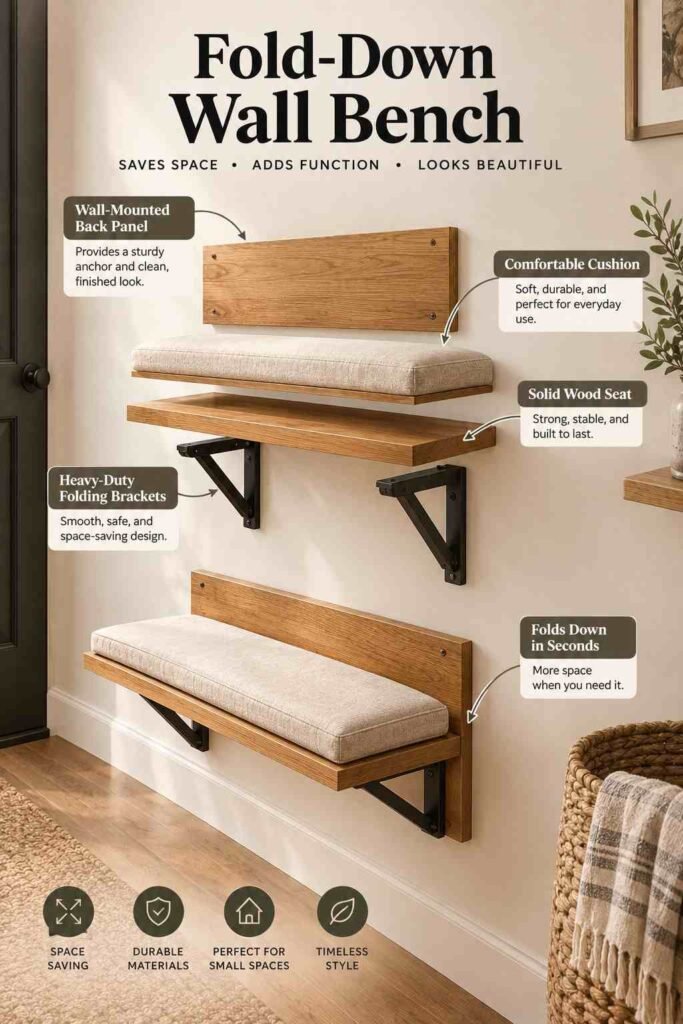
Hinged to fold flat against the wall when not in use, this space-saving option suits mudrooms doubling as laundry pass-throughs or narrow hallway entries.
10. Slim Bench with Mirror Pairing: A shallow bench under a large mirror creates the illusion of depth in a tight entry while still offering a place to sit. The mirror also bounces light back into the space.
Style-Driven Bench Ideas
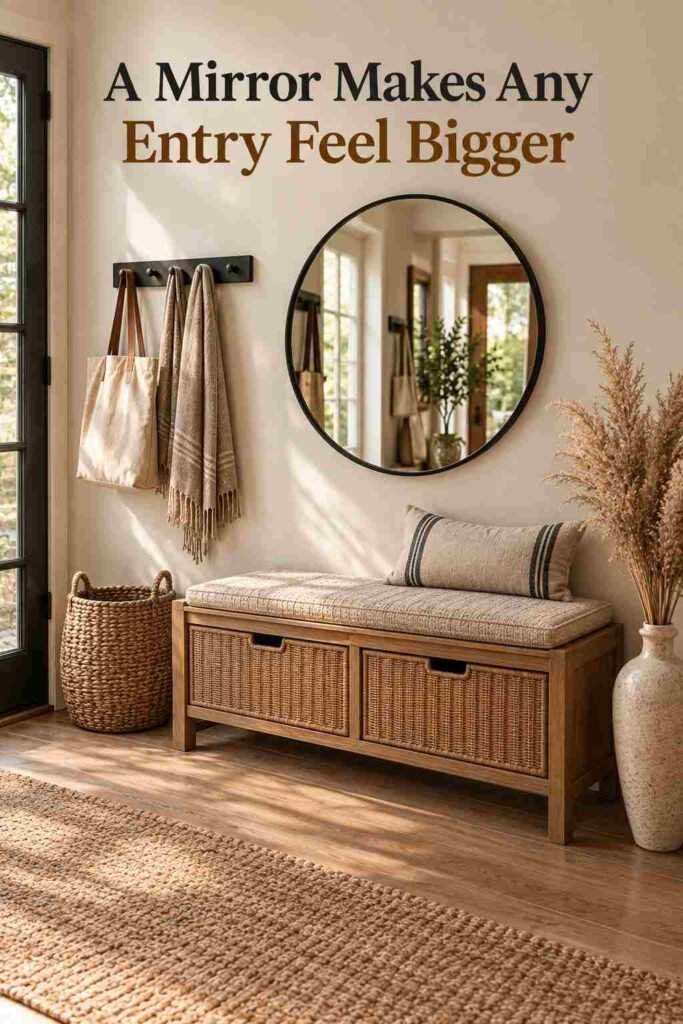
11. Farmhouse Bench with Turned Legs: Solid wood, visible grain, and turned or tapered legs give this option a warm, lived-in character that suits country and cottage-style homes.
12. Modern Minimalist Slab Bench: A single clean slab of wood or engineered stone on hairpin legs suits contemporary interiors that favor negative space over ornamentation.
13. Industrial Pipe-and-Wood Bench: Black iron pipe legs paired with a reclaimed wood top bring texture and an urban-loft feel, popular in converted warehouse apartments and open-concept homes.
14. Tufted Upholstered Bench
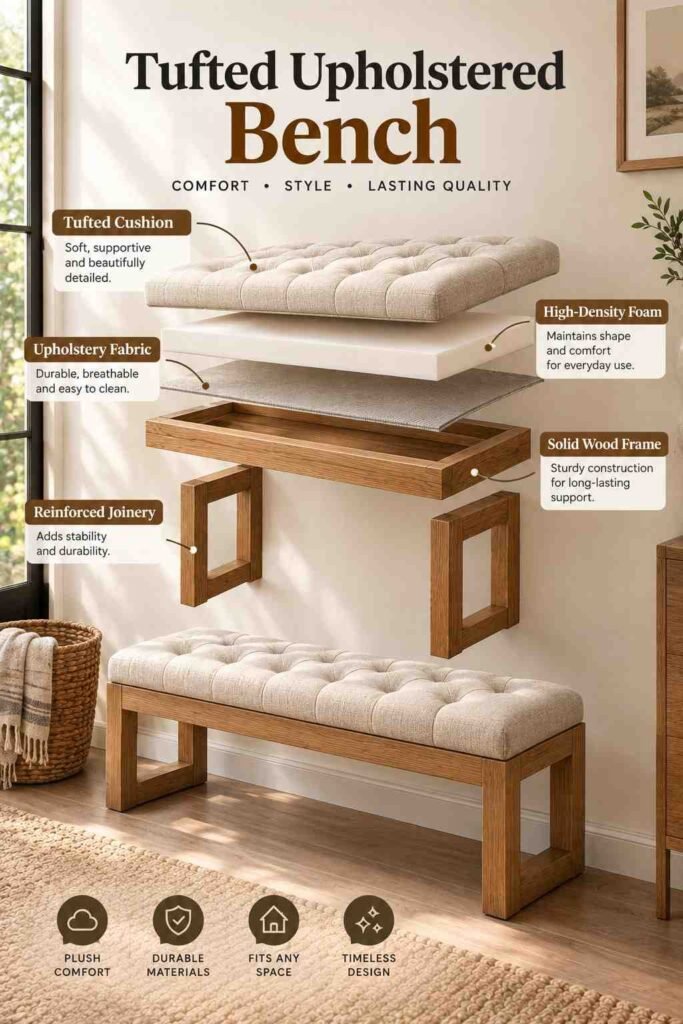
A padded, tufted seat adds softness and formality, making it a strong fit for traditional or transitional entryways where comfort takes priority over storage.
15. Rattan or Wicker Bench: Natural woven materials bring a coastal or bohemian feel and work well in warmer climates, though they should be paired with a washable cushion for durability.
Budget-Friendly and DIY Bench Ideas
16. Repurposed Dresser Bench: An old dresser with the top drawers removed and a cushion added on top becomes an instant storage bench, keeping the lower drawers intact for shoes.
17. Flat-Pack Cabinet Hack: Two matching flat-pack storage cabinets set side by side with a cut plywood top and cushion create a budget storage bench for under $150 in materials.
18. Reclaimed Pallet Bench: Sanded and sealed pallet wood makes an inexpensive, rustic bench, though it requires careful sanding to avoid splinters in high-traffic bare-foot zones.
19. Painted Vintage Bench Refresh: A thrifted wooden bench sanded down and refinished in chalk paint or stain can outperform new furniture in character while costing a fraction of the price.
Built-In and Custom Bench Ideas
20. Under-Stair Built-In Bench: The often-wasted triangular space beneath a staircase can be framed into a custom bench with cubbies sized to the sloped ceiling above.
21. Window-Nook Built-In Bench: If your entry includes a window, a built-in bench beneath it creates a bright reading-and-storage spot rather than wasted wall space.
22. Full-Wall Locker Bench System: A custom carpentry build spanning an entire wall — combining bench seating, cubbies, drawers, and hooks — works best for larger mudrooms serving as the household’s main entry point.
Multi-Functional and Modern Bench Ideas
23. Bench with Built-In Charging Station: Concealed outlets and USB ports built into the bench base let you charge phones or e-readers while sitting to remove shoes, a detail almost no traditional bench design includes.
24. Convertible Bench-Desk Nook: In small apartments, a fold-out desktop attached to the bench turns the entry into a temporary workspace, then folds away when guests arrive.
25. Pet-Friendly Bench with Feeding Station: A bench with a built-in leash hook, treat drawer, and space below for food and water bowls keeps pet gear contained near the door instead of scattered through the house.
Once your bench is chosen, the surface above it deserves equal attention — pairing it with fresh Entryway Table Decor Ideas rounds out the space with layered lighting, a catch-all tray, and seasonal greenery.
Styling Tips to Complete the Look
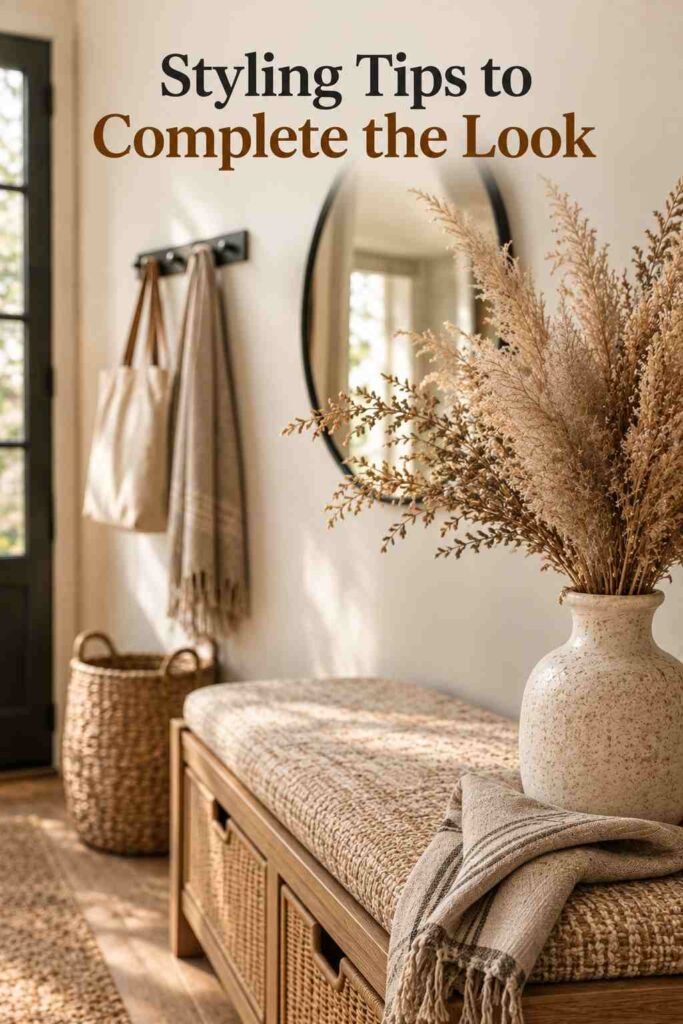
A bench rarely stands alone, and the small finishing touches often make the biggest visual difference. Layer a cushion in a performance fabric so spills and muddy paws wipe clean instead of staining, then add one or two textured throw pillows to soften the edges of a wood or metal frame. Rotate them seasonally — heavier knits in winter, linen or cotton in summer — to keep the space feeling current without buying new furniture.
Baskets and bins underneath the seat do more than hide clutter; they also add color and texture at floor level, which balances out taller elements like coat hooks or a mirror above. Stick to two or three materials total across the whole vignette — wood, metal, and woven fiber, for example — so the space feels curated rather than cluttered. These small choices are what separate a bench that just sits there from one that anchors the entire entryway.
Bringing It All Together
The right bench turns a hallway into a genuine first impression rather than a dumping ground. Whether you choose a built-in locker wall, a simple thrifted dresser hack, or a sleek floating wall-mounted bench, the goal stays the same: create a spot where people naturally want to pause, sit, and settle in. Match the material to your traffic level, get the height and depth right, and add storage that fits how your household actually lives.
There’s no single right answer among these 25 options — the best choice is simply the one that matches your entryway’s size, your family’s daily habits, and the style already present in the rest of your home. Start with the sizing basics, pick two or three ideas that solve your specific storage problem, and build outward from there.
For more room-by-room inspiration and styling breakdowns like this one, outinteriors publishes practical design guides built around real dimensions and everyday use, not just pretty photos.
Frequently Asked Questions
What is the ideal height for an entryway bench?
Most comfortable entryway benches sit between 17 and 19 inches high, matching standard chair height. Benches used mainly for shoe removal by children can sit slightly lower, around 15 to 16 inches.
Can I use an entryway bench without a mudroom?
Yes. Many homes rely on a bench near the front door as their only landing zone. Pairing it with wall hooks and a shoe tray achieves most of the organization a dedicated mudroom would offer.
What’s the best material for a high-traffic entryway?
Sealed solid wood or powder-coated metal frames hold up best against wet shoes, dropped bags, and daily use. Reserve fully upholstered benches for lower-traffic, more formal entries.
How much weight should an entryway bench hold?
A sturdy bench should support at least 250 to 300 pounds without flexing. Check joinery and leg bracing rather than relying on listed weight ratings alone.
Should an entryway bench always have storage?
Not necessarily. In small or formal entries, a slim bench without storage can look cleaner, while busy households with kids or pets usually benefit more from cubbies or drawers.
How deep should an entryway bench be?
Aim for 16 to 20 inches of depth for comfortable seating. Anything under 14 inches works only as a narrow perch rather than true seating.
What’s a budget-friendly way to add a bench to a small entryway?
Repurposing a dresser, thrifted bench, or flat-pack cabinets with a cushioned top delivers the look and function of custom furniture at a fraction of the cost.



One Comment