Luxurious 22 Spa Bathroom Ideas to Turn Your Bathroom Into a Personal Retreat
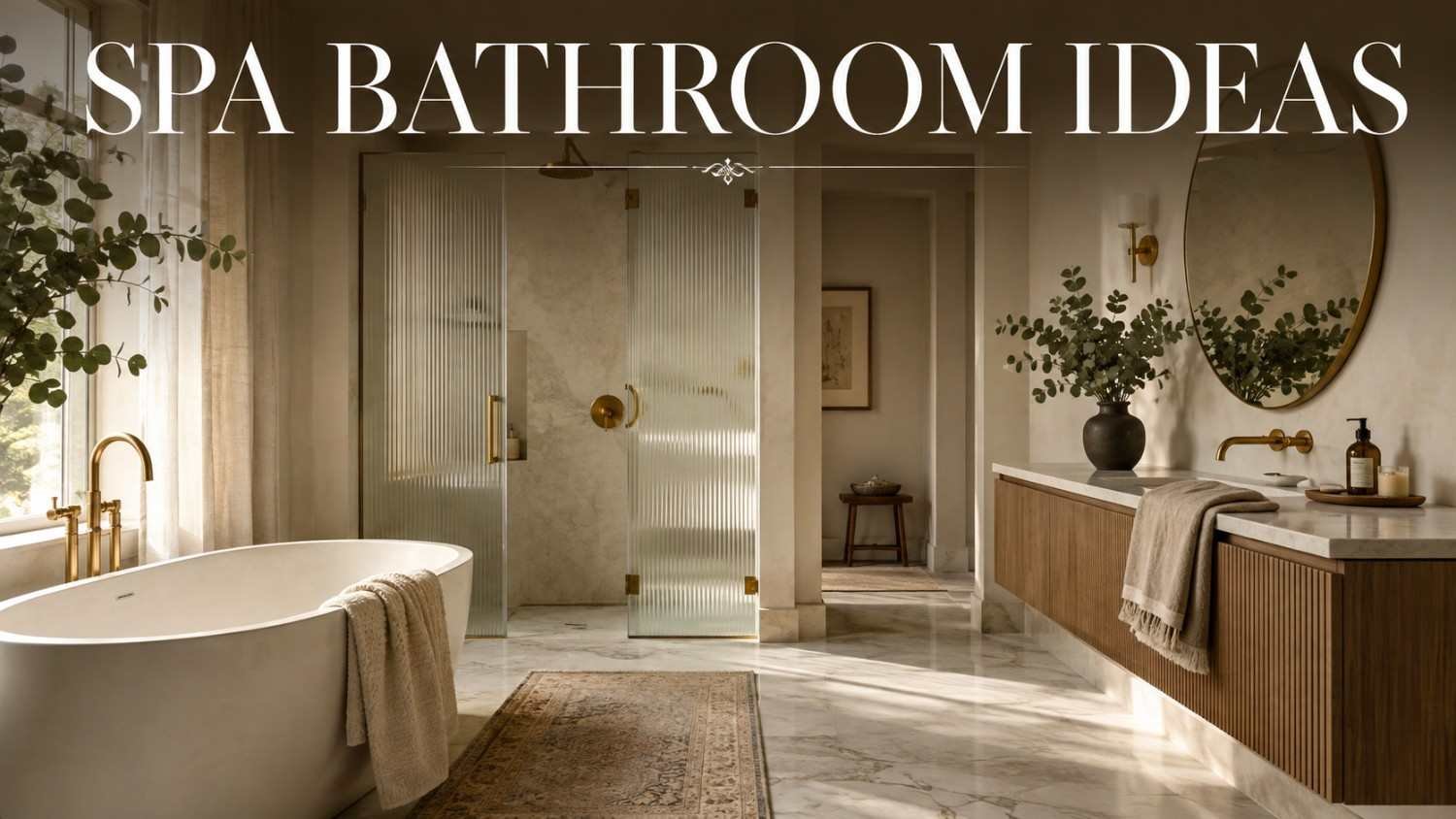
There’s a particular kind of quiet that settles over a bathroom done right — steam curling off warm water, soft light against tile, the scent of something calming in the air. That feeling is the whole point behind every well-designed spa bathroom, and it’s more attainable than most homeowners assume. You don’t need a five-figure renovation or a mansion-sized floor plan to get there. What you need is intention: the right materials, the right light, and a handful of details that turn a purely functional room into a place worth lingering in. Below are 22 spa bathroom ideas, organized by fixtures, finishes, lighting, comfort, storage, and sensory details, so you can pull from the list based on what your space and budget actually allow.
What Makes a Bathroom Feel Like a Spa?
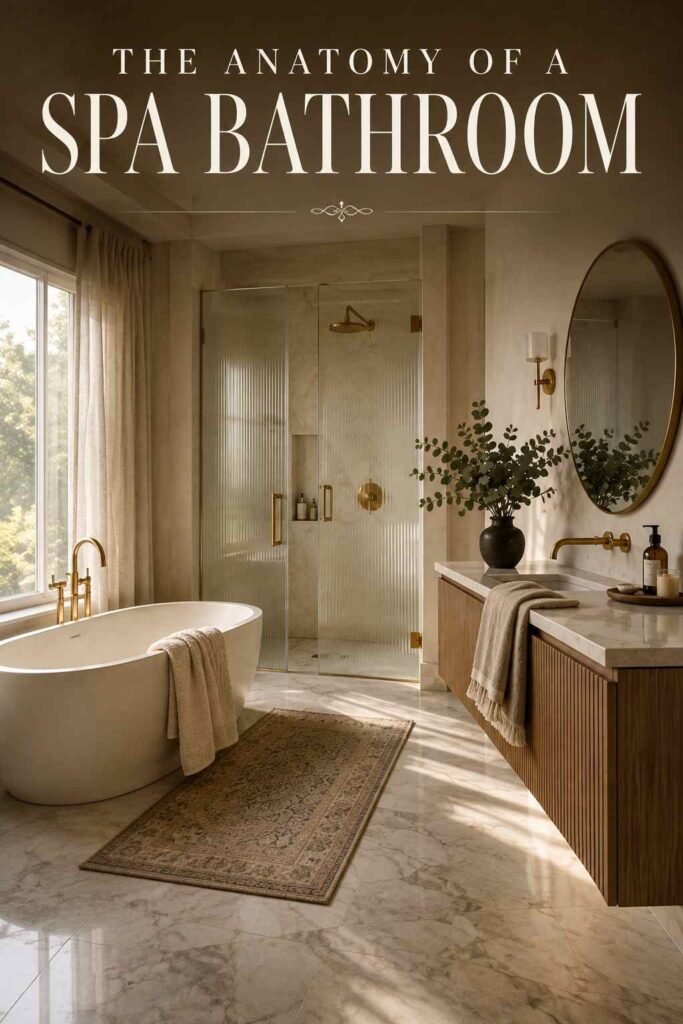
Before diving into specific spa bathroom ideas, it helps to understand the principles that set a spa-inspired room apart from an ordinary one. Four things matter most: warmth (through materials, heated surfaces, and soft lighting), visual calm (achieved with hidden storage, muted colors, and minimal clutter), sensory richness (layered light, natural textures, and a consistent scent), and fixtures that feel good to use, not just look good in photos. None of this requires square footage. A 40-square-foot powder room can feel more restorative than a large, cluttered primary bath if the details are handled with care.
22 Spa Bathroom Ideas for Every Style and Budget
These spa bathroom ideas are grouped into categories — fixtures, surfaces, lighting, comfort, storage, and sensory finishing touches — so you can build a plan that fits your space, timeline, and budget.
Fixtures That Set the Spa Tone
1. Freestanding Soaking Tub. A freestanding tub is still the single most recognizable spa signal in a bathroom. Placed where it catches natural light, it becomes a sculptural centerpiece rather than just a place to bathe. Deeper, ergonomically curved models hold heat longer, which is often the difference between a tub that gets used weekly and one that becomes a towel shelf.
2. Rainfall Shower or Walk-In Rain System. A ceiling-mounted or wall-arm rain showerhead disperses water in a wide, gentle pattern that mimics natural rainfall. It’s one of the easiest upgrades on this list — many models install in an afternoon — and it instantly changes how a shower feels, trading force for coverage.
3. Wet Room Layout. A wet room removes the shower enclosure entirely, waterproofing the whole floor and walls so water can flow freely to a central drain. The continuous floor plane visually expands a small bathroom and simplifies cleaning, though it does require professional waterproofing, a proper slope, and strong ventilation to manage humidity.
4. Japanese-Style Soaking Tub for Small Bathrooms. Shorter and deeper than a standard Western tub, a Japanese-style soaker fits into footprints where a full-length tub simply won’t, while still delivering full-immersion bathing. It’s one of the best spa bathroom ideas for compact primary baths or awkward layouts where floor space is tight, but the ambition isn’t.
Color Palettes, Countertops, and Textured Surfaces
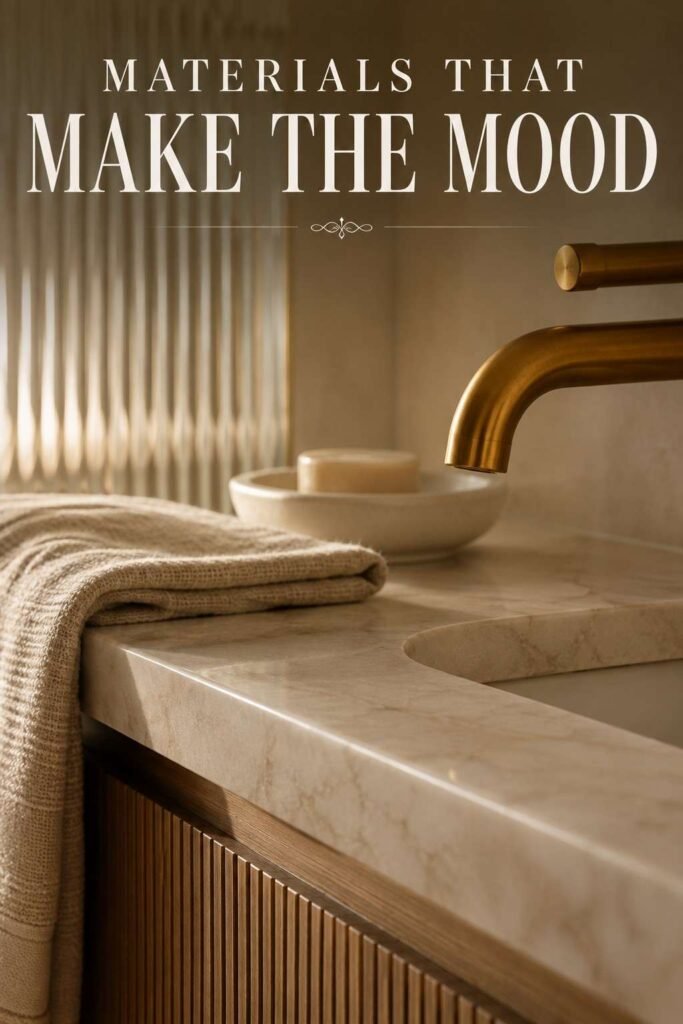
5. A Calming, Cohesive Color Palette. Color sets the emotional register of the entire room before a single fixture is chosen. Soft grays, warm greiges, sage green, and muted clay tones read as restful in a way that stark white or high-contrast schemes don’t. If you’re unsure where to start, our guide to bathroom color schemes breaks down which palettes photograph well and hold up over time.
6. Natural Stone or Engineered Quartz Countertops. Countertops do more visual work than most homeowners expect, since they sit at eye level and anchor the vanity wall. Honed marble, soapstone, and quartz all read as calm and tactile rather than clinical, and quartz in particular resists staining and etching far better than natural stone. For a full comparison of durability, cost, and maintenance, see our breakdown of the best bathroom countertops for spa-style vanities.
7. Textured Tile Accents. Zellige, fluted, and pebble tiles introduce depth and handmade character without adding clutter. Used as a shower backsplash or a single accent wall, textured tile catches light differently throughout the day, which is part of what makes high-end spas feel alive rather than static.
Lighting and Mirrors That Do the Heavy Lifting
8. Layered, Dimmable Lighting. Warm white light in the 2700–3000K range reads as cozy rather than clinical, and pairing it with dimmers lets the room shift from bright and functional in the morning to soft and restorative at night. Layer overhead, vanity, and accent lighting rather than relying on a single fixture.
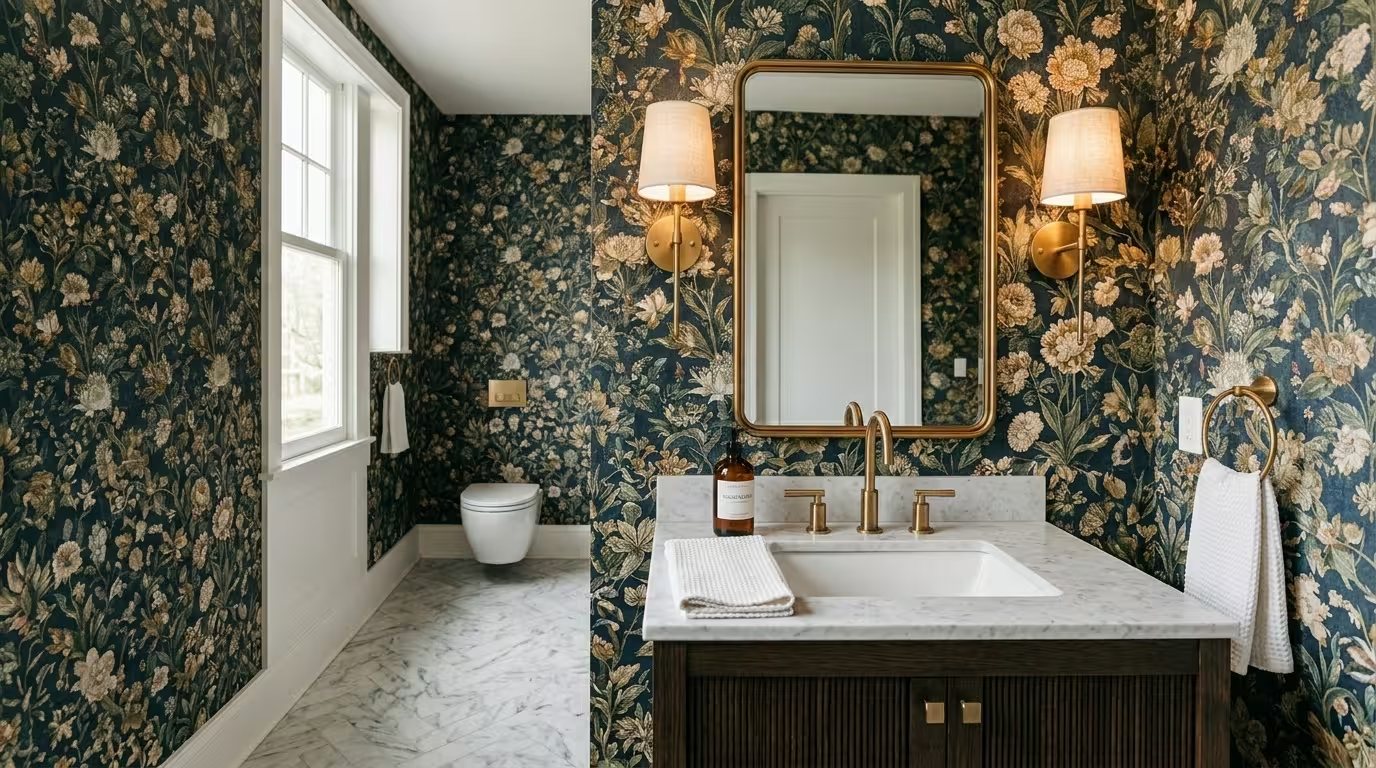
9. A Statement Round Mirror with Sconces. Round mirrors soften a room full of straight lines and rectangular tile, and flanking sconces provide shadow-free light for grooming while adding a boutique-hotel feel. This is one of the lowest-cost, highest-impact spa bathroom ideas on this list.
10. Anti-Fog Smart Mirror. Built-in defoggers, adjustable color temperature, and sometimes Bluetooth speakers turn a mirror into a functional centerpiece rather than an afterthought. They’re a modern upgrade that pairs particularly well with a steam shower or soaking tub.
Warmth and Comfort Upgrades
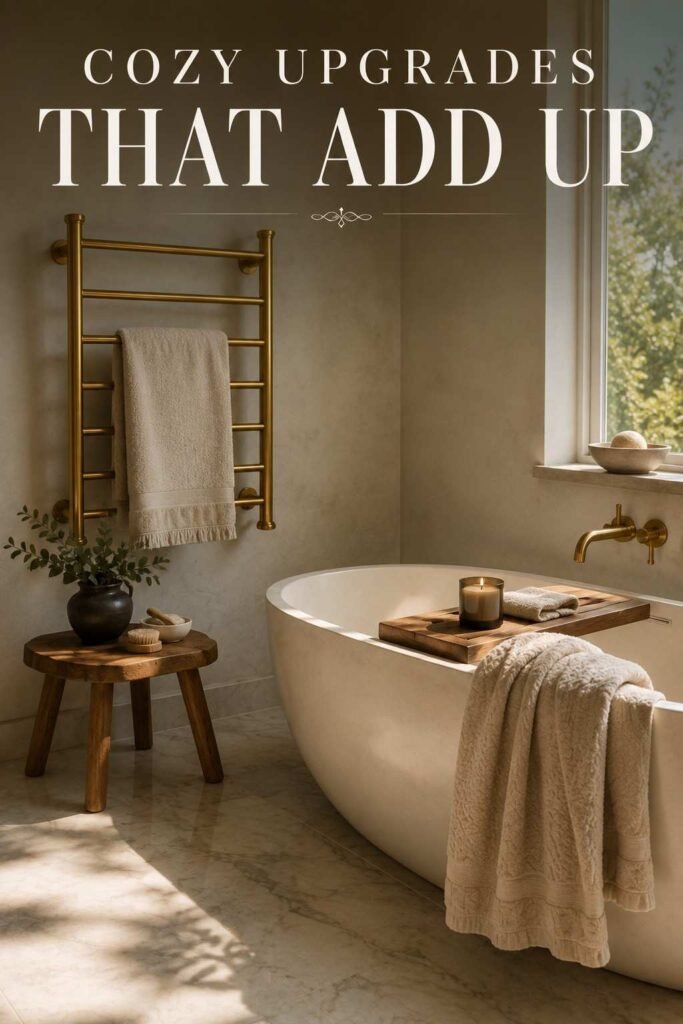
11. Radiant Heated Flooring. Underfloor heating eliminates the shock of cold tile first thing in the morning and is one of the most consistently mentioned upgrades among homeowners who’ve completed a spa-style remodel. It installs beneath tile or stone and runs on a simple programmable thermostat.
12. Wall-Mounted Towel Warmer. A heated towel rail delivers an outsized sense of luxury for a relatively modest cost. Hardwired or plug-in models both work; the point is stepping out of a shower or tub into a warm, dry towel rather than a cold one.
13. Wood and Teak Accents. A slatted teak bath mat, a wooden shower stool, or a bamboo tub tray introduces organic texture that tile and stone alone can’t provide. These pieces are inexpensive, easy to swap seasonally, and immediately soften a room dominated by hard surfaces.
Storage That Keeps the Calm Intact
14. Recessed Storage Niches. Built into the shower wall during construction, a recessed niche keeps bottles and soap off ledges and out of sight lines. Visual clutter is one of the fastest ways to undercut a spa atmosphere, and a niche solves it permanently.
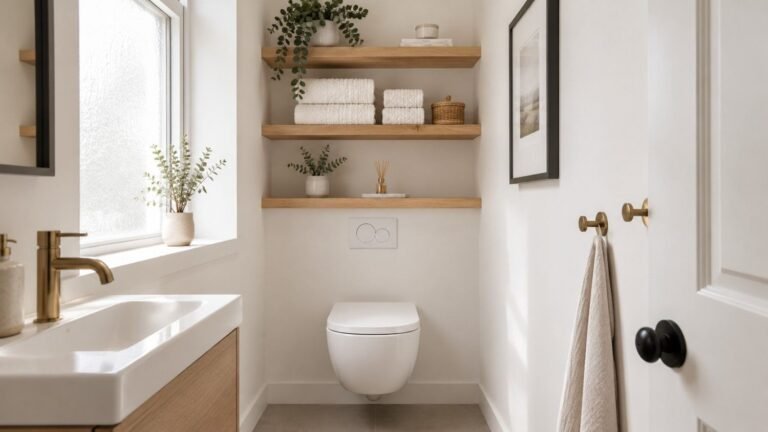
15. Floating Vanity with Concealed Storage. A wall-mounted vanity with closed drawers instead of open shelving keeps everyday items hidden while making a small floor plan feel larger, since you can see the floor continue beneath it. It’s a favorite trick among designers working with compact primary and guest baths alike.
Sensory Details That Complete the Ritual
16. Living Greenery. A single eucalyptus bundle hung in the shower, or a low-light plant like a pothos on the vanity, adds life and a faint natural scent without any real upkeep. Greenery is one of the cheapest spa bathroom ideas to test before committing to anything larger.
17. Aromatherapy Diffuser or Candles. Scent is often the missing piece in an otherwise well-designed bathroom. A small ultrasonic diffuser with eucalyptus, lavender, or cedar oil, or a set of unscented soy candles near the tub, adds a sensory layer that photos of a room can’t capture but visitors always notice.
18. Waterproof Sound System. A compact waterproof speaker turns a shower or bath into a full ritual rather than a quick routine. Many models mount with a suction cup and run for hours on a single charge, making this an easy weekend addition.
19. Plush Towels, Robes, and Linen Storage. Thick, hotel-weight towels and a simple robe hook change how a bathroom feels to use every single day. Store extras in a woven basket or open shelf so they’re part of the room’s texture rather than hidden in a closet.
Practical and Sustainable Finishing Touches
20. Water-Efficient Fixtures. Low-flow showerheads and faucets carrying a WaterSense label reduce water use without sacrificing pressure, thanks to improved aerator design. It’s a detail that supports the calm, considered feel of a spa bathroom while lowering utility costs over time.
21. Proper Ventilation and Humidity Control. No amount of styling compensates for a bathroom that stays damp after every shower. A properly sized exhaust fan, or an operable window where possible, protects tile grout, wood accents, and paint finishes while keeping the air genuinely comfortable to breathe.
22. Curated Personal Styling. One or two meaningful objects — a vintage mirror, a piece of botanical art, a ceramic dish for rings — do more for a room’s personality than a shelf full of matching decor. Restraint, not accumulation, is what keeps a spa bathroom feeling intentional rather than staged.
Small Bathroom? These Spa Bathroom Ideas Still Work
A limited footprint doesn’t rule out a spa-style result. Prioritize a Japanese-style soaking tub or a compact corner model over a full-length freestanding tub, choose a wet room layout to eliminate the visual break of a shower curb, and lean on vertical storage — recessed niches, a mirrored medicine cabinet, hooks behind the door — instead of floor-standing furniture. Warm, dimmable lighting and a heated towel rail read as luxurious in any square footage, and a single well-placed plant or piece of art often does more in a small room than it would in a large one.
The mistake most homeowners make in a tight bathroom is trying to fit in everything at once. A handful of well-chosen spa bathroom ideas, executed properly, will always outperform a crowded room full of half-finished upgrades. Pick two or three from this list, get them right, and expand later if the space and budget allow.
Budget Breakdown: What These Spa Bathroom Ideas Typically Cost
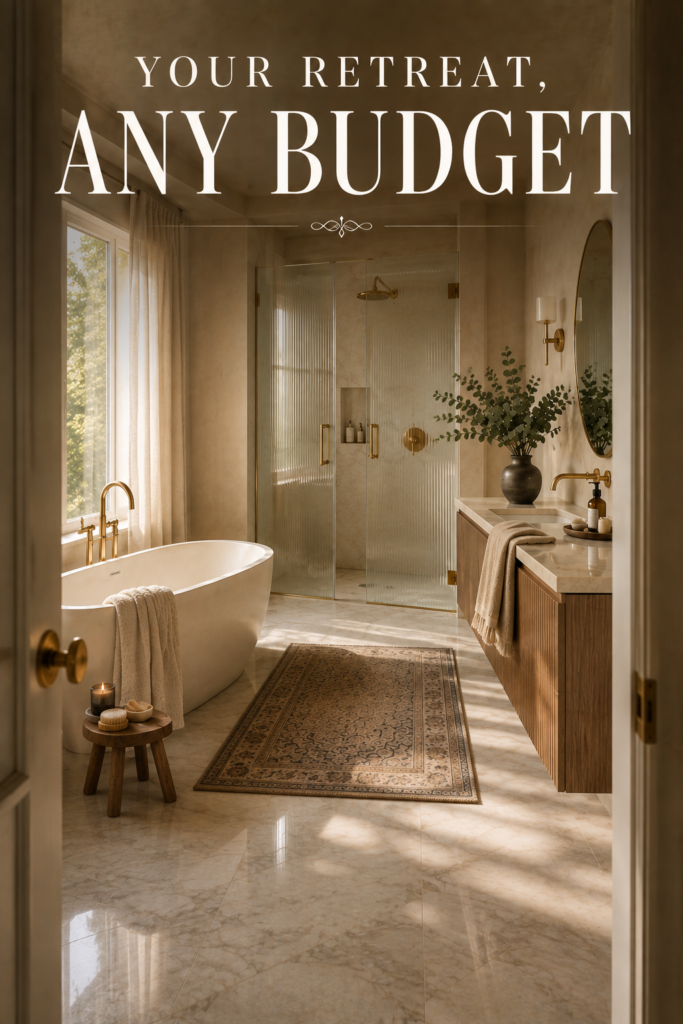
Costs vary widely by region and contractor, but as a general guide: accessory-level changes — a towel warmer, a diffuser, plush towels, a new mirror — typically fall in the $50 to $400 range and can be done in a weekend. Mid-tier upgrades like a rainfall showerhead, radiant floor heating, or a countertop swap usually run $1,500 to $6,000 depending on the scope of tile and plumbing work involved. A full renovation that includes a freestanding tub, a frameless glass shower, and new countertops commonly starts around $15,000 and climbs from there based on finishes. Tackling spa bathroom ideas in phases — accessories first, fixtures later — is a practical way to spread the cost without losing momentum.
Conclusion
A spa bathroom isn’t defined by square footage or a single splurge purchase — it’s built from a series of small, deliberate decisions about warmth, light, texture, and calm. Whether you start with a $30 diffuser or commit to a full remodel with a freestanding tub and heated floors, the 22 spa bathroom ideas above give you a realistic roadmap for either path. For more design inspiration and curated product picks to help you plan the details, browse the resources at outinteriors.
Frequently Asked Questions About Spa Bathroom Ideas
How much does it cost to turn a bathroom into a spa-style retreat?
It depends entirely on scope. Accessory changes can cost under $200, while a full renovation with a freestanding tub, new countertops, and a glass shower often starts around $15,000. Most homeowners land somewhere in between by phasing the work.
What is the best color scheme for a spa bathroom?
Soft neutrals, warm grays, sage green, and muted clay tones consistently read as calming. Avoid high-contrast or overly saturated palettes, which tend to feel energetic rather than restful.
Can a small bathroom still feel like a spa?
Yes. A Japanese-style soaking tub, a wet room layout, vertical storage, and warm dimmable lighting all work well in compact spaces and often make a bigger visual impact than they would in a larger room.
What lighting works best for a spa bathroom?
Warm white light in the 2700–3000K range on a dimmer switch is the standard recommendation, layered across overhead, vanity, and accent fixtures rather than a single bright source.
Do I need a full renovation for spa bathroom ideas to work?
No. Many of the ideas on this list — towel warmers, plants, lighting swaps, textiles, and scent — require no construction at all and can be added incrementally.
What’s the difference between a spa bathroom and a luxury bathroom?
Luxury bathrooms are often defined by high-end materials and statement fixtures. A spa bathroom borrows some of that, but the focus is specifically on comfort, warmth, and sensory calm rather than visual grandeur alone.
How do I keep a spa bathroom low-maintenance?
Choose durable surfaces like engineered quartz over porous natural stone, install a properly sized exhaust fan to control humidity, and keep decor minimal so cleaning stays quick and clutter doesn’t accumulate.