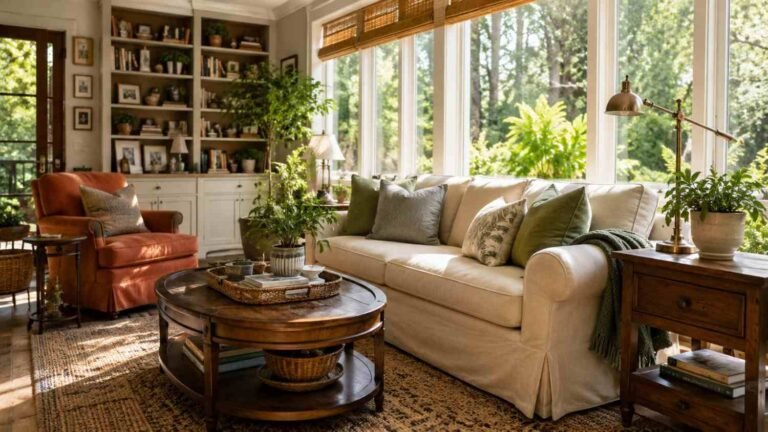
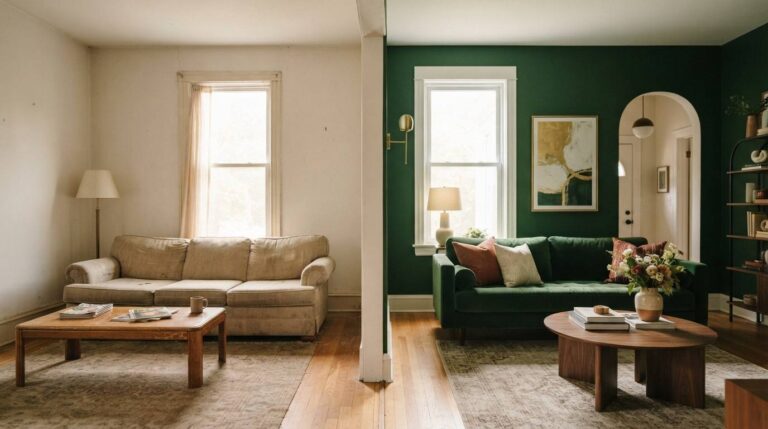
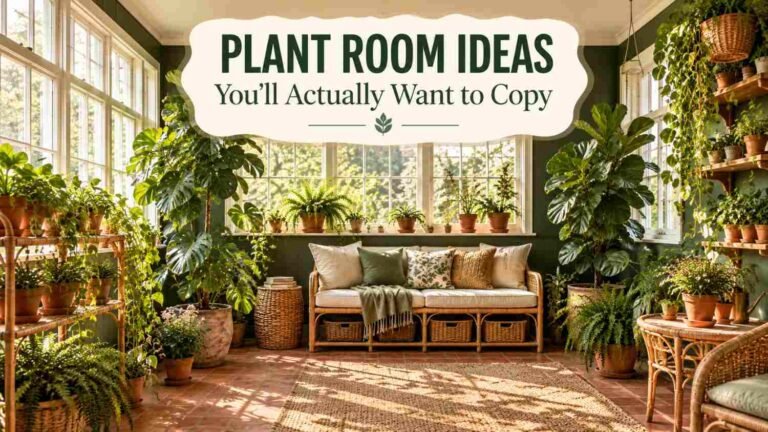
Sunroom Ideas With Plants for a Bright, Green Retreat

A sunroom is one of the few rooms in a home designed with plants in mind. The glass walls, the flood of daylight, the connection to the outdoors — it all sets the stage. Yet most guides stop at “add some ferns” and call it a day. This list goes further, pairing 26 sunroom ideas with plants, real design styles, functional layouts, and plant choices suited to different light conditions and climates, so you can build a space that thrives through every season, not just looks good in a photo.
What Makes a Sunroom the Perfect Spot for Plants
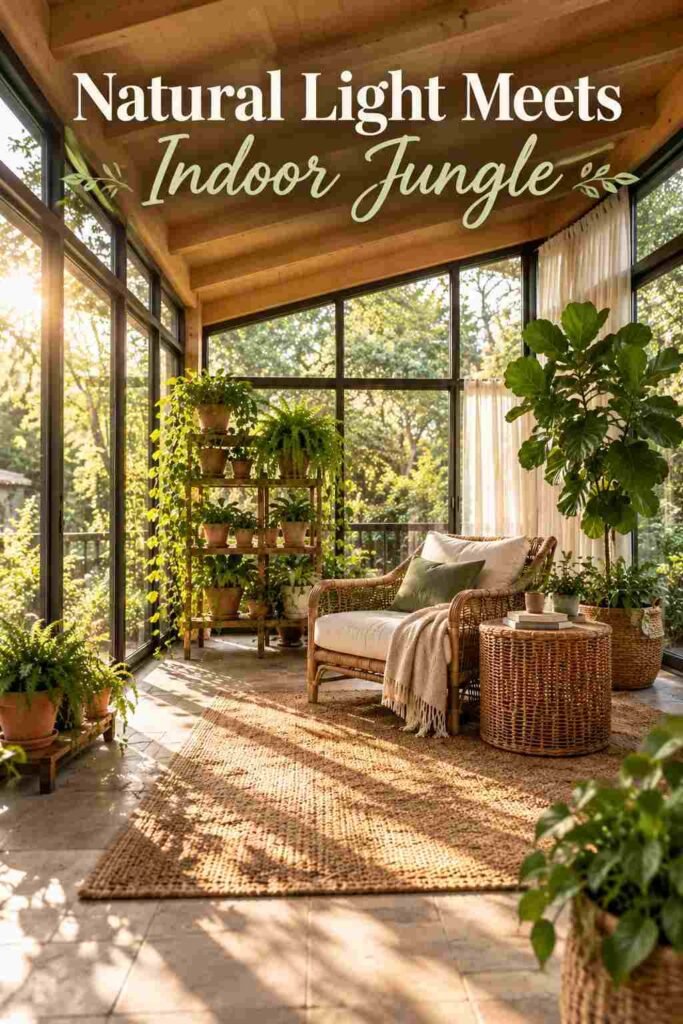
Sunrooms typically receive far more natural light than any other room in the house, thanks to windows on three or four sides. That light exposure means you can grow sun-loving species that would struggle on a normal windowsill, from citrus trees to flowering hibiscus. The trade-off is temperature swings — sunrooms can get hot on summer afternoons and chilly overnight in winter, especially in three-season models without insulated glass. Before filling the room, check whether your windows face south (intense, direct light), east (gentle morning sun), or north (soft, indirect light), since this determines which plants will genuinely flourish rather than just survive.
26 Sunroom Ideas With Plants to Steal for Your Space
Style-Driven Sunroom Ideas With Plants
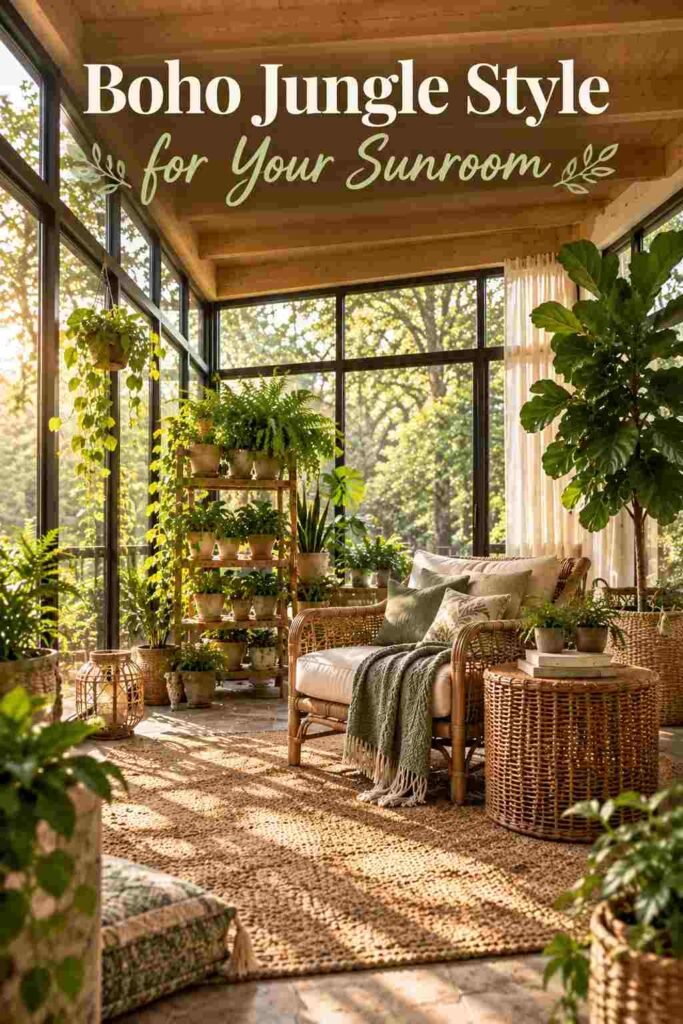
1. Bohemian Jungle Sunroom: Layer oversized monstera, rubber plants, and trailing pothos against rattan furniture and woven textiles for a dense, tropical feel that makes the room look like an indoor jungle.
2. Scandinavian Minimalist Sunroom
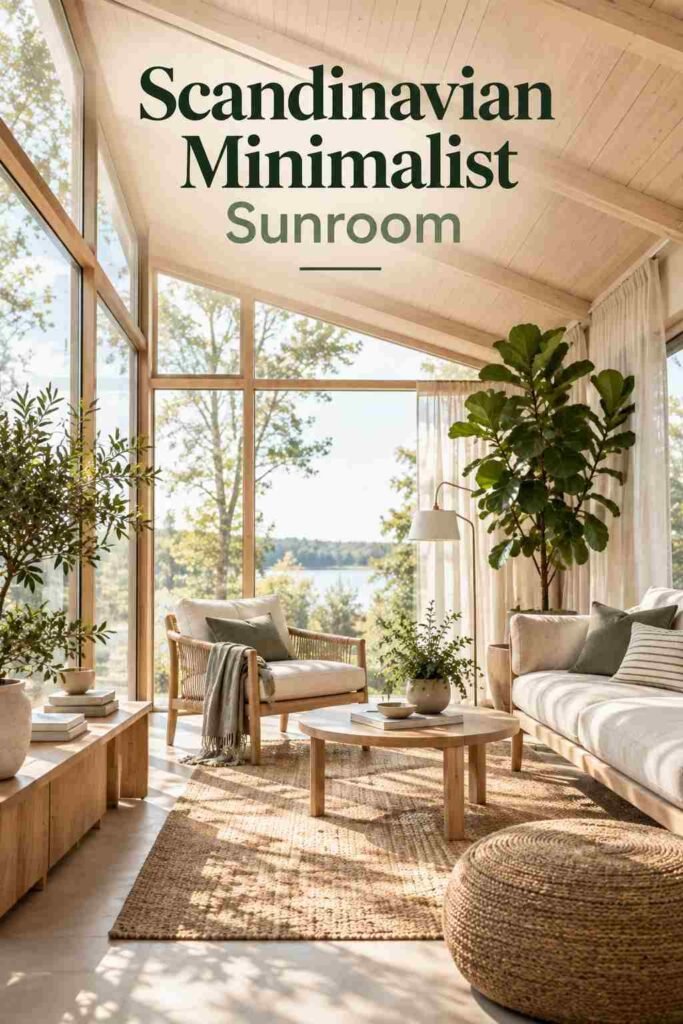
Keep walls white, furniture pale wood, and let a handful of sculptural plants like fiddle-leaf figs or snake plants do the visual work without clutter.
3. Coastal Cottage Sunroom: Pair whitewashed shelving with olive trees, ferns, and sea grass baskets for a breezy, seaside atmosphere that still feels grounded.
4. Modern Farmhouse Sunroom: Combine shiplap walls, black metal window frames, and mixed terracotta pots filled with herbs and trailing ivy for warmth with an edge.
5. Mid-Century Glasshouse Sunroom: Lean into tapered wooden furniture legs and a single architectural plant, such as a bird of paradise, to echo the clean lines of the era.
6. English Conservatory-Style Sunroom
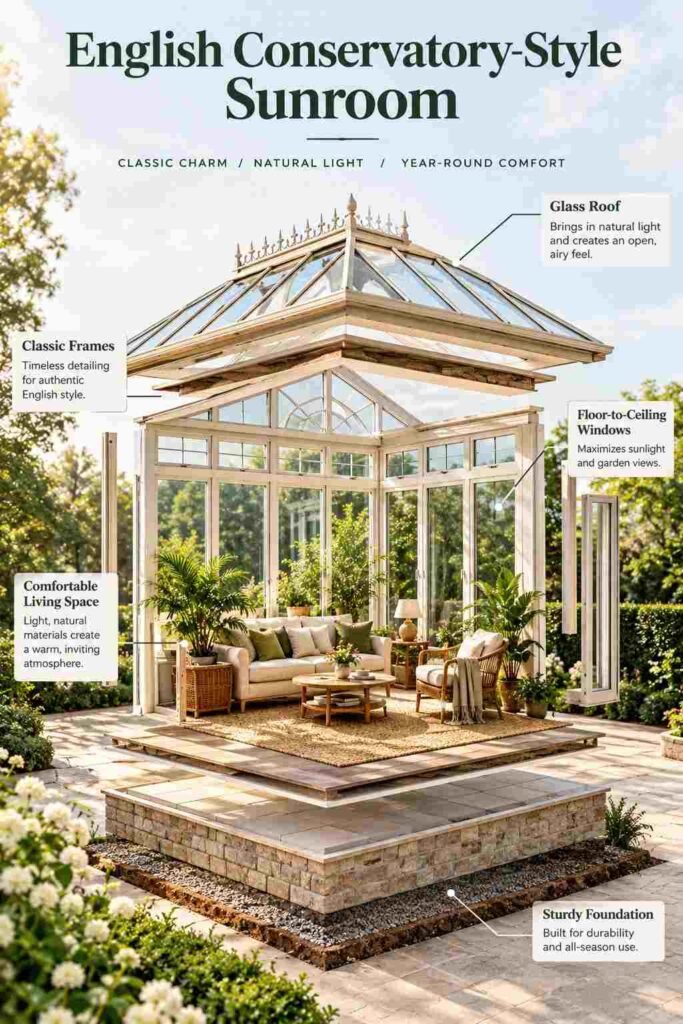
This classic look pairs wrought-iron furniture with climbing jasmine and potted roses for a romantic, garden-room feel.
7. Colorful Eclectic Sunroom: Mix bold planters, patterned cushions, and a variety of leaf shapes and colors, from calathea to croton, for a space that refuses to match anything perfectly.
Layout and Functional Sunroom Ideas With Plants
8. Tiered Plant Stand Corner
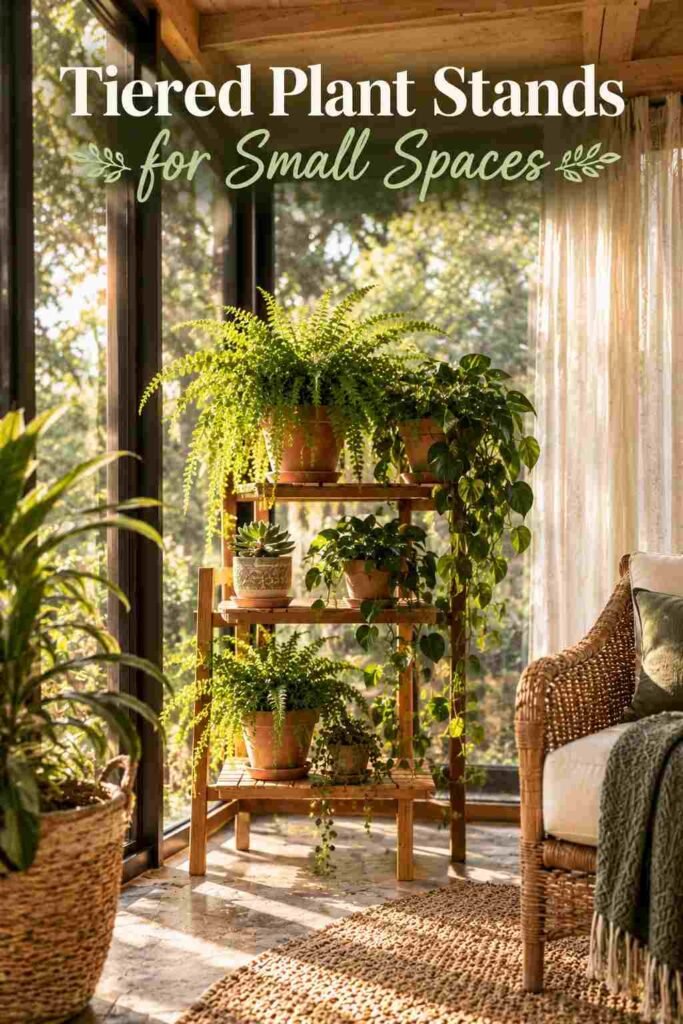
A staggered wooden or metal stand lets you display succulents, ferns, and trailing vines at different heights in one compact footprint.
9. Hanging Macramé Planters: Suspend pothos or string-of-pearls near windows to add greenery overhead without sacrificing floor space, especially useful in small sunrooms.
10. Vertical Trellis Living Wall: Train climbing plants like ivy or jasmine up a wall-mounted trellis for a striking green backdrop that takes up almost no square footage.
11. Window Herb Garden Shelf
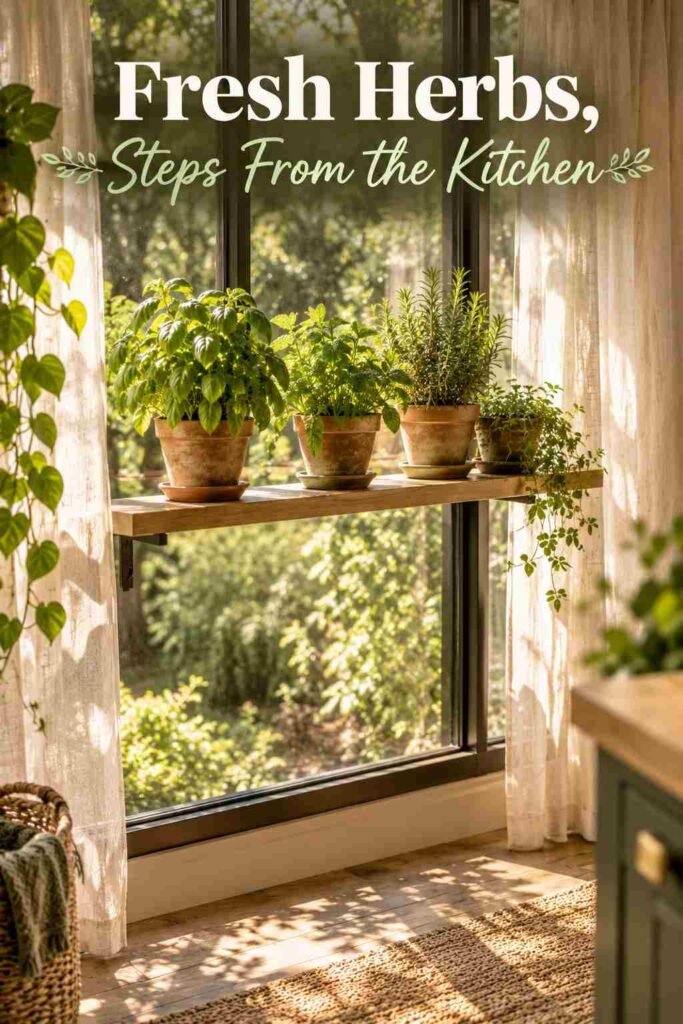
Install a narrow floating shelf across a sunny window for basil, mint, and rosemary, turning the sunroom into a working kitchen garden.
12. Potting and Gardening Station: Dedicate one corner to a small potting bench with tools and soil storage, keeping the mess contained while you repot and propagate.
13. Reading Nook Framed by Plants
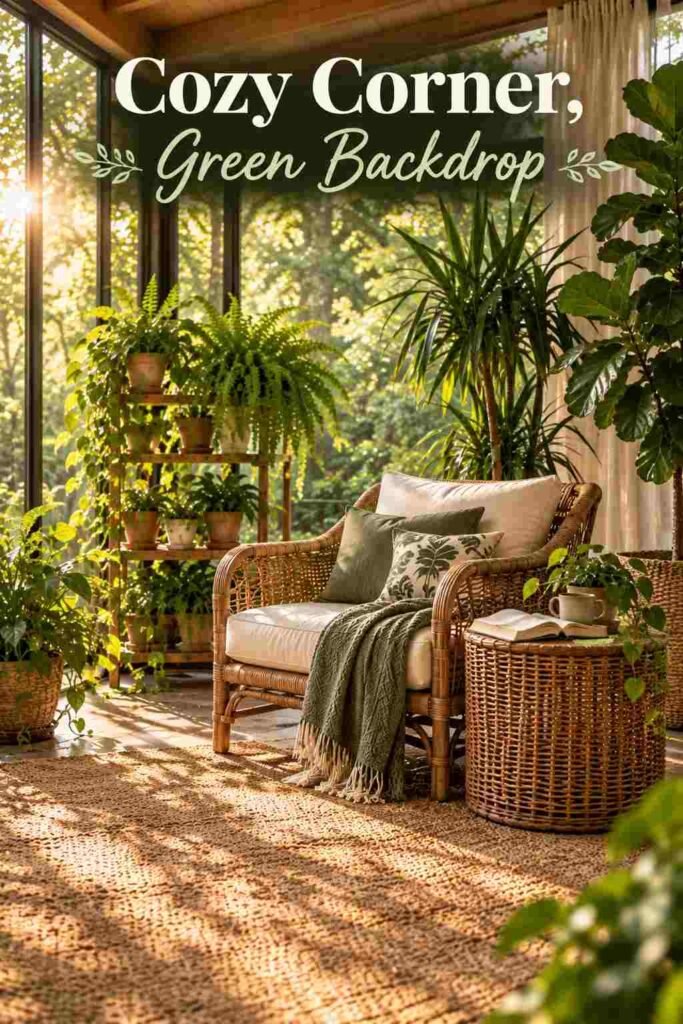
Position an armchair between two tall floor plants, like a dracaena or areca palm, to create a private, leaf-framed reading spot.
14. Yoga or Meditation Plant Corner: Surround a floor cushion or mat with low, calming greenery such as peace lilies for a quiet space to unwind.
15. Dining Nook Surrounded by Greenery: Circle a small bistro table with potted trees or hanging baskets so every meal feels like it’s happening outdoors.
Plant Selection Ideas for Every Sunroom
16. Tropical Statement Plants for Warm Sunrooms
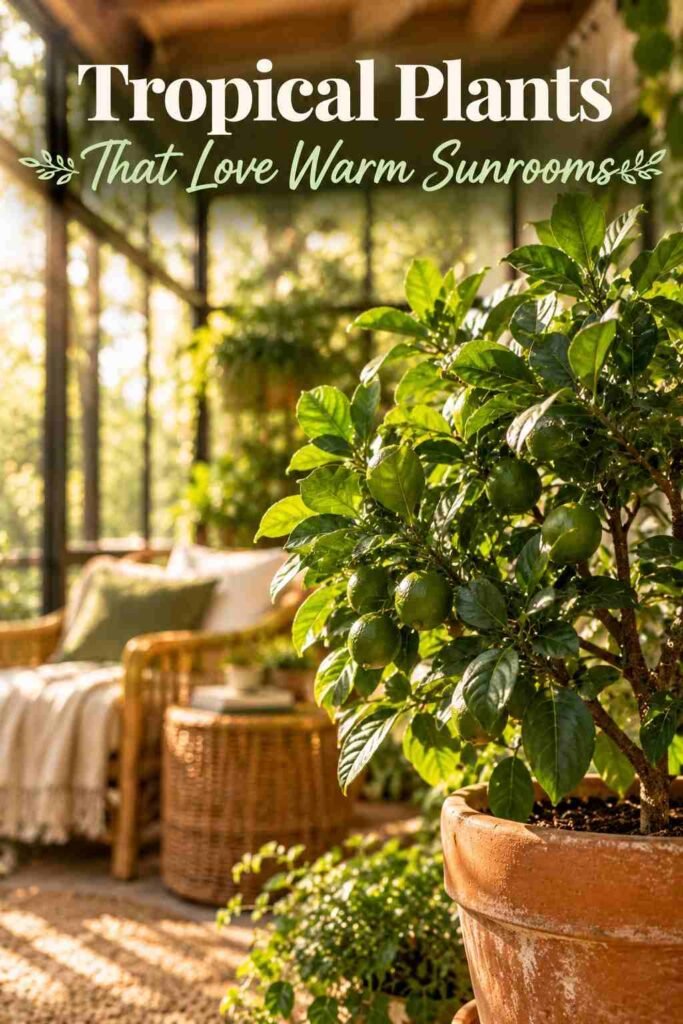
If your sunroom stays warm through fall and winter, dwarf citrus, hibiscus, and passionflower can genuinely thrive rather than just survive.
17. Low-Light Plants for North-Facing Sunrooms: Pothos, ZZ plants, and peace lilies tolerate the softer, indirect light that north-facing rooms receive.
18. Sun-Loving Succulents and Cacti for Hot Spots: In sunrooms with intense afternoon sun, succulents and cacti handle the heat and dry air better than most tropical species.
19. Air-Purifying Plant Picks
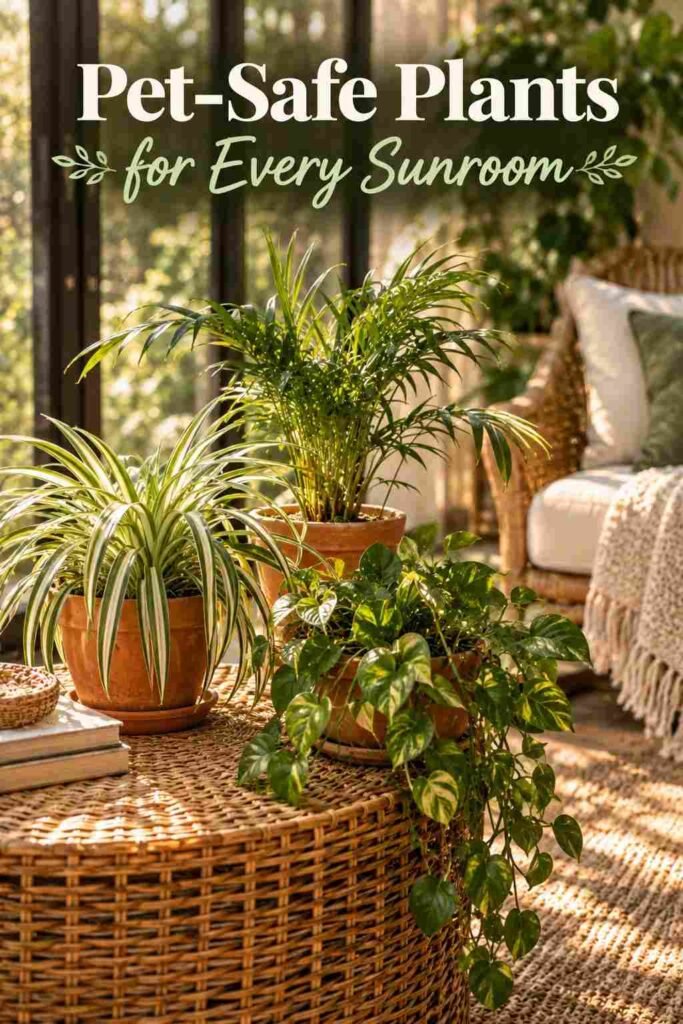
Spider plants, snake plants, and Boston ferns are commonly recommended for improving indoor air quality alongside their visual appeal.
20. Pet-Safe Plant Choices
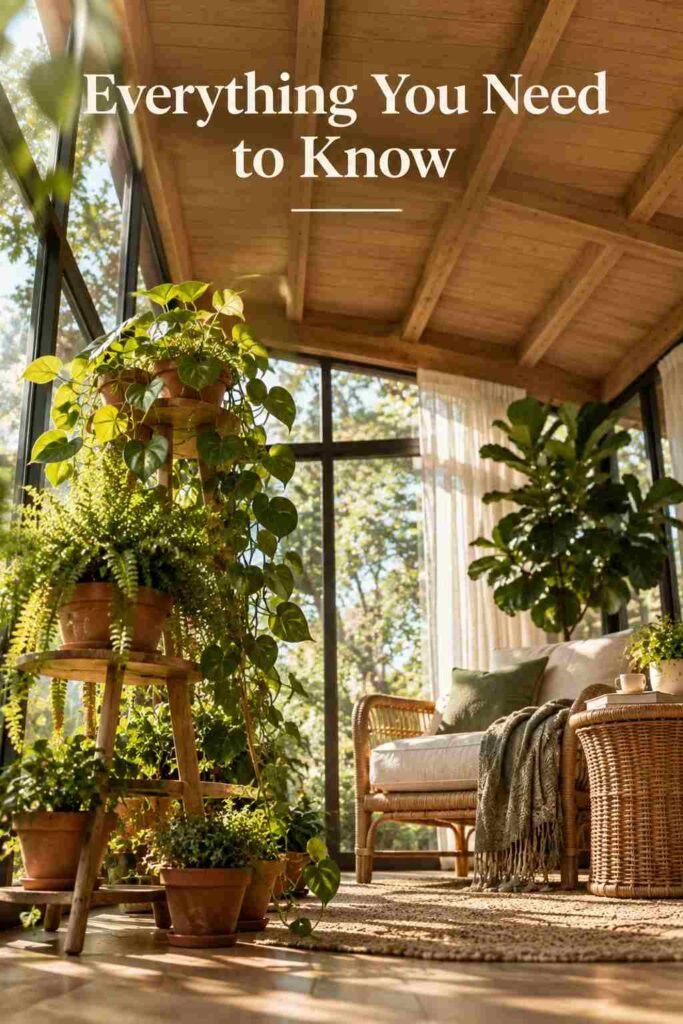
If pets share the space, opt for spider plants, areca palms, or Boston ferns instead of toxic options like sago palm or pothos.
21. Trailing Plants for Shelves and Ledges: String of hearts, philodendron, and ivy soften hard edges on shelving and cascade beautifully over window ledges.
22. Seasonal Rotation From Summer Annuals to Winter Evergreens: Rotate flowering annuals like geraniums in warmer months with hardier evergreens such as ferns once temperatures drop.
Finishing Touches for a Sunroom Full of Plants
23. Grow Lights for Cloudy Climates: In regions with long overcast stretches, a simple LED grow light keeps tropical plants healthy without relying solely on sun exposure.
24. Self-Watering Planters for Low-Maintenance Care
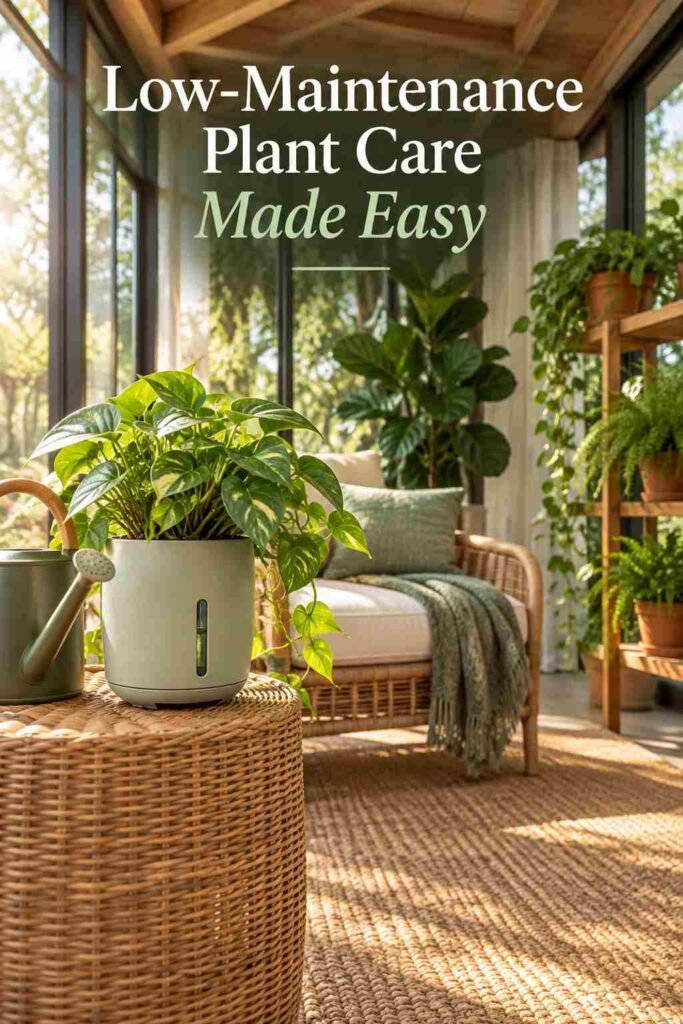
These pots reduce the guesswork of watering schedules, which is especially useful for larger plants that dry out quickly in bright, warm rooms.
25. Decorative Pots and Planters That Match Your Style
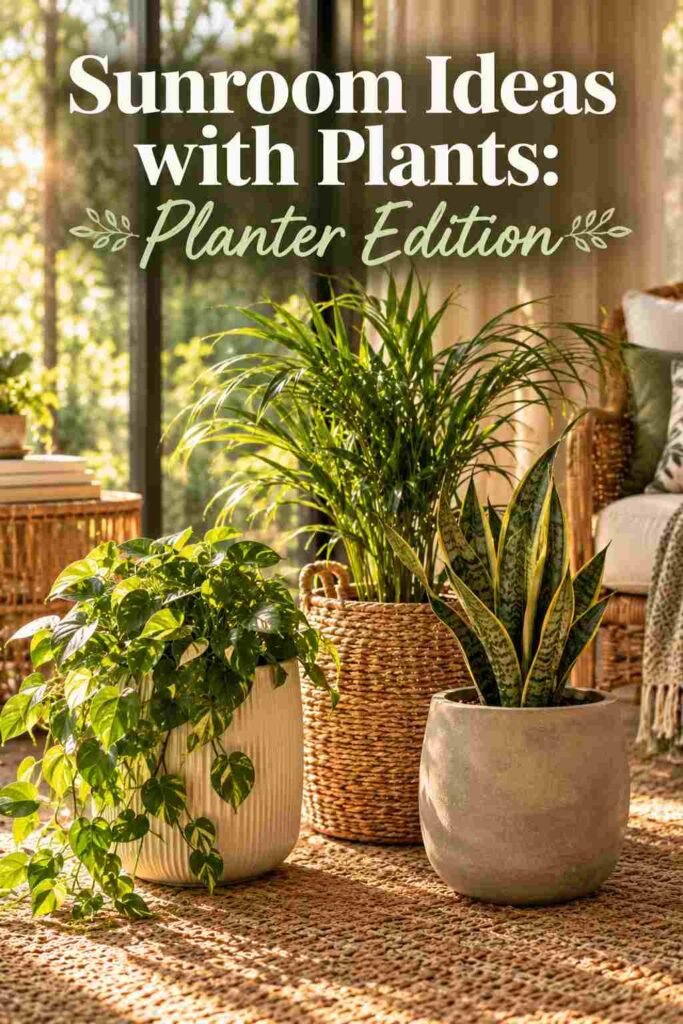
Swap generic plastic nursery pots for ceramic, woven, or concrete planters that tie into your sunroom’s overall color scheme.
26. Humidity Tray or Pebble Tray for Tropical Plants
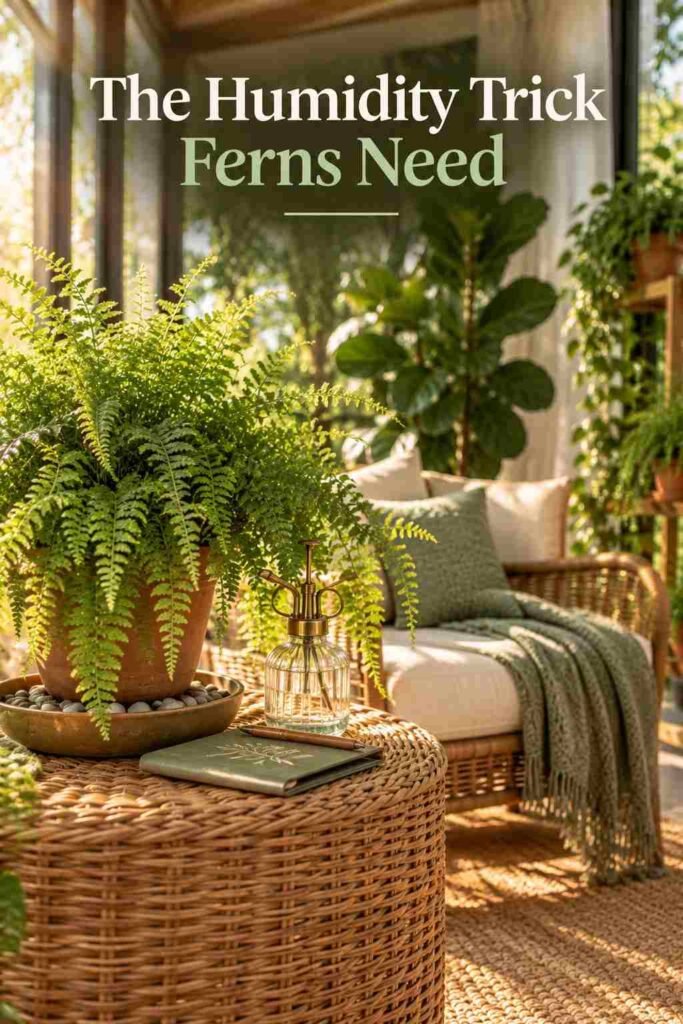
Placing pots on a shallow tray of water and pebbles raises local humidity, which helps ferns and tropical species cope with dry indoor air in winter.
If your home has the space, a Solarium sunroom takes this idea even further, using glass on the walls and roof to give plants light from nearly every angle throughout the day. The same layering principle — tall plants anchoring the space, trailing varieties softening the edges — scales down neatly too; you’ll spot the exact same trick in chic dorm room ideas, where a single windowsill has to do the work of an entire sunroom.
Sunroom Plant Care Tips for Year-Round Growth
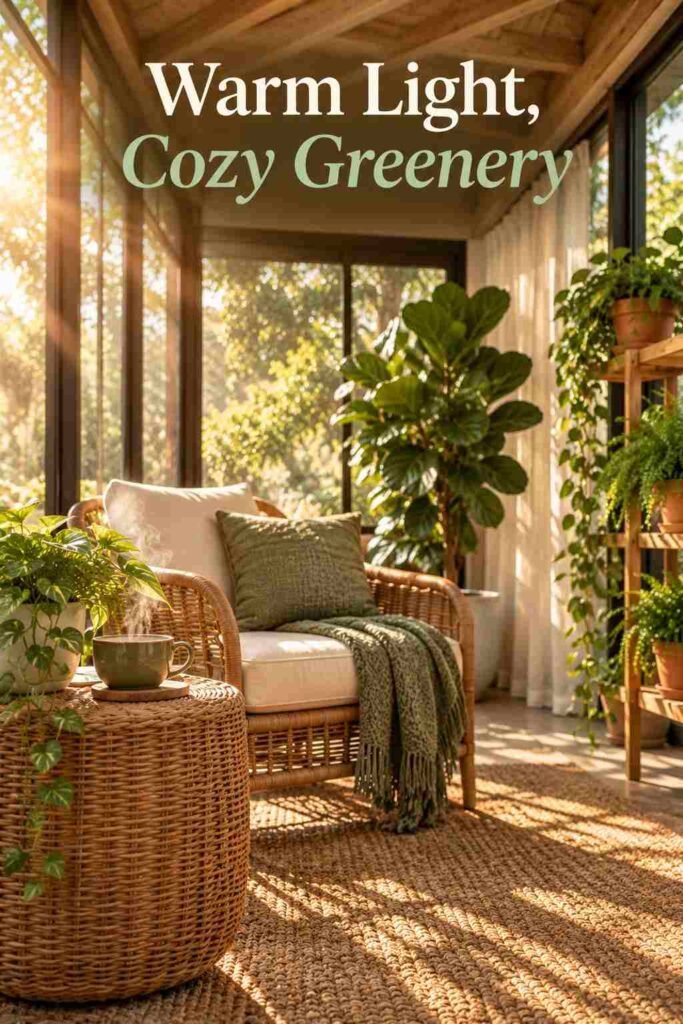
Most sunroom plant problems come down to two things: temperature swings and inconsistent watering. Unlike interior rooms, sunrooms can drop 15–20 degrees overnight in colder months, which stresses tropical species not built for that range. Move sensitive plants away from single-pane glass during cold snaps, and group plants together to create a slightly more stable microclimate. In summer, watch for scorched leaves near south-facing windows and add sheer curtains or frosted film to diffuse harsh afternoon rays. Water based on soil dryness rather than a fixed schedule, since heat and light levels change evaporation rates week to week.
Pests also move faster in warm, humid sunrooms than in typical living spaces. Check leaves regularly for spider mites and aphids, which favor the same bright, warm conditions your plants enjoy. Wiping leaves down monthly not only removes dust that blocks photosynthesis but also gives you a chance to catch early infestations before they spread. For anyone furnishing the room from scratch, sites like Outinteriors offer additional seasonal styling inspiration that pairs well with a plant-heavy layout, particularly for choosing weather-resistant furniture that can handle humidity swings.
Choosing the Right Sunroom Style Before You Shop for Plants
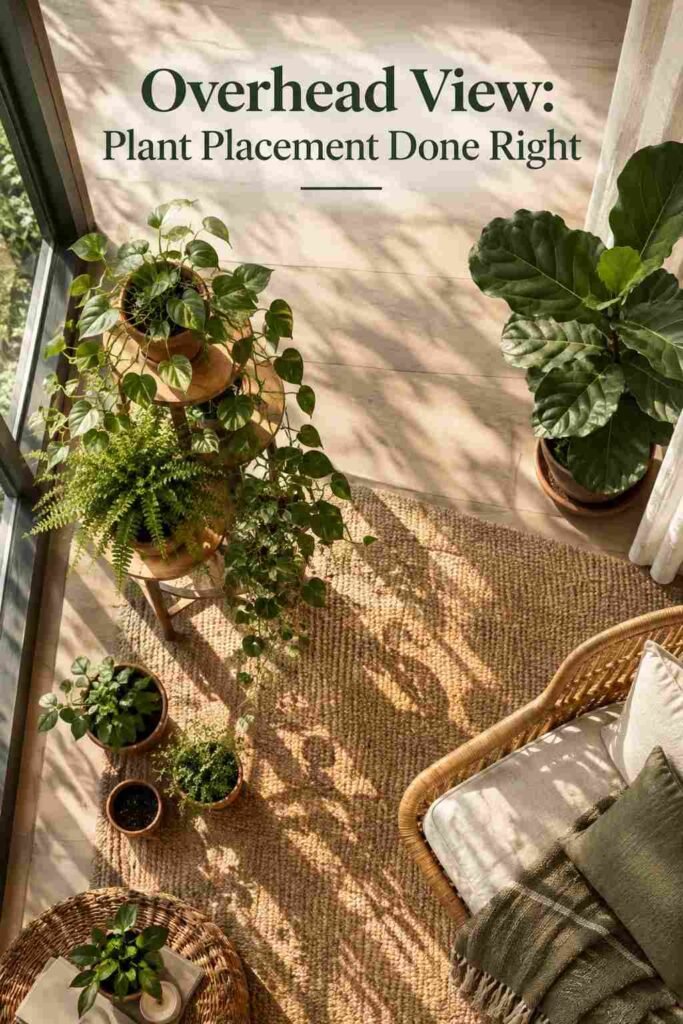
Before buying a single pot, decide whether your sunroom is a three-season or four-season space, since that single detail determines almost everything else. A three-season sunroom without proper insulation will struggle to keep tropical plants alive through winter, making hardy options like snake plants or succulents a smarter long-term choice. A fully insulated, four-season sunroom opens the door to citrus trees, orchids, and other plants that need stable warmth year-round. Matching your plant ambitions to your room’s actual conditions — rather than the other way around — saves money and prevents the disappointment of losing plants to a cold snap.
Conclusion
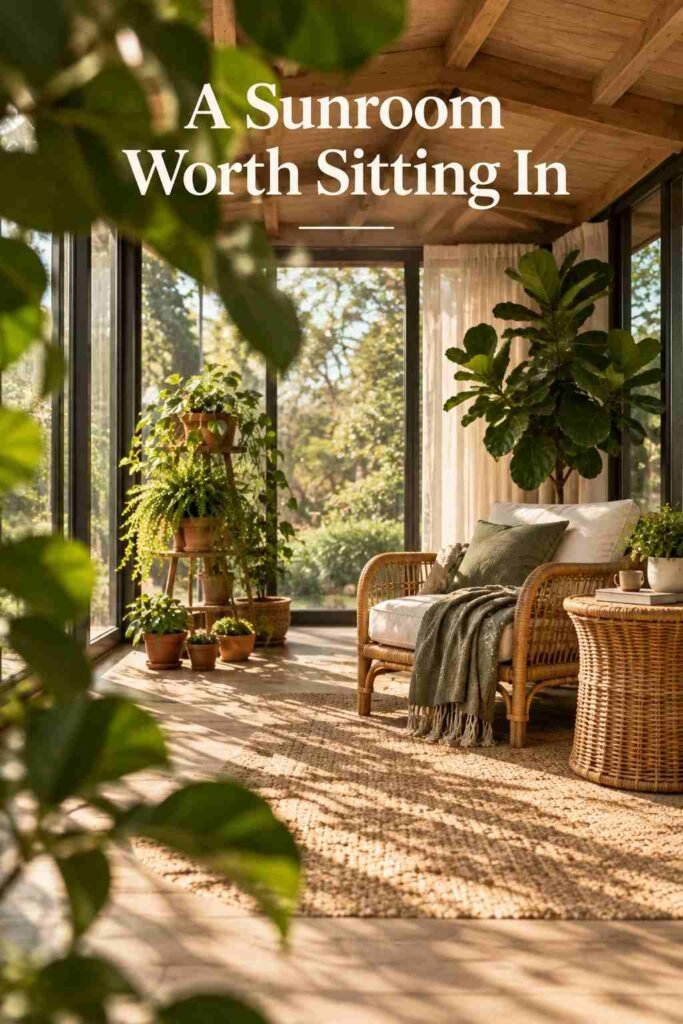
A sunroom filled with plants doesn’t happen by accident — it comes from matching the right greenery to your light, temperature, and style. Whether you’re drawn to a dense bohemian jungle look, a minimalist Scandinavian corner, or a working herb garden shelf, these 26 sunroom ideas with plants give you a starting point for nearly any layout or climate. Start small with a few well-suited plants, learn how your specific room behaves through the seasons, and expand from there. The result is a space that feels alive year-round, not just during the months your plants happen to cooperate.
Frequently Asked Questions
1. What are the easiest plants for a sunroom?
Snake plants, pothos, ZZ plants, and succulents are among the most forgiving choices, tolerating inconsistent watering and varying light levels common in sunrooms.
2. Can sunroom plants survive winter without heating?
Hardy plants like succulents and snake plants can handle cooler temperatures, but tropical species such as hibiscus or citrus trees typically need a heated, four-season sunroom to survive winter.
3. How much natural light does a sunroom need for plants to thrive?
Most sunrooms with south- or east-facing windows provide enough bright, indirect light for the majority of houseplants; north-facing rooms work best with shade-tolerant species.
4. Do sunroom plants need extra humidity?
Tropical plants often benefit from added humidity via pebble trays or occasional misting, since sunrooms can have drier air than the rest of the house, especially in winter.
5. What is the best flooring for a sunroom with lots of plants?
Water-resistant options like tile, luxury vinyl, or sealed concrete handle occasional overwatering and humidity better than carpet or untreated hardwood.
6. How many plants should I put in a small sunroom?
Start with three to five plants of varying heights rather than overcrowding the space; you can always add more once you understand how the room’s light and temperature behave.
7. Are grow lights necessary in a sunroom?
Grow lights aren’t required if your sunroom gets consistent daylight, but they’re helpful in cloudy climates or during shorter winter days when natural light drops significantly.