Prefab Tiny Houses: The Complete Buyer’s Guide for 2025
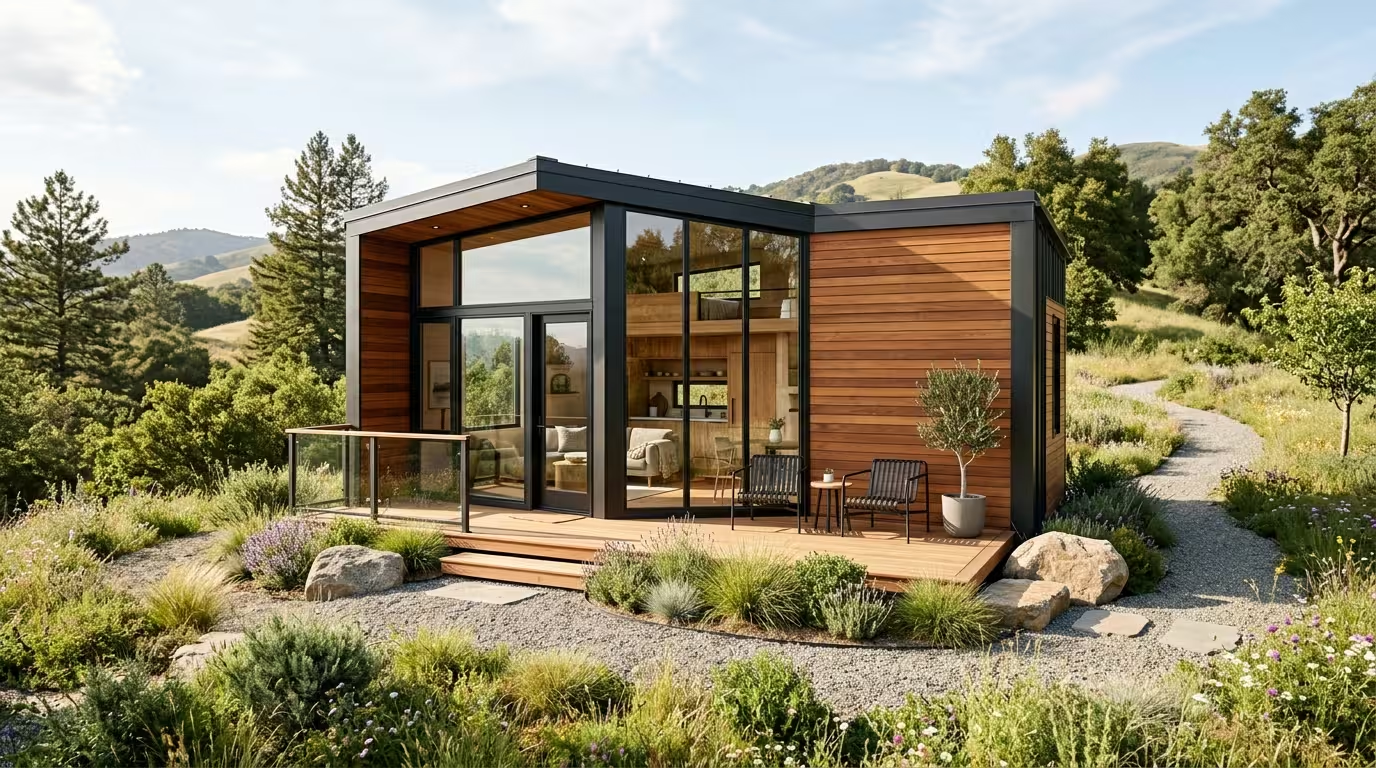
Imagine owning a fully finished home delivered to your land in a matter of weeks — no lengthy construction timelines, no weather delays, and no cost blowouts that double your budget. That’s exactly the promise that has driven millions of Americans to explore prefab tiny houses as a genuine path to homeownership.
The numbers tell a compelling story. The tiny home market reached an estimated $5.81–$5.95 billion in 2024 and is projected to grow to between $7.64 and $12.45 billion by 2032, driven by a housing affordability crisis that has pushed the median U.S. home price above $400,000. Against that backdrop, a prefabricated compact home priced between $15,000 and $120,000 looks less like a lifestyle experiment and more like a smart financial decision.
But buying one of these homes is not as simple as placing an online order. Zoning laws vary dramatically across states and counties, financing options differ by property type, and the word “prefab” itself covers a surprisingly wide range of structures with very different legal and financial implications. This guide walks you through everything — from how prefab tiny houses are built and categorized, to what they cost, how to finance them, and which states make the process easiest.
What Exactly Are Prefab Tiny Houses?
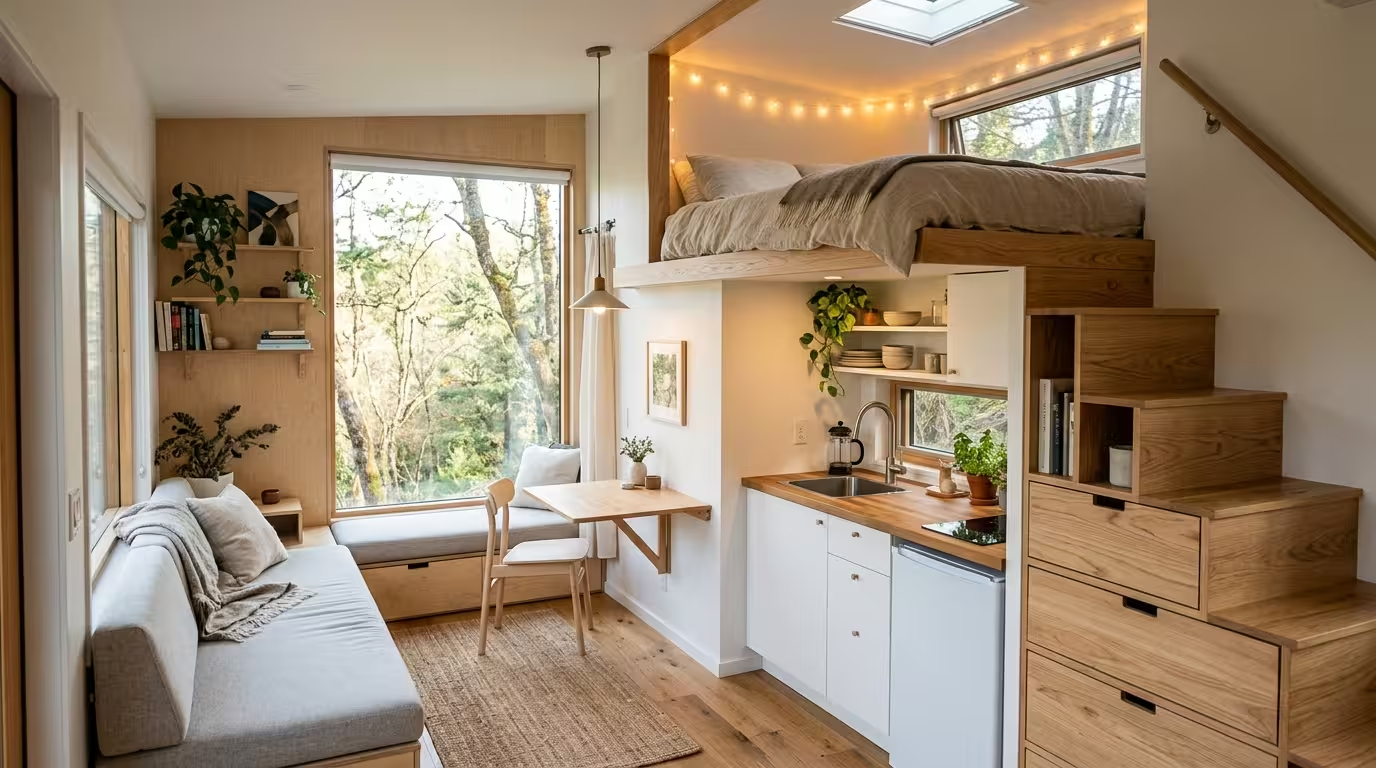
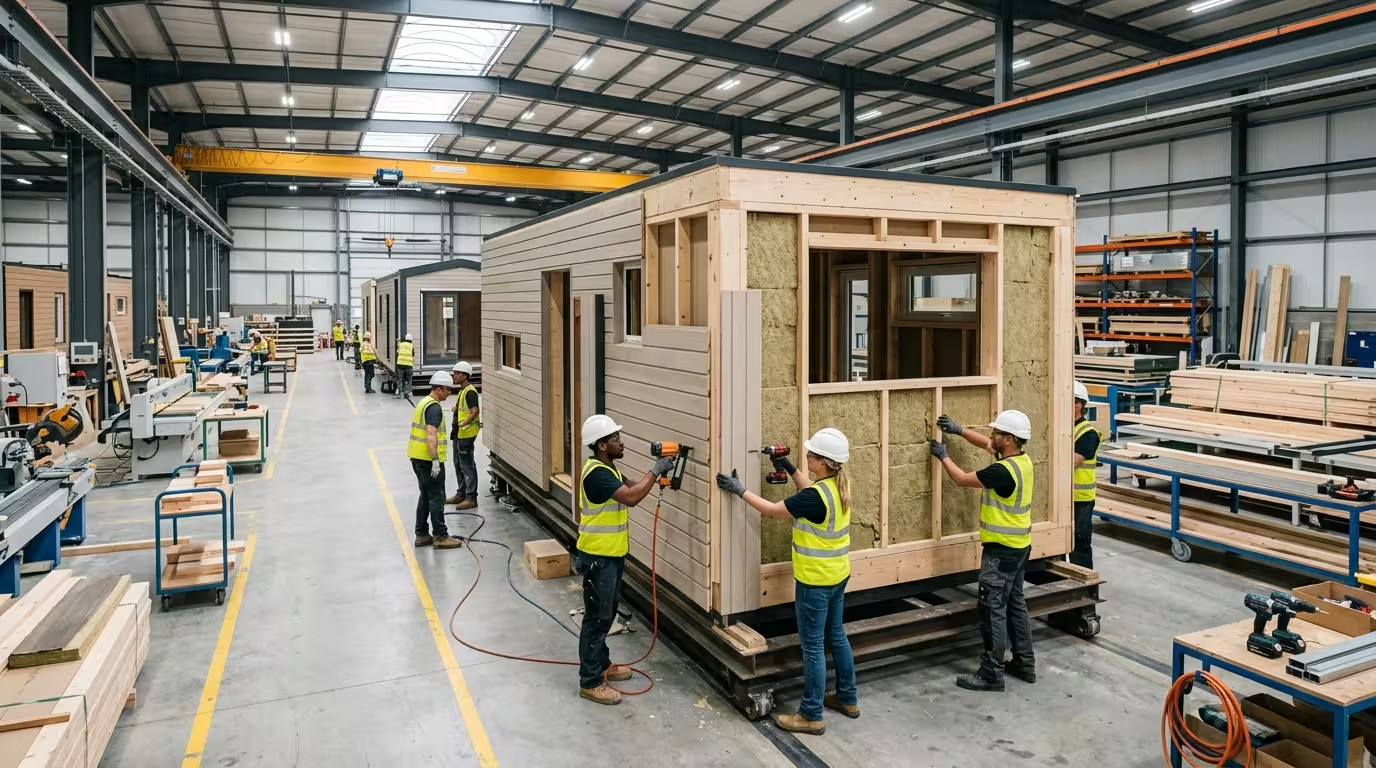
The word “prefab” is short for prefabricated — meaning that major portions of the home are built in a controlled factory environment before being transported to the final site. A prefab tiny house combines this factory-built efficiency with a compact footprint, typically under 400 square feet, that prioritizes smart design over raw square footage.
This is not a new concept. The factory-built housing industry has existed for decades. What has changed is the quality, customization, and cultural acceptance of these structures. Modern prefab compact homes feature insulated wall panels, open-plan interiors, full-size kitchens and bathrooms, loft sleeping areas, and increasingly, off-grid energy systems built right into the design. The early image of a mobile home park has given way to architecturally striking, Instagram-worthy structures placed on private land, rural lots, and even urban backyard parcels as accessory dwelling units (ADUs).
The Four Main Types of Prefab Tiny Houses
Not all prefab tiny houses are built the same way — and the distinctions matter enormously for zoning compliance, financing, and long-term value.
Modular Tiny Homes
Modular homes are constructed in climate-controlled factories in sections, or “modules,” then transported to the site and assembled on a permanent foundation. Critically, modular homes must comply with the same local and state building codes that govern traditional stick-built construction. This code compliance means they are classified as real property, which unlocks access to conventional mortgage financing, standard homeowners insurance, and appreciation potential comparable to that of a site-built home.
For buyers focused on long-term investment, resale value, and financing flexibility, modular construction is generally the strongest option within the prefab tiny houses category.
Manufactured (HUD-Code) Homes
Manufactured homes are built entirely in the factory and transported to the site on a permanent steel chassis. Unlike modular homes, they follow federal HUD (Department of Housing and Urban Development) standards rather than local building codes. They can be placed on a permanent foundation or kept on the chassis.
The HUD code was designed to prioritize affordability and transportability, which means it often sets a lower baseline than local codes in some jurisdictions. As a result, manufactured homes are sometimes subject to more restrictive zoning — including requirements to be placed in dedicated manufactured home communities. Financing typically involves a chattel loan (a personal property loan) rather than a mortgage, which tends to carry higher interest rates and shorter repayment terms.
Tiny Houses on Wheels (THOWs)
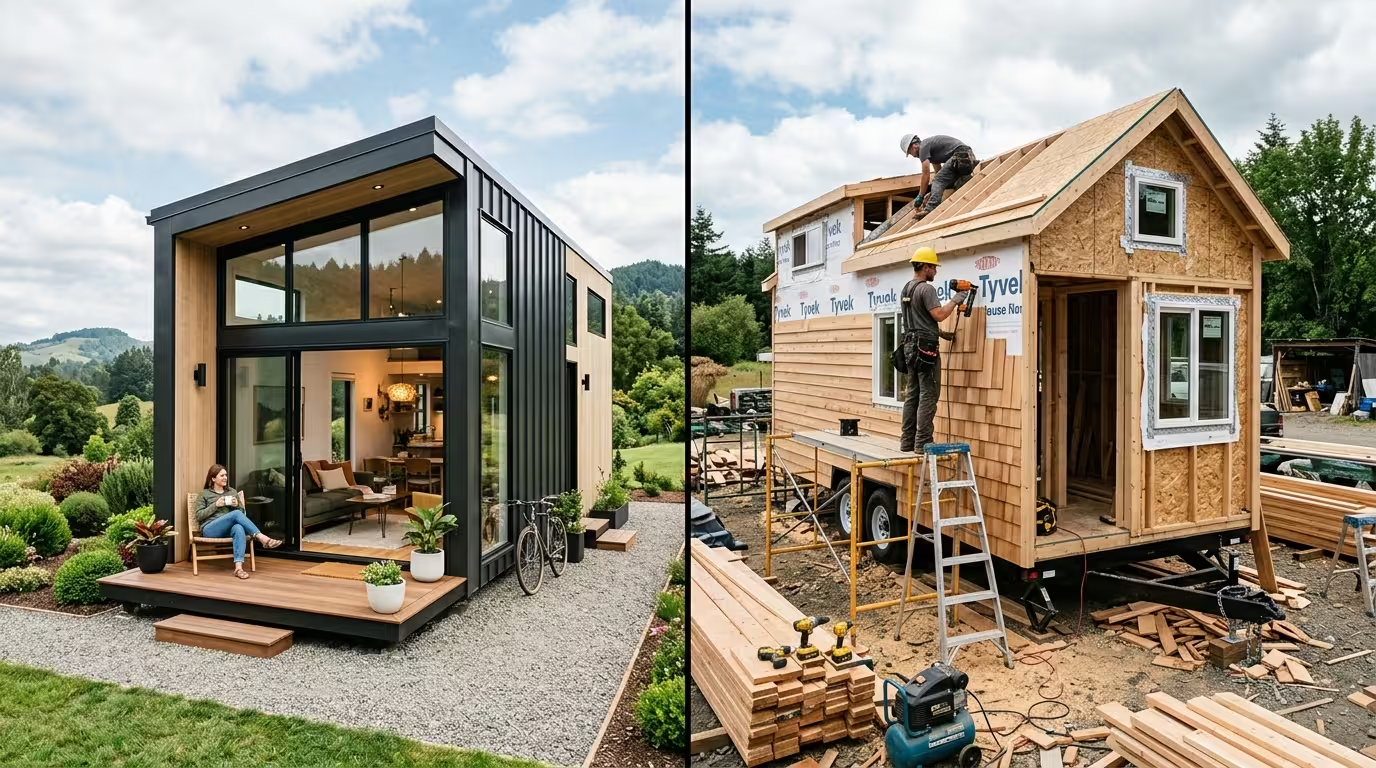
THOWs are built on trailer frames and are technically classified as recreational vehicles (RVs) in most U.S. jurisdictions. This classification has a significant practical upside: because they’re treated as vehicles rather than permanent structures, they sidestep many of the zoning restrictions that govern fixed dwellings. Owners can often park them in RV parks, on family land, or in rural areas, where regulatory hurdles are fewer.
The tradeoff is significant, however. Because THOWs are personal property rather than real estate, they cannot be financed with a standard mortgage. Most buyers use RV loans, personal loans, or builder financing — options that typically cost more over time than a conventional home loan. According to Will Johnson, CEO of Tiny House Atlanta, approximately 75% of tiny home buyers prefer a unit permanently affixed to land, which suggests that while THOWs generate significant media attention, most serious buyers are looking for something with a fixed address.
Kit Homes and Panelized Homes
Kit homes arrive as a collection of pre-cut components — wall panels, roof trusses, framing materials — along with detailed assembly instructions. They require on-site assembly and generally more owner involvement than a fully factory-built unit. Shell-only kits can start as low as $4,000 to $30,000, making them the most affordable entry point in the prefab tiny houses market. The catch is that interior finishing (plumbing, electrical, insulation, drywall) can add tens of thousands of dollars and months of labor.
How Much Do Prefab Tiny Houses Cost in 2025?
Cost is the question most buyers lead with, and the honest answer is: it depends heavily on what you’re buying. Here is a practical breakdown for 2025.
Prefab Tiny House Price Ranges
|
Type |
Price Range |
Notes |
|
Shell/kit home |
$4,000–$30,000 |
Requires significant interior work |
|
Entry-level THOW |
$30,000–$60,000 |
Basic finish; road-ready |
|
Mid-range prefab unit |
$50,000–$90,000 |
Turn-key; move-in ready |
|
Premium modular tiny home |
$80,000–$120,000+ |
High-end finishes; permanent foundation |
|
Custom-built tiny home |
$100,000–$150,000+ |
Full customization; site-built option |
For context, the average nationwide cost per square foot for a quality prefab unit in 2025 runs between $200 and $350, compared to $150 or more for a traditional home. While the per-square-foot cost is higher, the dramatically smaller footprint means total project costs stay well below those of conventional construction.
One critical budget item that many first-time buyers overlook: land. For modular and manufactured homes, land must be purchased separately. Depending on your region, this can add anywhere from $20,000 to well over $100,000 to the total project cost. Factor in utility connections (water, sewer, electricity), foundation preparation, site grading, permits, and delivery, and a realistic all-in budget for a turn-key modular tiny home on its own lot can reach $80,000 to $140,000 in most parts of the country.
Hidden Costs to Budget For
- Site preparation and foundation: $3,000–$15,000
- Utility hookups (water, sewer, electric): $5,000–$15,000 combined
- Permits and inspections: $1,000–$5,000 depending on jurisdiction
- Delivery and crane installation (for modular units): $3,000–$8,000
- Landscaping and exterior work: $2,000–$10,000
The Real Advantages of Going Prefab
Speed of Construction
Traditional stick-built construction typically takes 12 to 18 months from groundbreaking to move-in. Prefab tiny houses, by contrast, can be completed and delivered in three to six months from order to occupancy. The key reason is parallel construction: while the factory builds your home modules, site contractors are simultaneously preparing your foundation and utility connections. That time overlap cuts months off the schedule and, importantly, cuts months off any bridge financing you’re carrying.
Cost Predictability
One of the most frustrating aspects of traditional construction is cost overruns. Unexpected site conditions, material price spikes, and labor delays can add 20% or more to a project budget. Prefab manufacturing locks in material costs at the factory level, and weather delays don’t stop production the way they do on an open construction site. For buyers working within a strict budget, this predictability is one of prefab’s most underappreciated advantages.
Sustainability and Reduced Waste
Prefabricated construction can reduce on-site construction waste by up to 90% compared to traditional methods, according to research from the sustainable construction sector. Factory settings allow precision cutting with computer-controlled machinery, and leftover materials are sorted and recycled rather than sent to a landfill. For homeowners motivated by environmental values, this makes prefab tiny houses one of the greenest housing choices available.
The environmental case for compact living is backed by research. A study of 80 tiny home downsizers across the U.S. found that their ecological footprints were reduced by approximately 45% on average after moving into a smaller home. Smaller square footage means less heating, cooling, and lighting demand — and when paired with solar panels and battery storage, a prefab tiny home can operate almost entirely off-grid.
Quality Control
Because each unit is built in a factory under consistent conditions — away from rain, humidity, and UV exposure — framing, insulation, and mechanical systems are installed with a level of consistency that’s difficult to replicate on an outdoor construction site. Completed modules undergo inspections before leaving the factory, meaning issues are caught before delivery rather than after move-in.
Zoning Laws: The Biggest Variable in the Equation
If cost is the first question buyers ask, zoning is the complication that catches most of them off guard. There is no single federal rule governing where prefab tiny houses can be placed. Regulations are set at the state, county, and municipal levels — and they vary enormously.
What You Need to Know by Structure Type
Modular homes generally benefit from the most favorable treatment. Because they follow local and state building codes, they are treated similarly to site-built homes in most residential zones. In many jurisdictions, you can place a modular home anywhere a traditional home is permitted.
Manufactured homes face more variable rules. Some areas permit them freely in any residential zone; others restrict them to designated manufactured home parks or specific zoning districts. The HUD code preempts many local codes, but local zoning ordinances still govern where the home can be placed.
THOWs are technically RVs in most states, meaning they are generally restricted to RV parks, campgrounds, or rural land with fewer zoning restrictions. Some states — notably Oregon, California, and Colorado — have made notable progress in updating their codes to allow THOWs as permanent dwellings in certain zones, but rules remain inconsistent even within these states.
Before purchasing land or ordering a home, always consult your local county planning or zoning department. Ask specifically about: minimum square footage requirements, foundation requirements, whether the structure type is permitted in your target zone, and what permits and inspections will be required.
Financing Your Prefab Tiny House
Financing is where the type of prefab tiny house you choose has its most tangible financial consequences. Here is how the main options break down.
Conventional Mortgage
Available for modular homes on permanent foundations that meet local building codes. Because these homes qualify as real property, standard mortgage lenders — including banks, credit unions, and FHA/VA programs — will underwrite them similarly to a traditional home. Current conventional mortgage interest rates apply (mid-to-high single digits as of 2025), with standard 15- to 30-year repayment terms.
FHA and VA Loans
Both FHA and VA loans can be used to finance modular homes and, in some cases, manufactured homes — provided the home is on a permanent foundation and meets applicable code standards. These government-backed programs offer lower down payment requirements and can be particularly helpful for first-time buyers or veterans.
Chattel Loans
Used primarily for manufactured homes that are not on permanent foundations. These are personal property loans, not mortgages, and they typically carry higher interest rates and shorter terms (10 to 20 years). Over the life of the loan, the difference in interest cost compared to a conventional mortgage can be substantial — potentially $50,000 to $80,000 more over a 30-year equivalent period.
Personal Loans and RV Loans
The most common financing path for THOWs, personal loans, and RV loans offer flexible terms but generally at higher rates than mortgage financing. Because the loan amounts for prefab tiny houses are relatively modest compared to traditional real estate, some buyers find personal loan terms manageable — particularly for lower-cost units in the $30,000–$60,000 range.
Builder Financing
Some prefab tiny house manufacturers offer direct financing or have established lending partnerships. This can be a convenient option, but it’s worth comparing terms against independent lenders before committing.
Who Is Buying Prefab Tiny Houses?
The demographic profile of the prefab tiny home buyer has broadened considerably in recent years. Roughly 70% of U.S. tiny house owners are millennials, reflecting that generation’s combination of student debt pressure, delayed homeownership, and strong values around minimalism and environmental impact. But the movement extends well beyond one demographic.
Approximately 73% of Americans say they would consider tiny home living, with affordability and minimalism cited as the top motivators. About 68% of tiny homeowners achieve mortgage-free status, compared to just 37–40% of traditional homeowners — a financial independence statistic that resonates across age groups. Retirees downsizing from large family homes, remote workers seeking rural retreats, and investors building rental income through ADUs and short-term rentals are all active segments of the current market.
From an investment angle, ADUs (accessory dwelling units) built as prefab tiny houses have shown strong rental income potential. In Florida markets, for example, ADUs generate reported monthly rental income between $1,500 and $2,200, depending on location and amenities.
Key Factors to Evaluate Before You Buy
1. Permanent or Mobile?
Decide first whether you want a home that stays put or one you can relocate. Permanent modular structures offer better financing and appreciation but require land and zoning approval. THOWs offer flexibility but come with financing constraints and legal complexity.
2. Builder Reputation
Research any manufacturer thoroughly. Look for certifications from the Modular Building Institute (MBI) or the National Association of Home Builders (NAHB). Read third-party reviews, ask for references, and verify warranty terms before signing any contract.
3. Total Project Cost vs. Unit Price
The quoted price for any prefab tiny house is the starting line, not the finish line. Add site prep, land (if needed), utility connections, permits, delivery, and landscaping to get an accurate all-in budget.
4. Local Zoning and Permit Requirements
Consult your local planning department before committing to any specific unit type. Zoning surprises are the most common reason prefab tiny house projects stall or fall apart entirely.
5. Resale Value
Modular homes appreciate similarly to traditional real estate when properly maintained and located in desirable areas. Manufactured homes and THOWs typically do not build equity at the same rate, which matters if you plan to treat the purchase as an investment.
Conclusion
Prefab tiny houses have evolved from a fringe housing concept into one of the most pragmatic responses to the American affordability crisis. Factory-built, fast to deploy, and designed for efficient living, these compact homes offer a genuine alternative to renting indefinitely or stretching a budget across a six-figure mortgage on a conventional property.
The key to success is doing your homework before you buy. Understand the type of prefab tiny house you’re considering — modular, manufactured, or on wheels — because the legal classification determines everything from where you can place it to how you’ll finance it. Check zoning requirements in your specific location. Build a realistic all-in budget that includes land, site work, and utility connections. And choose a builder with verified credentials and a track record of completed projects.
With the right preparation, a prefab tiny house can deliver something increasingly rare in today’s housing market: a home you can afford outright, live in comfortably, and own without decades of debt.