
The Bedroom Rug Size Design Debate: What Actually Works (And Why Experts Still Disagree)
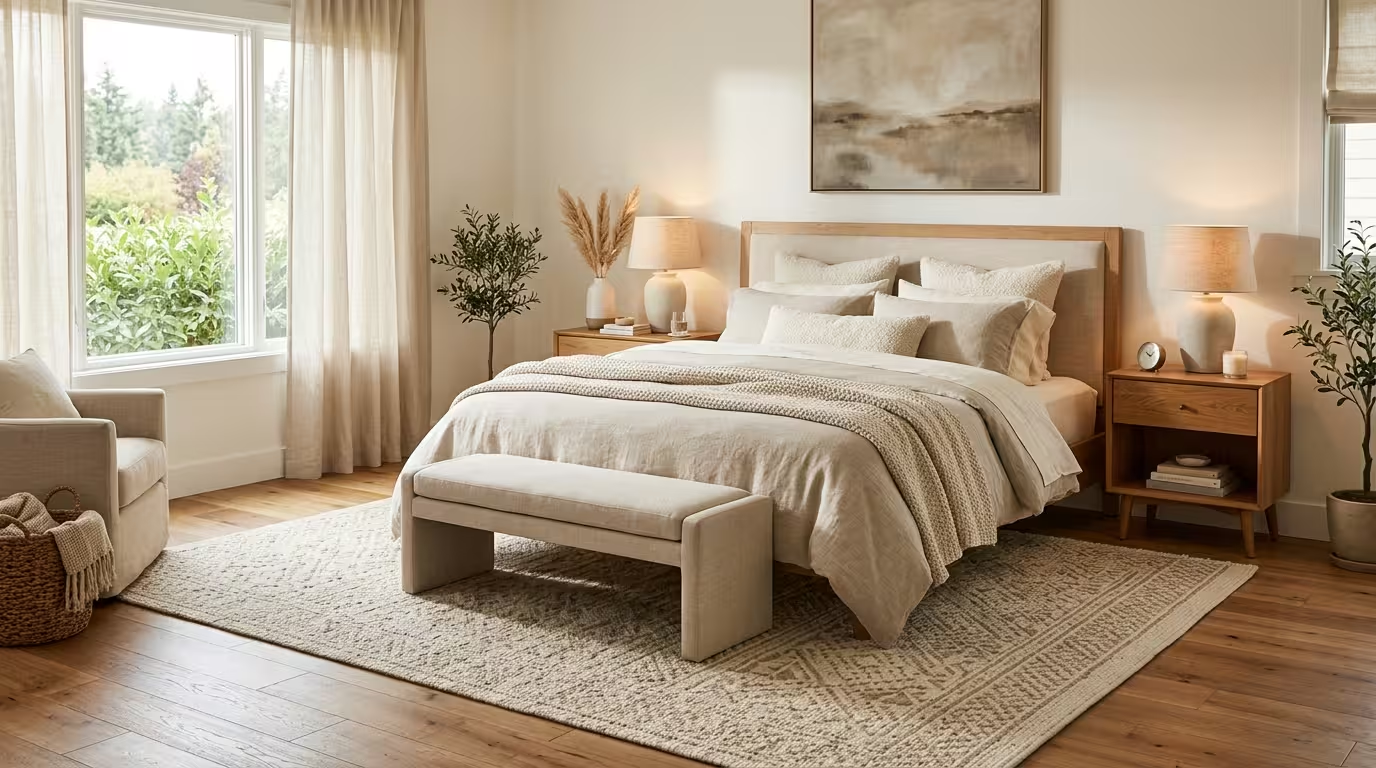
You’ve probably stood in a furniture store, stared at a sea of rugs, and felt completely lost. Should the rug sit entirely under the bed? Peek out at the sides? Float freely in the middle of the room? If you’ve asked three designers these questions, you’ve likely gotten three different answers.
Welcome to the bedroom rug size design debate — one of the most talked-about, most misunderstood topics in interior decorating. It’s not just about aesthetics. The size, placement, and proportion of a bedroom rug affect how warm the floor feels underfoot at 6 a.m., how large the room appears, and how cohesive the entire space looks. Getting it wrong doesn’t just look off — it feels off every single day.
This guide cuts through the noise. We’ll look at what design experts actually recommend, why the debate exists in the first place, and how to make the right call for your specific bedroom — no matter the size, furniture arrangement, or budget.
Why the Bedroom Rug Size Design Debate Exists in the First Place
The reason this topic sparks so much disagreement is surprisingly simple: there is no single universal rule that applies to every bedroom. Room dimensions vary wildly. Bed sizes range from twin to California king. Furniture arrangements differ. Cultural design influences play a role. And personal comfort matters too.
For decades, designers leaned on rigid guidelines passed down through trade schools and shelter magazines. “Always leave 18 to 24 inches of floor showing around the rug’s edge.” “The rug must go under the bed.” These rules worked in standardized showroom settings but often clashed with real-world bedrooms — oddly shaped rooms, low platform beds, open-plan layouts, and budget constraints.
Add social media’s influence into the mix, and the bedroom rug size design debate really took off. Instagram-perfect rooms showed rugs styled in ways that broke every classic rule, and followers loved it. Today, the debate lives on because both traditional and contemporary approaches can look stunning — if executed correctly.
The Classic Rules of Bedroom Rug Sizing (And Where They Come From)
Before diving into alternatives, it helps to understand the foundational guidelines that most professional designers still reference.
The 18-Inch Border Rule
One of the most widely cited guidelines in the bedroom rug size design debate is the 18-inch exposed floor border. This means that when a rug is placed under the bed and around the room, roughly 18 to 24 inches of bare floor should remain visible between the rug’s edge and the walls.
This rule originated from classical interior design principles rooted in proportion and visual balance. When followed correctly, it prevents the room from feeling crowded and gives the eye a natural boundary to rest on. It works especially well in rooms with hardwood or tile flooring that deserve to be seen.
The “Two-Thirds Under the Bed” Standard
Another popular guideline suggests that two-thirds of the rug should sit under the bed, with the remaining portion extending into the open floor space. In a queen bedroom with a standard 8×10-foot rug, this means the rug’s top edge disappears beneath the bed frame while the sides and foot extend outward by roughly 24 to 36 inches.
This approach keeps the rug anchored to the bed visually, making the sleeping area feel intentional and grounded. It also ensures your feet land on a soft surface the moment you step out of bed — one of the most practical arguments in favor of this approach.
Floating Rug Placement
The floating method — where the rug sits entirely at the foot of the bed without going underneath — is the most polarizing position in the bedroom rug size design debate. Purists say it looks unanchored and small. Modernists argue it works beautifully in minimalist spaces, especially with a large rug (think 9×12 feet) in a room with a low-profile platform bed.
Breaking Down Rug Sizes: What Actually Fits in Each Bedroom Type
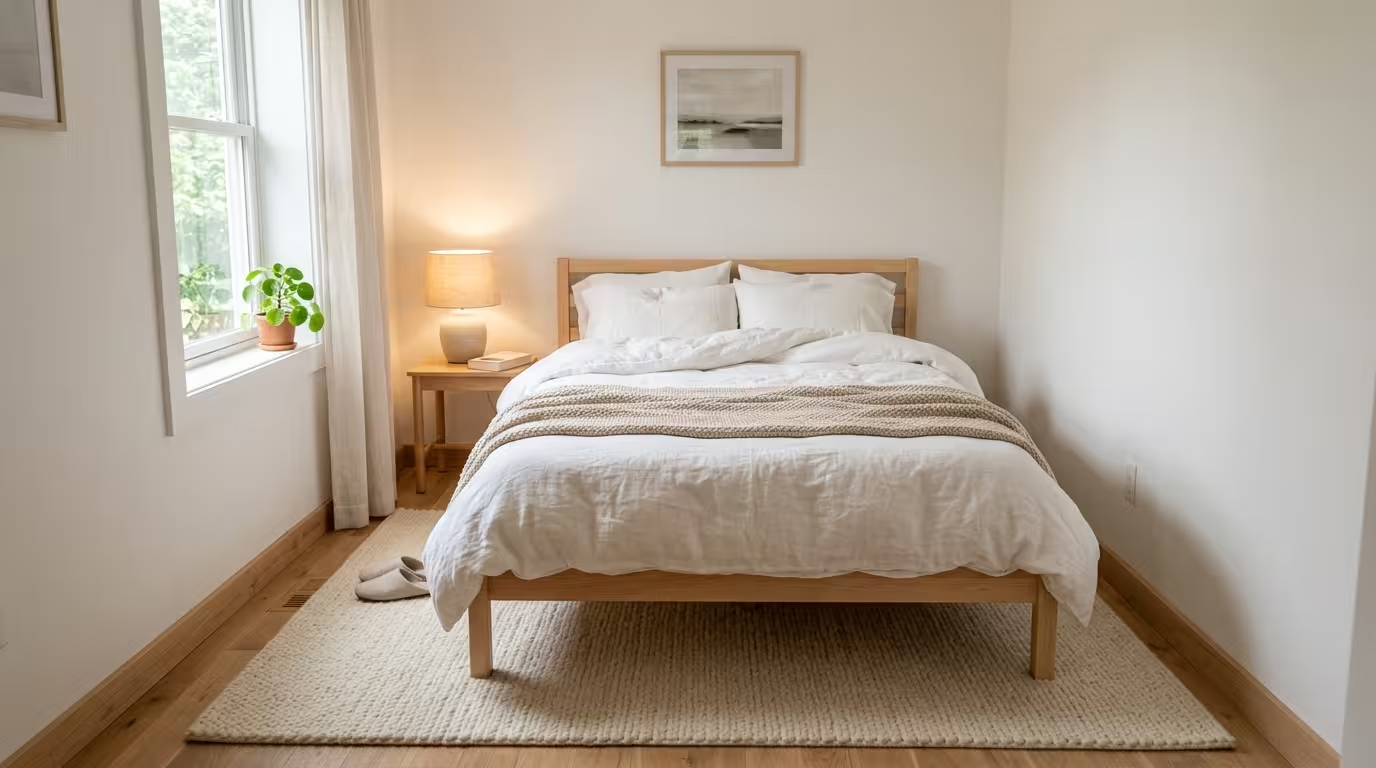
One reason the bedroom rug size design debate persists is that most advice ignores the starting point: how big is the room? Here’s a breakdown of how size recommendations shift based on room dimensions.
Small Bedrooms (Under 10×10 Feet)
In a small bedroom, the most common mistake is going too small with the rug. A 5×8-foot rug tucked under a full or queen bed with barely any exposure on the sides looks like an afterthought. In compact spaces, consider a 6×9-foot rug placed to extend about 18 inches beyond each side of the bed.
If budget is a concern, placing a runner on each side of the bed (rather than one large rug) is a practical solution gaining popularity among younger homeowners and apartment dwellers.
Medium Bedrooms (10×12 to 12×14 Feet)
This is where the bedroom rug size design debate gets most heated, because medium-sized rooms offer multiple valid options. An 8×10-foot rug is often the default recommendation — and for good reason. It fits neatly under the lower two-thirds of a queen or king bed and extends gracefully to nightstand lines.
However, a 9×12-foot rug can look equally stunning in this space, especially if the room has 9-foot ceilings and the designer wants to create a sense of visual expansion. The key is ensuring at least 12 inches of floor remains visible at the walls.
Large Bedrooms (Over 14×16 Feet)
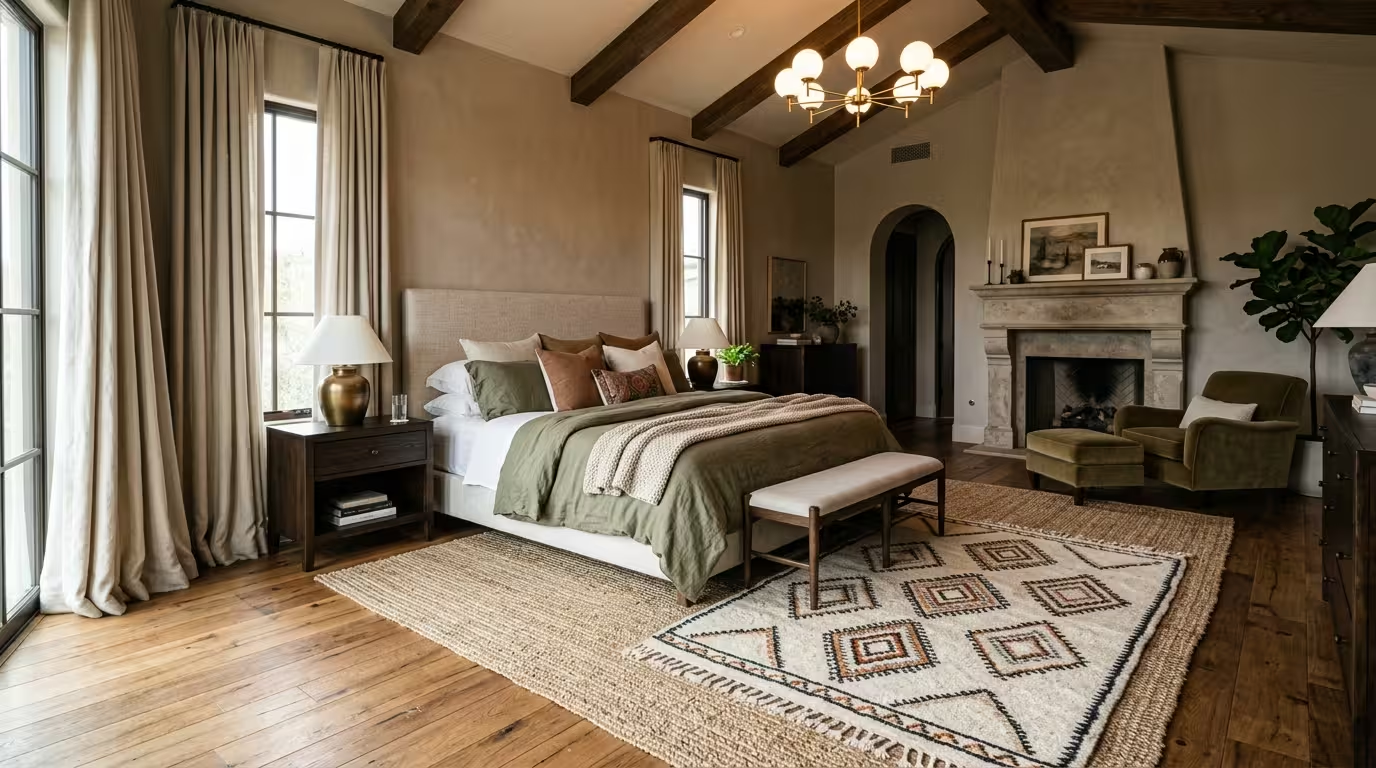
In large primary suites, going too small with the rug is the cardinal sin. A room this size needs at minimum a 9×12-foot rug, and in many cases, a 10×14-foot rug is ideal. Anything smaller creates an island effect — a tiny rug floating in a vast sea of floor — which disrupts the room’s visual harmony.
Large bedrooms also allow for creative placement. Some designers choose to layer two rugs: a natural fiber jute rug as a base layer with a smaller, textured or patterned rug on top, adding depth and warmth simultaneously.
The Real Controversy: Under the Bed or Not?
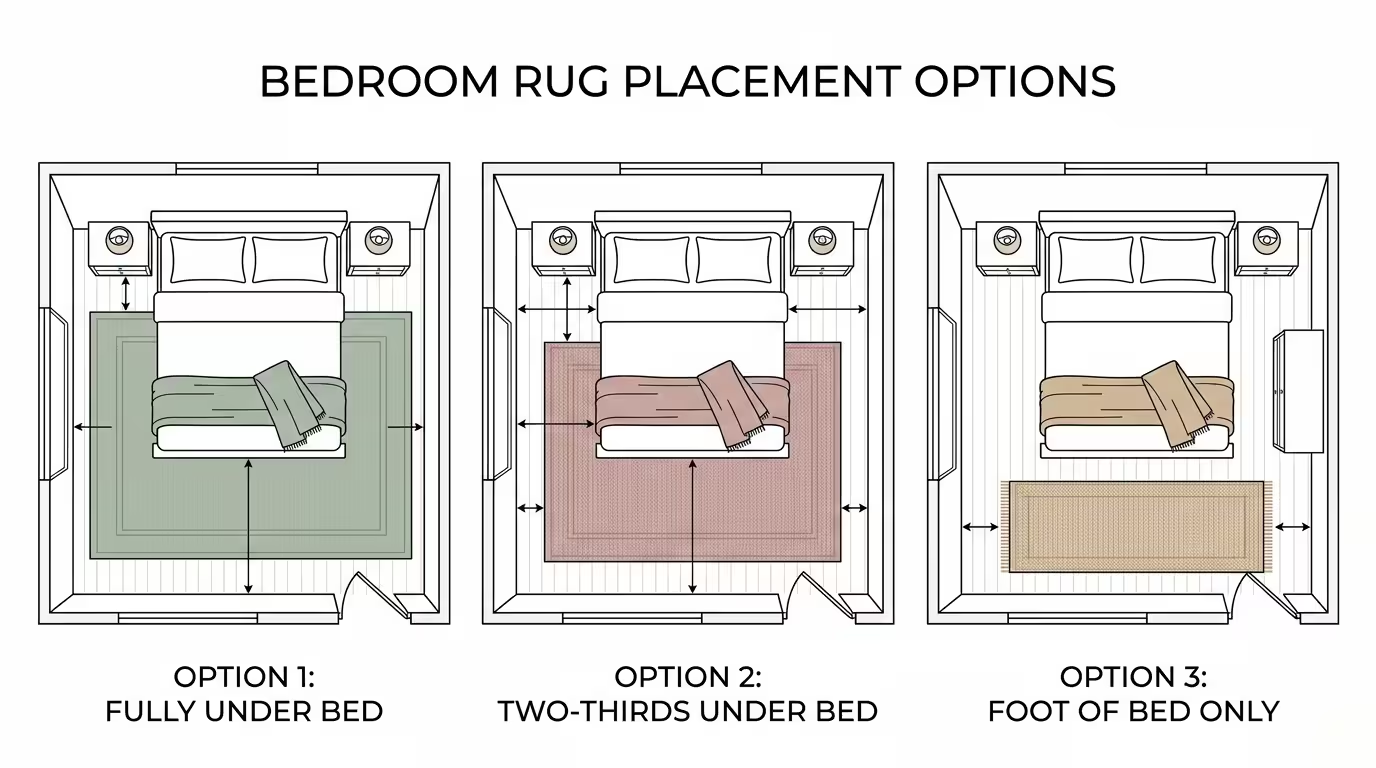
At the heart of the bedroom rug size design debate is one question that generates more heated discussion than any other: Should the rug go under the bed or not?
Arguments for Going Under the Bed
Placing the rug partially under the bed is the method most recommended by traditional interior designers, and for several strong reasons.
First, it anchors the bed visually. The bed becomes the focal point it’s supposed to be, and the rug frames it the way a mat frames a piece of art. Second, it creates a continuous, cohesive look from the headboard wall outward. Third, it ensures symmetrical exposure on both sides of the bed — a critically important factor in rooms where the bed sits centered between two windows or nightstands.
Design publication Architectural Digest has consistently featured rooms where the rug extends beneath at least the lower half of the bed, noting that this approach works across traditional, transitional, and contemporary styles.
Arguments Against Going Under the Bed
The case for not placing the rug under the bed is surprisingly strong, particularly in practical and budget-conscious contexts. If your bed frame sits low to the ground, you won’t see the rug underneath it anyway — making that real estate completely invisible and arguably wasted.
Additionally, some platform beds and upholstered frames with fabric skirts make it visually awkward to have a rug sliding underneath. In these scenarios, a smaller rug placed at the foot of the bed or runners on each side can be far more intentional and cost-effective. Apartment Therapy has long been an advocate for this approach, particularly for renters who want flexibility.
How Rug Shape Enters the Design Debate
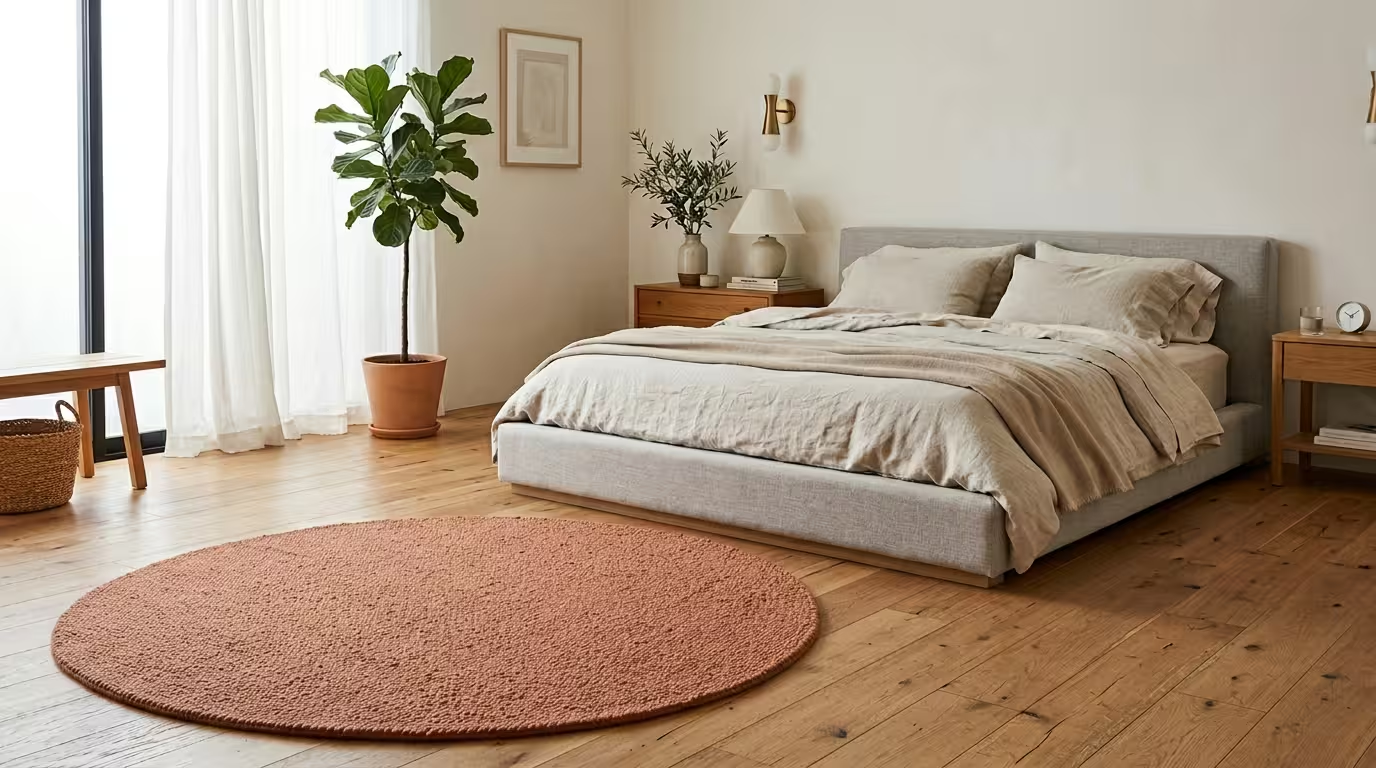
Most of the bedroom rug size design debate centers on rectangular rugs, but shape is a factor that’s frequently overlooked — and one where designers genuinely diverge.
Rectangular Rugs
Rectangular rugs are the most common and versatile choice. They align with the natural geometry of the bed and most furniture arrangements, which is why they remain the default option in the vast majority of bedrooms.
Round Rugs
A round rug in the bedroom is bold, unconventional, and increasingly popular in eclectic and Scandinavian-influenced interiors. Placed at the foot of the bed, a large round rug (6 to 8 feet in diameter) can soften a boxy room and introduce an artistic quality to the space. However, a round rug that’s too small — say, 4 feet in diameter — will look like a bathmat and undermine the entire design.
Runner Rugs
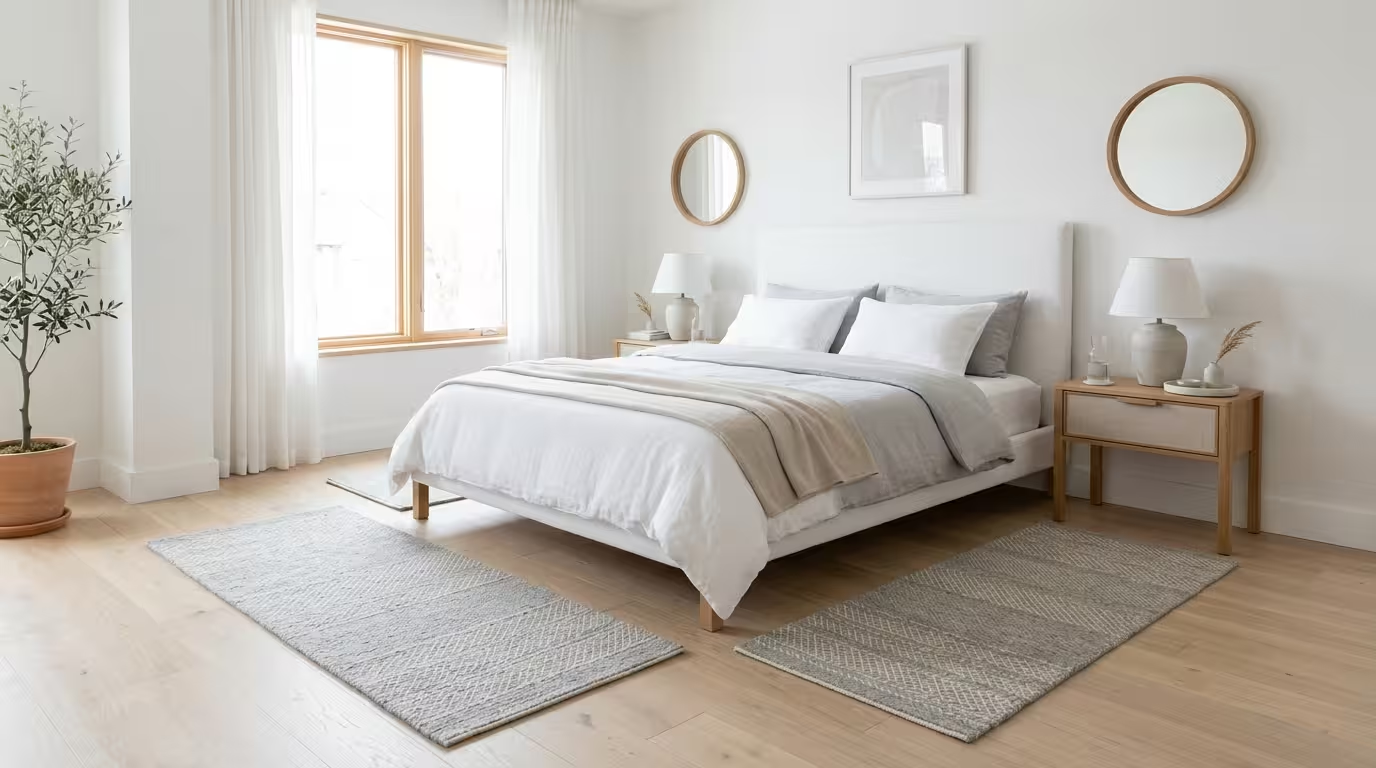
Runners placed on either side of the bed are perhaps the most underused strategy in the bedroom rug size design debate. A pair of 2×8-foot or 2×6-foot runners placed parallel to the bed provides warmth underfoot exactly where it’s needed — without the cost or logistical challenge of moving an oversized rug under a heavy bed frame.
Rug Material and Its Influence on Size Perception
An often-neglected dimension of the bedroom rug size design debate is how material and texture affect the perception of size. A rug doesn’t just have physical dimensions — it has visual weight.
High-pile wool rugs feel larger and more luxurious than they measure, making them an excellent choice if you’re going slightly smaller than ideal. Flatweave cotton rugs tend to visually recede, which can make a room feel more open but may require you to size up.
Jute and sisal rugs add organic texture and work well as layering pieces, but can feel rough underfoot — making them better suited as base layers rather than the primary bedroom rug in spaces where barefoot comfort is a priority.
Patterned rugs are worth special attention. A bold geometric or floral pattern on a large rug can make a medium-sized room feel smaller — so if you love pattern, you can sometimes get away with a slightly smaller rug without it looking diminutive.
What Interior Designers Actually Recommend in Practice
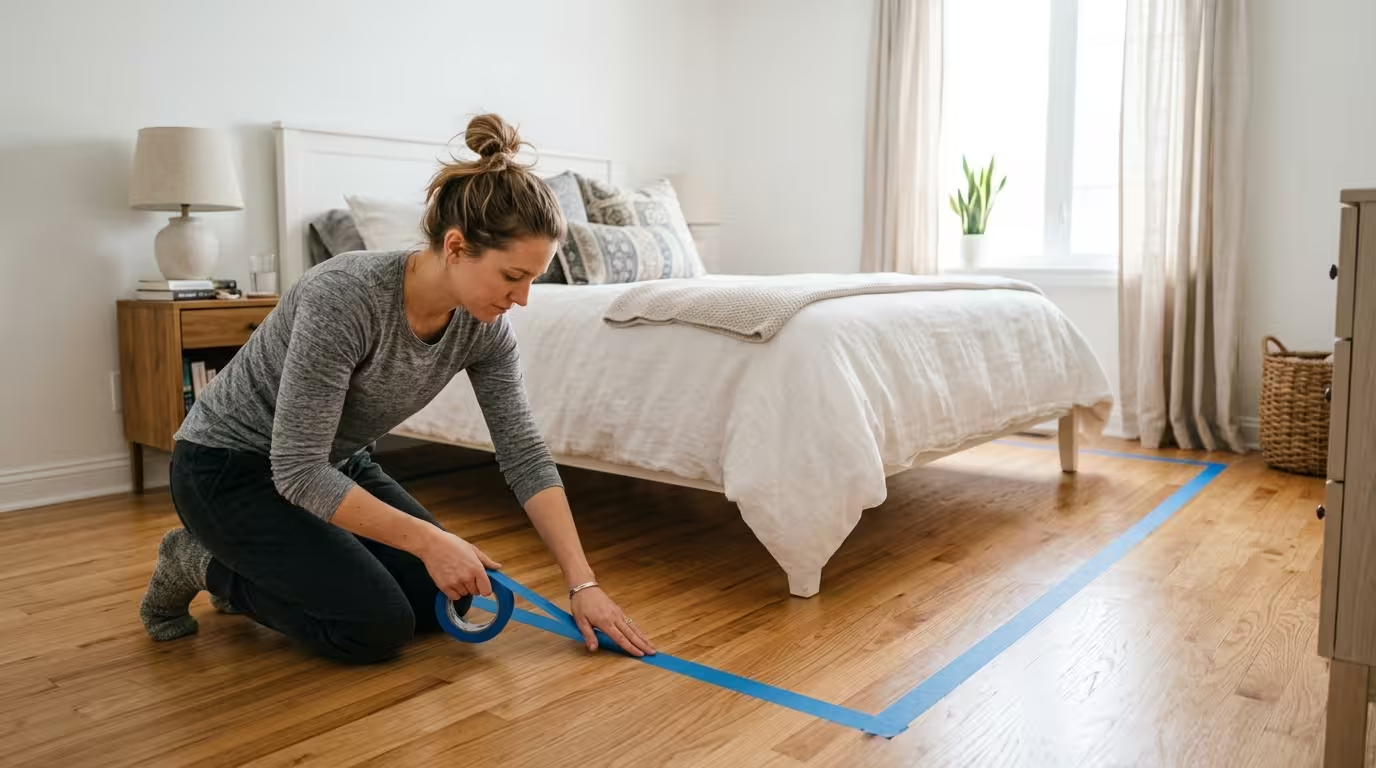
When stripped of magazine-perfect settings, what do working interior designers actually recommend for the bedroom rug size design debate?
Rule 1: Size up when in doubt. Nearly every experienced designer will tell you that the most common mistake clients make is buying a rug that’s too small. If you’re torn between an 8×10 and a 9×12, the larger option is almost always the right call.
Rule 2: Use painter’s tape before you buy. A simple and highly practical tip: before purchasing a rug, tape out its dimensions on your bedroom floor. Walk around it, step out of bed onto it, and assess how it feels in the space. This eliminates guesswork and saves costly returns.
Rule 3: Symmetry matters more than coverage. Equal exposure on both sides of the bed (typically 18 to 24 inches) matters more than how far the rug extends under the bed frame itself. Asymmetrical rug placement — where one side of the bed has 24 inches of rug, and the other has only 6 — is one of the most visually jarring mistakes in bedroom design.
Rule 4: Consider your morning routine. The practical reality is that you step out of bed every single morning. Whether your feet land on cold hardwood or a soft rug has real quality-of-life implications. This should be a meaningful factor in the bedroom rug size design debate, not just an afterthought.
Common Mistakes That Reignite the Bedroom Rug Size Design Debate
Many of the arguments in the bedroom rug size design debate aren’t really philosophical disagreements — they stem from mistakes that could have been avoided. Here are the most common:
- Choosing a rug before measuring the room. This seems obvious, but it happens constantly. Always measure your room and your bed before setting foot in a store.
- Forgetting to account for furniture. Nightstands, benches, and dressers often partially sit on rugs. This affects how much of the rug is actually visible and functional.
- Prioritizing aesthetics over comfort. A stunning rug that feels scratchy or slippery underfoot will make you regret the decision within a week.
- Ignoring scale relative to the ceiling height. In rooms with high ceilings, a larger rug feels proportionate. The same rug in a room with standard 8-foot ceilings can feel overwhelming.
- Buying the cheapest option available in the right size. A well-sized mediocre rug will always look worse than a slightly smaller but high-quality one. Material and craftsmanship matter.
A Quick Reference Size Guide
|
Bed Size |
Minimum Rug |
Recommended Rug |
For Large Rooms |
|
Twin |
5×8 ft |
6×9 ft |
8×10 ft |
|
Full |
6×9 ft |
8×10 ft |
9×12 ft |
|
Queen |
8×10 ft |
9×12 ft |
10×14 ft |
|
King |
9×12 ft |
10×14 ft |
12×15 ft |
|
Cal King |
9×12 ft |
10×14 ft |
12×15 ft |
Conclusion: Choosing Your Side of the Bedroom Rug Size Design Debate
The bedroom rug size design debate isn’t going away — and honestly, that’s a good thing. It means there’s no single right answer imposed on every home, every aesthetic, every lifestyle. The “rules” of bedroom rug placement are starting points, not mandates.
What we know for certain: size up rather than down, ensure symmetrical exposure on both sides of the bed, test your layout with tape before purchasing, and always consider how the rug feels underfoot — not just how it photographs. Whether you choose to tuck it under the bed or leave it floating at the foot, whether you go rectangular or bold with a round shape, the best rug is the one that serves your room and your daily life with equal elegance.