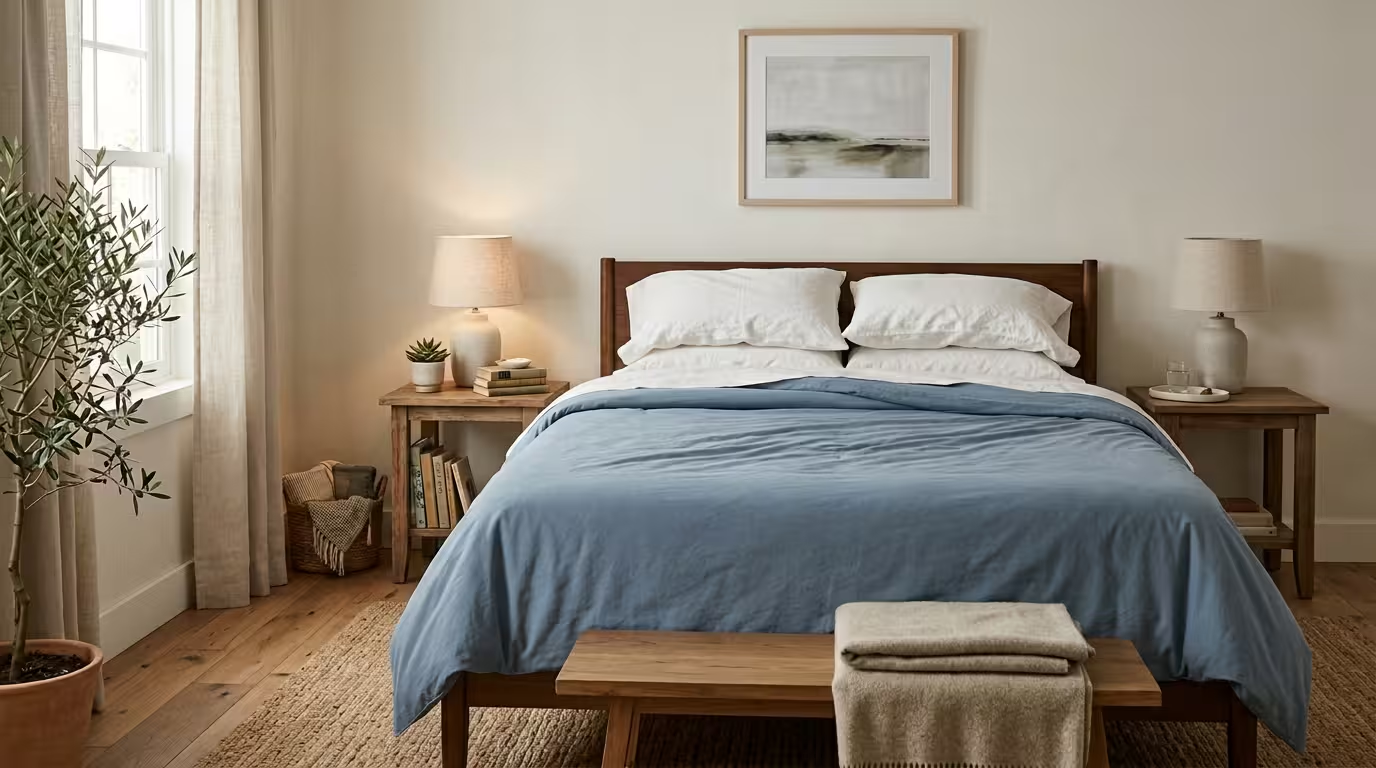
Small Bedroom Design Tips: Smart Ways to Make a Compact Room Feel Bigger
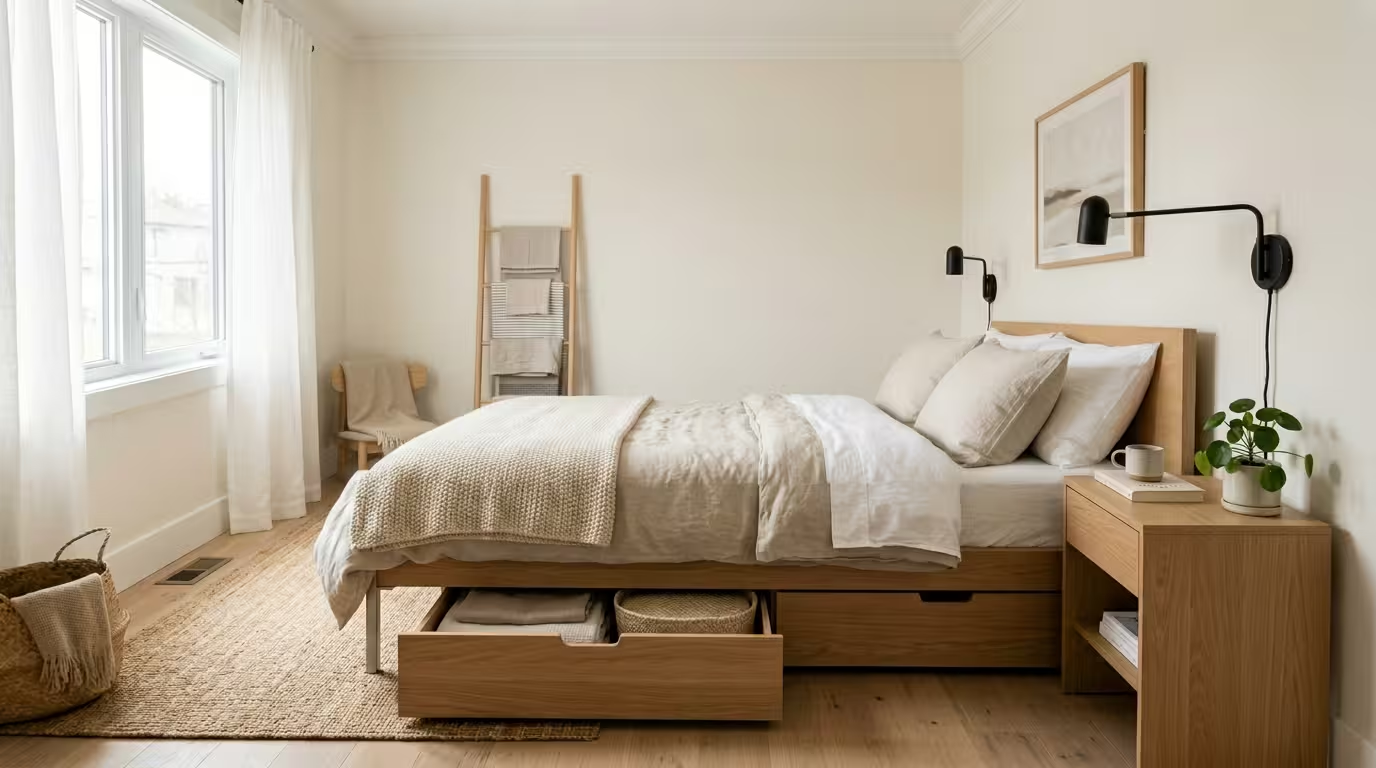
A small bedroom can feel like a design problem before you even move the furniture. The bed takes up most of the floor, the closet fills too quickly, and every extra basket seems to make the room tighter. But a compact room is not automatically a bad room. With the right plan, it can feel calm, personal, and easier to maintain than a larger space. These small bedroom design tips focus on decisions that change how the room works: layout, bed size, storage, lighting, color, furniture scale, and daily habits.
The biggest mistake is decorating before solving the room’s basic flow. A pretty throw blanket will not fix a blocked closet door. A trendy nightstand will not help if there is no place to walk. Good design starts with how you sleep, dress, move, and store everyday items. Once those needs are clear, the room becomes easier to shape. Use these small bedroom design tips as a practical guide to turning limited square footage into a bedroom that feels finished, not forced.
Start With a Layout Before Buying Furniture
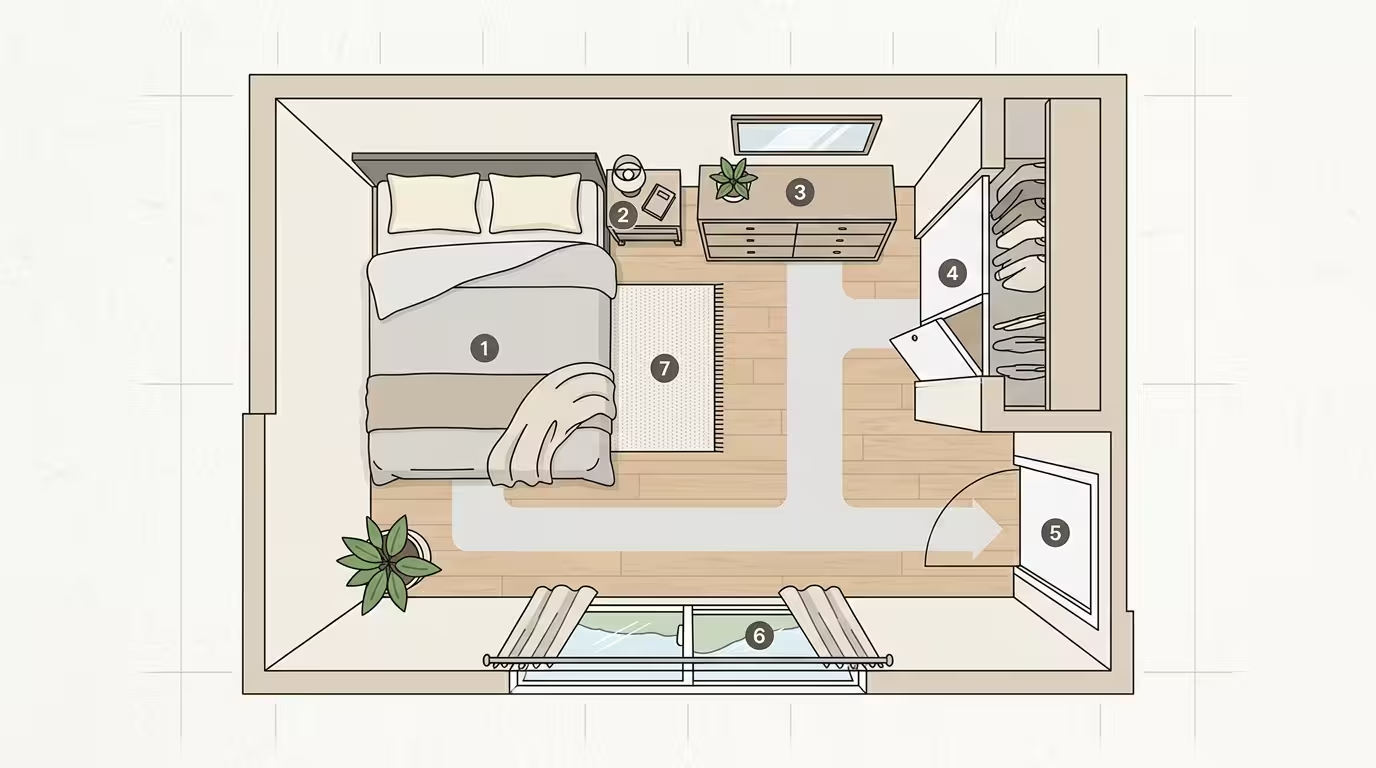
Before you buy anything, measure the bedroom and draw a simple floor plan. Mark the wall lengths, windows, outlets, closet door, entry door, vents, and any awkward corners. This step prevents the costly mistake of buying furniture that looks right online but doesn’t move well in real life. The best small bedroom design tips begin with space planning because every inch has a job. Try to keep a clear path from the door to the bed and closet. If one side of the bed must touch the wall, accept it as a practical layout choice, not a design failure.
Choose the Right Bed Size for the Room
The bed is the anchor of the bedroom, but in a small space, it can also become the main problem. A king bed may be comfortable, but it can make a compact room feel like a storage closet with bedding. Measure the mattress and the frame together. Platform edges, thick headboards, footboards, and oversized side rails can steal several inches from each side. One of the most useful small bedroom design tips is choosing the smallest bed that still supports your sleep needs. A full bed often works for one adult, while a queen can work for couples if the frame is slim and the layout stays clear.
Small Bedroom Design Tips for Smarter Storage
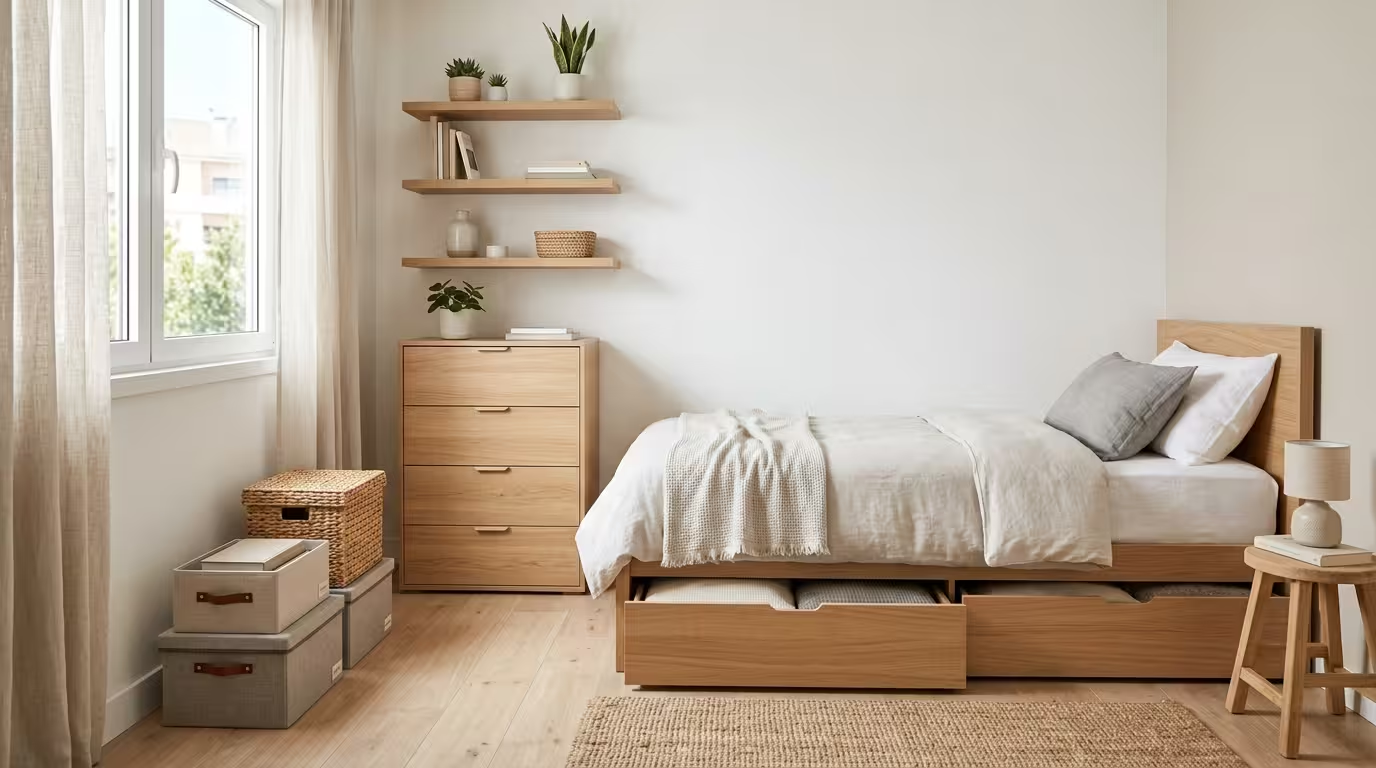
Storage should reduce clutter, not create new clutter. Start with the hidden spaces first: under the bed, inside the closet, behind the door, and higher on the wall. Use low rolling bins, zippered fabric cases, or built-in drawers for off-season clothes, extra bedding, guest linens, or rarely used shoes. Avoid pushing loose bags under the bed because they collect dust and become hard to manage. This system works best when each storage zone has a clear purpose. If a container has no category, it will become a junk box.
Use Vertical Space Without Overloading the Walls
When floor space is limited, build upward. Tall dressers, floating shelves, wall hooks, high cabinets, and vertical organizers help keep the floor open. A short, wide dresser may look attractive, but it often takes too much wall space. A taller piece uses the same footprint while holding more. Still, do not cover every wall with shelves. That can make the room feel busy. Choose one main storage wall and let the other areas breathe. Keep daily items at arm’s or waist level, and place less-used items higher. Closed storage usually works better than too many open shelves.
Make the Closet Work Harder
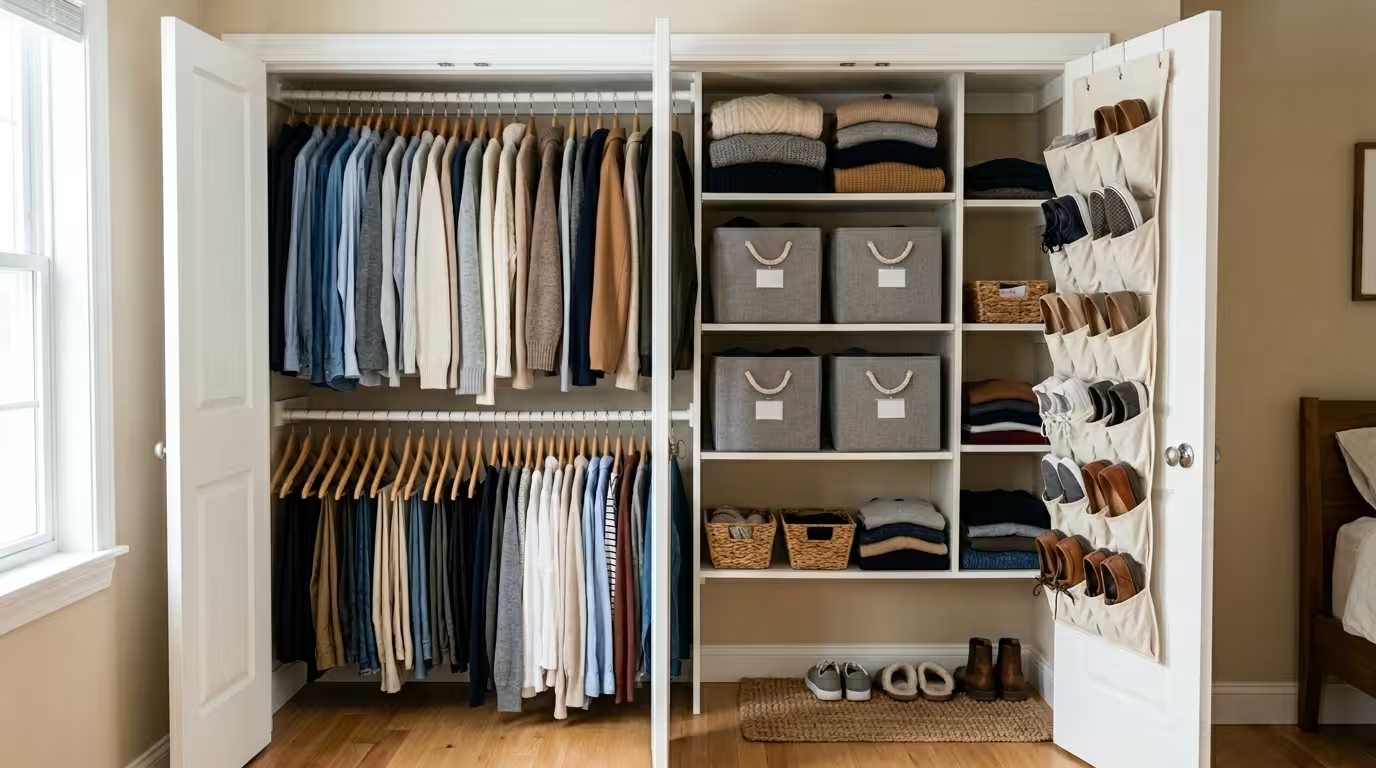
A small bedroom often feels cramped because the closet is poorly organized. Many closets have one rod and one shelf, which wastes the lower half and the upper section. Add a second hanging rod for shirts, folded pants, or shorter garments. Use shelf dividers for sweaters and jeans, slim bins for accessories, and a vertical shoe rack instead of a messy floor pile. One of the overlooked small bedroom design tips is treating the closet as part of the room design. A better closet can remove the need for another dresser and make the bedroom feel calmer.
Pick Furniture With Slim Profiles
Small bedrooms need furniture that looks light, even when it offers storage. Pieces with raised legs show more floor, which can make the room feel more open. Slim nightstands, narrow dressers, wall-mounted desks, and open-base benches usually work better than chunky pieces that sit heavily on the floor. This does not mean everything must be tiny. A room filled with many undersized pieces can look scattered. These small bedroom design tips are about proportion. Choose fewer pieces that do more. If there is no space for two nightstands, use one slim table and one floating shelf.
Use Color to Create a Calm Background
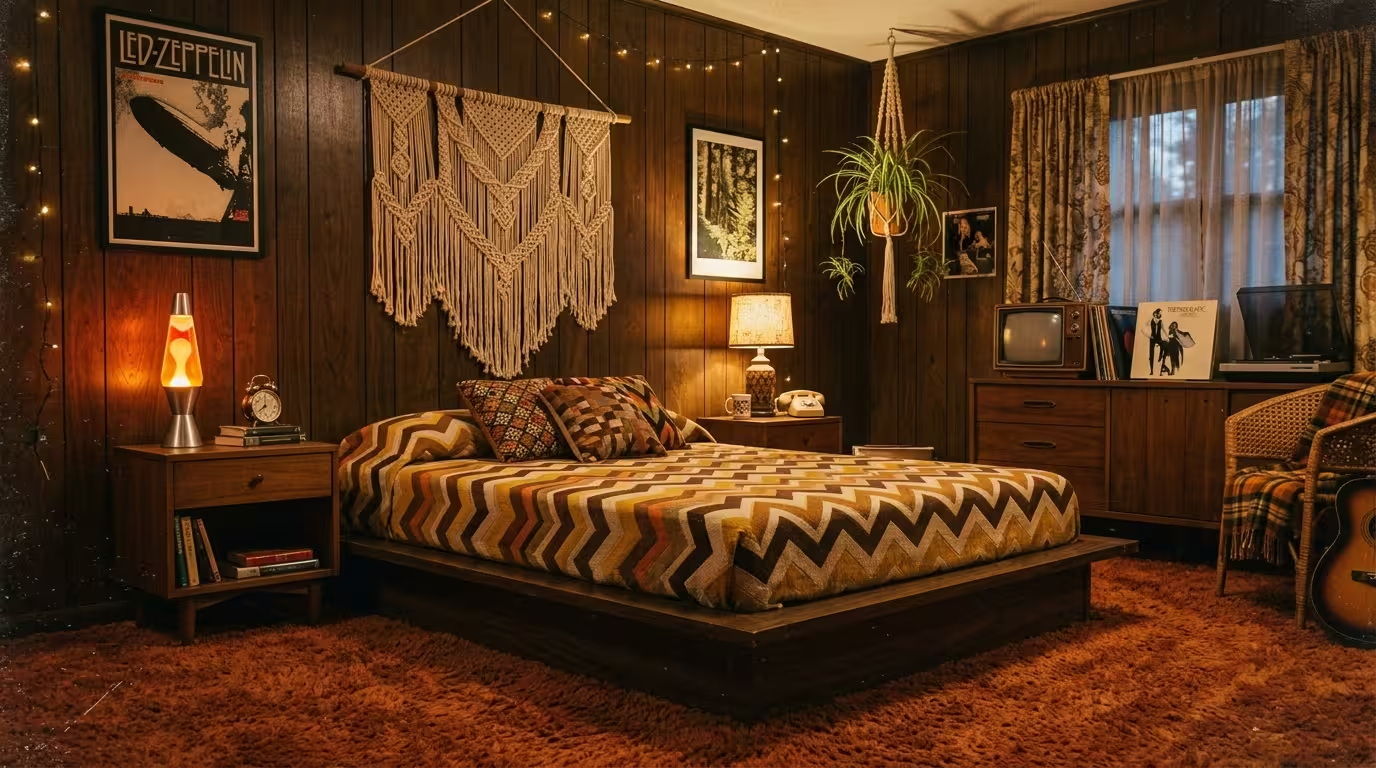
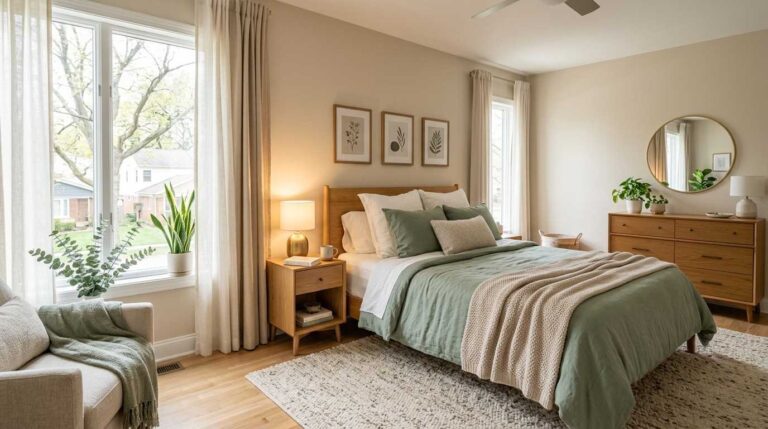
Light colors can make a small bedroom feel more open, but white is not the only answer. Warm beige, soft gray, pale blue, muted green, cream, and gentle taupe can all create a calm background. The right color depends on natural light. A north-facing room may need warmth, while a bright room can handle cooler shades. Darker colors can also work when used intentionally. A deep green, charcoal, navy, or earthy brown can make a compact room feel cozy when the trim, walls, and ceiling stay in a close color family. Strong small bedroom design tips favor a simple palette with texture for depth.
Layer Lighting Instead of Relying on One Ceiling Light
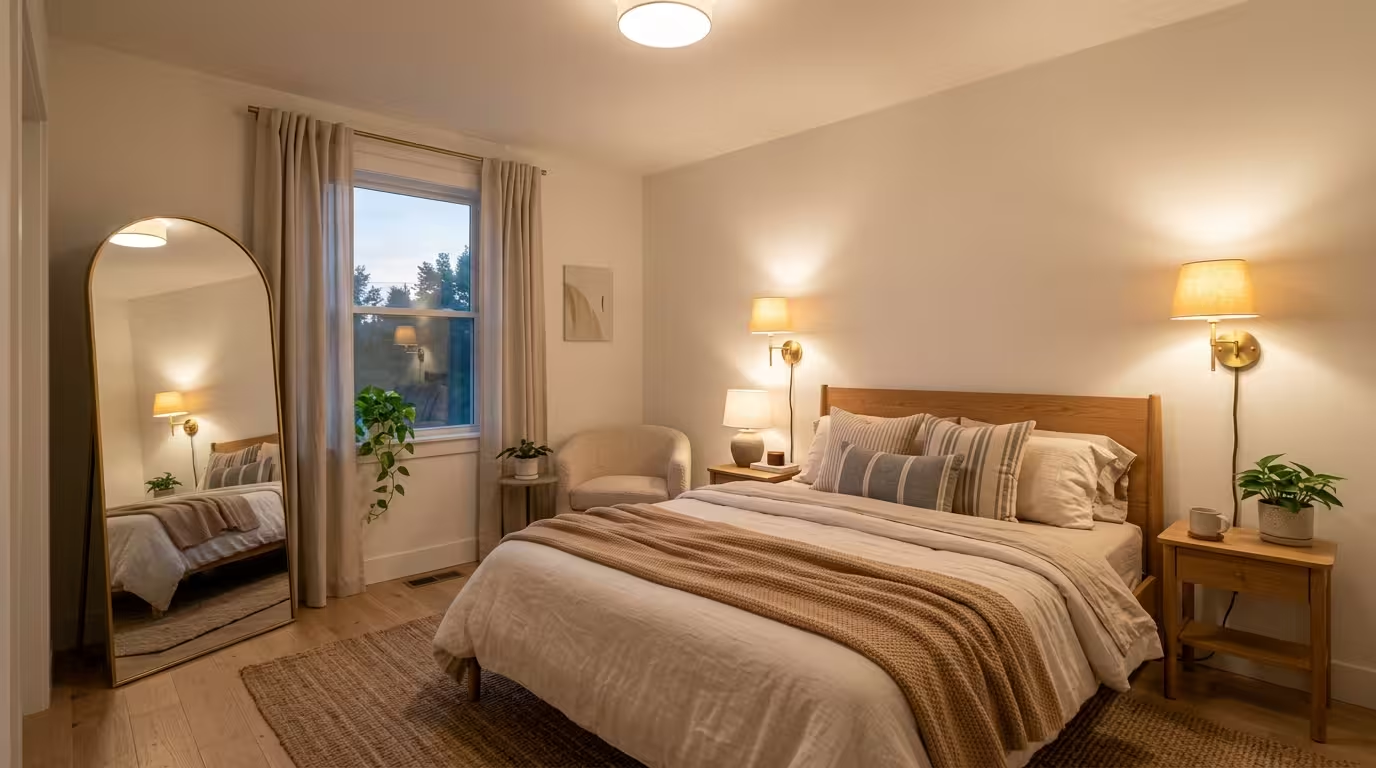
A single overhead light can make a small bedroom feel flat and harsh. Layered lighting gives you more control and makes the room feel finished. Use at least two light sources if possible: one general light and one task or mood light. Wall sconces, plug-in sconces, clip lamps, and narrow bedside lamps are useful in compact rooms. Wall-mounted lighting is especially helpful because it keeps nightstand surfaces clear. These small bedroom design tips matter because lighting affects mood and function. A well-lit compact room feels intentional rather than cramped, especially in the evening.
Choose Window Treatments That Save Space
Heavy curtains can feel warm and luxurious, but they are not always the best choice when the bed sits close to the window. Roman shades, roller shades, woven shades, or slim curtains can offer privacy without taking up much physical space. If you prefer curtains, hang them high and wide so the window looks larger and the wall feels taller. Let the panels frame the window instead of covering too much glass during the day. Good window treatments are underrated because they control privacy, light, softness, and visual height at the same time.
Make Mirrors Work Without Overdoing Them
Mirrors can make a small bedroom feel brighter by reflecting light and views. Place a mirror across from or near a window when possible, but avoid positioning it where it reflects clutter, laundry, or a messy corner. A tall mirror can also be practical for dressing and can visually lengthen the room. Do not rely on mirrors as a magic fix. Too many reflective surfaces can make the bedroom feel restless, especially at night. The strongest small bedroom design tips use mirrors with a purpose: to increase light, support daily routines, and reflect the room’s best view.
Keep the Bed Wall Simple but Strong
The bed wall is usually the natural focal point. In a small bedroom, it should feel clear and composed. You do not need a dramatic feature wall, but you do need a visual anchor. A slim headboard, painted panel, wallpaper behind the bed, large artwork, or two matching sconces can create structure without using floor space. Avoid placing too many small frames, shelves, and decorative objects above the bed. One large piece of art often works better than several tiny pieces. This approach helps the room feel designed without making it look crowded.
Create Storage Zones for Daily Habits
A bedroom becomes messy when daily routines have no assigned landing spots. Create small zones for what you actually do: charging devices, getting dressed, reading, skincare, laundry, and accessories. A narrow tray on a nightstand can hold a watch and earbuds. A wall hook can hold a robe. A small hamper with a lid can hide laundry. Design for your real habits, not an imaginary version of yourself who folds everything immediately. Practical design works because it reduces friction. The easier the room is to reset, the cleaner it will stay.
Use Rugs to Define and Soften the Space
A rug can make a compact bedroom feel warmer and more complete, but size matters. A tiny rug floating beside the bed often looks accidental. If the budget allows, choose a rug large enough to extend beyond the sides and foot of the bed. In a very tight room, runners on one or both sides of the bed can work better. Keep rug patterns in balance with the bedding and wall color. Low-pile rugs are easier to clean and better under doors. This matters because the floor is one of the largest visible surfaces.
Add Personality Without Crowding the Room
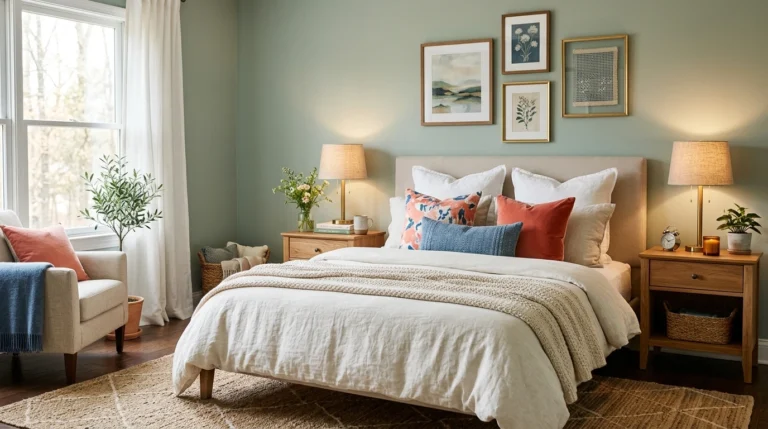
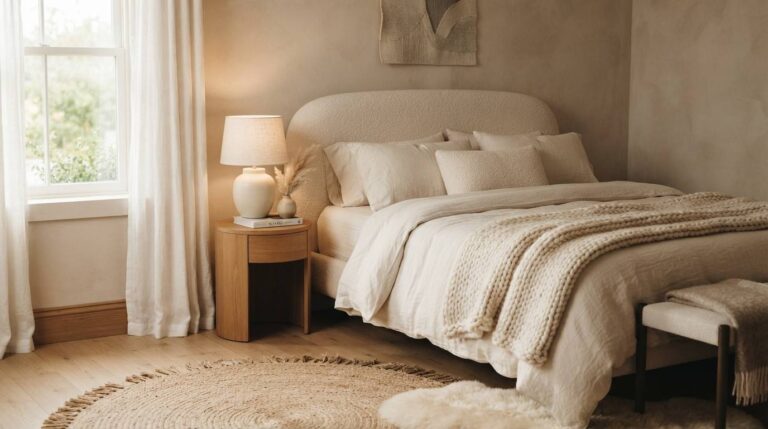
A compact bedroom should not feel like a storage unit with a mattress, but it also should not become a showroom with no personality. Choose a few meaningful details: a framed print, a favorite lamp, a handmade bowl, a plant, a textured throw, or a small stack of books. Limit decorative objects to places where they will not interfere with daily use. Texture is often better than clutter. Linen bedding, a woven shade, a wooden frame, or a soft rug can make the room feel layered without filling every surface. Personal style works best when it does not fight the function of the room.
Try Renter-Friendly Upgrades
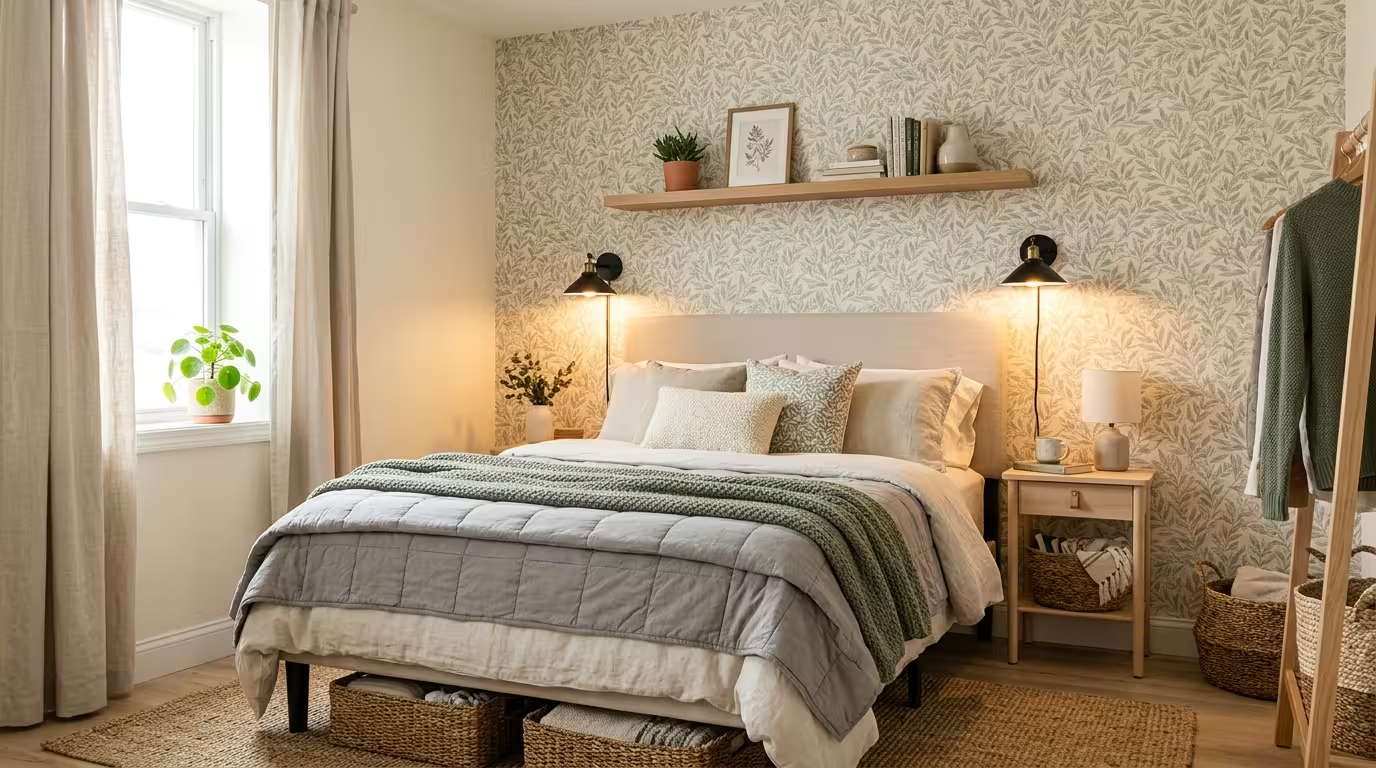
Renters can still make a small bedroom feel custom. Plug-in sconces can replace table lamps without electrical work. Peel-and-stick wallpaper can create a headboard wall if the surface allows it. Tension rods, removable hooks, freestanding wardrobes, and over-door organizers can solve storage problems without permanent changes. Focus on upgrades you can take with you, such as quality bedding, slim lamps, baskets, art, and a flexible dresser. These small bedroom design tips are useful for apartments because they improve comfort without risking the security deposit. Temporary does not have to mean unfinished.
Avoid Mistakes That Make the Room Feel Smaller
The fastest way to shrink a small bedroom is to keep too much furniture. A chair that only holds laundry is not a chair; it is a clutter magnet. A second dresser that blocks the closet is not solving storage; it is creating a daily obstacle. Another common mistake is using too many small storage products. Baskets, bins, hooks, trays, and organizers are helpful only when they serve a clear category. Strong small bedroom design tips often come down to editing. A compact room improves quickly when the wrong pieces are removed.
Budget-Friendly Changes That Make a Real Difference
You do not need a full makeover to improve a small bedroom. Start by removing anything that does not belong. Then wash the bedding, clear surfaces, organize the closet, and adjust the layout. These steps cost nothing and often reveal the real problem. After that, spend where function improves: a better hamper, under-bed bins, wall lighting, drawer dividers, or a narrow nightstand. Paint is one of the most affordable upgrades if you are allowed to use it. The smartest approach is to spend in the right order: declutter first, plan second, buy last.
A Simple Weekend Plan for a Better Small Bedroom
Start on Friday evening by removing trash, laundry, and anything that belongs in another room. On Saturday morning, measure the room and test one new layout if the current one blocks movement. Move the bed first because every other decision depends on it. Then sort the closet and remove items you no longer wear, use, or need. On Sunday, improve the visual layer. Make the bed, style the window, hang art, adjust lighting, and leave one or two surfaces mostly clear. These small bedroom design tips work as a weekend plan because they follow the correct order: function, storage, then style.
Conclusion:
A compact bedroom does not need more tricks; it needs better decisions. The bed should fit the room, storage should match real habits, lighting should work in layers, and every visible surface should have breathing room. When these basics are handled, color, mirrors, rugs, and decor can make the room feel personal instead of packed. The best small bedroom design tips are practical enough to live with every day.
Start with one problem, not the whole room. Fix the layout, then the closet, then the lighting, then the decorative details. A small bedroom becomes easier when each choice reduces friction. You should be able to walk in, rest, get dressed, and reset the room without fighting the furniture. That is what makes a compact space feel successful: not size, but control, comfort, and calm.