Small Living Room Decorating Ideas That Make Your Space Feel Bigger and Better
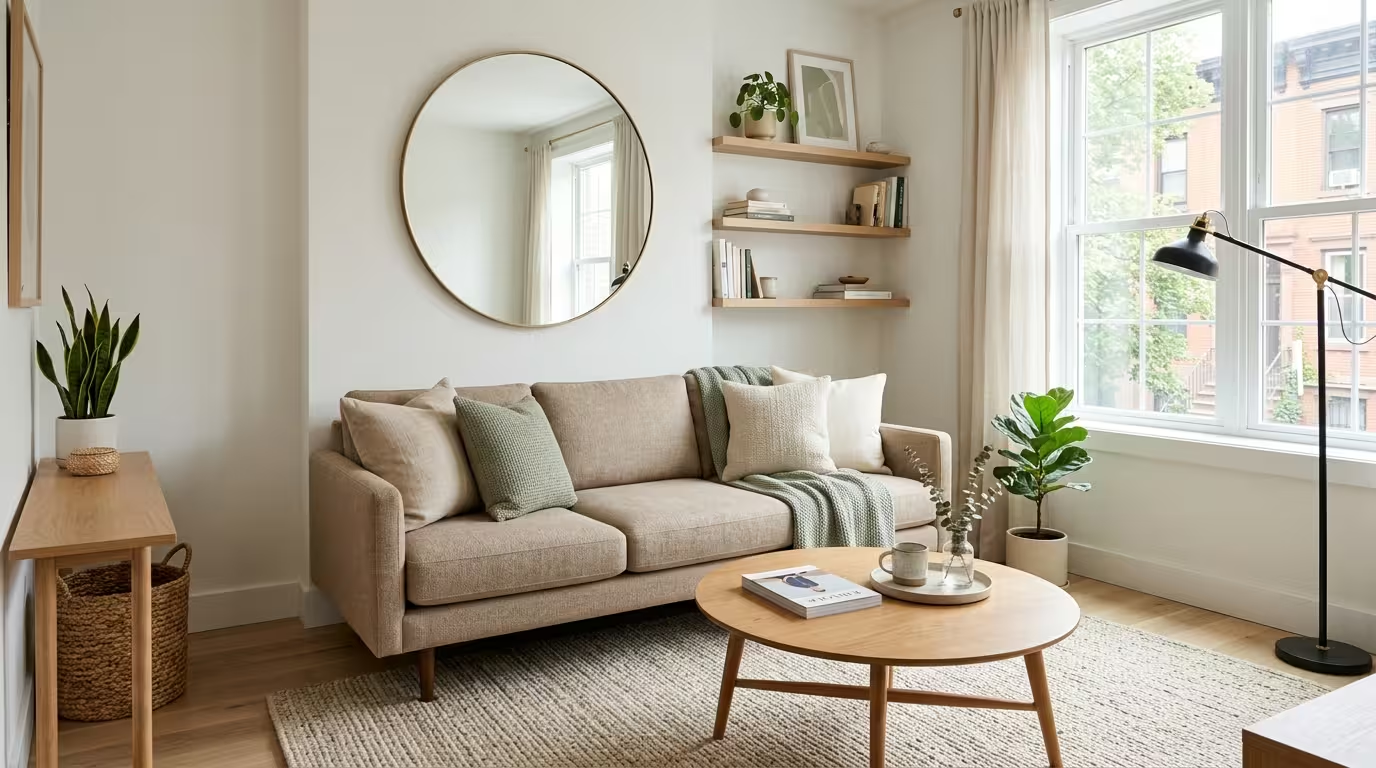
A small living room can feel frustrating at first. The sofa looks too large, the corners go unused, and every decorative piece seems to compete for attention. Yet the problem is rarely the room itself. More often, the room feels off because it is trying to do too many jobs without a clear plan. The best small living room decorating ideas work because they solve movement, storage, comfort, and mood at the same time.
Instead of chasing a picture-perfect look, start by thinking about how you actually live. Do you watch television every night, host friends on weekends, read by the window, or need a corner for work? Once the room reflects your routines, it starts to feel calm instead of cramped. Good design does not depend on more square footage. It depends on better choices, stronger editing, and a layout that gives every piece a reason to be there.
Why Many Small Living Room Decorating Ideas Feel Wrong in Real Homes
Many rooms go wrong because people decorate in reverse order. They begin with pillows, wall art, and trending colors before deciding where people will sit, where light should fall, and how traffic should move. That is why some compact rooms look stylish in photos but feel tiring in daily life. The strongest spaces are built from the floor up: layout first, storage second, lighting third, and accessories last. When those basics are correct, even a simple room feels warm, layered, and complete.
Another common mistake is assuming that small means plain. Some homeowners strip everything back in the hope that emptiness will create spaciousness. Others go to the opposite extreme and fill every wall, shelf, and corner to prove that the room has personality. Neither approach works for long. A compact room needs restraint, but it also needs identity. The goal is not to make the room disappear. The goal is to make it feel intentional. It should feel comfortable and visually settled from the moment you walk in.
Smart Small Living Room Decorating Ideas Start With Layout, Not Accessories
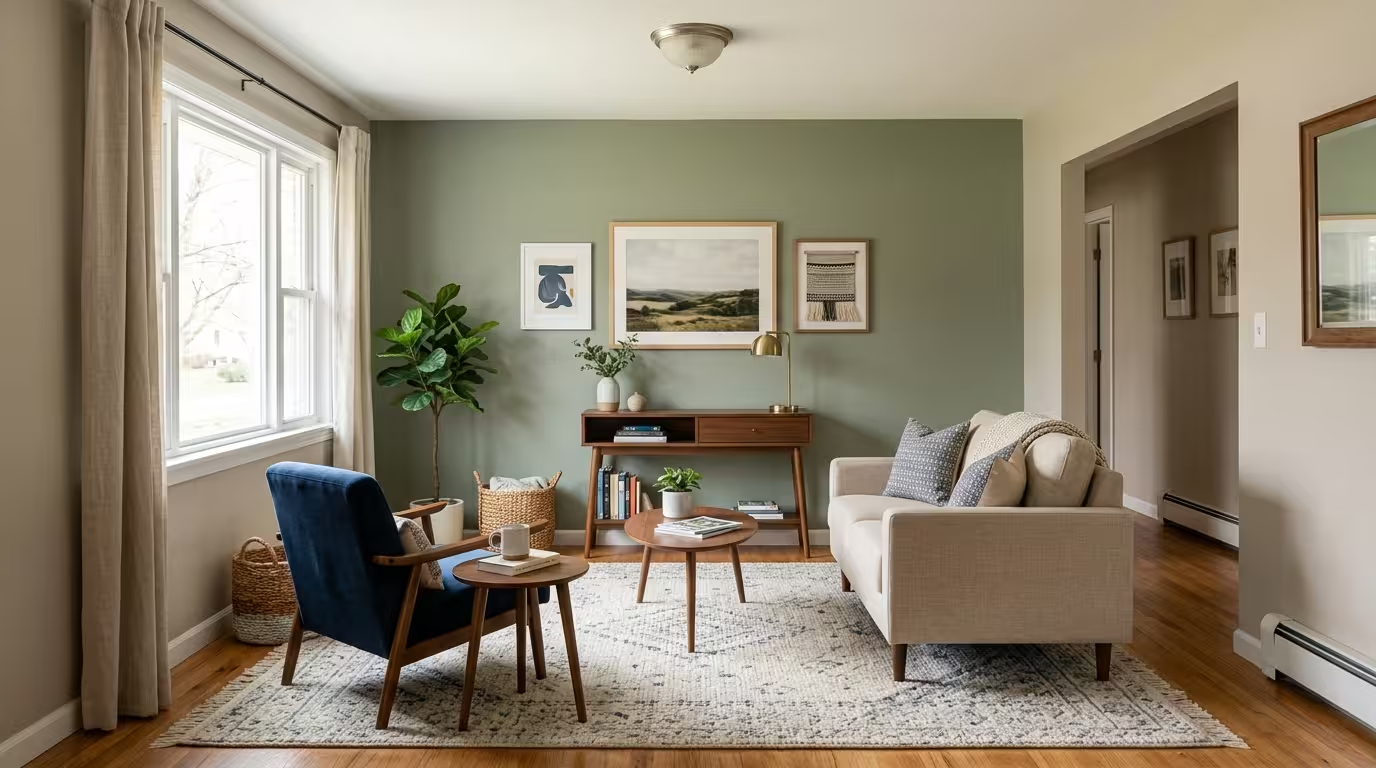
The first decision is the room’s anchor. Choose one focal point. In some homes, that is the window. In others, it is the television, fireplace, bookcase, or a single large artwork piece. Once you choose one visual leader, arrange the seating around it. This instantly reduces the scattered feeling that many small rooms have. A clear anchor also helps you decide what can be removed. If an item does not support the focal point, add comfort, or solve storage, it is probably taking more than it gives.
For a narrow room
A long room often feels like a hallway with furniture pushed along both sides. Break that pattern by building one central seating zone instead of stretching the arrangement from end to end. Place the rug so it creates a compact gathering area, then bring the main seating slightly inward rather than flattening it against the wall. This makes the room feel wider because the eye reads one balanced destination instead of one long corridor. A round side table or curved chair also softens the boxed-in look.
For a square room
A square room can feel easier, but it still needs structure. Start with a sofa and one or two chairs that face each other comfortably. Use an ottoman, nesting tables, or a slim coffee table in the center so the room keeps breathing. In a square layout, symmetry can look elegant, but too much of it can feel stiff. Balance matching pieces with one unexpected element, such as a sculptural lamp, a textured accent chair, or a bold piece of art. The room should feel organized, not frozen.
For an open-plan corner
In an open layout, the living area often drifts into the dining zone or kitchen without a clear boundary. This is where the most useful small living room decorating ideas rely on visual zoning. A rug, a pendant light, a sofa with its back facing outward, or a low bookcase can quietly define the area without building a wall. The goal is not to close the room off. It is to help the eye understand where the living space begins, where it ends, and what purpose it serves.
Color-Based Small Living Room Decorating Ideas That Add Depth
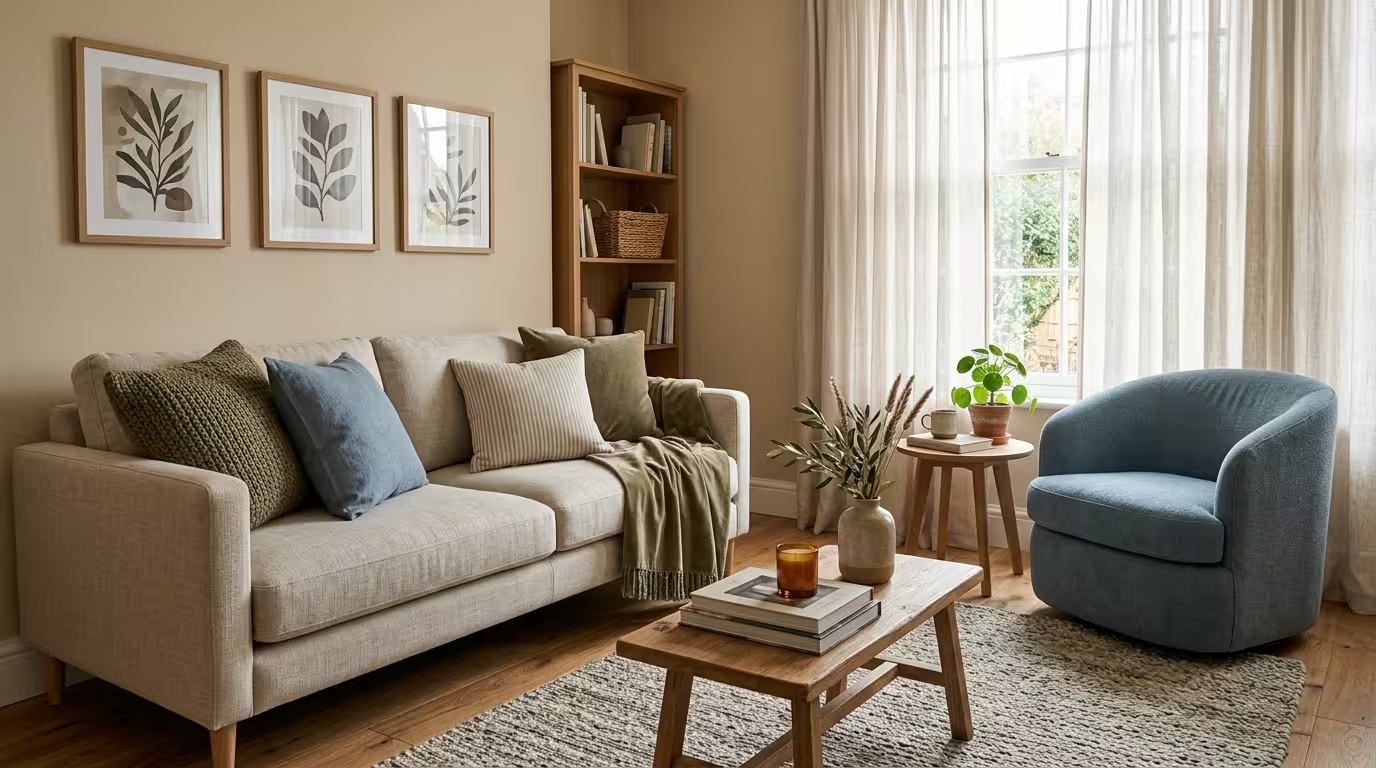
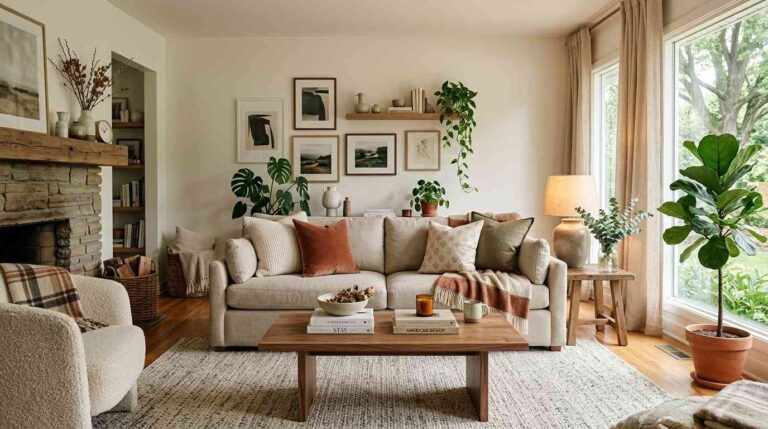
Color has a huge effect on how compact a room feels, but the answer is not always “paint it white.” Light tones can help bounce daylight around the room, especially when the space has limited windows. Soft off-white, warm beige, greige, pale taupe, muted sage, and dusty blue can all create an open feeling without looking stark. The key is continuity. When the walls, trim, and larger furnishings sit within a close color family, the room feels less chopped up and more visually fluid.
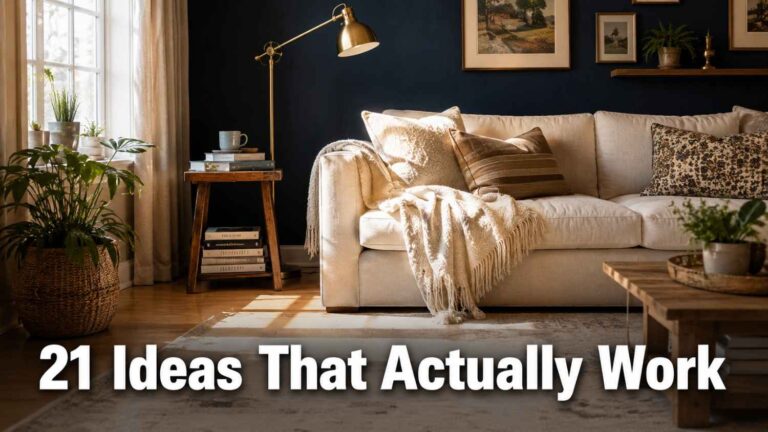
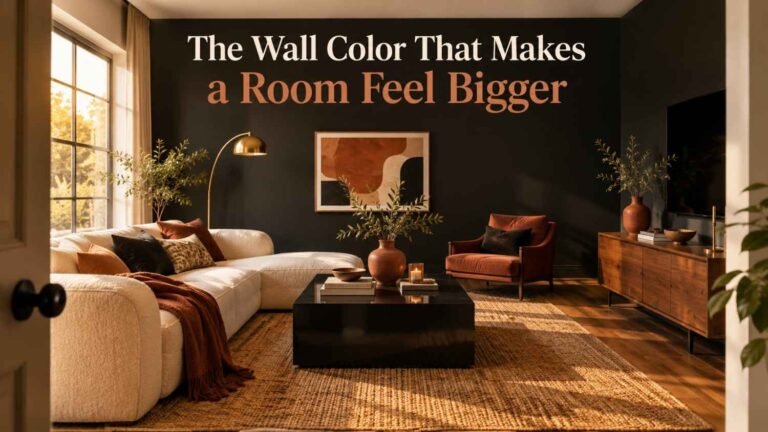
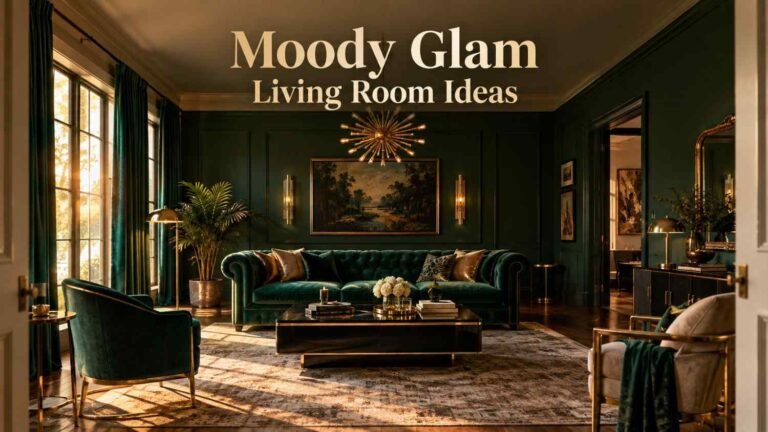
At the same time, darker rooms can be beautiful when handled with confidence. Deep olive, smoky blue, charcoal, cocoa, and muted plum can make a compact room feel wrapped, rich, and deliberate. If you choose a deeper shade, repeat it in more than one place so it feels purposeful rather than accidental. This is where small living room decorating ideas often improve dramatically: instead of forcing a tiny room to feel airy at all costs, they let it become cozy, moody, and memorable with controlled contrast.
One of the easiest upgrades is to treat the ceiling as part of the room, not an afterthought. A ceiling painted in the same family as the walls can blur hard edges and make the space feel more connected. Even a soft tint instead of plain white can help the room look finished. If you prefer a neutral scheme, add depth through texture rather than extra colors. Linen curtains, a wool rug, wood accents, ceramic lamps, and woven baskets create interest without making the eye stop at every surface.
Related Articles:
- https://outinteriors.com/small-kitchens/
- https://outinteriors.com/best-game-room/
- https://outinteriors.com/archive-dive-1970s-bedrooms/
Furniture-Led Small Living Room Decorating Ideas for Better Flow
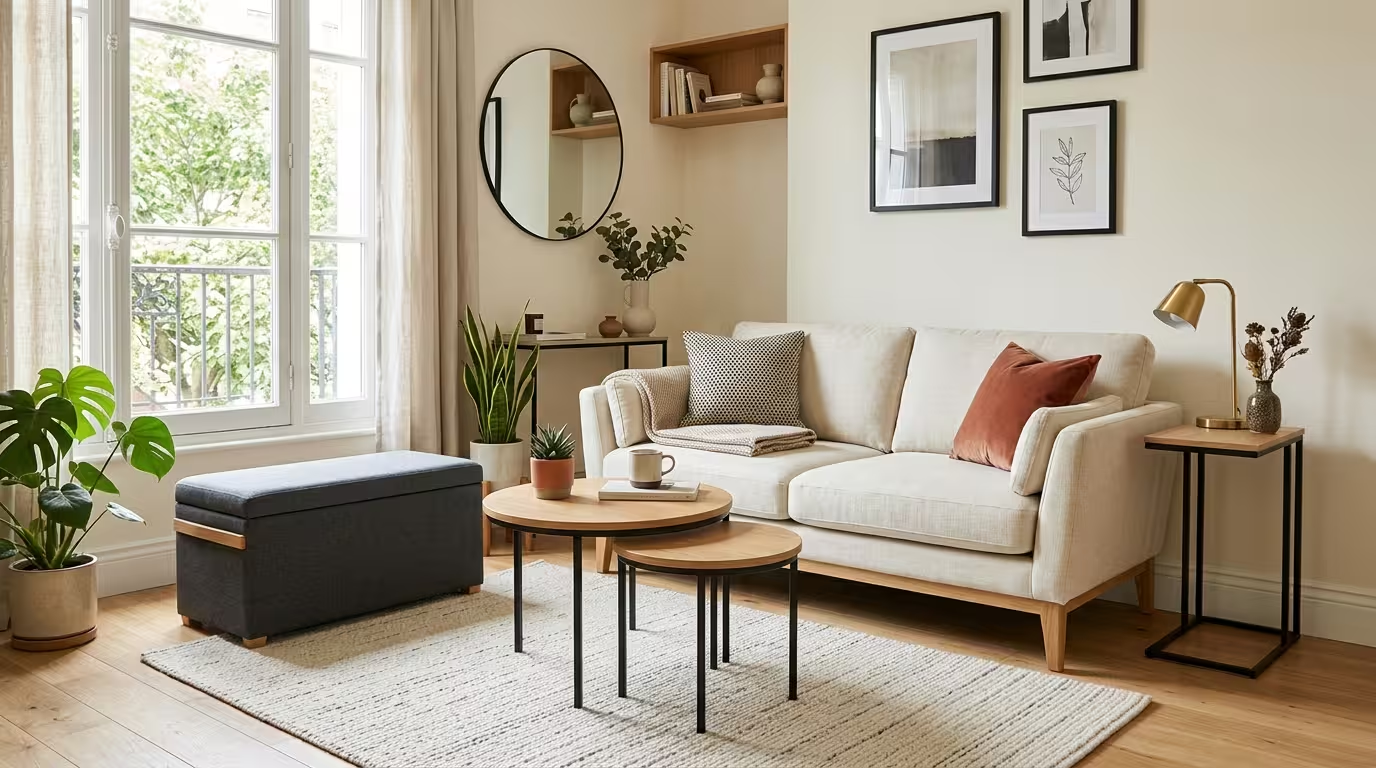
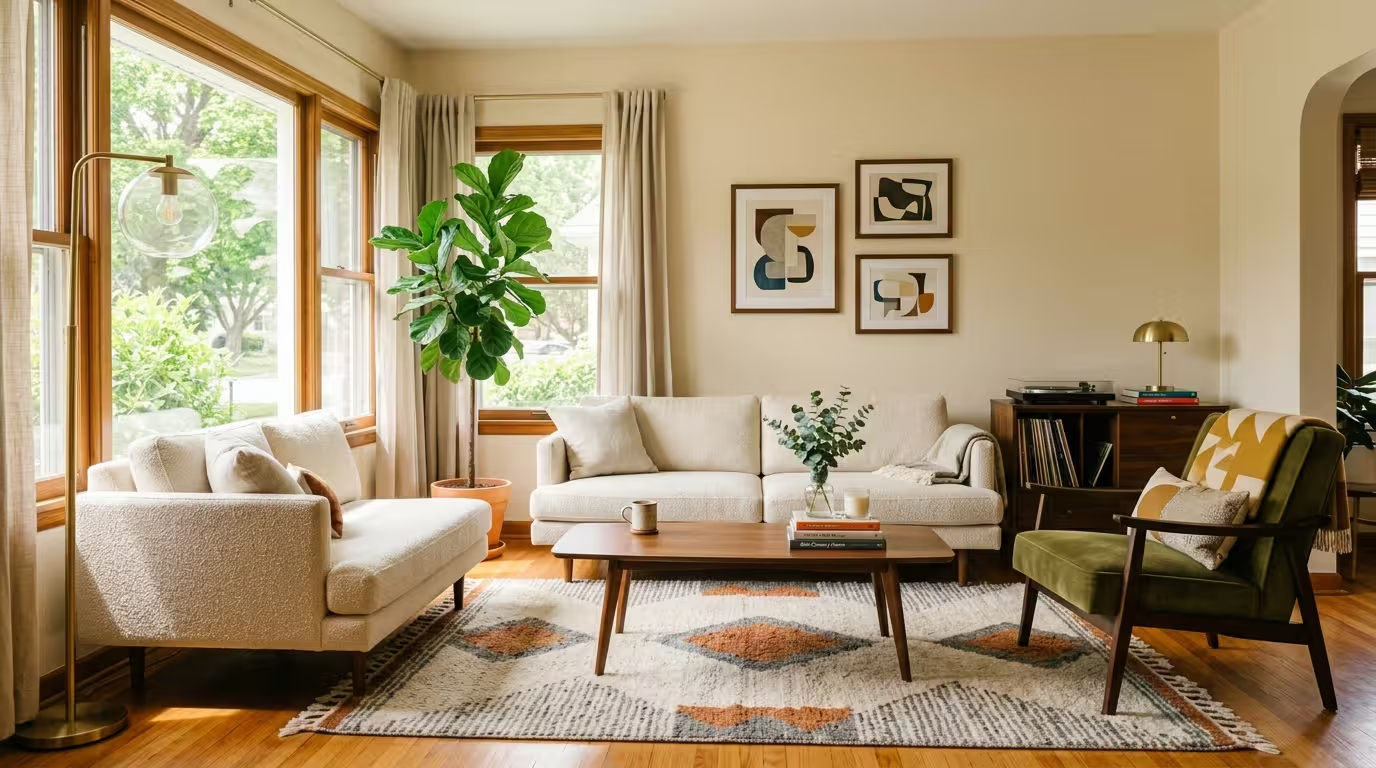
Furniture scale matters more than furniture quantity. One bulky sectional can consume a room faster than three well-sized pieces. Before buying anything, pay attention to seat depth, arm thickness, and leg style. Sofas with slimmer arms and visible legs usually feel lighter than overstuffed pieces that sit heavily on the floor. The same principle applies to tables and chairs. When more floor remains visible, the room often feels easier to move through and less visually crowded, even when the seating count stays the same.
This is also why the best small living room decorating ideas favor flexibility. Nesting tables can be spread out when guests arrive and tucked away later. A storage ottoman can act as a coffee table, extra seat, and hidden compartment. A bench can sit under a window, move beside the sofa, or shift to the entry when needed. Flexible furniture prevents a small room from becoming locked into one rigid setup. It also gives you more uses without forcing you to buy more items than the room can gracefully hold.
Do not assume every piece must hug the wall. Pulling the sofa or chairs just a little inward can create a cleaner walkway and a more intentional layout. The room begins to feel designed instead of merely arranged around leftover edges. If you want a room to look larger, choose a rug generous enough to connect the seating area. A tiny rug floating in the middle usually shrinks the room because it breaks the layout into fragments. A properly scaled rug visually gathers the furniture and calms the space.
Storage-First Small Living Room Decorating Ideas That Stay Stylish
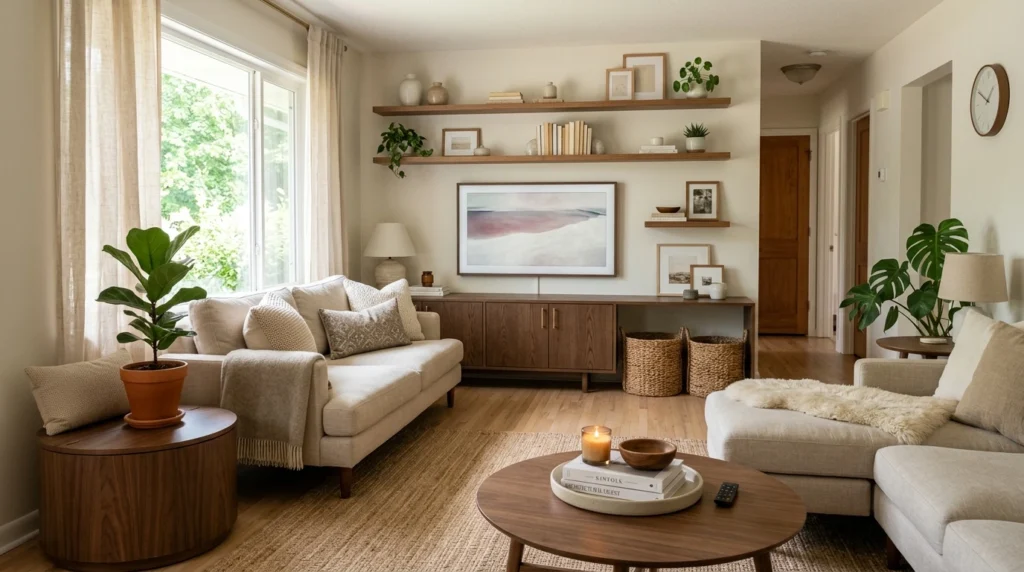
Clutter is not only about having too much stuff. It is also about having no home for the things you use every day. Remotes, chargers, books, throws, kids’ items, pet gear, and mail can quickly turn a pleasant room into a stressful one. That is why the most practical small living room decorating ideas rely on hidden storage for daily mess in plain sight. Choose a media unit with closed storage, a coffee table with shelves, baskets for soft items, and a sideboard or cabinet that works harder than it looks.
Vertical space matters just as much as floor space. Tall bookcases, floating shelves, picture ledges, and wall-mounted cabinets pull the eye upward and give you storage where the room can spare it. The trick is not to fill them edge-to-edge. Leave open pockets between books, frames, and objects so the display feels edited. A shelf that holds fewer but better-chosen items almost always looks more expensive than one crowded with small décor. Breathing room is part of the design, not wasted space.
There is also value in hiding awkward functions. A wall-mounted television frees the floor below for a slim console. A narrow cabinet can conceal routers, game devices, or office supplies. A lidded basket beside the sofa can store blankets without spilling visual noise into the room. These quiet fixes rarely appear in glamorous before-and-after photos, yet they make the biggest difference in daily life. A room feels larger when the eye can rest, and restful rooms are almost always the ones with good hidden storage.
Lighting and Wall Styling Small Living Room Decorating Ideas
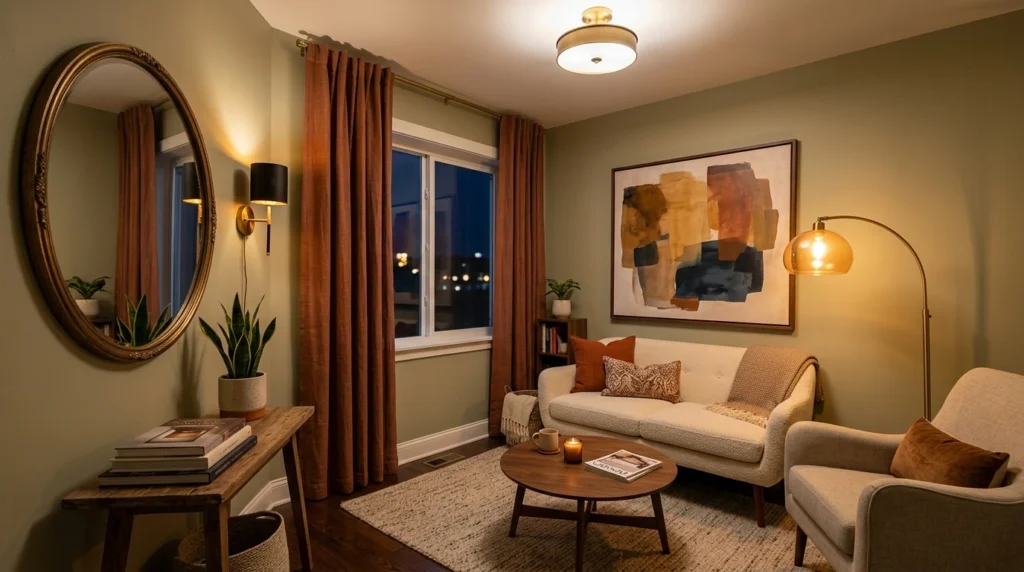
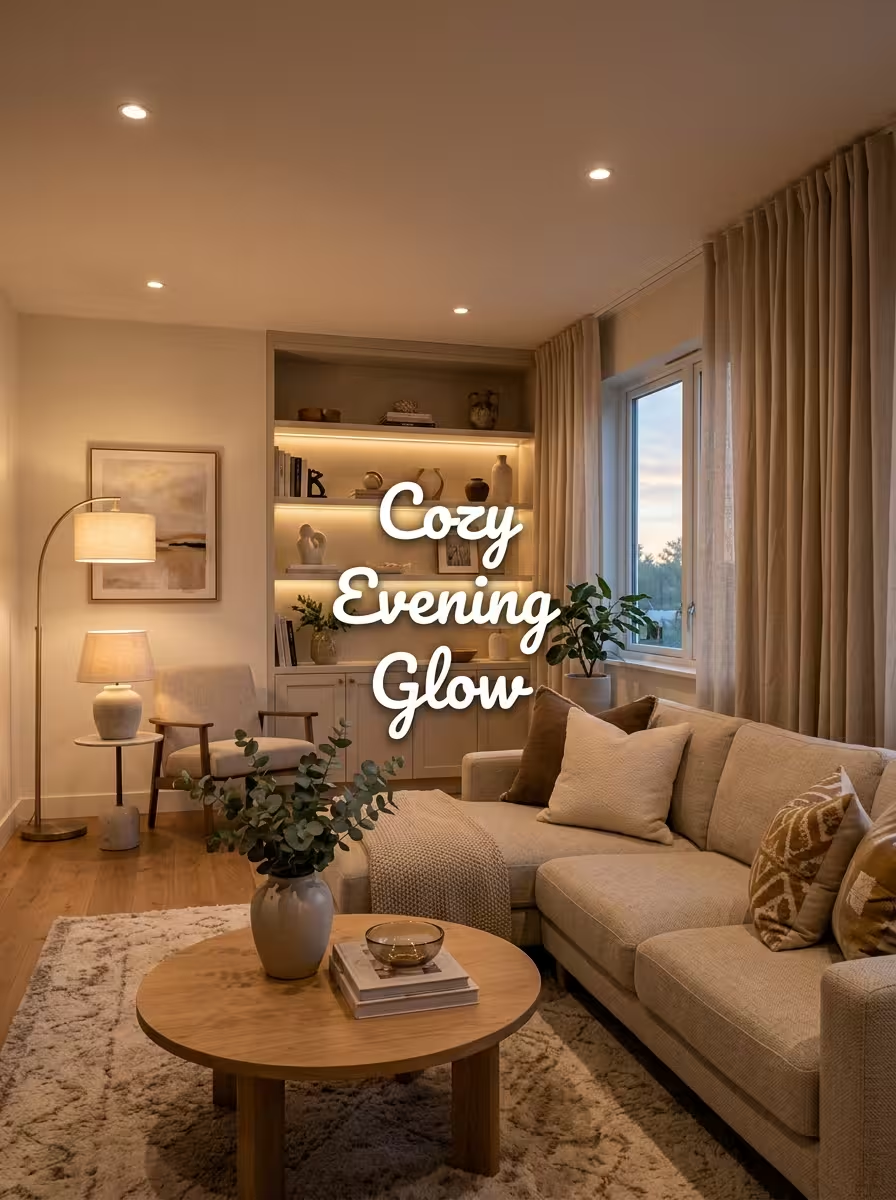
Lighting decides whether a compact living room feels flat or layered. One ceiling fixture is rarely enough. A room becomes more inviting when it has different light levels: ambient light from overhead, softer light from a floor or table lamp, and perhaps accent light near a shelf or artwork. This layered approach creates depth and helps the room shift easily from daytime brightness to evening comfort. If floor space is limited, swing-arm sconces or wall-mounted plug-in lights can deliver style without stealing precious inches.
Wall styling should follow the same principle of restraint with purpose. One large artwork piece can look calmer than a busy gallery wall made of small frames. A mirror placed to catch daylight can brighten a dim side of the room and visually extend the view. Curtains should be long enough to draw the eye upward, and rods should feel intentional rather than cramped. When you use height well, the room starts to feel less floor-bound. This is where small living room decorating ideas often succeed most: they use the walls to lift the whole room.
Plants also deserve a place in the plan, but only if they suit the room’s scale. One tall plant in a quiet corner or two smaller ones on a shelf usually feel fresher than a scattered collection of little pots everywhere. The same rule applies to decorative objects. Go slightly larger and slightly fewer. A bold vase, one textured throw, or a strong lamp base often creates more impact than ten tiny accessories. Small rooms reward confidence. Thoughtful restraint nearly always reads as more spacious and more refined.
Renter-Friendly Small Living Room Decorating Ideas
Not every improvement requires a renovation. Many renter-safe upgrades can completely change the feeling of a compact room. Peel-and-stick wallpaper on one wall can create a focal point without overwhelming the space. Removable sconces, tension-rod curtains, a large area rug, and command-mounted art can all add polish with little commitment. If the room lacks character, bring it through textiles, lighting, and furniture shape rather than relying on permanent changes you cannot make.
The smartest renter approach is to invest in pieces you can carry forward. A beautiful mirror, a well-made lamp, a storage bench, or a rug with the right scale will keep serving you after you move. That is why small living room decorating ideas work best when they are not built around one apartment’s limitations alone. They should improve your life now while still making sense later. Temporary homes deserve the same care as permanent ones, and thoughtful layers can make even the plainest box feel personal and finished.
Mistakes That Make a Small Living Room Feel Smaller
A few design habits repeatedly create problems in compact spaces. The first is buying furniture before measuring the room properly. The second is choosing too many tiny pieces, which can make the room feel more crowded, not less. The third is relying on storage that stays open all the time. Open shelving looks good when styled carefully, but daily life often needs some doors, drawers, and baskets to keep the visual field clean. Another common issue is blocking windows with dark, bulky furniture that cuts off daylight.
A small room can also suffer from too many “safe” choices. When everything is beige, miniature, and cautious, the room may look smaller because it has no visual energy. On the other hand, when every surface competes for attention, the room feels restless. The solution is balance. Use a few strong moves instead of many weak ones. Choose one focal point, one clear palette, one or two standout materials, and a small number of hardworking furnishings. The room should feel edited, not emptied, and expressive, not overloaded.
Conclusion:
The most effective small living room decorating ideas do not depend on expensive furniture or a complete makeover. They depend on clarity. Start with how you want the room to function. Build the layout around one focal point. Use color to create continuity, furniture to improve flow, storage to quiet the background, and lighting to add depth. Then add personality in measured layers. When each piece supports the life you actually live, a small room stops feeling like a limitation and starts feeling like one of the most inviting places in your home.