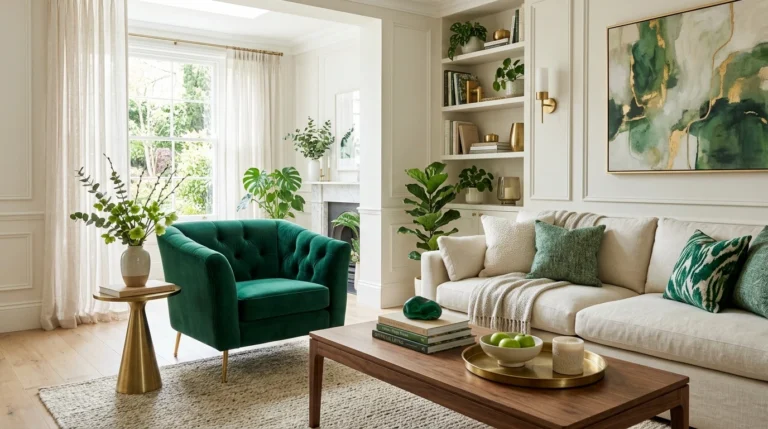
Sunroom Ideas: Practical, Beautiful Ways to Create a Brighter Room
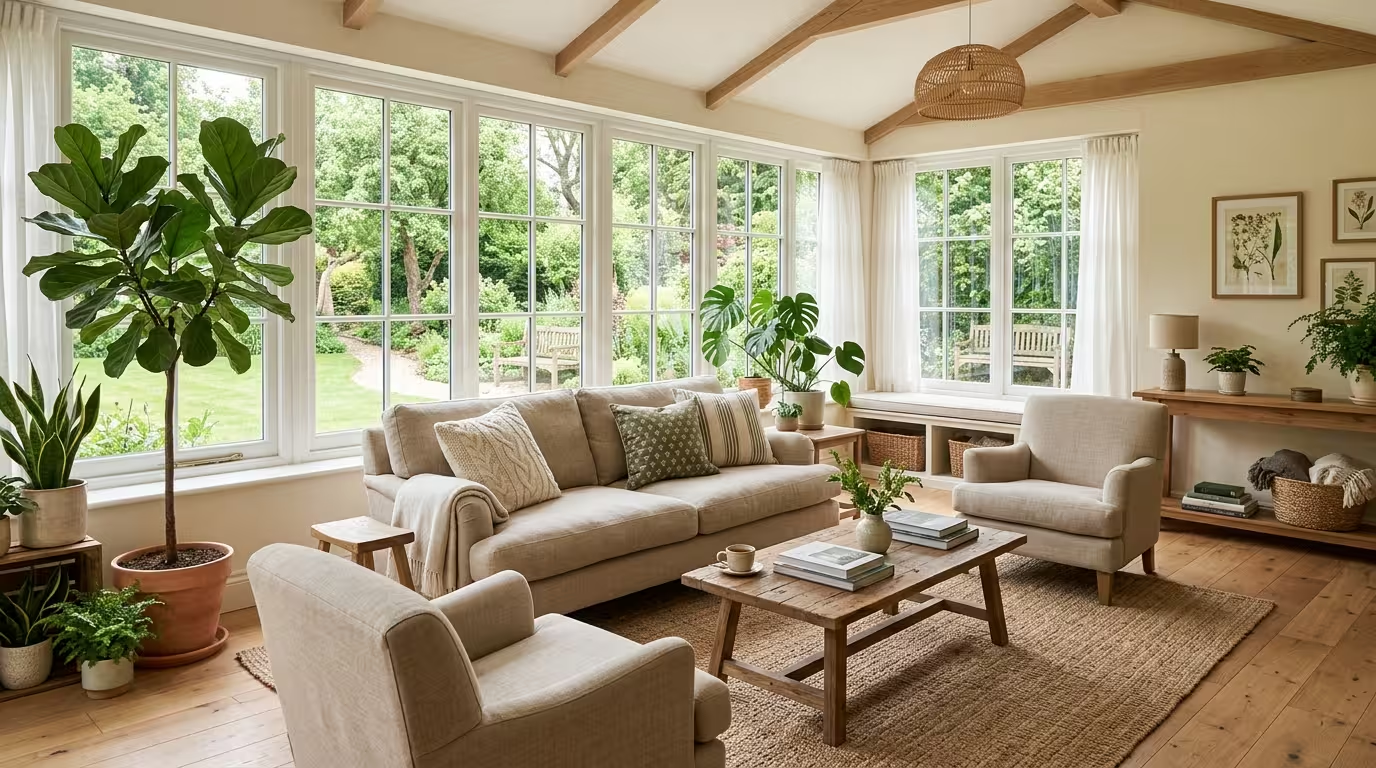
A sunroom has a quiet kind of magic. It catches the morning light, softens the view of the yard, and gives a home a place that feels relaxed without feeling disconnected. It can be where coffee tastes better, plants grow stronger, kids read on rainy afternoons, or guests naturally gather after dinner. The best sunroom ideas are not just about adding pretty chairs near big windows. They are about making the room comfortable, useful, and suited to the way your home actually works.
A good sunroom should feel like part of the house, not an afterthought. It needs the right layout, durable materials, comfortable seating, smart window treatments, and a clear purpose. Whether you have a small enclosed porch, a three-season room, a glass-heavy addition, or a full four-season space, the goal is the same: create a room that brings in natural light while still supporting daily life.
What Makes a Sunroom Different?
A sunroom is usually a glass-enclosed living area, porch, or room addition designed to bring in natural light and connect indoor living with outdoor views. It may also be called a Florida room, sun porch, solarium, garden room, enclosed porch, or four-season room, depending on the structure and climate. Southern Living describes a sunroom as a glass-enclosed porch or living room with large windows or glass walls, often on three sides, made for light, views, and bug-free indoor-outdoor living.
The main difference is comfort level. A three-season room is usually enjoyed in spring, summer, and fall, while a four-season room is insulated and climate-controlled for year-round use. This distinction matters before choosing furniture, flooring, heating, cooling, and window treatments. Many beautiful rooms fail because they were designed only for photos, not temperature swings, glare, moisture, and everyday wear.
Best Sunroom Ideas Start With a Clear Purpose
Before picking paint colors or furniture, decide what the room should do. A sunroom can be a lounge, breakfast nook, plant room, reading corner, home office, playroom, hobby space, dining area, or quiet retreat. The room becomes easier to design when one main function leads the plan.
For example, a coffee-and-reading room needs deep seating, side tables, soft lighting, and privacy shades. A dining sunroom needs an easy-clean floor, comfortable chairs, and enough room to pull out seating. A plant-focused space needs washable surfaces, sunlight-tolerant materials, and airflow. A family room needs stain-resistant fabrics, storage, durable flooring, and a layout that supports conversation.
One of the most useful sunroom ideas is to avoid turning the room into a catch-all space. If it becomes a place for extra furniture, random baskets, and seasonal storage, it loses its charm quickly. Give it one strong purpose, then let every design decision support that purpose.
Small Sunroom Ideas That Make the Room Feel Bigger
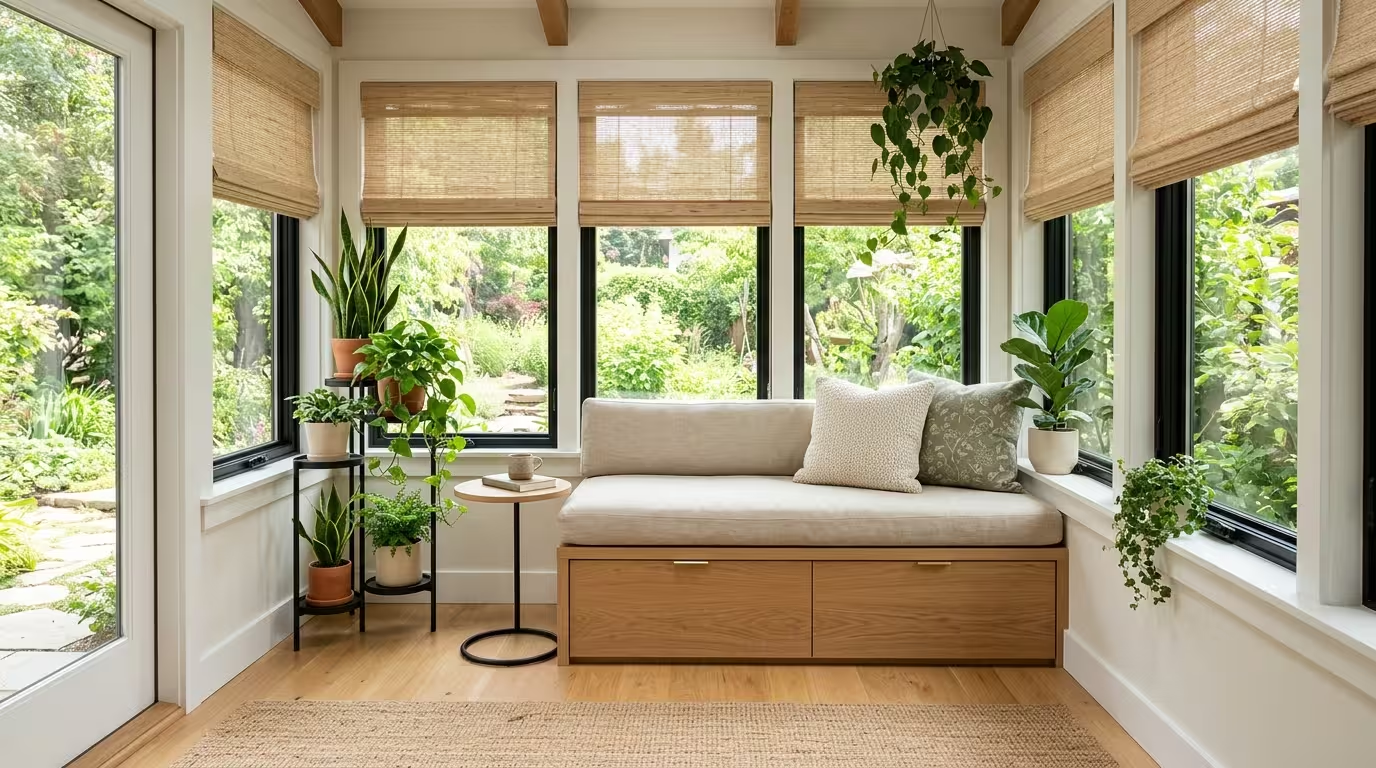
A small sunroom can be one of the most inviting spaces in the house when every inch is used well. The key is to keep the floor open, choose furniture with slim profiles, and use built-ins where possible. A window bench with storage underneath can replace several chairs while adding a cozy reading spot. A round bistro table works better than a large rectangular dining table in a narrow space.
Built-in seating is especially useful because it follows the walls and keeps circulation clear. The Spruce notes that built-in seating can maximize space in small sunrooms and accommodate more people than individual chairs.
Use vertical space with tall plants, wall sconces, narrow shelves, or a hanging chair if the ceiling can support it. Keep the color palette calm, but do not assume everything must be white. Soft green, warm beige, pale blue, clay, and muted gray can make the room feel personal while still reflecting light. These sunroom ideas work best when the furniture is scaled to the room instead of borrowed from a larger living area.
You can also borrow furniture, lighting, and color inspiration from our favorite designer living rooms.
Four-Season Sunroom Ideas for Year-Round Comfort
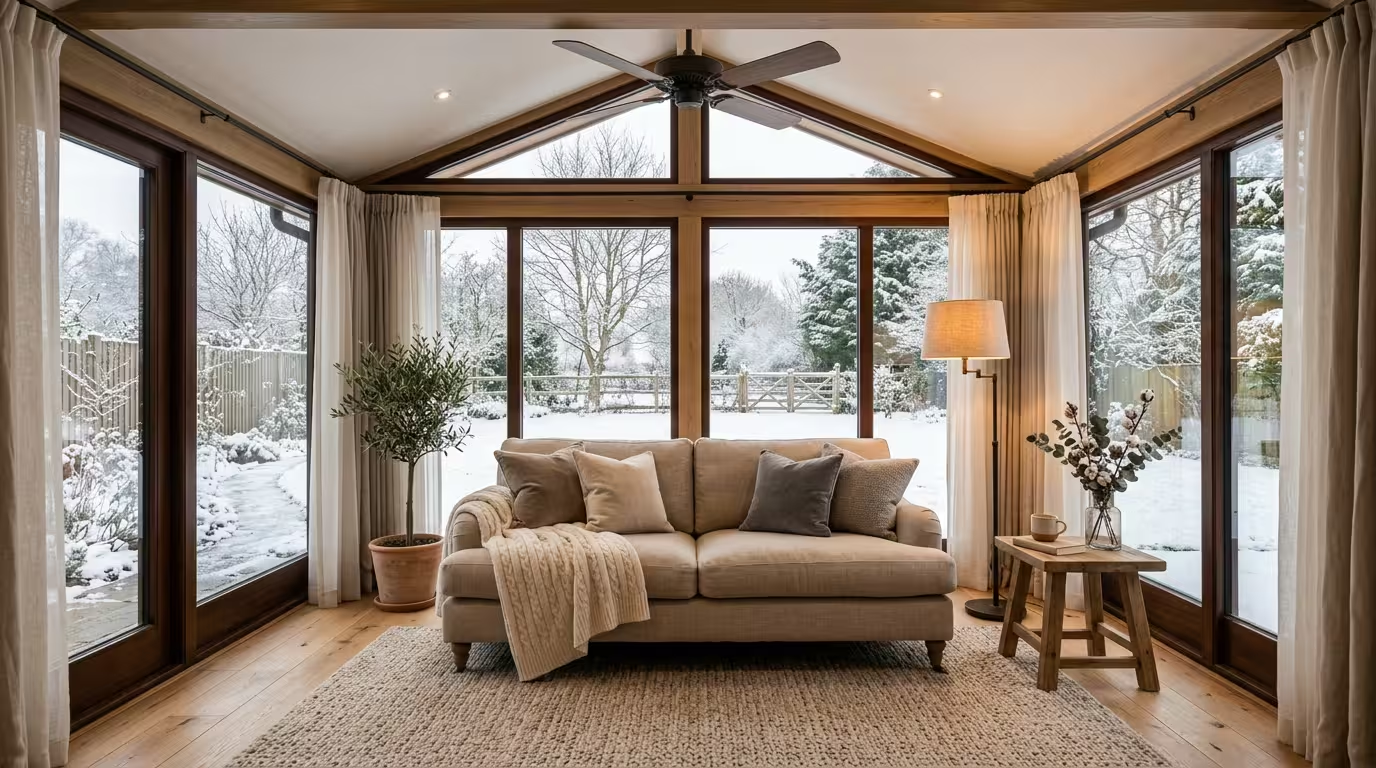
A four-season room should feel comfortable in January and July, not just during mild spring days. That means insulation, heating, cooling, quality windows, and proper ventilation matter as much as decor. The room may need a ductless mini-split, ceiling fan, insulated roof, thermal window treatments, and flooring that stays comfortable underfoot.
Window performance is especially important because sunrooms have more glass than standard rooms. ENERGY STAR says windows, doors, and skylights must meet U-Factor and, where applicable, Solar Heat Gain Coefficient requirements based on climate zone. U-Factor relates to heat transfer, while SHGC relates to how much solar heat passes through the glass.
The most reliable sunroom ideas for four-season spaces combine beauty with climate control. In cold regions, prioritize insulation and heat retention. In hot or humid regions, focus on solar heat control, ventilation, ceiling fans, and UV protection. In mixed climates, use flexible layers: shades, curtains, fans, washable rugs, and movable seating.
Three-Season Sunroom Ideas for Spring, Summer, and Fall
A three-season room can be charming, affordable, and flexible, but it needs realistic planning. Since it is usually less insulated than a four-season room, choose materials that can handle temperature shifts and humidity. Outdoor-rated furniture, washable cushions, ceramic tile, stone, sealed concrete, and indoor-outdoor rugs are practical choices.
Ceiling fans are useful in warmer months, while portable heaters may help during cool evenings if used safely and according to manufacturer instructions. Screens, shades, and cross-ventilation can make the space more comfortable without major renovation. Avoid delicate antiques, untreated wood, and fabrics that fade quickly if the room gets strong direct sunlight.
These sunroom ideas suit homeowners who want a relaxed seasonal retreat without turning the space into a fully finished addition. Treat it like a protected porch with style, not like a formal living room. That mindset keeps expectations realistic and helps the design last.
Sunroom Layout Ideas for Lounging
A lounging sunroom should invite people to sit down and stay awhile. Start with one anchor piece: a small sofa, loveseat, daybed, pair of armchairs, or sectional. Then build around it with a coffee table, side table, reading lamp, and a soft rug. The layout should face the best view when possible, but conversation matters too.
If the room is long and narrow, place a loveseat along one wall and two lightweight chairs across from it. If the room is square, float a pair of chairs around a round table. If the room is wide with windows on three sides, keep furniture low so it does not block the view. Swivel chairs are excellent because they can face the room, the garden, or the TV if one is included.
The best sunroom ideas for lounging avoid overcrowding. Let the windows breathe. A room filled with light does not need too many accessories. Texture can do the work: linen cushions, woven shades, rattan chairs, wood tables, ceramic lamps, and a few plants.
Before changing your layout, read our take on are open floor plans outdated to see what still works in modern homes.
Sunroom Dining Ideas for Everyday Meals
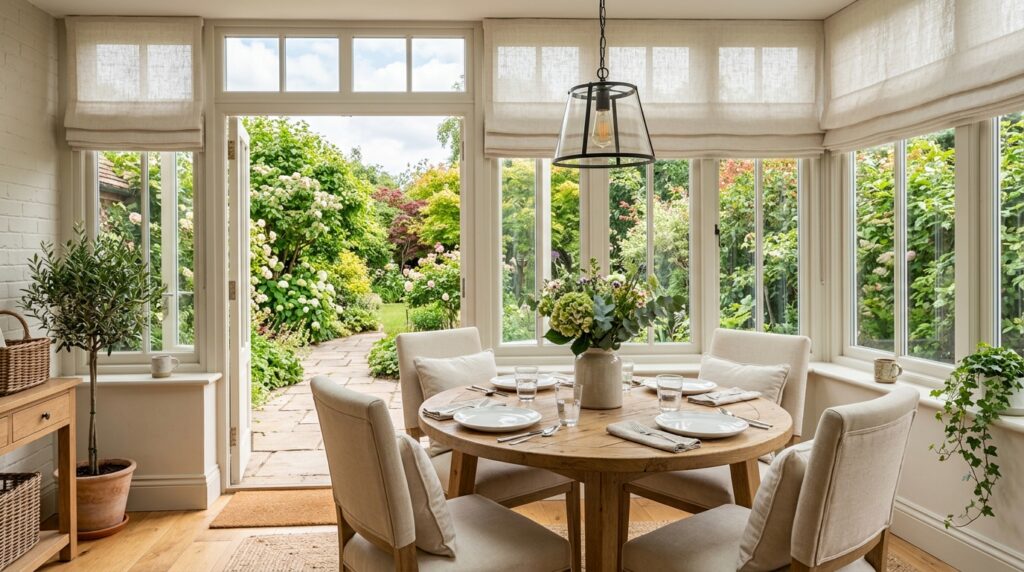
A dining sunroom can turn ordinary meals into a ritual. It works especially well in a kitchen, breakfast area, or family room. The design should make serving food easy, so keep a clear path from the kitchen and avoid rugs that catch chairs. A round table is friendly and space-saving, while a rectangular farmhouse table works well in larger rooms.
Choose chairs that are comfortable enough for long meals but durable enough for daily use. Performance fabric, wood, cane, wicker, and metal can all work depending on the room’s moisture level. Add a pendant light or chandelier if the ceiling allows it. If not, use wall sconces, rechargeable table lamps, or floor lamps.
Practical sunroom ideas for dining include washable seat cushions, Roman shades for glare control, and storage for placemats or serving pieces. If the space gets hot in the afternoon, use it mainly for breakfast or evening meals, then choose window coverings that keep midday sun under control.
Sunroom Office Ideas for a Better Workday
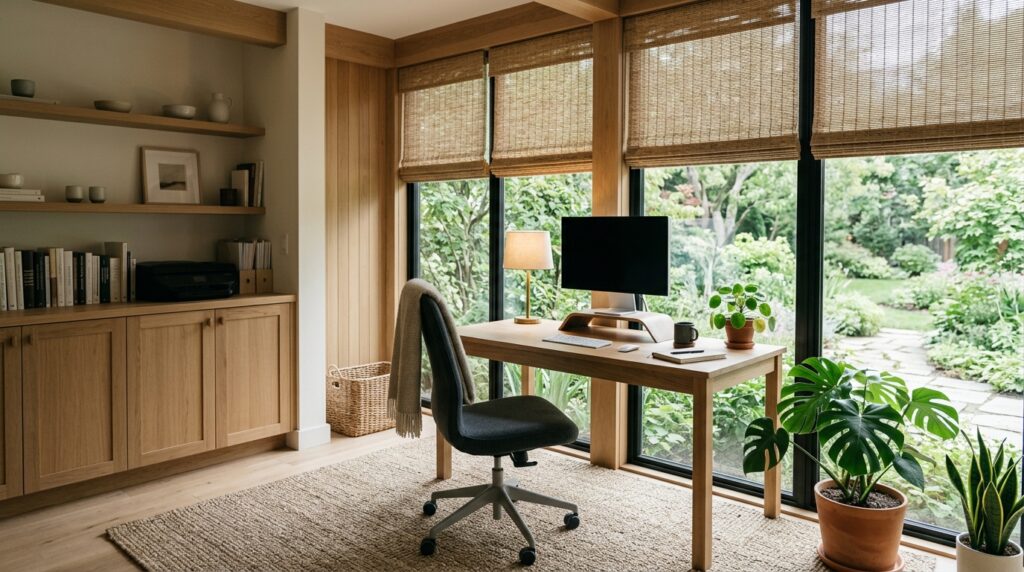
A sunroom office sounds dreamy, but it needs careful planning. Too much light can create screen glare, and too many windows can reduce privacy. Place the desk perpendicular to windows when possible instead of directly facing them. This gives you natural light without making the screen hard to see.
Use adjustable shades, a supportive chair, and a desk with closed storage. A woven shade or a lined Roman shade can soften the light during video calls. Add a rug to reduce echo, especially if the room has tile or wood floors. Plants can help the room feel calm, but keep the desk surface clear.
These sunroom ideas are ideal for remote work, writing, studying, or creative projects. The goal is not to make the space look like a corporate office. It should feel calm and focused, with enough practical support for real work.
Plant-Filled Sunroom Ideas for a Garden Feel
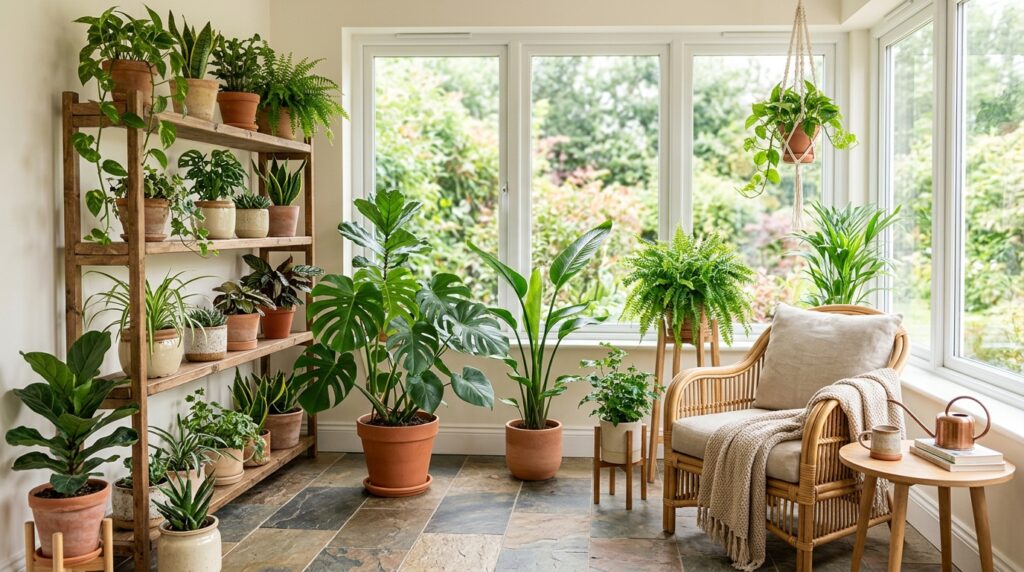
A sunroom is a natural home for plants, but not every plant wants the same light. South- and west-facing rooms can become hot and bright, while north-facing rooms are cooler and softer. Choose plants based on the actual light, not just the room name.
Succulents, citrus, hibiscus, and many herbs enjoy bright conditions. Ferns, pothos, peace lilies, and calatheas usually prefer indirect light. Use plant stands to create height and prevent the floor from feeling cluttered. Trays under pots protect the flooring, and washable surfaces make watering easier.
The strongest sunroom ideas for plants include airflow, grouped planters, moisture protection, and shade during harsh sun. Avoid placing delicate leaves directly against hot glass. Rotate plants occasionally so they grow evenly. A plant-filled sunroom should feel lush, but it should still leave room for people to sit and move comfortably.
Window Treatment Ideas for Light, Heat, and Privacy
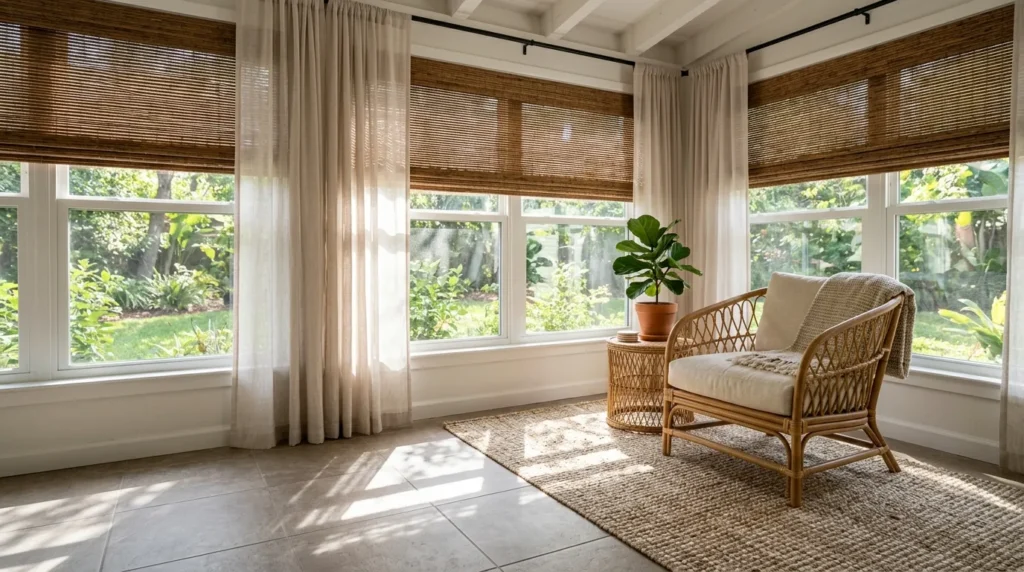
Window treatments are not just decoration in a sunroom. They control glare, privacy, heat, and mood. Because sunrooms have large areas of glass, uncovered windows can make the room too bright, too hot, or too exposed at night.
Roman shades add softness and work well in small rooms. Woven wood shades bring texture and filter light beautifully. Floor-length curtains make the room feel more finished, especially if the sunroom connects to a living room. Solar shades can reduce glare while keeping the view more open. Layering shades with curtains gives the most flexibility.
Smart sunroom ideas always include a plan for the strongest sun of the day. East-facing rooms may need morning glare control. South-facing rooms may need year-round solar management. West-facing rooms often need serious afternoon heat control. The right treatment can make the difference between a room that is used daily and one that is avoided.
Flooring Ideas That Can Handle Real Life
Sunroom floors need to handle sunlight, moisture, foot traffic, plants, pets, and outdoor dirt. Tile is one of the most practical choices because it is durable, easy to clean, and available in many styles. Porcelain tile can mimic stone, wood, or concrete while resisting wear. Natural stone looks beautiful but may need sealing.
Luxury vinyl plank can work in some enclosed, climate-controlled spaces, but check the product rating for heat and direct sunlight. Engineered wood may work in a four-season room with stable humidity, but it is not ideal for damp or unconditioned spaces. Painted concrete is simple, durable, and budget-friendly when done properly.
A washable indoor-outdoor rug adds warmth without creating maintenance problems. The best sunroom ideas pair hard flooring with soft layers, so the room feels comfortable but stays easy to clean.
Furniture and Fabric Ideas for Durability
Sunrooms blur the line between indoors and outdoors, so furniture should be chosen carefully. Direct sun can fade fabric, dry out wood, and make some materials brittle. Indoor-outdoor cushions, performance upholstery, washable slipcovers, powder-coated metal, teak, rattan, cane, and wicker all have a place, depending on how protected the room is.
For a polished look, mix one refined piece with practical materials. A linen-look performance sofa, a vintage wood table, woven chairs, and ceramic lamps can feel layered without being fragile. Avoid filling the room entirely with patio furniture unless the space is truly seasonal. The goal is comfort with resilience.
Choose lighter pieces if you like changing layouts. Better Homes & Gardens notes that lighter-weight furnishings can make seasonal seating changes easier.
Color Ideas for a Calm, Bright Room
Color in a sunroom should respond to the light. White walls are classic because they bounce light around, but warm whites usually feel better than stark whites. Soft green connects the room to the garden. Pale blue gives a porch-like feeling. Beige, cream, and taupe create warmth. Terracotta and clay tones work well with wood, wicker, and plants.
Dark colors can also work, especially in small sunrooms where a cozy mood is desired. Deep green, charcoal, navy, or chocolate brown can make a glass-heavy room feel grounded. The trick is balance: pair dark walls with natural textures, light cushions, warm lamps, and greenery.
One of the more overlooked sunroom ideas is painting the ceiling. A soft blue ceiling can feel airy, while a wood ceiling adds warmth. If the ceiling is low, keep it light. If it is vaulted, beams or paneling can add character.
Budget-Friendly Sunroom Ideas
Not every sunroom needs a major remodel. A strong refresh can happen with paint, shades, rugs, plants, furniture rearrangement, and better lighting. Start by removing anything that does not support the room’s purpose. Then invest in the pieces that improve comfort: seating, window coverings, airflow, and flooring layers.
For larger projects, costs vary widely by size, structure, location, labor, foundation, insulation, HVAC, and materials. Angi’s 2026 cost guide lists many sunroom additions between $22,000 and $75,000, with an average around $47,000, while noting that costs depend heavily on room type and project scope.
If the budget is limited, focus on comfort before decoration. A ceiling fan, glare-control shades, a washable rug, and comfortable seating will improve daily use more than decorative objects. The best sunroom ideas make the room functional first, then beautiful.
Sunroom Ideas by Climate
Homes in the United States face very different sunroom challenges. A room in Arizona needs shade, heat control, and sun-resistant materials. A room in Minnesota needs insulation, heat retention, and winter comfort. A coastal room needs moisture-resistant finishes and corrosion-conscious hardware. A Southern room may need fans, screens, and humidity-friendly materials.
ENERGY STAR advises choosing windows, doors, and skylights suited to the climate zone and considering U-Factor, SHGC, and window orientation when buying new windows.
This is where many generic designs fail. Climate should guide window choices, shades, flooring, upholstery, and HVAC. Good design is not only about how the room looks in photos. It is about how it feels at 3 p.m. in August and 8 a.m. in January.
Family-Friendly and Pet-Friendly Sunroom Ideas
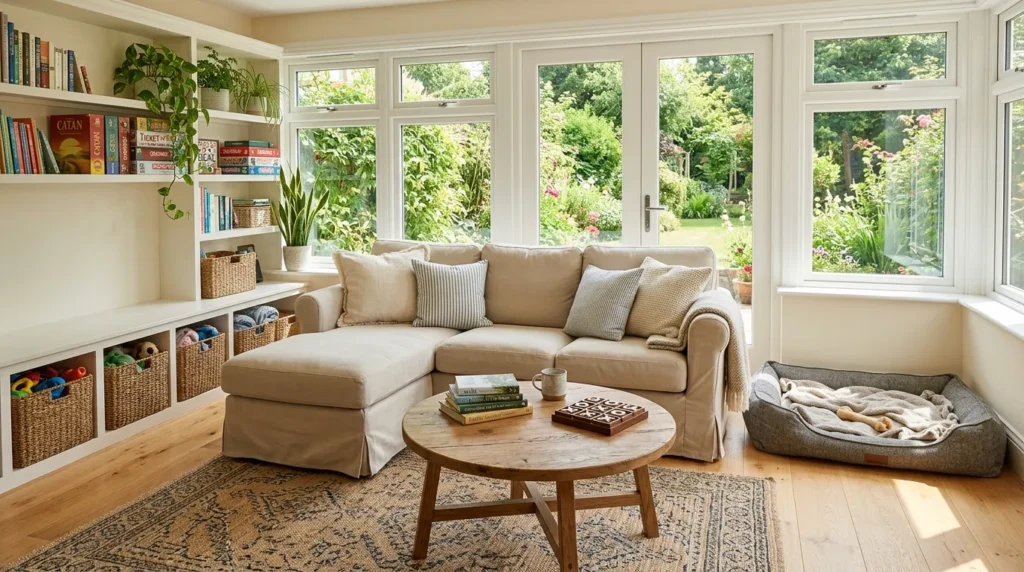
A family sunroom should be easy to live in. Choose rounded tables, washable rugs, durable upholstery, storage baskets, and furniture that can handle snacks, paws, toys, and muddy shoes. Avoid fragile glass tables if kids or pets use the space often. Use cordless window treatments for child safety and cleaner lines.
Create zones if the room is large enough. A bench can hold shoes and dog leashes. A cabinet can store games, books, sunscreen, or gardening tools. A washable throw can protect a favorite chair from pets. If the room opens to the backyard, add a small landing area for wiping feet.
These sunroom ideas help the room stay beautiful without becoming high-maintenance. A sunroom should invite real life, not make everyone nervous.
Lighting Ideas for Evening Use
Many sunrooms are lovely during the day but forgotten at night. Lighting fixes that. Use layered lighting instead of one harsh ceiling fixture. A pendant light over a dining table, sconces near a reading chair, lamps on side tables, and small accent lights near plants can make the room glow after sunset.
Warm bulbs usually feel better than cool bulbs in a sunroom because they balance the glass and outdoor darkness. Dimmers help change the mood. If the room has no hardwired lighting, use plug-in sconces, rechargeable lamps, or floor lamps.
A room designed only for daylight gives you half the value. Add evening lighting, and the sunroom becomes useful for dinner, reading, quiet talks, and weekend gatherings.
For more inspiration on comfortable gathering spaces, explore our guide to designer family rooms.
Mistakes to Avoid When Designing a Sunroom
The first mistake is ignoring heat and glare. A room can look perfect and still be uncomfortable if the sun is too strong. The second mistake is using indoor-only materials in a space that behaves more like a porch. The third mistake is choosing furniture that is too large.
Another common issue is forgetting storage. Even a simple cabinet or bench can keep the room from becoming cluttered. Also, avoid blocking windows with tall furniture unless privacy requires it. The view is part of the room’s value.
Finally, do not skip local planning. Structural changes, electrical work, HVAC connections, foundations, and additions may require permits or inspections depending on your location and project scope. Budget guides commonly include building permits as a cost factor, and requirements vary by local jurisdiction.
Conclusion:
The best sunroom ideas balance beauty, comfort, and real-life use. A successful sunroom is not just a bright room with chairs. It is a carefully planned space that respects light, climate, layout, flooring, furniture, and daily routines. Whether you want a quiet reading corner, a plant-filled retreat, a family lounge, or a dining space with garden views, the room should support how you live.
Start with purpose. Choose materials that match the seasonality of the space. Control glare and heat. Add comfortable seating, durable flooring, layered lighting, and practical storage. When these elements work together, your sunroom becomes more than an extra room. It becomes the place everyone naturally wants to spend time.
Frequently Asked Questions:
1. What is the best use for a sunroom?
The best use depends on your lifestyle. Many homeowners use a sunroom as a reading room, breakfast nook, family lounge, plant room, home office, or casual dining space. Choose one main purpose first, then design the layout around it.
2. What furniture works best in a sunroom?
Performance fabric, wicker, rattan, teak, powder-coated metal, washable slipcovers, and indoor-outdoor cushions work well. For four-season rooms, you can use more traditional indoor furniture, but it should still resist fading from direct sunlight.
3. How do I make a small sunroom feel bigger?
Use slim furniture, built-in benches, light window treatments, round tables, vertical plant stands, and clear walking paths. Avoid oversized sofas and heavy cabinets that block windows or make the room feel crowded.
4. What flooring is best for a sunroom?
Porcelain tile, ceramic tile, sealed concrete, stone, and some indoor-outdoor flooring options are practical choices. In climate-controlled rooms, engineered wood or luxury vinyl may work if rated for sunlight and temperature changes.
5. Can a sunroom be used all year?
A four-season sunroom can usually be used year-round if it has insulation, proper windows, heating, cooling, and ventilation. A three-season room is typically more comfortable in spring, summer, and fall.
6. How do I keep a sunroom from getting too hot?
Use solar shades, lined curtains, ceiling fans, ventilation, low-SHGC glass where suitable, and light-colored materials. In hot climates, afternoon sun control is especially important.
7. Are plants good for a sunroom?
Yes, plants can thrive in a sunroom when matched to the light level. Bright rooms suit succulents, citrus, herbs, and hibiscus, while softer-light rooms are better for ferns, pothos, peace lilies, and other indirect-light plants.