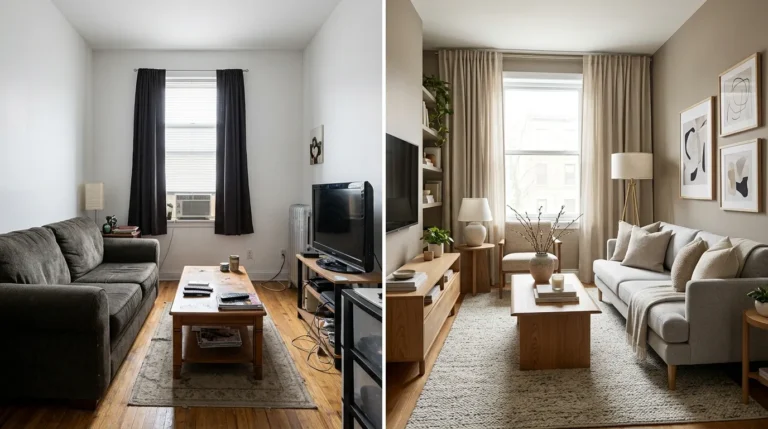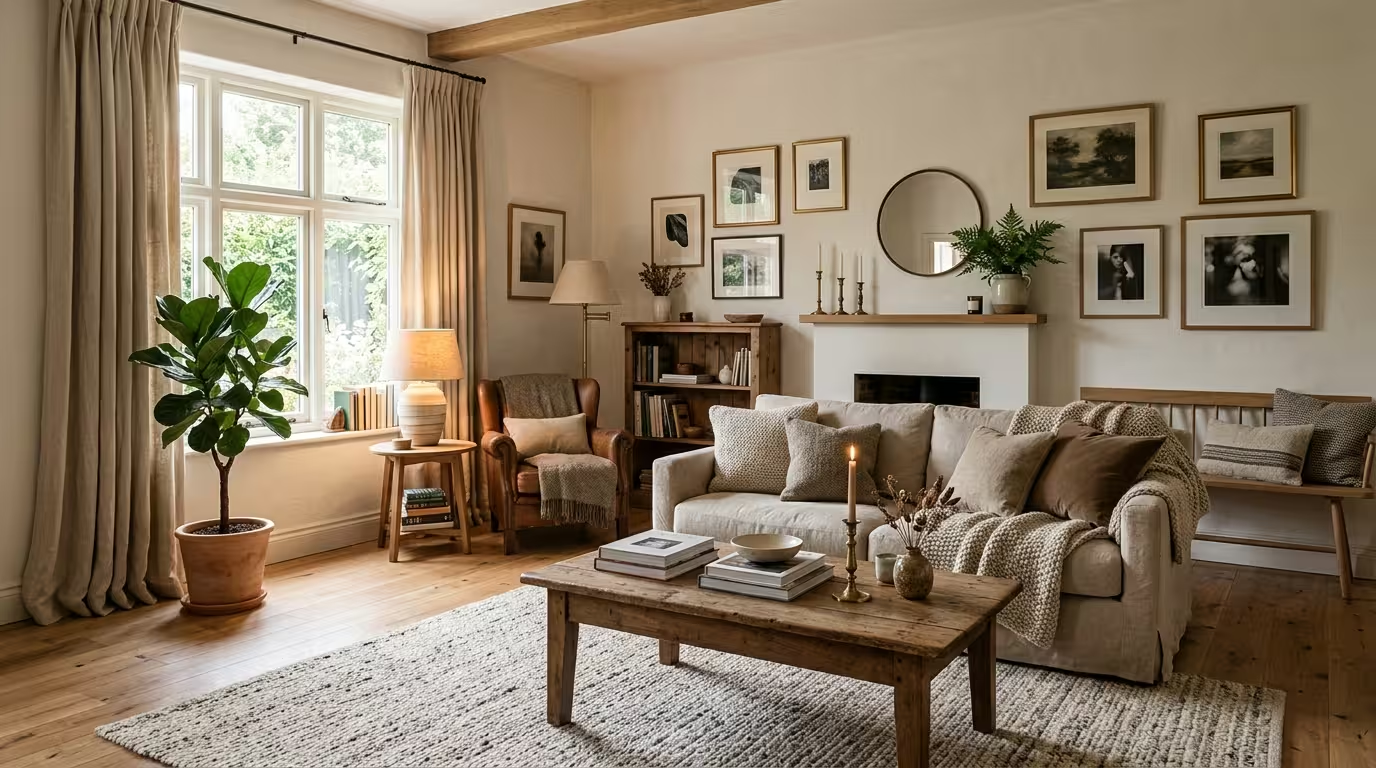
Top 24 Living Room Decor Drawing Ideas for Stylish, Practical Spaces
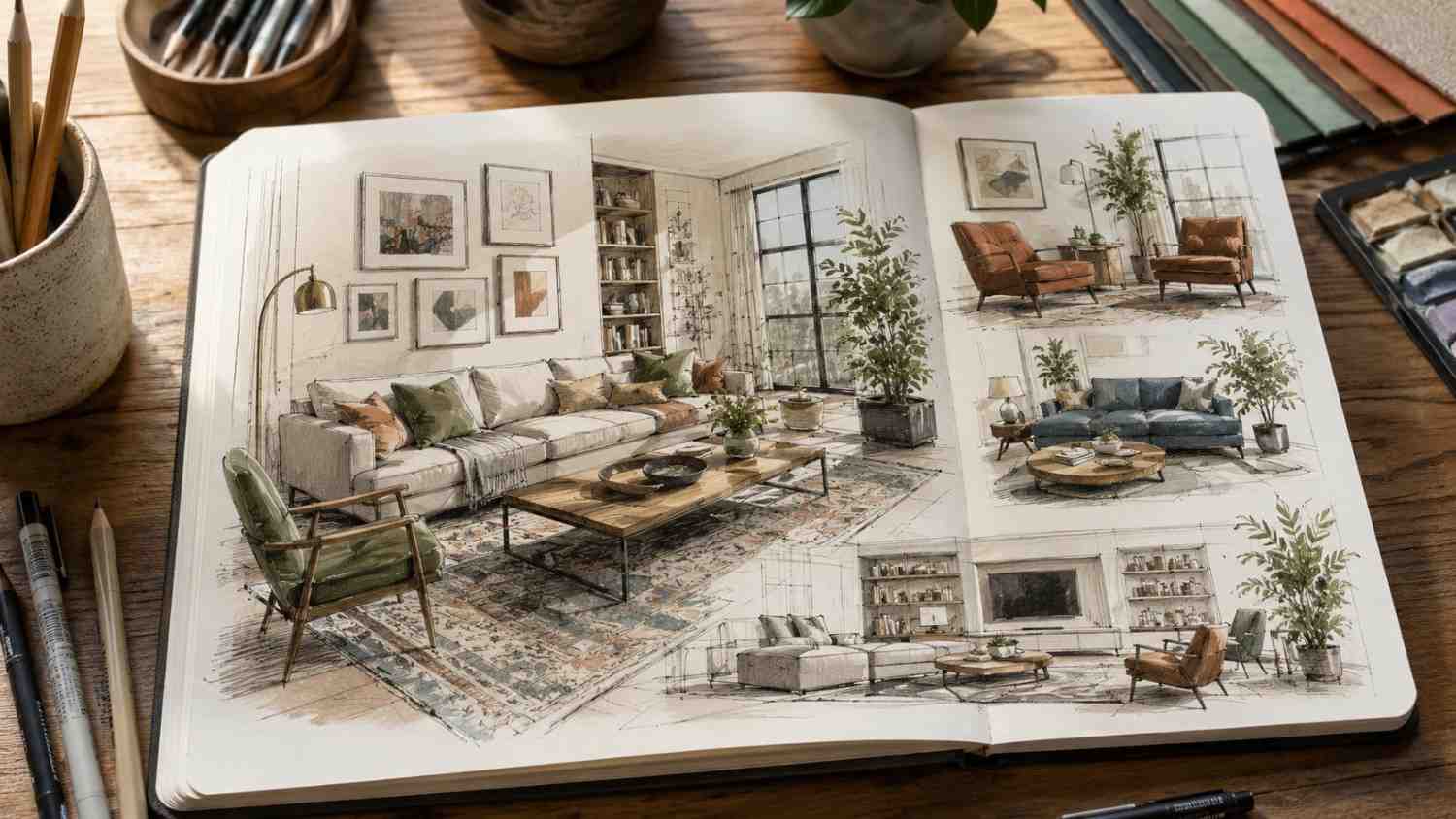
A blank sheet can show how a finished room may look before you move a sofa, buy a rug, or paint a wall. These 24 living room decor drawing ideas help homeowners, students, and hobby artists turn rough thoughts into clear visual plans. You do not need advanced art skills. Start with boxes, straight lines, and basic shapes. Then add furniture, lighting, textiles, plants, and personal objects. Each concept below explains what to draw and which details make the scene believable. Keep a pencil, ruler, eraser, and colored pencils nearby. For wider home-style references, outinteriors can help you compare coordinated indoor and outdoor looks.
How to Start a Living Room Decor Drawing
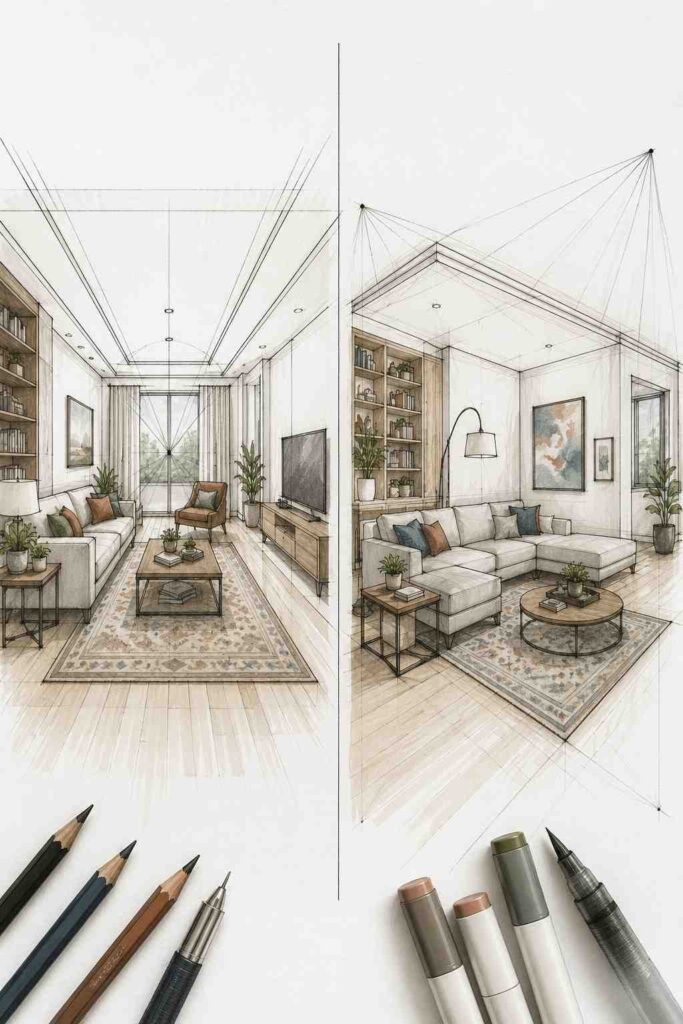
Draw the room’s shell before choosing a style. Mark the walls, doors, windows, ceiling line, and main walking paths. Use one-point perspective for a straight-on view or two-point perspective when showing a corner. Place the largest item, usually the sofa, and build the layout around it. Keep furniture sizes consistent so the room feels realistic. Add shadows only after the composition works. These living room decor drawing ideas become easier when you test two or three thumbnail sketches before completing a detailed version.
24 Living Room Decor Drawing Ideas
1. One-Point Perspective Lounge and Corner Perspective Room
Place one vanishing point near the center of the back wall. Draw the sofa, rug, table, and ceiling lines moving toward it. This creates an orderly, beginner-friendly room. For the second sketch, show two walls meeting in a corner and direct horizontal edges toward two vanishing points. Add an L-shaped sectional, corner lamp, and framed art. These two approaches teach depth while giving you flexible foundations for modern, classic, or minimalist decor.
2. Small Apartment Layout and Open-Concept Plan
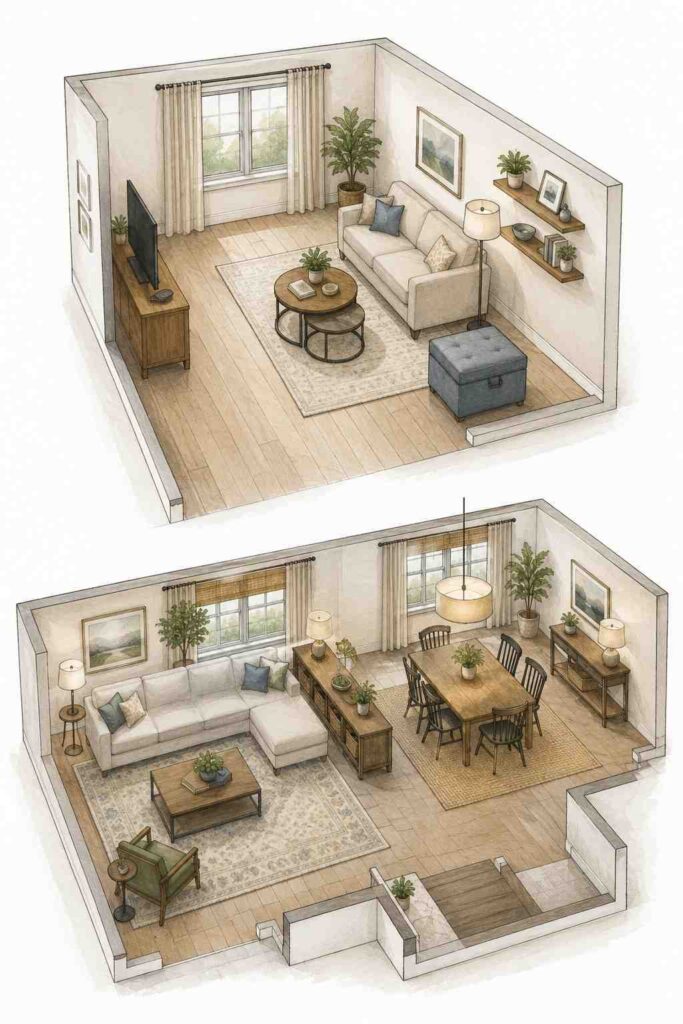
Draw a compact room with a loveseat, nesting tables, wall shelves, and a narrow media console. Leave visible floor space so the result does not feel crowded. Next, sketch an open plan joining the lounge with a dining or kitchen area. Use a rug, pendant light, or sofa back to define each zone without adding walls. Mark walking routes with faint arrows during planning, then erase them. Both room decor sketches balance storage, comfort, and movement.
3. Conversation Seating and TV Wall Arrangement
Sketch two sofas or a sofa with two chairs facing inward around a central table. Angle the seats slightly to create an inviting conversation zone. Add reachable side tables and keep the middle open. For a media-focused version, draw a simple TV wall with low cabinetry, hidden cords, and balanced shelves. Avoid surrounding the screen with many tiny accessories. A tall plant or floor lamp can soften one side while preserving a clean, useful composition.
4. Fireplace Focal Point and Gallery Wall Scene
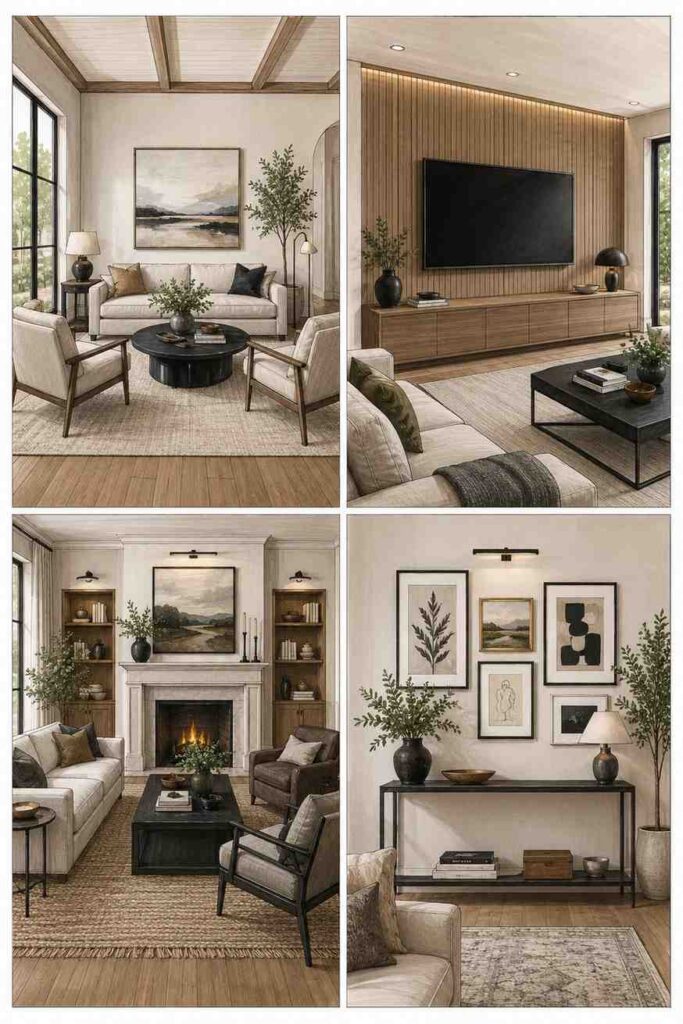
Create a fireplace as the visual anchor, then arrange seating so the eye moves toward it. Add a mantel, artwork, firewood basket, and textured rug without blocking the hearth. For the gallery wall, begin with one large frame and organize smaller rectangles around it. Keep the gaps even while varying frame sizes. A slim console below the display grounds the arrangement. These living room decor drawing ideas show how one strong feature can organize the whole room.
5. Library Living Room and Window-Seat Retreat
Draw floor-to-ceiling shelves containing books, boxes, ceramics, and plants. Use careful vertical lines, then break the repetition with a ladder or reading chair. In the window-seat scene, create a deep sill with a cushioned bench, drawers below, and curtains framing the opening. Add a floor lamp and side table to complete the corner. These concepts make a room feel personal because they highlight hobbies, collections, and everyday routines rather than generic furniture alone.
6. Scandinavian Calm and Mid-Century Character
For a Scandinavian sketch, use a pale background, slim wooden legs, soft textiles, and limited decoration. Draw a light sofa, a rounded table, a woven rug, and a simple pendant. Add black accents sparingly. The mid-century version can feature a low sofa, tapered legs, geometric artwork, and a starburst clock. Use warm wood with muted orange, olive, or mustard. Both layouts stay uncluttered, yet their furniture shapes and color choices create clearly different moods.
7. Japandi Balance and Layered Bohemian Room
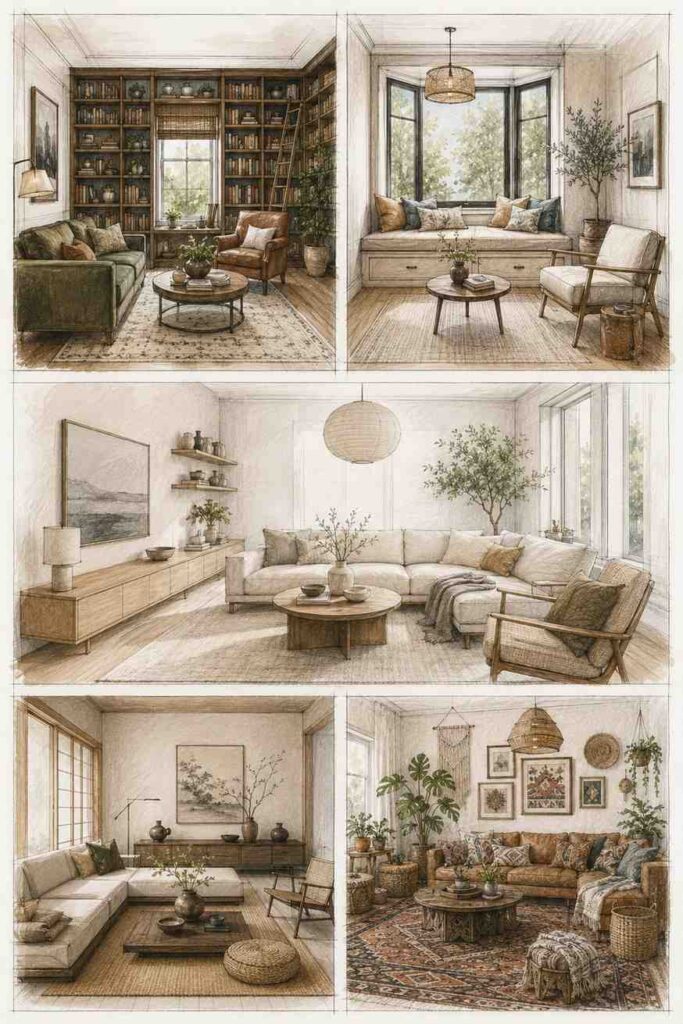
Combine Japanese restraint with Scandinavian warmth in a Japandi plan. Draw low furniture, natural wood, handmade pottery, and one sculptural branch. Leave generous blank space around objects. For the bohemian room, layer a patterned rug, floor cushions, baskets, plants, and mixed wall art. Repeat two or three colors to keep everything connected. For related handmade accents, garden art diy can inspire organic shapes, painted pots, and plant-focused decorative details that also work indoors.
8. Modern Farmhouse and Industrial Loft
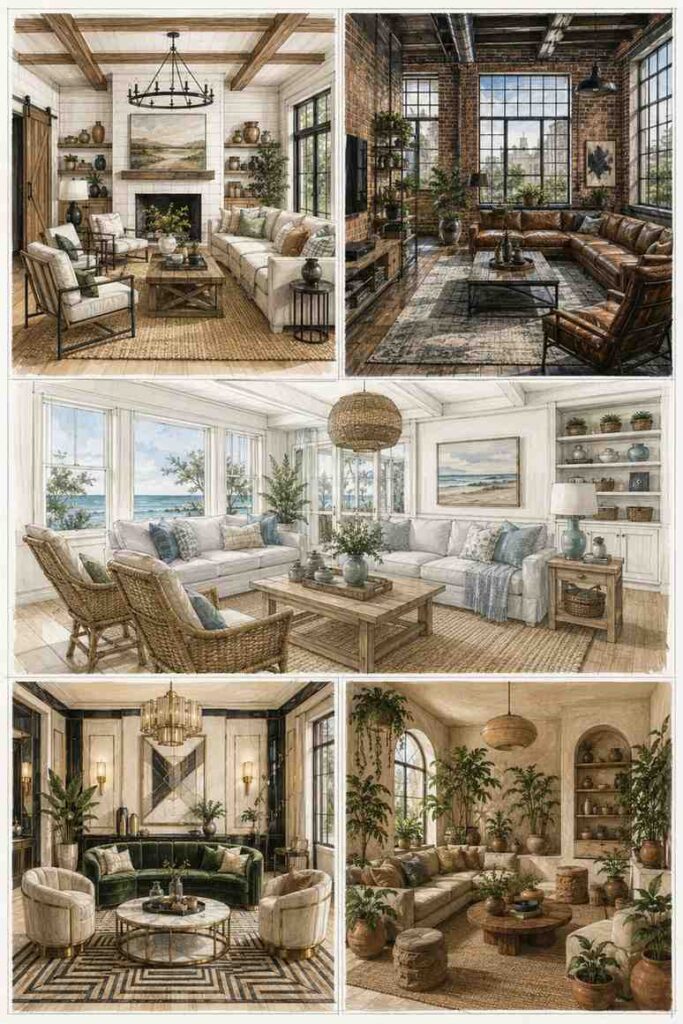
Sketch a farmhouse setting with a comfortable sofa, wood table, paneled wall, checked cushion, and black metal lighting. Keep the palette soft, so rustic details do not feel overly themed. For the industrial loft, draw exposed brick, tall windows, metal frames, leather seating, and visible beams. Use heavier pencil shading on structural features and lighter shading on fabric. These living room decor drawing ideas share natural textures, but one feels familiar while the other appears sharper and more urban.
9. Coastal Light and Art Deco Glamour
In a coastal drawing, show large windows, airy curtains, pale upholstery, woven materials, and restrained blue accents. Texture and light can carry the theme without obvious nautical symbols. For Art Deco, use symmetry, stepped shapes, curved seating, bold borders, and metallic details. A sunburst mirror or geometric rug makes the style easy to recognize. Apply stronger contrast in the glamorous sketch and softer tonal changes in the coastal scene to emphasize their different atmospheres.
10. Monochrome Texture Study and Earth-Tone Plant Room
Build a monochrome room using black, white, gray, or several shades of one color. Since the palette is limited, show contrast through velvet, wood grain, glass, woven fabric, and matte surfaces. Next, create an earth-tone space with clay, sand, olive, and brown. Draw plants at different heights and add one stone or wood feature for visual weight. These plans improve your ability to communicate texture and depth without depending on many bright colors or decorative objects.
11. Family-Friendly Space and Pet-Friendly Layout
Plan a family room with rounded tables, closed storage, durable upholstery, and an open play area. A wide rug can unite the seating while leaving room for movement. For a pet-friendly version, sketch easy-care flooring, a toy basket, a washable throw, and a discreet bed beside the sofa. Keep fragile objects on higher shelves and maintain a clear route between doors. Practical living room decor drawing ideas should explain how people and animals will use the space, not only how it looks.
12. Living Room, Home Office and Seasonal Refresh Sketch
For a multifunctional room, add a slim desk behind the sofa or place it inside a shelving wall. Show task lighting, a compact chair, and storage that hides work supplies after hours. The final concept uses one base drawing for several seasonal versions. Change cushions, flowers, art, throws, and tabletop decor without redrawing the furniture. For an autumn gathering, readers can connect this plan with 22 Halloween party decorations for coordinated mantel, wall, table, and entryway details.
Details That Make Decor Drawings Look Finished
Refine the room in three layers: structure, furnishings, and accents. Structure includes walls, windows, floors, and built-ins. Furnishings cover seating, tables, rugs, cabinets, and lighting. Accents include art, pillows, plants, and books. Vary line weight so nearby objects look darker than distant ones. Add shadows in one consistent direction, and repeat accent colors across the page. Strong living room decor drawing ideas do not require perfect realism. They communicate proportion, function, atmosphere, and a clear reason for each visible item.
Common Mistakes to Avoid
Do not begin with accessories before checking the floor plan. Small decor cannot rescue furniture that blocks a doorway or overwhelms the room. Avoid drawing every object with the same outline thickness because the scene will look flat. Do not mix unrelated styles unless one color, material, or shape connects them. Keep perspective lines consistent on rugs, tables, shelves, and ceiling details. Finally, leave some walls and corners open. Space gives important features room to breathe and makes the design easier to understand.
Conclusion
The best room sketch is not always the most detailed. It is the one that helps you make a confident decision. Use these 24 living room decor drawing ideas to test furniture placement, compare styles, study color, and solve practical problems before changing your home. Begin with simple room shapes, establish perspective, place the largest furniture, and add decor in controlled layers. Save every version, including imperfect drafts. They show how your plan developed and may reveal solutions that disappear from a highly polished final drawing.
Frequently Asked Questions
What tools are best for living room decor drawing ideas?
A pencil, eraser, ruler, sketchbook, and colored pencils are enough for most beginners. Graph paper helps with scale, while tracing paper allows you to test furniture arrangements without redrawing the room shell.
Do I need to understand perspective?
Basic perspective helps, but you can begin with a floor plan or a flat front view. One-point perspective is usually the easiest way to show a complete room with believable depth.
How can I draw furniture in proportion?
Choose a simple scale and use it consistently. Measure the real room and major furniture first, then convert those measurements into smaller units on paper. Compare each new object with the sofa or rug.
Should I add color to the sketch?
Color is optional, but it helps compare palettes and clarify materials. Begin with light layers, repeat accent colors in several areas, and keep shadows consistent so the page does not appear patchy.
How can a small room look larger in a drawing?
Show open walking paths, correctly scaled furniture, visible flooring, and tall storage close to walls. A restrained palette and fewer visual interruptions can also make the composition feel more spacious.
Can I create these sketches digitally?
Yes. Digital tools make it easy to duplicate layouts, test colors, resize furniture, and correct perspective. A quick pencil thumbnail, however, is often faster during the earliest planning stage.
How often should I practice drawing living room decor ideas?
Complete one or two small sketches each week. Focus on a different skill each time, such as perspective, furniture scale, shading, color coordination, or arranging a clear focal point.