Tacky Small Living Room Decor Mistakes: Designer Advice: How to Make a Compact Space Feel Polished
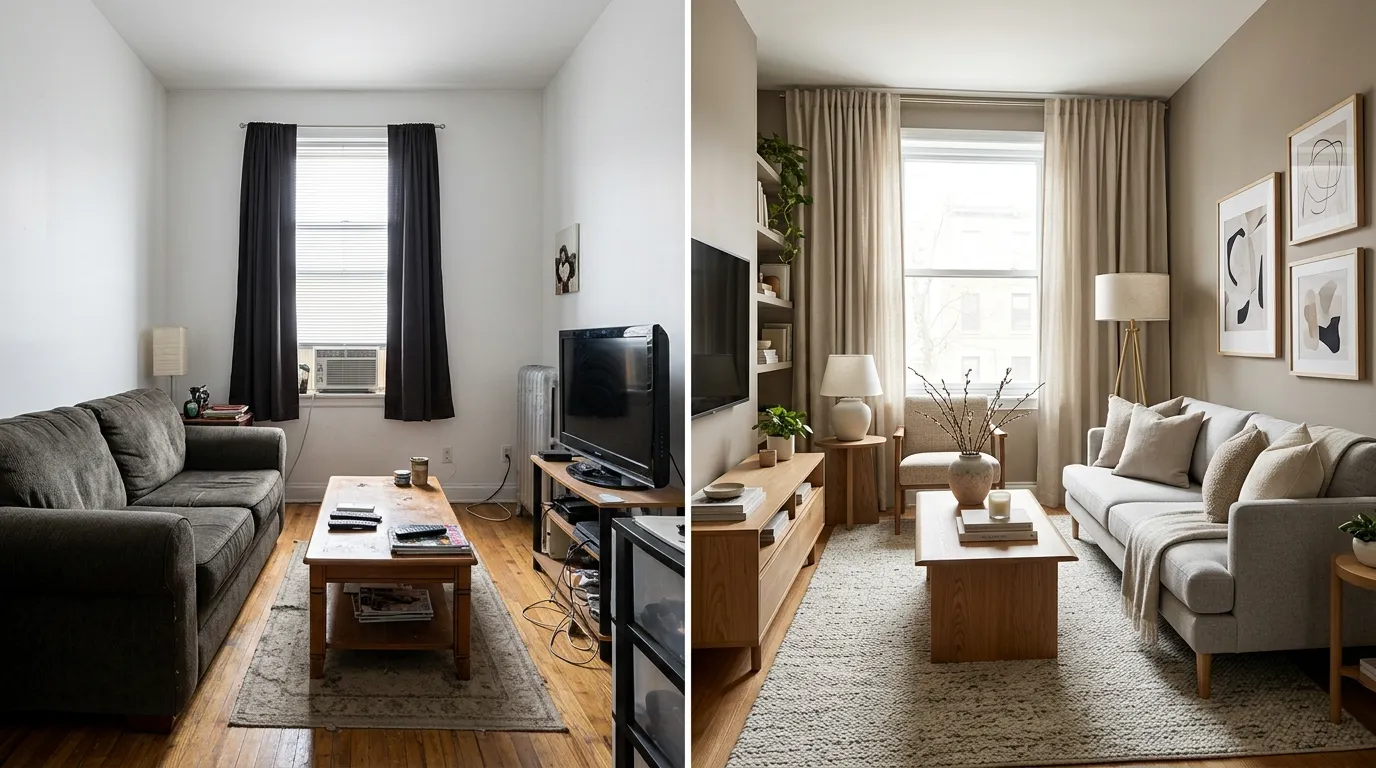
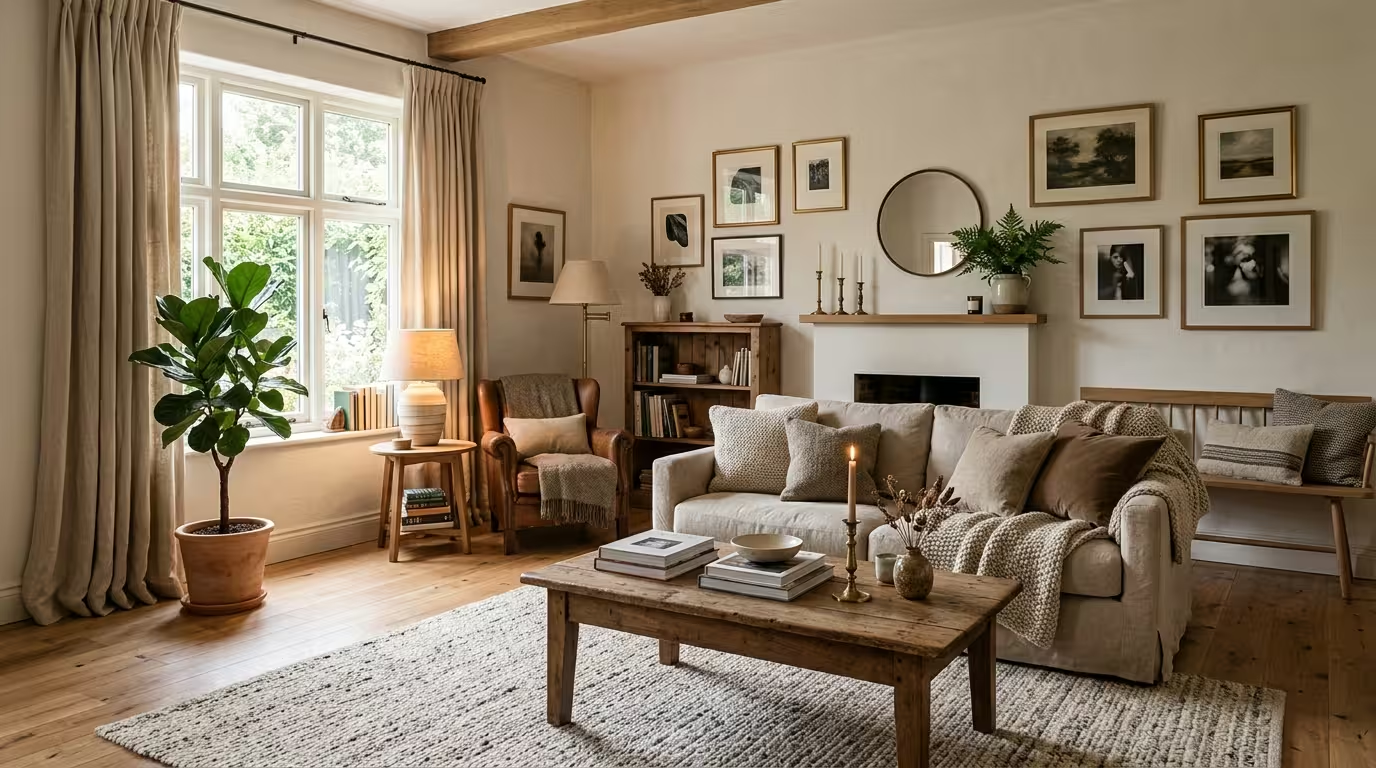
Small living rooms can be charming, warm, and practical, but they are also easy to overwork. One wrong rug, one bulky sofa, or one bright ceiling light can make the whole room feel cramped and unfinished. That is why tacky small living room decor mistakes designer advice matters: it helps you see the room as a whole instead of judging each item alone.
The goal is not to create a perfect showroom. A good small living room should feel lived-in, comfortable, and personal. It needs a clear layout, proper lighting, and furniture that fits the way you actually relax. This guide explains the common mistakes that make a compact space look cheaper than it is, plus practical fixes you can use without starting from zero.
Why Small Living Rooms Look Tacky Faster Than Larger Rooms
A large room can hide a few weak choices. A small room cannot. Every item sits closer to the eye, so scale, color, lighting, and clutter feel more obvious. A thin rug can make the seating area feel disconnected, while a mismatched bulb can flatten wall colors and fabrics.
This is where tacky small living room decor mistakes designer advice becomes useful. Designers often look at the relationship between objects, not just the objects themselves. A sofa may be beautiful, but if it blocks the walkway, it becomes a problem. A gallery wall may be stylish, but if every frame is tiny and scattered, it feels chaotic. The best fixes usually come from editing, scaling, and arranging what you already own.
Mistake 1: Choosing Furniture That Is Too Big or Too Small
The most common mistake is poor scale. A deep sectional can swallow a compact living room, while a tiny loveseat and miniature tables can make the room feel temporary. Neither extreme creates comfort. The better approach is to measure the room, mark the furniture footprint with painter’s tape, and leave a clear walking path before buying anything large.
Good tacky small living room decor mistakes, designer advice starts with proportion. Choose a sofa that fits the longest practical wall, but avoid thick arms or backs that are too high. Look for raised legs, clean lines, and a seat depth that suits everyday lounging. In a narrow room, two smaller chairs may work better than one oversized sectional.
The Fix: Use Fewer Pieces With Better Presence
Small does not mean every item must be small. In fact, too many undersized pieces can make a room feel busy. Instead, pick fewer pieces with a stronger purpose: a comfortable sofa, one useful accent chair, a storage coffee table, and a slim side table. This gives the room structure without crowding corners.
A balanced room usually includes a mix of visual weight. Pair a soft sofa with a lighter chair. Add a coffee table that has storage but still leaves space around it. This kind of tacky small living room decor mistakes designer advice, keeping the space flexible instead of forcing it to behave like a larger room.
Mistake 2: Using a Rug That Is Too Small
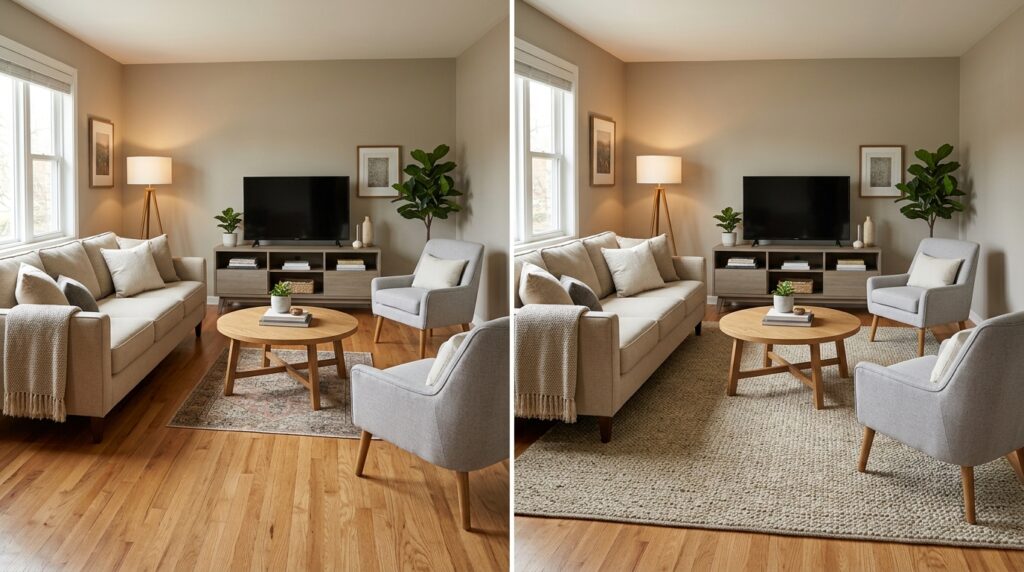
A small rug is one of the fastest ways to make a living room look unfinished. When the rug floats under only the coffee table, the seating area feels broken into pieces. The sofa, chairs, and table no longer look connected. In a small room, that visual break can make the floor seem smaller, not larger.
Use the rug to define the seating zone. At a minimum, the front legs of the sofa and chairs should touch the rug. If the room allows it, choose a rug large enough for most furniture legs. This does not mean buying the biggest rug available. It means choosing one that relates to the furniture instead of sitting alone in the center.
The Fix: Let the Rug Anchor the Room
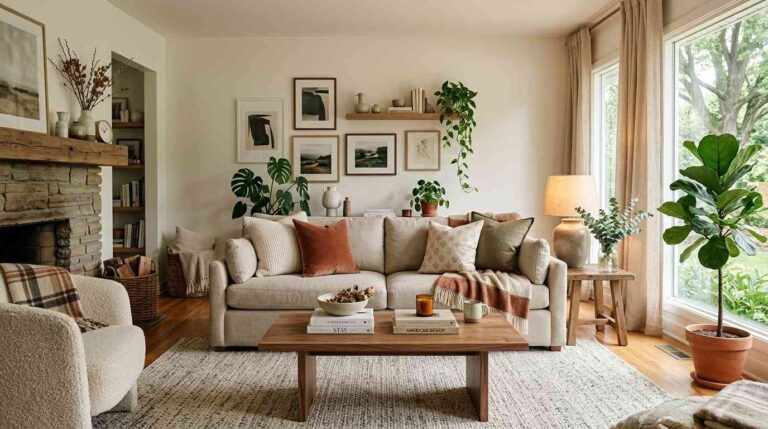
For a compact apartment or small home, a properly sized rug can create instant order. Choose a low-pile option if doors, pets, or cleaning are concerns. Use pattern carefully: a subtle stripe, vintage-style print, or tonal pattern can hide wear and add movement without overwhelming the room.
This tacky small living room decor mistakes designer advice is especially useful when your furniture is neutral. A rug can bring warmth, texture, and color into the room without taking up vertical space. It also makes the room feel intentional, which is often the difference between “small but stylish” and “small and thrown together.”
For more compact-space inspiration, review these small living room decorating ideas before choosing furniture, rugs, or lighting.
Mistake 3: Pushing Every Piece Against the Wall
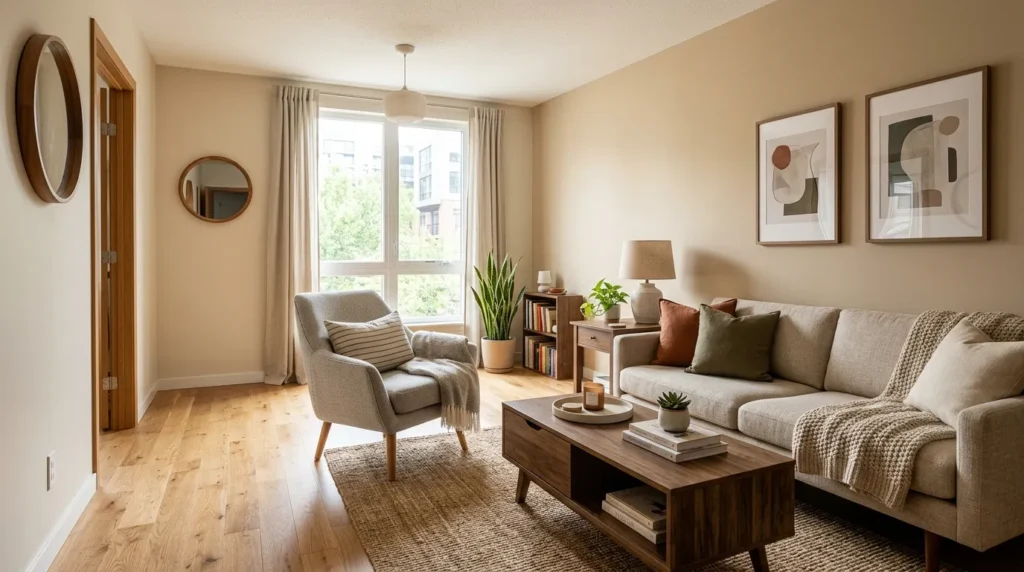
Many people push furniture against the walls because they want more floor space in the middle. The result often feels stiff. The room may look like a waiting area, with an empty center and furniture sitting too far apart for easy conversation. Even a small gap behind the sofa can create a more relaxed layout.
Try floating the sofa or chairs slightly forward if the room allows. You do not need a dramatic designer layout. Even 3 to 6 inches between the sofa and the wall can make the space feel less cramped. Angle a chair toward the sofa, pull the coffee table closer, and keep pathways clear.
The Fix: Plan for Conversation and Flow
A living room should guide people naturally. You should be able to sit down, reach a drink, watch TV comfortably, and move through the room without turning sideways. Before decorating, identify the main pathway. Then place furniture so people can walk through without interrupting the seating area.
This is practical, tacky small living room decor mistakes, designer advice, because it focuses on daily use. A room that photographs well but feels awkward will not stay neat for long. When the layout supports real movement, the room instantly feels more grown-up and comfortable.
Mistake 4: Relying Only on Overhead Lighting
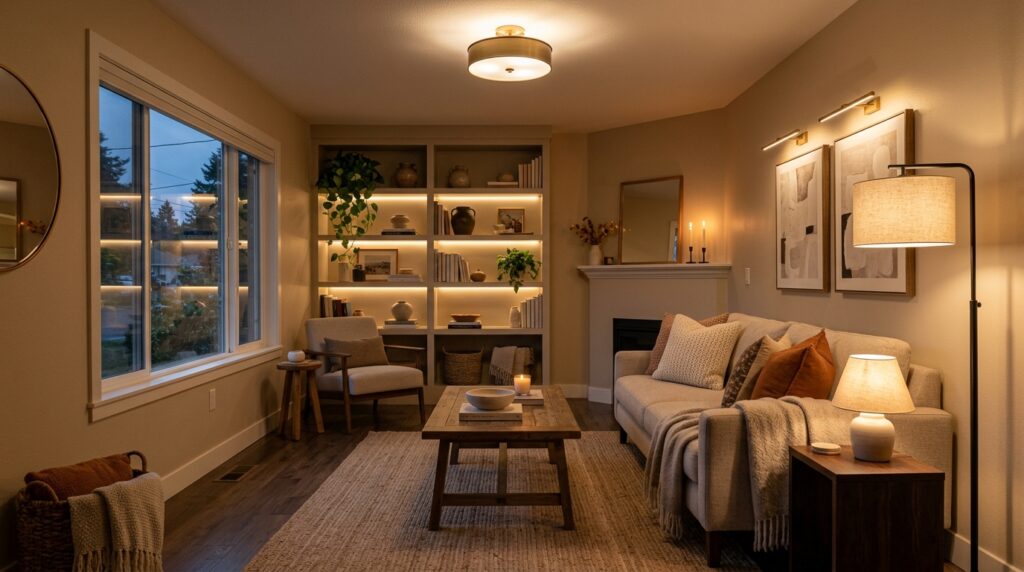
One ceiling light rarely makes a living room feel inviting. It can create harsh shadows, glare on the TV, and a flat look that makes inexpensive materials appear even cheaper. Poor lighting also changes how colors read. A warm beige can look yellow, a gray sofa can look dull, and artwork can disappear into the wall.
Layered lighting is a better choice. Use a mix of ceiling light, floor lamp, table lamp, wall sconce, or picture light, depending on the room. Add dimmable bulbs when possible. Warm white bulbs usually feel more comfortable in a living room than cold, blue-toned light.
The Fix: Create Three Levels of Light
Think of lighting in three layers. Ambient lighting helps you see the whole room. Task lighting supports reading, working, or games. Accent lighting highlights art, shelves, plants, or textured walls. A small living room does not need many lamps, but it does need more than one mood.
This tacky small living room decor mistakes, designer advice can change the room in one evening. Replace mismatched bulbs so the light color feels consistent. Put a slim floor lamp beside the sofa. Add a small lamp to a shelf or side table. The room will feel softer and deeper without changing the furniture.
Mistake 5: Decorating With Only Flat Neutrals
Neutral rooms can be beautiful, but flat neutrals can feel lifeless. A small living room with a beige sofa, beige rug, beige walls, and no texture can look unfinished rather than calm. The issue is not the color family. The issue is the lack of contrast, depth, and material variation.
If you love neutrals, mix them with intention. Combine warm white, oatmeal, stone, camel, walnut, linen, rattan, aged brass, black accents, or soft gray-green. Add texture through pillows, throws, baskets, curtains, and wood. A tonal room works when the surfaces are different enough to be noticed.
The Fix: Add Contrast Without Adding Clutter
A compact room needs interest, but not chaos. Choose one or two contrast points. That may be a dark wood coffee table, a patterned pillow, a black picture frame, or olive curtains. These small decisions help the eye move around the room.
This tacky small living room decor mistakes designer advice is helpful because it separates simplicity from emptiness. A simple room still needs layers. A plain room often feels accidental. The best small living rooms usually have a quiet palette, a few strong contrasts, and enough texture to make people want to sit down.
Mistake 6: Buying Matching Furniture Sets
Matching sets can feel easy, but they often make a living room look less personal. When the sofa, chair, coffee table, side tables, and media console all look like they came from the same page, the space can feel flat. It may be coordinated, but not collected.
A better room has related pieces, not identical ones. You can repeat a wood tone, metal finish, or fabric color, but vary the shapes and textures. For example, pair a modern sofa with a vintage-inspired wood table, a simple linen pillow, and a sculptural lamp. The room will still feel cohesive, but it will have more character.
The Fix: Mix Materials Carefully
You do not need to replace everything. Start by breaking up the most obvious set. Change the pillows that came with the sofa. Add a different side table. Swap one shiny finish for a warmer material. Bring in a textured throw or handmade ceramic bowl.
This is one of the easiest tacky small living room decor mistakes that a designer can fix because small changes can soften the “furniture showroom” effect. The goal is not random mixing. The goal is balance: a little wood, a little fabric, a little metal, a little texture, and one personal detail that feels like you.
Mistake 7: Ignoring Curtains and Window Height
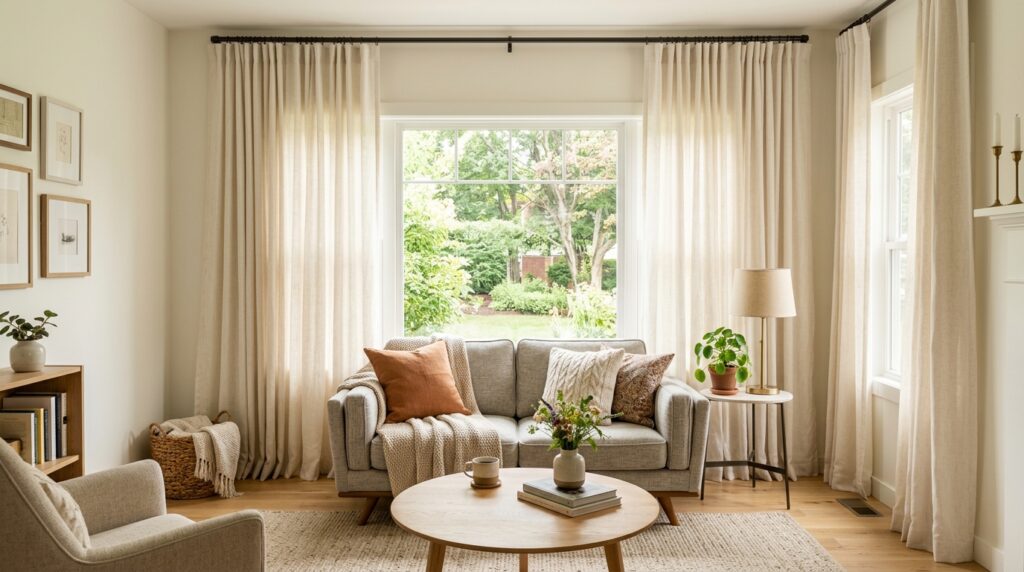
Short curtains can make walls look shorter. Thin panels that barely cover the window can also make the room feel underdressed. In a small living room, window treatments matter because they affect light, wall height, and softness. Bare windows can work in some modern spaces, but many rooms need fabric to feel finished.
Hang curtain rods higher than the window frame when possible, often closer to the ceiling or crown molding. Let the curtains reach the floor or just kiss it. Choose fabric with enough weight to hang well, but not so much that it blocks natural light all day.
The Fix: Use Drapery to Stretch the Room
Curtains can make a compact room feel taller and calmer. Light-filtering linen, cotton blends, or textured sheers work well for daytime privacy. If the room gets strong sunlight, layer shades underneath. This gives you control without heavy-looking fabric.
This tacky small living room decor mistakes designer advice works especially well in rentals because curtain height can change the mood without renovation. When the eye travels from floor to ceiling, the room feels more generous. The window becomes part of the design rather than a leftover detail.
Mistake 8: Letting Cords, Remotes, and Electronics Take Over
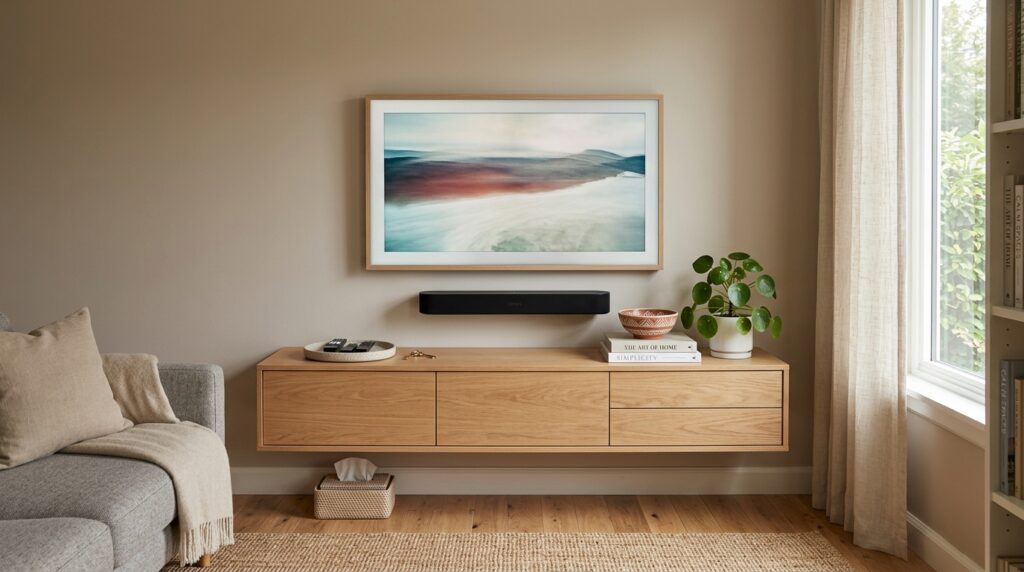
Visual clutter can make a small living room feel messy even after it has been cleaned. Cords hanging under a TV, game consoles stacked in the open, loose remotes, and chargers on every surface all weaken the room. These items are normal, but they need a home.
Use a media console with closed storage if possible. Add cord covers, cable clips, or a simple cord management box. Keep only the electronics you use often. Store remotes in a tray, drawer, or lidded box. If your TV is mounted, make sure it is not too high for comfortable viewing from the sofa.
The Fix: Hide the Functional Mess
A polished room does not mean pretending technology does not exist. It means planning for it. Choose baskets for blankets, trays for remotes, and cabinets for extra devices. Label chargers if several people share the room. Keep surfaces clear enough that one book, one lamp, and one decorative object can breathe.
This tacky small living room decor mistakes designer advice is less glamorous than buying decor, but it has a bigger impact. When cords and clutter are controlled, every design choice looks cleaner. The room feels calmer because the eye is not constantly stopping on small messes.
Mistake 9: Hanging Art Too High or Using Tiny Pieces Everywhere
Art brings personality, but poor placement can make a room feel awkward. Tiny frames scattered across a large wall can look nervous. Artwork hung too high can feel disconnected from the furniture below it. In a living room, art should relate to the seating area, not float near the ceiling.
A useful rule is to hang artwork around eye level, with the center often near 57 to 60 inches from the floor. Over a sofa, leave enough space so the art feels connected but not cramped. One larger piece, a pair of medium pieces, or a clean gallery arrangement usually works better than several unrelated small frames.
The Fix: Give the Wall a Clear Idea
Before making holes, lay the frames on the floor. Decide whether the wall needs one statement, a balanced pair, or a gallery story. Keep frame spacing consistent. Use art that connects to the room’s colors without matching everything exactly.
This tacky small living room decor mistake, according to the designer’s advice, helps a compact room feel more intentional. Art is not just decoration. It creates a focal point, adds vertical interest, and gives guests something personal to notice. Even budget prints can look elevated when they are scaled and hung correctly.
Mistake 10: Overdecorating Every Surface
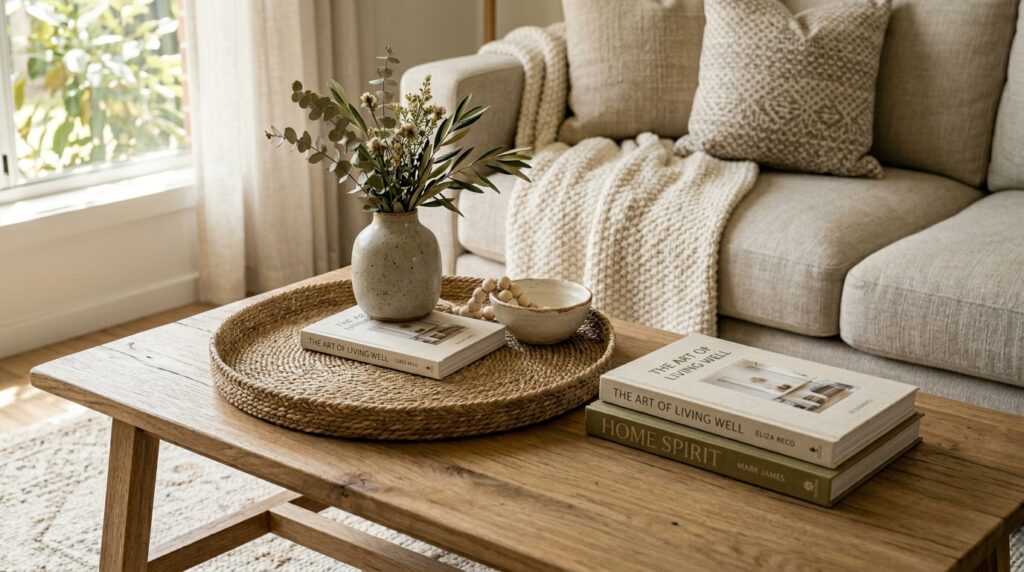
Small rooms do not need empty surfaces; they need edited ones. A coffee table covered with candles, books, coasters, faux flowers, and trays can quickly feel crowded. Shelves packed edge-to-edge can make the walls feel heavy. Too many small accessories often read as clutter, even when each item is nice on its own.
Use fewer items with more purpose. On a coffee table, try a tray, a small stack of books, and one natural element such as flowers, greenery, or a ceramic bowl. On shelves, mix books upright and stacked, leave some open space, and vary object heights.
The Fix: Edit Like a Designer
Designers often remove items before adding anything new. Take everything off one surface, then return only the pieces that support the room. If an object is too small to notice or has no meaning, store it elsewhere. Rotate decor seasonally instead of displaying everything at once.
If you want a more relaxed gathering space, these designer family rooms can help you plan a room that feels stylish and practical.
This tacky small living room decor mistake, according to the designer’s advice, makes the room easier to maintain. A small space becomes more relaxing when the eye has places to rest. Clean surfaces also make your best pieces stand out, which is more effective than filling every inch.
Conclusion:
A compact living room does not need to feel limited. Most problems come from a few repeated choices: the wrong scale, weak lighting, tiny rugs, flat color, cluttered surfaces, and furniture that ignores flow. The solution is not always to buy more. Often, it is to measure better, edit harder, raise the curtains, improve lighting, and choose pieces with purpose.
Use this tacky small living room decor mistakes designer advice as a practical checklist. Start with the layout, then fix the rug, lighting, window treatments, storage, art, and accessories. Make one thoughtful change at a time. A small living room becomes stylish when every piece earns its place, and the room feels easy to live in.
For brighter seasonal layouts, explore these sunroom ideas that bring more natural light and comfort into your home.
Frequently Asked Questions:
What makes a small living room look tacky?
A small living room can look tacky when the furniture scale is wrong, the rug is too small, the lighting is harsh, or every surface is crowded. Matching furniture sets, visible cords, short curtains, and flat neutral decor can also make the room feel unfinished. The best fix is balance: proper scale, layered lighting, controlled storage, and a few personal details.
Is dark paint a mistake in a small living room?
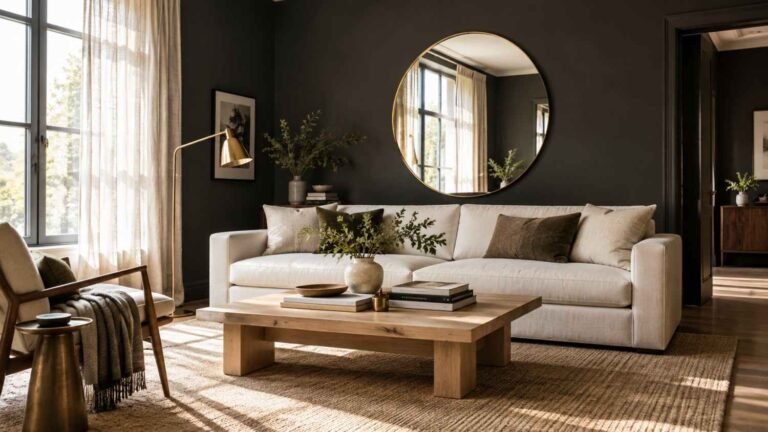
Dark paint is not automatically a mistake. Deep colors can make a small room feel cozy, grounded, and intentional when balanced with good lighting, texture, and contrast. The mistake is using dark color without a plan. Test samples first, consider natural light, and add lighter textiles or warm wood so the room does not feel heavy.
Should all small living room furniture be small?
No. Using only small furniture can make a room feel scattered and temporary. A better choice is fewer pieces with the right proportions. A comfortable sofa, one accent chair, and a properly sized rug can make the room feel more finished than several tiny items. Scale should match the room and the way people use it.
How can I make a small living room look more expensive?
Focus on lighting, texture, and editing. Use warm bulbs, add a floor or table lamp, upgrade pillow covers, choose a larger rug, hide cords, and remove weak accessories. Hang curtains higher and make sure artwork is properly scaled. These changes help the room feel intentional without requiring luxury furniture.
What is the biggest layout mistake in a small living room?
The biggest layout mistake is pushing every item against the wall without thinking about conversation or movement. This can create an empty center and awkward seating. Try pulling furniture slightly away from the wall, angling chairs toward the sofa, and keeping a clear pathway through the room.
How do I decorate a small living room without clutter?
Choose decor with purpose. Use one tray, one natural element, and a few books instead of filling every surface. Store remotes and chargers out of sight. Pick larger art instead of many tiny pieces. Repeat a few colors and materials so the room feels connected, not crowded.
What should I fix first in a tacky, small living room?
Start with the layout and rug because they affect the whole room. Then improve lighting, hide cords, adjust curtain height, and edit accessories. Once the foundation feels right, adding color, texture, and personality becomes easier.