Lush Fern Sunroom Ideas to Turn Any Room Into a Living Retreat (Ideas, Plants & Care Tips)
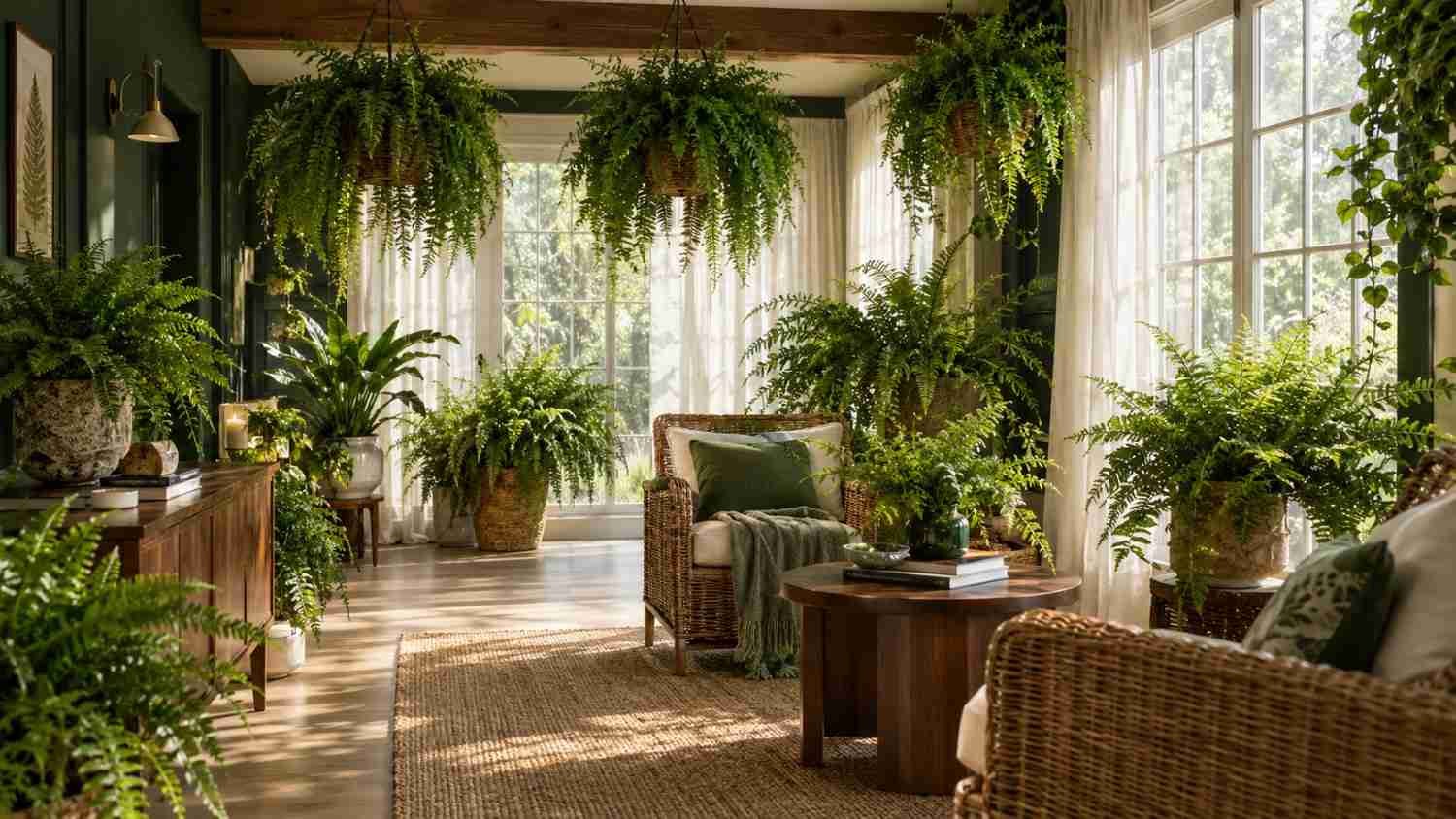
Sunlight pours through the glass, and every leaf seems to lean toward it. That’s the quiet magic of a well-planted sunroom. A lush fern sunroom Ideas does more than fill empty corners with greenery — it turns an ordinary glass-walled room into a calm, oxygen-rich escape that feels closer to a greenhouse than a living room. Whether you’re starting from scratch or reworking a room that already gets plenty of natural light, ferns are one of the simplest ways to make a sunroom feel genuinely alive. This guide covers 25 practical ideas, the fern varieties best suited to bright, humid spaces, and the mistakes that quietly kill more sunroom ferns than anything else.
Why Ferns Work So Well in a Sunroom
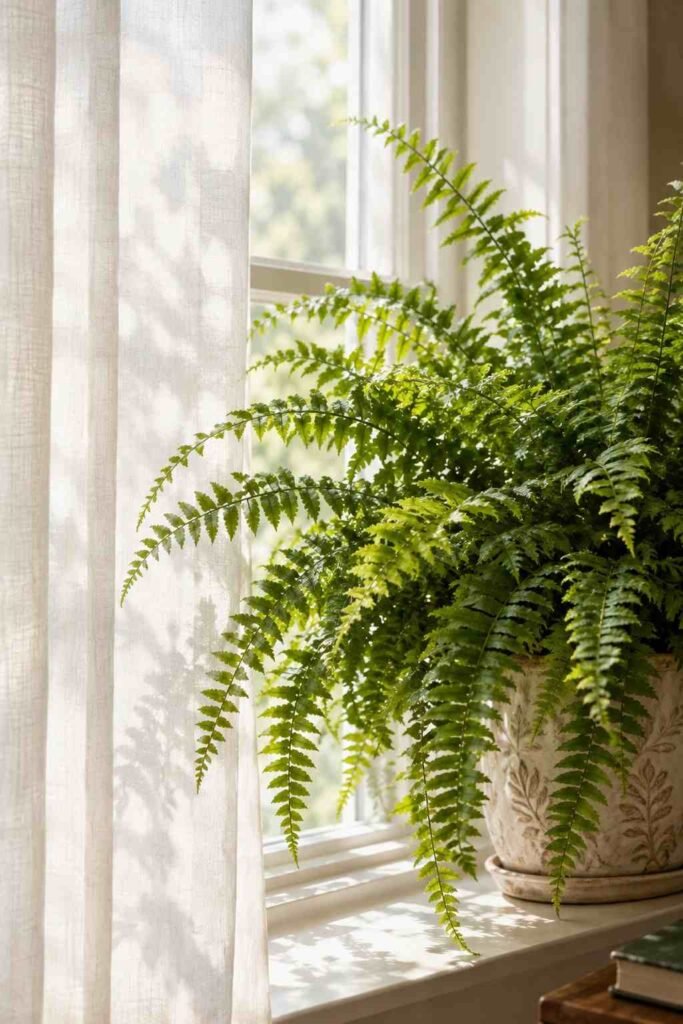
Most plant guides treat “sunroom” and “full sun” as interchangeable, and that’s where many fern owners go wrong. Ferns actually prefer bright, indirect light rather than direct rays, which makes a sunroom a small paradox: it’s bright, but the light needs filtering through sheer curtains or a lightly shaded pane to avoid scorched fronds. Sunrooms also tend to run warmer and drier than the rest of the house, especially near single-pane glass or heating vents. Matching the right fern to the right window — north- or east-facing exposure works best for most species — is the single biggest factor in whether a fern sunroom thrives or slowly declines.
25 Lush Fern Sunroom Ideas for Every Style
Layout and Placement Ideas
1. The Corner Fern Cluster
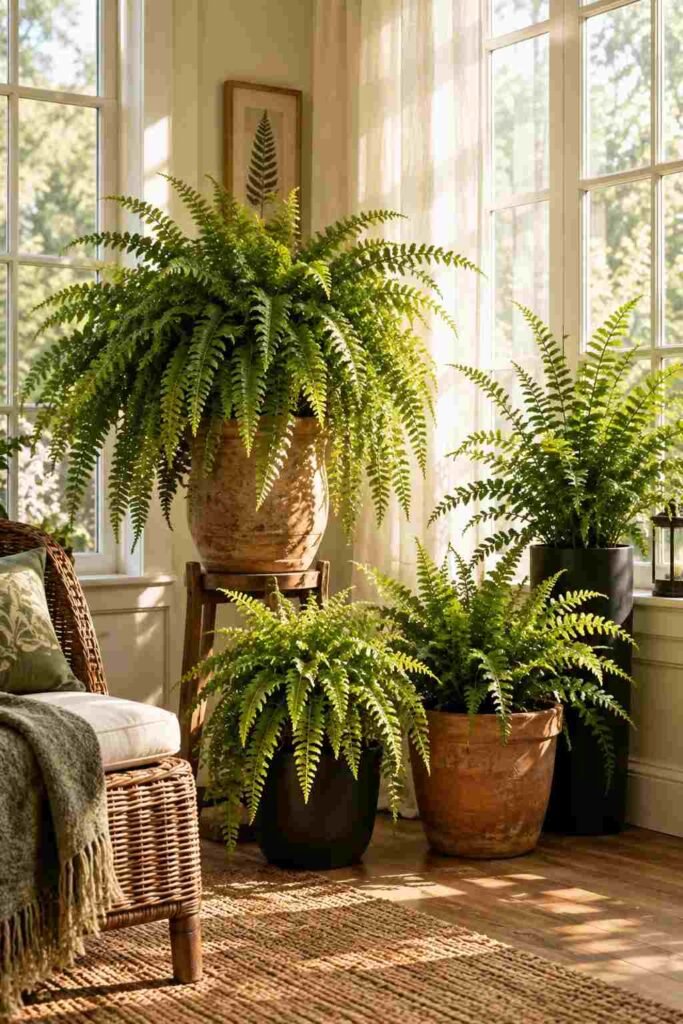
Group three or four ferns of varying heights in an underused corner. It softens hard architectural lines and creates an instant focal point without crowding walkways.
2. A Hanging Basket Row
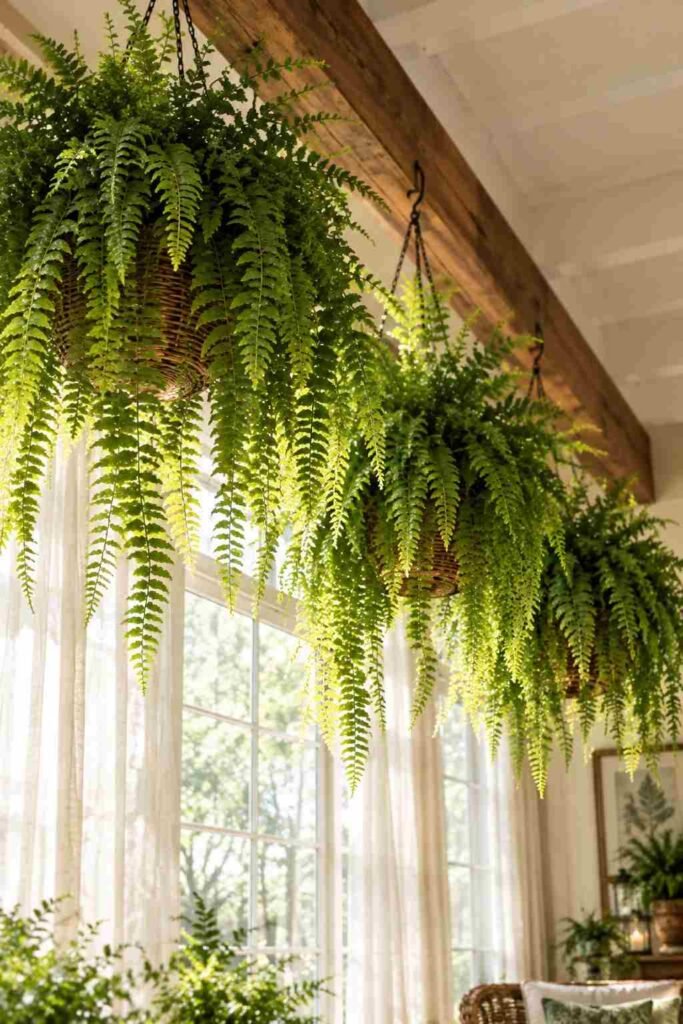
Suspend Boston ferns along a beam or curtain rod so fronds cascade at eye level. This works especially well in sunrooms with high ceilings and exposed structural beams.
3. Windowsill Ledge Garden
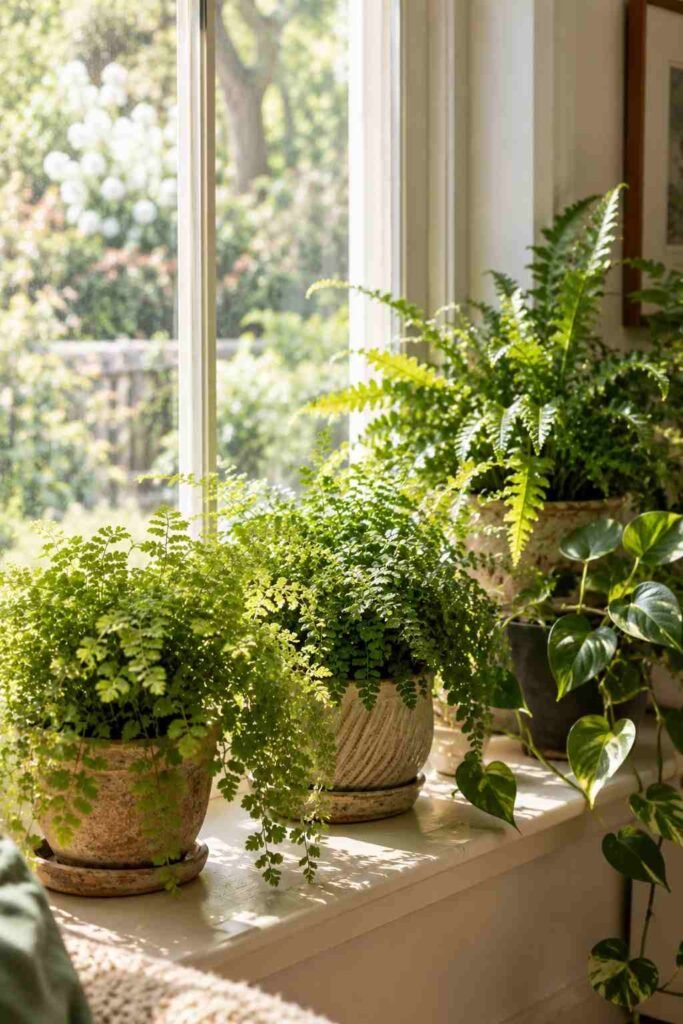
Line a deep windowsill with small pots — button fern, maidenhair, and a trailing pothos for contrast. It keeps the view open while still framing it in green.
4. Staggered Plant Stands
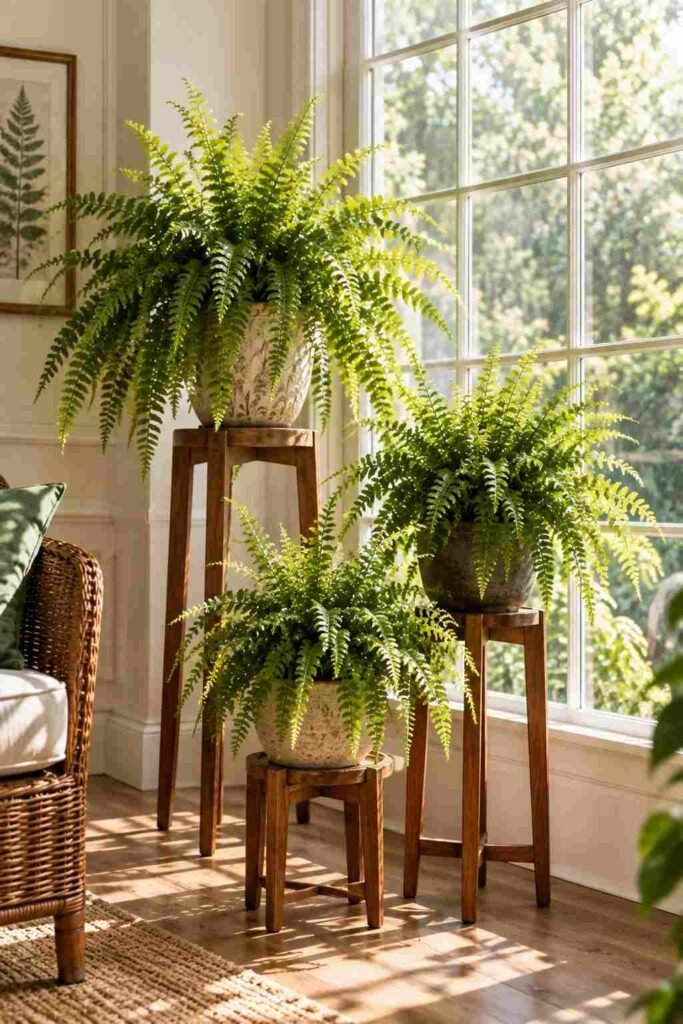
Use three stands at different heights near a single window so light reaches every plant without one shading another.
5. Under-the-Bench Greenery
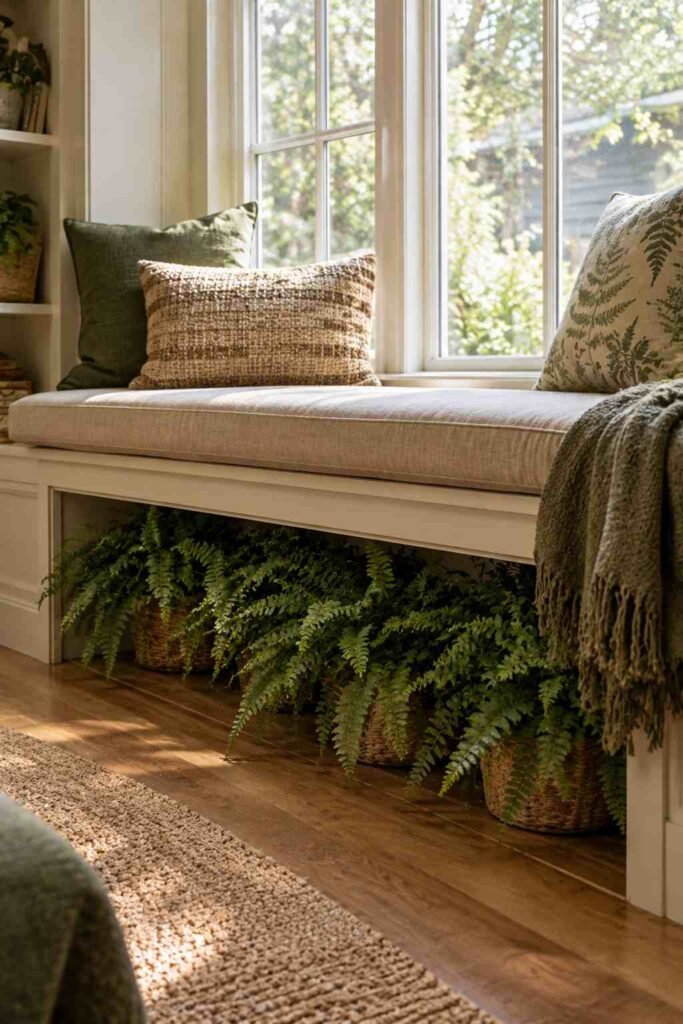
Tuck low, shade-tolerant ferns beneath a built-in window seat. It fills dead space and hides the seat’s structural base.
6. A Living Room Divider
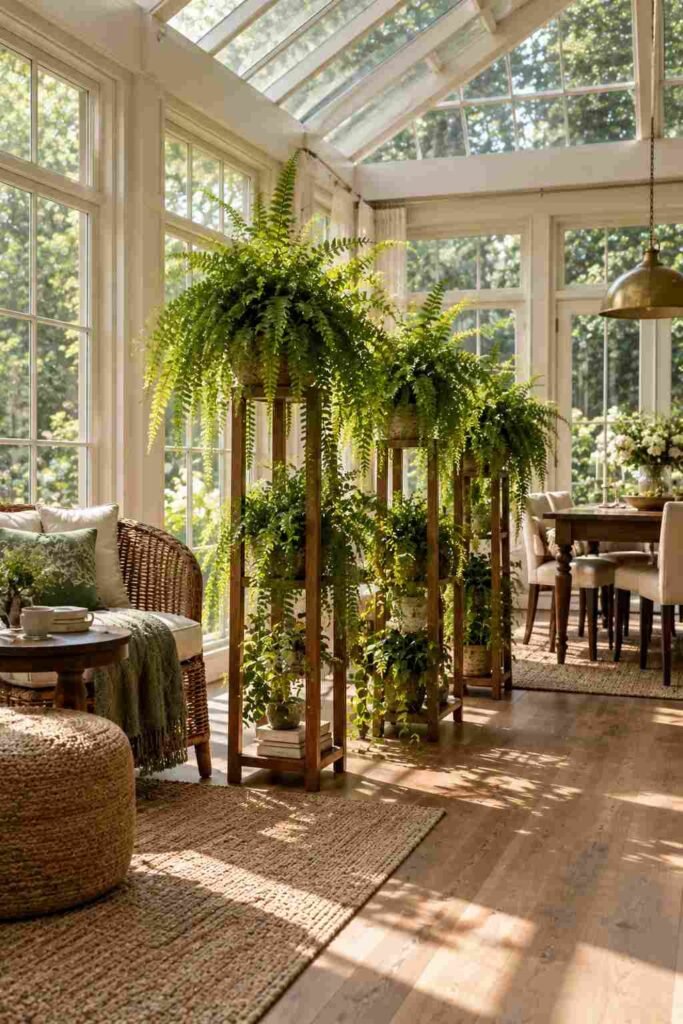
In an oversized sunroom, line up tall fern stands to gently zone a reading nook from a dining area without a solid wall.
Fern Varieties Worth Featuring
7. Boston Fern (Nephrolepis exaltata)
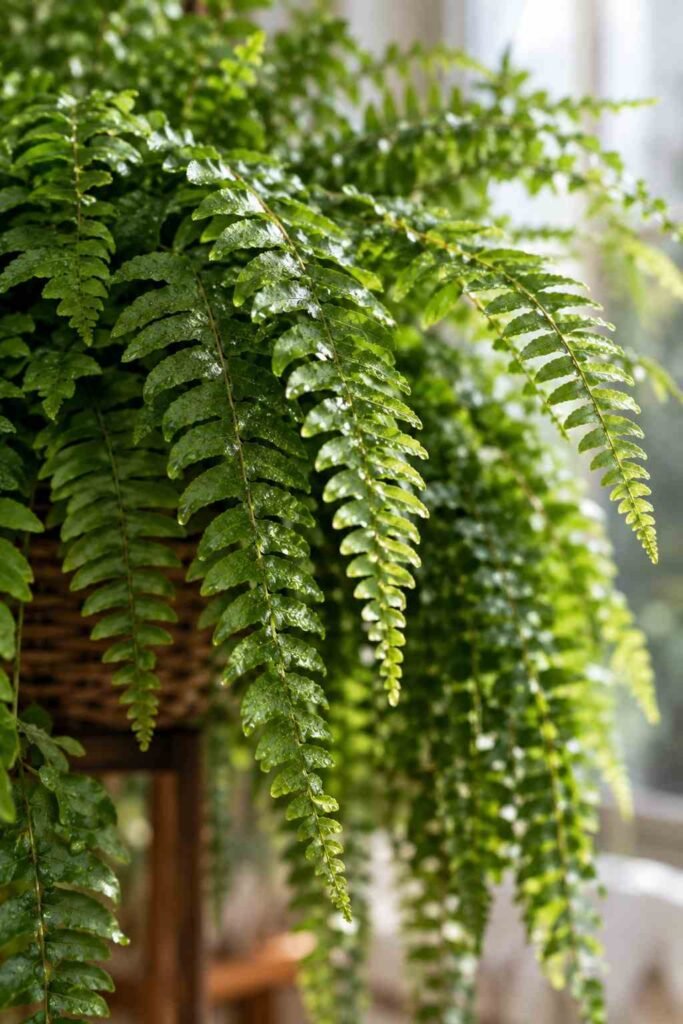
The classic choice — arching fronds up to three feet long, thriving in 50–70% humidity and indirect light.
8. Maidenhair Fern (Adiantum)
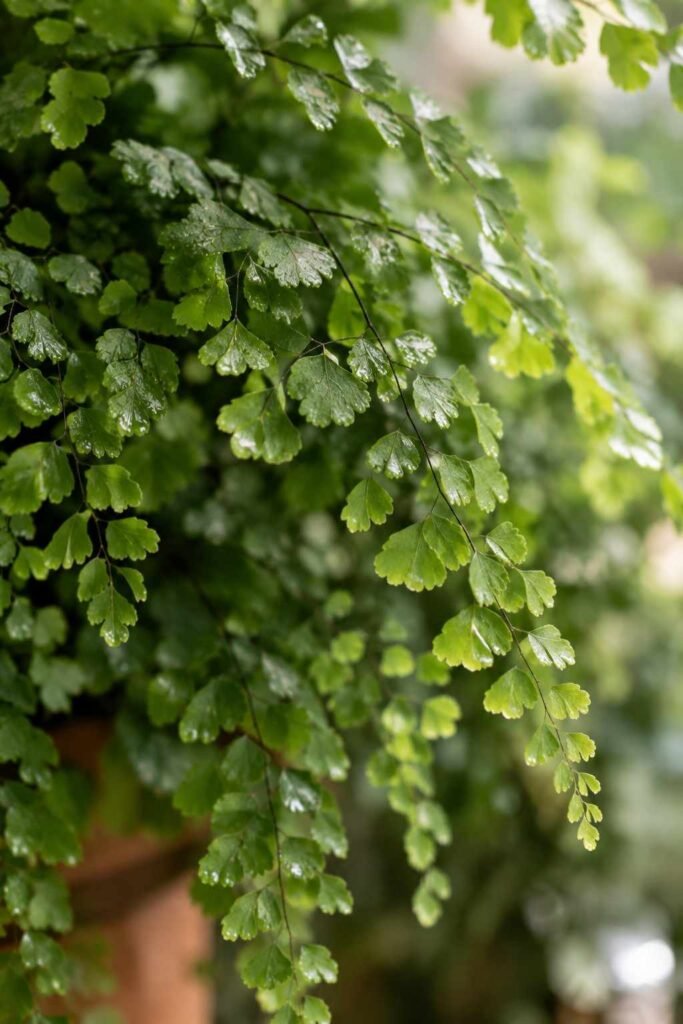
Delicate, fan-shaped leaves for a softer, more romantic look. It needs consistent moisture and humidity above 60%, so pair it with a pebble tray.
9. Bird’s Nest Fern (Asplenium nidus)
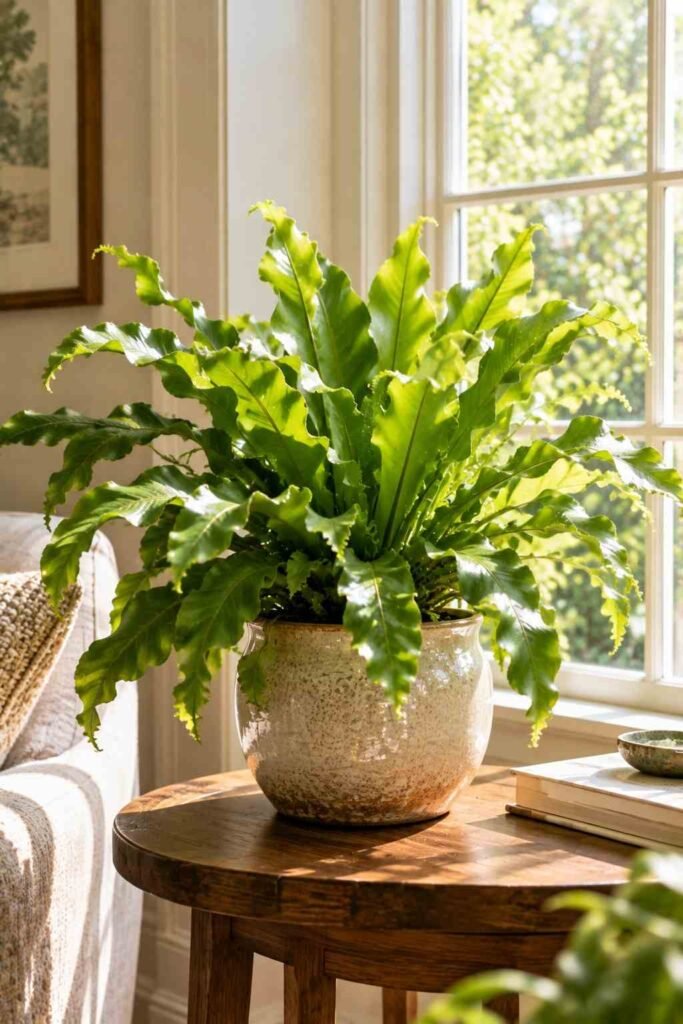
Broad, wavy rosette fronds that tolerate a wider light range than most ferns, making it forgiving for beginners.
10. Staghorn Fern (Platycerium bifurcatum)
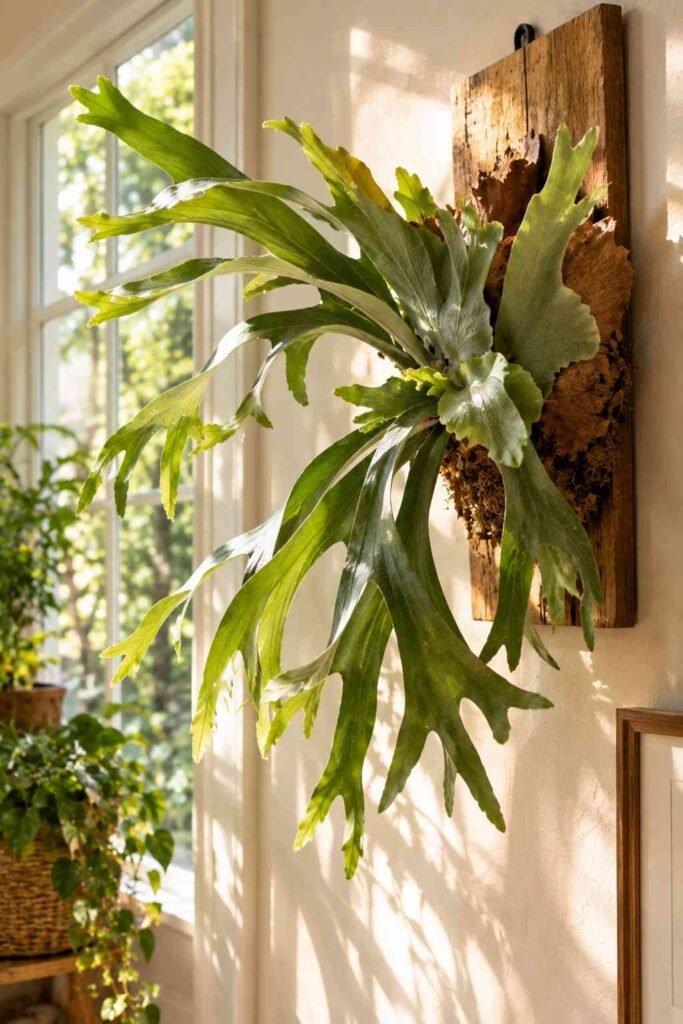
Mount it on a wooden board for a striking wall feature. It’s an epiphyte, so it grows without soil and needs very high humidity.
11. Kimberly Queen Fern
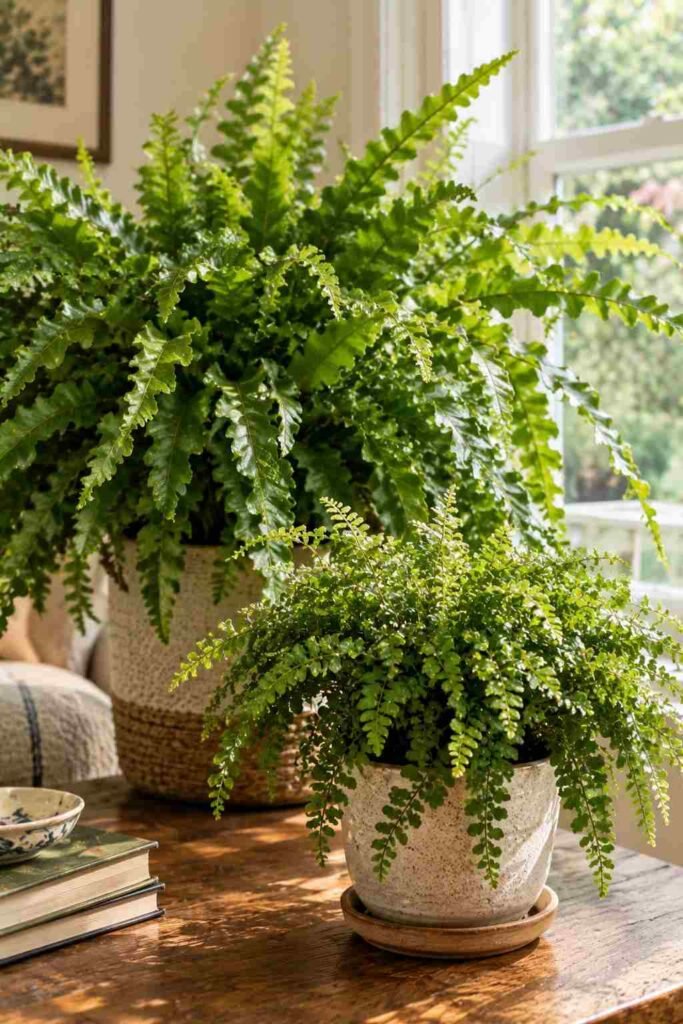
Upright, fuller fronds than a Boston fern, and more tolerant of drier air — a solid pick for sunrooms without a humidifier.
12. Button Fern (Pellaea rotundifolia). Small, leathery, round leaflets that suit tabletop displays and tolerate brief dry spells better than most fern varieties.
Styling and Decor Pairings
13. Wicker and Rattan Furniture
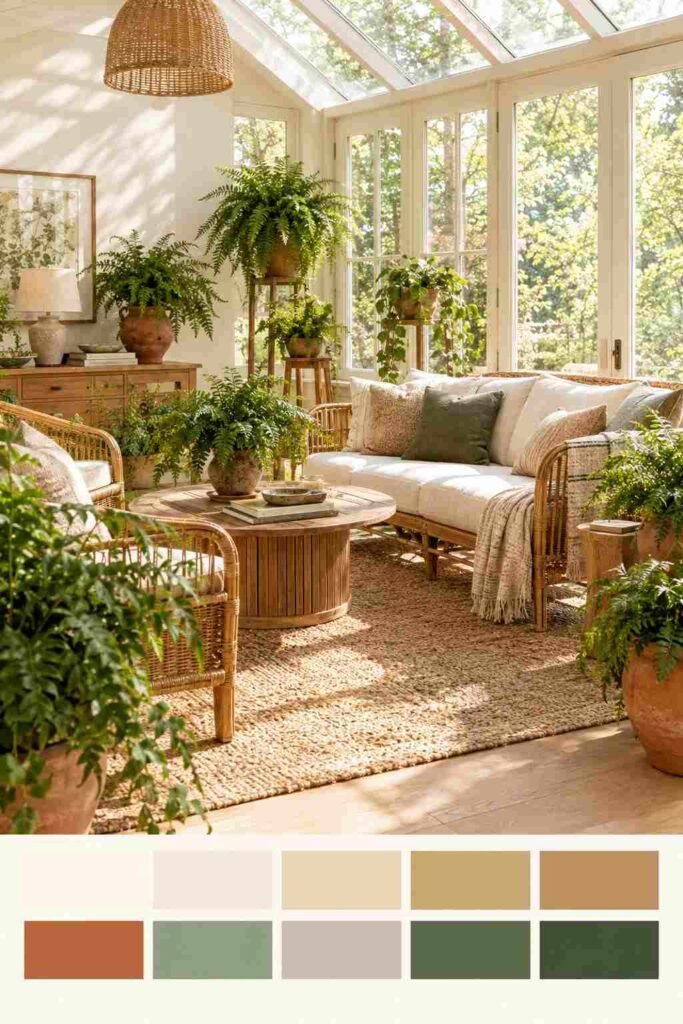
Natural fiber seating handles humidity better than upholstered pieces and visually echoes the texture of fern fronds.
14. Decorative Pebble Trays
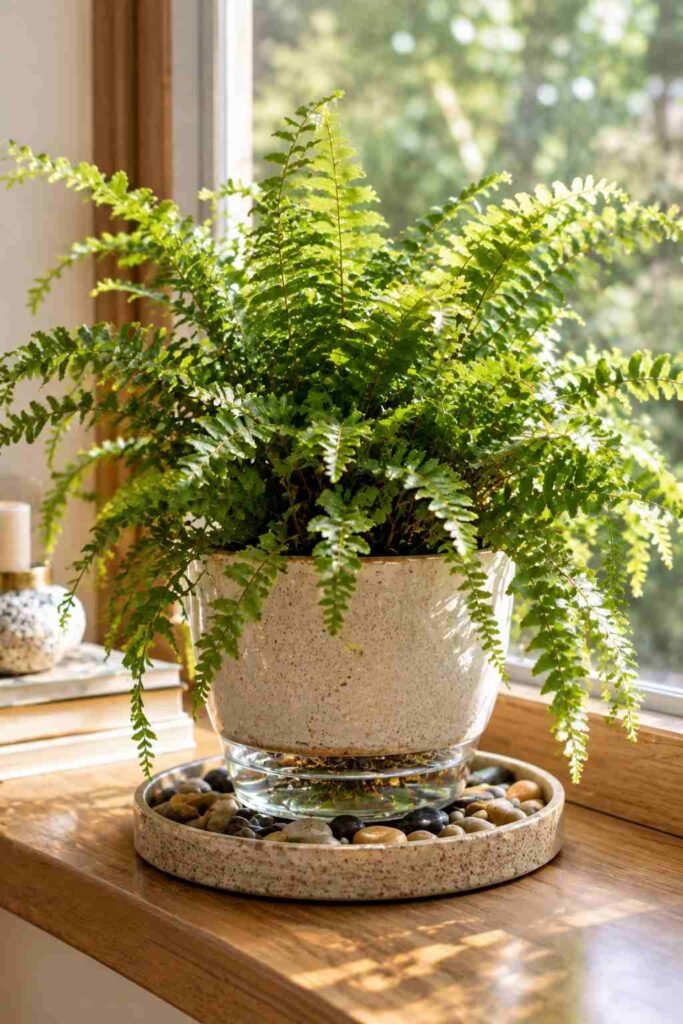
Set pots on a tray of pebbles and water. It raises humidity right where ferns need it while doubling as a styled surface detail.
15. Woven Hangers and Macrame
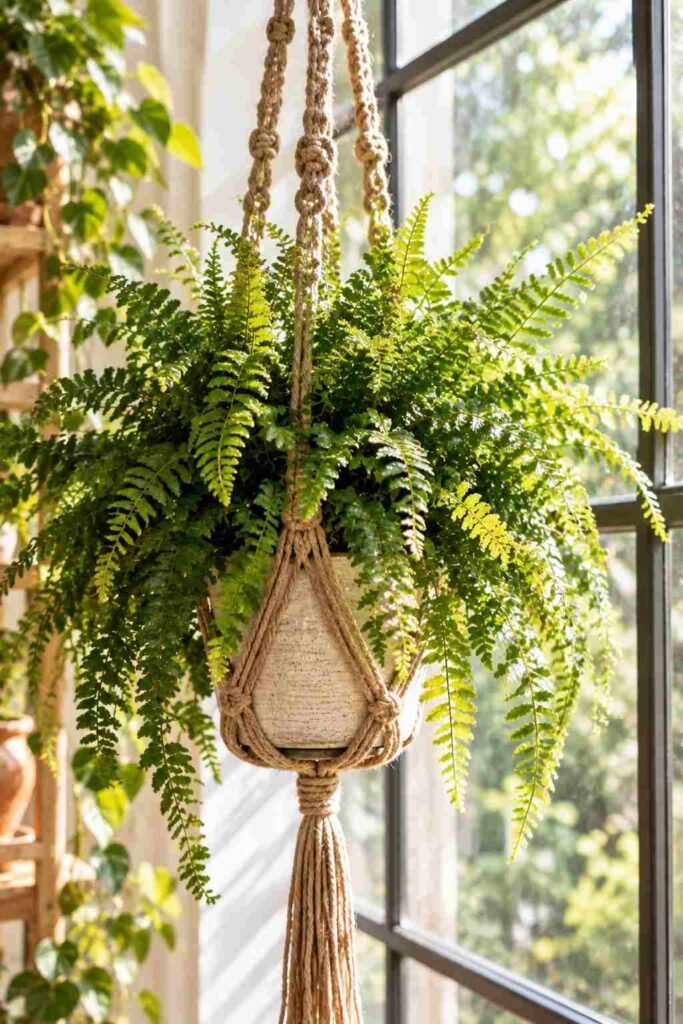
Swap plastic hooks for jute or macrame hangers to soften the look of hanging ferns against glass walls.
16. Botanical Print Textiles. Fern-print curtains or throw pillows echo the living plants and tie the room’s pattern language together without feeling matchy.
17. Mixed Metal Planters. Pair matte black and warm brass containers to keep a fern-heavy room from reading as flat or overly green.
18. Layered Rugs Under Plant Groupings. A textured rug beneath a plant stand protects flooring from water rings and anchors the greenery visually.
Seasonal and Maintenance Ideas
19. Quarterly Pot Rotation. Give each pot a quarter turn every few weeks so fronds grow evenly instead of leaning toward the light.
20. A Winter Humidifier
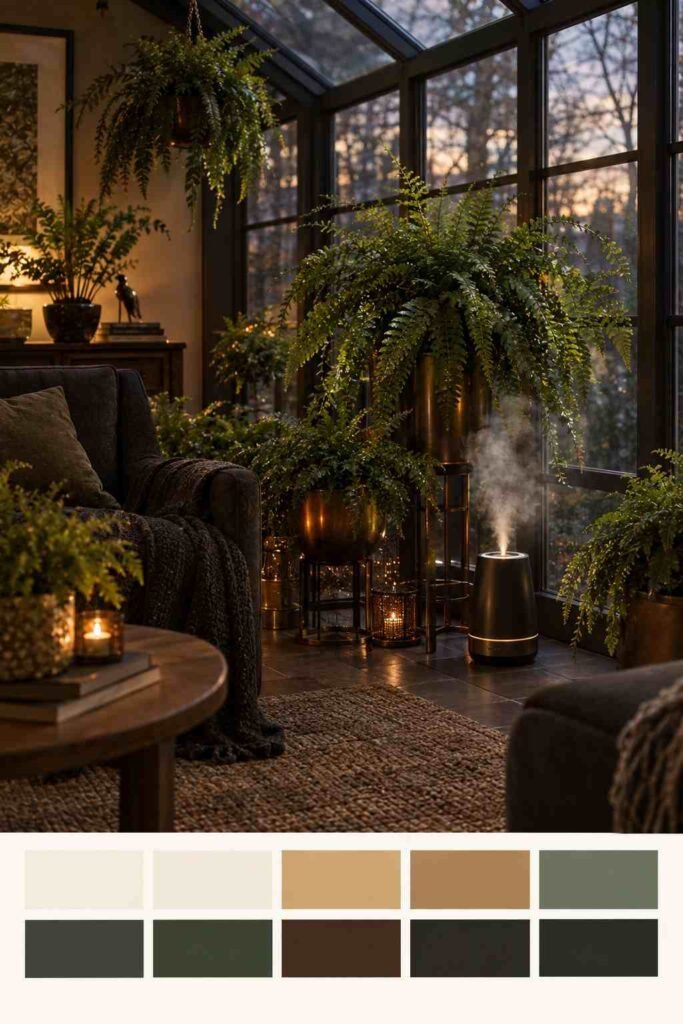
Indoor heating drops humidity fast in colder months — a small humidifier keeps a fern sunroom from turning brittle and brown.
21. Monthly Leaf Rinses. A gentle shower rinse removes dust that blocks light absorption and can double as a pest check.
22. Grouping for Humidity. Clustering ferns together raises the humidity in their immediate microclimate more effectively than any single plant alone.
23. Seasonal Color Swaps. Add orchids or cyclamen alongside permanent ferns for seasonal color without redesigning the whole room.
24. A Small Water Feature. A tabletop fountain adds ambient humidity and a soft background sound that complements a plant-filled space.
25. A Spring Repotting Day
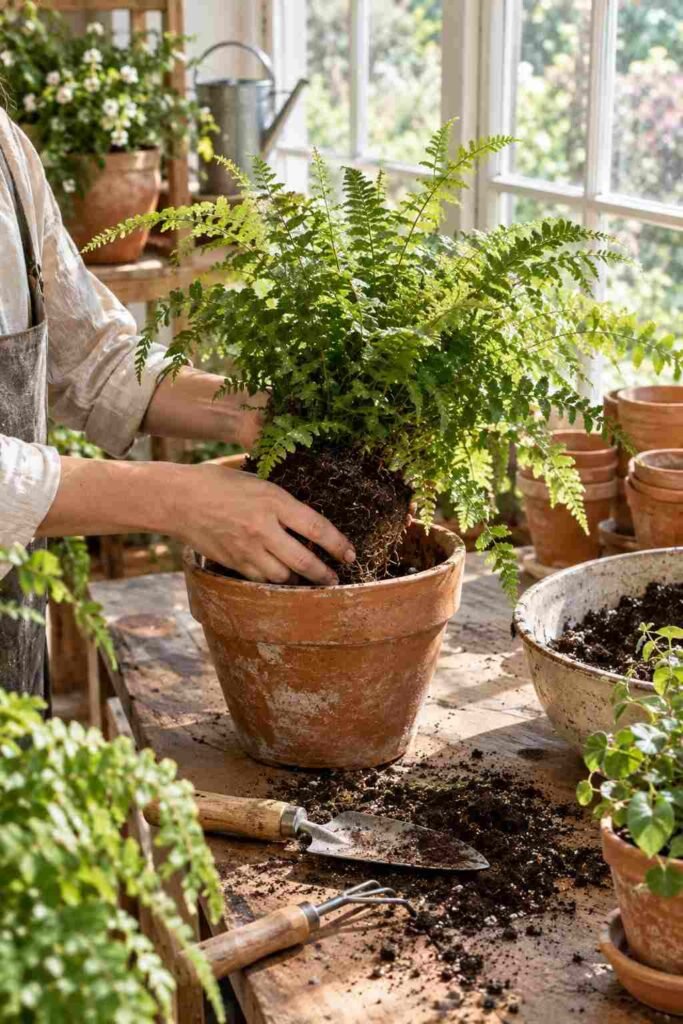
Early spring is the best time to divide overgrown ferns and refresh potting mix before the active growing season begins.
Best Fern Varieties for a Sunroom, at a Glance
Not every fern suits every sunroom, and this is where a lot of design guides stop short. Light exposure, humidity, and temperature all shift depending on which direction your windows face and how well-insulated the glass is. Boston and Kimberly Queen ferns are the most forgiving for beginners, tolerating average home humidity. Maidenhair and staghorn ferns demand more attention — consistent moisture, higher humidity, and protection from cold drafts near single-pane glass. Bird’s nest ferns sit in the middle, tolerating a wider light range while still rewarding a humid, warm spot near 60–75°F.
Common Mistakes That Undermine a Lush Fern Sunroom
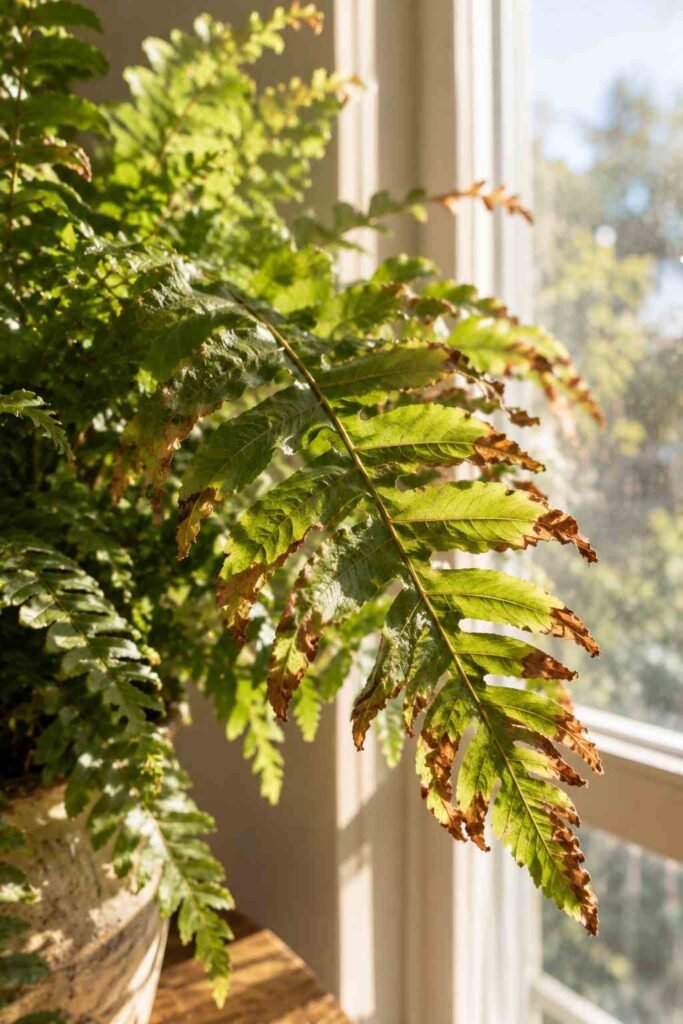
The biggest mistake is placing ferns in a south- or west-facing window without a sheer curtain — direct afternoon sun scorches fronds within days. A close second is overwatering: yellowing fronds usually signal soggy soil, not thirst. Many homeowners also forget that sunrooms swing in temperature more than interior rooms, so ferns placed directly against cold glass in winter can suffer stress even indoors. Finally, skipping humidity altogether is a quiet killer — a fern sunroom without a pebble tray, humidifier, or grouped plants will slowly dry out, even with perfect watering.
Keeping a Fern Sunroom Thriving Year-Round
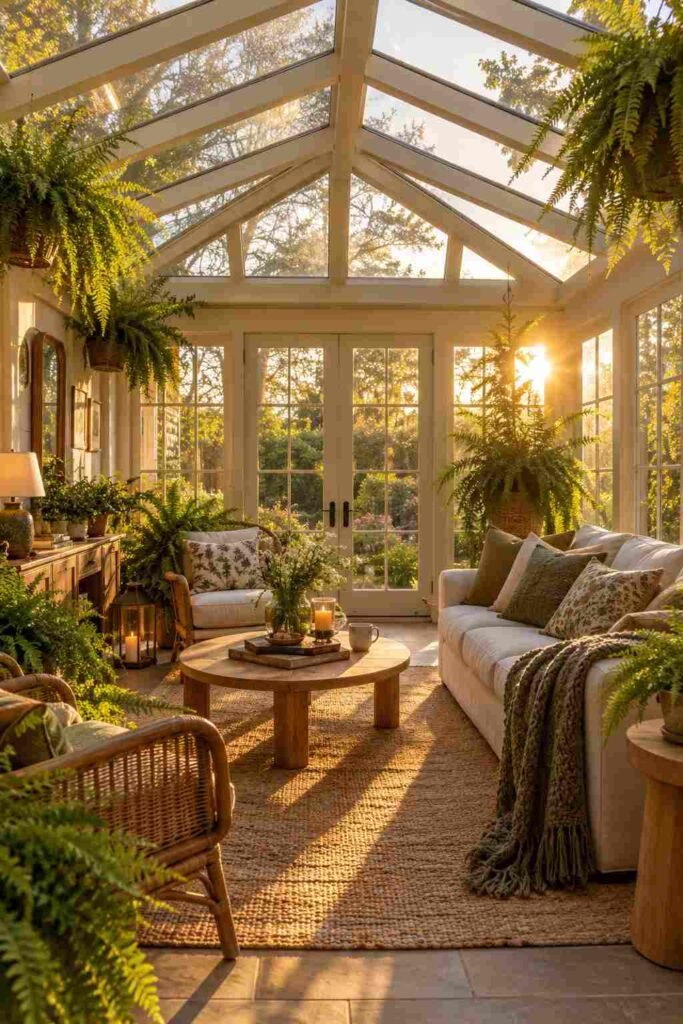
Consistency matters more than perfection. Water when the top inch of soil feels dry, never on a rigid schedule, since sunroom conditions shift with the seasons. In summer, watch for faster drying and increased light intensity; shift pots back from unshaded windows if needed. In winter, humidity drops sharply from indoor heating, so a humidifier or grouped plant arrangement becomes essential rather than optional. Fertilize lightly during the active growing months and hold off entirely in winter, when most ferns rest. A little attention to these seasonal shifts is what separates a fern sunroom that limps along from one that genuinely flourishes.
If you’re weighing a full room upgrade rather than just styling an existing space, it’s worth comparing a fern-focused layout against a Solarium sunroom design, which typically uses more glass and structural glazing to support a wider range of humidity-loving plants. For more layout inspiration beyond ferns, this collection of Sunroom ideas with plants shows how other greenery can complement a fern-heavy scheme. And if you want help sourcing furniture and planters that hold up in a humid, sun-drenched room, Outinteriors is a useful place to start browsing pieces built for exactly this kind of space.
Conclusion
A lush fern sunroom isn’t built overnight, and it isn’t built by accident either. It comes from matching the right fern to the right light, respecting humidity needs that most home environments don’t naturally provide, and layering in furniture and decor that can handle a little moisture in the air. Start small — a cluster in one corner, a hanging Boston fern by the brightest (but not harshest) window — and expand as you learn what your specific room’s light and airflow actually support. The reward is a room that feels alive in every season, not just when the sun happens to be out.