25 Home Remodeling Ideas Exterior: Upgrades That Raise Curb Appeal and Resale Value Lighting and Landscaping
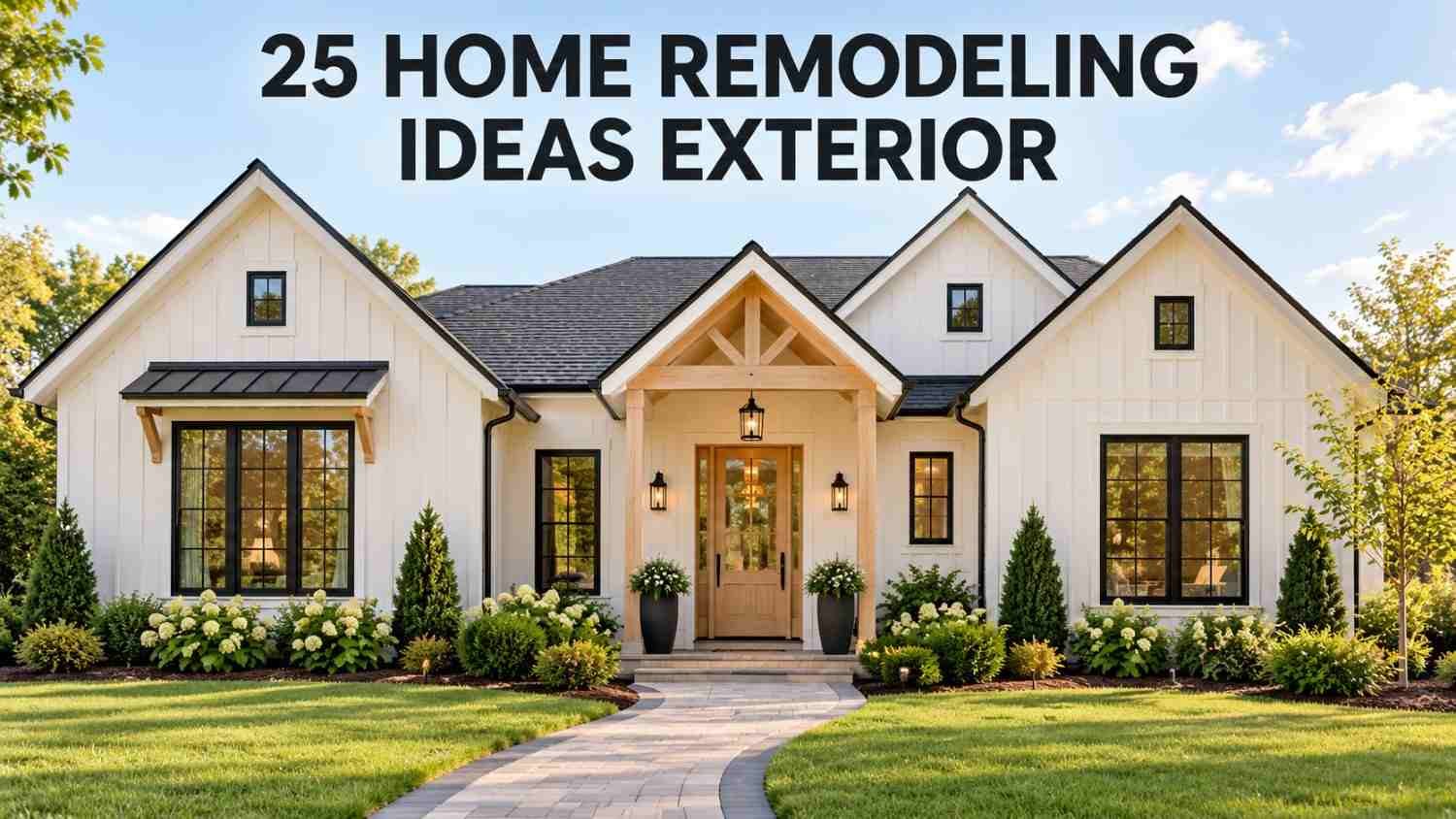
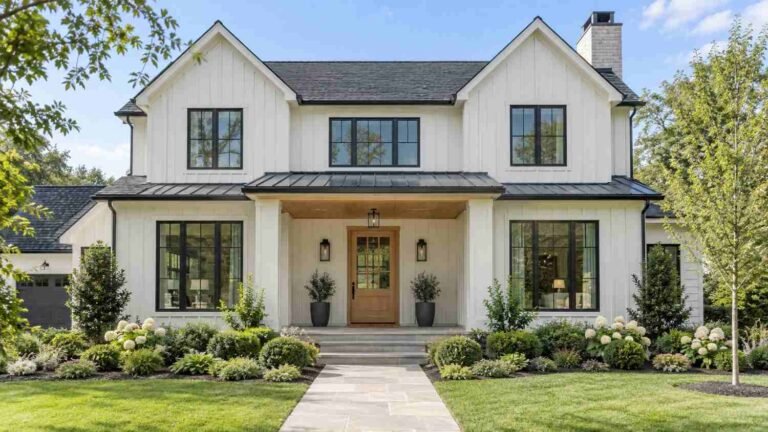
Picture pulling into your driveway and seeing a bold front door, clean fiber cement siding, and warm lantern light. That scene is more achievable than it looks. Your home’s outer shell is the first thing neighbors, guests, and buyers notice, and it also shields everything inside. This guide shares 25 home remodeling ideas exterior owners can use, from small paint and hardware swaps to decks, pergolas, and roofing. Each idea includes practical advice on materials, climate, and building permits, so you can plan with confidence.
How to Plan Your Exterior Remodel Before You Start
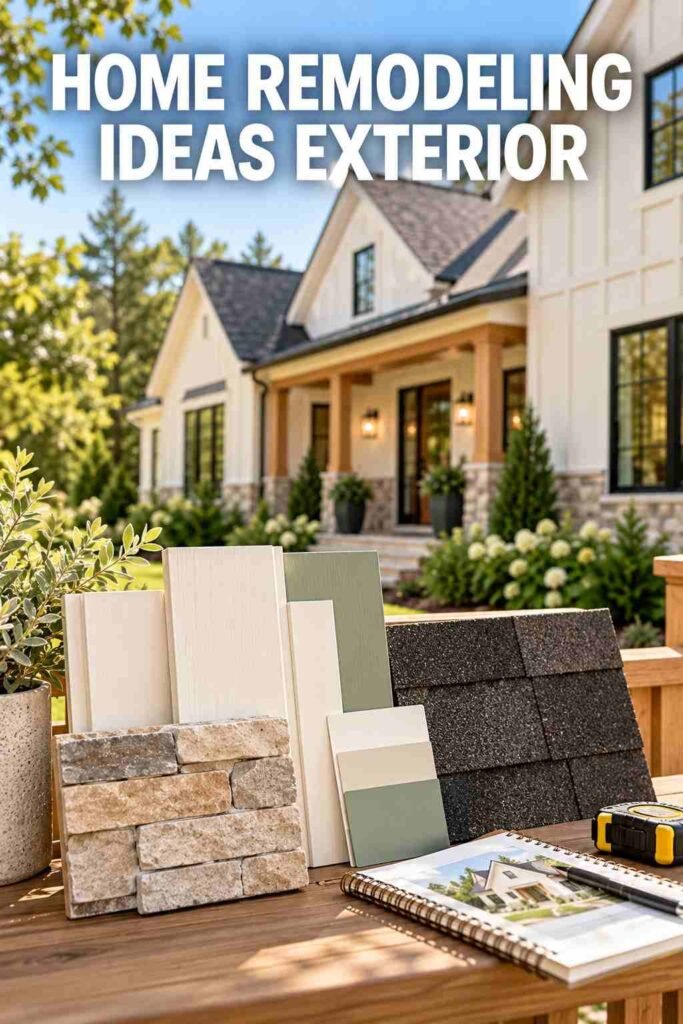
Before choosing materials, walk around your property and note what is failing, what is ugly, and what is simply dated. Fix problems that cause damage first, such as roof leaks, rotted trim, and poor drainage. Then move on to style upgrades. This order protects your investment, because new paint over damaged wood will not last.
Set a budget with a 10–15% cushion for surprises. Check local building codes and homeowners association rules, since many exterior changes need permits. Finally, think about climate. Materials that thrive in dry Arizona may struggle in humid Florida or snowy Minnesota. A clear plan keeps these home remodeling ideas exterior projects on time and on budget. If you are also planning indoor upgrades, browse these home remodeling ideas for bathrooms for fresh layout and fixture inspiration.
Front Entry and Curb Appeal Upgrades
The entry sets the tone for the whole house. Because it is small, it is also one of the most affordable places to start. Upgrades here are visible from the street and are often finished in a weekend or two. Many are also among the best-performing projects when homeowners sell.
1. Replace the Front Door
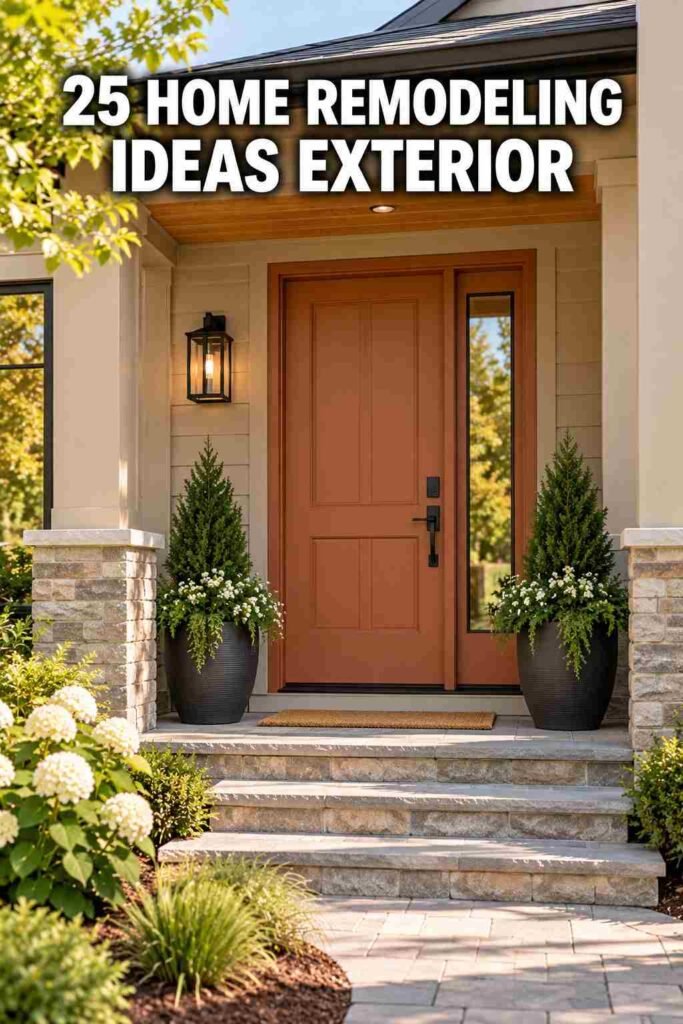
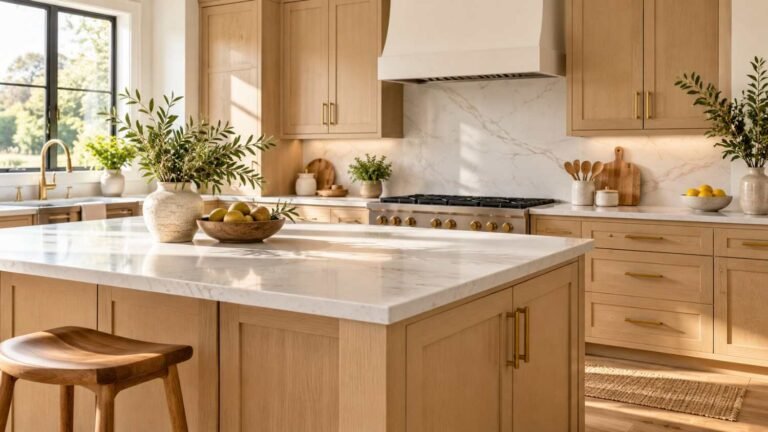
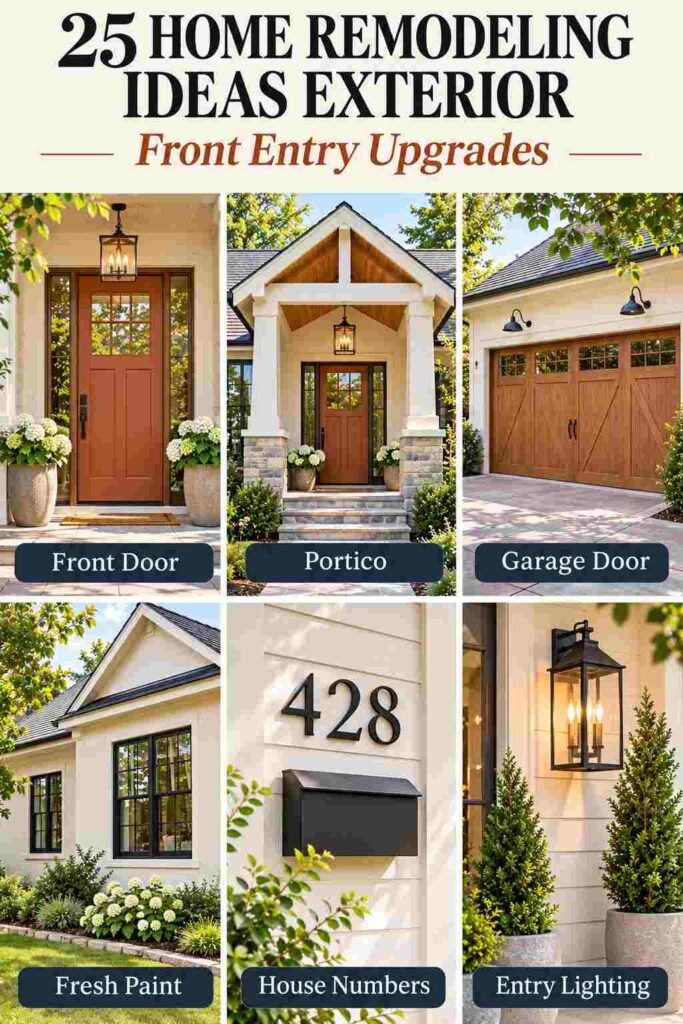
A new entry door improves security, insulation, and style at once. Steel and fiberglass doors resist warping and need little upkeep. Choose a bold color, such as deep green, navy, or warm red, to create a focal point. Industry cost-versus-value studies regularly rank entry door replacement among the top returns on exterior projects. Inside the kitchen, these cabinet and countertop ideas for home remodeling can match the new look you are creating outside.
2. Add a Covered Porch or Portico
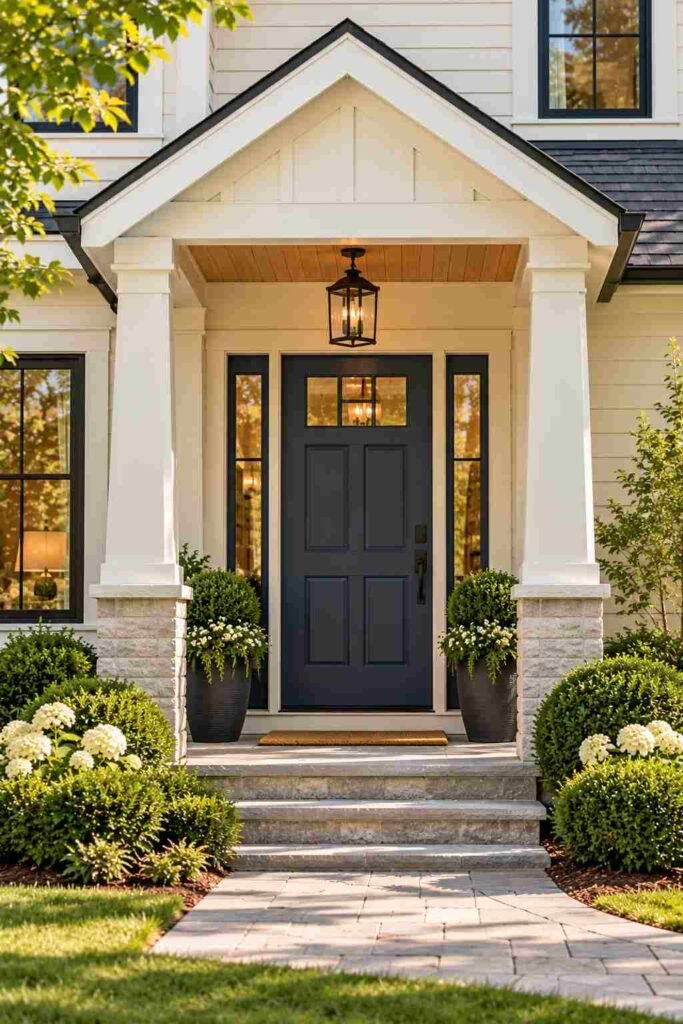
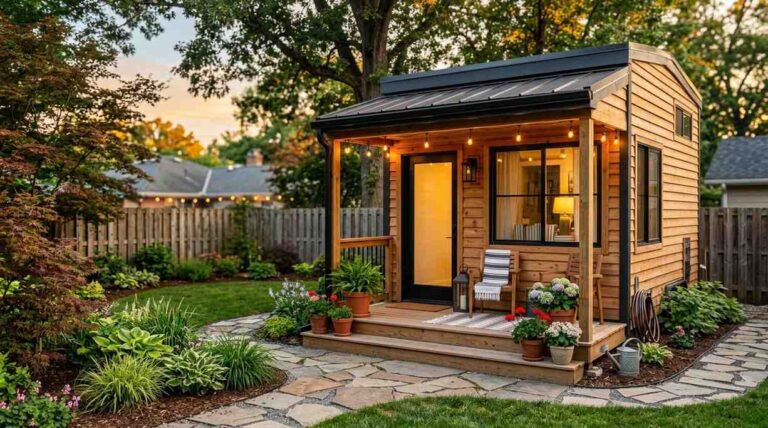
A roofed entry shelters guests from rain and adds architectural character. Even a small gabled portico gives a flat facade depth. Match the roofline and trim to your existing home so it looks original. Check setbacks and permit rules before building. Owners of manufactured homes can find practical exterior and interior tips in this guide to ideas for remodeling a mobile home.
3. Upgrade the Garage Door
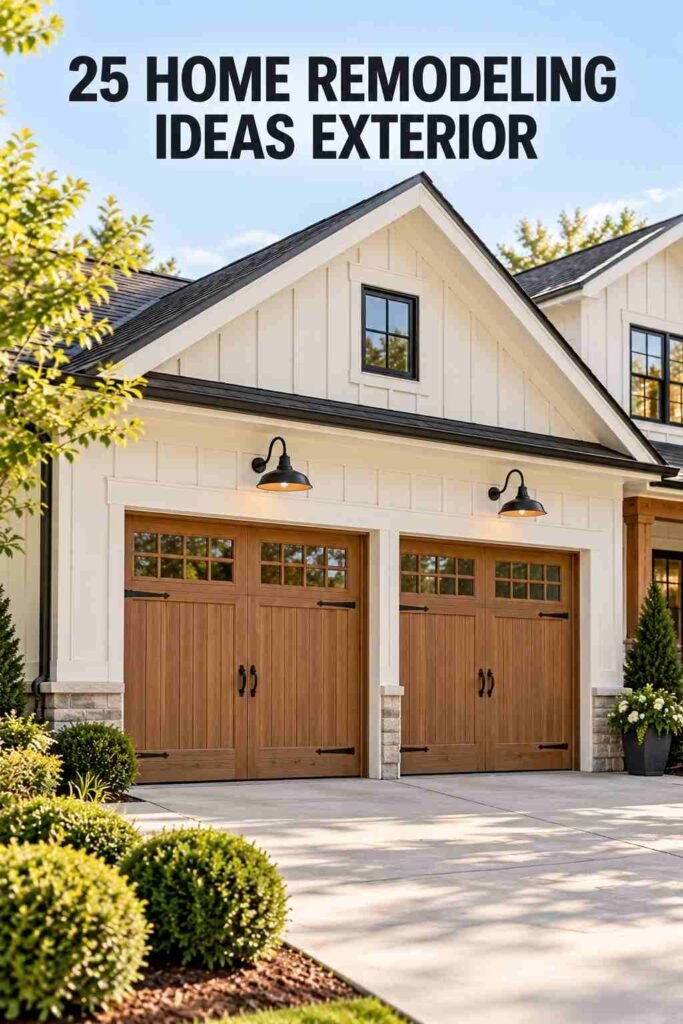
On many homes, the garage door is the largest feature facing the street. Replacing a dented or dated door can change the whole look. Insulated steel or wood-look composite models cut noise and temperature swings. Garage door replacement has frequently ranked at or near the top in national cost-versus-value reports.
4. Repaint With a Modern Palette

Fresh paint is the classic budget refresh. Choose a main color, a trim color, and one accent. Warm whites, soft greys, and earthy greens remain popular. Always clean and prime surfaces first. Test samples on the sunniest and shadiest walls, since light changes color dramatically.
5. Update House Numbers, Mailbox, and Hardware
Small details signal care. Large, high-contrast house numbers also help emergency responders find you. Replace a rusty mailbox, and match light fixtures, door handles, and numbers in one finish, such as matte black or brushed brass. This is a low-cost project with a noticeable payoff.
Siding, Walls, and Roofing Ideas
Walls and roofs cover the most surface area, so they shape your home’s character. They also do the heaviest protective work. Replacing them is a bigger investment, but it can solve moisture, insulation, and energy problems while it improves looks. Choose durable materials suited to your local weather, and hire licensed installers, since flashing and sealing details decide how long the work lasts.
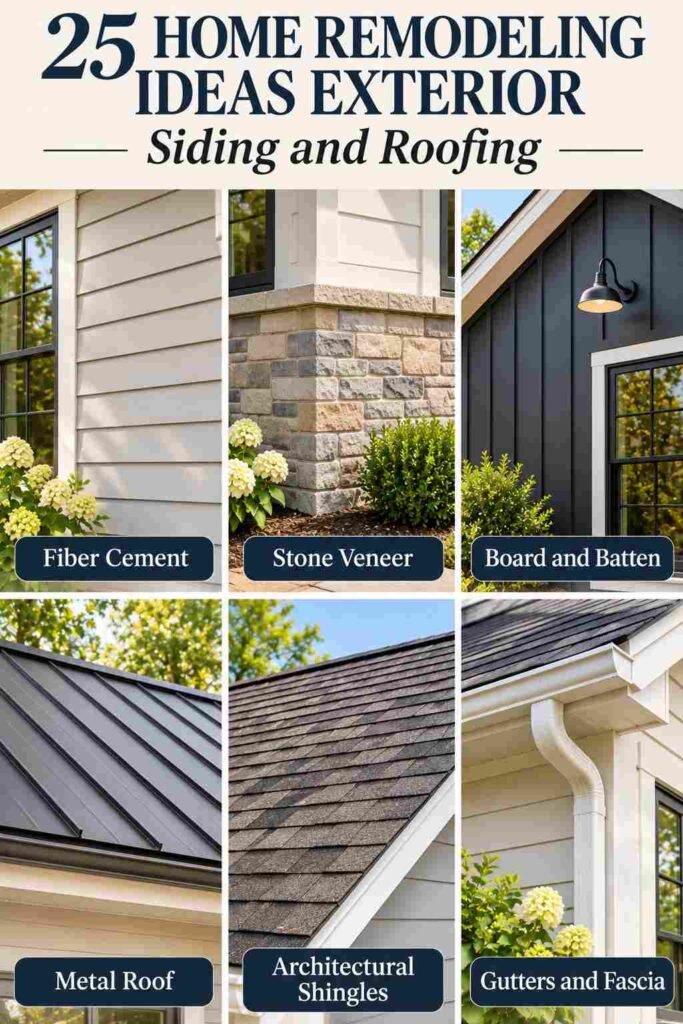
6. Install Fiber Cement Siding
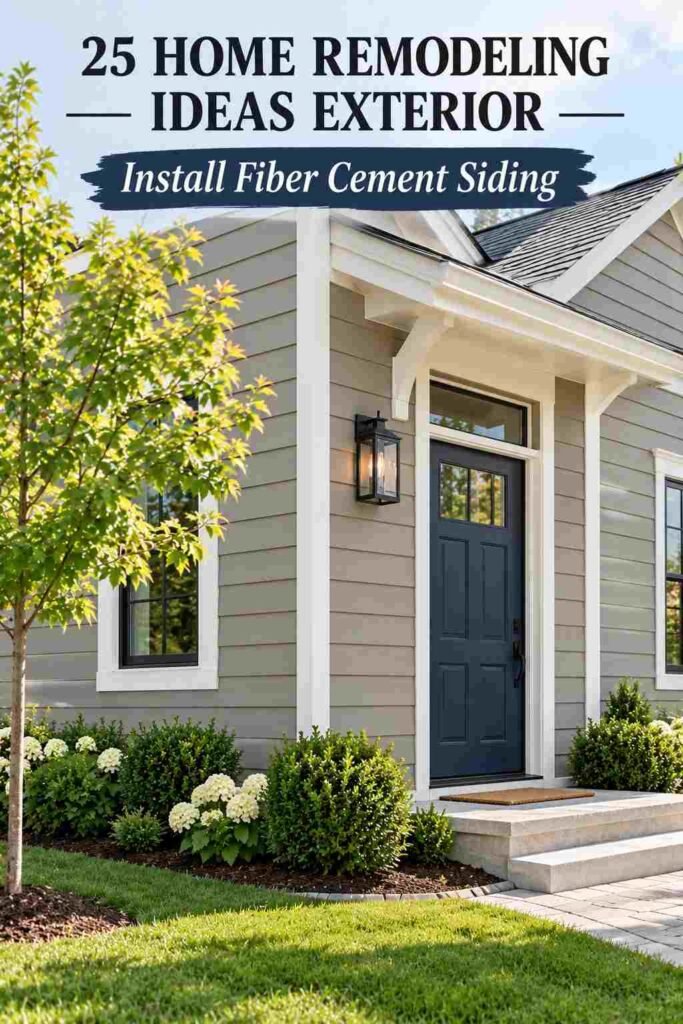
Fiber cement resists fire, insects, and rot, and it holds paint well. It can imitate wood lap, shingles, or panels. It is heavier than vinyl and needs skilled installation. For many homeowners, the long lifespan justifies the higher upfront cost.
7. Add Stone or Brick Veneer Accents
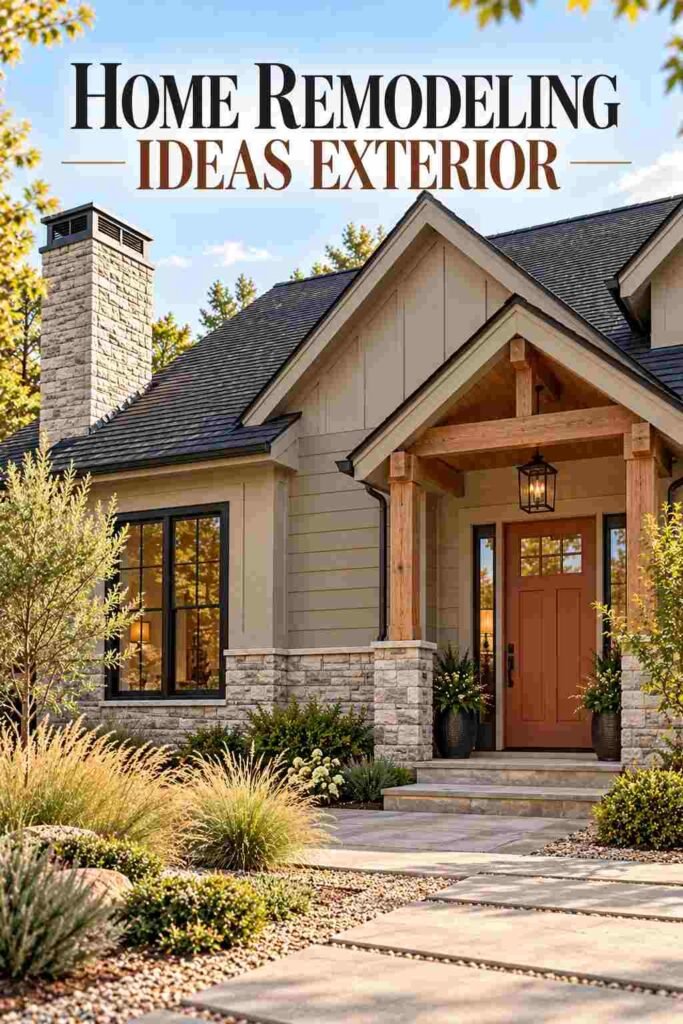
Thin stone veneer around the base, chimney, or entry adds texture without the weight of full masonry. Pair it with simpler siding above for balance. Manufactured stone is lighter and cheaper than natural stone, while natural stone offers a more authentic look.
8. Try Board and Batten
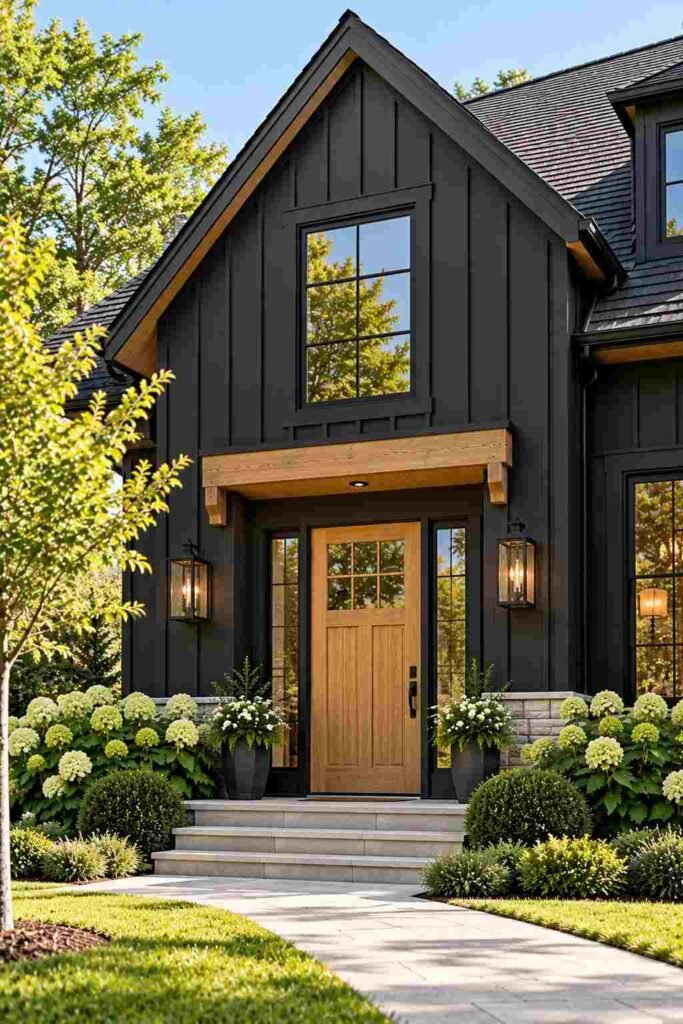
Vertical board and batten siding creates strong lines that make a home look taller. It suits modern farmhouse, cottage, and contemporary styles. Use it on a gable end or the whole facade. Painted black or deep grey, it delivers dramatic contrast.
9. Switch to a Metal Roof
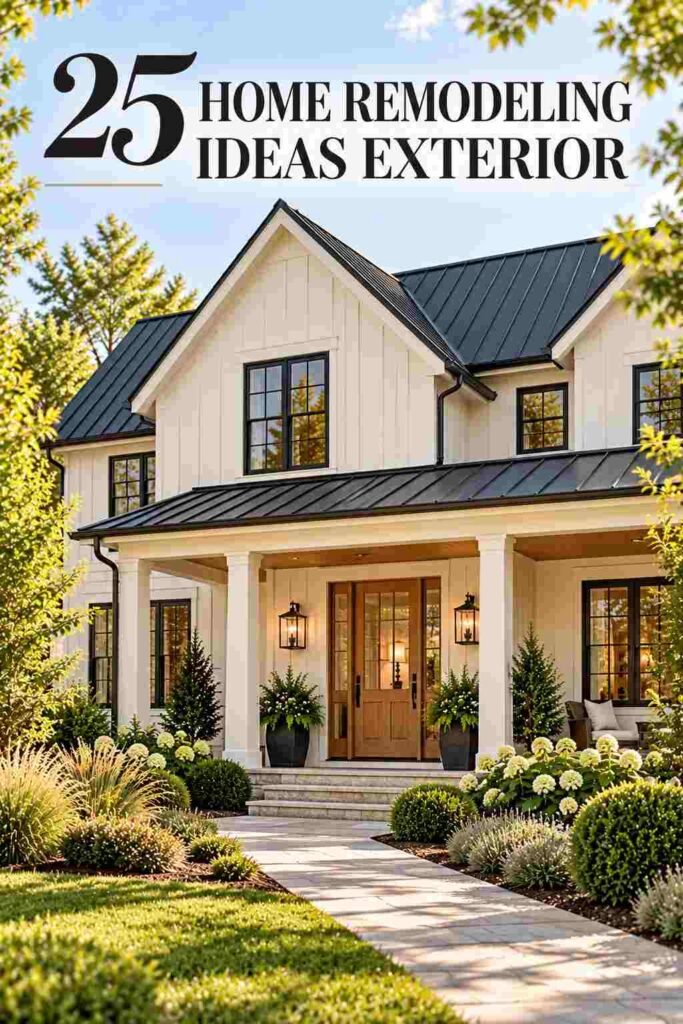
Standing-seam metal roofs can last several decades, shed snow well, and reflect heat. They cost more than asphalt shingles but often need less maintenance. Choose a finish with a manufacturer warranty, and confirm that your insurer and local rules allow it.
10. Re-Roof With Architectural Shingles
If metal is out of reach, architectural shingles offer depth and better wind ratings than basic three-tab options. They come in many colors, so choose one that complements your siding. Replace damaged underlayment and flashing at the same time.
11. Refresh Gutters, Fascia, and Soffits
Clean, properly sloped gutters protect siding, foundations, and landscaping from water damage. Replace sagging sections and rotted fascia boards. Consider gutter guards if you have many trees. These repairs rarely excite visitors, yet they prevent costly problems.
Windows, Doors, and Lighting Ideas
Openings and lighting influence how a home feels from both sides. Good choices cut energy loss, bring in daylight, and make the exterior look finished after dark. Replace windows in stages if the whole house is too much at once, starting with the worst offenders.
12. Install Energy-Efficient Windows
Look for double- or triple-pane glass with low-E coatings and ENERGY STAR labels suited to your climate zone. Better windows reduce drafts and noise. Make sure installers flash and seal each opening correctly, because poor installation causes more leaks than poor glass.
13. Choose Black or Dark Window Frames

Dark frames add contrast against white or light siding and suit modern and farmhouse designs. They can absorb more heat in hot regions, so check the product’s specifications. Matching exterior trim keeps the effect clean.
14. Layer Outdoor Lighting

Combine wall sconces at doors, path lights along walks, and soft uplights on trees or textured walls. Warm LED bulbs save energy and feel welcoming. Lighting improves safety on stairs and driveways. Add timers or motion sensors for convenience.
15. Add a Dormer or Gable Detail
A small dormer or decorative gable breaks up a plain roofline and can bring light into an attic space. This is a structural project, so involve an architect or engineer. Done well, it adds character and, sometimes, usable room.
Outdoor Living Space Ideas
Outdoor rooms extend your living area and often become the favorite spot in the house. Think about how you actually live. Do you grill every weekend, host large groups, or want a quiet place for morning coffee? Let those habits decide the layout before you pick finishes. Good home remodeling ideas exterior plans balance beauty, shade, privacy, and upkeep.
16. Build or Replace a Deck

A deck is a flexible way to add outdoor space, especially on sloped lots. Composite boards resist rot and fading and need little care. Pressure-treated wood costs less but needs regular sealing. Always have the framing and ledger attachment inspected.
17. Lay a Paver Patio
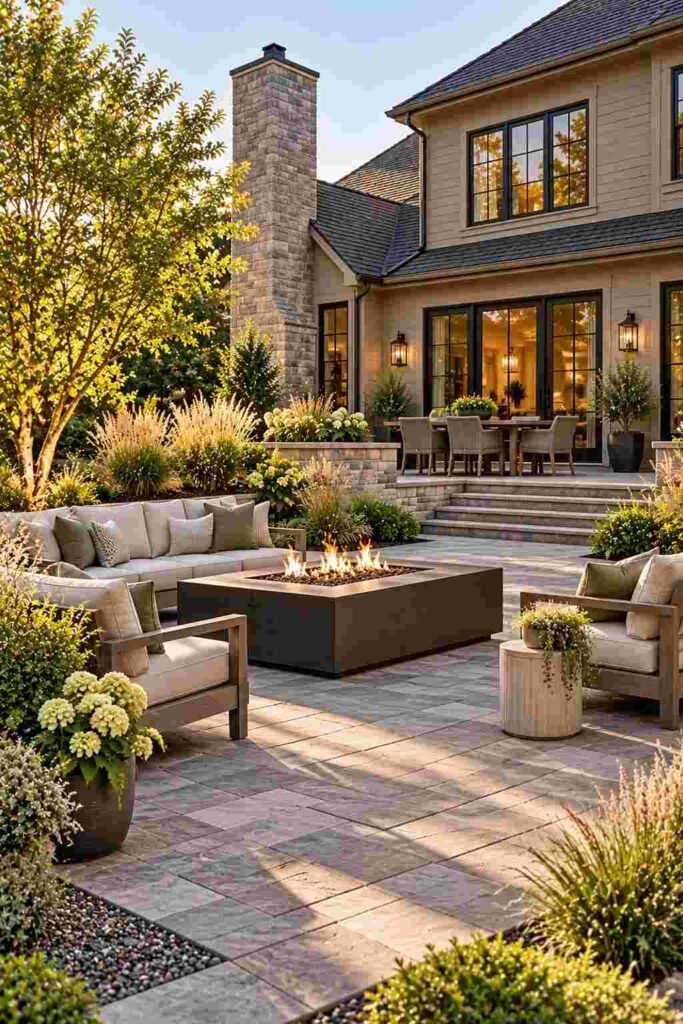
Concrete or natural stone pavers create a durable, level surface for dining and seating. Proper base preparation and drainage matter most. Pavers can be replaced individually if damaged, which makes repairs easier than with poured slabs.
18. Add a Pergola
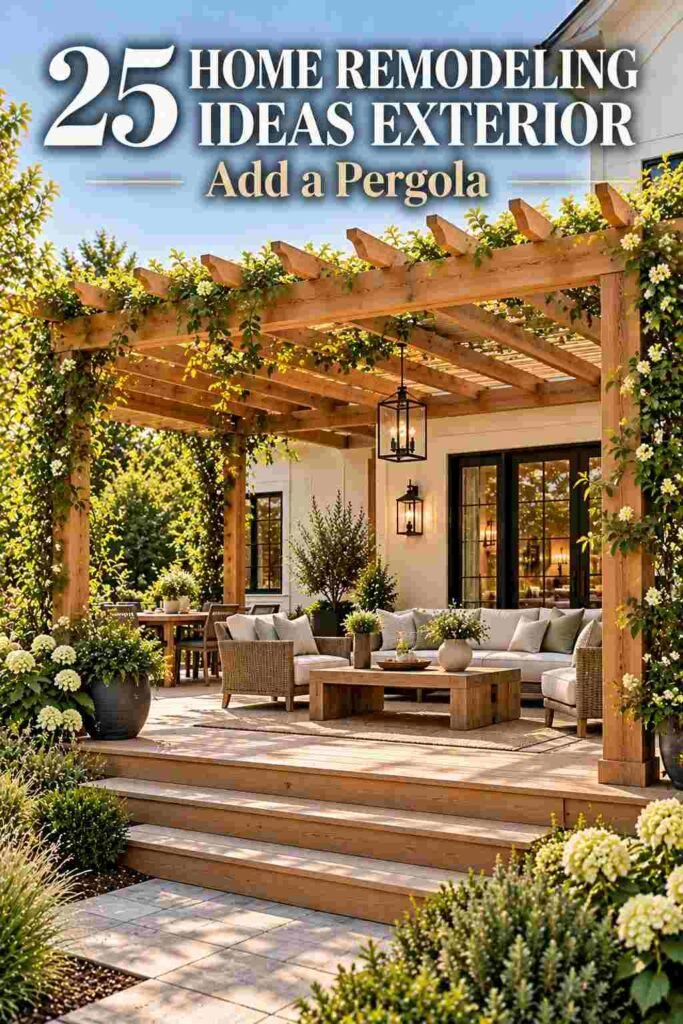
A pergola defines a seating area and supports climbing plants or shade fabric. Cedar, vinyl, and aluminum are common materials. Choose adjustable louvers if you want control over sun and rain. Anchor it securely against wind.
19. Create an Outdoor Kitchen
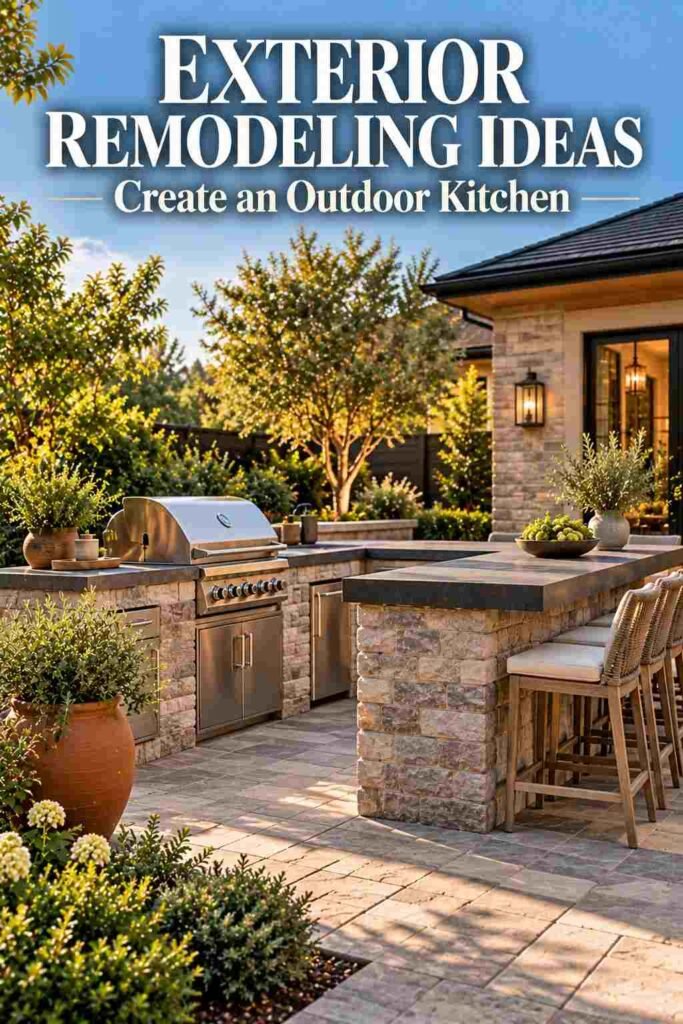
Even a simple setup with a grill, counter, and storage turns a patio into an entertaining hub. Use weather-resistant materials such as stainless steel and stone. Plan gas, water, and electric lines early, and follow local codes for fuel and wiring.
20. Install a Fire Pit
A fire pit extends the usable season and brings people close. Gas models are cleaner and easier to control, while wood-burning pits offer classic crackle. Keep a safe distance from structures and check local burn restrictions.
21. Screen In a Porch

A screened porch keeps insects out while letting breezes in. Add ceiling fans, durable flooring, and weatherproof furniture. It is one of the most beloved additions in warm, buggy regions and can be used for much of the year. For styling the finished patio or porch, check out this mirror table decor food feature for tabletop and entertaining inspiration.

Landscaping, Driveway, and Boundary Ideas
Hardscape and plantings frame the house like a picture frame. They also manage water, create privacy, and guide visitors to the door. Strong landscaping can make a modest facade look polished, so do not treat it as an afterthought.
22. Resurface or Replace the Driveway
Cracked, stained asphalt or concrete drags down the entire front view. Resurfacing, sealing, or replacing it restores a clean base. Pavers, stamped concrete, and gravel borders add style. Fix drainage issues first so water does not undermine the new surface.
23. Build a Welcoming Walkway
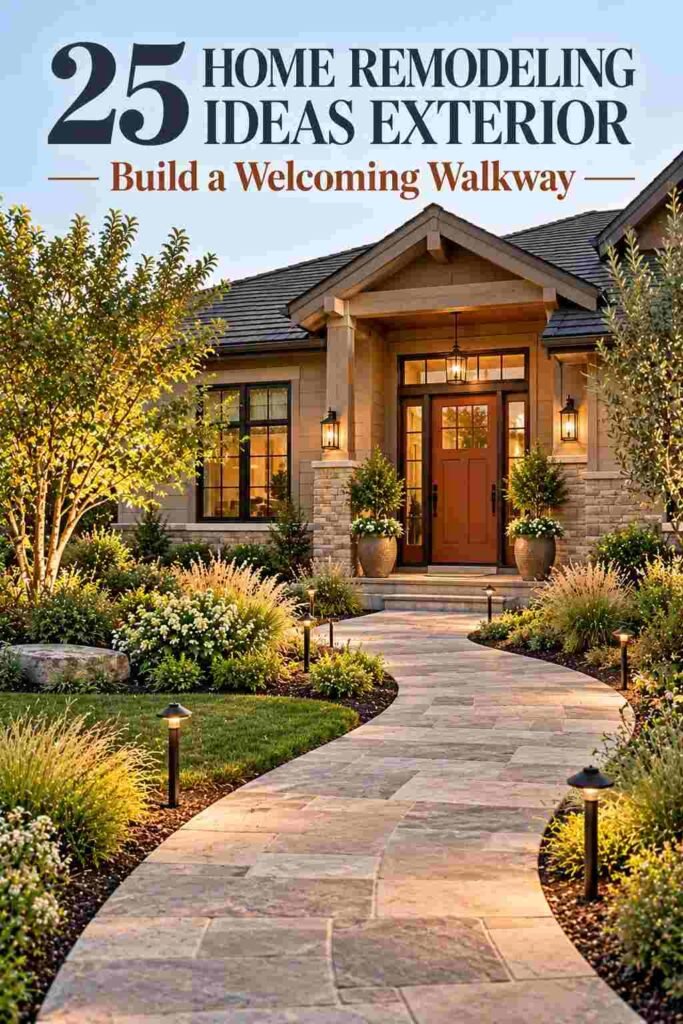
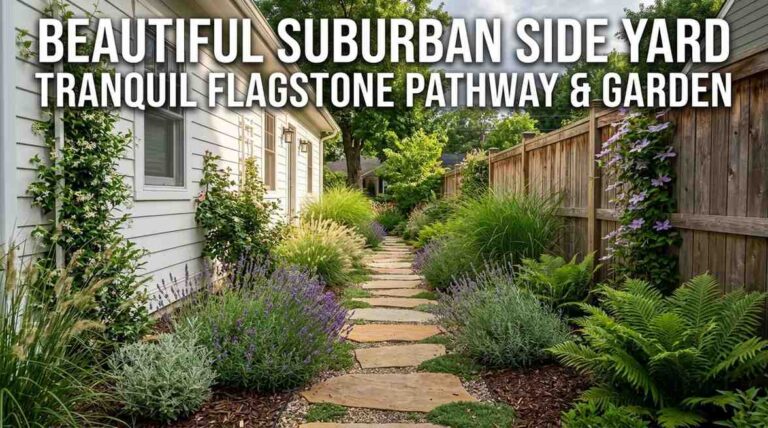
A wide, gently curved path from street to door feels inviting. Use stone, brick, or pavers that echo your home’s materials. Keep surfaces slip-resistant and wide enough for two people. Add low lighting along the edges.
24. Add Fencing or Privacy Screening
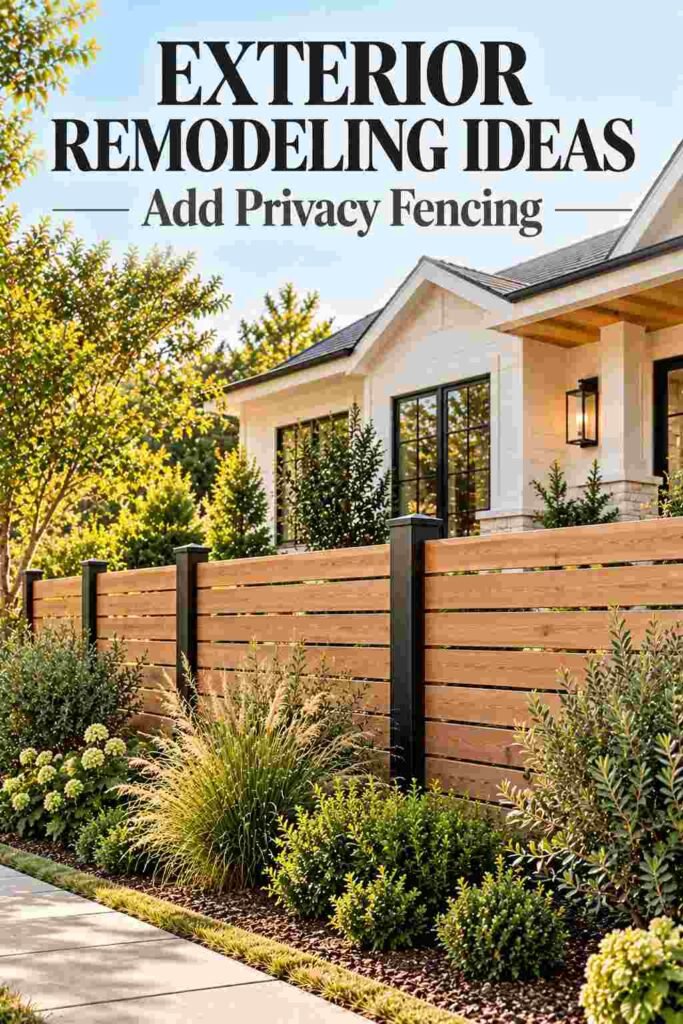
A fence defines boundaries, keeps pets and children safe, and blocks wind or views. Wood, vinyl, aluminum, and horizontal slat designs each suit different styles. Confirm height limits and property lines before building.
25. Plant Native Foundation Beds

Layer evergreens, flowering shrubs, and perennials chosen for your region. Native plants usually need less water and fewer chemicals, and they support pollinators. Keep mulch away from siding, and leave space for plants to reach mature size.

Budget and Priority Tips for Exterior Projects
If funds are limited, work in tiers. Start with repairs and low-cost refreshes such as paint, lighting, hardware, and landscaping. Move next to mid-range upgrades such as doors, garage doors, and windows. Save major projects such as siding, roofing, and outdoor kitchens for when you can plan carefully and collect at least three written quotes.
Verify each contractor’s license, insurance, and references. Ask for a written scope, timeline, and payment schedule. Keep photos of the work in progress. These habits protect you and make future sales or insurance claims simpler. Thoughtful sequencing helps your 25 home remodeling ideas exterior list stay realistic.
Conclusion
An exterior remodel does not have to happen all at once. Start with what protects your home, then add what makes you proud to pull into the driveway. Whether you choose a bold front door, durable siding, a cozy porch, or fresh plantings, each change builds toward a home that looks better and works harder.
Use this list as a starting point, match ideas to your climate and budget, and bring in qualified professionals for structural, electrical, and roofing work. With a clear plan, these home remodeling ideas exterior upgrades can turn an ordinary house into one you truly enjoy. To explore more design and renovation inspiration, visit outinteriors for related guides.