Shed to Tiny House: Complete Guide to Costs, Permits, Design, and Livable Comfort
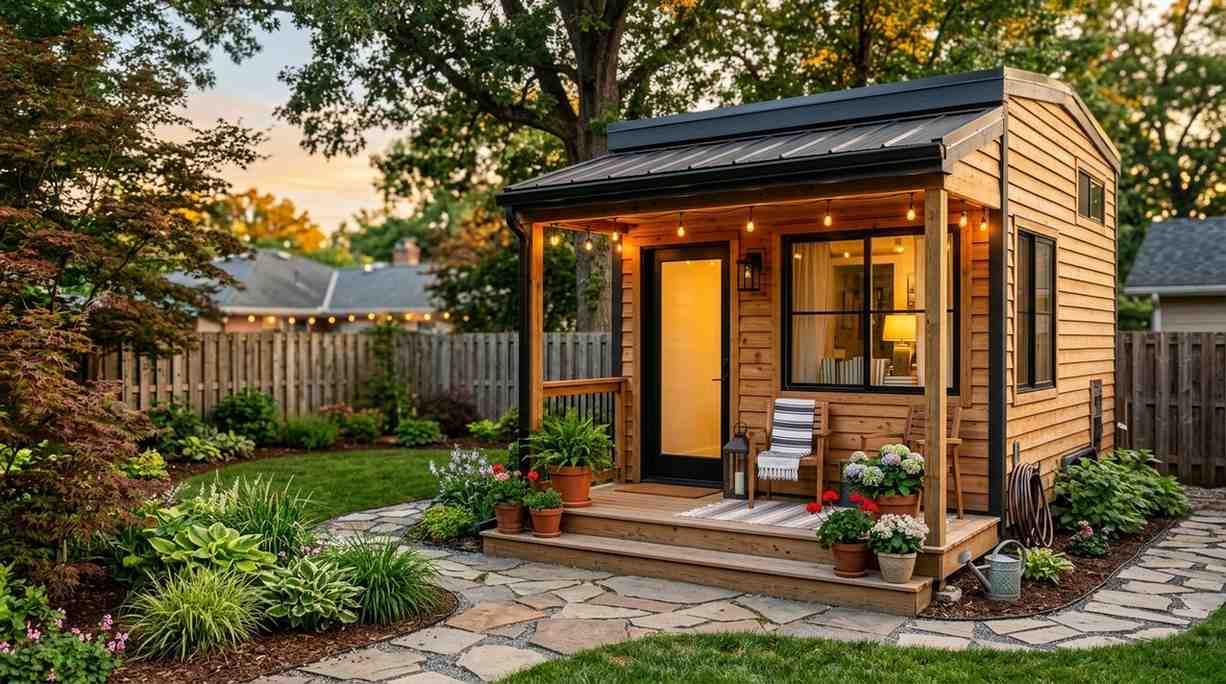
Turning a shed to tiny house project into a real home sounds simple at first. You buy a shed, finish the inside, add a bathroom, and move in. Real life is more detailed. A storage shed is built to hold tools, lawn equipment, and boxes. A home must safely handle people, heat, water, electricity, moisture, appliances, and daily wear.
A good shed conversion starts long before paint colors and cabinet choices. It begins with local rules, structural checks, budget planning, and a clear idea of how the space will be used. When planned correctly, a converted shed can become a guest cottage, backyard suite, starter home, retreat, or flexible living space. When rushed, it can become expensive, uncomfortable, or impossible to approve.
Is a Shed to Tiny House Conversion Really Possible?
Yes, a shed can be converted into a tiny home, but not every shed is a good candidate. A livable structure needs proper framing, a safe foundation, insulation, ventilation, code-compliant wiring, moisture control, and approved sanitation. A shed that looks charming from the outside may still need major upgrades behind the walls.
Before starting a shed to tiny house conversion, think of the shed as a shell, not a finished home. The shell may save time and provide a basic structure, but the real work happens in the hidden systems. Walls, floors, roof framing, windows, doors, and utility paths must all support residential use. That is why the smartest projects begin with inspection, not decoration.
Before Your Shed to Tiny House Project: Check Local Rules First
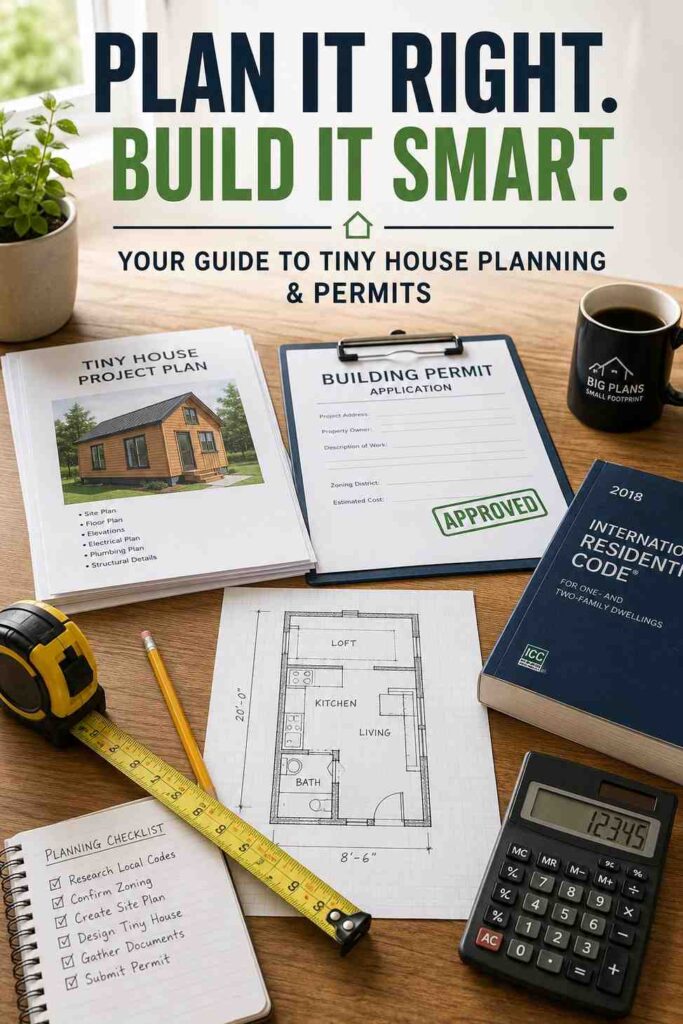
Local rules decide whether your project can legally be used as a dwelling. Many areas treat sheds as accessory structures, not homes. A converted unit may be classified as an accessory dwelling unit, guest house, detached bedroom, cabin, or small single-family dwelling depending on your location and use.
Successful shed to tiny house conversions usually begin at the local building or planning department. Ask whether a dwelling is allowed on the property, whether it can include a kitchen and bathroom, and whether it must be connected to approved water, sewer, septic, and electric service. Also ask about setbacks, parking, fire separation, maximum lot coverage, and minimum dwelling size. Getting these answers early can prevent wasted money.
Choose the Right Shed Shell
The best shed shell is strong, dry, level, and large enough for the intended layout. A common choice is a 12×20, 12×24, 12×28, or 12×32 shed because those sizes allow room for sleeping, cooking, storage, and a small bathroom. A lofted shed can add storage or sleeping space, but lofts must still be safe, accessible, and comfortable.
Look for quality framing, straight walls, a sound roof, pressure-treated floor framing, and space for insulation. Avoid sheds with water stains, sagging floors, roof leaks, weak doors, or major pest damage. A cheaper old shed may cost more to repair than a new shed designed for conversion. If the structure cannot pass inspection, the low purchase price will not matter.
Cost to Convert a Shed Into a Tiny Home
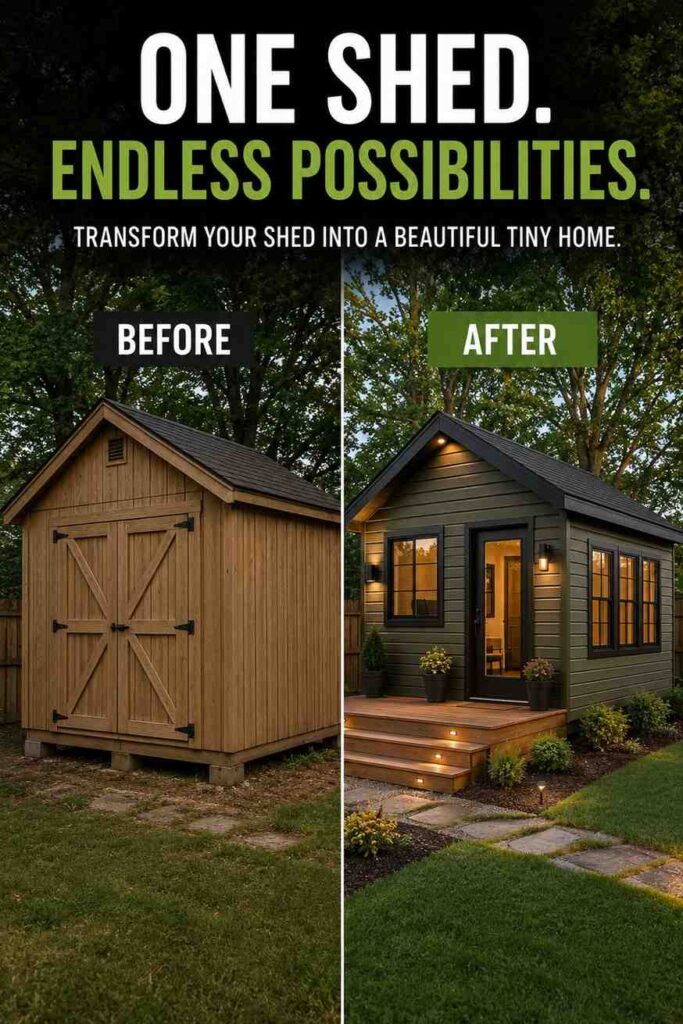
A shed to tiny house budget depends on the shed size, location, utilities, finish level, labor, and required permits. A simple DIY guest space without plumbing may cost far less than a full-time dwelling with a kitchen, bathroom, heating, cooling, and utility hookups. The shell is only one part of the total cost.
Important cost categories include the shed, delivery, foundation, framing upgrades, windows, doors, insulation, electrical work, plumbing, HVAC, drywall, flooring, cabinets, appliances, fixtures, permits, inspections, and exterior improvements. Utility connections can be one of the biggest surprises, especially if the unit needs a new sewer line, septic work, trenching, water service, or panel upgrades. Always keep a contingency fund for hidden issues.
Permits and Inspections Matter
A shed to tiny house project is not just a craft project where people will sleep, cook, bathe, or live in it. Permits may be required for the building conversion, electrical system, plumbing, mechanical equipment, foundation, septic, sewer connection, or occupancy approval. Requirements vary by city, county, and state.
Permits protect future use. They also matter when selling the property, insuring the structure, renting it, or connecting utilities. Unpermitted work can create problems later, even when the space looks finished. The safest approach is to ask what drawings, site plans, contractor licenses, and inspections are required before construction begins. Keep records of approvals, receipts, warranties, and inspection sign-offs.
Follow a Smart Inspection Order
A safe shed to tiny house conversion follows a logical order. First, confirm zoning and allowed use. Second, inspect the structure and foundation. Third, create a floor plan with plumbing, electrical, windows, doors, and mechanical systems marked clearly. Fourth, submit plans if required.
After approval, rough-in work usually comes before finishes. Electrical wiring, plumbing lines, ventilation ducts, mini-split lines, and framing changes should be inspected before insulation, and drywall hides them. Insulation, vapor control, wall finishes, flooring, cabinets, fixtures, and final trim come later. The final inspection confirms whether the space can be legally occupied. This sequence saves money because mistakes are easier to fix while walls are still open.
Foundation: Do Not Treat It Like an Afterthought
For a shed to tiny house, the foundation must support more than an empty storage building. Finished walls, appliances, water tanks, tile, cabinets, furniture, and people all add weight. A weak or uneven base can lead to cracked finishes, doors that do not close, moisture problems, and structural movement.
Common foundation options include gravel pads, concrete piers, skids, crawlspace foundations, and concrete slabs. The right choice depends on soil, drainage, frost depth, code requirements, budget, and whether the home will be permanent. Drainage is just as important as strength. The ground should slope away from the structure, and gutters or splash blocks should direct water away from the foundation.
Layout Planning: Make Every Foot Work
A good shed to tiny house layout begins with daily movement. Imagine waking up, making coffee, showering, cooking, working, relaxing, and storing clothes. The plan should support real routines, not just look good in a drawing. Door swings, appliance clearance, bathroom privacy, window placement, and storage all affect comfort.
Place the bathroom near plumbing entry points when possible to reduce cost. Keep the kitchen compact and efficient. A narrow galley kitchen often works better than a bulky island, but small-space lessons from island design can still help with prep zones, storage, and traffic flow. Built-in benches, wall cabinets, under-bed drawers, fold-down tables, and pocket doors can make the home feel larger without increasing square footage.
Insulation, Air Sealing, and Climate Comfort
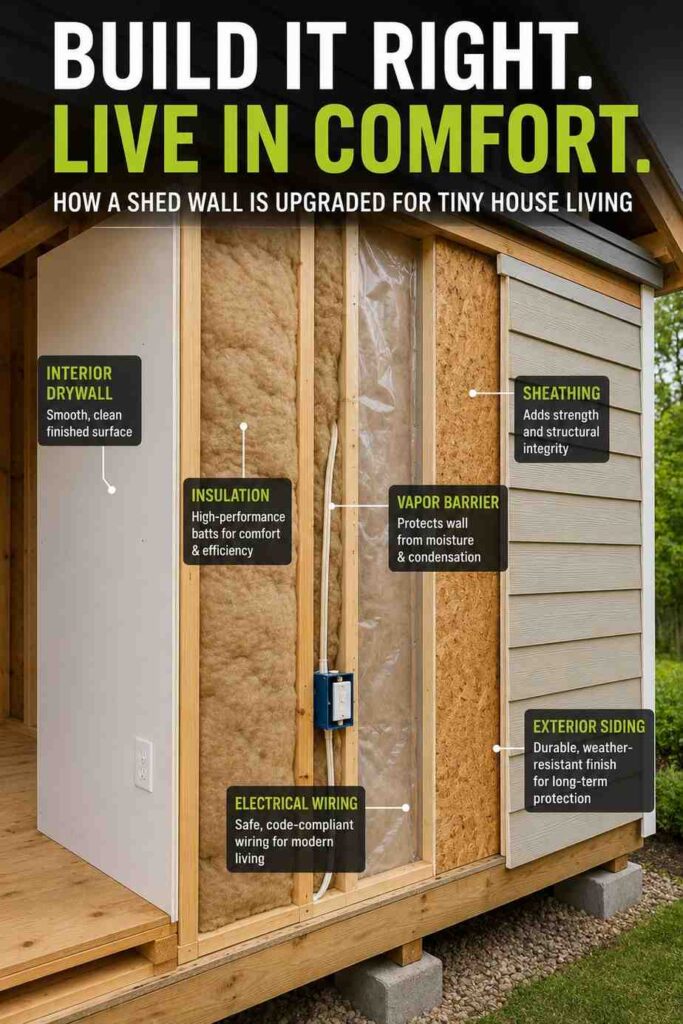
The comfort of a shed to tiny house depends heavily on the building envelope. Thin shed walls, drafty doors, exposed floors, and uninsulated roofs can make the space too hot, cold, damp, or noisy. Insulation should be planned for walls, ceiling, and floor, not just the easiest areas to reach.
Air sealing is equally important. Gaps around windows, doors, rim joists, floor penetrations, and rooflines can waste energy and invite pests. Use proper caulk, flashing, weatherstripping, and foam where appropriate. In cold regions, pay attention to condensation and vapor control. In hot and humid regions, moisture management and ventilation become critical. A small home can become uncomfortable quickly when humidity is trapped inside.
Heating, Cooling, and Ventilation
A ductless mini-split is a popular choice for small homes because it can provide heating and cooling without bulky ductwork. Other options include electric wall heaters, radiant panels, ceiling fans, small wood stoves where allowed, and high-efficiency window units. The best system depends on climate, insulation, power supply, and local code.
Ventilation should not be ignored. Cooking, bathing, breathing, cleaning products, and building materials all affect indoor air. A bath fan, range hood, operable windows, and planned fresh-air strategy help protect comfort and health. In a very tight, small structure, mechanical ventilation may be needed. Good ventilation also helps prevent mold, musty smells, and moisture damage behind finished surfaces.
Plumbing and Bathroom Choices
When planning a shed to tiny house, plumbing can be simple or complex depending on the site. A full bathroom with a flushing toilet, shower, sink, and water heater usually requires an approved water supply and a sewer or septic connection. This can involve trenching, permits, inspections, and licensed work.
Some owners consider composting toilets, holding tanks, greywater systems, or off-grid water storage. These options may be useful in rural settings, but they are not allowed everywhere. Before buying fixtures, confirm what your local rules permit. In small bathrooms, choose compact sinks, corner showers, wall-mounted storage, and sliding doors. Use moisture-resistant materials around wet areas and include a strong exhaust fan.
Electrical Planning and Safety
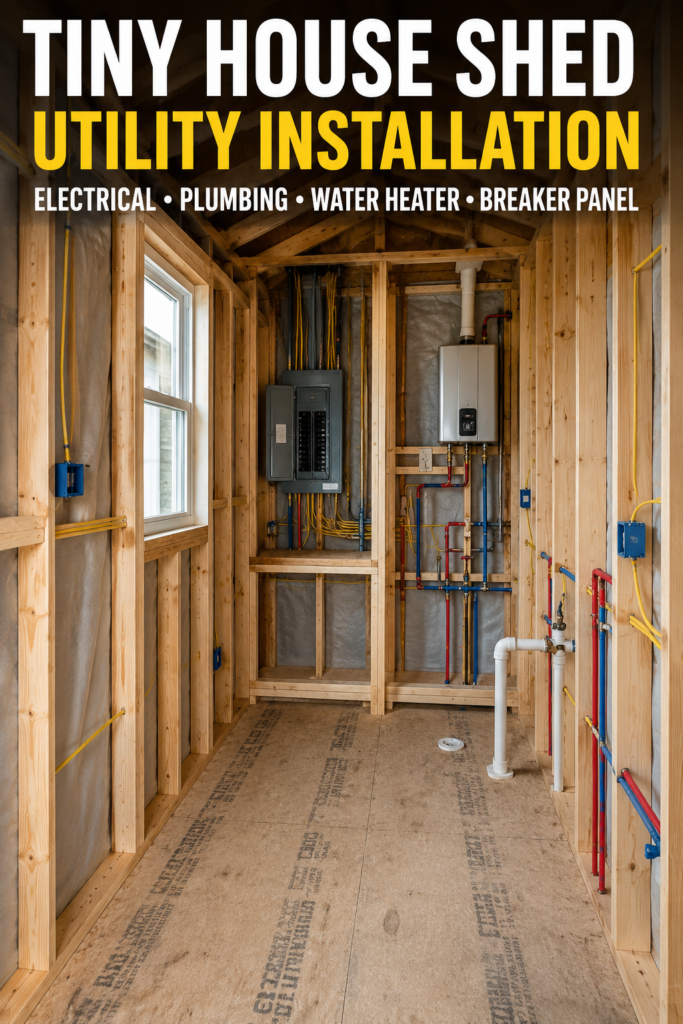
Electrical work should be designed around actual use. A tiny home may need circuits for lighting, outlets, heating and cooling, a refrigerator, an induction cooktop, a microwave, a water heater, a washer-dryer combo, internet equipment, and outdoor lighting. A single extension cord or undersized circuit is not safe for daily living.
Hire a licensed electrician when required or when the system is beyond your skill level. The plan should include GFCI protection in wet areas, proper outlet spacing, smoke and carbon monoxide alarms, exterior-rated fixtures, and enough capacity for future needs. Solar panels and battery systems are possible, but they still need safe design, correct sizing, and approved equipment.
Kitchen Design for Small-Space Living
A small kitchen should be easy to clean, safe to cook in, and realistic for the way you eat. Not everyone needs a full-size range, dishwasher, or large refrigerator. Some tiny homes work well with a two-burner induction cooktop, convection microwave, compact fridge, deep sink, and pull-out pantry.
Counter space is often more valuable than extra appliances. Use vertical storage, magnetic knife strips, narrow shelves, toe-kick drawers, and hooks for daily tools. Choose durable surfaces because tiny kitchens work hard. A window near the sink can add light and ventilation. Warm lighting, natural wood, and a few personal details can keep the kitchen from feeling like a utility corner.
Storage: The Secret to Long-Term Comfort
Small homes fail when storage is treated as an afterthought. Clothing, shoes, cleaning supplies, tools, linens, food, pet items, paperwork, and seasonal items all need a place. Without storage, counters become cluttered, and the home feels smaller than it is.
Use every zone carefully. Add drawers under beds, shelves above doors, hooks near the entry, a narrow broom cabinet, and storage benches. Loft space can hold occasional-use items, but daily items should stay easy to reach. A small wall board near the entry can organize reminders, keys, and seasonal notes; simple June chalkboard ideas can make that spot useful without taking up floor space.
Exterior Upgrades That Make It Feel Like Home
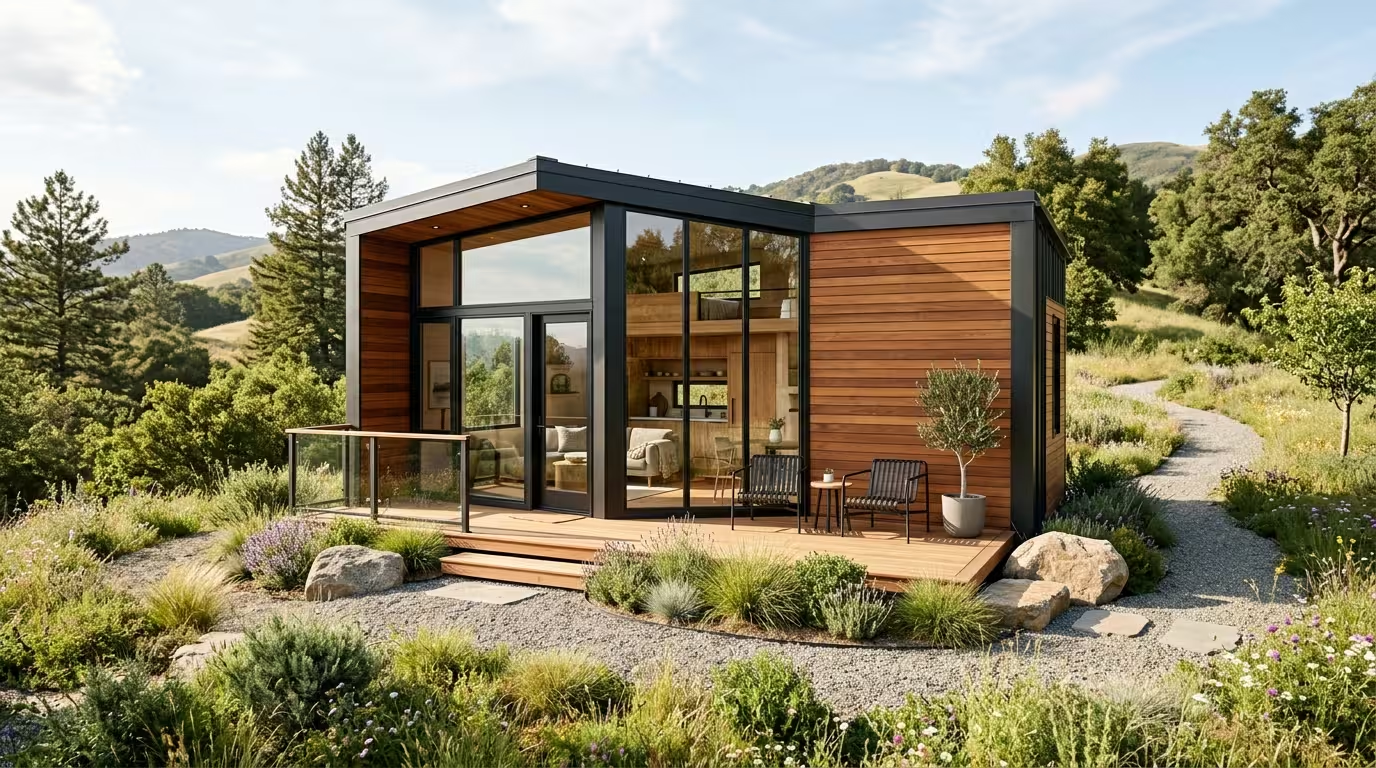
Once the shell is sound, a shed-to-tiny-house conversion should connect to the outdoors. A small porch, steps, skirting, exterior lighting, planters, and a defined path can make the structure feel intentional rather than temporary. These details also improve safety and daily use.
Exterior improvements should still respect drainage and access. Keep soil and mulch away from siding. Use safe steps, railings where needed, and lighting at entries. If the unit will be used by guests or family, add a clear walkway from parking to the door. For outdoor living upgrades, a related outinteriors resource can guide ideas for decks, patios, privacy screens, and small garden zones.
Best Uses for a Converted Shed Home
A converted shed can serve many purposes. It may become a guest suite, backyard office with a bathroom, rental unit where allowed, aging-parent cottage, student space, art studio, weekend cabin, or downsized primary home. The intended use affects the budget, permits, layout, and comfort level.
A weekend retreat may not need the same storage or appliance package as a full-time residence. A rental must be durable, safe, private, and easy to maintain. A family guest suite may need better accessibility, wider paths, and fewer loft-dependent features. Clarifying the purpose early prevents overbuilding in one area and underbuilding in another.
Common Mistakes to Avoid
Most shed to tiny house mistakes happen when design comes before due diligence. Buying a shed before checking local rules can lead to disappointment. Finishing walls before inspection can force expensive demolition. Ignoring moisture can create mold. Choosing the wrong foundation can cause movement. Underestimating utility costs can break the budget.
Another mistake is copying a beautiful online layout without adapting it to the site. Climate, code, soil, utility access, and lifestyle matter more than photos. Avoid oversized furniture, poor lighting, tiny windows, weak ventilation, and too little storage. A tiny home should feel calm and practical, not crowded and improvised.
DIY or Hire a Contractor?
DIY work can reduce labor costs, but only when the owner has the time, tools, skill, and patience to do the work correctly. Painting, flooring, trim, shelving, and some finish work may be realistic for careful homeowners. Structural changes, utility connections, electrical panels, plumbing, HVAC, and code-sensitive work often need professionals.
A contractor can also help with drawings, permits, inspections, scheduling, and trade coordination. This is useful when the structure will be a legal dwelling rather than a hobby space. The best approach may be a hybrid plan: hire professionals for safety-critical systems and handle simpler finish work yourself. That balance can protect both budget and quality.
Safety and Accessibility Considerations
A tiny home should be safe for everyday use. Include smoke alarms, carbon monoxide alarms where needed, safe exits, proper locks, exterior lighting, slip-resistant steps, and bathroom ventilation. Windows should provide light and emergency access where required. Heating equipment must be installed with proper clearances.
Accessibility also matters. Loft sleeping areas may look cozy, but ladders are not ideal for everyone. A single-level layout with a main-floor bed can work better for aging adults, pets, injuries, or long-term living. Wider doorways, fewer steps, lever handles, good lighting, and a curbless or low-step shower can make the home easier to use over time.
Maintenance After Move-In
A converted shed needs regular care because small problems spread quickly in compact spaces. Check caulk, flashing, roof edges, gutters, foundation drainage, and exterior paint. Watch for condensation on windows, musty smells, soft flooring, pests, and roof leaks. Clean filters on heating and cooling equipment.
Inside, keep humidity controlled, especially after showers and cooking. Do not block vents or overload circuits. If the home uses tanks, composting systems, solar batteries, or septic connections, follow manufacturer and local maintenance guidelines. A simple monthly checklist can protect the investment and keep the space healthy.
Conclusion:
A shed to tiny house can be a smart way to create flexible living space, but it should be planned like a real home from the beginning. The strongest projects start with local approval, a solid shell, safe utilities, good insulation, moisture control, and a layout built around daily life.
The goal is not only to make a shed look beautiful. The goal is to make it safe, legal, comfortable, and durable. With the right planning, professional help where needed, and careful design choices, a simple shed can become a warm and practical tiny home that serves its purpose for years.
Frequently asked questions:
How much does a shed to tiny house conversion cost?
Costs vary widely based on size, permits, utilities, labor, and finish level. A simple finished guest space may cost far less than a full dwelling with plumbing, HVAC, kitchen, and bathroom. Utility hookups, foundation work, and professional labor are often the biggest cost drivers.
Can I legally live in a converted shed?
Maybe, but it depends on local zoning and building rules. Some areas allow small dwellings or accessory units, while others restrict living in sheds. Contact your local planning or building department before buying materials or starting work.
What size shed is best for a tiny home?
Many people prefer sheds between 12×20 and 12×32 because they offer enough room for basic living zones. Smaller sheds can work for offices or studios, but full-time living usually needs careful layout planning, storage, and utility space.
Do I need a permit to add electricity and plumbing?
In most areas, electrical and plumbing work requires permits and inspections, especially when the space will be used as a dwelling. Licensed professionals may also be required. Always confirm local requirements before rough-in work begins.
Is a loft a good idea in a converted shed?
A loft can add sleeping or storage space, but it is not ideal for everyone. Consider headroom, ladder safety, ventilation, emergency access, and long-term comfort. A main-floor sleeping area is often better for full-time living.
What is the biggest hidden problem in shed conversions?
Moisture is one of the biggest hidden problems. Poor drainage, weak ventilation, roof leaks, condensation, and wrong insulation choices can lead to mold and structural damage. Plan moisture control before closing the walls.
Can a converted shed be used as a rental?
It may be possible where local rules allow it, but rental use often has stricter requirements. The unit may need legal occupancy approval, safe utilities, proper parking, insurance, and compliance with local housing rules.