Island Design: A Complete Guide to Building a Beautiful, Functional Kitchen Centerpiece
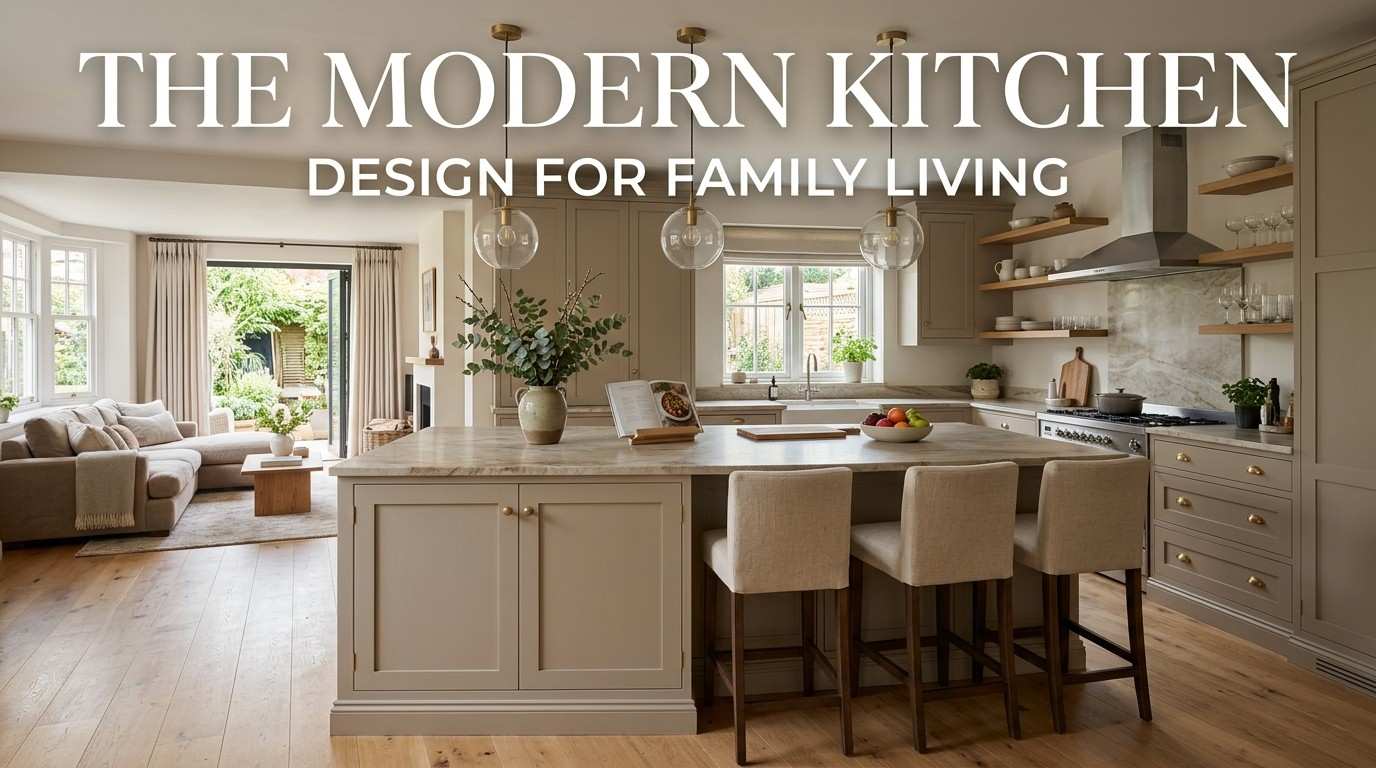
A great kitchen island can change the way a home feels. It becomes the place where groceries land, homework happens, friends gather, and dinner quietly comes together. Yet a beautiful island can also become frustrating if it blocks traffic, crowds appliances, or lacks storage where you need it most. That is why good island design starts with real life before finishes. The right plan considers movement, seating, lighting, storage, safety, and proportion at the same time. Whether you are remodeling a large open kitchen or trying to improve a compact layout, this guide will help you shape an island that looks intentional and works smoothly every day.
What Island Design Really Means in a Modern Kitchen
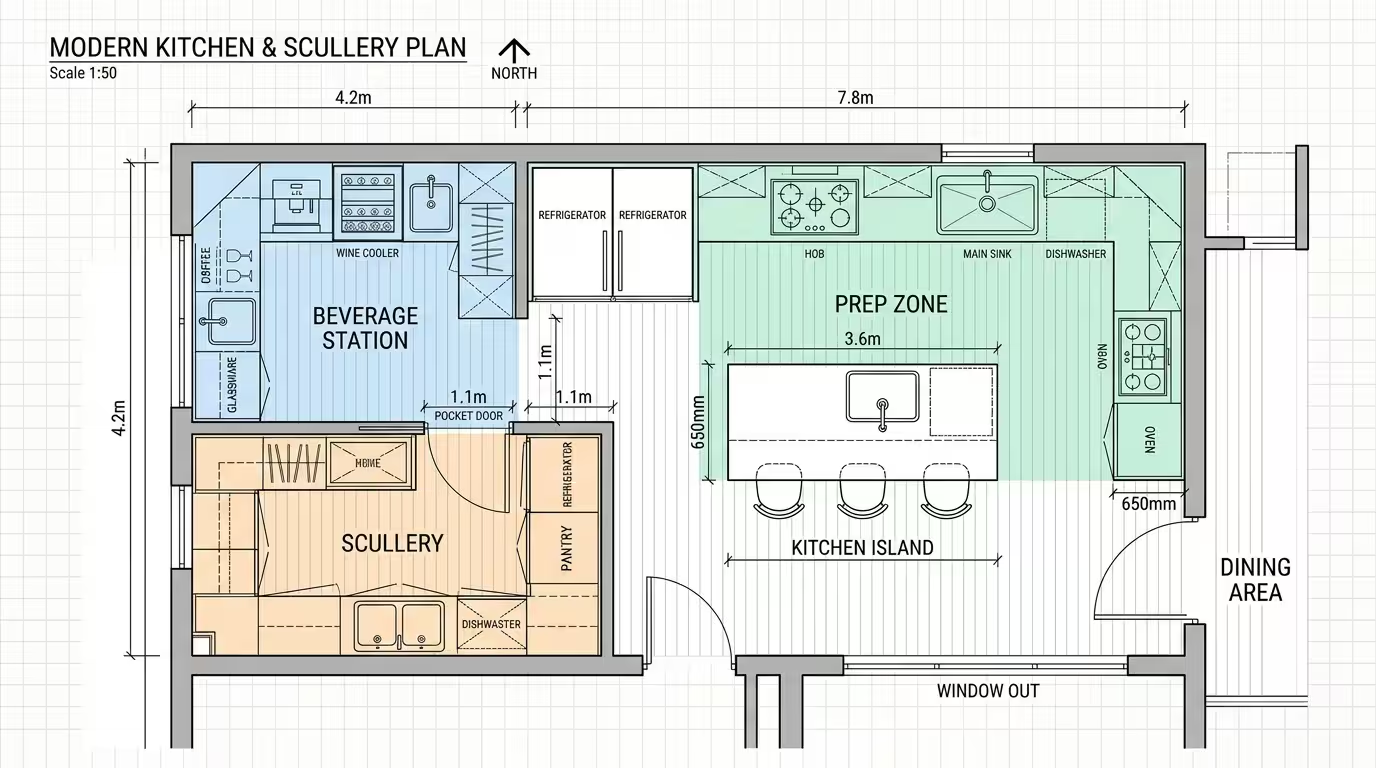
Island planning is not just about placing a cabinet block in the middle of a room. It is the careful planning of a freestanding work zone that supports cooking, serving, storage, cleaning, socializing, or all of these functions in balance. In many homes, the island is also the visual bridge between the kitchen and nearby dining or living areas.
The best island design feels natural because it answers three questions: what do you do most in the kitchen, where do people move, and what should stay within easy reach? A family that cooks daily may need prep space, deep drawers, a trash pullout, and a sink. A host may prefer seating, beverage storage, and a clean surface for serving. A small household may need a flexible worktable rather than a heavy built-in island.
Start With Purpose Before Choosing the Shape
Before choosing stone, stools, or pendant lights, decide the island’s main role. A common mistake is asking one island to do too much. When prep, cooking, cleanup, seating, appliance storage, and display all compete for the same surface, the result can feel crowded. Clear purpose creates a better layout.
For a prep-first island, keep the top open and place knives, mixing bowls, cutting boards, trash, and compost nearby. For a social island, protect the seating side from the busy cooking zone. For a storage island, plan drawers by task instead of filling the base with random cabinets. Planning the kitchen as part of wider dream home ideas also helps the island feel connected to how the entire house supports daily life.
A Prep-Focused Island
A prep-focused island should give you an uninterrupted surface. The most useful version includes a generous stretch of counter, drawers for tools, and nearby access to the sink, refrigerator, and cooktop. If the island includes a prep sink, leave usable landing space beside it so bowls, produce, and utensils have somewhere to go.
A strong island design for cooking does not always need a cooktop. In fact, many homeowners find that a clear island top is more flexible for baking, chopping, plating, packing lunches, and casual dining. If you do add a cooktop, consider ventilation, splatter, hot pan landing space, and whether guests will sit too close to heat.
A Social and Family Island
A social island needs comfort as much as style. Seating should face the room or each other when possible, not just a wall of cabinets. This small shift makes the island feel like a gathering place instead of a cafeteria counter. For families, the seating side may also become a homework zone, breakfast spot, or weekend baking station.
The key is to separate sitting from heavy prep. Place stools where legs will not block appliance doors or the main work aisle. If children often use the island, rounded corners, durable finishes, and easy-clean fabrics matter. A good layout welcomes people without forcing the cook to work around them.
A Storage-First Island
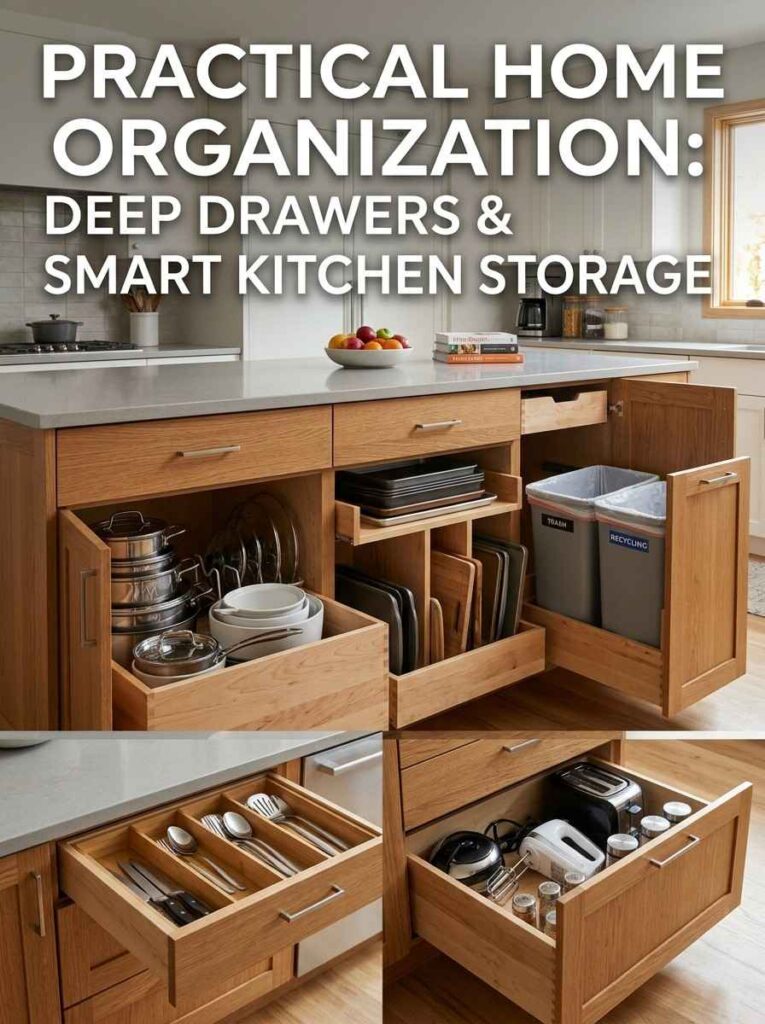
A storage-first island is ideal when perimeter cabinets are limited. Deep drawers often work better than standard doors because you can see and reach everything without kneeling. Use wide drawers for pots, pans, mixing bowls, wraps, baking trays, or lunch containers. Reserve narrow pullouts for oils, spices, cutting boards, or cleaning items.
Think in zones. If the dishwasher is nearby, drawers for plates and everyday glasses can speed up unloading. If the island supports baking, store measuring cups, trays, mixers, and ingredients together. The goal is not just more storage; it is storage that shortens daily movement and keeps the counter calm.
Island Design Dimensions That Make the Kitchen Easy to Use
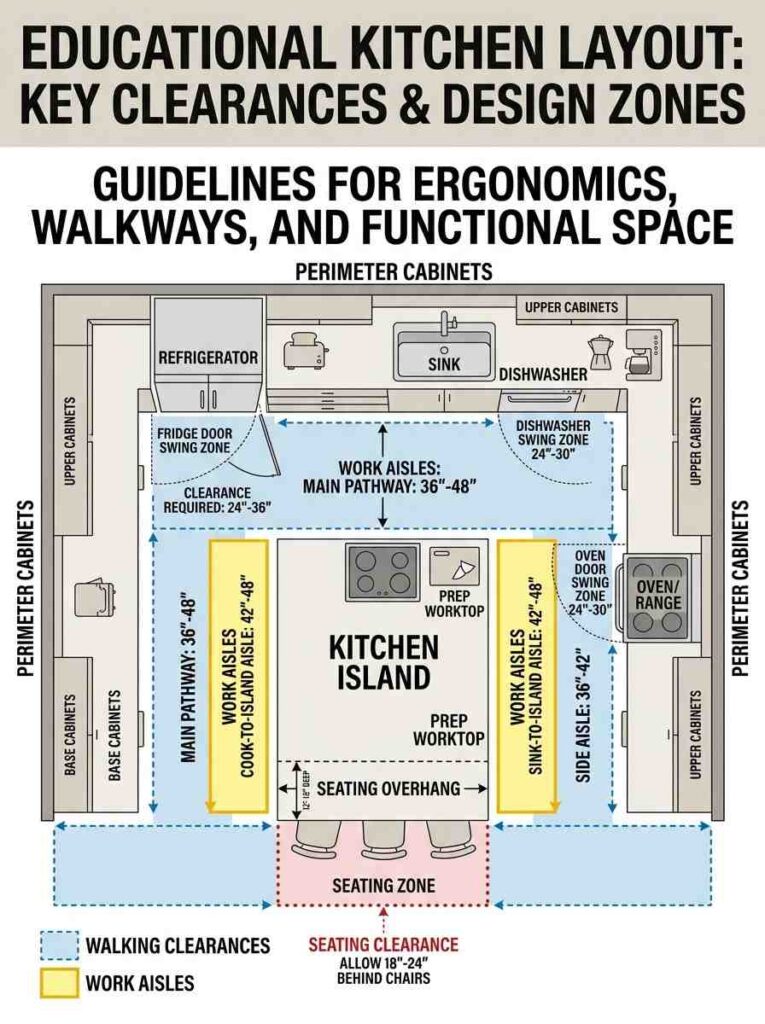
Beautiful finishes cannot fix poor spacing. Before committing to an island, measure the room with appliance doors, cabinet pulls, stools, and walking paths in mind. For work aisles, a practical planning benchmark is at least 42 inches for one cook and 48 inches for multiple cooks. General walkways should stay around 36 inches or more, but busy routes often need extra space.
Seating needs its own clearance. Each diner should usually have about 24 inches of width. Knee space depends on counter height: around 18 inches deep for a 30-inch table height, 15 inches for a 36-inch counter height, and 12 inches for a 42-inch bar height. These numbers may sound technical, but they prevent cramped knees, blocked paths, and stools that never tuck in neatly.
A useful island design test is to tape the proposed footprint on the floor. Then open the refrigerator, oven, dishwasher, and nearby drawers. Walk through the space while someone else stands at the island. If you have to turn sideways, shrink the island, change the shape, or consider another layout. The island should improve the kitchen, not make every trip around it longer.
Choosing the Right Shape and Layout
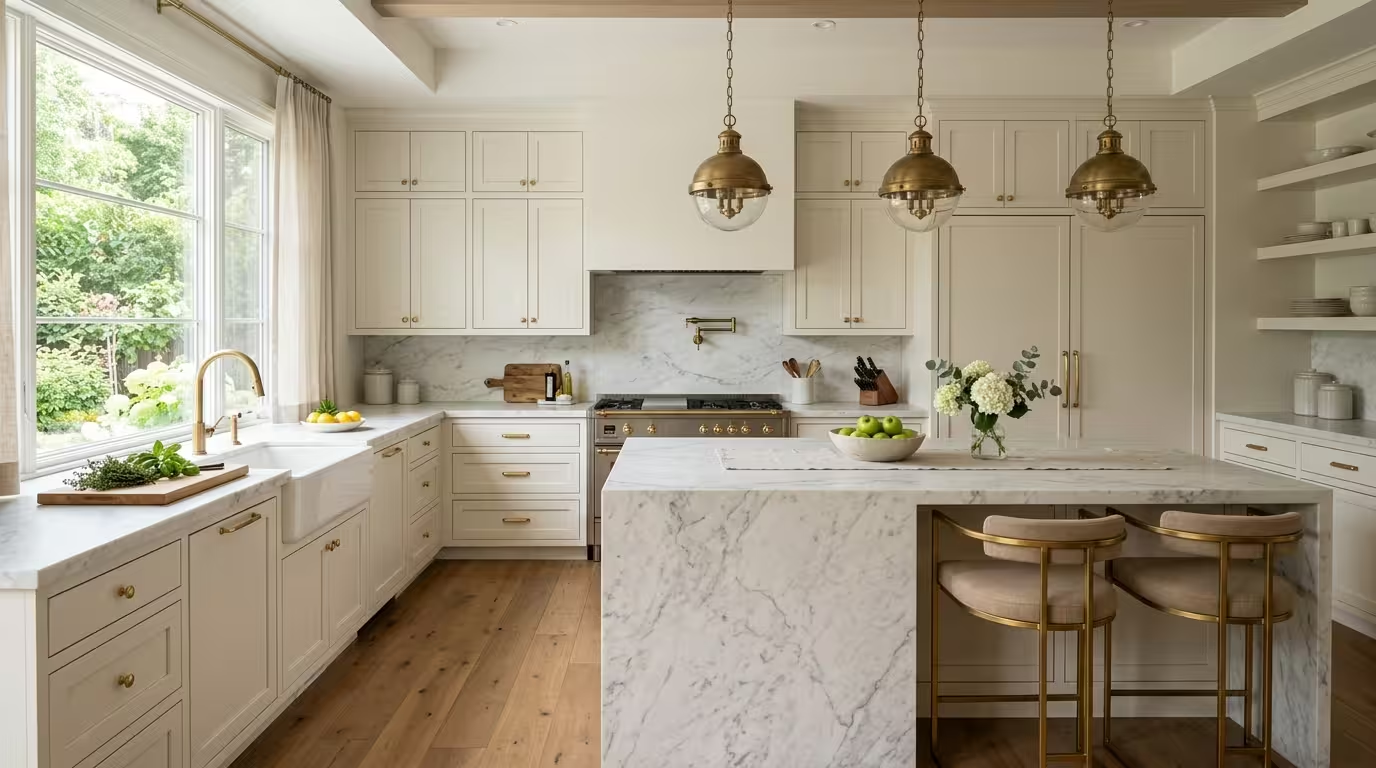
The classic rectangular island works because it is simple, efficient, and easy to build. It suits many open kitchens and can handle prep, storage, and seating in one clean line. A square island can work well in a broad room, especially when it supports conversation from more than one side. Narrow islands suit smaller kitchens when they add surface area without crowding movement.
Curved islands soften traffic and reduce sharp corners, which can help in family spaces or open-plan rooms. L-shaped islands create a natural split between work and seating zones but need enough floor area to avoid feeling bulky. Double islands can be useful in very large kitchens, especially when one supports cooking, and the other supports serving or gathering.
The smartest kitchen island plan is not always a full island. If the room is narrow, a peninsula may provide counter space and seating with less circulation demand. A freestanding worktable or butcher-block cart can also bring flexibility. These options are especially helpful in older homes where walls, windows, and doorways limit the layout.
Smart Storage Ideas That Keep the Counter Clear
An island often becomes the home’s drop zone, so storage must be planned carefully. Start by listing what currently clutters your counters: small appliances, mail, school papers, water bottles, utensils, snacks, chargers, or baking tools. Then create a place for the items that truly belong in the kitchen and move unrelated clutter elsewhere.
Deep drawers are excellent for cookware, while shallow drawers are better for utensils and linens. A pullout trash and recycling center near the prep area keeps cleanup simple. Open shelves at the end of the island can display cookbooks or serving pieces, but use them sparingly because open storage collects dust and visual noise.
A practical layout can also include hidden power, charging drawers, tray dividers, pet feeding storage, or a cabinet for a stand mixer. The best features are the ones you will use weekly, not the ones that simply look impressive on a plan. Every inch should earn its place.
Seating That Feels Comfortable, Not Crowded
Island seating should feel relaxed, not squeezed in as an afterthought. A 72-inch seating run generally fits three stools comfortably when you allow about 24 inches per person. If stools have arms or swivel seats, allow more space. Backless stools tuck in easily, while stools with backs are better for longer meals or children who need support.
Counter-height seating is the most common choice because it lines up with a standard 36-inch countertop. Bar-height seating can hide prep mess, but it may feel less comfortable for everyday dining. Table-height seating is the most accessible and relaxed, especially when the island connects to a built-in dining extension.
Good island design also considers conversation. Seating in a straight row works for quick breakfasts, but corner seating or an L-shaped arrangement feels more social because people can face each other. Leave enough room behind stools so guests can pull out seats without trapping the cook.
Materials and Finishes That Age Well
The island is often the most touched surface in the kitchen, so durability matters. Quartz, granite, marble, soapstone, solid surface, butcher block, and porcelain slabs each have strengths and trade-offs. Some resist stains better. Some handle heat better. Some develop patina. Some need sealing. Choose based on how you cook, clean, and live.
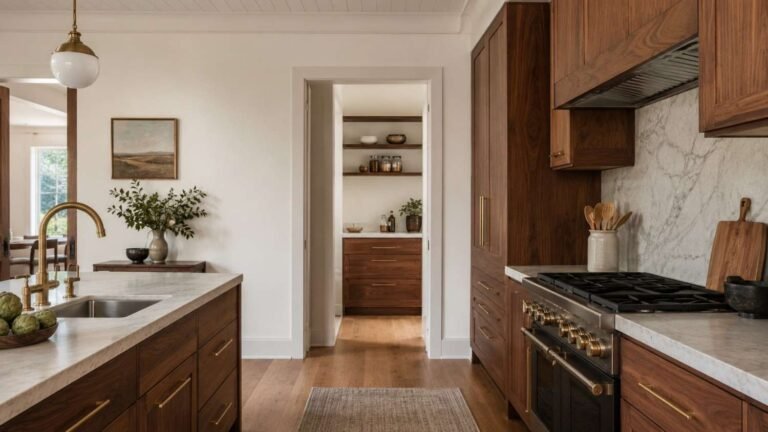
For cabinets, painted finishes bring color and character, while wood adds warmth and depth. A two-tone kitchen can make the island feel like furniture rather than just more cabinetry. Warm whites, natural oak, deep green, navy, charcoal, walnut, and soft blue can all work when they connect with floors, walls, hardware, and lighting.
A timeless island design usually balances one statement with several quiet choices. If the stone has bold movement, keep cabinet fronts simpler. If the island color is strong, let the countertop breathe. Rooms that open to a patio or garden can borrow tones from outinteriors so the kitchen feels connected to nearby outdoor living areas.
Lighting and Electrical Planning
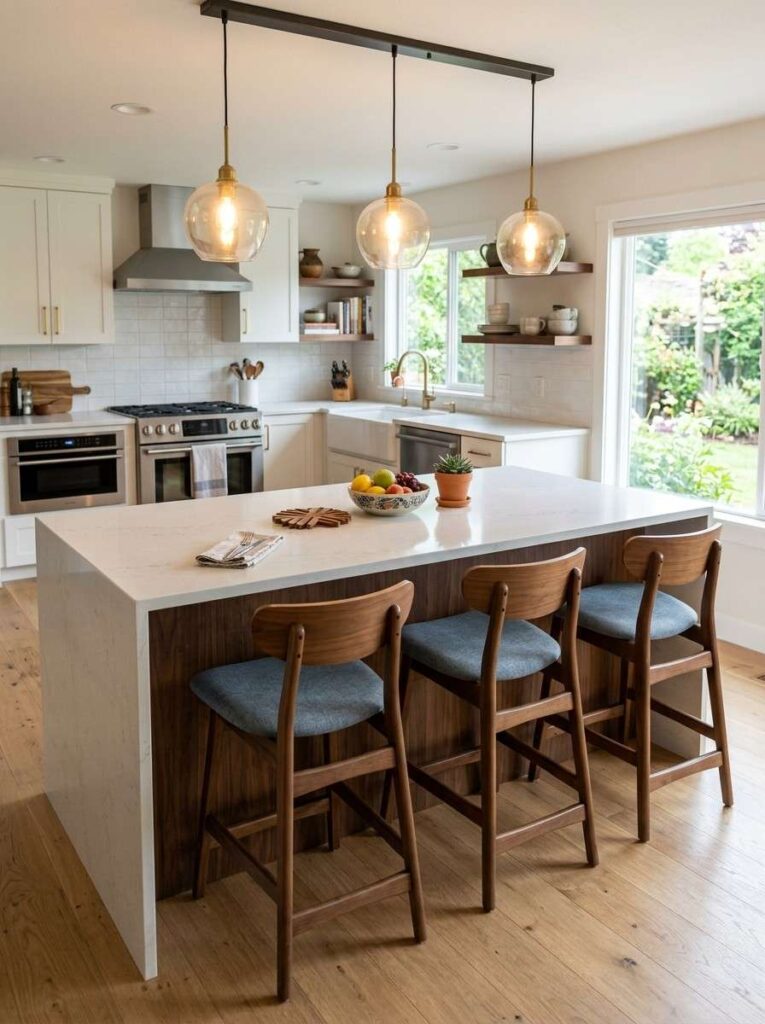
Lighting turns an island from a work surface into a comfortable focal point. Use layered lighting rather than relying on one fixture. Recessed or ceiling lights provide general brightness. Pendants add task lighting and visual rhythm. Under-cabinet or toe-kick lighting can support evening ambiance when the kitchen opens to a living area.
Pendant height depends on ceiling height, fixture size, and sightlines, but many kitchens place pendant lights roughly 30 to 36 inches above the countertop. The goal is to light the surface without blocking faces across the island. Two larger pendants often look calmer than several tiny fixtures, while one linear fixture can suit a long modern island.
Plan power early. The 2023 National Electrical Code changed how island and peninsula receptacles are handled, and local adoption varies across the United States. Speak with a licensed electrician before countertop fabrication so any outlet, pop-up, or future wiring provision is safe, legal, and placed where cords will not create hazards.
Small Kitchen Island Design Ideas That Still Work
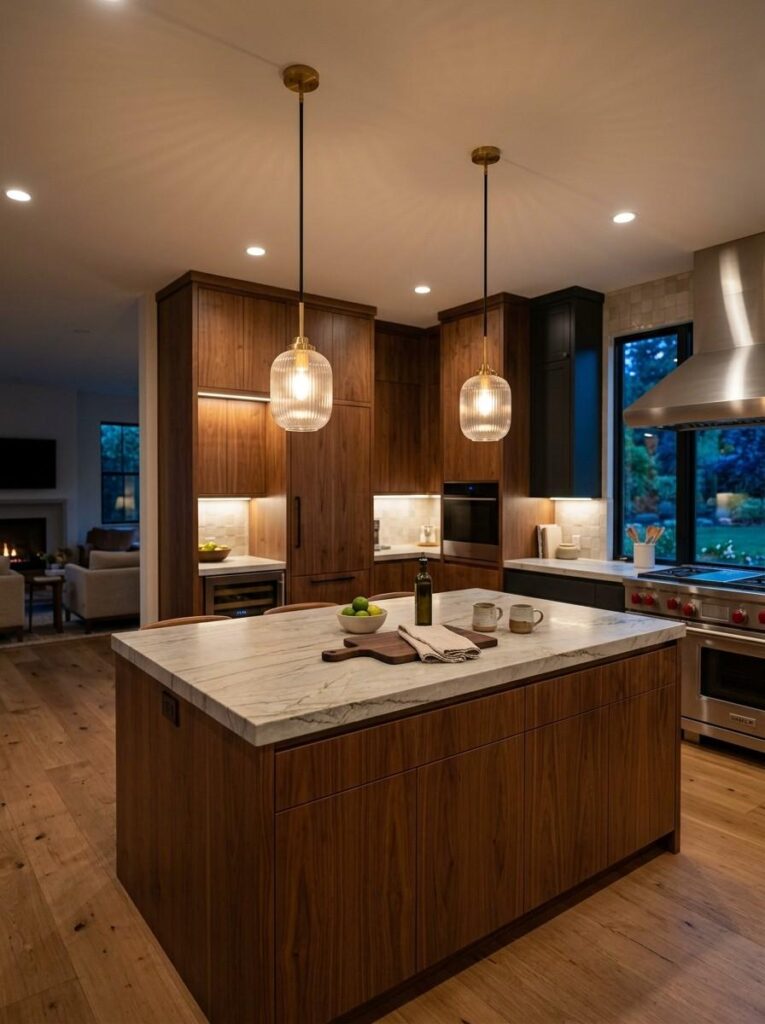
A small kitchen does not automatically rule out an island, but it does demand restraint. A slim island, rolling cart, freestanding table, or narrow butcher block may add the surface you need without blocking every route. Prioritize clearances before storage. A smaller piece with breathing room will feel better than a large built-in island that makes doors collide.
Choose open legs or a furniture-style base when you want the room to feel lighter. Use shelves only for attractive, frequently used items. Consider a rounded end if the main walkway curves around the island. If seating is important, one or two tuck-in stools may be more practical than forcing a full breakfast bar.
Small island design works best when the island has one strong job. It might be a prep station, coffee area, baking table, or landing spot near the refrigerator. When the role is clear, the island can feel intentional even in a modest room.
Styling an Island Without Adding Clutter
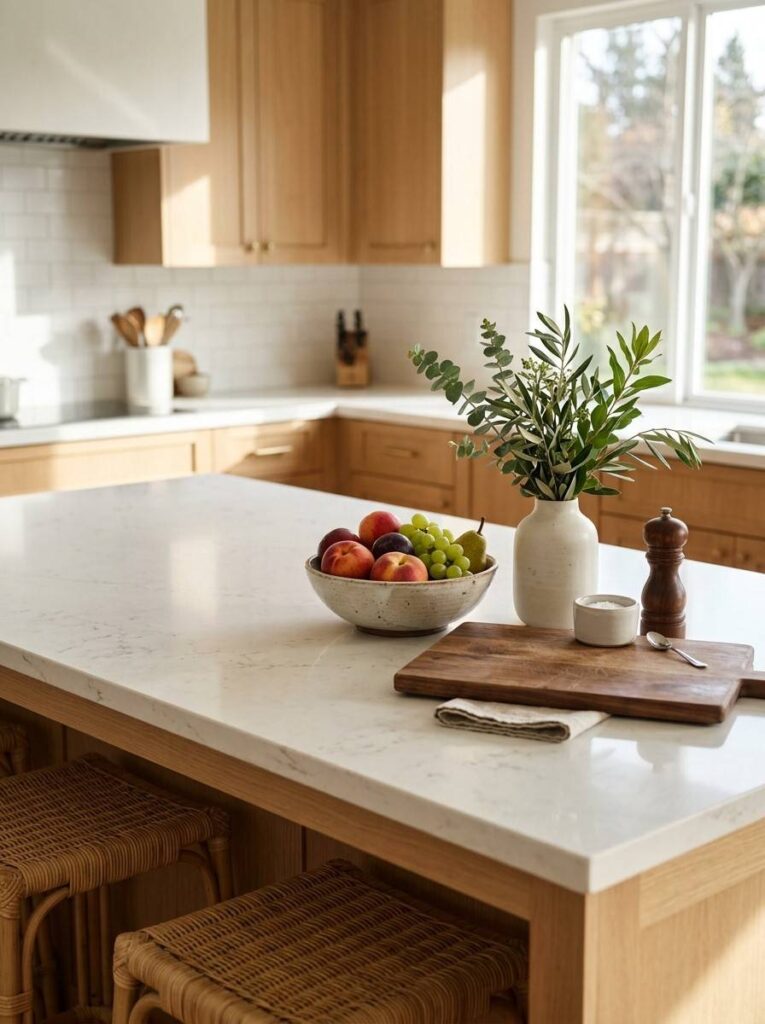
Styling should not steal the workspace. The most successful islands have a few useful objects arranged with care: a fruit bowl, a vase, a tray, a wooden board, a ceramic pitcher, or a small stack of cookbooks. Keep everyday tools attractive if they must stay visible, and store the rest.
Scale matters. A tiny bowl can look lost on a long island, while oversized decor can make the surface hard to use. If the kitchen opens to a living room, repeat a material or color from nearby furniture for a connected look. You can also borrow balance and layering principles from coffee table decor ideas while keeping the kitchen more practical and easier to clean.
A thoughtful island plan leaves room for life. There should be space to unload groceries, roll dough, serve dinner, or set down a laptop. Decor should support warmth, not compete with function.
Common Island Design Mistakes to Avoid
The biggest mistake is making the island too large. Oversized islands may look luxurious in photos, but they can create long walks, awkward cleaning, and poor appliance access. The second mistake is ignoring clearances. Even a beautiful island becomes annoying if the dishwasher blocks the walkway or stools collide with cabinets.
Another mistake is placing seating on the main cooking side. Guests then sit in the work zone, where hot pans, knives, and spills belong. Poor lighting is also common. A single decorative pendant may look pretty but fail to light the full surface. Likewise, choosing delicate finishes without considering children, pets, cooking habits, or cleaning routines can create daily frustration.
Avoid designing only for resale or trends. A good island design should serve the people who live in the home now while staying flexible enough to age well. Let your routine guide the layout, then let style refine it.
A Practical Checklist Before You Build
Before finalizing the plan, walk through a normal day in the kitchen. Where do groceries land? Where do you chop vegetables? Where does a guest stand with a drink? Where do kids sit? Where does the trash go during prep? Where will dirty dishes collect after dinner?
Next, check the measurements. Confirm work aisles, appliance door swings, seating overhang, stool depth, outlet planning, pendant placement, sink landing space, and drawer access. Review the material care requirements in writing, especially for natural stone, wood tops, and painted cabinetry. A practical island design is built on these quiet details.
Finally, test the visual balance. The island should feel related to the room, not like a separate object dropped into the center. Align it with major cabinet runs when possible. Leave enough negative space. Choose one focal feature, such as color, stone, shape, or lighting, and let the rest support it.
Conclusion:
Island design works best when beauty and daily function are planned together. The right island gives you useful surface area, comfortable movement, smart storage, balanced seating, safe power access, and a finished palette that feels connected to the rest of the home. The wrong island usually tries to be too big, too trendy, or too overloaded with features.
Start with your routine, then shape the island around it. Measure carefully. Respect walkways. Choose durable materials. Keep styling simple. When every decision supports how the kitchen is actually used, the island becomes more than a centerpiece. It becomes the hardest-working and most welcoming part of the home.
Frequently asked questions:
What is the best island design for most kitchens?
The best island design is usually a well-proportioned rectangular island with clear walkways, deep drawers, a durable countertop, and seating placed away from the main cooking zone. This shape is efficient, flexible, and easier to adapt to different kitchen styles. However, the best choice always depends on room size, traffic flow, and how you use the kitchen.
How much space do I need around a kitchen island?
Plan for at least 42 inches in a main work aisle for one cook and 48 inches when multiple people cook together. A general walkway can be around 36 inches, but more space is better near seating, appliance doors, and busy household routes. Always test the layout with open doors and pulled-out stools.
Is a sink or cooktop better on an island?
A sink is often more practical because it supports prep and cleanup, especially when paired with good landing space. A cooktop can work, but it requires careful planning for ventilation, hot surfaces, splatter, and guest safety. Many homeowners prefer keeping the island clear because an open surface is more flexible.
What countertop is best for a kitchen island?
The best countertop depends on your habits. Quartz is consistent and low maintenance. Granite is durable and natural. Marble is classic but more prone to staining and etching. Butcher block adds warmth but needs care around water. Porcelain slabs are sleek and resilient, though fabrication quality is important.
Can a small kitchen have an island?
Yes, if the island does not block movement. A slim island, rolling cart, freestanding table, or peninsula may work better than a large built-in unit. In a compact kitchen, choose one main function such as prep, storage, or seating. Clear space around the island matters more than the island’s size.
How many stools fit at a kitchen island?
A good rule is about 24 inches of width per person. A 48-inch run usually fits two stools, while a 72-inch run can fit three. Wider stools, arms, swivel seats, or family dining needs may require more space. Also check the clearance behind stools so people can sit without blocking traffic.
How do I make a kitchen island look high-end?
Use strong proportions, quality hardware, layered lighting, and one standout material or finish. A high-end look often comes from restraint: clean cabinet lines, a beautiful counter edge, thoughtful pendants, and minimal clutter. Keep the surface useful and style it with a few intentional pieces instead of filling it with decor.