Luxury Home Office Aesthetic Ideas to Build a Refined Workspace at Home
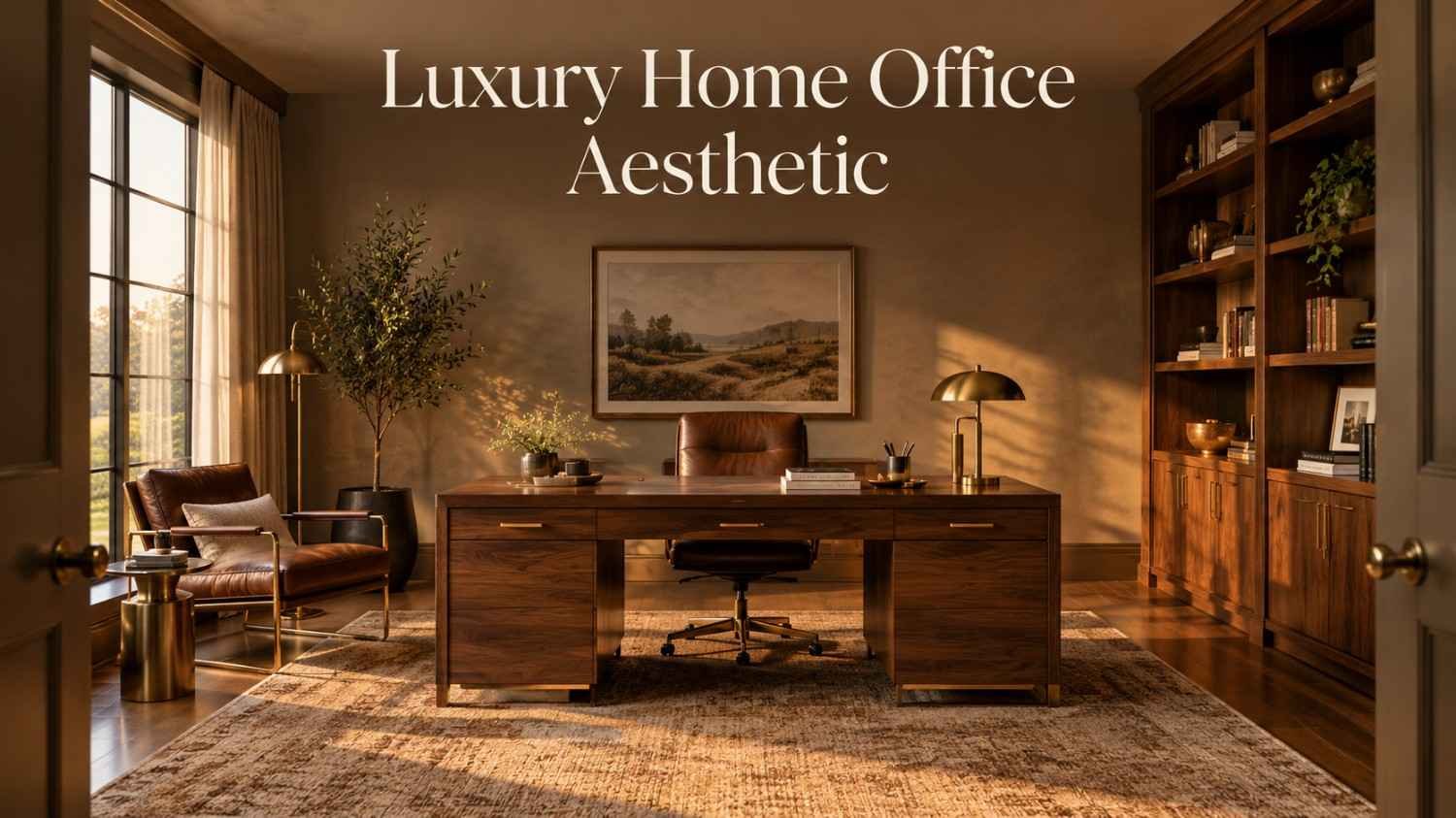
Working from a kitchen table was fine for a season. It is not fine for a career. As remote and hybrid schedules have become permanent fixtures of American work life, the home office has quietly turned into one of the most personal rooms in the house — part command center, part sanctuary. A luxury home office aesthetic is not about spending the most money in the room; it is about choosing materials, light, and layout with the same care you would give a client-facing space, because in many ways, it is one. This guide breaks down 25 practical, design-backed ideas you can use to build that look, whether you have a full spare room or a six-foot alcove.
Why a Luxury Home Office Aesthetic Matters More in 2026
Remote work has stopped being a trend and become infrastructure. Federal labor data shows that roughly 23.7% of employed Americans telework on an average day, a share that has held steady since 2023 rather than shrinking, even as return-to-office mandates made headlines. That stability changes how people think about their workspace. A desk that was meant to be temporary is now where careers get built, so the room deserves the same intention as a living room or kitchen renovation.
At the same time, designers have moved away from cold, minimalist “home office chic” toward something warmer. A genuine luxury home office aesthetic in 2026 leans on tactile materials, layered lighting, and zoned layouts rather than glossy surfaces and matching furniture sets. It also borrows from wellness design — think air quality, acoustic comfort, and daylight — because the room is now used eight or more hours a day, not just for the occasional email.
25 Luxury Home Office Aesthetic Ideas Worth Stealing
These ideas are grouped into five categories so you can focus on what your space needs most: materials, color and light, layout, comfort, and personal finishing touches. Not every category needs equal attention — most rooms only need two or three upgrades before the space reads as intentional rather than assembled.
Rich Materials That Set the Tone
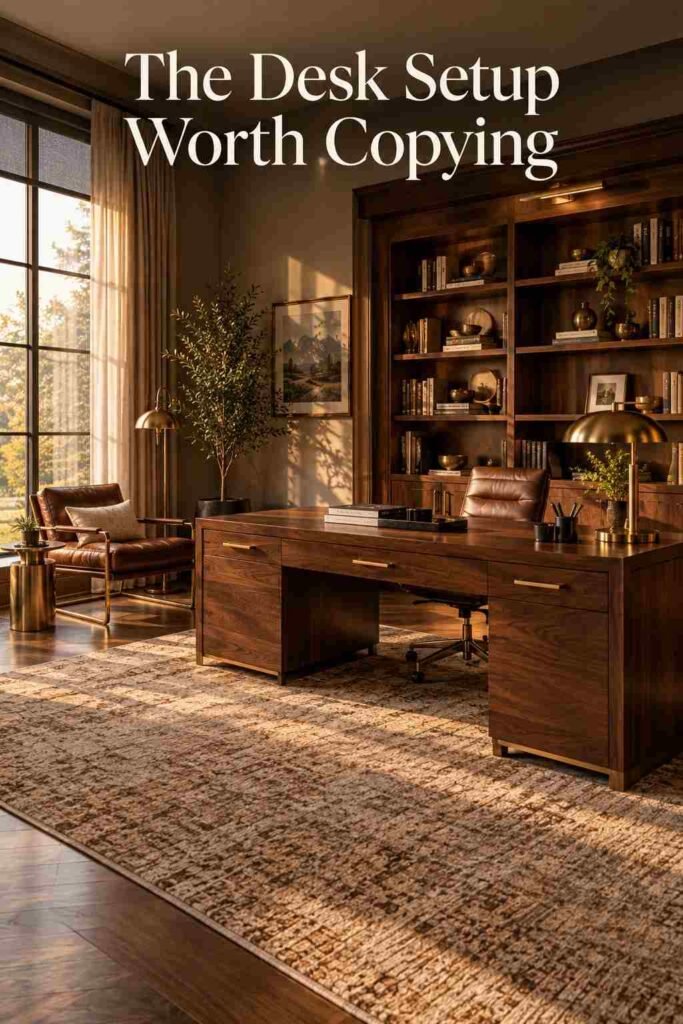
Material choice is where a luxury home office aesthetic is won or lost, since furniture is the largest visual footprint in any workspace.
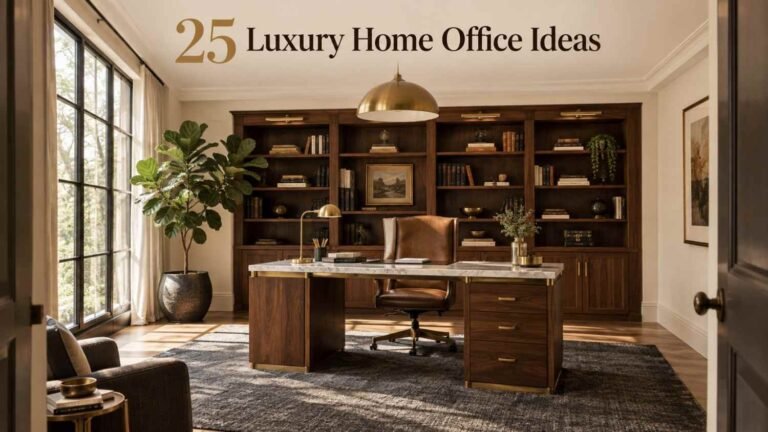
1. Solid wood over veneer. A desk built from solid ash, walnut, or oak develops character with wear, unlike veneer, which chips and dates quickly. It is a one-time investment that outlasts several redecorating cycles.
2. Poured mineral or stone work surfaces
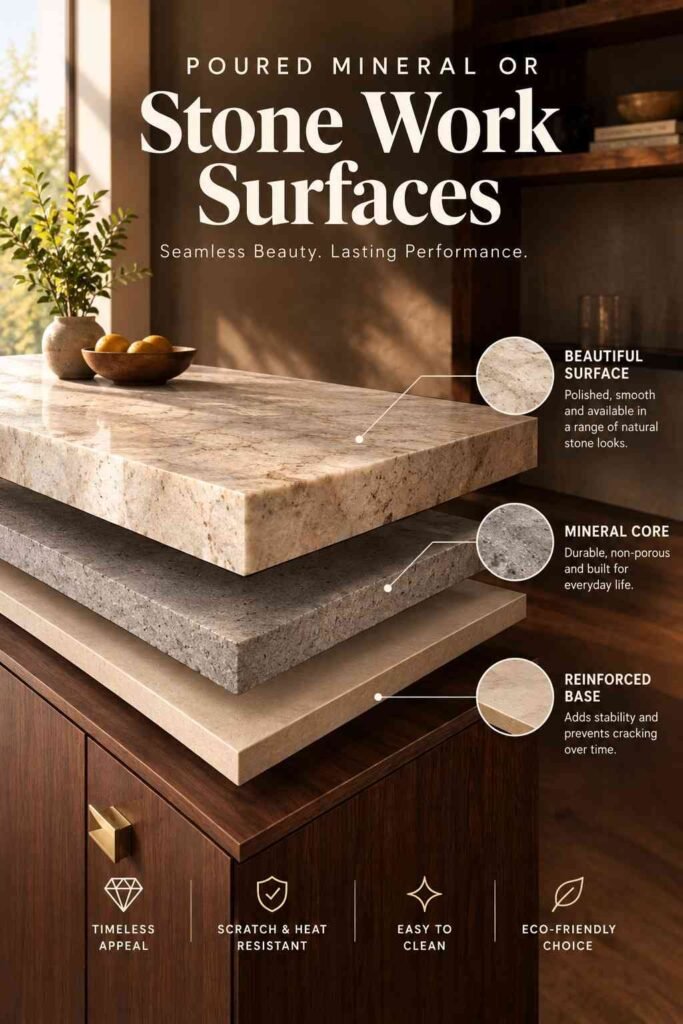
Concrete or mineral-composite desktops with visible texture and uneven pigment give a room an architectural feel that mass-market laminate cannot replicate.
3. Leather or bouclé upholstered seating. A leather task chair or a bouclé accent chair softens the technical feel of a workspace and photographs well on video calls, which matters more than people admit.
4. Brass or matte black hardware
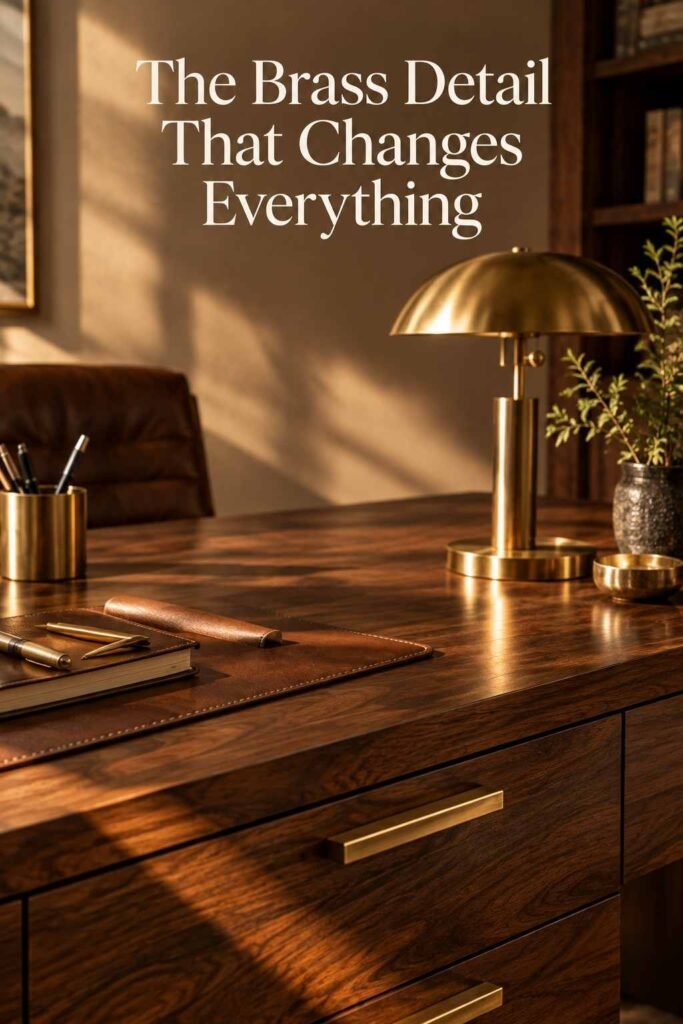
Small metal details on drawer pulls, lamp bases, and shelf brackets pull a room together without requiring a full furniture overhaul.
5. Handcrafted storage cabinetry. Custom or artisan-built shelving with visible joinery signals permanence. It also solves the clutter problem that undermines most attempts at an elegant office.
Color, Light, and Mood
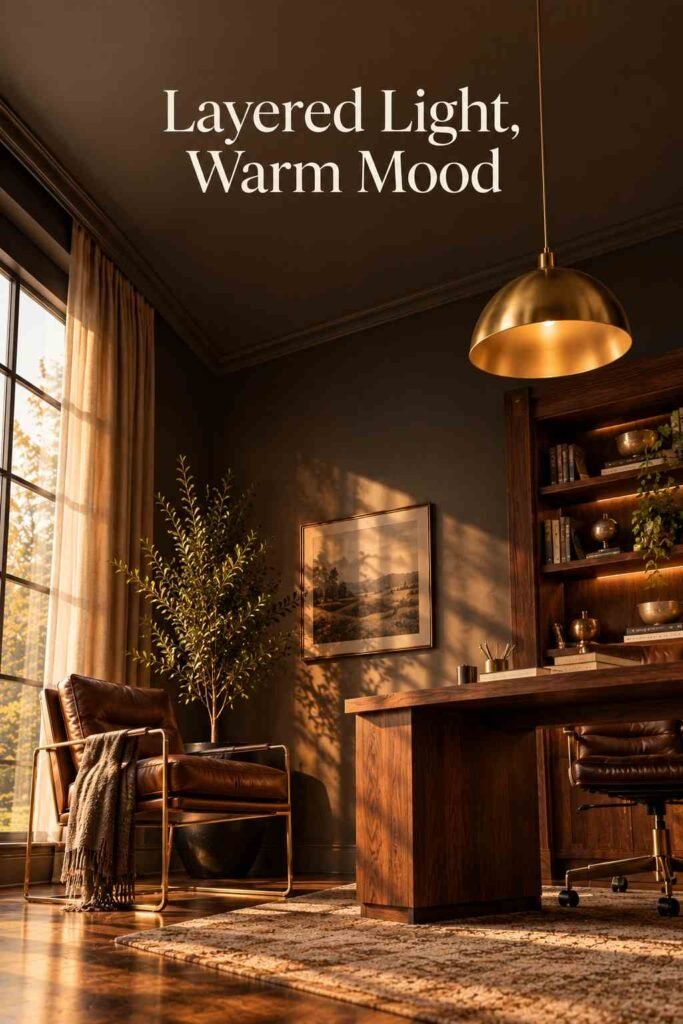
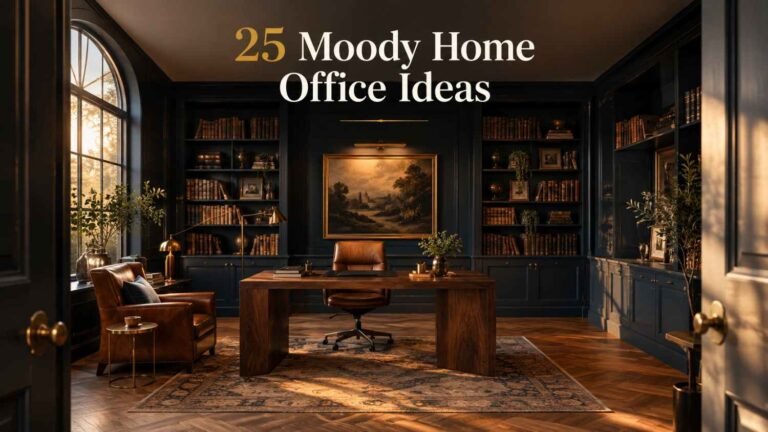
6. Deep, grounding wall tones. Moody greens, chocolate browns, and inky blues create focus in a way that stark white walls do not. Reserve them for one accent wall if the room is small.
7. Layered lighting design. Combine an overhead fixture, a task lamp, and an ambient floor or shelf light. Single-source lighting is the fastest way to make a room feel flat and clinical.
8. Warm metallic accents. Brass or aged-gold picture frames and lamp fittings catch light without the harshness of chrome, which tends to read as sterile in a home setting.
9. Natural light positioning
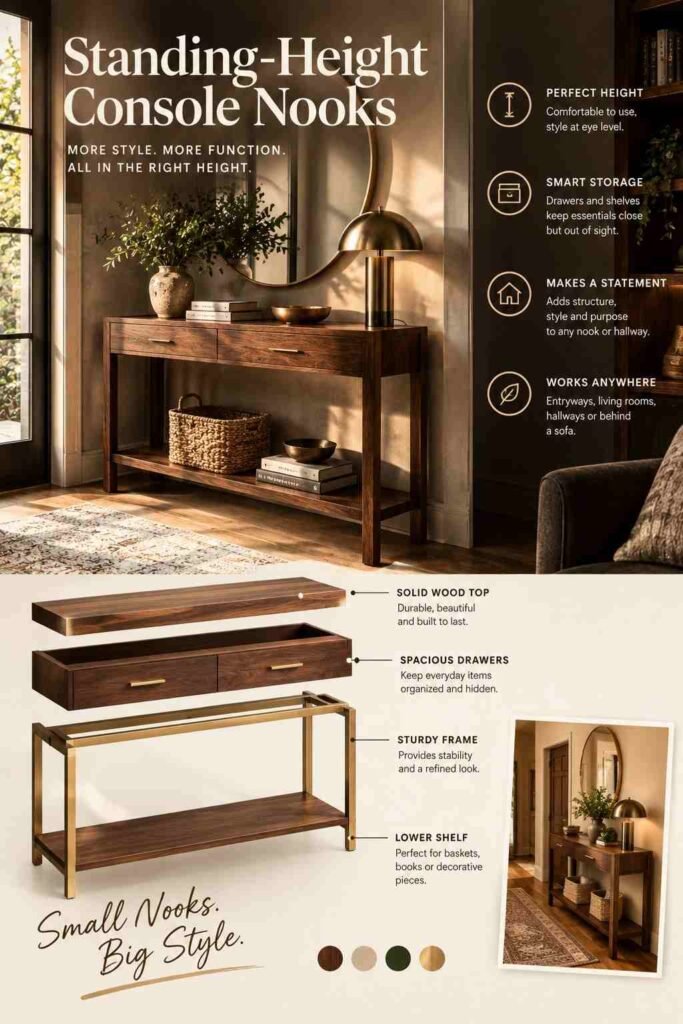
Position the desk perpendicular to the window rather than facing it directly, cutting glare while keeping daylight as the primary light source for most of the day.
10. A soft neutral base palette. Sand, warm white, and greige backgrounds let statement furniture and art do the work, keeping the space from feeling busy or cluttered.
Smart, Zoned Layouts
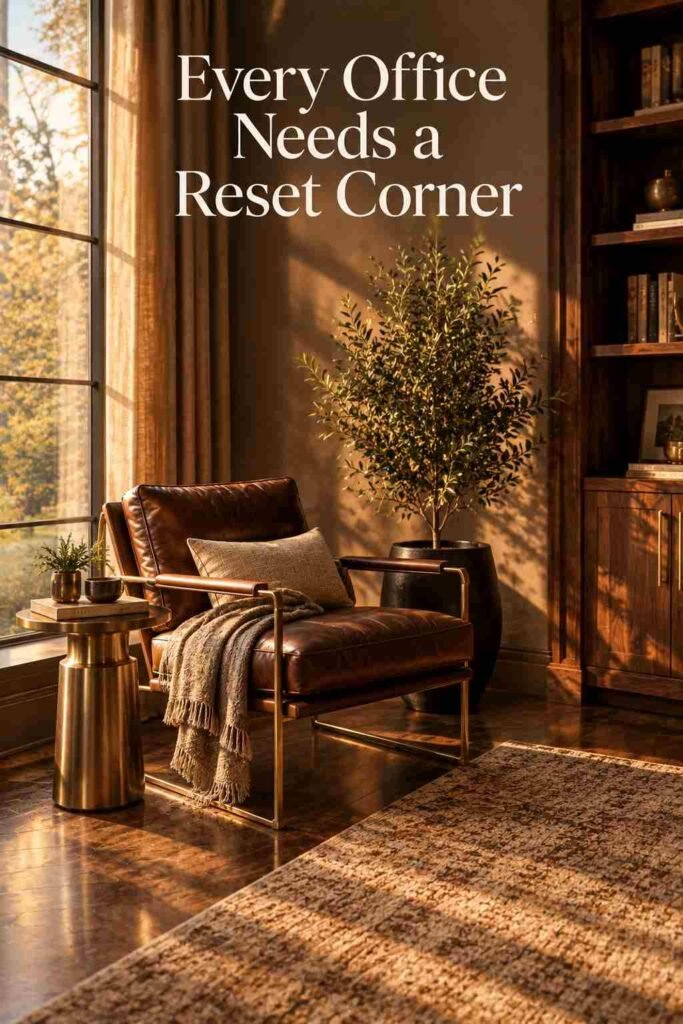
11. Multi-zone workspaces. Instead of one desk doing everything, separate a focus zone for deep work from a softer seating area for calls or reading, even within a small room.
12. Hidden technology integration. Recessed outlets, cable trays built into the desk, and charging drawers keep cords out of sight, which does more for a polished look than any single decor piece.
13. Standing-height console nooks
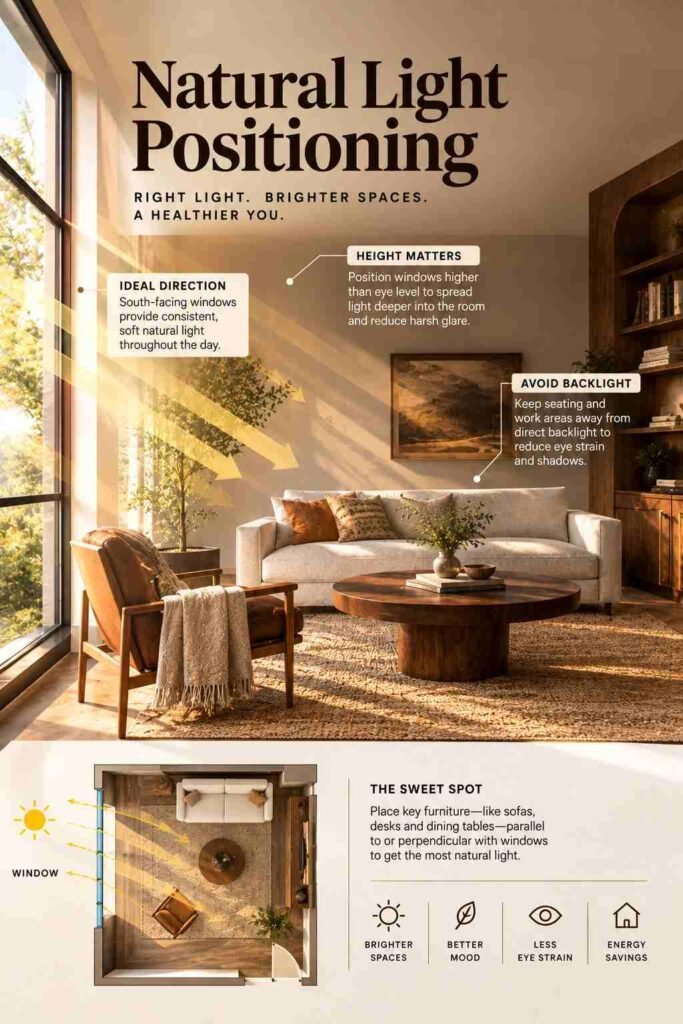
A narrow console tucked into a hallway or landing works well for quick tasks and frees the main room for focused work, a layout gaining traction in smaller American homes.
14. Glass or fluted partition dividers. These separate a home office from an adjoining living space without blocking light, which matters in open-plan homes where a full wall is not practical.
15. A window-bay bench. A built-in bench under a window doubles as a reading spot and an overflow call space, adding function without adding square footage.
Comfort-Driven Luxury
Comfort is the piece of a luxury home office aesthetic that most buying guides skip, yet it is what determines whether the room gets used daily or avoided after the first week.
16. Ergonomic chairs with high-end upholstery. A chair that supports your back for eight hours matters more than any decorative object in the room; look for adjustable lumbar support paired with a fabric or leather that fits the room’s palette.
17. A dedicated wellness corner. A small stretching mat, a plant shelf, or a reading chair near natural light gives the brain a place to reset between meetings, which is now considered part of serious office design.
18. Acoustic paneling. Fabric-wrapped acoustic panels reduce echo on video calls and make the room feel calmer, an upgrade most home offices skip entirely.
19. Height-adjustable desks. Sit-stand desks are no longer just a productivity gadget; models with wood or stone tops now fit seamlessly into a refined room instead of looking like gym equipment.
20. Air quality and climate touches. A quiet air purifier or a small humidifier tucked into a cabinet keeps a closed-door office comfortable during long stretches at the desk.
Personal Style and Finishing Touches
21. Curated art or a small gallery wall. A few well-chosen prints or original pieces say more about a room than a dozen generic motivational quotes ever will.
22. A statement rug. A patterned or textured rug anchors the furniture and adds warmth underfoot, especially over hardwood or tile flooring.
23. Biophilic greenery. Large-leafed plants like a fiddle-leaf fig or a snake plant soften hard edges and have been linked to lower reported stress during long work sessions.
24. Custom bookshelves or display ledges. Open shelving styled with books, small objects, and negative space feels intentional in a way that a fully stuffed bookcase does not.
25. Subtle scented ambiance. A candle or reed diffuser in a warm, woody scent finishes the sensory experience of the room, something almost no home office guide mentions but every well-designed space includes.
Common Mistakes That Undercut a Luxury Home Office Aesthetic
Even with the right pieces, a few habits quietly work against the look. Overcrowding the desk with cords and gadgets is the most common one — technology should be present but not visible. Matching every piece of furniture from a single collection can also flatten a room, since genuine luxury design usually mixes eras and materials rather than buying a matched set. Finally, skipping window treatments or leaving harsh overhead lighting as the only light source undoes hours of careful furniture selection in seconds.
Achieving a Luxury Home Office Aesthetic on a Budget
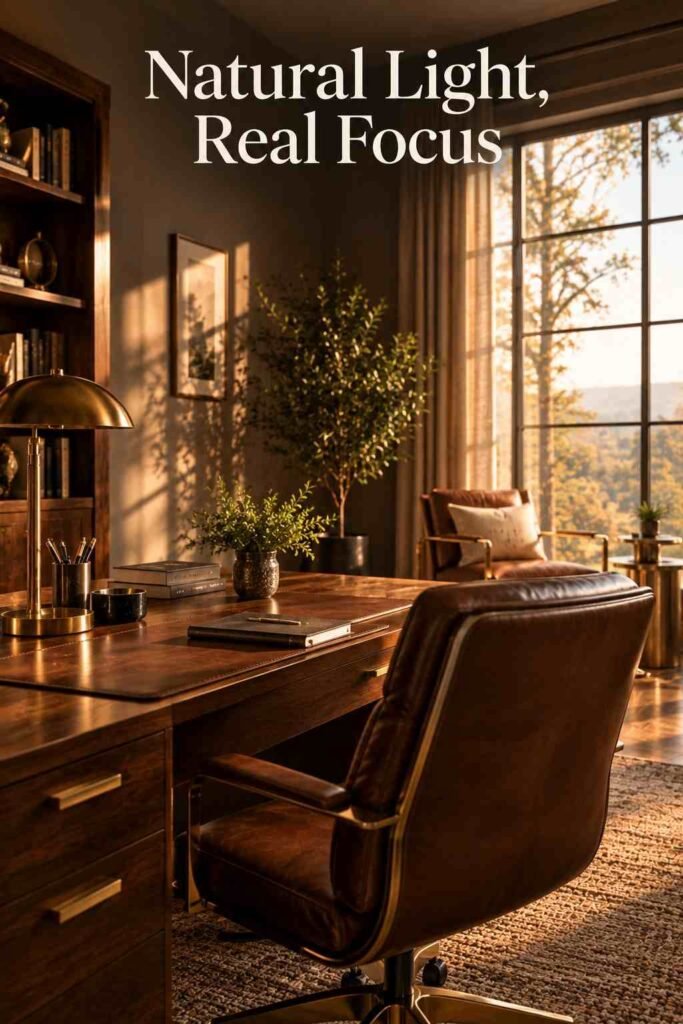
You do not need a full renovation to get this look. Start with the two elements that carry the most visual weight: lighting and a single statement piece, such as a leather chair or a wood desk. Paint remains the cheapest transformation available, and a deep accent wall behind the desk reads as intentional rather than expensive. Vintage and estate-sale furniture often has the solid construction and character that new budget furniture lacks, and refinishing one older piece can anchor an entire room for a fraction of the cost of buying new.
Keeping the Space Warm: Blending Luxury With Comfort
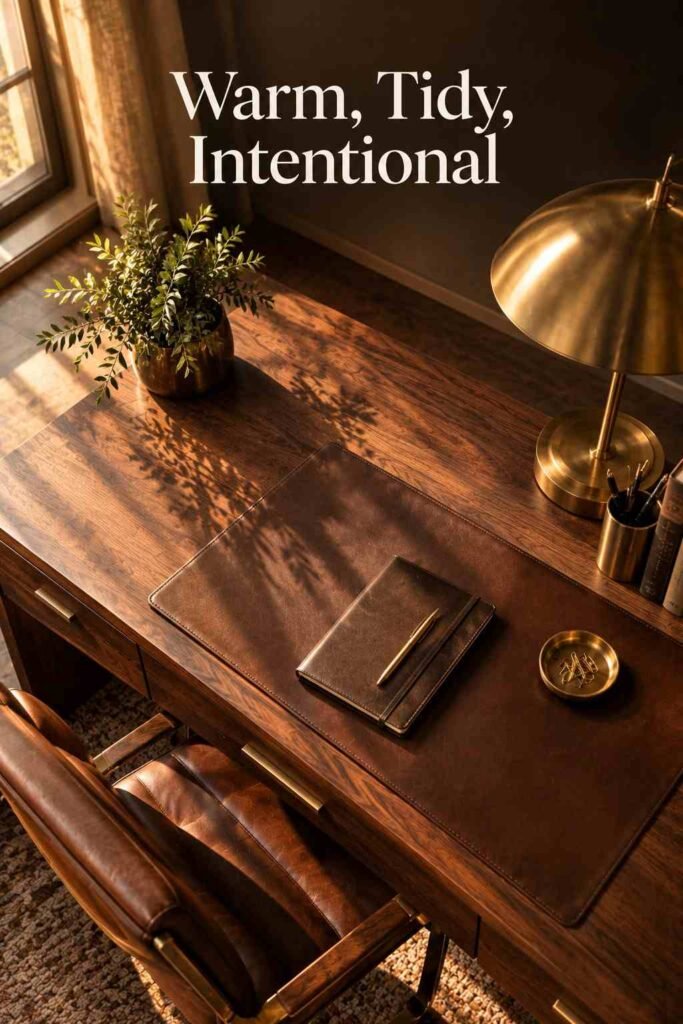
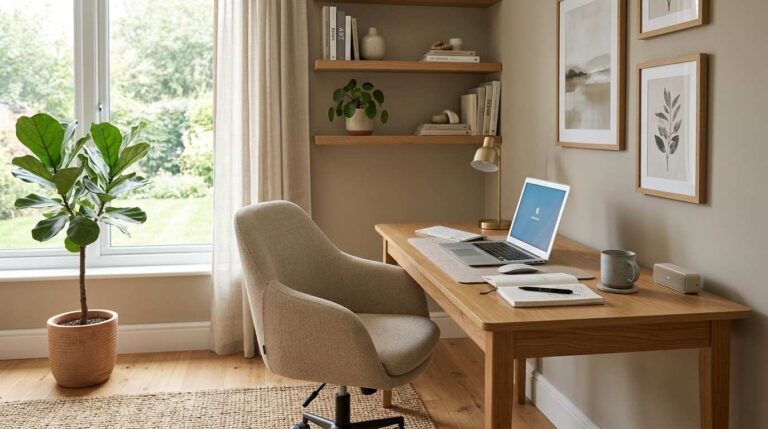
A workspace that looks impressive but feels stiff will not get used the way it should. Balancing a luxury home office aesthetic with genuine comfort means prioritizing texture — a wool throw on a reading chair, a soft rug, warm-toned bulbs — over anything that photographs well but feels cold in person. If you are working with a smaller footprint, these cozy home office ideas show how warmth and elegance can coexist without adding bulk. And for a broader set of layouts and starting points, this collection of luxury home office ideas is worth bookmarking before you buy anything. Curated sourcing also helps: platforms like Outinteriors make it easier to find the kind of handcrafted, design-forward pieces that mass retailers rarely stock.
Conclusion
A refined workspace is not built in a weekend, and it does not require replacing everything at once. The strongest luxury home office aesthetic comes from a handful of deliberate choices — a solid desk, layered lighting, a chair that actually supports a full workday, and one or two personal touches that make the room feel lived-in rather than staged. Start with whichever category matters most in your space, whether that is comfort, storage, or light, and build outward from there. The goal is a room you want to sit in at 8 a.m. and still enjoy at 6 p.m., which is the real measure of a workspace done well.
Frequently Asked Questions
What makes a home office look luxurious without being over the top?
Restraint is usually the key. A luxury home office aesthetic relies on a few high-quality materials — solid wood, leather, natural stone — rather than a room full of decorative objects. Layered lighting and a clean, zoned layout do more visual work than expensive accessories.
How much does it typically cost to redesign a home office in this style?
Costs vary widely depending on whether you are starting from scratch or upgrading pieces gradually. Achieving a luxury home office aesthetic on a budget usually means a refresh focused on paint, lighting, and one statement chair or desk, which can run a few hundred dollars, while a full custom build-out with bespoke cabinetry can run into the thousands.
What colors work best for a luxury home office aesthetic?
Deep, grounding tones like forest green, espresso brown, and navy pair well with warm neutrals such as sand or greige. These combinations photograph well on video calls and hold up better over time than stark white or overly bright accent colors.
Can a small room or a shared space still achieve this look?
Yes. A luxury home office aesthetic depends far more on zoning, vertical storage, and one well-chosen piece of furniture than on square footage. A narrow console with good lighting in a hallway or bedroom corner can achieve the same effect as a full dedicated room.
What furniture materials are most associated with luxury home offices in 2026?
Solid wood, leather, brass hardware, and poured stone or mineral composites are the materials designers keep returning to, largely because they age visibly and interestingly rather than looking worn out.
How do I keep a luxury home office from feeling cold or sterile?
Add texture wherever possible — a rug, a throw blanket, upholstered seating, and warm-toned lighting. Plants and a few personal objects also prevent the room from feeling like a showroom rather than a place you actually work.
Is natural light really necessary for this aesthetic, or can good lighting substitute for it?
Natural light is preferable because it supports focus and mood throughout the day, but layered artificial lighting — task, ambient, and accent — can substitute effectively in rooms without much daylight access.