
15 Minimalist Wall Art Ideas, From Matisse-Style Lines to Rothko-Inspired Color
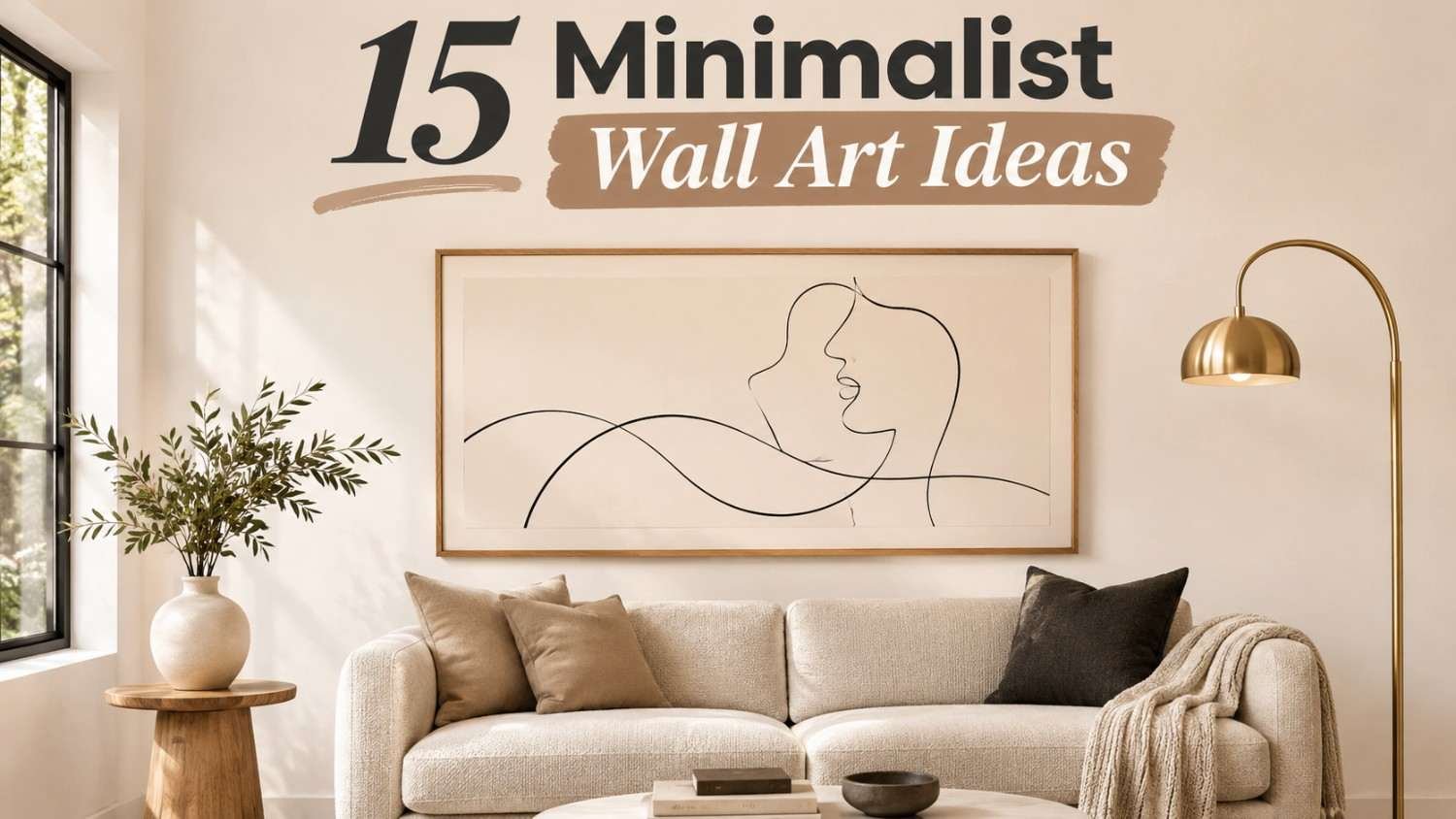
Staring at a blank wall is harder than it looks. Hang something too small and it feels lost. Add too much and the calm disappears. This guide solves that problem with 15 minimalist wall art ideas that suit Japandi, Scandinavian, and modern homes. You will see how a single line drawing warms a bedroom, how a large color field anchors a sofa, and how a thin-framed mirror brightens a small entry. We also share simple rules the pros use, such as centering art about 57 inches from the floor and sizing it to two-thirds of your furniture. Every idea works with a modest budget, and many suit renters. You will also get advice on color palettes, frame styles, and common hanging mistakes. Read on, choose the look that fits your space, and turn that empty wall into the quietest, most confident part of your home.
Why Minimalist Wall Décor Works So Well

Minimalist design grew from several traditions. Japanese wabi-sabi values simplicity and quiet imperfection. Scandinavian design brought warmth, light wood, and soft neutrals into everyday homes. The Bauhaus school, founded in Germany in 1919, argued that form should follow function. Together, these movements shaped the clean, intentional look we know today. If your staircase feels empty, explore how a wall going downstairs can become a quiet display for tall, narrow prints.
The practical benefits are easy to feel. Fewer objects mean less visual noise, which helps a room feel larger and calmer. Simple art also ages well. Trends change, but a line drawing or a soft color block rarely looks dated. It also costs less to swap, so you can refresh a room without a full redecorating project.
How to Choose Among These Minimalist Wall Art Ideas

Before you buy anything, look at the room itself. Note the light, the furniture, and the colors already there. Art should support the space, not compete with it. A small step now saves you from a mismatched purchase later.
Use three quick rules. First, match the scale: art above a sofa or bed should span about two-thirds of the furniture’s width. Second, hang at eye level. Galleries commonly center the middle of a piece around 57 inches (145 cm) from the floor. Third, leave breathing room. Negative space is part of the design, so resist the urge to fill every gap. With those basics set, you are ready to explore the list. Make a strong first impression with an entrance foyer wall design that uses one large, calm piece of art.
15 Minimalist Wall Art Ideas You Can Use Today
1. Single Line Drawing Prints

Continuous line art shows a face, a hand, or a plant in one flowing stroke. The style echoes the simple figure drawings of Henri Matisse and Pablo Picasso, who both explored the form. It suits bedrooms and reading corners because it feels personal without feeling busy. Choose black ink on warm white paper for a soft contrast. Frame it in a thin oak or black frame with a wide white mat. The generous border lets the single line breathe and gives the print a gallery feel.
2. Large Abstract Color Fields

Color field art uses broad, calm areas of tone instead of detail. The approach is linked with painters such as Mark Rothko, whose soft-edged rectangles invite long, quiet looking. At home, you can echo the idea with a muted sand, sage, or clay canvas. Hang one oversized piece above a sofa or console table. A single large work often looks calmer than several small ones. Keep the palette close to your existing textiles so the art feels like part of the room. When you are ready for something layered, our gallery wall ideas show how to mix frames without losing balance.
3. Black-and-White Botanical Photography
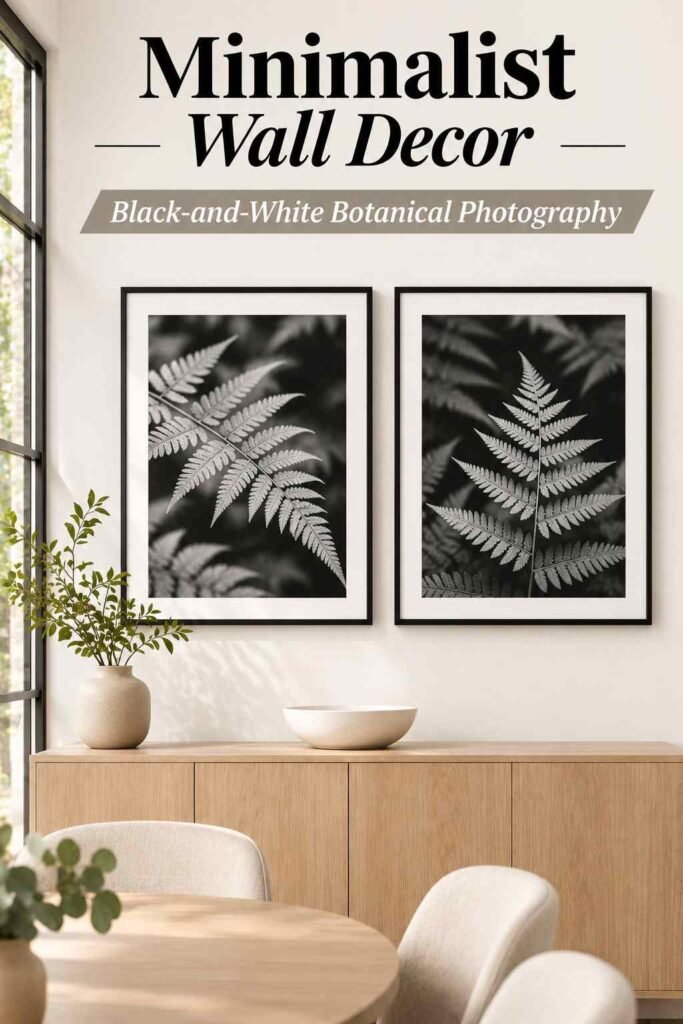
A close photograph of a fern leaf, a eucalyptus branch, or a single palm frond adds life without color. Black and white removes distractions and highlights shape, light, and texture. This idea works well in kitchens, dining rooms, and hallways. Print on matte paper to avoid glare. Hang two matching images side by side for a quiet pair. Because nature suits nearly every interior style, botanical prints are one of the safest choices if you are decorating for the first time.
4. Geometric Shapes in Neutral Tones

Circles, arches, and half-moons in beige, taupe, and cream create a soft, modern mood. The idea draws on the Bauhaus love of basic shapes and on the mid-century modern movement. A set of three arches in graduated shades looks especially polished above a bed. Keep the shapes few and the edges clean. Too many forms can tip the look toward busy. Choose a paper with a slight texture, such as cotton rag, so the neutral tones feel rich rather than flat.
5. Framed Fabric or Textile Art
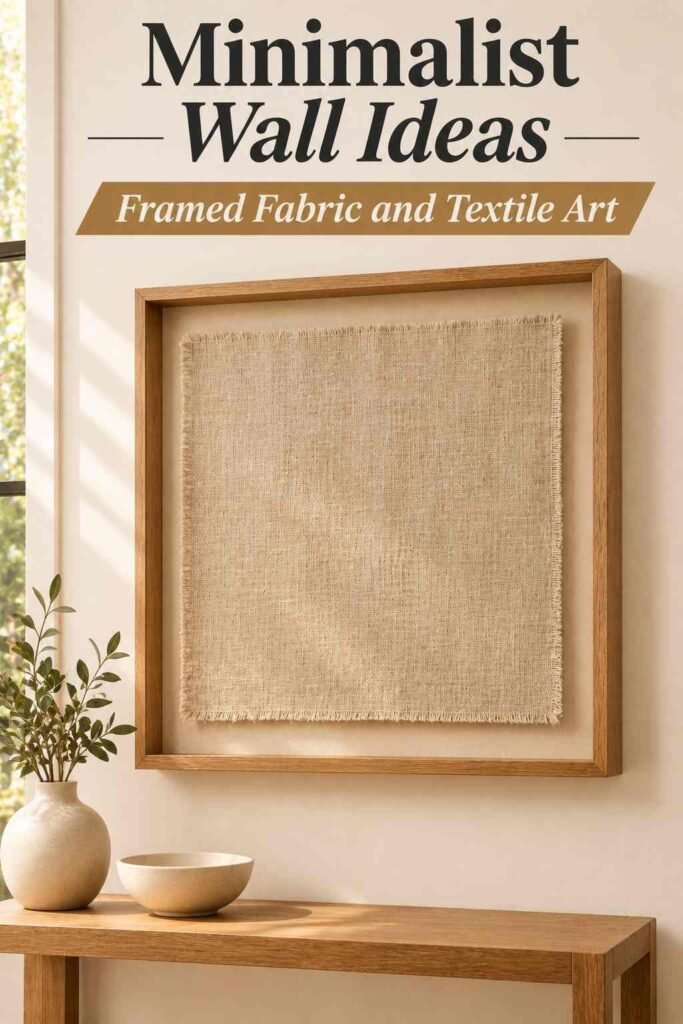
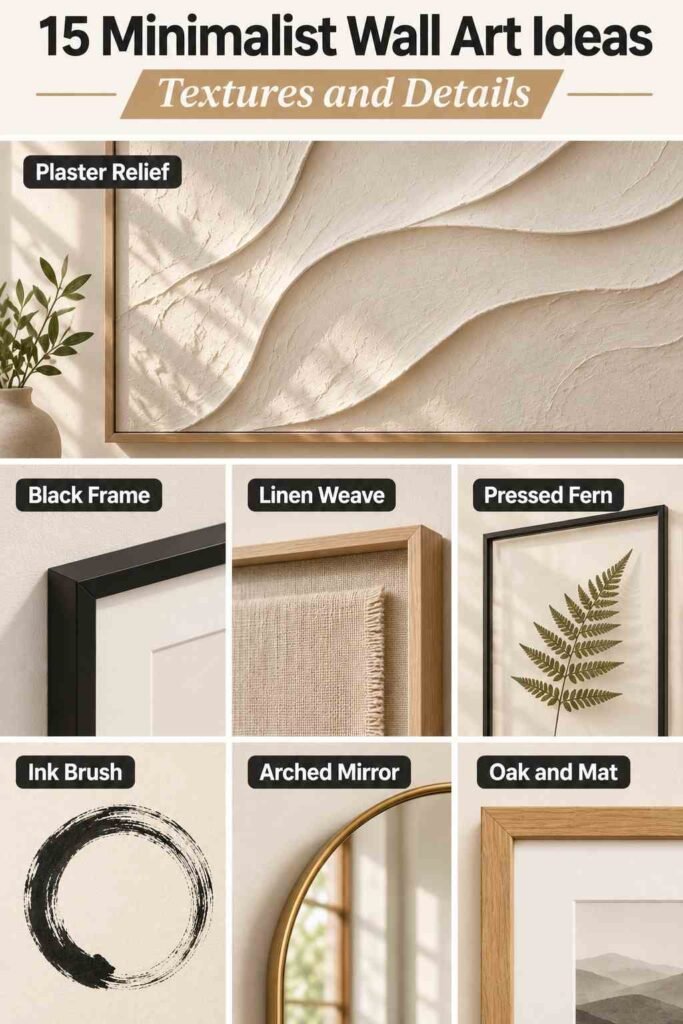
A piece of linen, a woven swatch, or a block-printed cloth can become art when it is stretched and framed. The texture adds warmth that a flat print sometimes lacks. This idea is a favorite in Scandinavian and wabi-sabi interiors. Pick a natural fiber in oatmeal, ivory, or soft grey. Float the fabric inside a deep frame so the edges show. It is also forgiving for renters, since you can replace the textile in minutes without redoing the whole display.
6. Oversized Typography or a Single Word
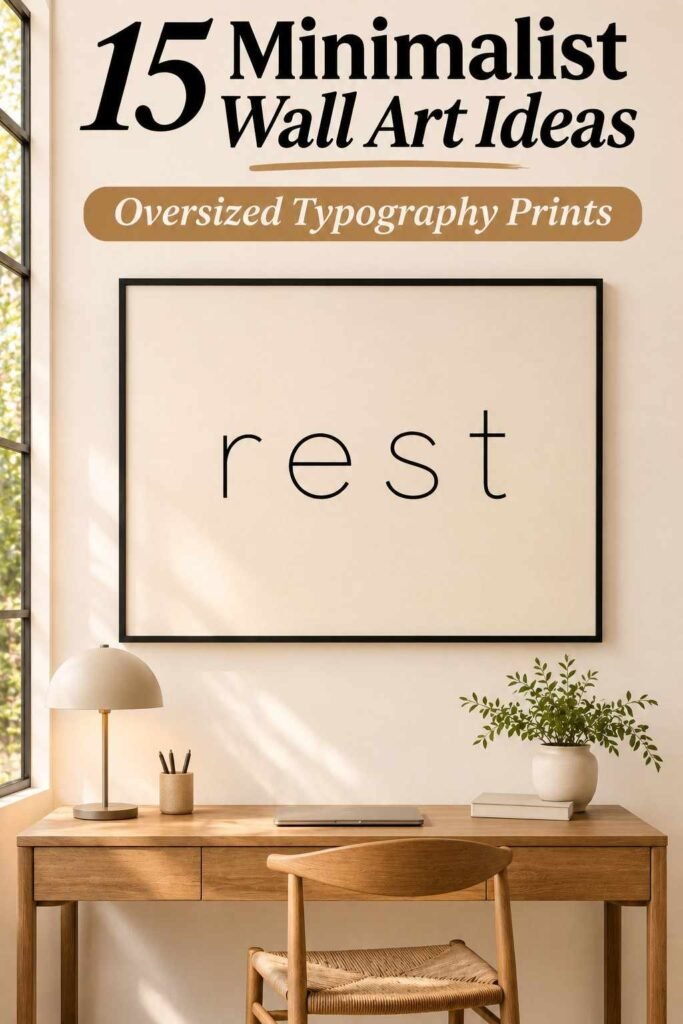
One carefully chosen word, set in a clean sans-serif typeface, can anchor a wall. Think of words like rest, home, or breathe. Keep the letters thin and the spacing wide. Black on white is classic, while soft grey on cream feels gentler. This works well in a home office, where it adds purpose without clutter. Avoid long quotes, because they quickly turn a calm wall into a reading task. Among all minimalist wall art ideas, this one is the easiest to personalize.
7. Matte Black Frames With Empty Mats
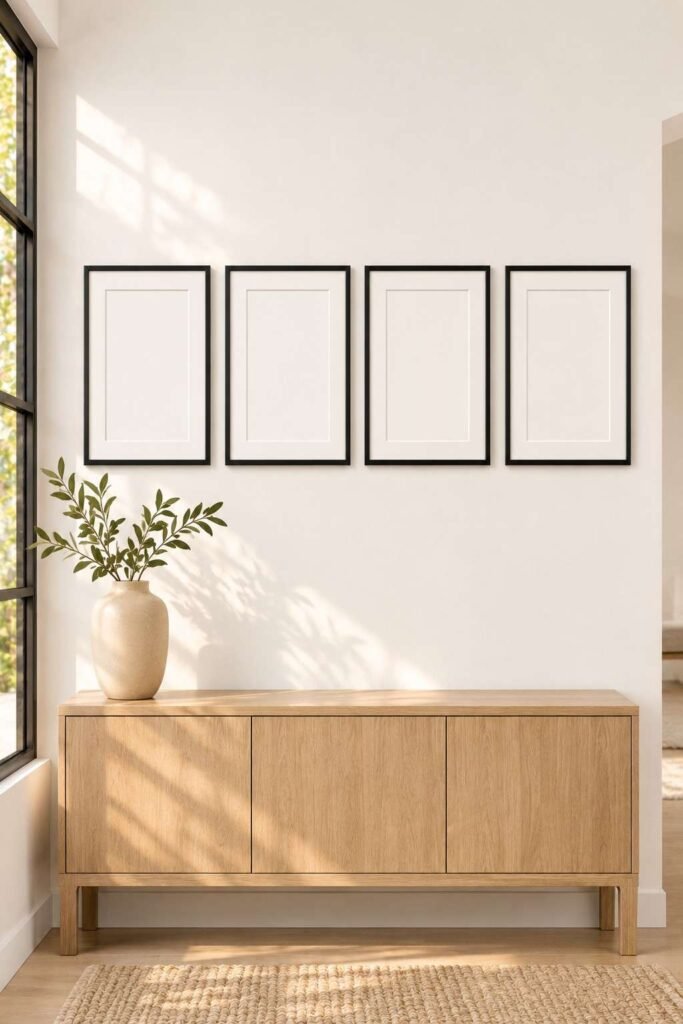
Sometimes the frame is the art. A slim matte black frame holding a mat with a small opening creates a crisp graphic square. You can leave the opening empty or place a tiny sketch inside. A row of three or four in identical sizes gives a rhythm that feels deliberate. Hang them with equal spacing of about 2 to 3 inches between frames. This is a smart, budget-friendly option because standard frame sizes are easy to find at most home stores. For a budget-friendly project, try these DIY wall art ideas that need only paper, ink, and a simple frame.
8. A Single Floating Shelf With One Object
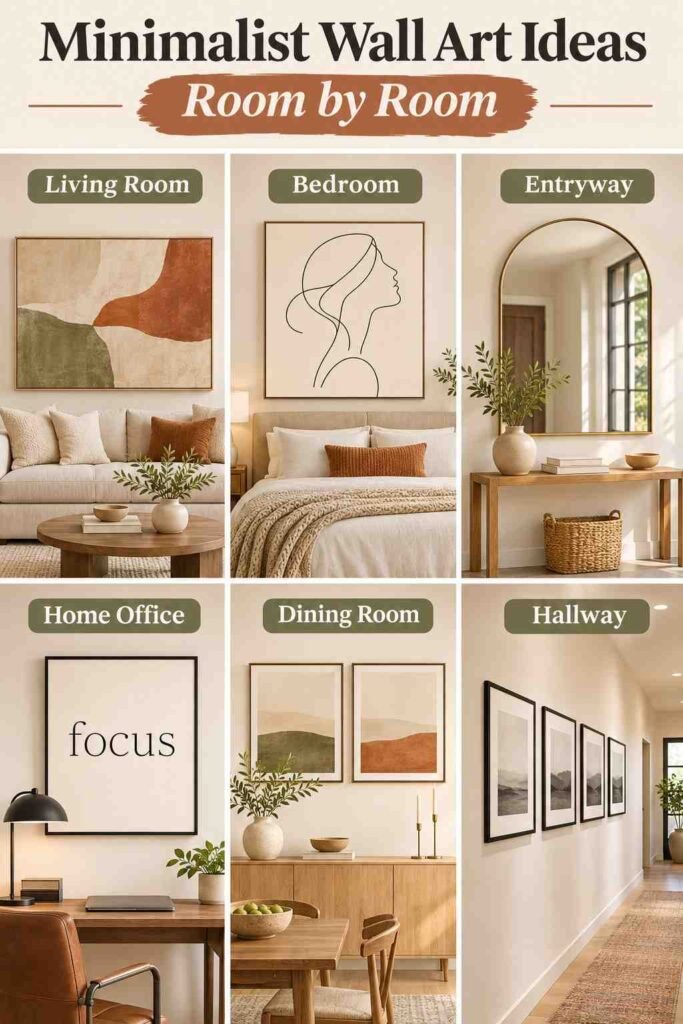
Not all wall art is flat. A narrow floating shelf holding one ceramic vase, one small sculpture, or one leaning print can act as a mini gallery. The key is restraint. One object is enough. Choose a piece with a calm shape, such as a hand-thrown bowl in matte white. Rotate the object with the seasons to keep the wall feeling fresh. This approach suits entryways and living rooms where you want a relaxed, curated look without drilling many holes.
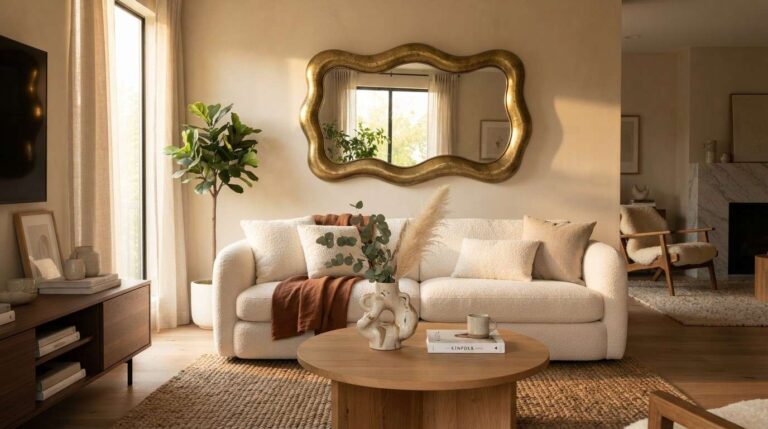
9. Oversized Mirror as Wall Art

A large mirror with a thin metal or wood frame does double duty. It reflects light, makes a room feel bigger, and acts as a clean, minimal focal point. An arched or round mirror softens straight lines in a space with many corners. Place it across from a window to bounce daylight around the room. Keep the frame simple and the glass clear. In small apartments, this is often the most useful of all the minimalist wall art ideas on this list.
10. Pressed Botanical Specimens
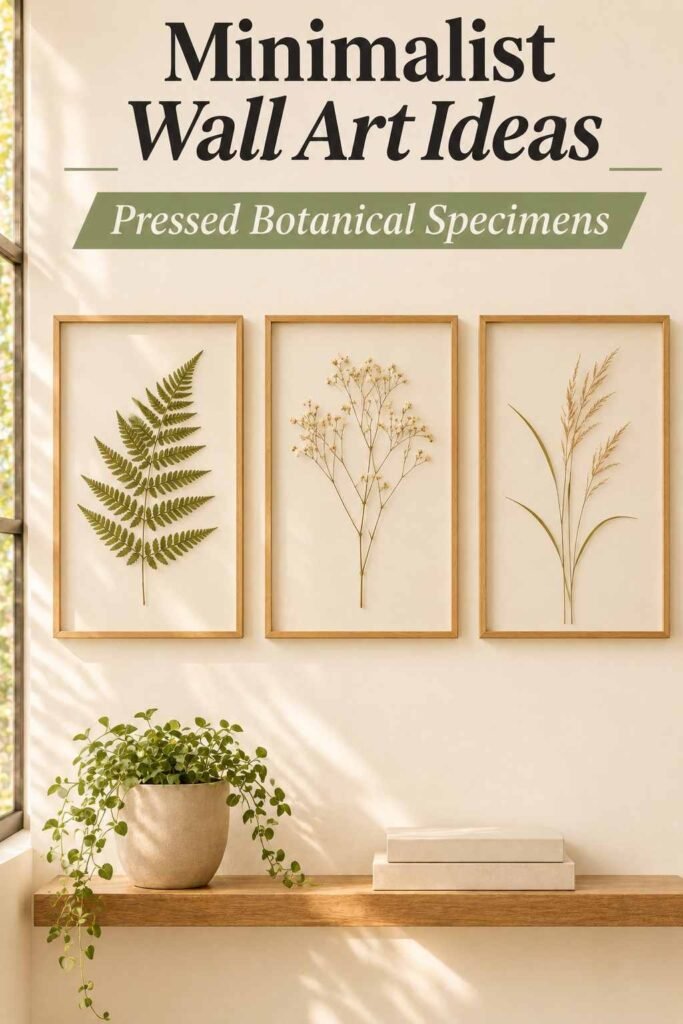
Pressed ferns, grasses, and flower stems have been used in botanical study for centuries. Floated between two sheets of glass, they feel both scientific and tender. Use one stem per frame for a clean look, and leave plenty of white space around it. Warm white backing makes the green or brown tones stand out gently. This idea has a story built in, since you can press flowers from a walk, a garden, or a trip. That personal touch gives the wall real meaning.
11. Architectural Line Sketches
Simple outlines of a doorway, a staircase, or a building facade bring structure and a little history to a room. Black ink on cream paper keeps the look light. City sketches from places you have visited add emotion without color. Hang one large drawing in a hallway or place a small one near a desk. Architectural art pairs well with natural wood furniture and plain walls because its straight lines feel steady and grounded.
12. Monochrome Triptych

A triptych is a single image split across three panels. In a monochrome palette, it feels bold yet quiet. Think of a soft grey horizon, a faint ripple, or a smooth stone texture running across all three. Hang the panels with narrow, even gaps of about 1 to 2 inches. The set works best above a bed, a sofa, or a wide console table where horizontal space needs a strong anchor. The effect is dramatic, but the colors stay calm.
13. Minimalist Landscape Photography
A lone tree in fog, a calm shoreline, or a quiet desert ridge brings depth to a wall without a single bright color. Look for images with a lot of empty sky or sand. That empty area is what gives the photograph its peaceful feel. Choose a wide panoramic crop for a long wall or a vertical crop for a narrow one. Print on archival paper if you want the colors to last for years. Landscapes also suit offices and bedrooms equally well.
14. Hand-Painted Ink Brush Strokes

A single brushstroke circle, often called an ensō in Japanese Zen art, shows how much feeling one gesture can carry. Today, many people paint their own with black ink and a wide brush. The slight roughness of the line is the charm. Hang it on a plain wall with space on all sides. This idea is calming in meditation corners, bedrooms, and any space where you want to slow down. It also costs very little if you make it yourself.
15. Textured Plaster or Clay Relief Panels
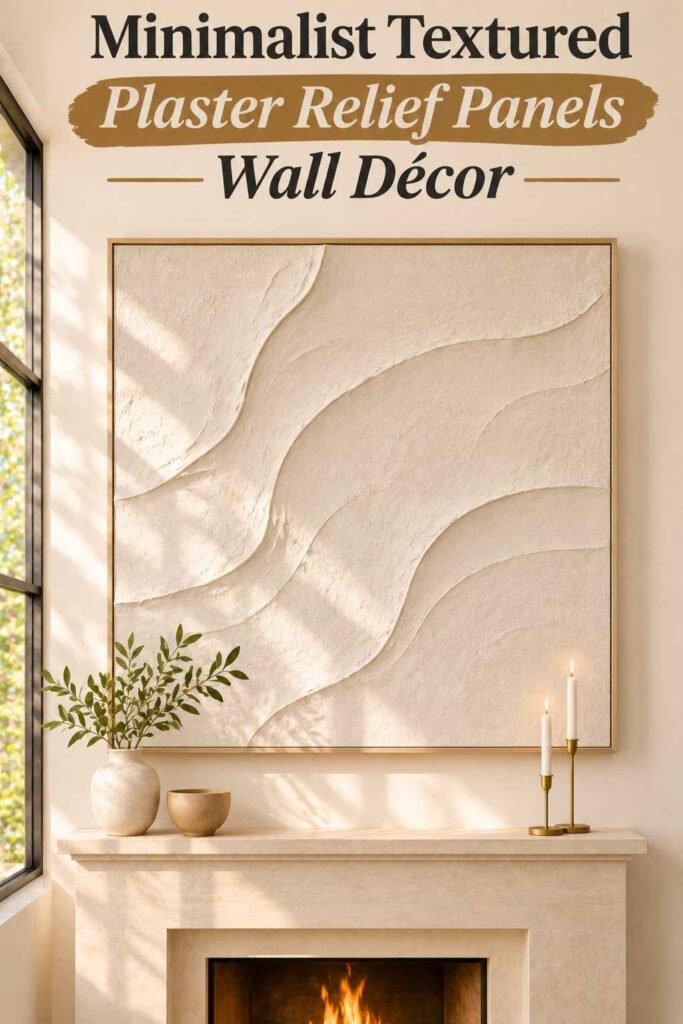
Raised, hand-troweled plaster panels add depth through shadow rather than color. In daylight, the surface changes through the day, which keeps a simple piece interesting. Tones like chalk white, soft grey, and warm sand work best. A single panel above a fireplace or a bed makes a strong statement. Use lightweight materials and proper wall anchors, since textured panels can be heavy. This is the most sculptural of the minimalist wall art ideas here, and it rewards close looking.
Color, Frame, and Placement Tips That Make a Difference

Start with a calm palette. Whites, creams, greys, soft greens, and warm earth tones work best. If you want an accent, pick one color and repeat it in a cushion or a throw so the art feels connected to the room. Color repetition ties a space together better than matching every item exactly.
Frames matter as much as the artwork. Thin black frames feel modern. Natural oak feels warm and Scandinavian. White frames almost disappear against a white wall. Whichever you choose, keep the style consistent across a room. Lighting also matters. Use soft, warm bulbs, and avoid placing glossy glass directly across from a bright window, because glare can hide the artwork. For more inspiration on modern interiors and styling, visit outinteriors for fresh, practical design guidance.
Common Mistakes to Avoid With Minimalist Wall Art Ideas
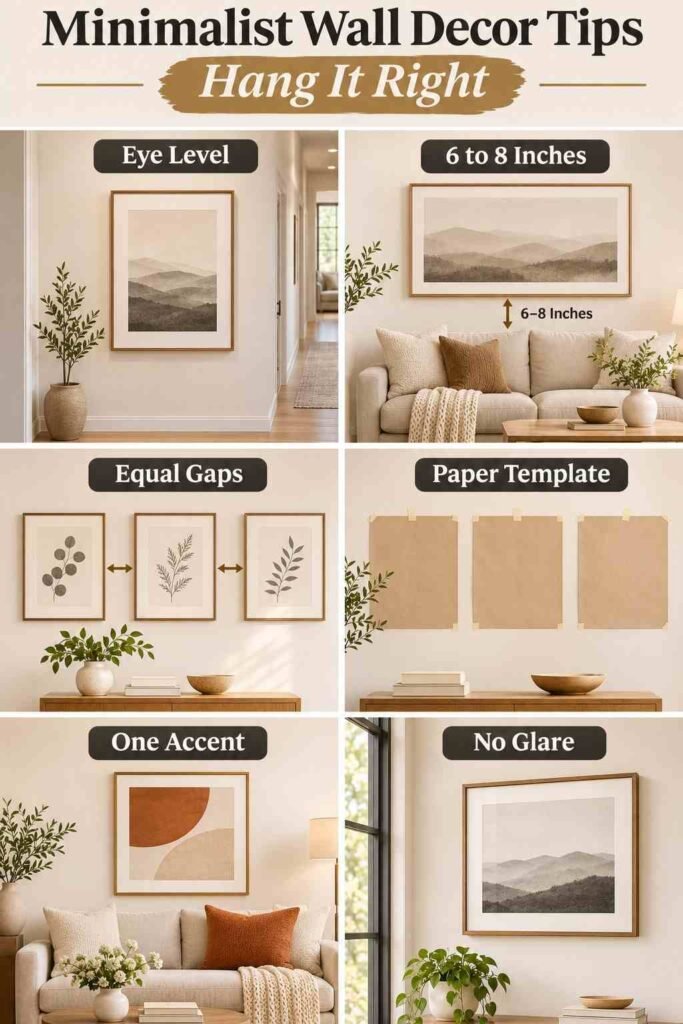
The most common error is hanging art too high. People often place pieces closer to the ceiling than to the furniture below. Keep the lower edge of art about 6 to 8 inches above a sofa or console so the two read as one group. Another mistake is choosing pieces that are too small. A tiny print on a big wall looks lost.
A third error is mixing too many styles at once. Minimalism depends on restraint. Pick one idea, perhaps two, and let them lead. Finally, avoid skipping measurements. Cut paper templates, tape them to the wall, and live with them for a day. This simple test often prevents costly nail holes and second thoughts.
Conclusion
A calm wall does not need many things. It needs a few good choices, placed with care. Whether you love the gentle line of a Matisse-style drawing, the soft glow of a color field, or the quiet shadows of a plaster panel, the point is the same: let each piece have room to speak. Start with the idea that matches your space and mood.
These minimalist wall art ideas work for any budget, from a DIY brush stroke to a large gallery print. Measure first, hang at eye level, and keep the palette soft. Then step back and enjoy the quiet confidence of a wall that feels just right. If you want a fresh start for your home, pick one idea from this list and try it today.



One Comment