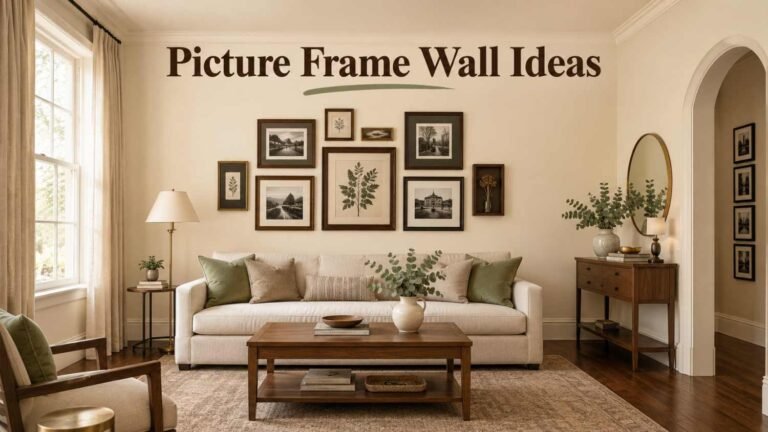
Entrance Foyer Wall Design Ideas to Make a Lasting First Impression
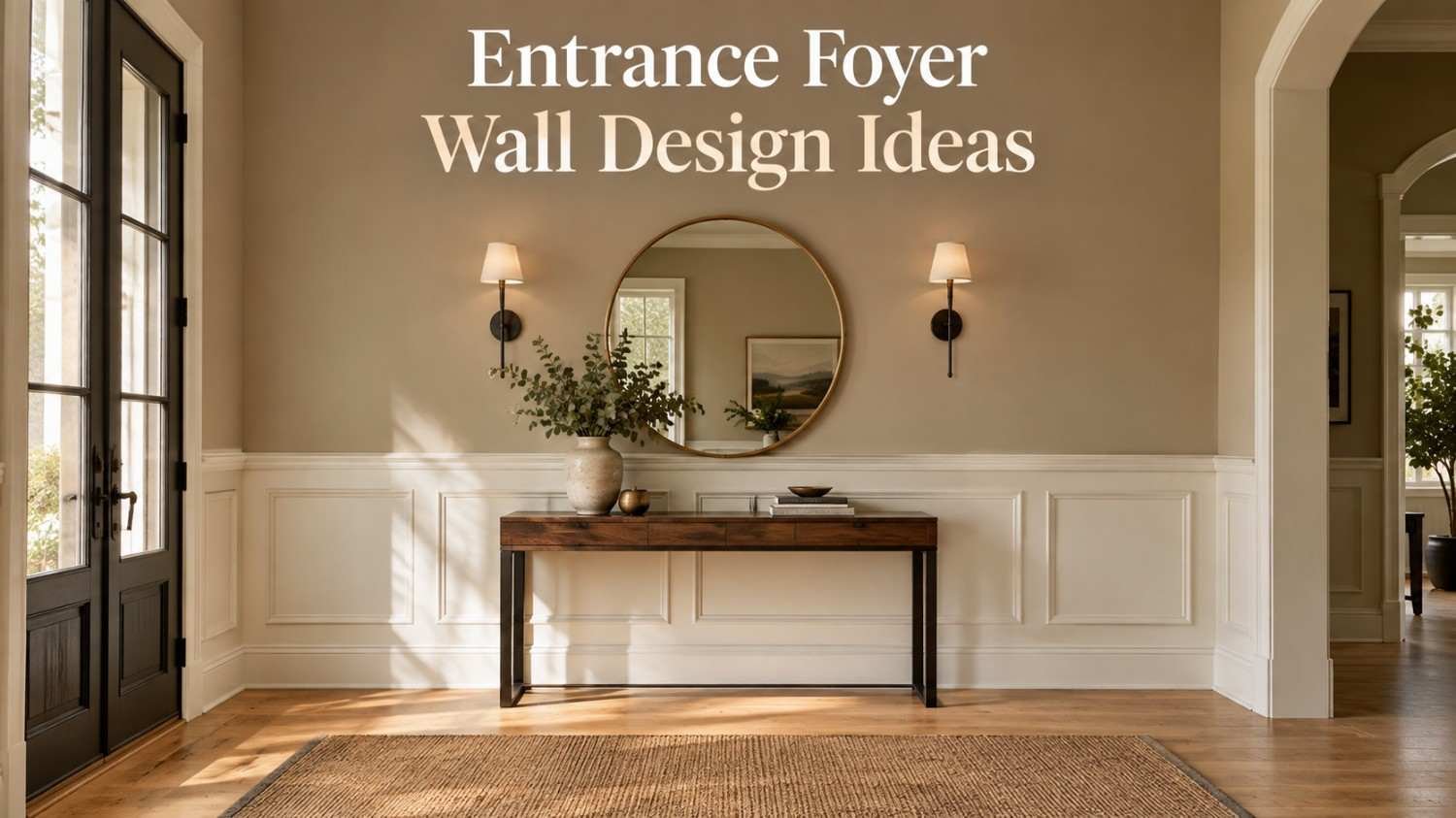
Walking through the front door should feel like stepping into a story your home is about to tell. The entrance foyer wall design you choose sets that tone before a guest ever reaches the living room. It’s the first surface people see, and it often gets the least attention — a blank stretch of paint, a forgotten mirror, maybe a coat hook. That’s a missed opportunity.
A well-planned entrance foyer wall design does more than look good in photos. It guides movement, adds warmth, and gives small or awkward entry spaces a sense of purpose. Whether your foyer is a grand double-height hall or a narrow hallway barely wide enough for a console table, the wall is where personality and function meet. Below are 26 ideas, organized by style and space, along with practical notes on lighting, sizing, and material choices that most guides skip over.
Classic and Timeless Foyer Wall Treatments
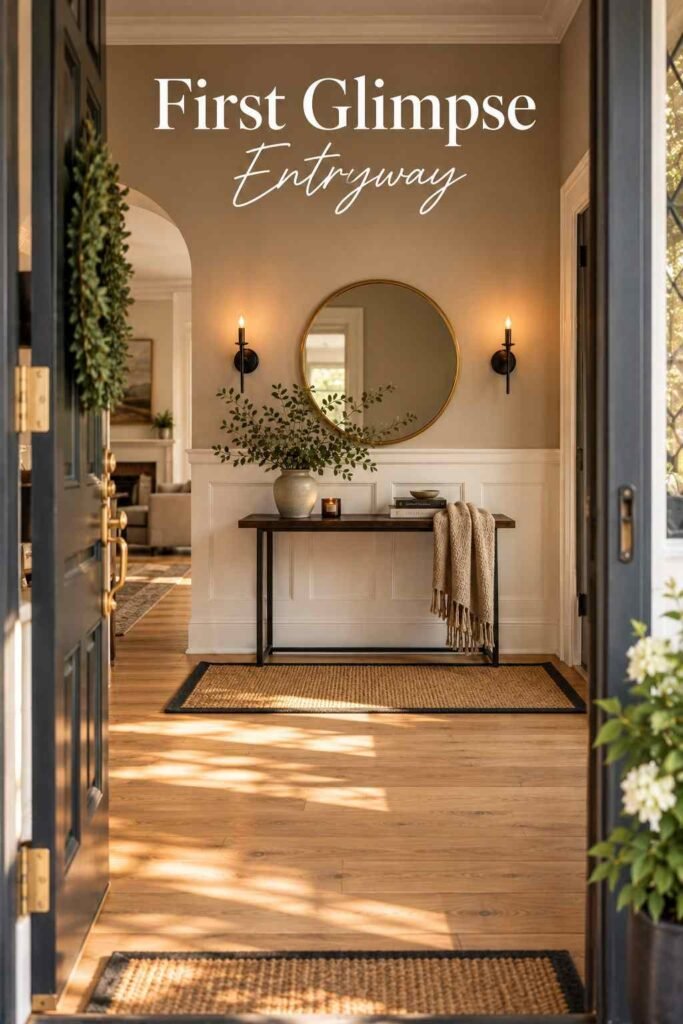
1. Wainscoting with a Soft Color Upper Wall
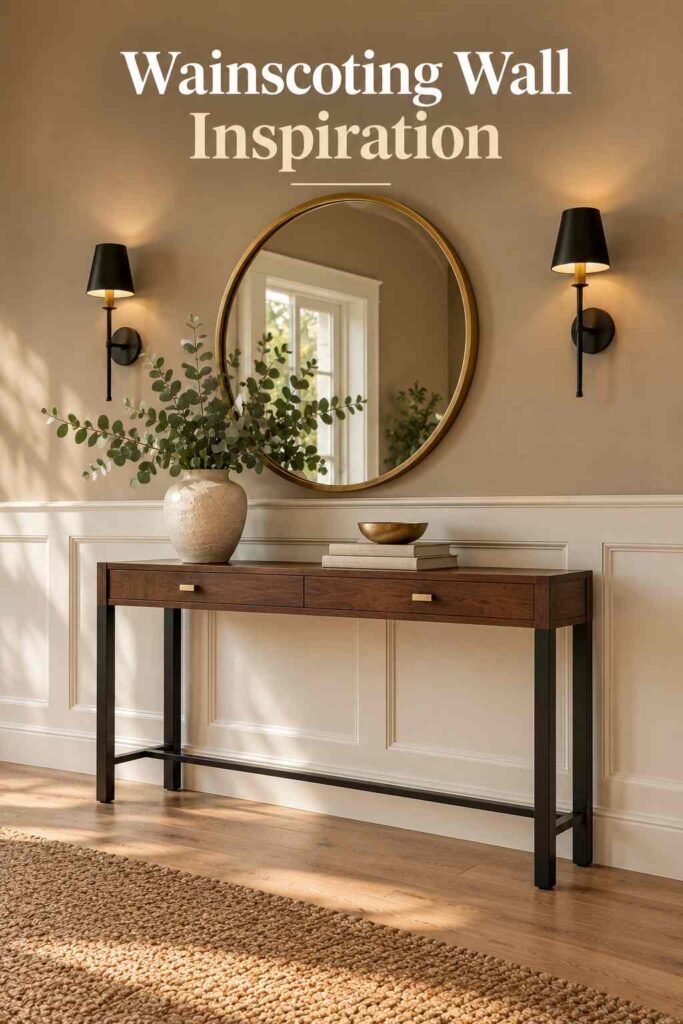
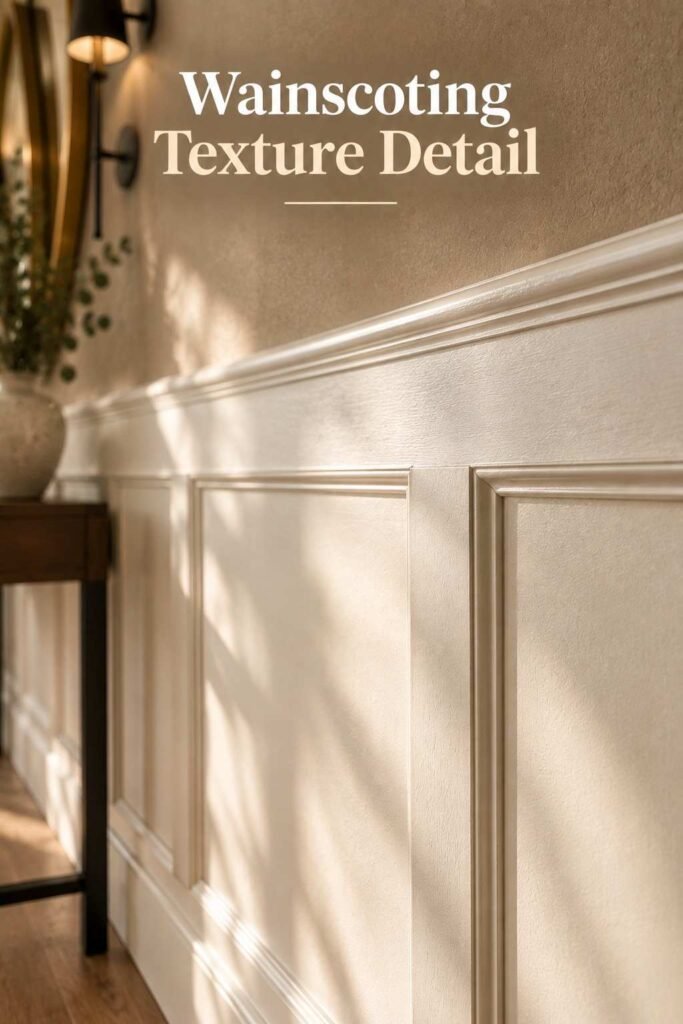
Wainscoting extending halfway up the wall, paired with a muted tone like ivory or sage above, creates depth without heaviness. This combination works especially well in entrance foyer wall design schemes aiming for traditional elegance, and it hides scuffs from foot traffic far better than plain paint.
2. Board and Batten Paneling
Vertical battens spaced evenly across the wall add architectural rhythm. Paint them a shade darker than the wall for contrast, or keep everything monochrome for a quieter, more cohesive look.
3. Textured Wallpaper Above a Console
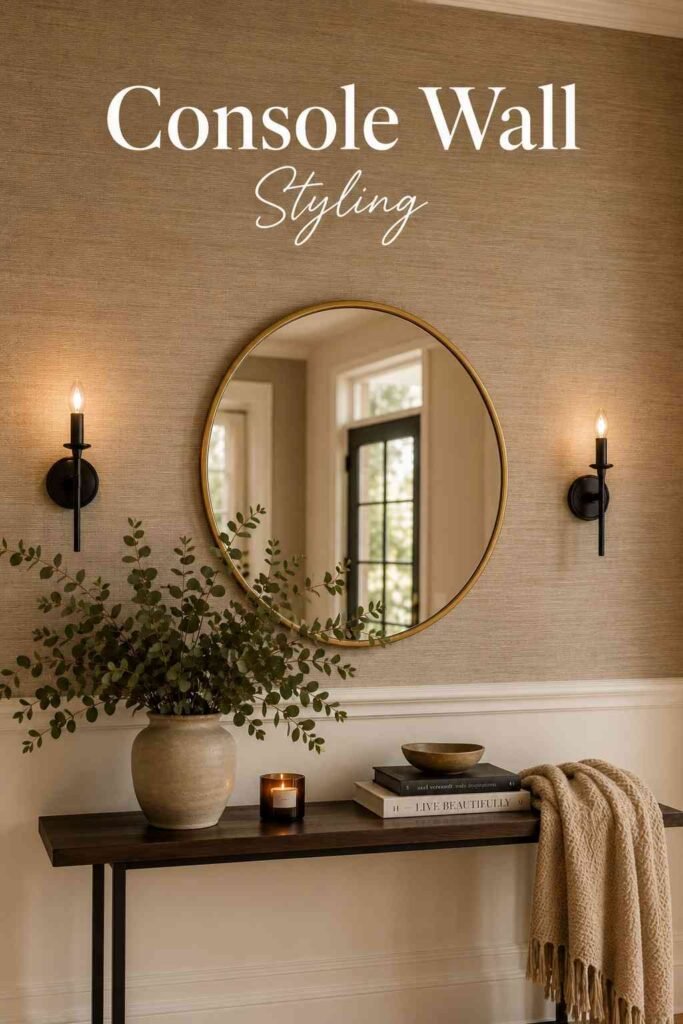
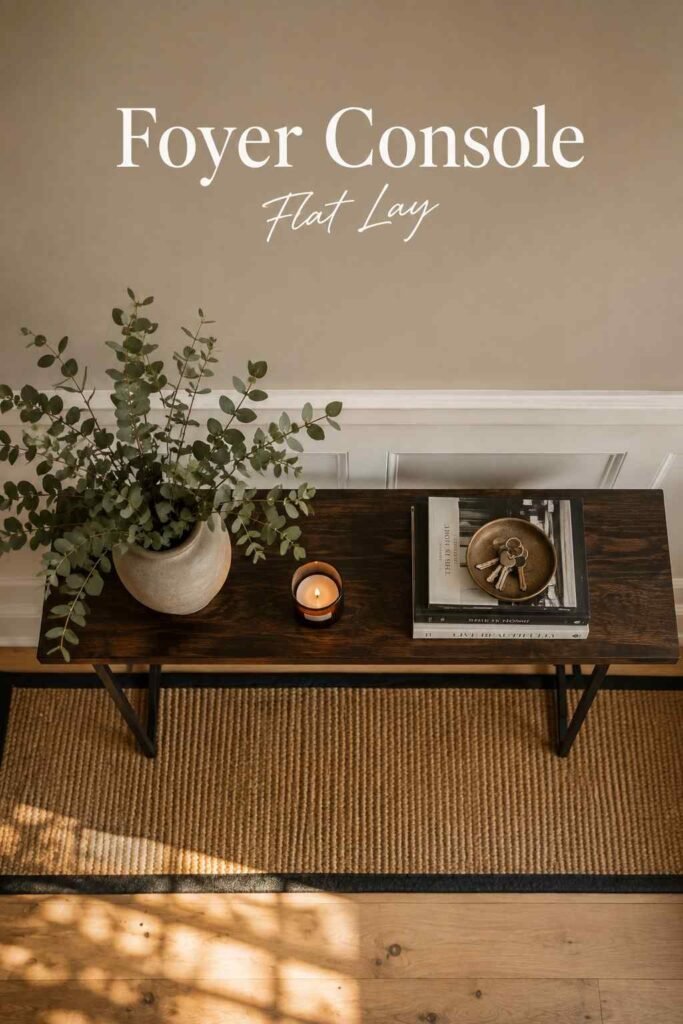
A textured or grasscloth wallpaper behind a console table anchors the space visually. Because it sits behind furniture, it’s a low-commitment way to introduce pattern without overwhelming a small entry.
4. Chair Rail with Two-Tone Paint
A chair rail divides the wall into two zones, letting you pair a darker, durable lower half with a lighter upper section. This is a practical foyer wall decor choice for households with kids or pets.
5. Vintage Molding and Trim Details
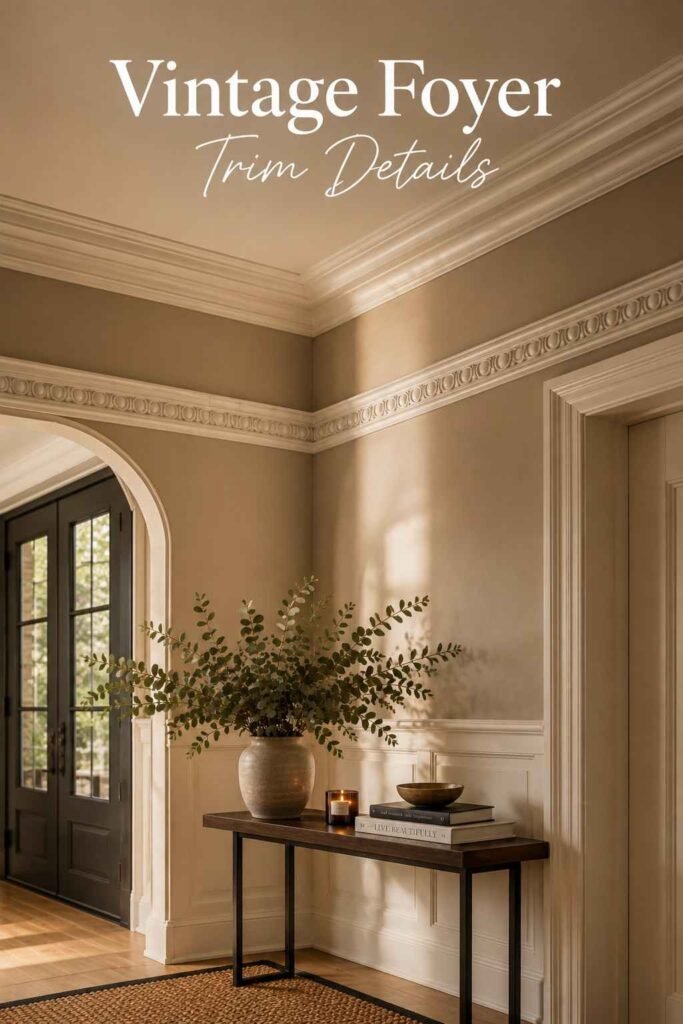
Crown molding, picture-rail trim, or decorative panel frames give a foyer old-world character. These details photograph beautifully and add resale value, since they read as custom architectural work.
Modern and Bold Wall Statements
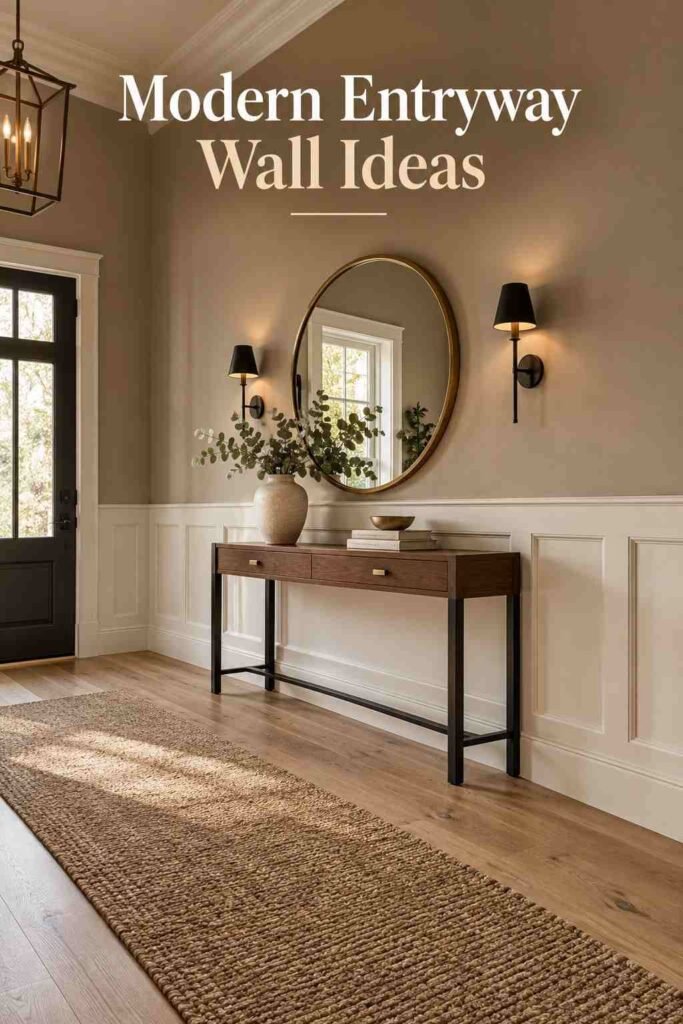
6. Geometric Metallic Paint Accents
Applying geometric shapes in metallic or matte-on-matte finishes adds depth without needing artwork. It’s one of the more distinctive entrance foyer wall design moves for a contemporary home and works best under warm spotlighting.
7. Fluted or Vertical Wood Panels
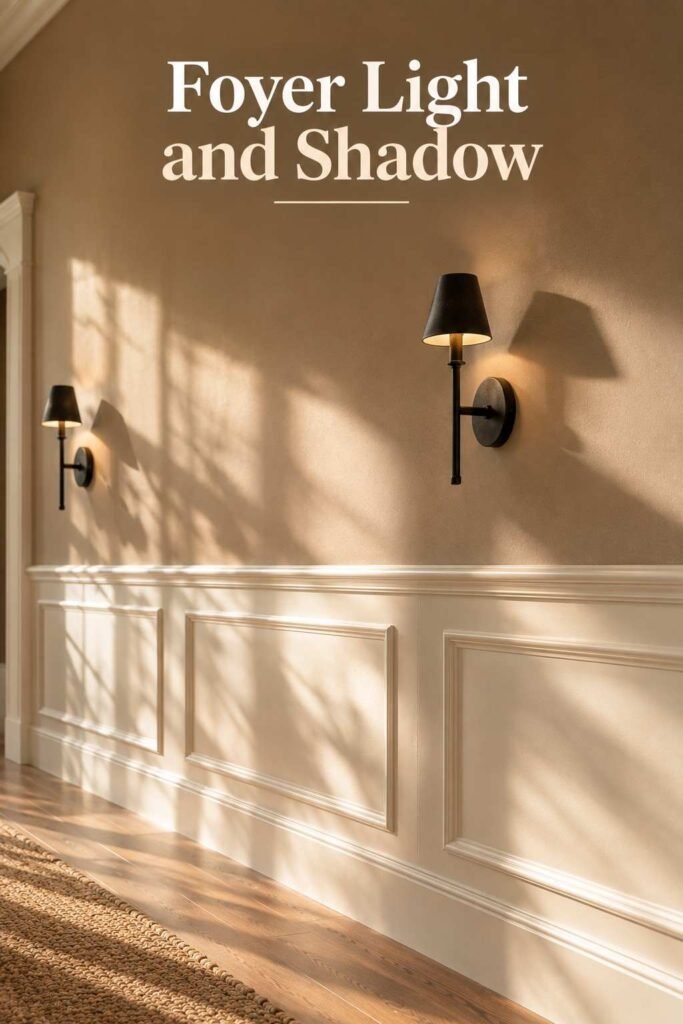
Fluted panels — wood strips with rounded vertical grooves — bring texture and a subtle sense of height. They also help absorb sound, which matters in echo-prone entryways with hard flooring.
8. Monochrome Color Drenching
Painting the walls, trim, and even the ceiling in one shade creates a cocoon-like, dramatic entrance. Dark tones like charcoal or deep green work particularly well when paired with brass fixtures.
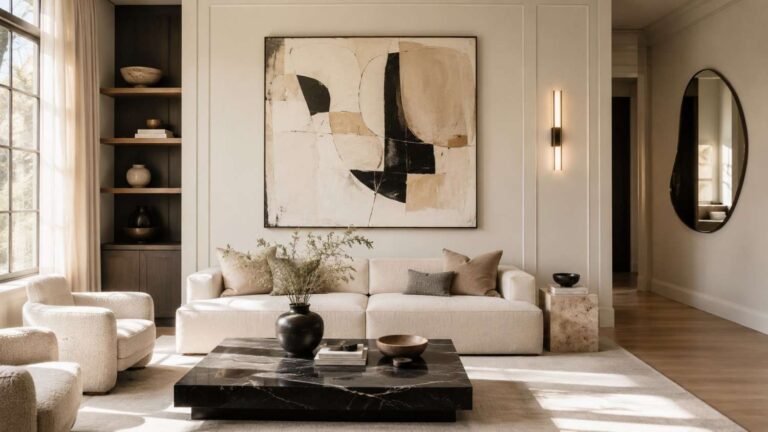
9. Large-Scale Abstract Art Wall
A single oversized abstract piece can replace a gallery entirely. As a general sizing rule, art should cover roughly 60% to 75% of the available wall space, so measure the blank area first and multiply by those figures to find a suitable range.
10. Statement Lighting as Wall Feature
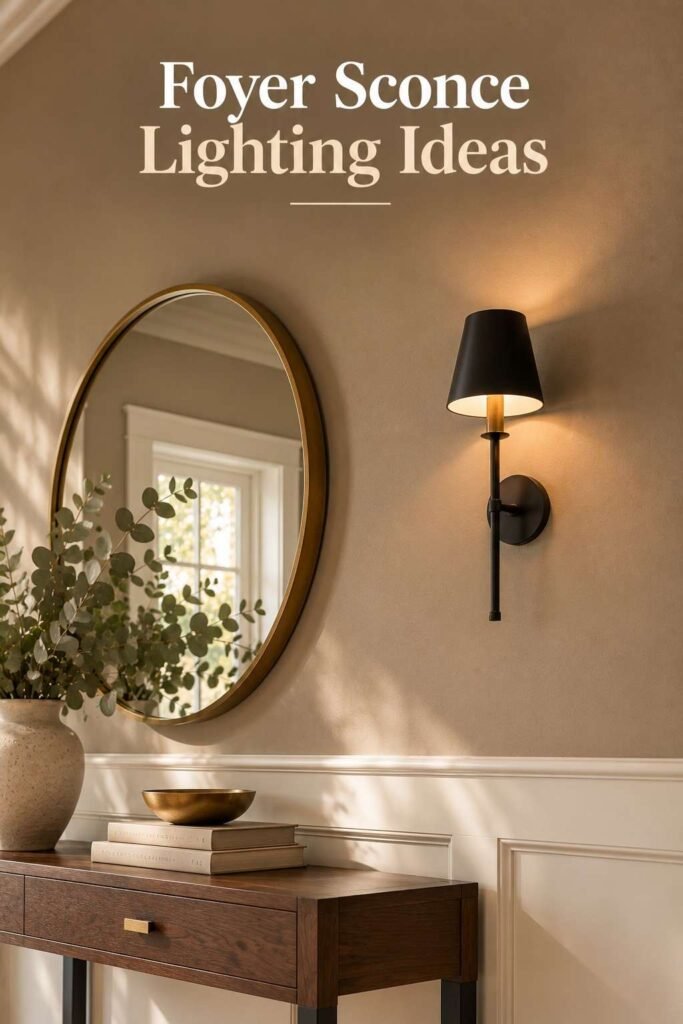
Wall-mounted sconces or an asymmetrical light fixture can function as the design centerpiece instead of artwork, especially in foyers with high ceilings where a chandelier alone leaves the walls feeling bare.
Textured and Architectural Wall Details
11. Stone or Brick Veneer Accent
A thin brick or stone veneer on one wall introduces rustic texture and pairs naturally with wood flooring. It’s durable, low-maintenance, and tolerant of the wear a busy entrance sees daily.
12. Lattice Wall Design
A lattice pattern crafted from dark wood adds intricate geometry and casts interesting shadows under angled light. It works best as a focal accent rather than covering every wall.
13. Shiplap for a Coastal or Farmhouse Feel
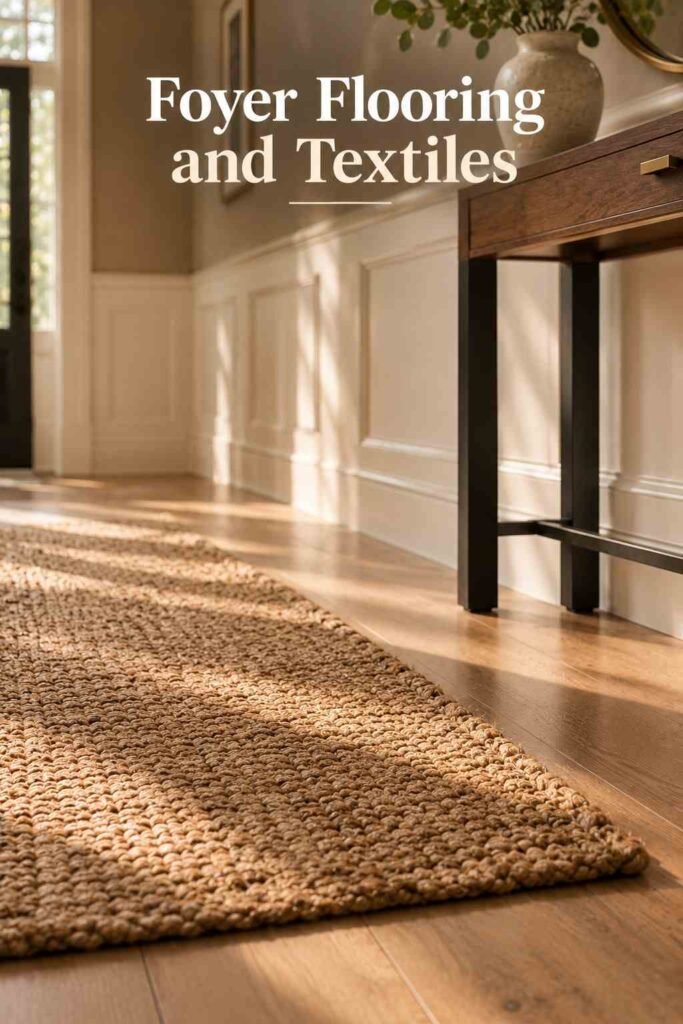
Horizontal shiplap boards, typically painted white or soft gray, bring a relaxed, airy quality. This treatment pairs well with natural fiber rugs and woven decor pieces.
14. Reclaimed Wood Open Shelving
Open shelves built from reclaimed wood double as storage and display space for books, small plants, or ceramics. This is one of the more functional entrance foyer wall design ideas for households that need extra organization near the door.
15. Arched Wall Niches
A built-in arched niche gives you a dedicated spot for a vase, sculpture, or seasonal decor without adding furniture. Painting the interior of the niche a contrasting color makes it pop.
Mirrors, Art, and Personal Touches
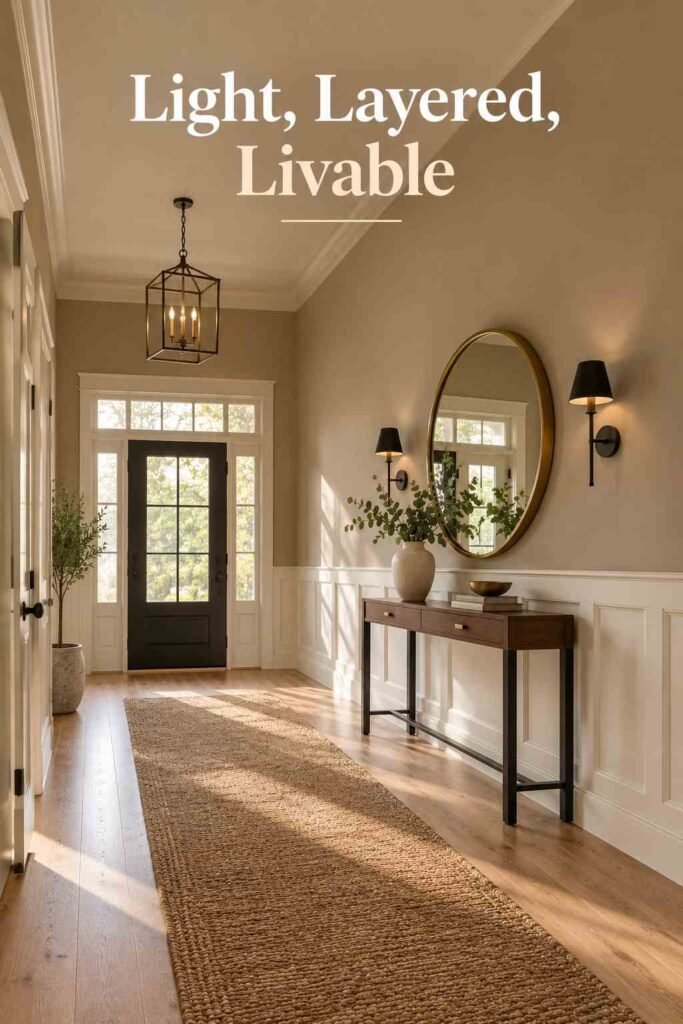
16. Oversized Leaning Mirror
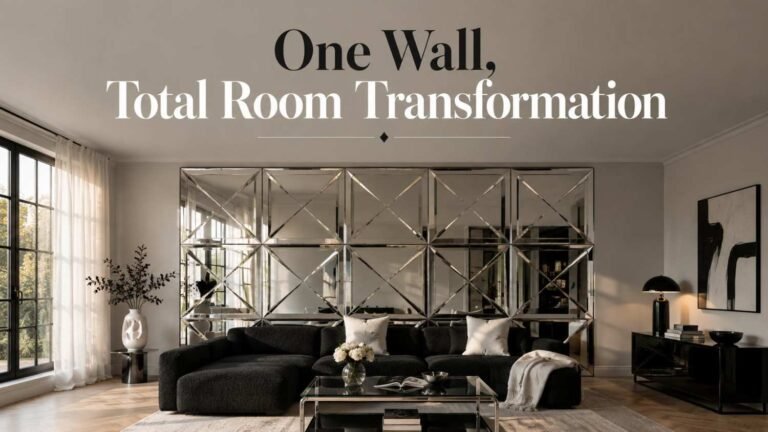
An oversized mirror leaned against the wall rather than mounted gives a relaxed, editorial feel while visually doubling the space — a smart trick for entrance foyer wall design in compact homes.
17. Round Statement Mirror Above a Console
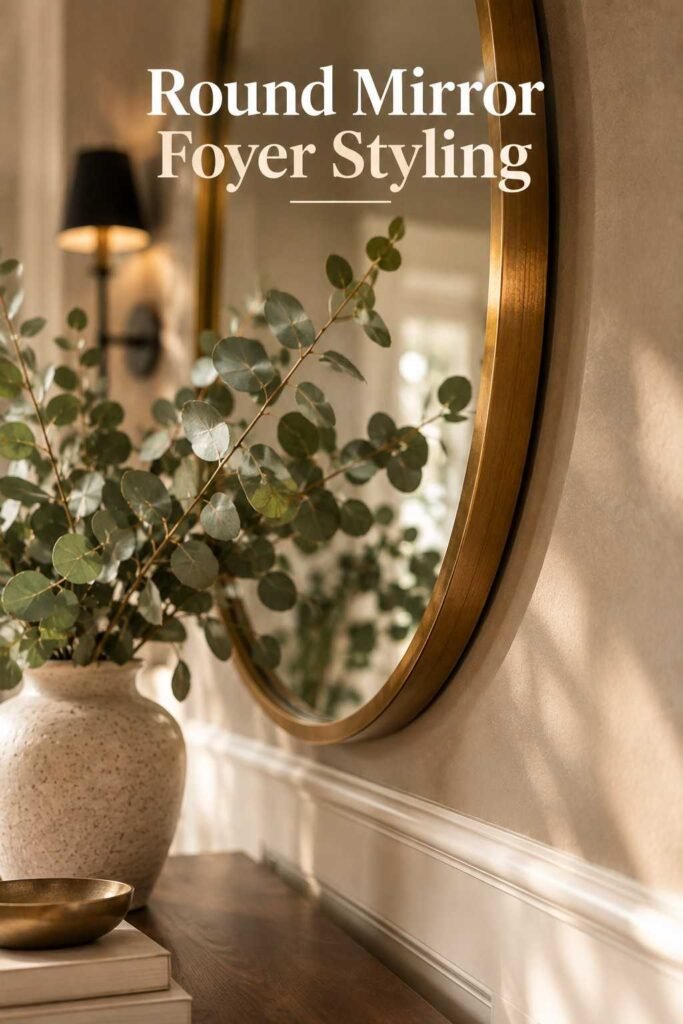
A large round mirror reflects natural light and softens the straight lines typical of console tables and door frames, making the whole entry feel brighter.
18. Gallery Wall of Framed Art
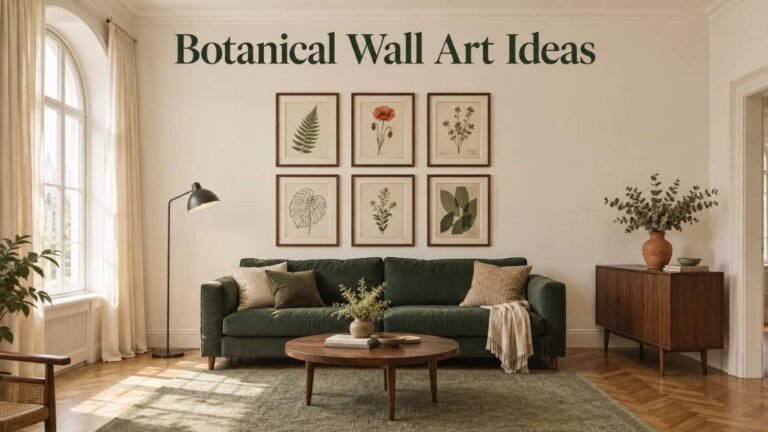
Mixing frame sizes and finishes across a cluster of art creates a layered, curated look. Because it’s easy to rearrange, a gallery wall can be refreshed seasonally without repainting or major cost.
19. Family Photo Wall
Swapping generic art for a curated set of family photographs personalizes the space immediately. Keep frame styles consistent even if photo sizes vary, so the wall still reads as intentional.
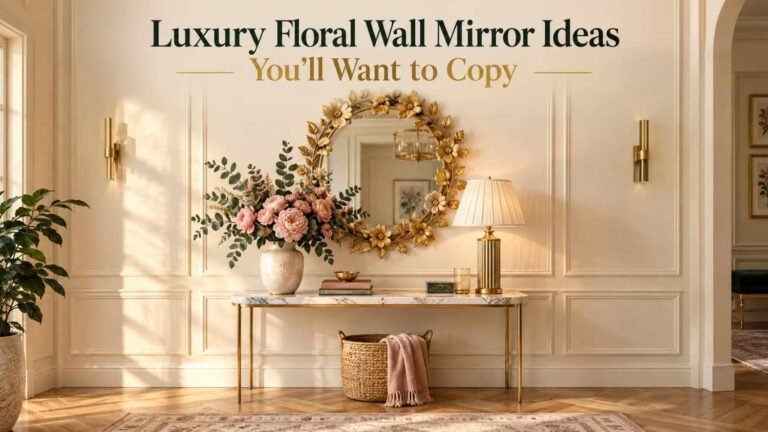
20. Luxury Floral Wall Mirror
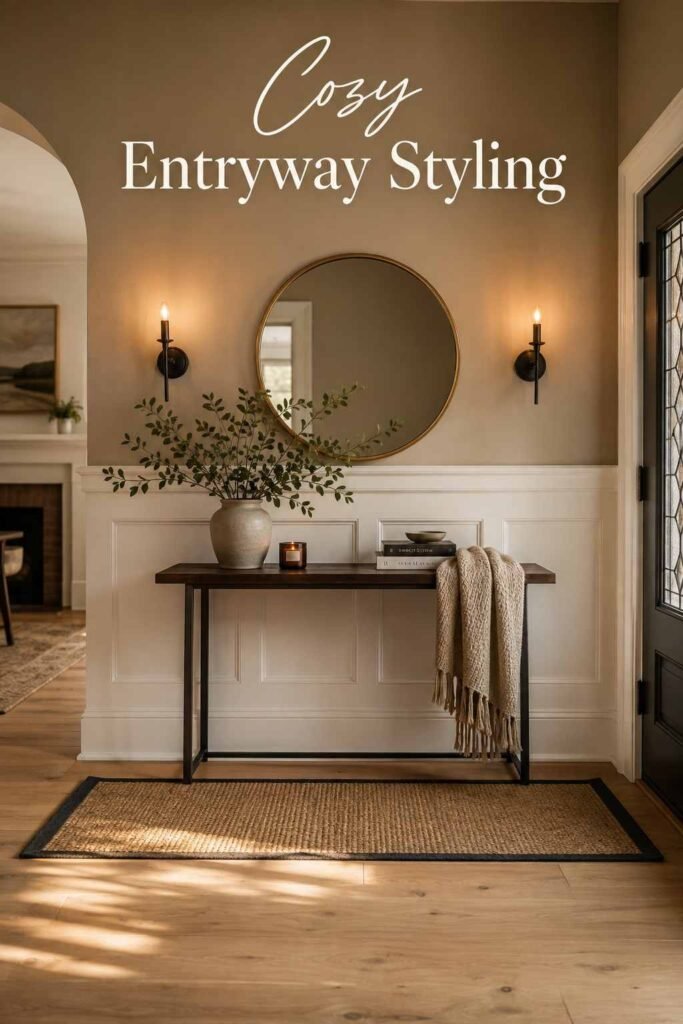
For homes wanting a softer, botanical-inspired focal point, a Luxury floral wall mirror brings ornamental detail that pairs beautifully with warm wood tones and layered lighting. Combined with a Cherry Blossom wall decor piece nearby, the entry gains a gentle, nature-inspired rhythm that feels curated rather than accidental — a look you can explore further at outinteriors.
21. Woven Macramé or Textile Wall Art
Layered textiles, macramé hangings, or woven wall baskets add warmth and visual softness, particularly suited to bohemian-style entries with natural materials like jute and rattan.
Small-Space and Budget-Conscious Solutions
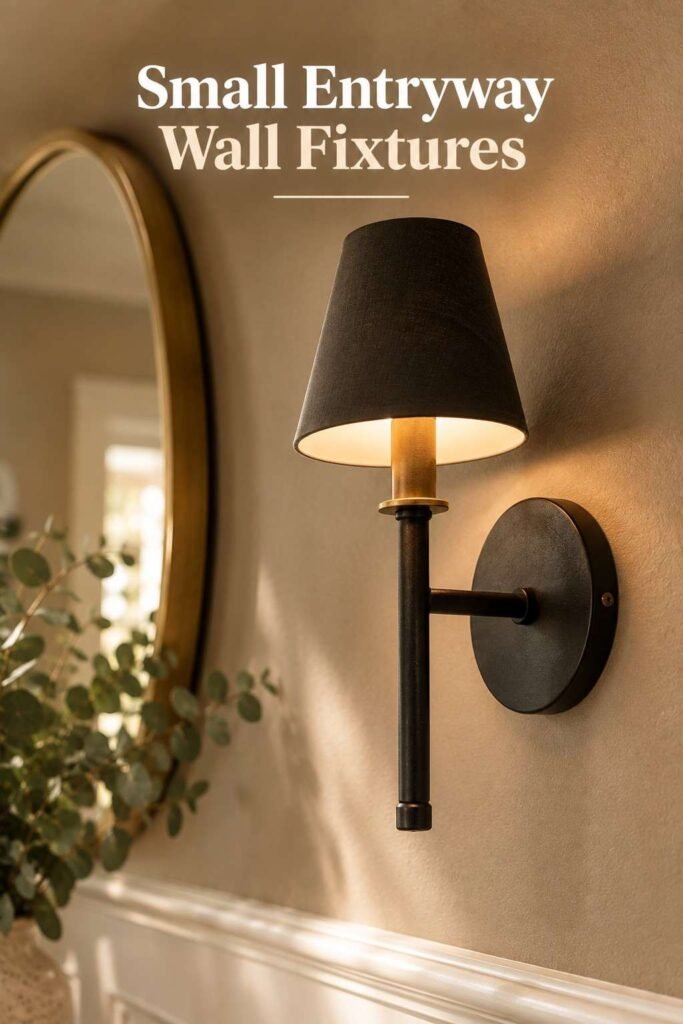
22. Vertical Hook Rail Below a Shelf
For apartments with minimal square footage, a slim wall shelf paired with hooks underneath solves storage and decor at once. Anchor hardware into wall studs for security, since coats and bags add real weight over time.
23. Peel-and-Stick Wallpaper Accent
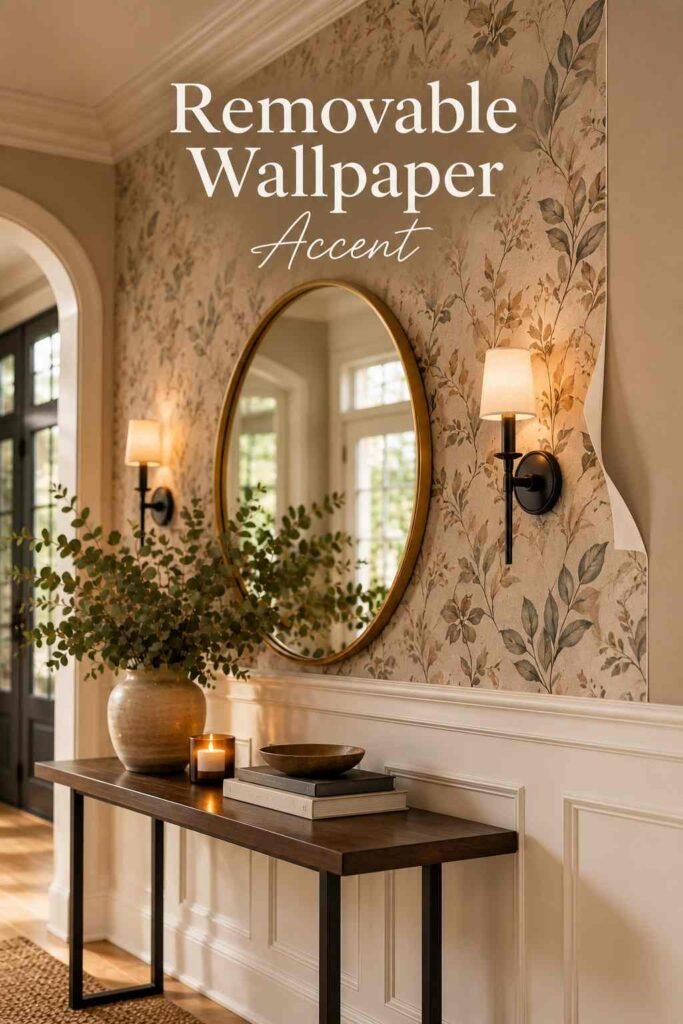
A removable wallpaper panel is a renter-friendly way to test bold pattern or color in an entrance foyer wall design without a long-term commitment or damage deposit risk.
24. Narrow Floating Shelves for Plants
In tight hallways, slim floating shelves holding small potted plants add life and color without eating into walking space. Choose low-maintenance varieties like pothos or snake plants for entries with limited natural light.
25. Painted Accent Stripe
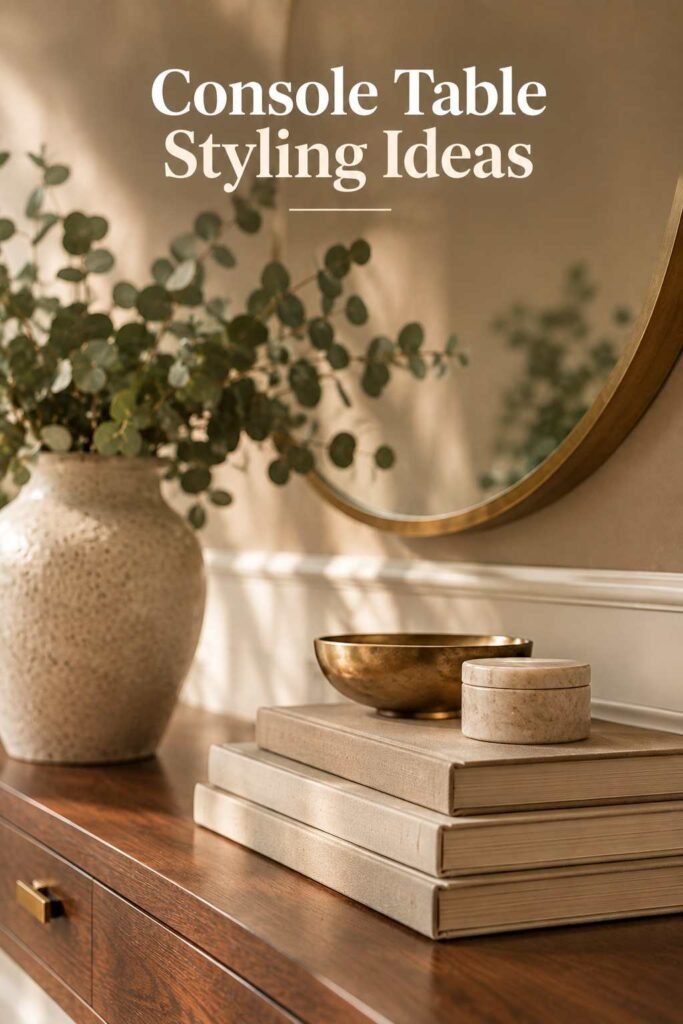
A single painted stripe — horizontal or diagonal — running across an otherwise plain wall adds movement and interest at almost no cost, making it one of the most budget-friendly entryway upgrades available.
26. Seasonal Rotating Display Wall
Designating one wall section for rotating seasonal decor (wreaths, small art swaps, holiday accents) keeps the space feeling current year-round without a full redesign each time.
Choosing the Right Entrance Foyer Wall Design for Your Home
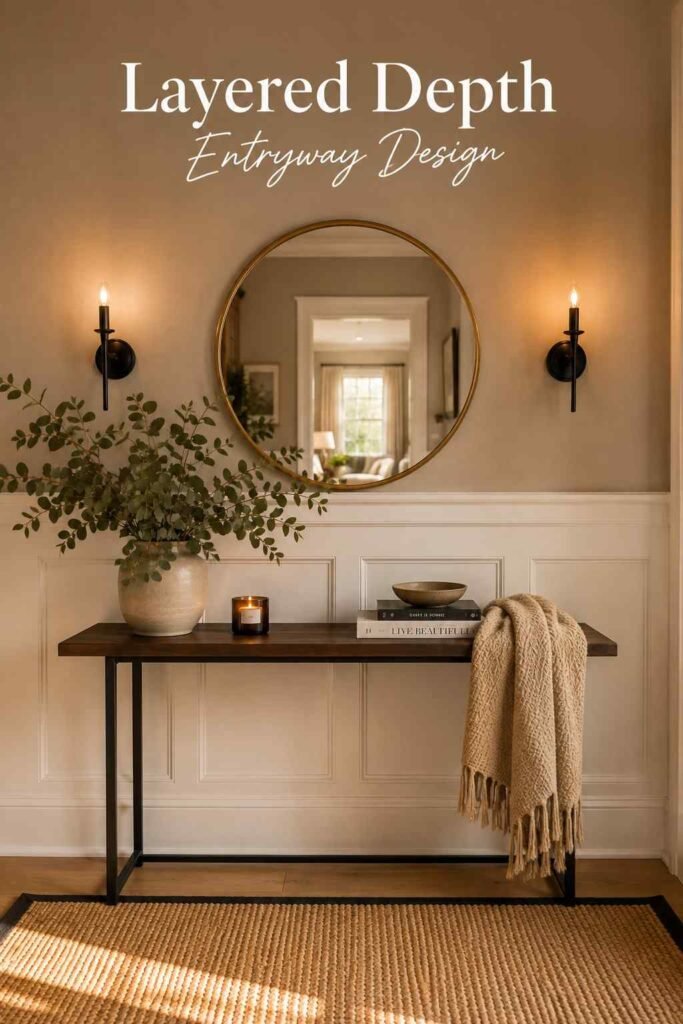
The best entrance foyer wall design depends on three practical factors: the amount of natural light available, the width of the walking path, and how much daily wear the space endures. Narrow foyers generally benefit from lighter colors and shallow-profile decor like floating shelves or leaning mirrors, since bulky furniture restricts movement. Wider or double-height entries, by contrast, can support bolder choices — dark color drenching, large-scale art, or dimensional paneling — without feeling cramped.
Lighting should always be planned alongside the wall treatment rather than added afterward. Textured surfaces like fluted panels or brick veneer look flat under a single overhead bulb but come alive with angled sconces or cove lighting that skims across the texture. Similarly, mirrors placed opposite a window multiply available daylight, which matters most in foyers without their own windows.
Conclusion
An entrance foyer wall design doesn’t need a full renovation budget to make an impression. Sometimes it’s a single mirror, a stripe of paint, or a cluster of family photographs that changes how a space feels the moment someone steps inside. The 26 ideas above cover a wide range of styles and budgets, from architectural paneling to a simple hook rail, so there’s a practical starting point regardless of your foyer’s size or your home’s overall style. Pick one or two elements that fit your space, and let the rest of the entryway grow from there.
Frequently Asked Questions
1. What is the best wall color for a small entrance foyer?
Light, warm neutrals like soft white, greige, or pale sage tend to work best in small foyers, as they reflect available light and keep the space from feeling boxed in.
2. How big should wall art be in a foyer?
As a general guide, wall art should fill about 60% to 75% of the visible wall space above furniture, calculated by measuring the blank wall area and multiplying by those percentages.
3. Is wallpaper a good choice for an entryway?
Yes, particularly textured or peel-and-stick versions, since entryways see less direct sun exposure than living rooms, which helps prevent fading over time.
4. How do I decorate a foyer wall with no natural light?
Mirrors, glossy paint finishes, and layered lighting (sconces plus an overhead fixture) help compensate for limited daylight and keep the wall from feeling dim or flat.
5. Should foyer walls match the rest of the house?
Not necessarily. Many designers treat the foyer as a distinct transitional space, allowing a bolder color or pattern that wouldn’t suit the rest of an open-concept home.
6. What’s a budget-friendly foyer wall upgrade?
A painted accent stripe, a gallery wall using existing frames, or a peel-and-stick wallpaper panel are all low-cost ways to refresh the space in a weekend.
7. How often should foyer wall decor be updated?
There’s no fixed rule, but a seasonal rotation of smaller elements — like a wreath or a swapped art piece — keeps the space feeling current without a full redesign.