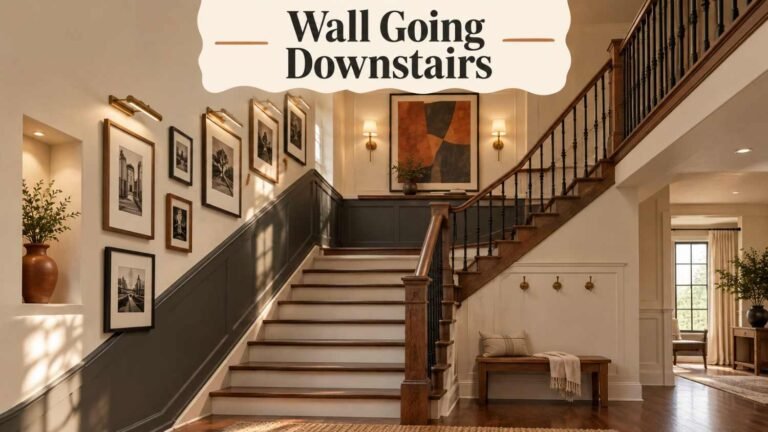
13 Textured Wall Ideas for Every Room, Budget, and Skill Level: Give Any Room a Custom, High-End Look

A flat painted wall is easy to ignore. Add texture, and it becomes the first thing you notice. These 13 textured wall ideas show how finishes like limewash, Venetian plaster, fluted oak panels, and grasscloth can turn plain drywall into a feature with real depth. Each one reacts to light in its own way. Limewash glows softly in the afternoon. Fluted wood throws long, rhythmic shadows at sunset. Brick and stacked stone bring weight and history. Some options suit a weekend DIY project, while others call for a skilled plasterer. You will find the look, the best room, the upkeep, and the one detail to check before you buy. Every idea comes with plain, practical advice. Whether you are updating a bedroom, a living room, or a bathroom, this guide helps you pick a finish that fits your style, your skill level, and your budget. Let’s begin.
Why Texture Works Better Than Color Alone

Texture adds visual weight without adding clutter. A wall with soft surface variation reflects light unevenly, so shadows and highlights shift throughout the day. That movement makes a room feel lived in and calm.
Texture also helps with practical problems. Dense or layered surfaces can reduce echo in open rooms, and some finishes hide small wall flaws that flat paint would show. Designers often use texture on a single accent wall, such as behind a bed, a sofa, or a dining table. This keeps the look focused and the budget under control.
13 Textured Wall Ideas to Try at Home
1. Limewash Paint for a Soft, Cloudy Finish
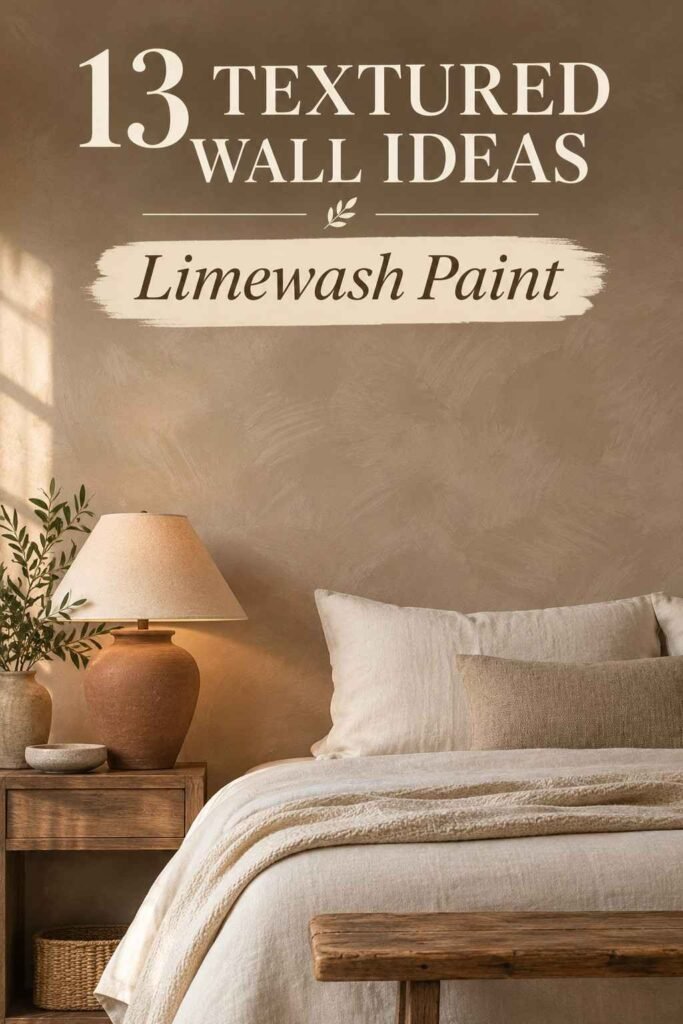
Limewash is a mineral-based paint made from limestone. It dries into a chalky, mottled finish with gentle tonal shifts. The effect looks like aged plaster, even on new drywall. If your dining area is next on the list, these large dining room wall decor ideas in modern luxury show how art and finishes work together.
It suits bedrooms, living rooms, and exteriors. Because it is breathable, it works well on masonry and plaster. Muted shades such as warm white, clay, and sage look especially natural. Apply it with a wide brush in crisscross strokes to build the cloud-like movement. Expect to apply more than one coat, and test a sample board first, since the color shifts as it cures.
2. Venetian Plaster for Polished Elegance

Venetian plaster is a classic Italian technique. Thin layers of lime-based plaster are troweled on, then burnished until the surface glows like soft stone. It adds quiet luxury to entryways, dining rooms, and main bathrooms when properly sealed.
The finish ranges from matte to a gentle sheen. It is not a quick DIY job. The trowel work takes practice, and uneven pressure shows. Many homeowners hire an experienced plasterer for large areas and try the technique themselves only on a small feature wall.
3. Fluted Wood Paneling for Rhythm and Shadow
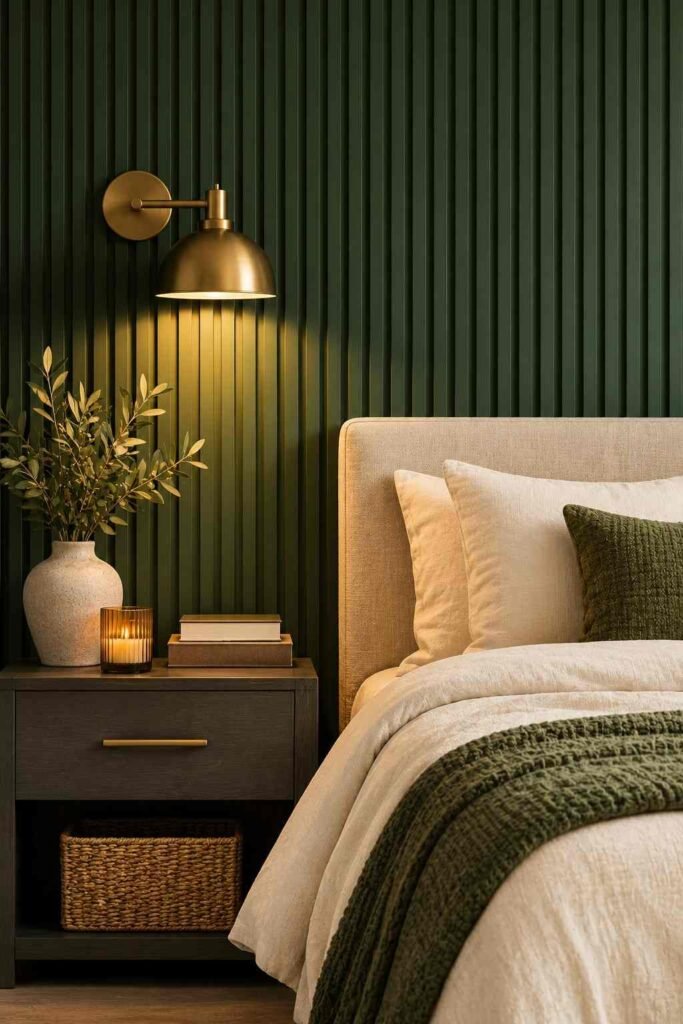
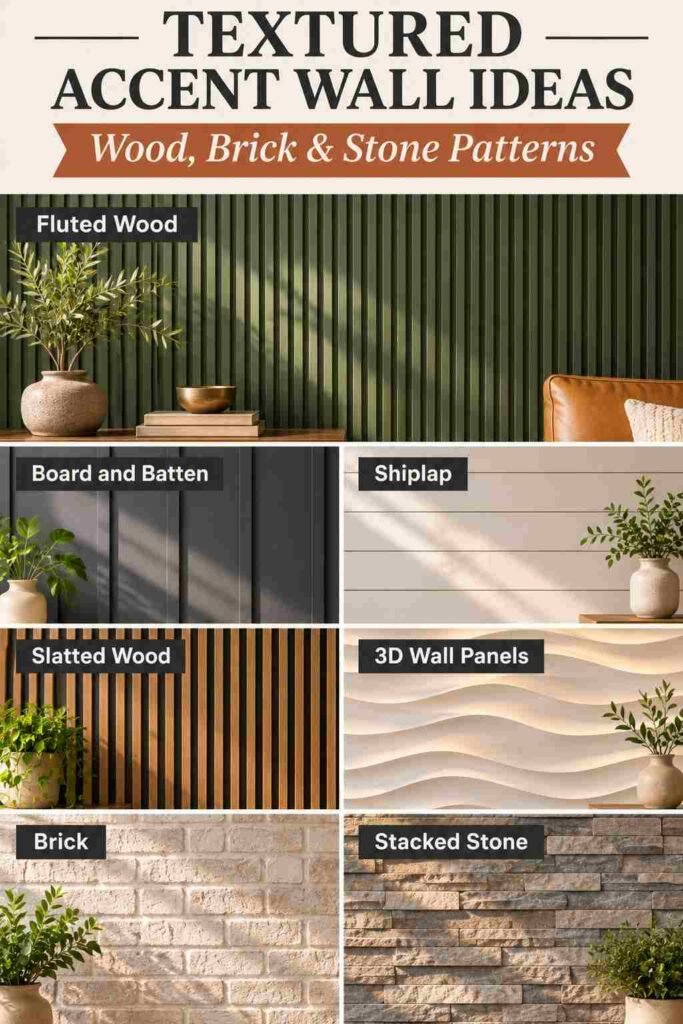
Fluted paneling uses vertical grooves to create a repeating pattern of light and shade. It became a major trend in recent years and still looks fresh. Oak, walnut, and painted MDF are common choices.
It works well behind a bed, around a fireplace, or in a hallway. Use it on one wall so the room does not feel heavy. Dark stains feel moody and dramatic, while pale oak keeps things airy. Pre-made panels on a backing sheet make installation easier than cutting individual slats.
4. Board and Batten for Classic Structure
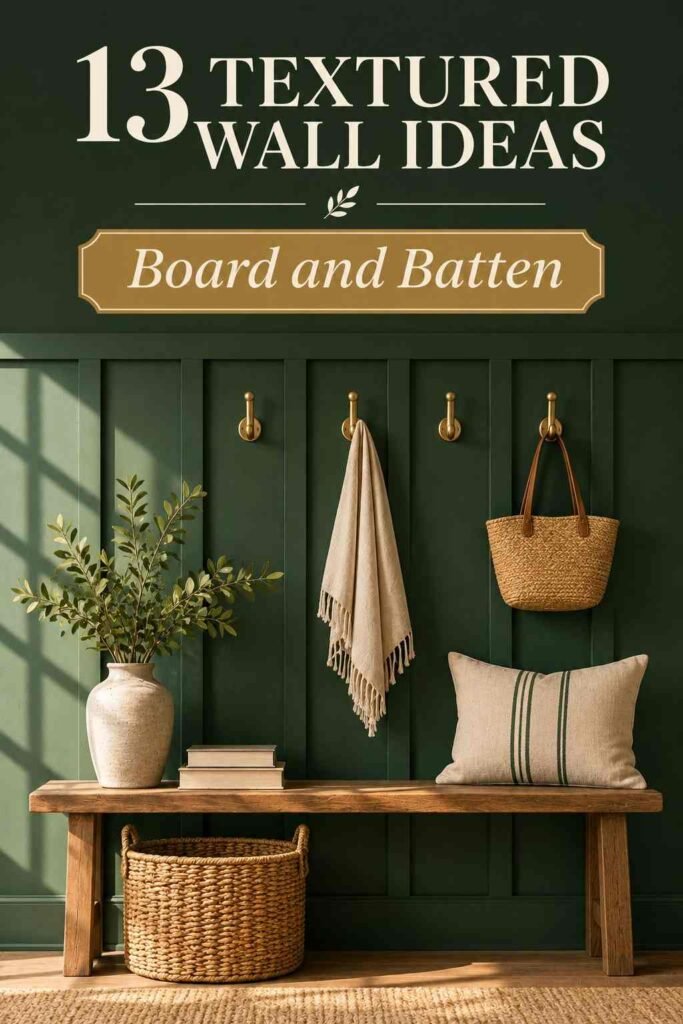
Board and batten pairs flat boards with narrow vertical strips. The result is a crisp grid that adds height and order. It started as a way to seal wooden barns and now appears in entryways, kids’ rooms, and dining spaces.
This is one of the most DIY-friendly textured wall ideas. You can cut MDF strips, glue them to the wall, fill the seams, and paint everything one color. A single shade, whether deep green, navy, or soft gray, makes the shadows do the work.
5. Shiplap for a Relaxed Horizontal Line
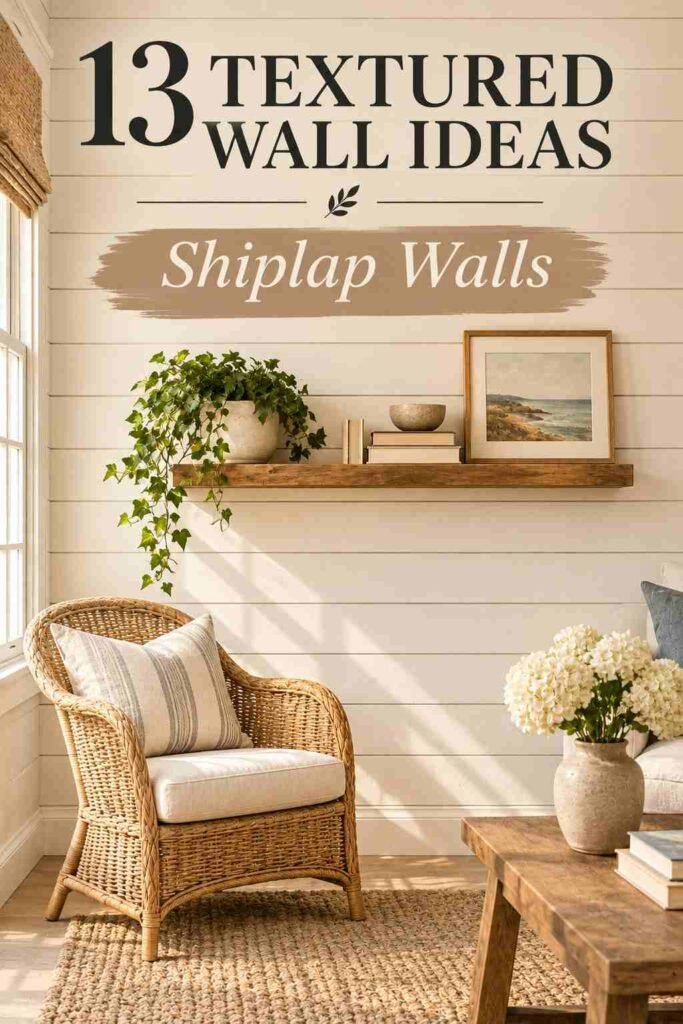
Shiplap uses horizontal boards with a small gap or groove between them. It gained fame through farmhouse design and still fits coastal and cottage styles well. Horizontal lines also make a narrow room feel wider.
Paint it white for a clean look, or stain it for warmth. For a modern take, try wider boards with tighter seams. Keep in mind that the gaps collect dust, so plan on regular wiping, especially in kitchens and bathrooms.
6. Grasscloth Wallpaper for Natural Warmth
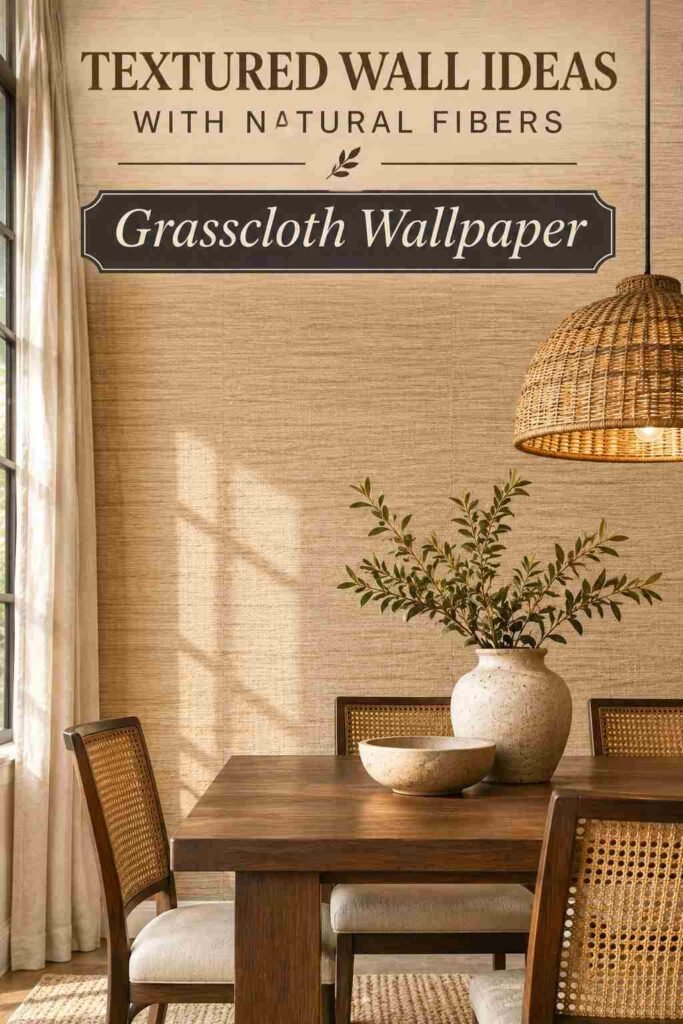
Grasscloth is woven from plant fibers such as sisal, jute, or arrowroot. Each roll has slight color variation and visible seams, which is part of its charm. It brings an organic, tailored feel to offices, dining rooms, and bedrooms.
It is best kept away from steamy bathrooms and splash zones, since moisture can stain or lift the fibers. Professional installation is wise, because the material is delicate and the seams need care. Pair it with linen curtains and wood furniture for a layered, natural look.
7. Exposed Brick or Brick Veneer for Urban Character
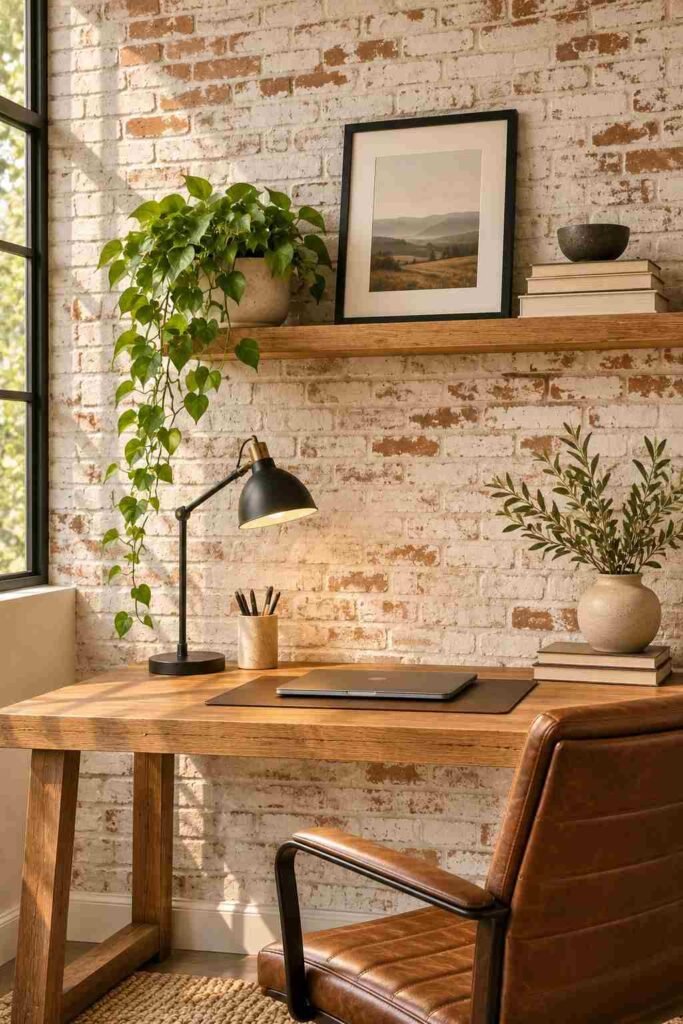
Brick brings instant history to a space. Original brick from an older building is ideal, but thin brick veneer gives the same look in newer homes. Whitewashed brick feels light and Scandinavian, while raw red brick feels warm and industrial.
Seal the surface to limit dust, especially in older walls. Brick holds heat well and adds a rugged texture that suits lofts, kitchens, and home offices. If your wall is already brick, a simple clean and sealant may be all it needs.
8. Stacked Stone for a Rugged Focal Point
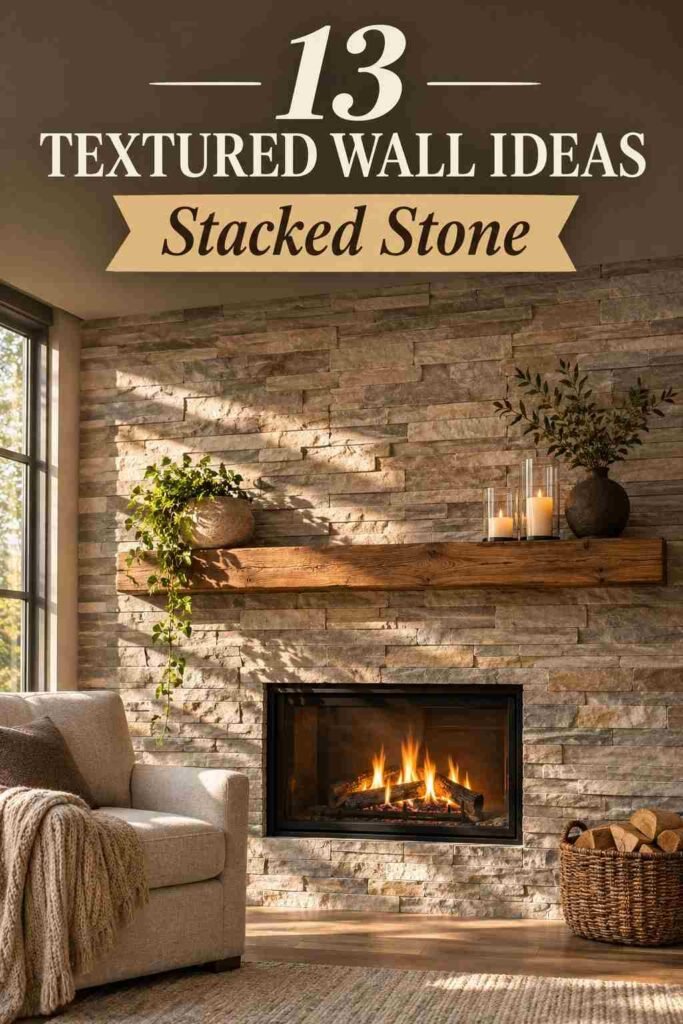
Stacked stone veneer gives a wall dimension that few other materials can match. Narrow ledgestone pieces create strong horizontal lines. Real stone feels cooler and heavier, while manufactured stone costs less and is lighter to install.
It looks best around a fireplace, behind a bathtub, or in a feature entry. Choose a tone that matches your flooring and trim. Cool gray reads modern, and warm beige and brown read rustic. Because the surface is rough, avoid placing it where people brush past often.
9. 3D Wall Panels for Modern Geometry
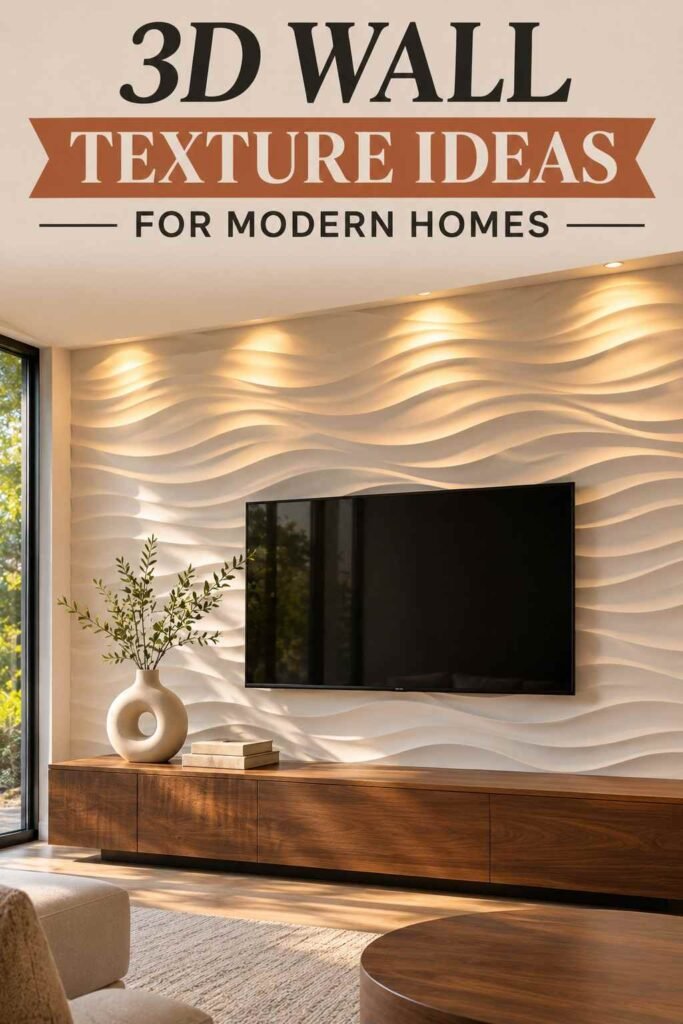
3D wall panels come in waves, diamonds, hexagons, and ripples. Most are made from PVC, plant fiber, or gypsum. They are lightweight, paintable, and often easy to glue or screw into place.
They suit media walls, nurseries, and commercial-style spaces. The pattern does the decorating, so keep the paint color simple. Under directional lighting, such as a wall washer or picture light, the shapes cast beautiful shadows that change as the day goes on. Fans of warm wood and limewash will enjoy these modern farmhouse decor ideas for the rest of the home.
10. Microcement for a Seamless, Smooth Texture
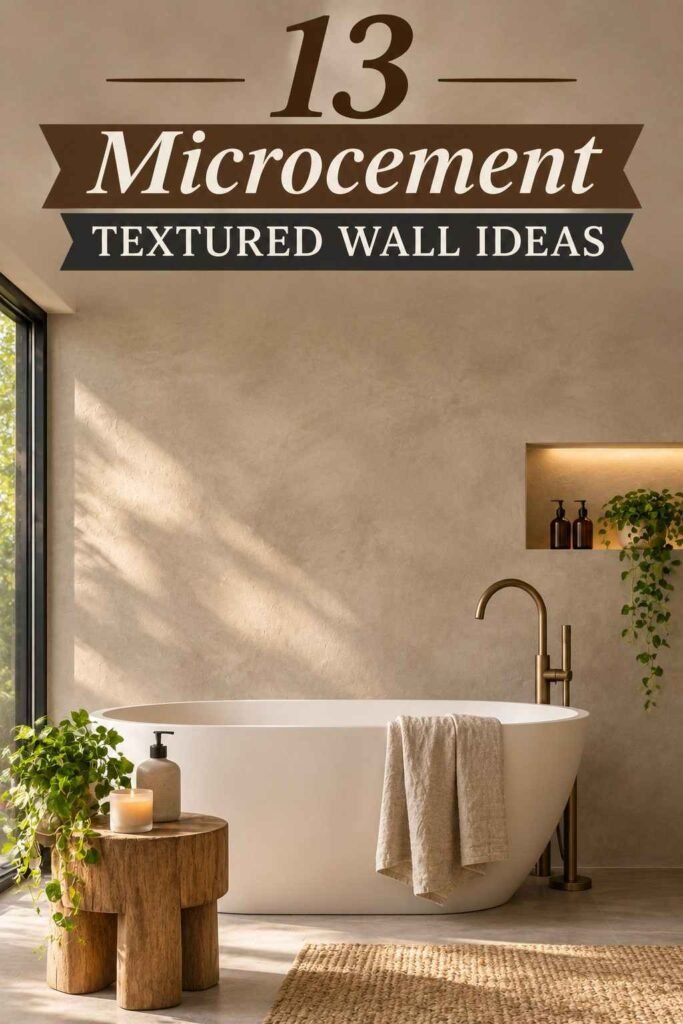
Microcement is a thin cement-based coating applied in layers. It can cover walls, floors, and even countertops in one continuous surface. The look is soft, slightly cloudy, and very contemporary.
It works in bathrooms, kitchens, and living areas when sealed correctly. The seamless finish avoids grout lines, which makes cleaning simpler in wet rooms. Like plaster, quality depends heavily on the installer, so check past projects before you hire.
11. Slatted Wood Walls for Warmth and Sound Control
Slatted wood panels use narrow wooden strips spaced over a felt backing. The felt can help absorb sound, which makes this option popular in home offices, studios, and open-plan living rooms.
The look is clean and Nordic. Oak and walnut veneers are common, and black-painted slats feel bold and modern. Slats are more open than fluted panels, so the backing color matters. A dark felt gives a dramatic contrast, while a light one keeps the look soft.
12. Sand-Textured Paint for Subtle Grit
Sand-textured paint contains fine particles that give the wall a soft, stone-like grain. It is among the easiest textured wall ideas for beginners. You roll it on like regular paint, and the surface hides minor flaws.
It works in any room, but earthy shades shine. Think terracotta, stone, oat, and olive. Keep in mind that a rough surface collects dust more easily and is harder to repaint smooth later. Test a small patch before committing to a whole room. Once the indoors feels finished, step outside with these cozy backyard ideas for a matching retreat.
13. Cork Wall Covering for Quiet Comfort
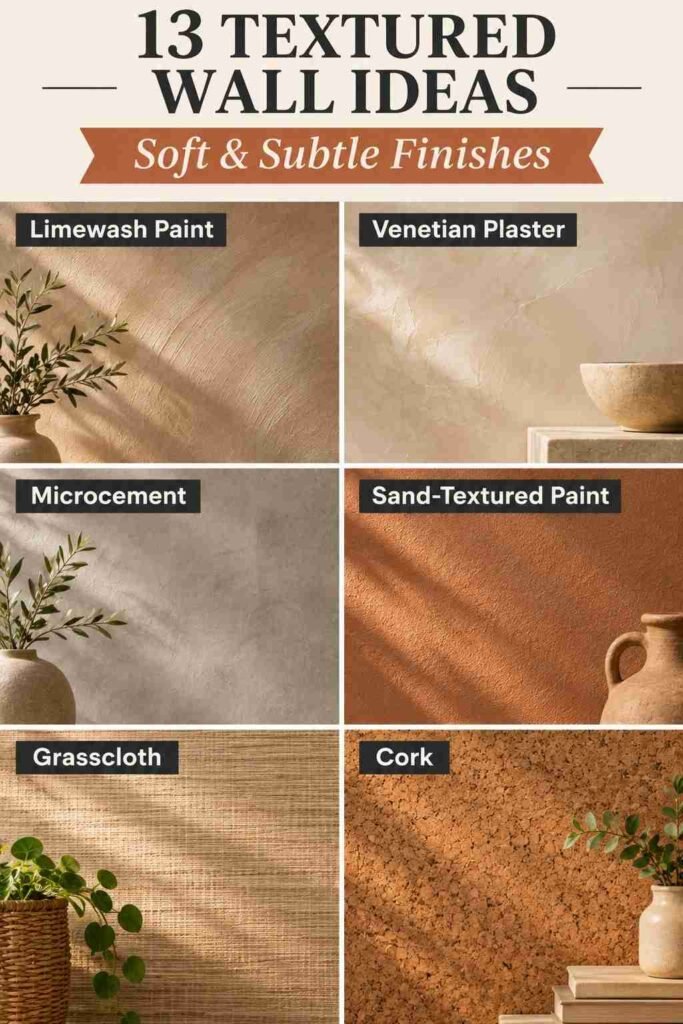
Cork is a renewable material harvested from the bark of cork oak trees, and the trees keep growing after harvest. As a wall covering, it brings a warm speckled texture and helps soften sound.
Rolls and tiles are available, and both fit offices, reading nooks, and playrooms. Cork also doubles as a pinboard in some formats. Its tone is naturally brown, so it pairs best with simple furniture and plenty of green plants.
How to Choose Among These Textured Wall Ideas
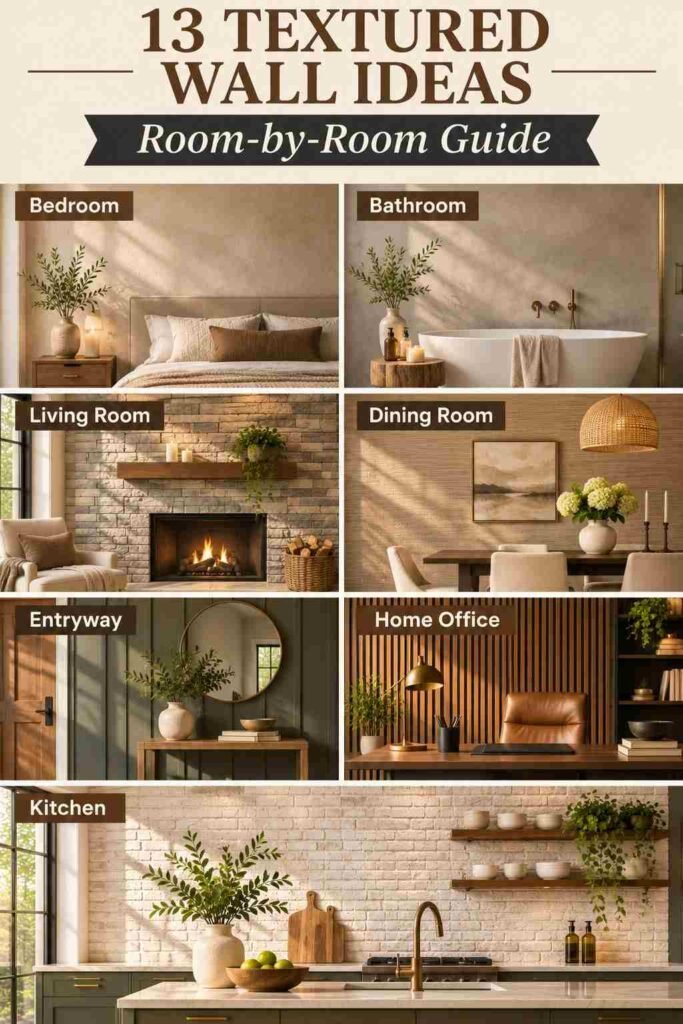
Start with the room’s purpose. Wet areas need sealed, water-tolerant surfaces such as microcement, tile-like stone, or properly sealed plaster. Dry rooms give you more freedom, including grasscloth, cork, and fluted wood.
Next, consider upkeep. Heavily grooved surfaces collect dust, and rough finishes can snag fabric or skin. Families with young children often prefer smooth-but-subtle options such as limewash or board and batten. For more design inspiration and room-by-room guides, visit outinteriors.
Finally, think about budget and skill level. Paint-based finishes cost the least and suit beginners. Wood panels fall in the middle. Stone, plaster, and microcement usually need skilled labor, so request quotes and sample boards first.
Styling Tips That Make Texture Look Intentional
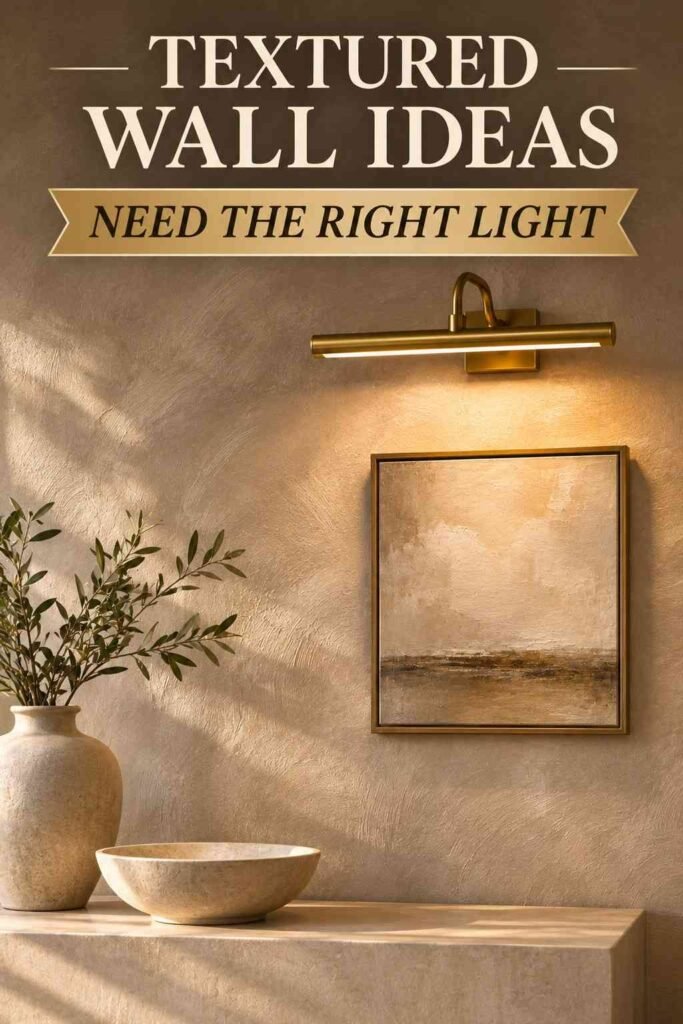
Lighting is the secret partner of texture. Place sconces or picture lights close to the wall so the light grazes the surface and reveals every ridge. A cold overhead bulb can flatten even the best finish.
Limit yourself to one or two textured surfaces per room. If the wall is heavy, such as stone or brick, keep the furniture clean and simple. If the wall is subtle, such as limewash, you can add patterned textiles and layered art. For more ways to fill your textured walls, browse these large wall decor ideas.
Conclusion
Texture turns a plain wall into a feature that feels personal and finished. Whether you want the softness of limewash, the polish of Venetian plaster, or the rhythm of fluted wood, there is a finish here for almost every budget and skill level.
Pick one wall, test a sample, and watch how it looks at different times of day. These 13 textured wall ideas give you a strong starting point, and the right one will make your room feel warmer, calmer, and more complete.