archive dive 1970s bedrooms That Defined a Decade of Bold, Fearless Design
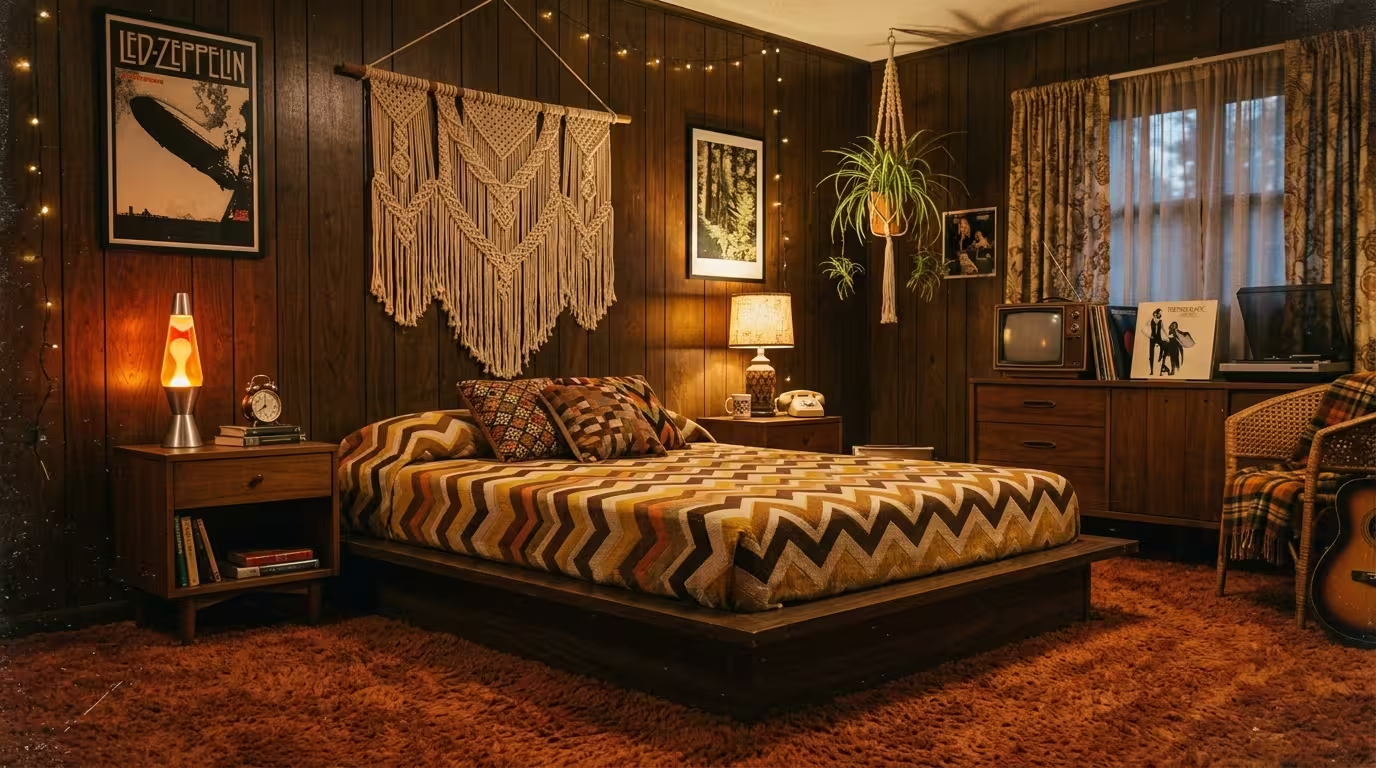
There is something deeply magnetic about opening an old design magazine or flipping through a family photo album from the 1970s. The bedrooms that appear in those faded images are unlike anything you see in modern interiors. They are unapologetic, bold, and almost theatrical in their commitment to color and pattern.
An archive dive into 1970s bedrooms is more than a nostalgic exercise. It is a window into a cultural moment when personal space became a form of self-expression. From avocado green shag carpets to mirrored ceiling panels, from waterbed frames to macramé wall hangings, the decade’s sleeping spaces told vivid stories about the people who lived in them. This article takes you deep into the design DNA of that era — what defined it, what drove it, and why so many of its elements are finding their way back into contemporary homes today.
The Cultural Backdrop Behind 1970s Bedroom Design
To understand the interiors of this period, you need to understand the era itself. The 1970s were years of transition. The social upheaval of the late 1960s had left a generation determined to assert individuality, and that spirit poured directly into the home. Interior design shifted away from the minimalist, space-age ideals of the mid-century and moved toward something warmer, earthier, and far more personal.
At the same time, the decade saw a significant rise in DIY culture. Home improvement television programs gained popularity. Stores like Sears and JCPenney expanded their home furnishings catalogs, making statement furniture more accessible to the middle class. People did not simply decorate their bedrooms — they curated them. Every throw pillow, every lava lamp, and every piece of wicker furniture was a deliberate choice.
Signature Color Palettes: Earth Tones and Jewel Hues
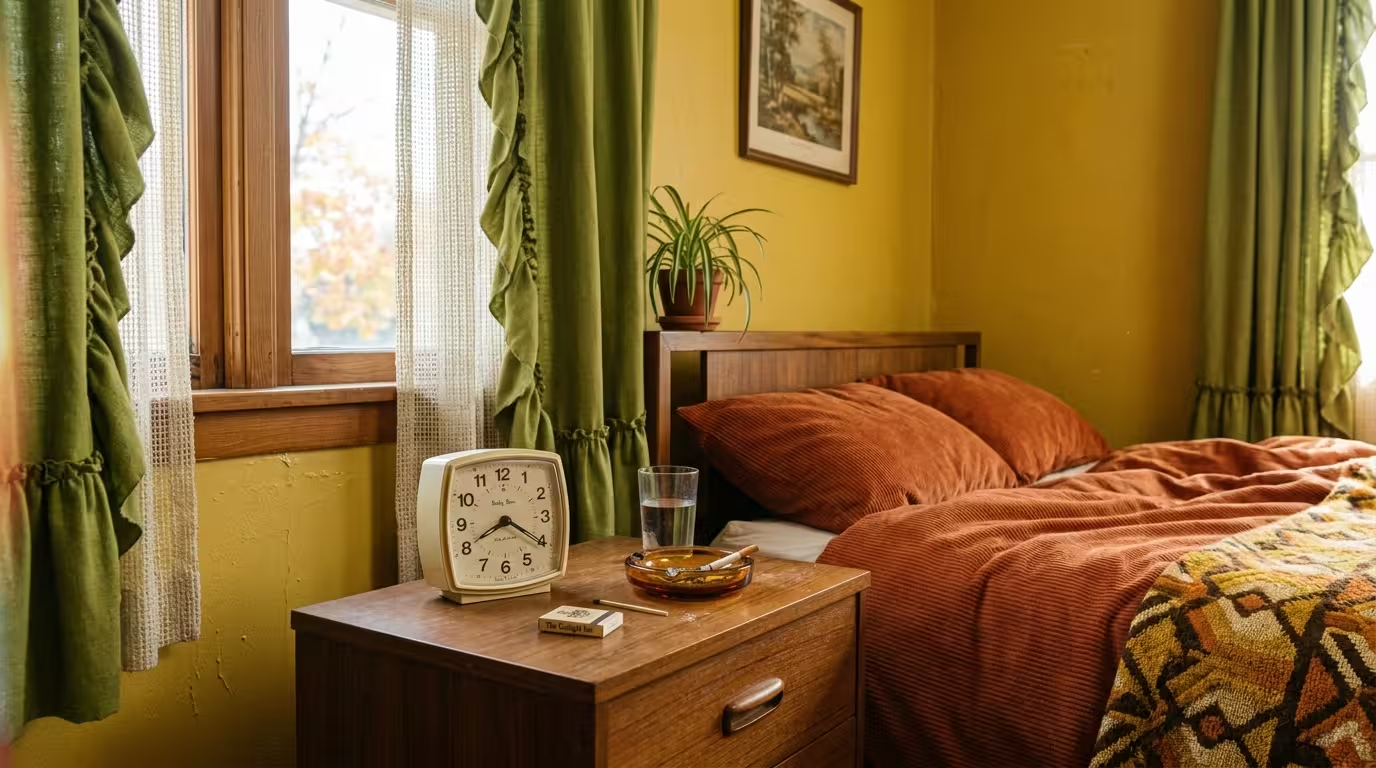
The most immediately recognizable feature of any archive dive into 1970s bedrooms is the color. The era had two dominant visual languages running side by side, and they could not have been more different from each other.
Earth Tones: The Brown, Orange, and Gold Family
The first palette was rooted in nature — or at least a stylized interpretation of it. Harvest gold, burnt orange, avocado green, and chocolate brown dominated bedroom walls, textiles, and furniture finishes throughout much of the decade. These colors appeared together in combinations that feel almost audacious by today’s standards. A bedroom might feature brown-paneled walls, an orange bedspread, and gold-trimmed lampshades — and it would work, because the whole decade was speaking the same visual language.
Paint brands in the early to mid-1970s heavily marketed these shades as “natural” and “organic.” The connection to nature was intentional. Environmental awareness was growing, and the color palette reflected a broader cultural desire to feel grounded. Manufacturers named their products accordingly — names like “Autumn Harvest,” “Copperleaf,” and “Saddle Tan” filled the swatches in home decorating brochures.
Jewel Tones and Bold Contrasts
The second dominant palette was its opposite. Influenced by the glam rock movement and the rising disco culture of the mid to late 1970s, some bedrooms went full jewel tone — deep burgundy, royal purple, sapphire blue, and emerald green. These rooms felt almost regal, and they were typically paired with metallic accents in gold or chrome.
Wallpaper was a major vehicle for these bolder colors. Geometric patterns, oversized florals, and graphic prints covered walls in shades that would have seemed excessive in any other decade. In this era, excess was the point.
Related Articles:
Flooring and Textiles: The Reign of the Shag Carpet
No archive dive into 1970s bedrooms is complete without a conversation about shag carpeting. If there is a single material that defines the decade’s interiors, this is it. Deep-pile shag carpets appeared in virtually every color imaginable — from white and cream to rust orange and deep green — and they covered not just floors but sometimes platforms and bed surrounds as well.
The appeal was tactile and psychological. After years of hardwood floors and thin area rugs, shag offered something luxurious underfoot. It transformed a bedroom from a functional sleeping space into something that felt indulgent and sensory. Raking the carpet — an actual grooming task of the era — even became a popular household ritual.
Beyond shag, the decade also embraced velvet upholstery, chenille throws, macramé wall hangings, and crochet bedspreads. Layering different textures was standard practice. A well-appointed 1970s bedroom might combine a shag floor, a velvet headboard, satin pillowcases, and a crocheted throw — all in complementary colors.
Furniture Trends: From Waterbeds to Platform Frames
The Waterbed Moment
Arguably, no piece of furniture is more synonymous with 1970s bedrooms than the waterbed. Invented by designer Charles Hall and introduced to the public in 1971, the waterbed became a genuine cultural phenomenon within just a few years. By the mid-decade, an estimated 20% of all beds sold in California were waterbeds, and the trend had spread nationally.
Early waterbed frames were often heavy, wood-paneled structures with built-in shelving, headboard lighting, and even stereo compartments. They were status symbols as much as they were sleeping surfaces. Owning a waterbed communicated something about the owner — that they were modern, relaxed, and unafraid of unconventional choices.
The practical challenges were real. Early models were prone to leaking, difficult to heat evenly, and notoriously hard to move. Yet their popularity persisted well into the 1980s before gradually declining.
Platform Beds and Low-Profile Frames
For those who preferred something more stable, the platform bed offered a similarly modern aesthetic. Low to the ground, typically upholstered in velvet or leather, and often built with integrated storage, platform beds became a popular alternative to traditional box spring setups. They fit naturally into the decade’s love of horizontal, layered arrangements.
Modular and Built-In Furniture
Another distinctive feature of 1970s bedroom design was the popularity of modular wall systems and built-in furniture. Influenced by Scandinavian design principles and adapted for the American market, these systems allowed homeowners to configure shelving, cabinetry, and display units in flexible arrangements. The bedroom became a multifunctional space — part sleeping area, part lounge, part personal library.
Lighting: Mood Over Function
The 1970s bedroom was not lit for efficiency. It was lit for atmosphere. Overhead fluorescent lighting was considered deeply unfashionable in personal spaces. Instead, the era favored multiple lower-level light sources that created warmth and intimacy.
Lava lamps, introduced in the 1960s, remained wildly popular throughout the seventies. Their slow, hypnotic movement and amber glow fit perfectly with the earth-tone aesthetic. Mushroom lamps — rounded, dome-shaped fixtures in white or cream — appeared on nightstands and dressers across the country. Macramé pendant lights and rattan shades filtered warm light through natural textures.
One of the more dramatic lighting choices of the era was the mirrored ceiling or mirrored wall panel. Associated with more overtly glamorous interiors, mirrors were used to amplify light and make smaller rooms feel larger. They appeared frequently in bedroom design throughout the mid to late 1970s, particularly in urban apartments.
Wall Treatments: Wallpaper, Wood Paneling, and More
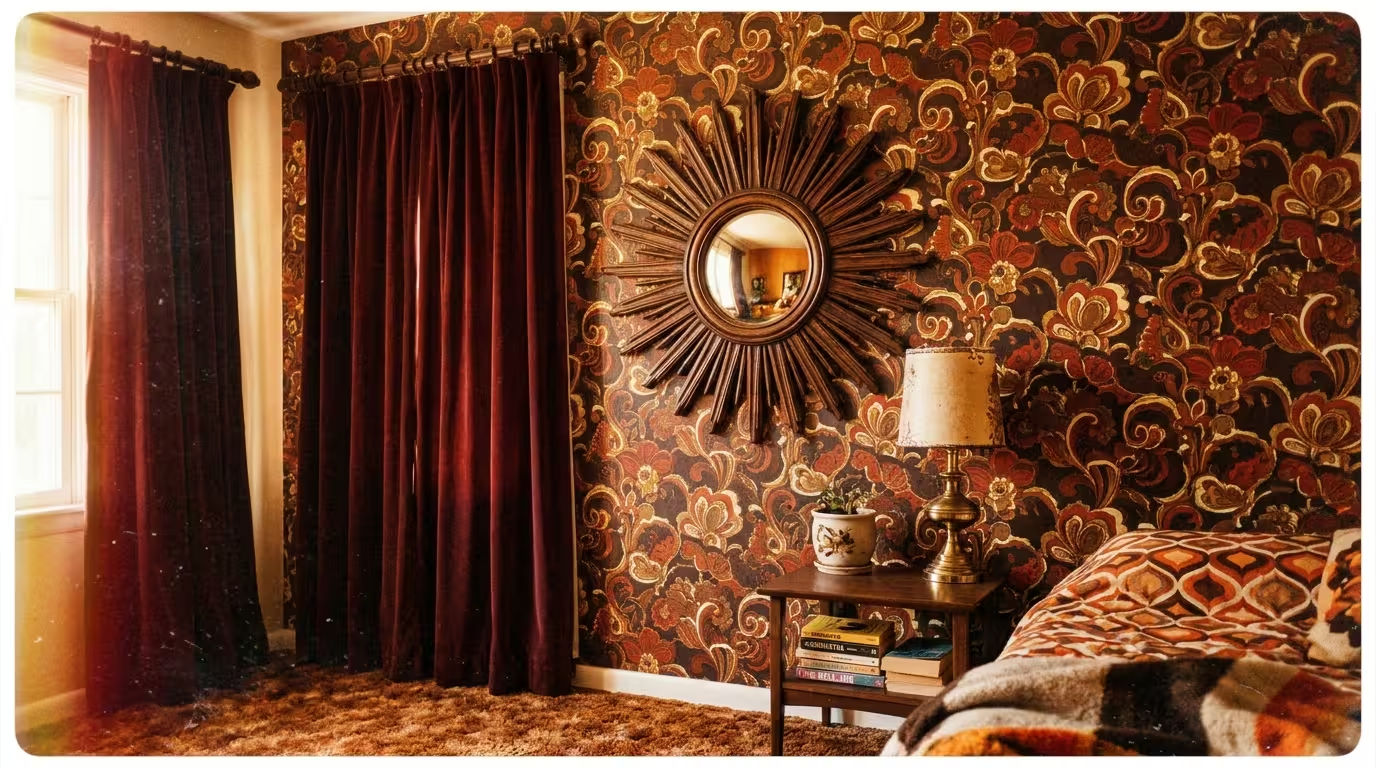
Walls in 1970s bedrooms were rarely plain. The era had a horror of empty, unadorned surfaces, and it addressed that horror with considerable creativity.
Wood Paneling
Faux wood paneling — typically dark walnut or pine — was perhaps the most ubiquitous wall treatment of the decade. It appeared in living rooms, dens, and bedrooms alike, lending a warm, cabin-like quality to interior spaces. In bedrooms, paneling was often combined with complementary textile colors to create a cohesive, enveloping feel.
Wallpaper Patterns
Wallpaper was a full commitment in the 1970s. The patterns were large, bold, and often psychedelic. Geometric prints featuring circles, hexagons, and interlocking shapes were especially popular in the early 1970s, while the latter half of the decade saw a surge in oversized botanical prints and Art Deco revival patterns. It was not unusual to see wallpaper on all four walls — the idea of an accent wall had not yet taken hold.
Macramé and Wall Art
Handmade décor played a significant role in 1970s bedroom interiors. Macramé wall hangings — large, knotted textile pieces in natural jute or cotton — were a staple of the era. They reflected the decade’s back-to-nature philosophy and its embrace of craft as a form of artistic expression. Alongside macramé, posters of rock bands, film stars, and travel destinations also decorated bedroom walls, pinned or framed at the discretion of the occupant.
The Kids’ and Teen Bedroom: A Separate Archive Chapter
An archive dive into 1970s bedrooms would be incomplete without examining the spaces designed for younger occupants. Children’s and teen bedrooms of the era were equally expressive, if slightly less extravagant.
Bunk beds with chunky wooden frames were standard in shared children’s rooms. Teen bedrooms, however, were often personal galleries — covered in band posters, draped with beaded curtains, and furnished with bean bag chairs that became essential seating for a generation. The bean bag chair, introduced in 1969 by Italian designers Piero Gatti, Cesare Paolini, and Franco Teodoro, became a staple of teenage spaces throughout the following decade.
Teen bedroom color palettes often leaned toward whatever popular culture demanded — the influence of rock music, television, and film was significant. Bedrooms reflected fandom in ways that had not been seen in previous generations.
Regional Variations in 1970s Bedroom Style
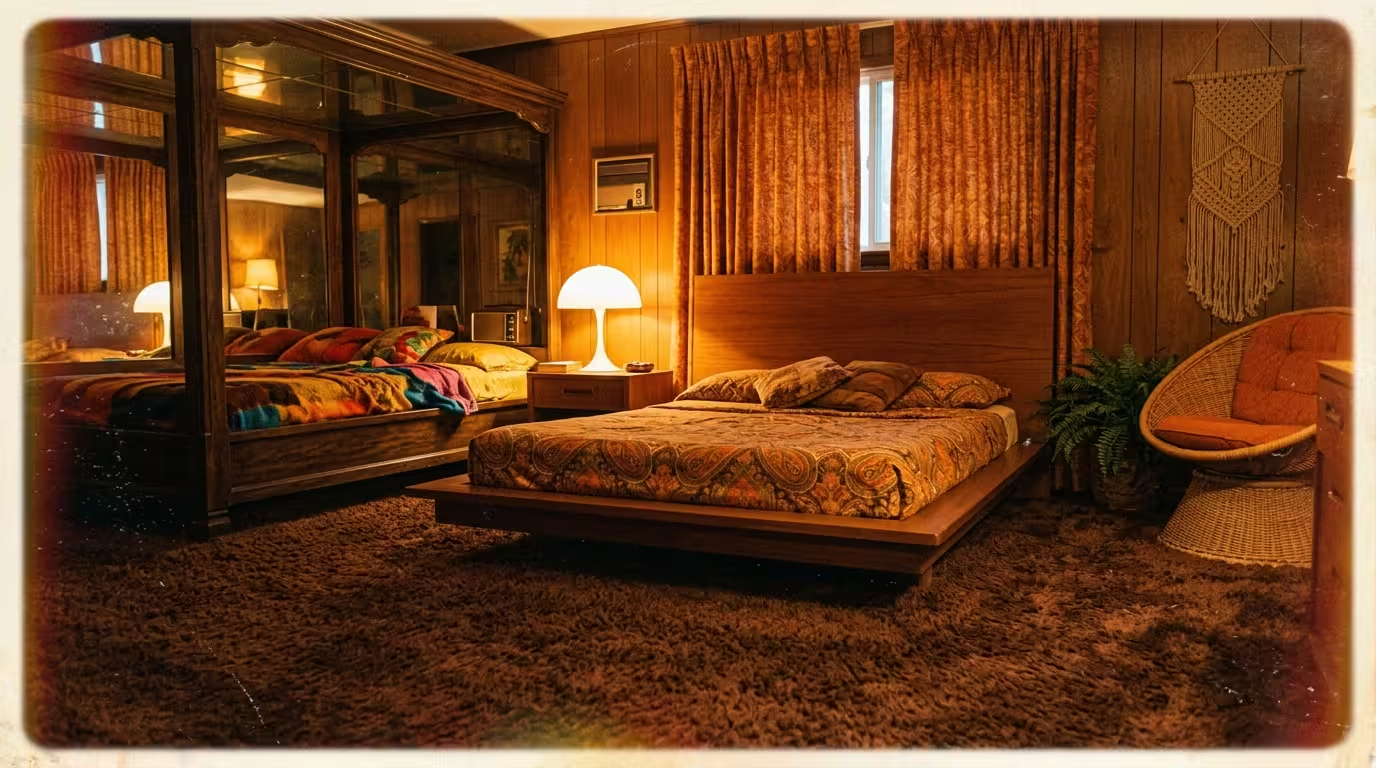
Not every 1970s bedroom looked the same. Regional differences shaped how the decade’s aesthetic played out across the United States.
In California, where the waterbed was born, and surf culture held sway, bedrooms tended to be more relaxed and nature-focused — rattan furniture, wicker baskets, and plant-filled windowsills were common. The Pacific Northwest shared a similar naturalistic impulse. In the South, traditional furniture forms were often blended with the decade’s color palette, producing rooms that felt transitional rather than fully committed to the era’s more radical aesthetics. Urban apartments in New York and Chicago often featured the more glamorous, jewel-toned version of seventies style, with mirrored surfaces and velvet upholstery.
Why 1970s Bedroom Design Is Influencing Contemporary Interiors
The lessons embedded in an archive dive into 1970s bedrooms have not gone unnoticed by modern designers. Several key elements of the decade’s aesthetic have made meaningful comebacks in recent years.
Warm earth tones — terracotta, camel, warm brown — have dominated interior design trends since the early 2020s. Major paint manufacturers, including Sherwin-Williams and Benjamin Moore, have repeatedly named warm, earthy hues as their colors of the year. The direct lineage back to the 1970s palette is unmistakable.
Velvet upholstery has returned with significant force in bed frames and headboards. Rattan and wicker furniture have made a sweeping comeback, appearing in everything from high-end boutique hotels to everyday bedroom designs. Macramé wall art, once dismissed as a dated craft, is now sold in mainstream home décor stores.
Even the concept of the layered, textural bedroom — multiple fabrics, mixed materials, surfaces that invite touch — owes a clear debt to the philosophy behind 1970s interior design. The decade understood something that modern minimalism sometimes forgets: a bedroom should feel like a sanctuary, not a showroom.
How to Incorporate 1970s Bedroom Elements Today
If this archive dive has you feeling inspired, there are practical ways to bring the era’s energy into a contemporary space without creating a full-period reproduction.
Start with color. Introduce one or two earth tones through bedding, curtains, or a painted accent feature. Terracotta, warm amber, and deep olive all translate beautifully into modern rooms.
Add a velvet headboard. A jewel-toned or neutral velvet headboard immediately evokes the decade’s luxurious sensibility while remaining thoroughly wearable in today’s interiors.
Bring in natural textures. A rattan side table, a jute area rug, or a macramé wall piece adds the tactile warmth that defined 1970s bedrooms without overwhelming a contemporary design.
Choose warm lighting. Swap overhead lighting for layered lamps with warm-toned bulbs. A statement table lamp with a rattan shade, placed on each nightstand, is a small change with significant atmospheric impact.
Layer your textiles. Don’t settle for matching bedding sets. Mix a linen duvet with a velvet throw and a crocheted cushion. The layered approach is fundamentally seventies in spirit and endlessly adaptable.
Conclusion: What the Archives Tell Us
A thorough archive dive into 1970s bedrooms reveals a decade that was, above all, committed to feeling. These were not rooms designed to photograph well or to impress strangers on the internet. They were rooms built for living — for warmth, for pleasure, for personal expression, and for a very particular kind of comfort that came from surrounding yourself with things that felt meaningful.
The era made mistakes, of course. Some combinations were overwhelming, some choices dated badly, and the faux wood paneling has not exactly found universal rehabilitation. But the underlying instinct — that a bedroom should speak in its occupant’s voice — remains as relevant today as it was in 1973.
Whether you are a design historian, a vintage enthusiast, or simply someone who stumbled across an old home decorating magazine, the 1970s bedroom deserves more than a dismissive laugh. It deserves a genuine look. Because somewhere inside that shag carpet and that burnt-orange bedspread is a philosophy of personal space that we have spent fifty years trying to rediscover.