10+ Home Living Room Ideas: How to Design a Space You’ll Actually Love Living In
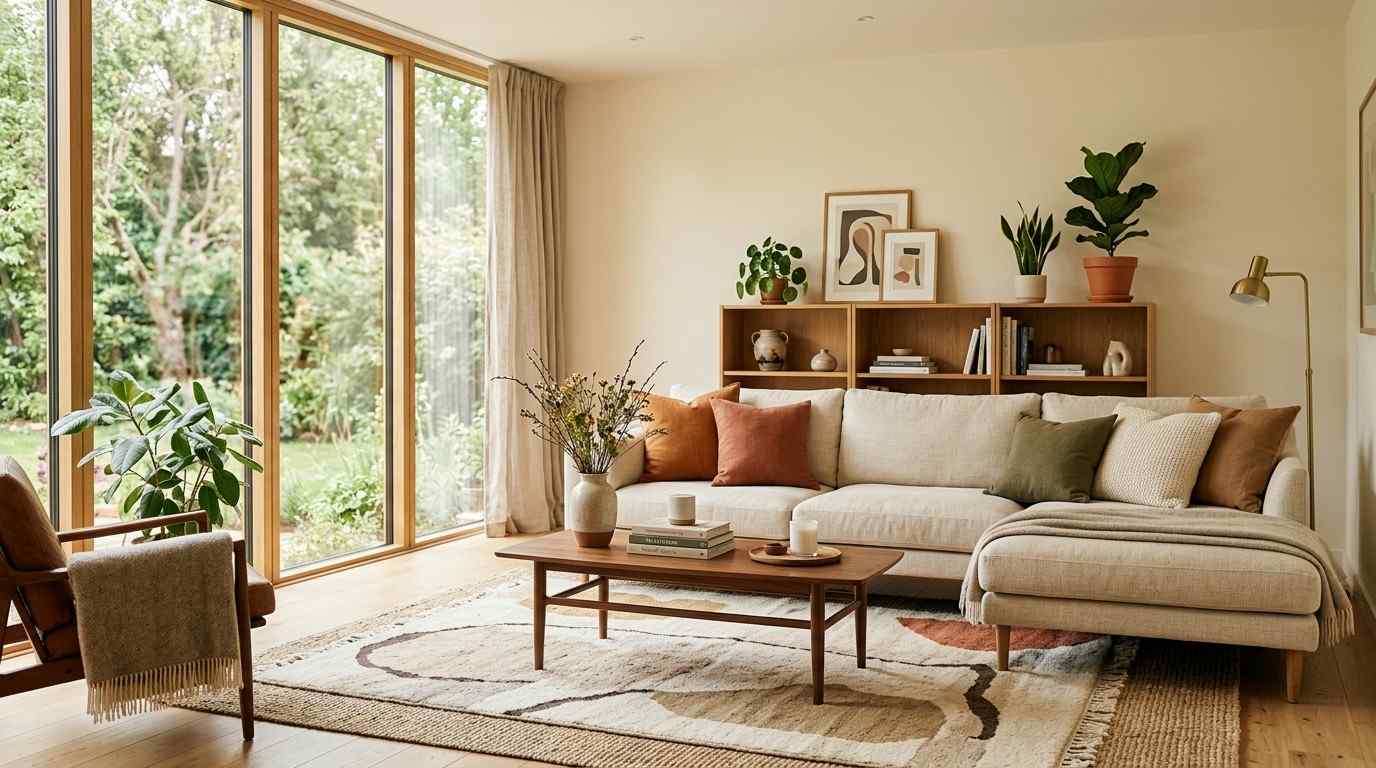
Most living rooms fail for one quiet reason: they were decorated, not designed. A throw pillow here, a rug there, a sofa chosen because it was on sale — and somehow the room still feels off. A great home living room isn’t built from a shopping list. It’s built from a handful of decisions about scale, light, color, and flow that work together.
This guide walks through those decisions in order, starting with the trends shaping 2026 and ending with the small, often-overlooked details — furniture spacing, lighting layers, multi-purpose zones — that separate a room that looks nice in photos from one that actually feels good to live in every day.
What Makes a Home Living Room Work in 2026
A living room has to do more than look good. It hosts movie nights, work calls, toddlers building block towers, and quiet evenings with a book — often all in the same week. The rooms that handle this best share three traits: durable, comfortable furniture; a layout that supports movement instead of blocking it; and a color story that feels calm rather than chasing every passing trend.
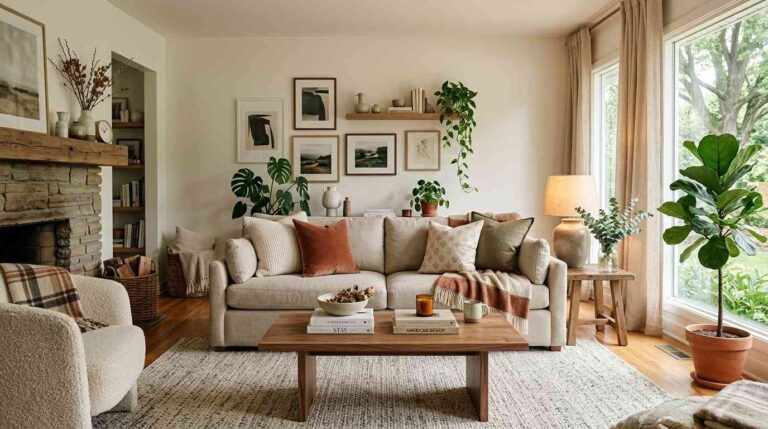
Designers are also moving away from the “matchy” living rooms of the early 2020s. According to recent industry commentary, 2026’s defining shift is toward collected, livable spaces rather than showroom-perfect ones — rooms with texture, a few imperfect vintage pieces, and color that’s chosen for how it feels at 7 p.m., not how it photographs at noon.
Living Room Color Trends Taking Over in 2026
Warm Neutrals Are Replacing Cool Grays
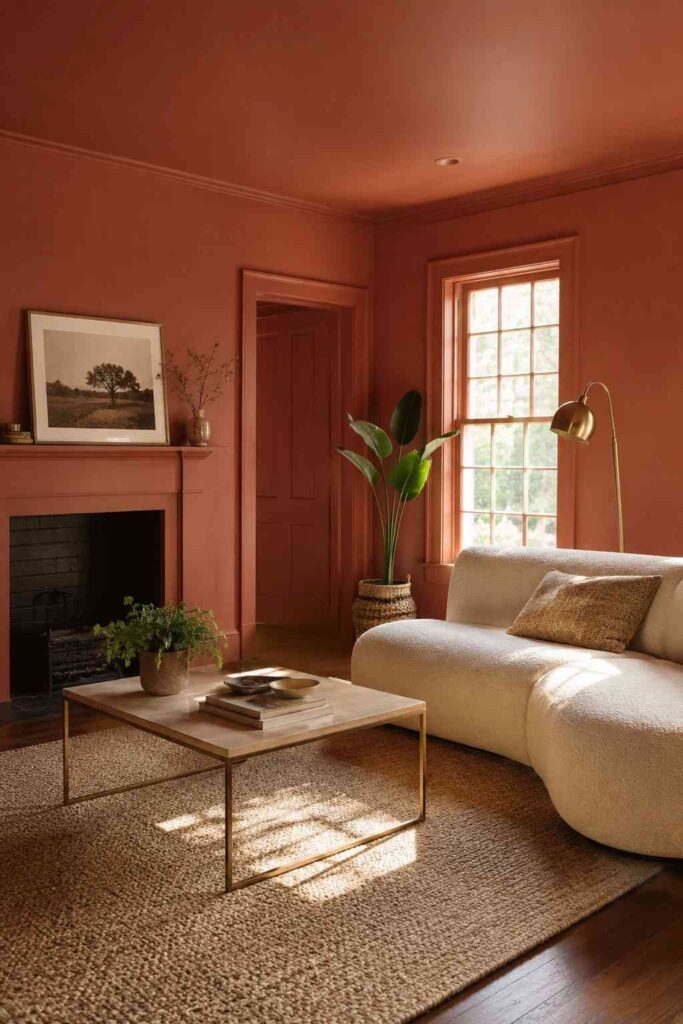
For most of the last decade, icy grays and stark whites dominated living room walls. That’s reversing. Designers now favor warmer, earthier neutrals — soft creams, mushroom brown, and warm whites like Sherwin-Williams’ Alabaster — because they hold onto warmth under both daylight and lamplight, where cool tones can feel flat and clinical.
Earth Tones and Deep, Grounding Shades
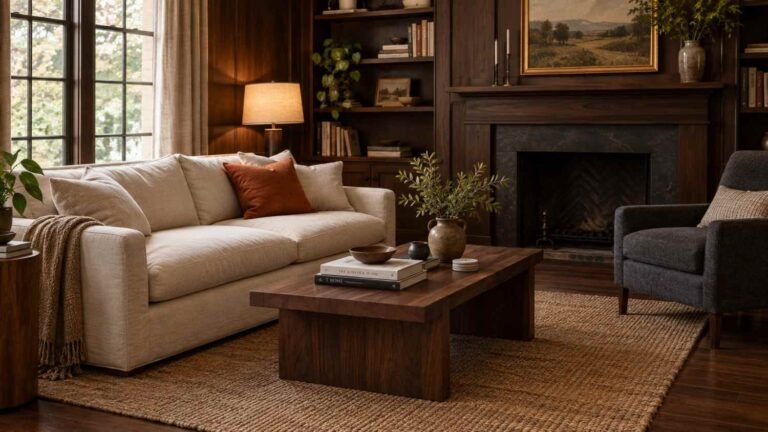
Terracotta, olive green, espresso brown, and aubergine are showing up across 2026 living room schemes, often described by designers as the new neutrals. Benjamin Moore’s 2026 Color of the Year, Silhouette, is a deep, charcoal-tinted brown built specifically to anchor a room without overwhelming it — proof that grounding colors no longer mean dark or heavy.
Color-Drenching Instead of Accent Walls
One real shift worth noting: single accent walls are losing ground to color-drenching, where walls, trim, and ceiling are painted the same tone for a cocooned, intentional look. Teal has also emerged as a standout 2026 hue, prized for feeling both calming and current — a more grown-up alternative to the bright blues and greens of a few years ago.
Furniture Layout Rules Most Guides Skip
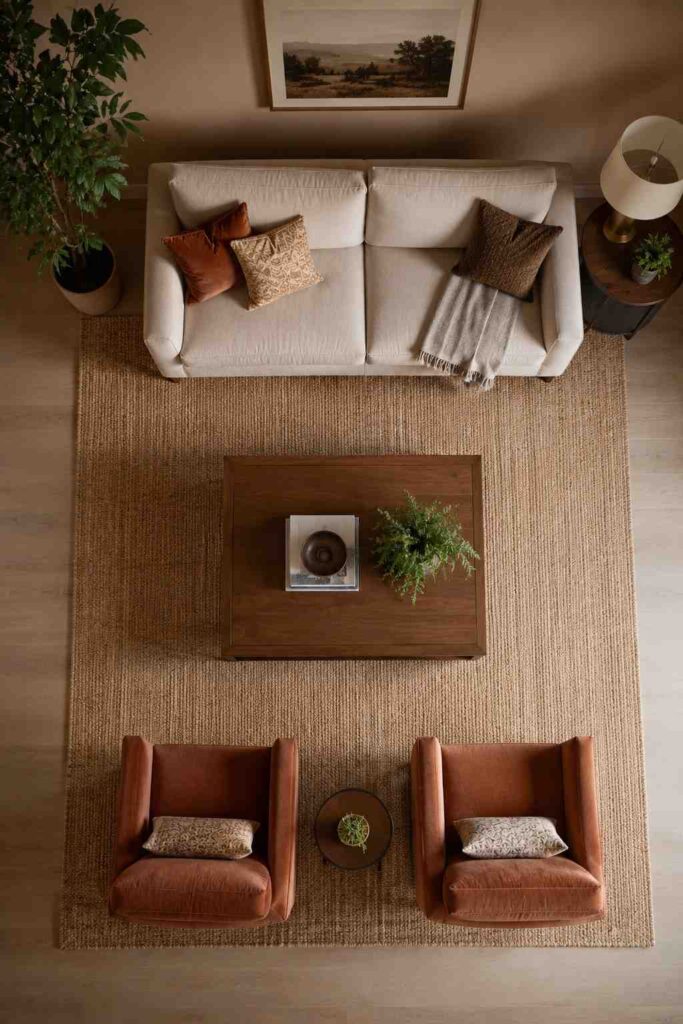
This is where most living room articles stop short — they show pretty photos but never explain the actual measurements that make a layout work. A few numbers solve most spacing problems instantly.
Leave 30 to 36 inches of walking clearance between major furniture pieces so the room doesn’t feel like an obstacle course. A coffee table should sit 14 to 18 inches from the front of your sofa — close enough to reach a mug without leaning, far enough to clear shins comfortably. For rugs, the front legs of every major seating piece should rest on the rug; a rug that only the coffee table touches will always look undersized, no matter how nice the rug itself is.
Television placement matters too. The general guideline is to position the screen so the viewing distance is roughly 1.5 to 2.5 times the diagonal screen size, and to mount it so the center sits close to seated eye level — usually 42 to 48 inches from the floor. Getting this one detail right fixes more “why does this room feel awkward” problems than any decor purchase ever will.
Small Home Living Room Solutions That Actually Work
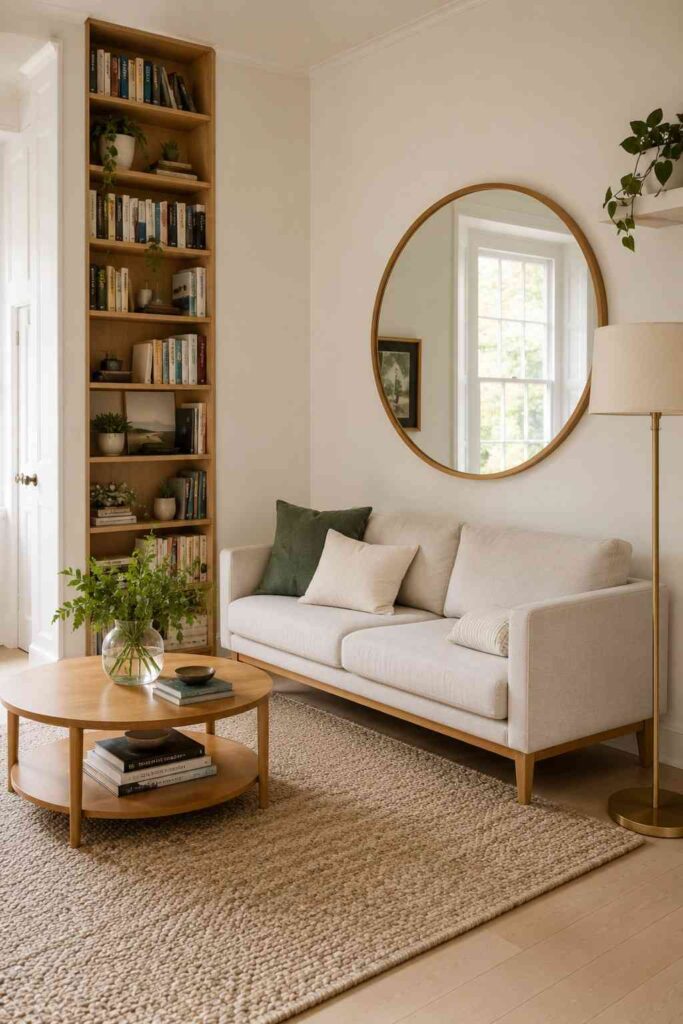
A small home living room doesn’t need to feel cramped — it needs furniture and sightlines that work harder. Choose pieces with exposed legs instead of skirted bases; the visible floor underneath tricks the eye into reading the room as larger. A round coffee table also helps in tight layouts, since it removes hard corners from the main walking path.
Vertical storage is the other lever that small spaces rarely use well. Floating shelves and tall, narrow bookcases pull the eye upward and free up floor space that a wide media console would eat into. Mirrors placed opposite a window are still one of the most effective tricks available — they bounce natural light across the room and visually double the sense of depth without adding a single extra square foot.
Layered Lighting for a Home Living Room That Feels Alive
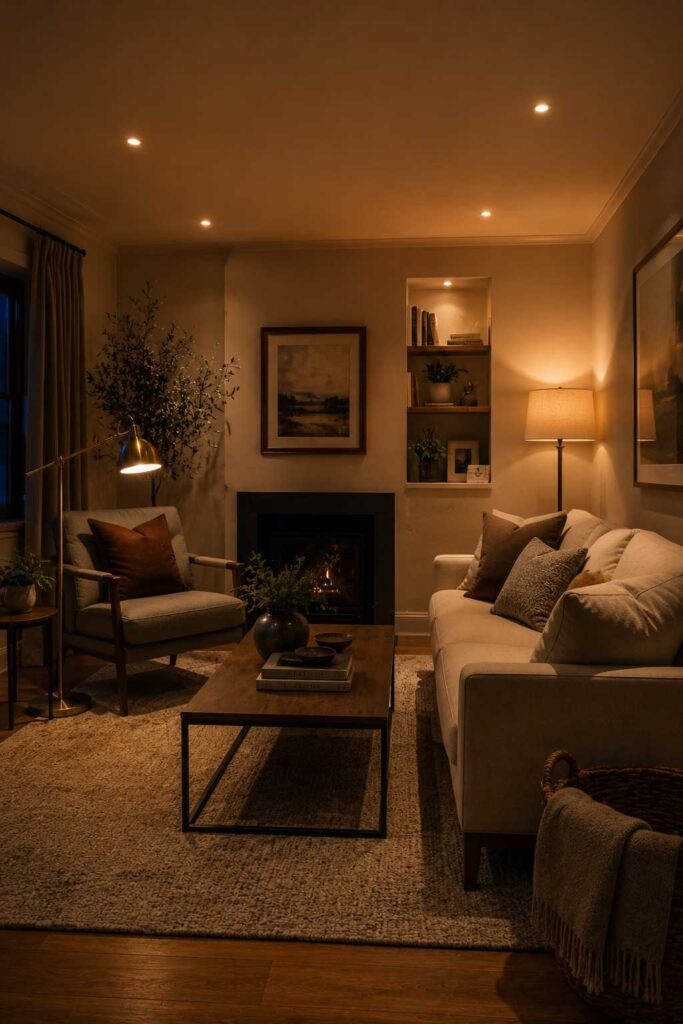
A single overhead fixture is the single most common reason a living room feels flat after dark. Designers build light in three layers: ambient light (ceiling fixtures or recessed lighting for general brightness), task light (a reading lamp beside a chair, for example), and accent light (a picture light or a dimmable floor lamp that adds mood).
Putting ambient lighting on a dimmer is a small change with an outsized effect — it lets the same room shift from bright and functional during a work call to soft and relaxed for an evening in. If you only upgrade one thing in your current setup, make it this. Resources like outinteriors are useful here, pulling together layout, color, and furniture guidance in one place rather than scattered across a dozen tabs.
Designing a Living Room That Works Harder Than One Room
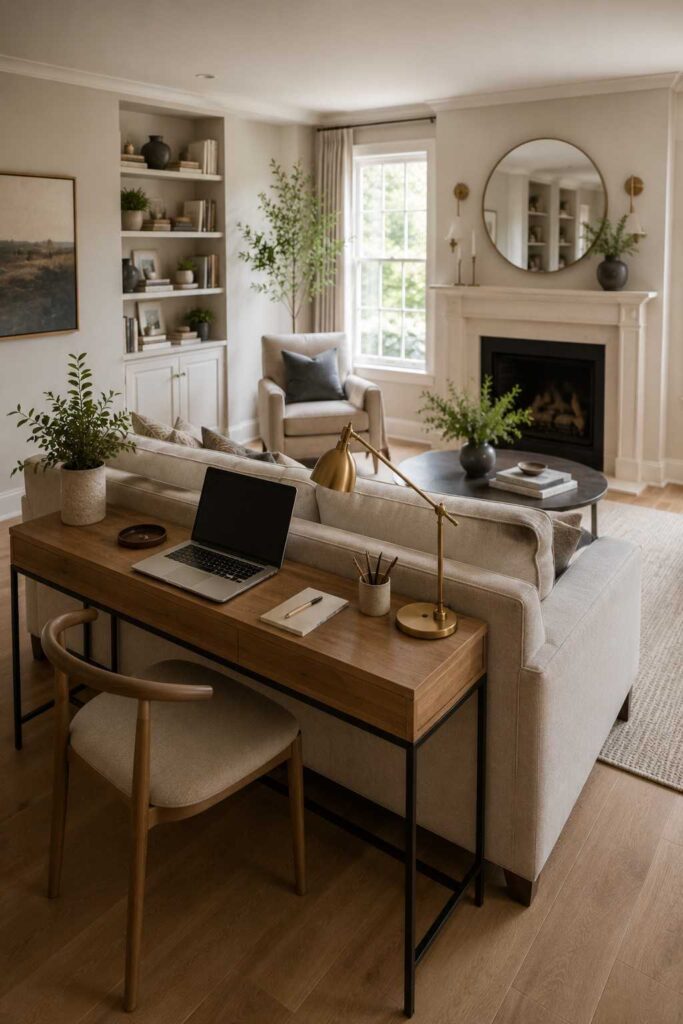
Home offices, reading nooks, and play corners are increasingly being folded into the living room rather than given a separate space, especially in homes where square footage is tight. A console table behind a sofa can double as a compact desk, and a deep ottoman with hidden storage can hide toys or work files in seconds. The goal is a room that resets quickly between roles rather than one that’s permanently cluttered with a laptop charger and a stray throw pillow.
This kind of flexible thinking is exactly where strong room aesthetics and real-world function start to overlap — a space can look intentional and still flex to whatever the day requires. For homeowners gathering dream home ideas, it’s also worth browsing curated style boards before committing to paint or furniture, since seeing full rooms together (not single products) makes it much easier to spot what actually fits your space.
Common Home Living Room Mistakes to Avoid
A few mistakes show up in almost every living room redesign, regardless of budget:
- Undersized rugs that float in the middle of the room instead of anchoring the seating area.
- Pushing all furniture against the walls creates a dead, unused center and makes conversation harder.
- Skipping window treatments leaves rooms feeling unfinished even after every other detail is handled.
- Buying a sofa before measuring doorways and stairwells, a surprisingly common and expensive error.
- Relying on one light source, which flattens the room the moment the sun goes down.
Fixing even two or three of these does more for a room than another round of decor shopping.
Conclusion:
A great home living room isn’t about chasing every trend that crosses your feed — it’s about getting the fundamentals right: proportional furniture, layered lighting, a color palette that feels calm rather than loud, and a layout that respects how your household actually moves through the space. The 2026 shift toward warm, earthy color-drenched rooms and collected, lived-in styling makes this an especially good year to lean into a space that feels personal rather than picture-perfect. Start with the measurements, let the color follow, and the rest tends to fall into place.
Frequently Asked Questions
What is the most popular living room color for 2026?
Warm, earthy neutrals are leading the year, including cream, mushroom brown, and deeper grounding tones like Benjamin Moore’s Silhouette. Teal is the standout accent color, while cool grays and stark whites are fading from favor.
How big should a rug be in a living room?
Large enough that the front legs of your sofa and chairs sit on it. A rug that doesn’t reach any furniture will almost always look too small for the room.
How far should a coffee table be from the sofa?
Around 14 to 18 inches is the comfort sweet spot — close enough to reach easily, far enough to walk past without bumping your knees.
How can I make a small living room look bigger?
Use furniture with exposed legs, add a mirror across from a window, and pull storage upward with tall shelving instead of wide consoles. Lighter, warmer wall colors also help the room read as more open.
What’s the right TV viewing distance for a living room?
A general rule is 1.5 to 2.5 times the screen’s diagonal size, with the screen’s center mounted near seated eye level for comfortable, strain-free viewing.
Should I paint my living room walls and trim the same color?
It’s a leading 2026 technique called color-drenching, and it can make a room feel more cohesive and intentional than a single contrasting accent wall.
Is it okay to mix furniture styles in one living room?
Yes — in fact, designers increasingly favor “collected” rooms over perfectly matched sets. Mixing a vintage piece with newer furniture, tied together by color and texture, often feels more personal than a uniform showroom look.