15+ Painted Brick Craft Ideas: The Complete Guide to Turning Old Bricks Into Beautiful Art
There is something satisfying about picking up a heavy, dusty brick and realizing it doesn’t have to sit in a pile forever. Painted brick crafts have quietly become one of the most rewarding weekend projects for gardeners, parents, and hobby artists across the USA. A leftover paver from a patio job or a chipped brick from an old chimney can become a hand-painted book, a whimsical garden village, or a lasting memorial stone. This guide covers everything from picking the right brick to sealing the finished piece, so the project holds up and looks professional from the first coat.
What Are Painted Bricks Crafts and Why People Love Them
Painted brick crafts involve turning ordinary construction bricks, pavers, or cinder blocks into decorative art using acrylic paint, primer, and a protective sealant. Unlike canvas or wood, brick offers a rough, three-dimensional surface that adds texture and character to every design. Since around 2015, the hobby has spread widely through Pinterest and Etsy communities, evolving from simple garden markers into detailed book replicas, holiday décor, and custom keepsakes. Part of the appeal is the cost — most bricks are free or nearly free, making this one of the most budget-friendly craft categories. It’s also nearly indestructible once sealed properly, which is rare for a handmade craft.
Choosing the Right Bricks for Your Project
Not every brick behaves the same way once paint hits it, so a little selection work up front saves frustration later. The best painted brick crafts start with the right base material, not the right brush.
Reclaimed vs. New Bricks
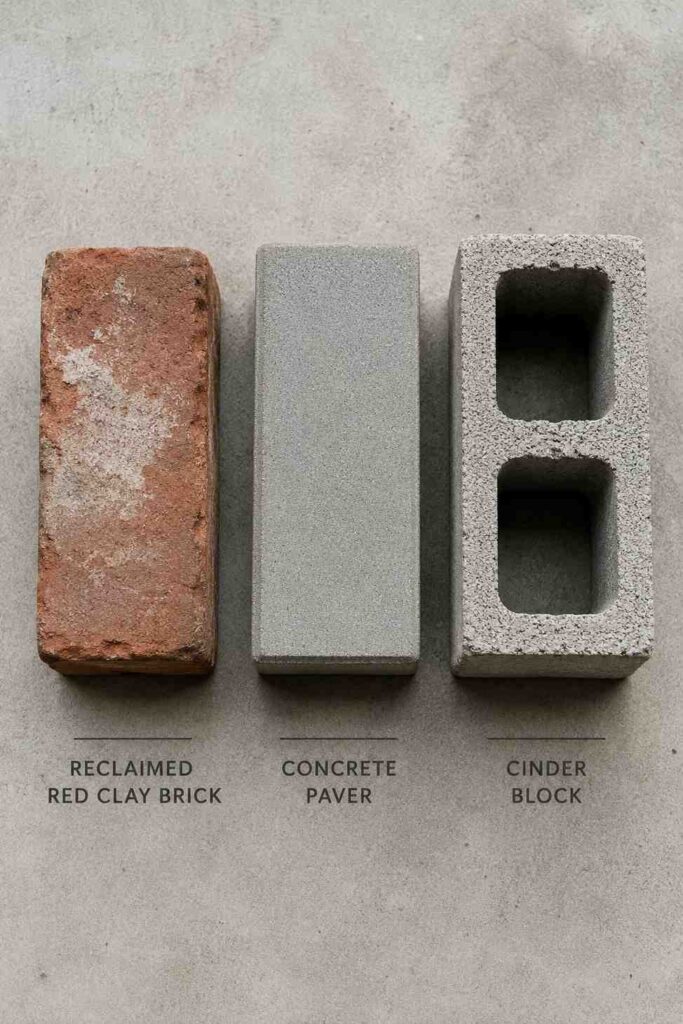
Reclaimed bricks — the kind found behind sheds, at demolition sites, or on local marketplace listings — often have more character, with worn edges and a warm, aged tone that peeks through the paint. New bricks from a home improvement store are more uniform and easier to prime evenly. Either works well for painted brick crafts, but reclaimed bricks should be scrubbed thoroughly, since years of dirt and efflorescence (that white mineral haze) can prevent paint from bonding.
Bricks vs. Pavers vs. Cinder Blocks
Standard clay bricks are the most popular choice because their size fits neatly in the hand and mimics the shape of a book or house. Concrete pavers have a flatter, smoother face, making them ideal for detailed scenes like nativity sets or portrait-style garden stones. Cinder blocks are larger and hollow, better suited for planters or oversized yard art rather than fine detail work. Clay, concrete, and cinder surfaces all accept paint differently, so testing a small patch first is always worth the extra five minutes.
Essential Supplies for Painted Bricks Crafts
A successful project comes down to three layers: primer, paint, and sealant. Skipping any one of them is the most common reason a design cracks or fades within a season.
Choosing Your Paint
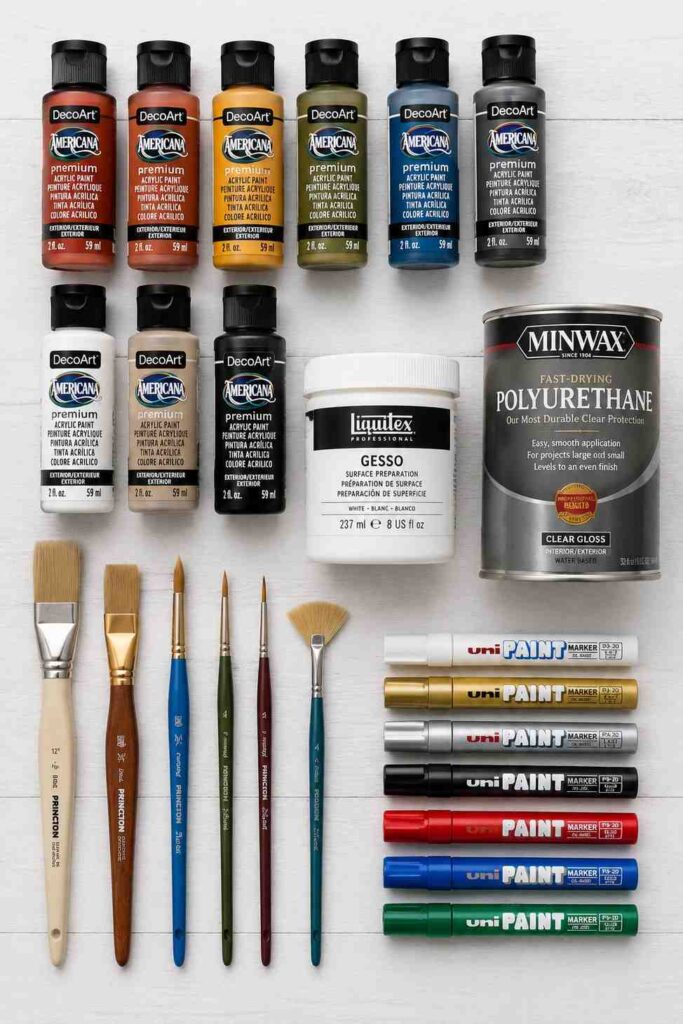
Exterior-grade acrylic craft paint is the standard choice because it flexes with temperature changes and resists fading in sunlight. Chalk paint gives a soft, matte, farmhouse look but usually needs an extra sealing step since it’s more porous. Spray paint works well for solid base coats but struggles with fine detail, so most crafters pair a spray-painted base with hand-painted acrylic details on top. Oil-based paint pens are excellent for outlines, lettering, and tiny accents once the base layers have fully dried.
Priming and Sealing
Bricks are porous, so they drink up paint the way a sponge drinks up water — a plain acrylic coat without primer can require three or four times as much product to look solid. A layer of gesso or masonry primer solves this and gives the paint pigment something even to grip. Once the design is finished and fully cured, sealing matters just as much as the paint itself. For outdoor pieces, an exterior-grade or marine-grade polyurethane varnish stands up to rain and UV rays far better than standard Mod Podge, which can turn sticky in humid climates. Indoor pieces, like bookends or shelf décor, do fine with a water-based polycrylic in a matte or satin finish. For anyone curious how these small accents look across a full house tour, the styled room galleries at outinteriors offer plenty of inspiration for blending painted brick pieces into a broader interior scheme.
Step-by-Step: How to Paint a Brick Like a Pro
- Clean the brick. Scrub with a stiff wire brush, then wash with warm soapy water if it’s heavily soiled. Let it dry completely for a full 24 hours before touching paint to the surface.
- Prime the surface. Apply two to three thin coats of gesso or masonry primer, letting each layer dry before adding the next.
- Sketch your design. Use a pencil or chalk to lightly outline your idea directly on the primed brick.
- Paint in layers. Start with base colors using a wash technique for large areas, then build up detail with a smaller brush once the base is dry.
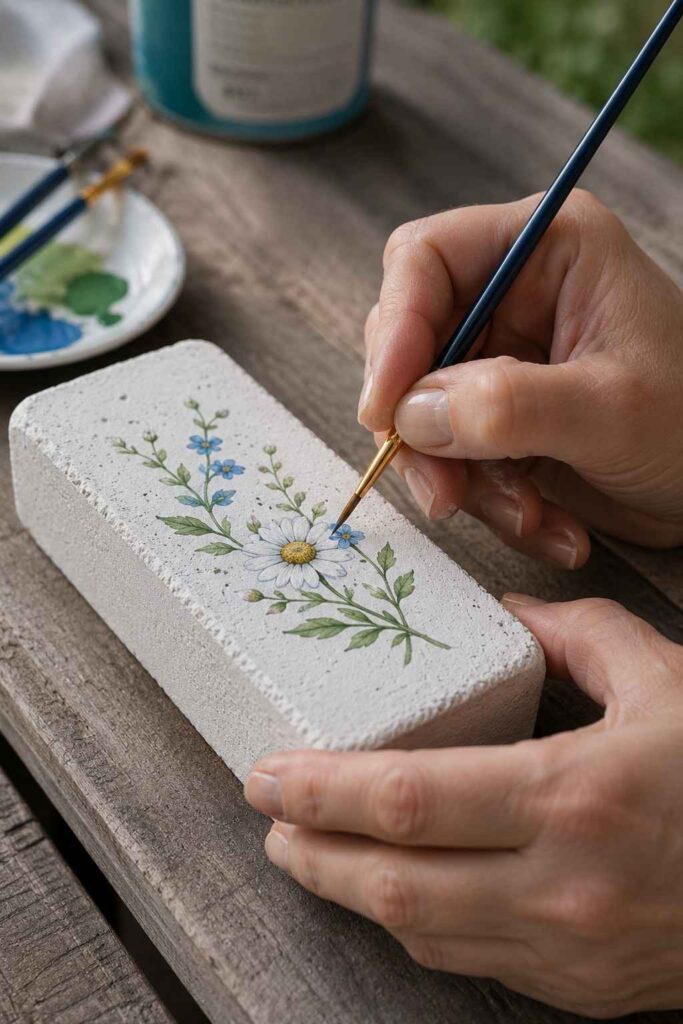
- Add fine details. Use oil-based paint pens for lettering, outlines, or intricate patterns after the main paint has cured for several hours.
- Seal thoroughly. Apply two to three thin coats of an appropriate sealant, allowing 30 to 60 minutes of drying time between coats.
- Cure fully. Let the finished piece sit undisturbed for 48 hours before placing it outdoors or handling it regularly.
Creative Painted Bricks Crafts Ideas Worth Trying
Garden and Outdoor Accents
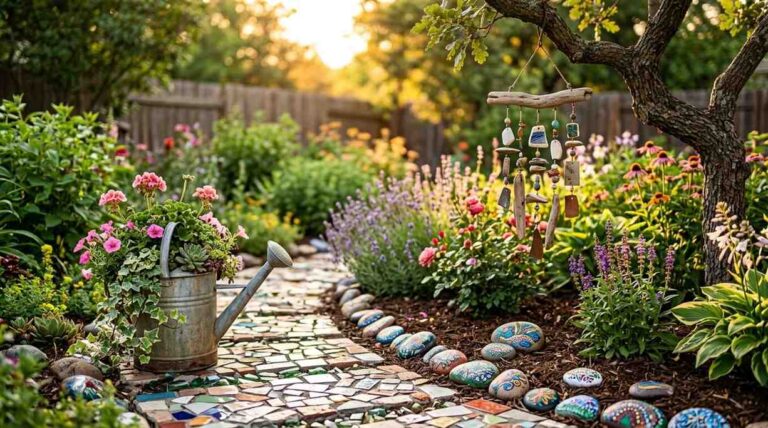
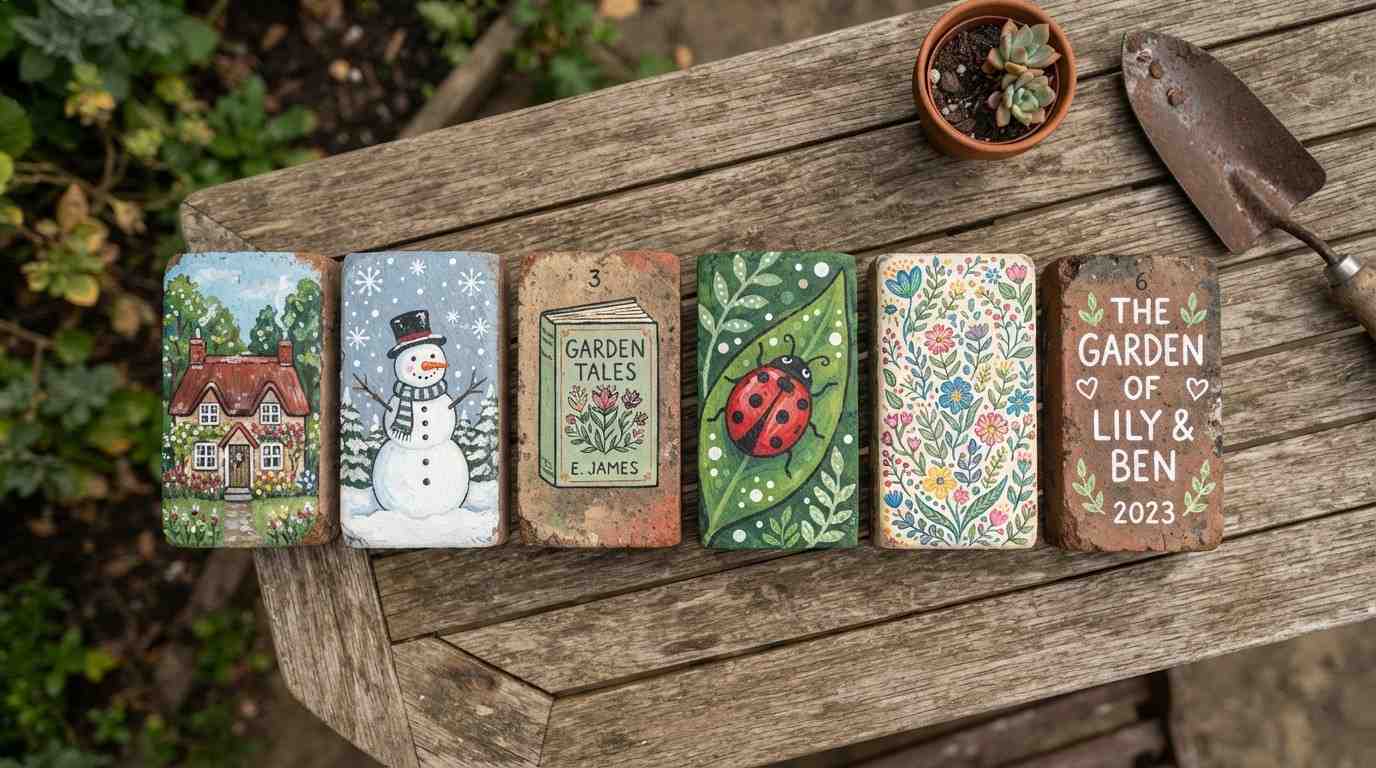
Painted bricks make natural garden markers, pathway edging, or a tiny painted village lining a flower bed. A row of bricks painted as miniature houses in berry reds, soft blues, and mustard yellows turns an ordinary border into a focal point. Ladybugs, snails, and owls are especially popular motifs because their rounded shapes fit the brick’s proportions well.
Holiday and Seasonal Décor
Snowmen, nativity scenes, gingerbread figures, and pumpkins are consistently the most searched seasonal designs. Because bricks are weatherproof once sealed, they can be rotated onto the porch or patio year after year without losing their color, making them a smarter long-term investment than paper or fabric decorations.
Home and Indoor Decor
Painted bricks aren’t limited to the yard. A single hand-painted brick doorstop or bookend brings texture into a home living room without competing with existing furniture. In the kitchen, a small stack of painted bricks used as a plant stand or spice-jar riser is one of the simplest kitchen decor ideas for adding rustic charm without spending on new furniture.
Kids-Friendly Projects
Because brick painting doesn’t require precision, it’s genuinely one of the best outdoor summer activities for children. Kids can paint faces, animals, or abstract patterns while an adult adds finer details afterward if needed. Choosing non-toxic, water-based acrylic paint keeps the project safe for small hands.
Memorial and Keepsake Pieces
Hand-painted bricks have become a popular way to memorialize a pet or mark a milestone like a new baby, engraved or painted with a name and date. Because the brick survives outdoors indefinitely once sealed, it functions as a permanent, low-maintenance tribute for a garden bed or entryway.
Common Mistakes to Avoid
Many first attempts at painted brick crafts fail for avoidable reasons. Skipping primer is the biggest one, since unprimed brick absorbs paint unevenly and leaves patchy color. Painting a brick that isn’t fully dry traps moisture underneath the paint, which later causes bubbling or peeling. Using a glossy sealant meant for paper crafts, rather than an exterior-rated varnish, is another frequent issue — it simply cannot handle repeated freeze-thaw cycles. Finally, rushing the curing time before placing a piece outdoors is a fast way to undo hours of careful painting.
Cost and Time to Expect
Most beginner-painted brick crafts cost very little, since acrylic paint, primer, and brushes are often already on hand or available cheaply at any craft store. Expect to spend roughly one to two hours on painting and detailing, plus drying and curing time spread across a couple of days. Larger projects, like a multi-brick garden village or a full set of book bricks for a shelf, take longer simply because of the number of pieces, not the difficulty of any individual step.
Caring for and Maintaining Painted Bricks
A well-sealed painted brick needs very little upkeep. Wiping it down occasionally with a damp cloth keeps dirt from building up in the texture, and reapplying a thin coat of sealant every year or two helps maintain color through harsh weather. Bricks kept indoors rarely need resealing, since they aren’t exposed to rain, frost, or direct sun.
Final Thoughts
Painted brick crafts prove that some of the most charming handmade pieces come from materials most people overlook entirely. With the right prep, the right paint, and a proper seal, a plain construction brick can become garden art, a seasonal decoration, or a keepsake that lasts for years. Whether the goal is a quiet weekend project with the kids or a polished piece for the front porch, painting bricks rewards patience with genuinely durable, one-of-a-kind results.
Frequently Asked Questions
1. What kind of paint works best for painted brick crafts?
Exterior-grade acrylic craft paint is the most reliable choice because it flexes with temperature changes and resists fading. Pair it with oil-based paint pens for fine detail work.
2. Do I need to prime a brick before painting it?
Yes. Brick is porous and will absorb paint unevenly without a primer or gesso base, often requiring far more paint to achieve solid coverage.
3. How do I make painted bricks waterproof for outdoor use?
Seal the finished design with an exterior-grade or marine polyurethane varnish, applying two to three thin coats and allowing each to dry fully before use outdoors.
4. Can I use regular house bricks, or do I need special craft bricks?
Standard clay bricks, concrete pavers, and cinder blocks all work. Pavers offer a flatter surface for detailed designs, while traditional bricks suit book-shaped or house-shaped crafts.
5. Is painting bricks safe for kids to do?
Yes, as long as you use non-toxic, water-based acrylic paint. It’s a low-precision, high-reward activity that works well outdoors where spills aren’t a concern.
6. How long do painted bricks last outside?
With proper priming and sealing, painted bricks can last for several years outdoors, though reapplying sealant every year or two helps preserve color and finish.
7. What can I make with painted bricks besides garden art?
Popular options include bookends, doorstops, mailbox markers, pet memorials, holiday décor, and small indoor accent pieces for shelves or plant stands.