Backyard Hardscaping Ideas: Practical Ways to Build a Better Outdoor Space
A backyard should feel useful before it feels impressive. A pretty patio that floods after rain is not a win. A fire pit with no walking path becomes annoying. A stone wall without planting can make the yard feel cold. The best backyard hardscaping ideas solve real outdoor problems first, then add style.
Hardscaping gives your yard structure. It creates places to sit, cook, walk, gather, garden, and relax. It also helps define zones so the space feels intentional instead of unfinished. Whether you have a narrow city yard, a sloped lawn, or a wide suburban backyard, the right hardscape features can turn unused ground into a comfortable outdoor living area.
What Counts as Backyard Hardscaping?
Hardscaping includes the non-living parts of a landscape. Think patios, walkways, retaining walls, decks, gravel areas, fire pits, pergolas, steps, edging, paver paths, outdoor kitchens, and built-in seating. Softscaping includes plants, lawns, trees, shrubs, flowers, and soil.
Good design needs both. A yard with only plants may lack function. A yard with only stone and concrete can feel harsh. The strongest backyard hardscaping ideas blend structure with greenery so the space looks finished but still feels natural. Current outdoor design trends are also shifting toward more planting, native greenery, and nature-led layouts rather than oversized paved areas alone.
How to Choose Backyard Hardscaping Ideas That Fit Your Yard
Before choosing materials, start with how you actually use the space. A family that grills every weekend needs a different layout than someone who wants a quiet reading corner. A yard with drainage issues needs a different plan than a dry, flat lawn.
Ask three practical questions first. Where does water go after heavy rain? Where does the sun hit in the afternoon? Which part of the yard do people naturally walk through? These answers prevent expensive mistakes. The most useful backyard hardscaping ideas work with your yard’s shape, slope, climate, and traffic patterns instead of fighting them.
Also, think about maintenance. Gravel is affordable and casual, but it may need occasional raking. Pavers are attractive and repairable, but the base must be prepared correctly. Concrete is clean and durable, but cracks are harder to disguise. Natural stone looks timeless, but it can cost more and may need skilled installation.
Backyard Hardscaping Ideas for Patio Zones
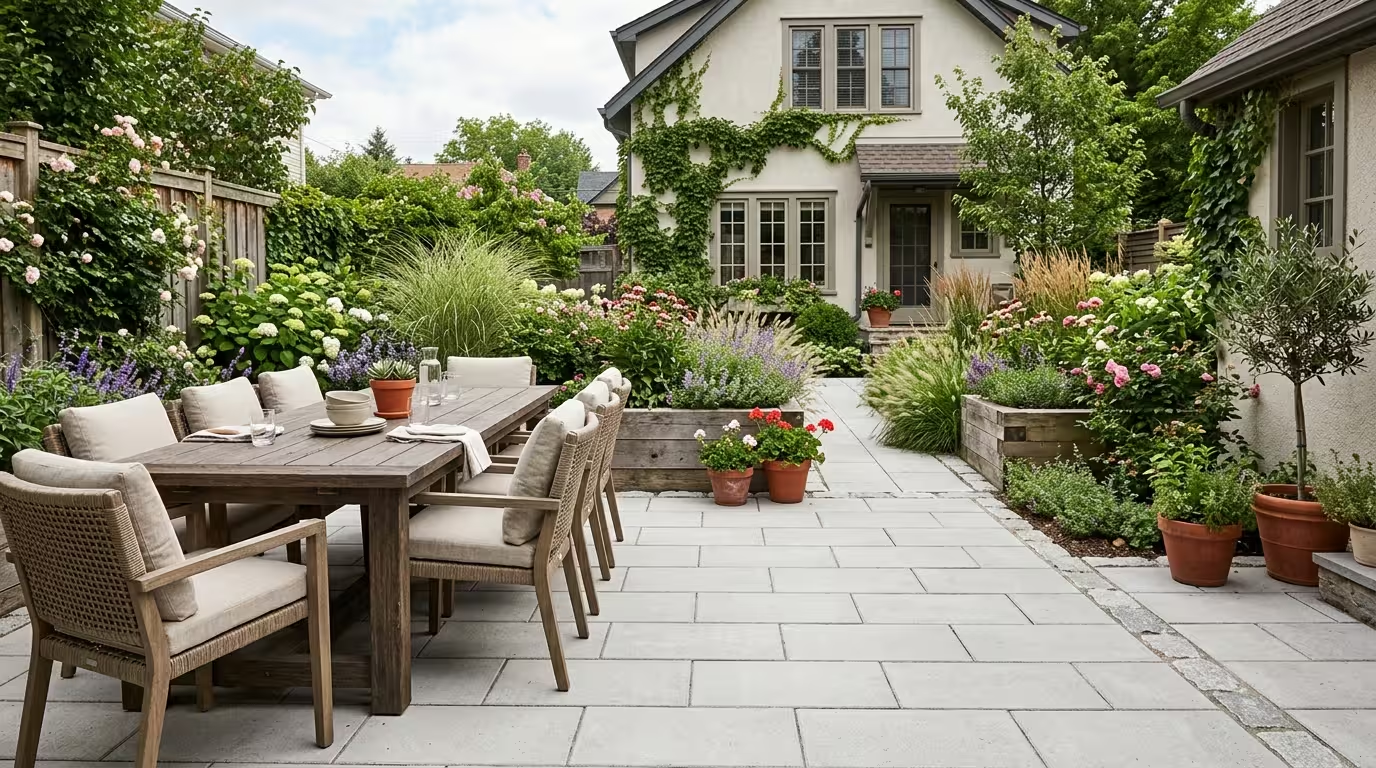
A patio is often the anchor of the backyard. It gives furniture a level surface, keeps chairs from sinking into the lawn, and creates a clear outdoor room. For most homes, a patio near the kitchen or back door works best because food, drinks, and supplies are easier to carry.
Paver patios are one of the most flexible backyard hardscaping ideas because they suit modern, rustic, farmhouse, and traditional homes. Concrete pavers can be replaced individually if one cracks or stains. Brick gives a warmer, older look. Large-format slabs feel cleaner and more modern. Industry guidance for interlocking concrete pavers commonly uses a compacted base with a bedding sand layer before pavers are placed and compacted.
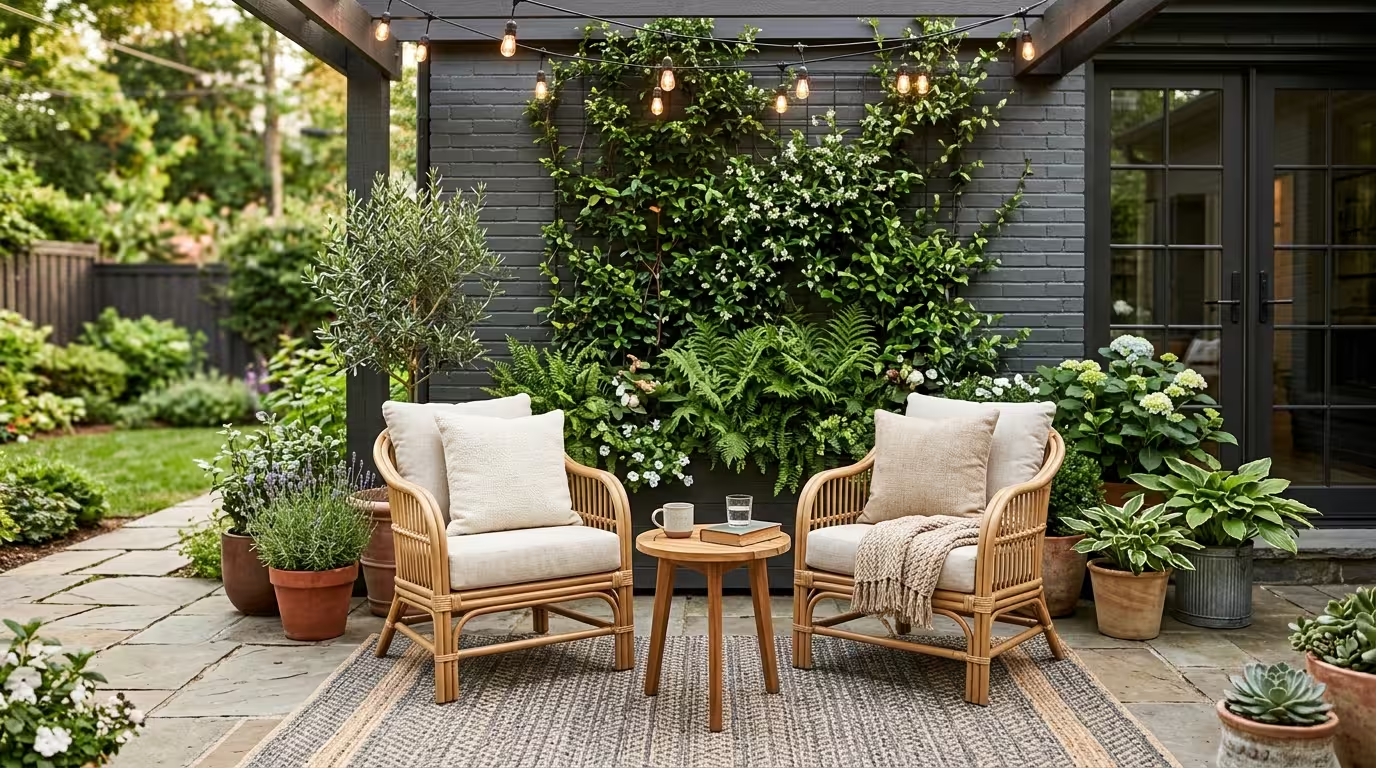
For a softer look, leave narrow planting strips around the patio edge. Ornamental grasses, lavender, boxwood, native perennials, or low shrubs can break up the hard edges. This keeps the patio from looking like a plain slab dropped onto the lawn.
For indoor-outdoor design flow, pair your patio color palette with these bathroom wallpaper ideas to keep your home style consistent.
Create a Gravel Lounge Area
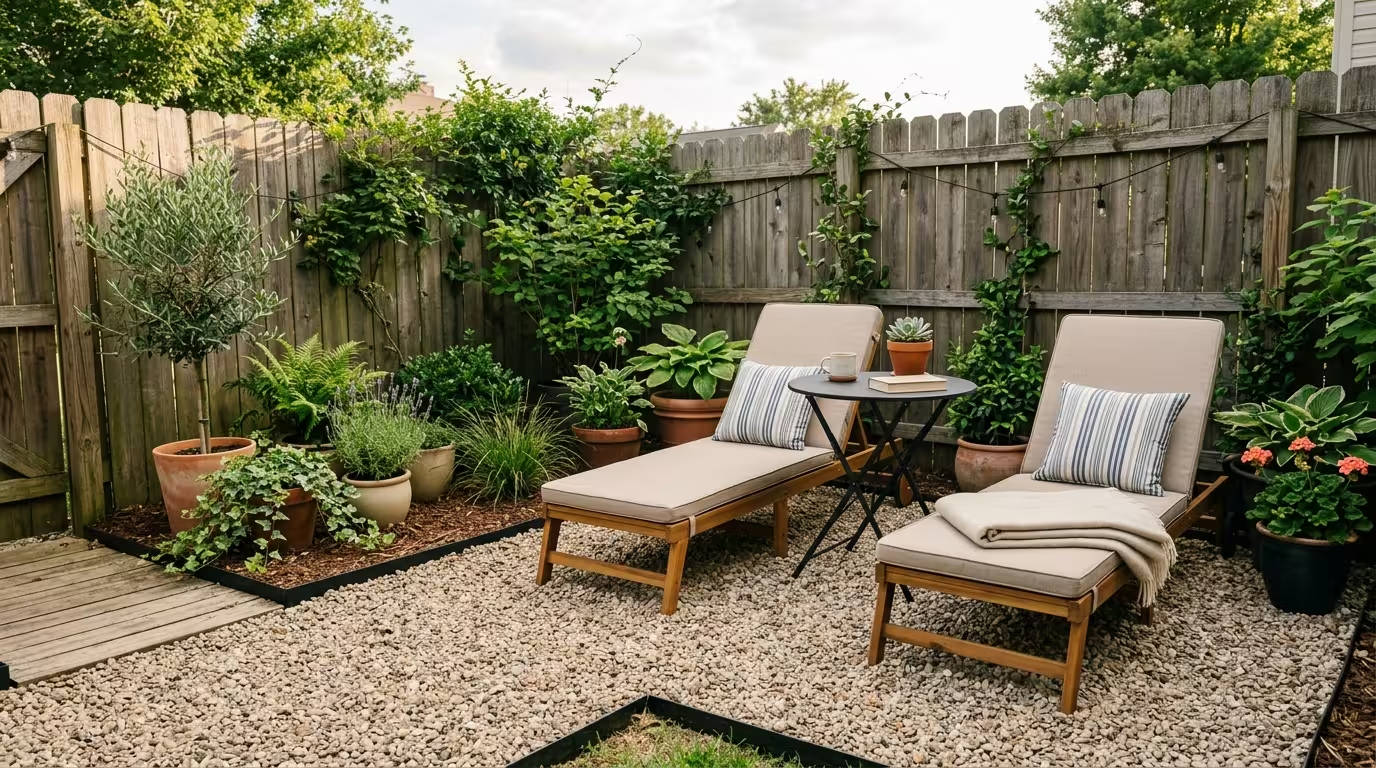
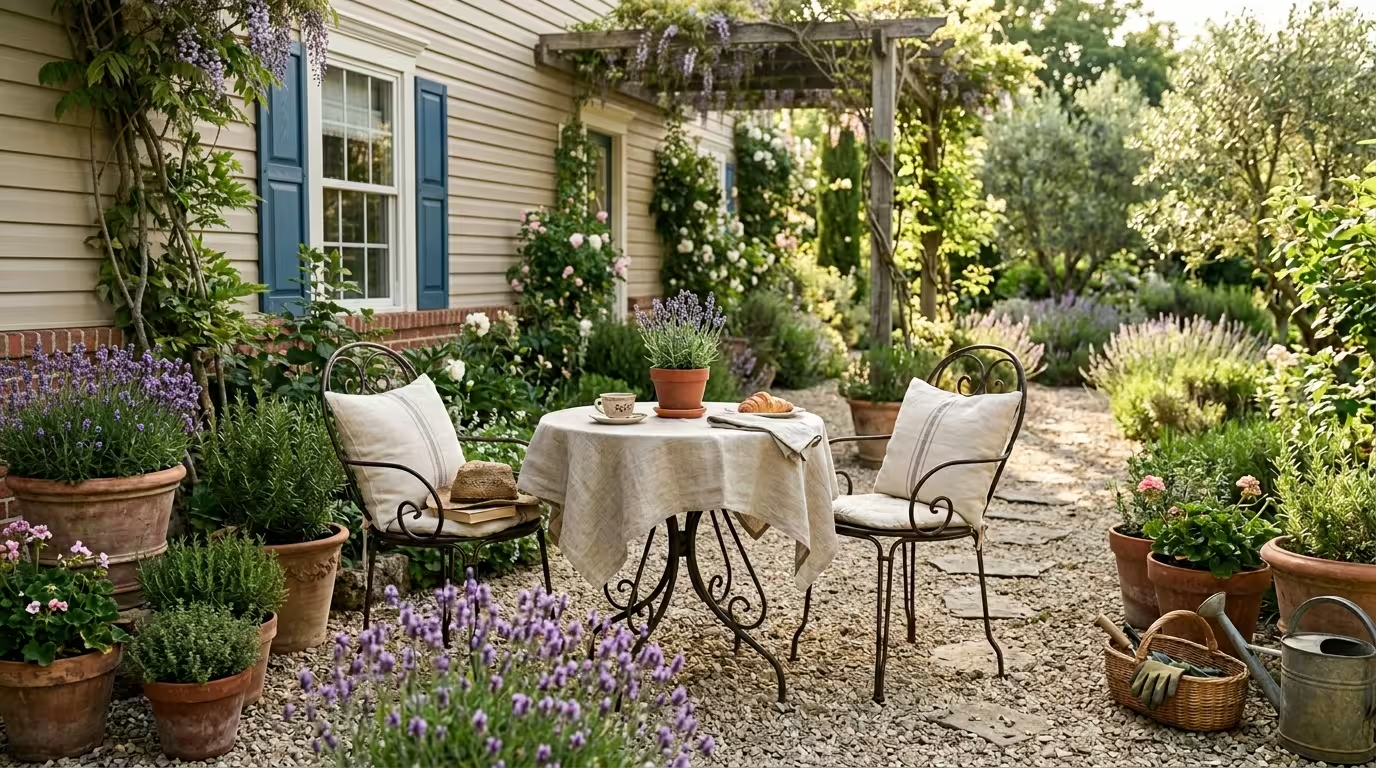
Gravel is one of the most budget-friendly hardscape materials. It works well for casual seating zones, side yards, fire pit areas, and garden paths. Pea gravel feels relaxed and cottage-like. Crushed stone feels cleaner and more stable under furniture. Decomposed granite gives a smoother, compacted surface in dry climates.
This is one of the easiest backyard hardscaping ideas for homeowners who want a clear outdoor zone without pouring concrete. Use metal, brick, or stone edging to keep the gravel contained. Add landscape fabric only where appropriate, because poor fabric placement can trap soil and weeds above the surface over time.
The biggest mistake is making the area too small. Give chairs enough room to slide back. Leave walking space around a table. A cramped gravel pad may look good in photos but feel awkward in daily use.
Add a Fire Pit Gathering Space
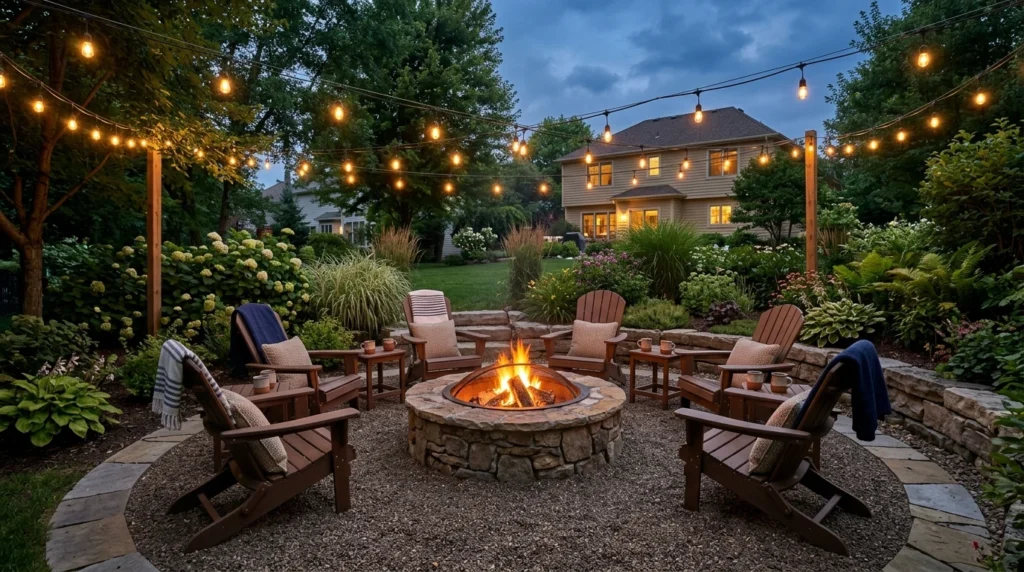
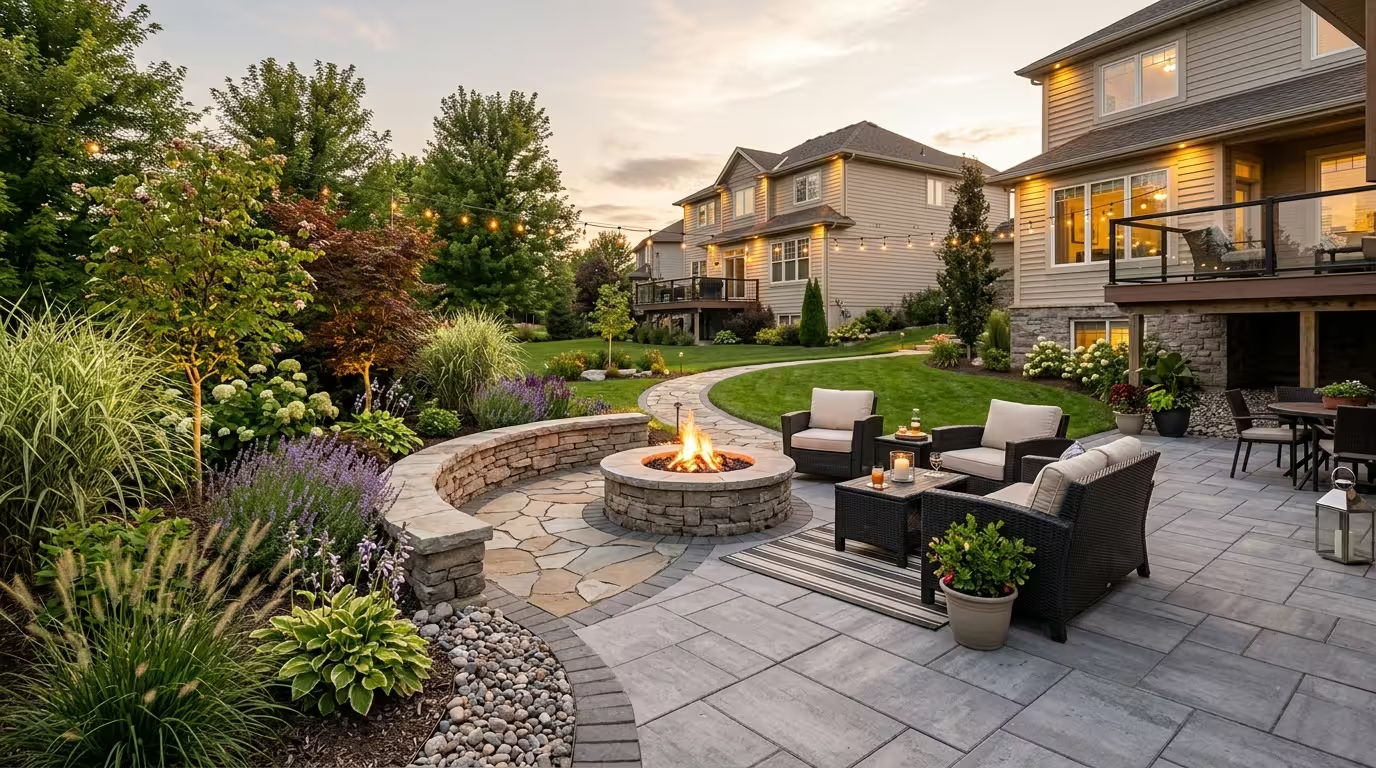
A fire pit gives the backyard a natural focal point. It pulls people outside in the evening and makes cooler months more usable. A circular layout works well because people can face one another. Adirondack chairs, curved benches, or built-in seat walls all work around a fire feature.
Fire pits appear often in popular patio and backyard design guides because they add warmth, atmosphere, and a defined gathering point. Before installing one, check local rules, clearance requirements, fuel restrictions, and burn regulations. Even design publications commonly remind homeowners to check city regulations before buying or building a fire pit.
For safety and comfort, use non-combustible materials under and around the fire area. Gravel, stone, concrete pavers, brick, or flagstone are better choices than grass or mulch near the flame zone.
Backyard Hardscaping Ideas for Walkways and Movement
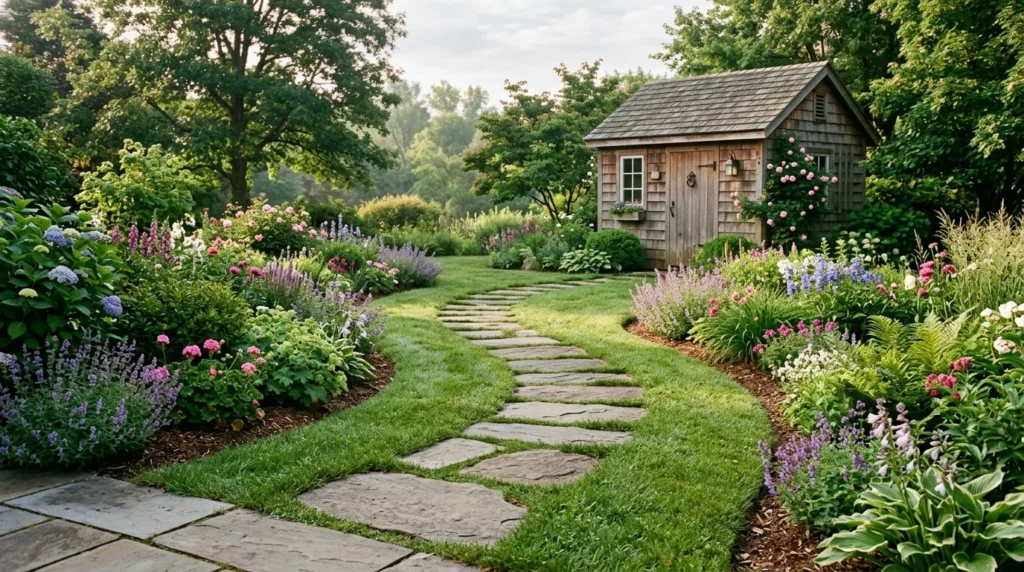
A good walkway does more than connect two points. It controls how people experience the yard. A straight path feels formal and efficient. A curved path feels relaxed and garden-like. Stepping stones feel casual, while full paver paths feel more finished.
The best backyard hardscaping ideas often begin with movement. Connect the back door to the patio. Link the patio to the garden. Add a stable path to the shed, pool, fire pit, or side gate. This prevents muddy shortcuts and protects lawn areas from foot traffic.
For narrow yards, use long rectangular pavers to visually stretch the space. For cottage-style yards, use irregular flagstone with creeping thyme or groundcover between stones. For modern homes, use concrete steppers with gravel joints for a clean geometric look.
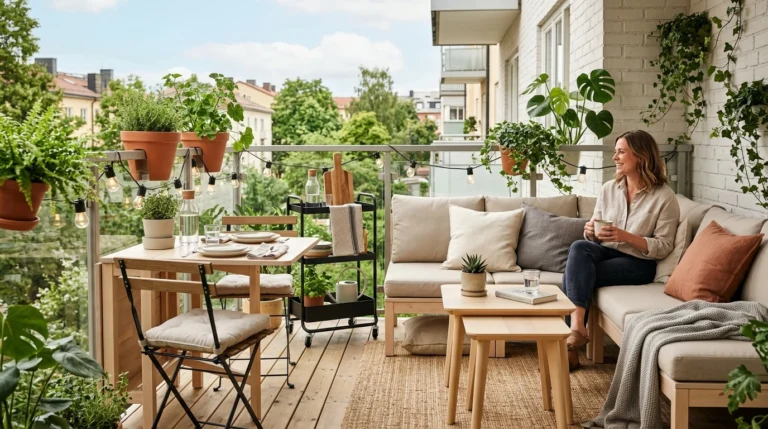
If your yard is compact, review these best small patio design ideas before choosing furniture, pavers, or a fire pit layout.
Use Stepping Stones for Small Yards
Stepping stones are ideal when a full walkway would feel too heavy. They work especially well in small backyards, garden beds, and side yards. The key is spacing. Stones should match a natural walking stride, not force people to tiptoe.
This is one of the simplest backyard hardscaping ideas because it can be installed in stages. You can start with a path from the door to the patio, then extend it later toward a raised bed, seating corner, or storage area.
Choose thicker stones that sit firmly in the ground. Thin pieces may shift or crack. Set each stone level with the surrounding surface to reduce tripping. If the ground freezes in winter, prepare the base carefully so stones do not heave unevenly.
Backyard Hardscaping Ideas for Sloped Yards
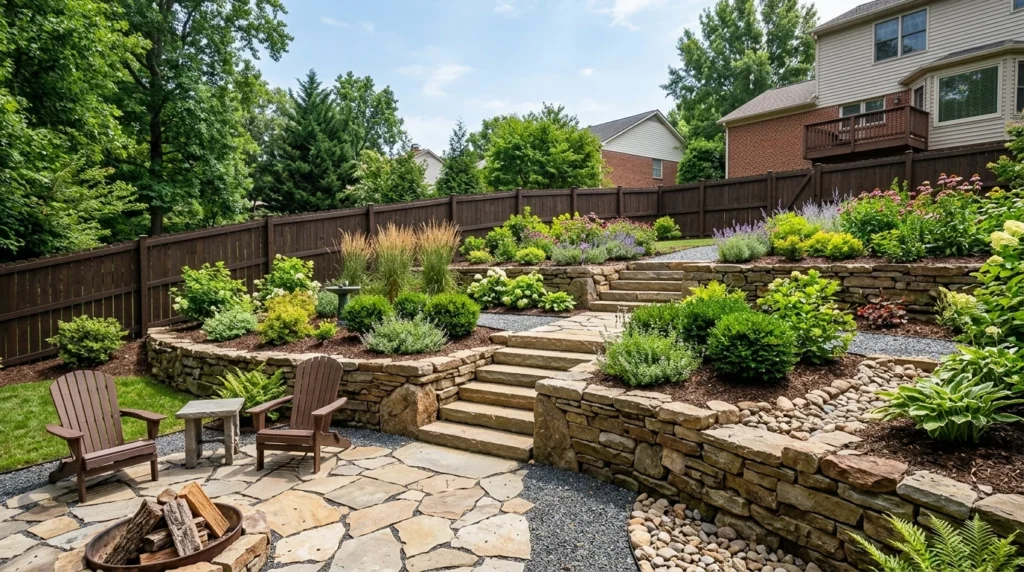
A sloped yard can feel difficult, but it also offers design opportunities. Terraces, steps, retaining walls, and tiered planting beds can turn a slope into separate outdoor rooms. Instead of fighting the grade, use it to create layers.
Retaining walls are among the most practical backyard hardscaping ideas for sloped spaces. They hold soil, reduce erosion, and create flatter areas for patios, gardens, or seating. Bob Vila’s sloped backyard guidance highlights tiers, stairs, winding paths, waterfalls, retaining walls, and rock gardens as common ways to manage grade changes.
Permits matter here. Many U.S. jurisdictions use height and surcharge rules for retaining walls. For example, some local guidance exempts certain walls under 4 feet, unless they support an extra load such as a driveway, slope, or structure. Rules vary by city and county, so verify locally before building.
Build Outdoor Steps That Feel Natural
Outdoor steps should feel safe, not decorative only. If a path climbs a slope, steps can prevent slipping and make the yard easier to use. Natural stone steps suit rustic landscapes. Concrete steps suit modern homes. Brick steps work well with traditional architecture.
Keep step height consistent. Uneven risers are one of the most common reasons outdoor stairs feel uncomfortable. Add lighting near steps so the route is visible at night. If the steps are long, add a landing where people can pause.
Planting around steps helps soften the structure. Creeping plants, grasses, ferns, or flowering perennials can make stone or concrete feel like part of the landscape instead of a separate construction project.
To make your outdoor zone more flexible, use 7 new ikea essentials for a multi use outdoor setup as a practical shopping guide.
Budget-Friendly Backyard Hardscaping Ideas
Not every project needs a large budget. Some of the strongest upgrades are simple: edging a mulch bed, adding a gravel seating pad, placing stepping stones, building a small fire pit area, or refreshing an old concrete patio with outdoor rugs and planters.
For low-cost backyard hardscaping ideas, focus on definition. A yard often feels unfinished because zones blur together. Edging can separate the lawn from the planting beds. Gravel can turn an unused corner into a seating area. A few large pavers can create a clean path to the gate.
Spend money where structure matters most: base preparation, drainage, steps, walls, and heavy-use surfaces. Save money on movable items like planters, loose seating, cushions, and decorative accessories.
Add Edging for a Cleaner Look
Edging is underrated. It can make a basic yard look much more organized. Stone, brick, steel, concrete, and paver edging all help separate lawn, gravel, mulch, and planting beds.
This small detail works because it creates visual order. Without edging, mulch spills into grass, gravel migrates into beds, and the yard slowly looks messy. With edging, every zone has a clear boundary.
Brick edging gives a classic look. Steel edging feels modern and minimal. Natural stone edging works well in informal gardens. For best results, match the edging to another material already in the yard, such as the patio, walkway, or retaining wall.
Backyard Hardscaping Ideas That Improve Drainage
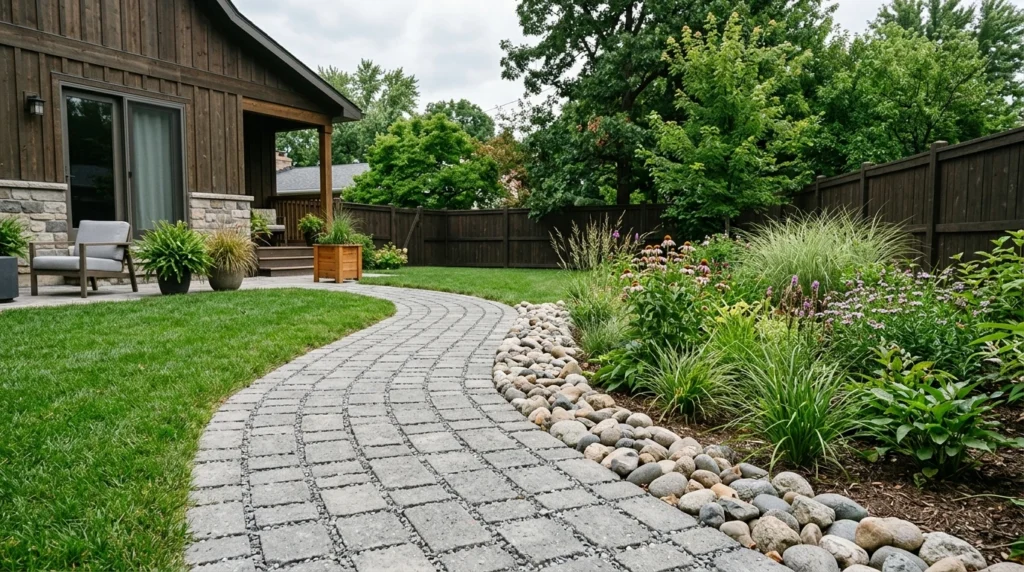
Drainage should never be an afterthought. A beautiful patio that sends water toward the house is a liability. Before installing hardscape, study where water collects after rain. Look for low spots, soggy corners, eroded soil, and splash marks near downspouts.
Permeable paving is one of the smartest backyard hardscaping ideas for water-conscious yards. The U.S. Environmental Protection Agency notes that permeable pavement allows rainwater and snowmelt to seep through the surface into soil and gravel layers, helping reduce runoff and filter pollutants.
Permeable materials can include gravel, permeable pavers, porous concrete, open-joint pavers, and grid systems. They are especially useful for walkways, patios, parking pads, and side yards where water tends to move quickly over hard surfaces.
Use Dry Creek Beds for Runoff Control
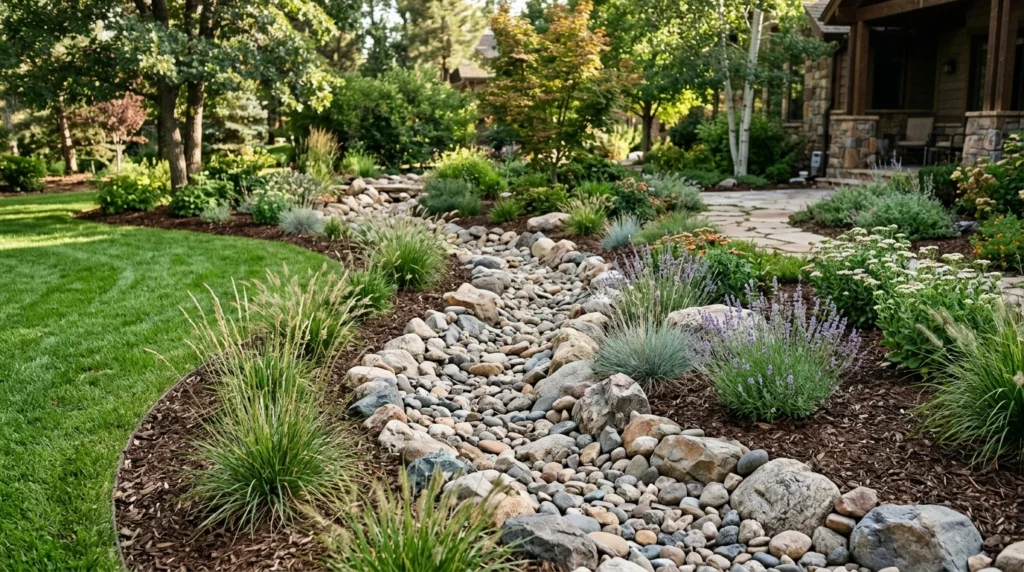
A dry creek bed can turn a drainage problem into a design feature. It uses river rock, boulders, gravel, and planting to guide water through the yard during heavy rain. When dry, it still looks intentional.
This approach works best where water already flows naturally. Instead of blocking runoff, the dry creek bed gives it a controlled route. Add larger stones along the edge and smaller gravel in the center for a natural look.
Do not use this as a quick fix for serious drainage problems near foundations. If water is moving toward the house, pooling against walls, or causing erosion, get professional grading advice. Hardscape should protect the home, not just decorate the yard.
Low-Maintenance Backyard Hardscaping Ideas
Low-maintenance does mean no maintenance. It means choosing materials and layouts that age well without constant repair. Concrete pavers, gravel, stone edging, composite decking, metal borders, and simple planting pockets can all reduce weekly yard work.
The most durable backyard hardscaping ideas avoid fussy layouts. Too many tiny joints collect weeds. Too many material changes make repairs harder. Too much paving can increase heat and runoff. A better approach is to use fewer materials in a stronger layout.
For example, combine a paver patio, gravel path, raised planter, and simple seating wall. This gives structure, movement, planting, and function without making the backyard feel busy.
Add Built-In Seating Walls
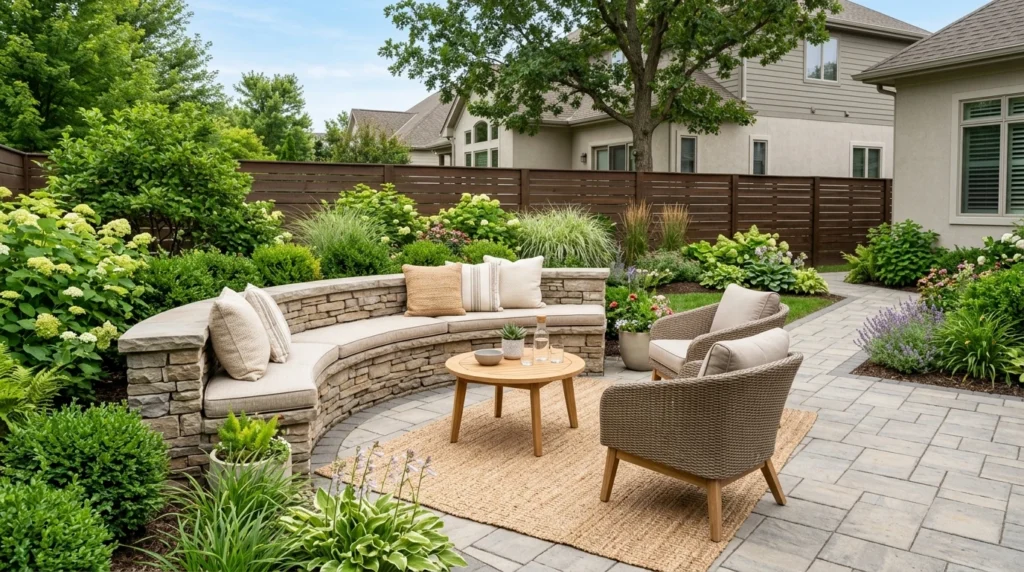
A seating wall can define a patio, create extra seating, and reduce the need for bulky furniture. It works especially well around fire pits, dining patios, and small yards where movable chairs take up too much room.
Seat walls can be made from concrete block, natural stone, brick, or poured concrete. Keep the height comfortable. Add cushions if the wall will be used often. If the wall borders a drop, slope, or raised terrace, safety becomes more important than style.
This idea works best when the wall has a purpose. A random wall in the middle of a yard can feel forced. A wall that frames a patio, supports a planting bed, or circles a fire pit feels natural.
Create an Outdoor Kitchen or Prep Zone
A full outdoor kitchen is not necessary for every home. Many backyards only need a simple prep counter, grill zone, storage cabinet, or small sink area. The goal is to reduce trips indoors and make outdoor meals easier.
Place cooking zones on stable, non-combustible surfaces. Keep the grill away from overhanging branches, fences, and siding. Add task lighting if you cook after sunset. Use materials that tolerate heat, grease, moisture, and cleaning.
For smaller spaces, a built-in grill station may be too much. A paved grill pad with a narrow counter can do the job. This gives the function without overwhelming the yard.
Use Pergolas, Shade Structures, and Paved Bases
Shade makes hardscape areas more comfortable. A pergola over a patio can define the outdoor room and reduce direct sun. It also gives you a structure for string lights, climbing plants, curtains, or shade fabric.
A paved base under a pergola keeps furniture level and prevents mud. Concrete, pavers, brick, or stone can all work. The style should match the house. A sleek black pergola may suit a modern home, while cedar or painted wood may fit a cottage or farmhouse style.
For hot climates, shade is not optional. A patio that looks beautiful but bakes in the afternoon sun will not be used often.
Material Comparison for Backyard Hardscaping
|
Material |
Best Use |
Strength |
Watch Out For |
|---|---|---|---|
|
Concrete pavers |
Patios, paths, pool decks |
Repairable and versatile |
Needs proper base prep |
|
Gravel |
Seating zones, side yards, paths |
Affordable and casual |
Can shift without edging |
|
Brick |
Traditional patios and borders |
Warm, classic look |
May become uneven over time |
|
Natural stone |
Steps, patios, garden paths |
Timeless and durable |
Higher material and labor cost |
|
Poured concrete |
Modern patios and pads |
Clean and strong |
Cracks are harder to hide |
|
Composite decking |
Raised outdoor rooms |
Low splinter risk |
Can get warm in direct sun |
|
Permeable pavers |
Drainage-friendly areas |
Helps reduce runoff |
Needs a correct base design |
Common Backyard Hardscaping Mistakes to Avoid
The first mistake is paving too much. A yard needs breathing room. Too much concrete, stone, or gravel can make the space feel hot and lifeless. Balance hard surfaces with trees, shrubs, groundcovers, and planting beds.
The second mistake is ignoring drainage. Every patio, path, wall, and step should move water safely away from the home. Flat surfaces still need a slight slope. Retaining walls may need drainage behind them. Low spots need planning before materials go in.
The third mistake is mixing too many styles. Brick, flagstone, concrete slabs, pea gravel, black metal, and rustic timber can all look good, but not all in the same small yard. Choose two or three main materials and repeat them.
The fourth mistake is building for photos instead of real use. Leave enough space to pull out chairs, walk around a table, carry food, open gates, and move trash bins. A backyard should work on a normal Tuesday, not just during a party.
Conclusion:
The best backyard hardscaping ideas are not just about adding stone, pavers, gravel, or concrete. They are about making the yard easier to use. A good design gives people a place to sit, a path to walk, a surface that drains well, and a layout that fits the home.
Start with the problem your yard needs to solve. Maybe it needs a patio for dining, a safer route across a slope, a fire pit for evenings, or a gravel corner for quiet seating. Then choose materials that match your climate, budget, and maintenance level. When hardscape and planting work together, the backyard feels complete, comfortable, and built for everyday life.