16 Smart DIY Organization Tips to Transform Every Room in Your Home
Clutter rarely arrives all at once. It builds up one unopened mail envelope, one “I’ll deal with this later” drawer, one overflowing closet shelf at a time. If you have ever spent ten minutes searching for scissors you know you own, you already understand why organization matters more than it gets credit for.
This guide breaks down 16 smart DIY organization tips that go beyond the usual “buy a bin and hope for the best” advice. Each idea includes what it actually costs, how long it takes, and whether it works for renters or homeowners. You will find tips grouped by room, so you can jump straight to the space that is bothering you most, plus a maintenance plan most organization guides skip entirely.
Why DIY Organization Beats Store-Bought Solutions
Pre-made organizers are built for an average home, not yours. A DIY organization project, on the other hand, gets measured, cut, and arranged to fit your exact cabinet, closet, or junk drawer. It also tends to cost far less. A reclaimed wood spice rack built from scrap lumber might run you $8 to $12, while a comparable store-bought version often sells for triple that. Building your own storage also means fewer trips to return the wrong-sized bin.
Kitchen and Pantry: 3 Smart DIY Organization Tips
The kitchen collects clutter faster than almost any other room, which makes it a smart place to start applying DIY organization tips.
1. Turn Mason Jars Into a Bulk Pantry System
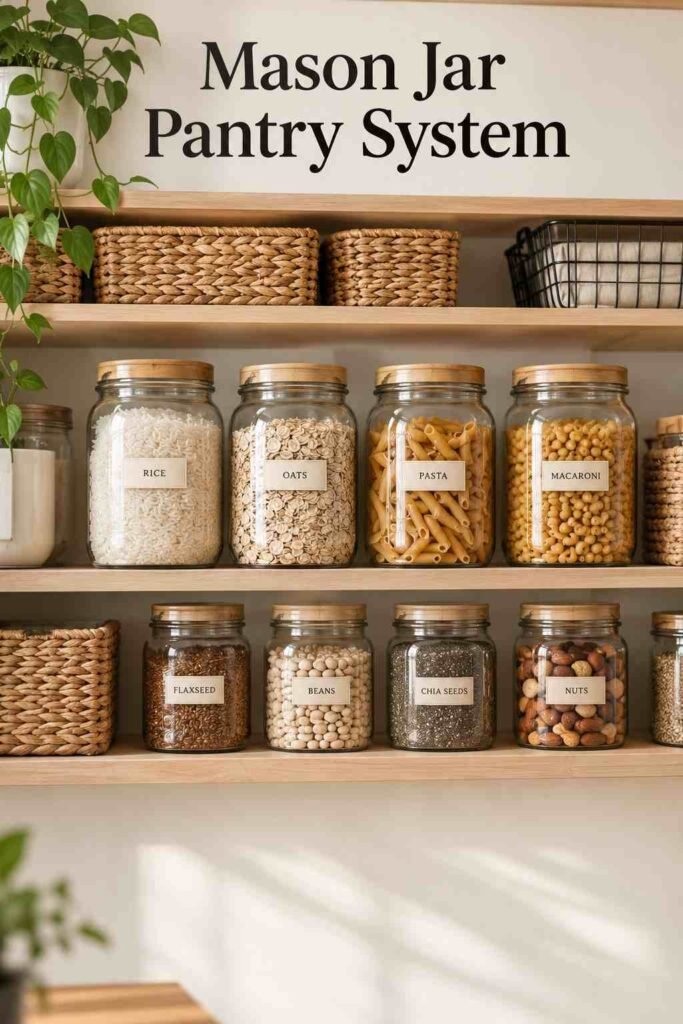
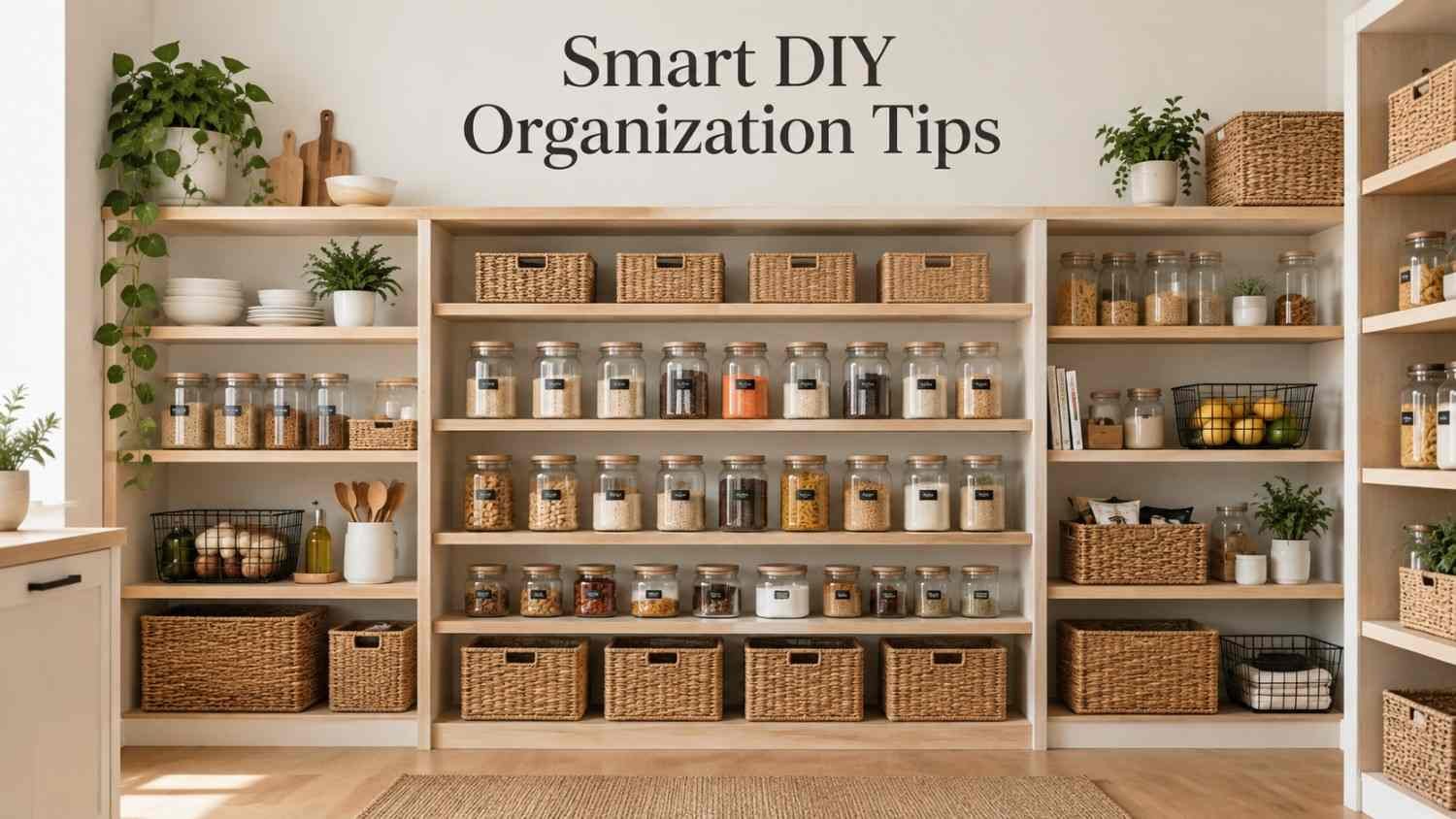
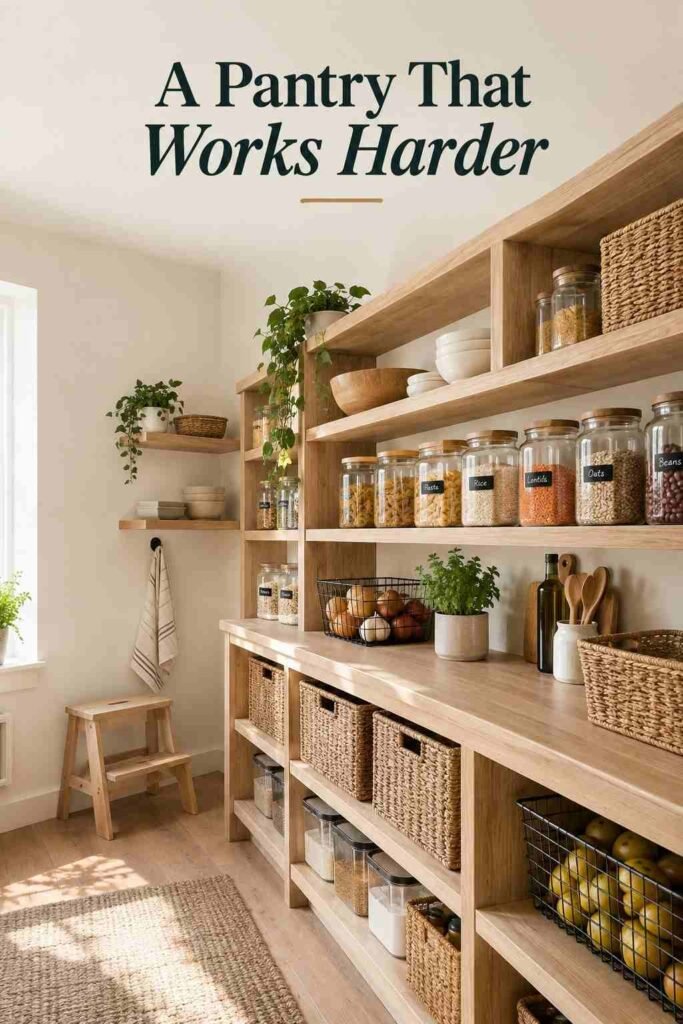
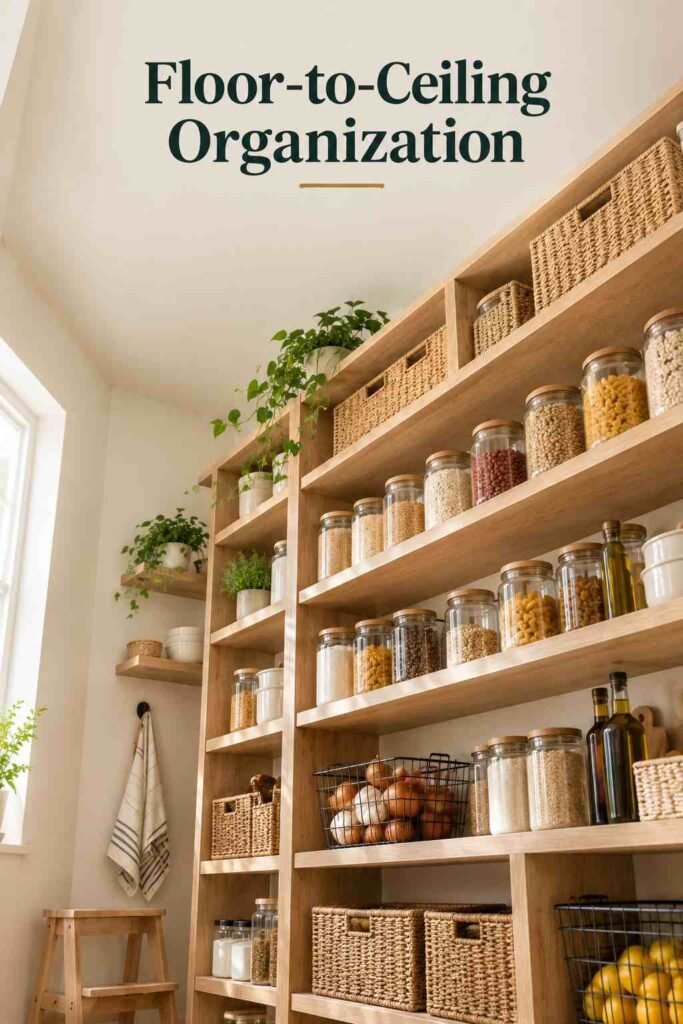
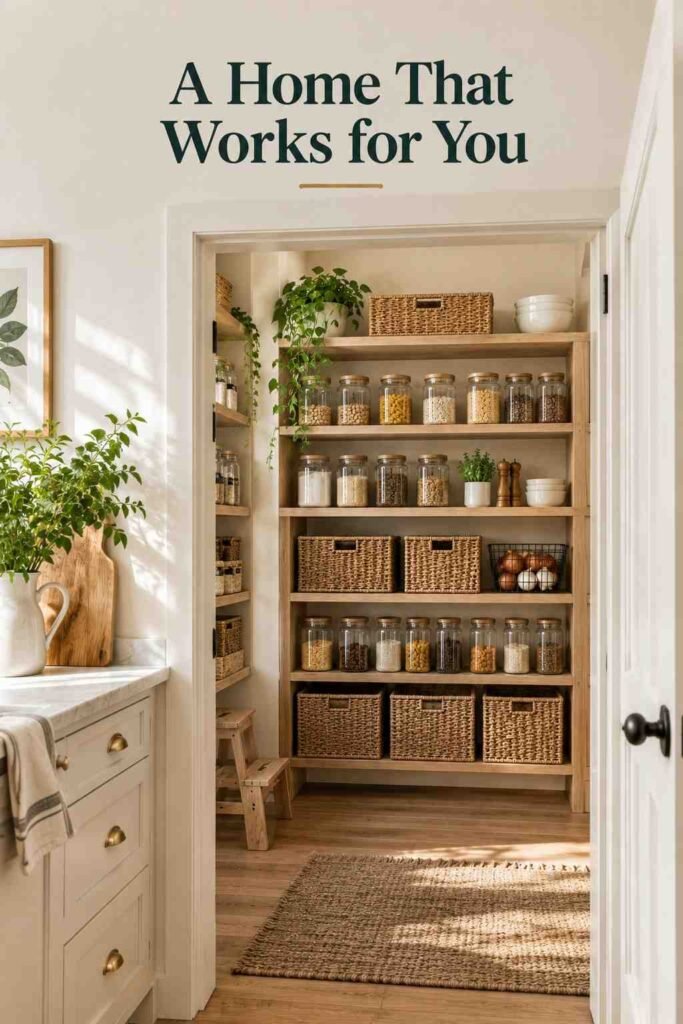
Decant rice, oats, pasta, and baking supplies into wide-mouth mason jars. Beyond looking tidy on open shelving, clear jars let you see at a glance when something is running low, which cuts down on duplicate grocery purchases. Label each jar with a chalkboard sticker and the purchase date so nothing sits forgotten for years. This project costs roughly $1 to $3 per jar if you buy secondhand, and takes about 20 minutes for a full pantry shelf.
2. Build a Vertical Spice Rack From Reclaimed Wood
Instead of digging through a cluttered spice drawer, mount a narrow shelf strip inside a cabinet door or on an open wall. A single 1×4 board, cut into three tiers and screwed into wall studs, holds dozens of jars upright and visible. This is a weekend-afternoon project for beginners; just confirm you are drilling into a stud or use wall anchors rated for at least 10 pounds per shelf.
3. Install a Magnetic Knife Strip and Utensil Rail
A magnetic strip mounted below your upper cabinets frees up an entire drawer that used to hold knives, and it keeps blades safer than tossing them loose in a drawer. Add a wall-mounted utensil rail with S-hooks nearby for spatulas, whisks, and tongs. Combined, these two additions typically cost under $25 and take less than an hour to install with a basic drill.
Bedroom and Closet: 3 DIY Organization Tips for Tight Spaces
Closets are often the most over-packed square footage in a house, so these DIY organization tips focus on stretching every inch.
4. Repurpose Shoe Boxes Into Drawer Dividers
Before recycling shoe boxes, cut them down to fit inside dresser drawers. Group socks, underwear, and accessories into separate compartments so nothing gets buried. Wrap the boxes in leftover wrapping paper or fabric scraps for a finished look. This tip costs nothing beyond what you already have at home and takes about 15 minutes per drawer.
5. Add Tension Rods for Renter-Friendly Closet Zones
Tension rods installed vertically split one wide closet shelf into two narrower zones, which is ideal for separating handbags from sweaters. Because they require no drilling, this is one of the few DIY organization solutions that work in apartments where damaging walls means losing a security deposit. Most rods cost $8 to $15 and install in under five minutes.
6. Create an Under-Bed Rolling Storage Cart
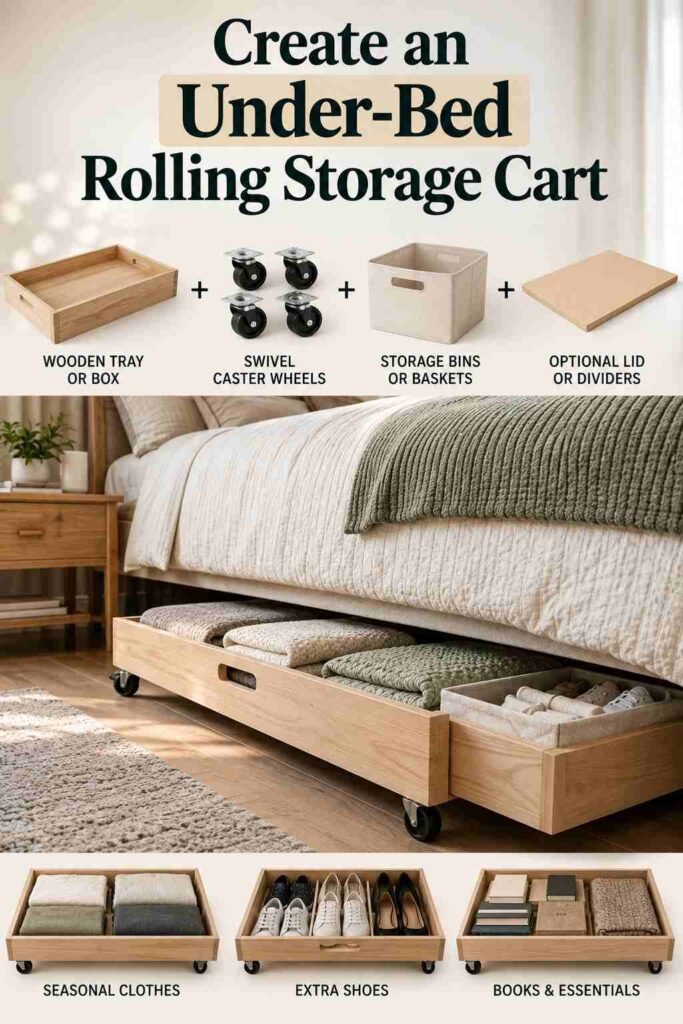
Build a low, wheeled platform from plywood and locking caster wheels to slide seasonal clothing or extra linens under the bed frame. Measure your bed’s clearance first; most standard frames leave 6 to 10 inches of usable height. This project takes a couple of hours and roughly $20 to $35 in materials, but it can free up an entire closet shelf.
Home Office and Digital Clutter: 3 DIY Organization Tips
Remote and hybrid work has made home offices a permanent fixture, and cord chaos is one of the most common complaints competitors’ guides overlook.
7. Build a Cable Management Station With Binder Clips
Clip binder clips to the edge of your desk and thread charging cables through the metal loops. This keeps cords from sliding behind the desk every time you unplug a laptop. It is a two-minute fix that costs less than $5 for a pack of clips, yet it solves one of the most persistent forms of desk clutter.
8. Sort Papers With a DIY File Crate System
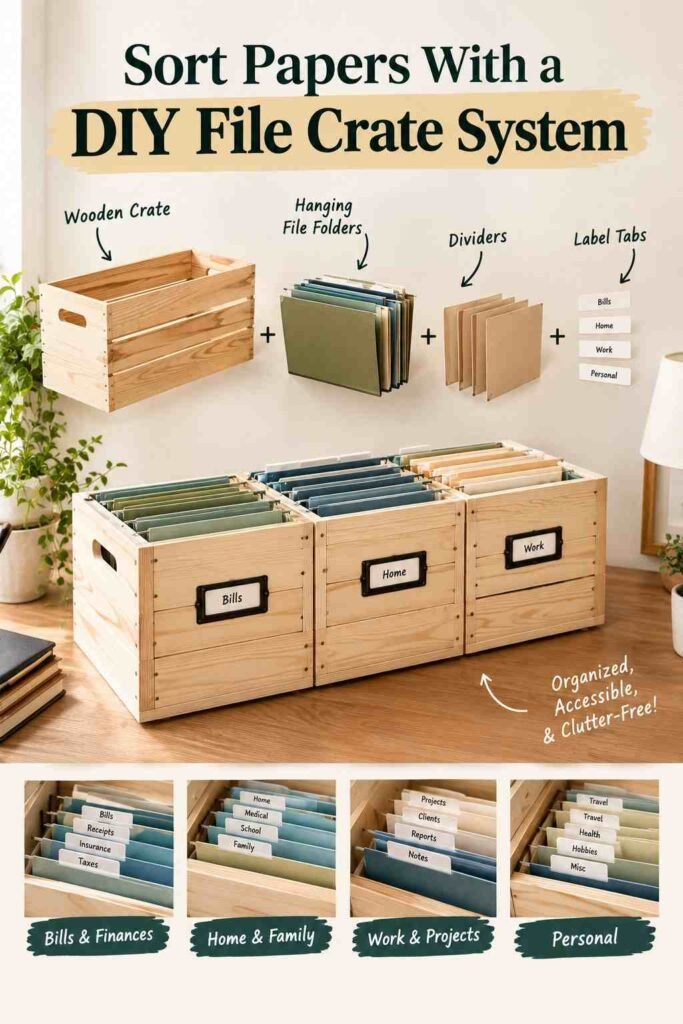
A wooden or repurposed metal crate turned on its side becomes an upright filing system for bills, tax documents, and kids’ school papers. Label hanging folders by category rather than by month, since most people search for documents by topic, not date. Set aside 30 minutes once to build the system, then just 5 minutes a week to keep it current.
9. Mount a Pegboard Command Center
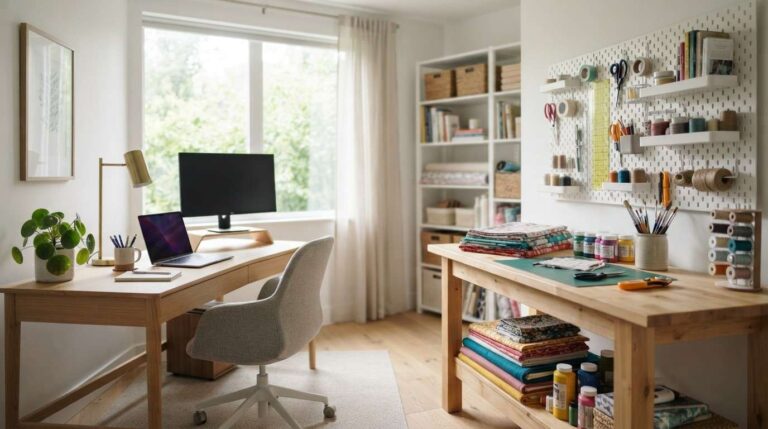
A pegboard mounted above a desk holds everything from scissors to sticky notes to a small whiteboard calendar, keeping your actual desk surface clear. Pegboards are sold in standard sizes for under $20 and mount with basic screws or an adhesive strip system for renters. This is one of the more flexible DIY organization ideas because you can rearrange hooks as your needs change.
Bathroom and Small Spaces: 3 DIY Organization Tips
Bathrooms are usually the smallest room in the house, which makes vertical and hidden storage essential.
10. Use Tension Rods Under the Sink for Spray Bottles
Install a thin tension rod horizontally under the sink, just above the base of the cabinet, to hang spray bottles by their trigger handles. This clears the cabinet floor for taller items like extra toilet paper or cleaning caddies. It costs around $6 and takes two minutes.
11. Repurpose a Cutlery Tray for Makeup Storage
An old kitchen cutlery tray, meant for forks and spoons, works surprisingly well for separating lipsticks, brushes, and skincare bottles inside a bathroom drawer. This is a zero-cost swap if you already have a spare tray, or under $8 for a plastic one from a discount store.
12. Add a Magnetic Strip Inside a Cabinet Door for Bobby Pins
Small metal items like bobby pins, tweezers, and nail clippers constantly get lost in drawers. A thin adhesive magnetic strip mounted inside a cabinet door solves this instantly and keeps countertops clear. It costs about $5 and requires no tools beyond scissors to trim it to size.
Living Room, Entryway, and Garage: 4 DIY Organization Tips
These larger, high-traffic spaces round out the full set of 16 smart DIY organization tips with projects that also improve how a room looks and functions.
13. Build a Floating Shelf Reading Nook
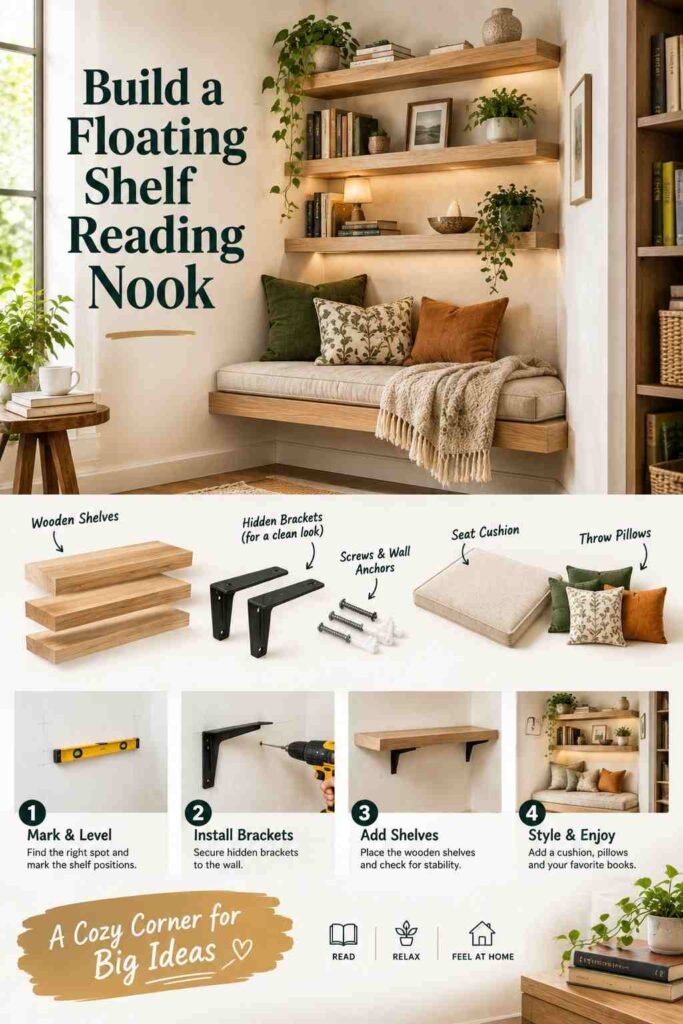
Floating shelves installed around a corner chair create a built-in look for books, a reading lamp, and a small plant, without eating up floor space. If you want a fuller room makeover to go with the shelving, our Cozy Reading Corner Ideas guide walks through layout, lighting, and seating choices that pair well with this kind of built-in storage.
14. Create a Seasonal Decor Bin Labeling System
Store holiday decorations in clearly labeled, stackable bins organized by season rather than by holiday, since most people decorate for an entire season at once. If you are planning for fall, our DIY Halloween Decorations Ideas post pairs naturally with this system, since handmade decor tends to need slightly different storage than store-bought pieces.
15. Install a DIY Pegboard Wall in the Garage
A full sheet of pegboard mounted along one garage wall turns scattered tools into a visible, labeled display. Trace each tool’s outline in marker so everyone in the household knows exactly where it goes back. Materials run $25 to $40 for a standard 4-by-8-foot sheet, and installation takes about 90 minutes.
16. Set Up an Entryway Drop Zone With Command Hooks
Mount a row of adhesive hooks near the front door for keys, bags, and dog leashes, paired with a small shoe tray underneath. This single change stops the “keys are missing again” scramble many households deal with daily. It costs under $15 and takes ten minutes to set up.
How to Maintain Your New DIY Organization System
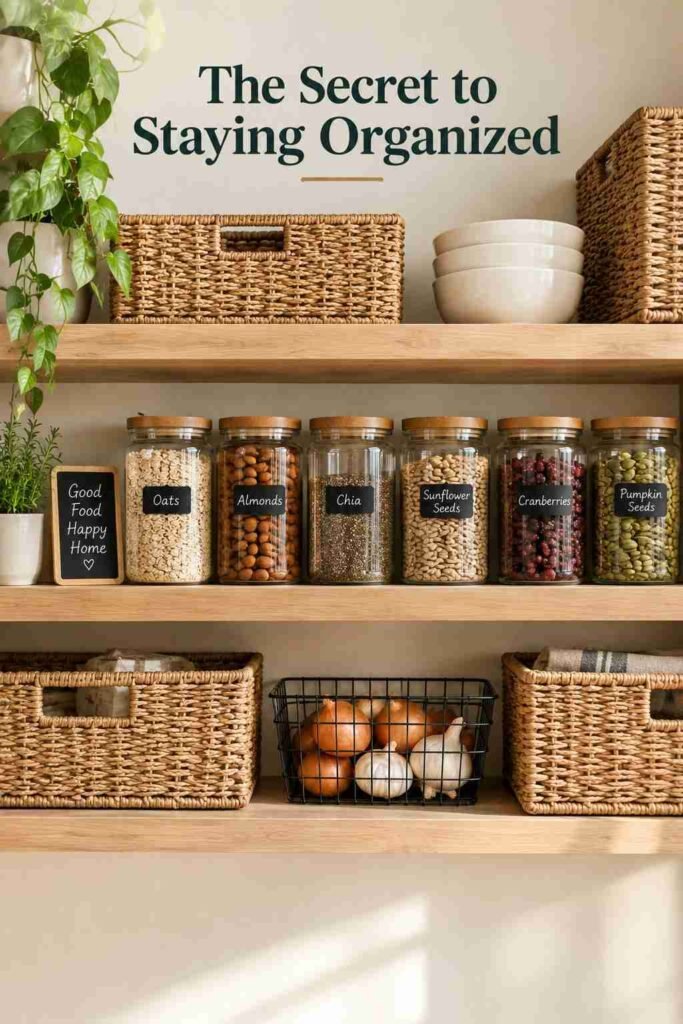
Building the system is only half the work; keeping it that way is what most guides leave out. Set a 10-minute weekly reset where every item that migrated out of place gets returned to its bin, hook, or shelf. Follow a one-in-one-out rule for clothing and toys so storage never creeps back toward overflow. Finally, schedule a seasonal check-in every three months to donate items you have not touched since the last reset. These small habits protect the time you already invested in building your system.
Conclusion
You do not need a full renovation or a professional organizer to bring order to your home. These 16 smart DIY organization tips work because they are built around your actual space, your actual budget, and a handful of tools most people already own. Start with the room that frustrates you most, complete one or two projects this weekend, and let the momentum carry you into the next space. For more room-by-room design inspiration to pair with your new storage systems, browse the full library at outinteriors.
Frequently Asked Questions
What is the cheapest way to organize a small apartment?
Renter-friendly tools like tension rods, adhesive hooks, and repurposed containers cost the least since they require no drilling and often reuse items you already own, such as jars or shoe boxes.
How do I keep my DIY organization system from falling apart?
Build in a short weekly reset, roughly 10 minutes, to return misplaced items to their spot, and follow a one-in-one-out rule so new purchases do not quietly overwhelm the system again.
Are DIY storage solutions safe for renters?
Yes, as long as you choose non-permanent options like tension rods, adhesive strips, and freestanding shelving units instead of anything that requires drilling into walls, which could affect a security deposit.
How often should I declutter my home?
A seasonal check-in, about every three months, is usually enough to catch items that have gone unused and prevent storage systems from slowly filling back up.
What tools do I need for beginner DIY organization projects?
A basic drill, a tape measure, wall anchors, and a stud finder cover most of the projects in this guide. Several tips, like tension rods and magnetic strips, require no tools at all.
Can DIY organization ideas work for large families?
Yes. Labeling systems, pegboards, and drop zones actually help more with multiple people, since everyone in the household can see exactly where an item belongs without asking.
How much does DIY organization typically cost compared to buying storage systems?
Most of the projects above cost between $0 and $40 in materials, which is usually a fraction of the price of comparable pre-made organizers sold at retail stores.